
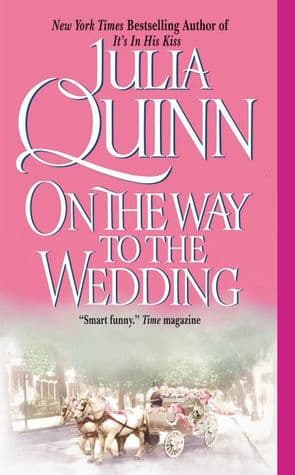
Synopsis
Covers the whole plot, including the ending.
- Difficulty
- Easy
- Pacing
- Moderate
- Mood
- Humorous, Romantic, Witty, Hopeful
- Read it if
- You love witty banter, charming historical romance with a 'friends-to-lovers' trope, and a hero who grows into his true feelings.
- Skip it if
- You prefer romances without significant external obstacles or enjoy a more serious, less humorous tone.
On the Way to the Wedding Plot Summary
Covers the whole plot, including the ending.
Gregory Bridgerton's Quest for True Love
Gregory Bridgerton, the youngest Bridgerton brother, believes in love at first sight. He attends a house party at Lady Roberta St. Clair's home, determined to find his soulmate. He sees Miss Hermione Watson and is instantly smitten, convinced she is the woman he will marry. However, Hermione loves John Stirling, the Earl of Kilmartin's younger brother, who is not a suitable match. Hermione's best friend, Lady Lucinda 'Lucy' Abernathy, is a practical and observant woman. She notices Gregory's infatuation and Hermione's lack of interest. Lucy worries about Hermione's future with John and decides to help Gregory pursue Hermione, hoping to steer her friend away from a bad marriage.
Lucy's Reluctant Matchmaking
Lucy is skeptical about Gregory's 'love at first sight' claims at first, but she begins to help him pursue Hermione. She tells Gregory about Hermione's schedule, interests, and offers advice on how to impress her. During these secret meetings, Gregory and Lucy spend a lot of time together, getting to know each other better. Gregory starts to like Lucy's sharp wit, intelligence, and kind nature. He finds himself drawn to her practicality and humor. Eventually, they discover that Hermione and John Stirling have secretly eloped, which leaves Lucy and Gregory surprised and unexpectedly close.
A Sudden Realization and a New Affection
Hermione's elopement with John Stirling leaves Gregory feeling foolish and a bit heartbroken. More importantly, it makes him face his true feelings. He realizes that his 'love at first sight' for Hermione was an illusion, a romantic ideal he put onto her. The woman he has truly come to care for, the one who makes him laugh and challenges him, is Lucy. He misses her company, her advice, and her presence. He understands that his affection for Lucy is deeper and more real than anything he felt for Hermione. He decides to tell Lucy his feelings and pursue a relationship with her.
Lucy's Predicament: An Unwanted Betrothal
When Gregory finally tells Lucy his feelings, he learns a devastating truth: Lucy is engaged to Lord Haselby. Her uncle, Lord Macclesfield, arranged the engagement years ago, and Lucy feels she must honor it. This news crushes Gregory, who had just found clarity in his emotions. Lucy, despite her own growing feelings for Gregory, explains that she cannot break her engagement due to her uncle's strict nature and her family's difficult financial situation, which depends on the marriage. This creates a big problem for them, as Lord Macclesfield is known for being stubborn and traditional.
A Desperate Plea to Lord Macclesfield
Gregory does not want to lose Lucy, so he bravely confronts Lord Macclesfield, Lucy's powerful uncle and guardian. He explains his love for Lucy and asks that the engagement to Lord Haselby be broken. However, Lord Macclesfield is a man who keeps his word and sees the engagement as a binding contract. He dismisses Gregory's romantic ideas, saying duty and family honor are more important than fleeting emotions. He refuses to release Lucy from the engagement, leaving Gregory feeling helpless and frustrated. His hopes for a future with Lucy seem ruined by her uncle's stubbornness and societal expectations.
A Fateful Accident and a Glimmer of Hope
Just when all hope seems lost, Lord Macclesfield is in a serious carriage accident. He cannot oversee the wedding preparations or enforce his will. This incident gives Gregory and Lucy an important chance. With her uncle in bed, Lucy is temporarily free from his direct control. Gregory sees this as his opportunity to pursue Lucy more openly and to try and convince her to choose him, despite the existing engagement. The accident, while sad, gives them a brief, valuable break from the upcoming wedding to Lord Haselby.
A Secret Agreement and a Desperate Scheme
With Lord Macclesfield's condition uncertain and the wedding date coming soon, Lucy and Gregory make a desperate plan. If her uncle does not recover enough to attend and approve the wedding, they will elope and marry in secret. This arrangement is risky; it would go against custom and possibly cause a scandal, but it is their only hope of being together. Lucy, despite being practical, is willing to take this risk, having fully admitted her love for Gregory. They spend time together, strengthening their bond and preparing for the drastic step they might have to take, all while hoping for a miracle that would allow her uncle's recovery to make their path simpler.
Lord Macclesfield's Recovery and Renewed Obstacles
Just as Gregory and Lucy prepare for their secret elopement, Lord Macclesfield makes an unexpected and rather miraculous recovery. To their dismay, he is well enough to attend and personally oversee Lucy's wedding to Lord Haselby. His recovery shatters their plans for a quiet, secret marriage, as he remains determined to see Lucy wed to Haselby. The problem of her uncle's will, which they thought was gone, now stands more firmly in their way than ever, making their situation feel even more desperate. Wedding preparations resume with new energy, and Lucy feels trapped.
The Wedding Day and a Last-Minute Plea
The wedding day arrives, and Lucy, in her bridal gown, feels deep despair. Gregory, however, refuses to give up. He arrives at the church, determined to stop the wedding. He confronts Lord Macclesfield and Lord Haselby, making a passionate, public declaration of his love for Lucy and asking them to release her. He appeals to Lucy directly, urging her to choose her own happiness. The scene is tense and dramatic, with society's expectations clashing against the strong emotions of true love. Gregory's heartfelt words resonate with some of the wedding guests, causing gossip and sympathy.
A Shocking Revelation and a Twist of Fate
Just as it seems Gregory's plea will not work, Lord Haselby surprisingly steps in. Overwhelmed by the public scene and perhaps moved by Gregory's sincerity and Lucy's clear distress, Lord Haselby makes a shocking confession: he loves another woman, a governess named Miss Clara Finch, and has secretly been seeing her. He admits that he entered into the arranged marriage out of duty but cannot go through with it. This revelation publicly shames Lord Macclesfield but frees Lucy from her engagement. The scandal is huge, but Lucy is finally free to choose her own path and her own love.
A Happy Ending for Gregory and Lucy
With Lord Haselby's confession, the wedding is called off, and Lucy is finally free. Lord Macclesfield, humiliated but with no justification, can no longer force Lucy into a marriage she does not want. Gregory, overjoyed, immediately proposes to Lucy, who accepts without hesitation. They marry shortly after, surrounded by Gregory's loving family, the Bridgertons. Lucy, the practical woman who once tried to match Gregory with another, finds her own happy ending with the man who taught her what love truly means. Their journey, filled with unexpected turns and problems, ends in a joyful union built on real affection and mutual respect.
On the Way to the Wedding Characters
Gregory Bridgerton
Protagonist
The youngest Bridgerton son, a romantic who believes in love at first sight.
Gregory is the eighth and youngest Bridgerton sibling, known for his unwavering belief in love at first sight and a romantic ideal of finding 'the one'. Initially infatuated with Hermione Watson, he is charming, witty, and fiercely determined. He matures throughout the story, learning that true love is built on companionship and shared experiences rather than instant attraction. His persistence and passion drive much of the plot, especially in his efforts to win Lucy. He is close to his family, particularly his mother, Violet, who encourages his pursuit of happiness.
Relationships: Lucy Abernathy (Love interest, then wife); Hermione Watson (Initial object of infatuation); Violet Bridgerton (Mother, confidante); Bridgerton Siblings (Loving family)
Lady Lucinda 'Lucy' Abernathy
Protagonist
Hermione's practical best friend, secretly engaged, who falls for Gregory.
Lucy is intelligent, practical, and possesses a sharp wit, often masking her own insecurities and the burden of her arranged engagement to Lord Haselby. She initially helps Gregory pursue Hermione out of a misguided sense of duty to her friend, but in doing so, she unexpectedly falls in love with Gregory herself. She is fiercely loyal and honorable, leading her to feel trapped by her betrothal and her uncle's expectations. Her journey is about finding the courage to fight for her own happiness and defy societal pressure.
Relationships: Gregory Bridgerton (Love interest, then husband); Hermione Watson (Best friend); Lord Macclesfield (Strict uncle and guardian); Lord Haselby (Fiancé (arranged))
Miss Hermione Watson
Supporting
Lucy's beautiful but naive best friend, in love with another man.
Hermione is beautiful, sweet, and somewhat naive, deeply in love with John Stirling. She is the initial object of Gregory's affections, though she never reciprocates his feelings, remaining steadfast in her devotion to John. Her character serves as the catalyst for Gregory and Lucy's initial interactions and the subsequent development of their relationship. Her eventual elopement clears the path for Gregory's realization of his true feelings for Lucy.
Relationships: Lucy Abernathy (Best friend); Gregory Bridgerton (Object of his initial infatuation); John Stirling (Love interest, then husband)
Lord Macclesfield
Antagonist
Lucy's strict, traditional uncle and guardian, determined to see her marry Lord Haselby.
Lord Macclesfield is Lucy's overbearing and traditional uncle who holds significant power over her future as her guardian. He is unyielding in his belief that Lucy must marry Lord Haselby to uphold a long-standing family agreement and secure their social standing. He represents the rigid societal expectations and patriarchal control prevalent in the era, serving as the primary obstacle to Gregory and Lucy's happiness. His recovery from a carriage accident further complicates their plans.
Relationships: Lucy Abernathy (Niece and ward); Lord Haselby (Intended son-in-law (arranged))
Lord Haselby
Supporting
Lucy's fiancé, who secretly loves another woman.
Lord Haselby is Lucy's fiancé, betrothed to her through an arrangement with Lord Macclesfield. He appears to be a suitable, if unremarkable, match. However, he harbors a secret love for his governess, Miss Clara Finch. His character is crucial in providing the ultimate resolution to Lucy's predicament, as his confession at the altar frees her from the unwanted engagement. He acts out of duty but ultimately chooses his own heart, despite the public scandal.
Relationships: Lucy Abernathy (Fiancé (arranged)); Lord Macclesfield (Intended father-in-law); Miss Clara Finch (Love interest)
John Stirling
Supporting
Hermione's love interest, a younger son with little fortune.
John Stirling is the younger brother of the Earl of Kilmartin and Hermione Watson's true love. He is not wealthy enough to be considered a suitable match for Hermione by society's standards. His love for Hermione is genuine, and together they elope, setting in motion the events that allow Gregory to realize his feelings for Lucy. He represents the triumph of love over societal expectations, albeit in a way that creates complications for other characters.
Relationships: Hermione Watson (Love interest, then husband)
Lady Violet Bridgerton
Supporting
Gregory's mother, a wise and supportive matriarch.
Lady Violet is the beloved matriarch of the Bridgerton family. She is a wise, supportive, and loving mother who encourages her children to find true love and happiness. She offers Gregory advice and comfort throughout his romantic struggles, always believing in his ability to find the right person. Her presence provides a strong emotional anchor for Gregory and reinforces the central theme of love within the Bridgerton family.
Relationships: Gregory Bridgerton (Son); Bridgerton Siblings (Children)
Miss Clara Finch
Mentioned
Lord Haselby's secret love interest, his governess.
Miss Clara Finch is the governess with whom Lord Haselby is secretly in love. Although she does not appear directly as a speaking character, her existence and Lord Haselby's affection for her are pivotal to the plot. Her role is to provide Lord Haselby with the motivation to confess his true feelings at the wedding, thereby freeing Lucy and allowing Gregory to claim his love.
Relationships: Lord Haselby (Love interest)
On the Way to the Wedding Themes
Love at First Sight vs. Enduring Love
The novel challenges Gregory's initial belief in love at first sight. He is instantly smitten with Hermione, but he discovers his true, deeper feelings for Lucy develop over time through shared experiences, wit, and real connection. This theme explores the difference between an idealized, superficial attraction and a mature, lasting love built on compatibility and understanding. Gregory's journey makes him redefine what 'the one' truly means, moving from an instant spark to a deep, developed affection. This is clear when he realizes his feelings for Lucy after Hermione's elopement.
“He'd thought he'd known what love was. He'd seen Hermione and known, in that very instant, that she was the one. But he'd been wrong. Terribly, utterly wrong. Because it wasn't Hermione who made his heart sing. It was Lucy.”
Duty vs. Desire
This theme is important to Lucy's story. She feels bound by duty and honor to uphold her arranged engagement to Lord Haselby. This decision is heavily influenced by her uncle, Lord Macclesfield, and her family's financial situation. Her growing desire for Gregory directly conflicts with this duty. The novel explores the societal pressure on women to make good matches versus the desire for personal happiness and love. Lucy's internal struggle and eventual choice to defy her uncle, even if only through Lord Haselby's confession, show the tension between these opposing forces.
“Her duty was clear. Her honor was clear. But her heart… her heart was anything but clear.”
The Power of Choice and Agency
The story highlights the importance of individual choice, especially for women, in a society that often dictated their paths. Lucy initially feels she has no choice about her marriage. However, through Gregory's support and Lord Haselby's unexpected actions, she gains control over her own future. Hermione also makes a choice by eloping with John Stirling. The climax, where Lord Haselby's confession frees Lucy, shows that even with strict societal rules, individuals can and should choose their own happiness.
“He would not let her sacrifice her happiness for duty. Not when he knew he could make her happy.”
Family and Support Systems
The Bridgerton family's strong love and support for Gregory are a consistent theme. Lady Violet, in particular, encourages Gregory to follow his heart and comforts him during his romantic difficulties. This contrasts with Lucy's more isolated situation under her strict uncle, Lord Macclesfield. A strong, loving family allows Gregory the freedom and confidence to pursue his desires, while Lucy's lack of such a supportive network initially traps her. Ultimately, Lucy finds her place within the supportive Bridgerton family.
“His mother would understand. She always did. She believed in love, just as he did.”
Plot Devices & Literary Techniques
Misdirection and Red Herring
Gregory's initial infatuation with Hermione serves to misdirect the reader and Gregory himself.
The entire opening of the novel, with Gregory's fervent belief that Hermione Watson is 'the one,' acts as a classic red herring. The reader is led to believe that the story will be about Gregory winning Hermione, only for it to be revealed that Hermione is in love with someone else, and Gregory's true affections lie with Lucy. This device cleverly sets up the core conflict and allows for the unexpected development of Gregory and Lucy's relationship, making Gregory's eventual realization more impactful and earned.
The Obstacle/Impediment
Lucy's arranged betrothal to Lord Haselby creates the central conflict and tension.
Lucy's pre-existing engagement to Lord Haselby, orchestrated by her formidable uncle, is the primary external obstacle preventing Gregory and Lucy from being together. This device fuels the narrative tension, forcing Gregory to overcome seemingly insurmountable societal and familial barriers. It creates a sense of urgency and desperation, especially as the wedding date approaches, and highlights the clash between personal desire and societal duty. The dramatic resolution of this obstacle provides the novel's climax.
Dramatic Irony
The reader is often aware of Lucy's true feelings for Gregory before he fully recognizes them.
Dramatic irony is employed as the reader often perceives Lucy's growing affection for Gregory before Gregory himself does, and certainly before he acknowledges his own feelings for her. This creates a layer of anticipation and empathy for Lucy's predicament. Similarly, the reader might suspect Lord Haselby's disinterest in Lucy or his secret love before it is revealed, adding to the tension and setting up the dramatic reveal at the altar.
The 'Runaway Bride' Trope (Subverted)
The expectation of a runaway bride is present, but the resolution comes from an unexpected source.
While Lucy is trapped in an unwanted marriage, the classic 'runaway bride' trope is invoked but ultimately subverted. There is the expectation that Lucy might elope with Gregory, or that Gregory will physically stop the wedding. However, the resolution comes not from Lucy running away, but from Lord Haselby's unexpected confession at the altar. This twist adds surprise and shifts the agency, giving Lord Haselby a moment of unexpected courage and subverting the more traditional romantic hero rescue.
On the Way to the Wedding Quotes
“One did not tell a lady she was not going to a ball. One simply did not.”
“Love wasn't a choice. It was a compulsion.”
“A man could have a hundred secrets, but he could only have one true heart.”
“Sometimes, the most dangerous thing you could do was nothing at all.”
“It was a truth universally acknowledged that a single man in possession of a good fortune, must be in want of a wife. It was also a truth universally acknowledged that a single woman in possession of a good fortune, must be in want of a husband. But what about the poor souls who had neither?”
“He had never understood the female fascination with flowers. They died. They wilted. They smelled nice for a while, and then they smelled like death.”
“You can only truly know someone when you have seen them at their worst.”
“The problem with secrets was that they always found a way to come out.”
“She was a force of nature, and he, Gareth St. Clair, was about to be swept away.”
“One did not simply walk into a gentleman's study and demand to see his private papers, unless one was a Bridgerton.”
“Happiness was a choice. It was a deliberate act.”
“Sometimes the greatest treasures were not made of gold or jewels, but of words.”
“He had never known a woman who could make him laugh so much, and that, he realized, was the most dangerous thing of all.”
“A lady never gossiped. Unless, of course, it was truly fascinating gossip.”
Quiz
10 questions on the plot and the characters. Each answer comes with a short explanation.
Question 1
At the beginning of the story, who does Gregory Bridgerton initially believe is the woman of his dreams?
- Lady Lucinda Abernathy
- Miss Hermione Watson
- Lady Danbury
- Miss Penelope Featherington
Show answer
B. Miss Hermione Watson Gregory Bridgerton initially believes Miss Hermione Watson is 'the one' because of his belief in love at first sight, before realizing she is in love with someone else.
Question 2
Why does Lady Lucinda Abernathy initially offer to help Gregory Bridgerton?
- She is secretly in love with Gregory and wants to spend time with him.
- She wants to save her best friend, Hermione, from a disastrous alliance.
- She wants to prove that Gregory's belief in love at first sight is flawed.
- Her uncle commanded her to assist Gregory in his romantic pursuits.
Show answer
B. She wants to save her best friend, Hermione, from a disastrous alliance. Lucy offers to help Gregory win Hermione over because she wants to prevent Hermione from entering a 'disastrous alliance' with another man, showcasing her loyalty as a friend.
Question 3
What is the primary obstacle to Gregory and Lucy's relationship once they realize their feelings for each other?
- Gregory's family disapproves of Lucy.
- Lucy is already engaged to another man, and her uncle is against breaking the betrothal.
- Lucy's social standing is not high enough for a Bridgerton.
- Gregory is still secretly in love with Hermione.
Show answer
B. Lucy is already engaged to another man, and her uncle is against breaking the betrothal. The main impediment is Lucy's existing engagement. Her uncle, who has control over her betrothal, is unwilling to release her from the commitment, creating a significant challenge for Gregory and Lucy.
Question 4
Which characteristic best describes Gregory Bridgerton's initial belief about love?
- Love is a practical arrangement based on shared interests.
- True love is an instant, undeniable feeling, a 'love at first sight' phenomenon.
- Love develops slowly over time through shared experiences.
- Love is a duty, primarily for the continuation of the family line.
Show answer
B. True love is an instant, undeniable feeling, a 'love at first sight' phenomenon. Gregory's initial romantic philosophy is centered on the idea that when he finds the 'woman of his dreams,' he will know 'in an instant that she is the one,' a classic belief in love at first sight.
Question 5
How does Lucy's personality contrast with Hermione Watson's, as depicted in the story summary?
- Lucy is described as quiet and reserved, while Hermione is outgoing and boisterous.
- Lucy is 'ever-practical' and has a 'sharp wit,' while Hermione is simply described as 'ravishing' and in love with another.
- Lucy is focused on societal expectations, while Hermione prioritizes personal happiness.
- Lucy is manipulative and cunning, while Hermione is naive and easily influenced.
Show answer
B. Lucy is 'ever-practical' and has a 'sharp wit,' while Hermione is simply described as 'ravishing' and in love with another. The summary explicitly calls Lucy 'the ever-practical Lady Lucinda Abernathy' with 'sharp wit and sunny smile,' contrasting with Hermione who is 'ravishing' but also in love with another, suggesting Lucy's more grounded and intelligent nature.
Question 6
What is the central irony regarding Gregory's initial romantic pursuit?
- He believes in true love, but he is actually a cynical person.
- He finds the woman he believes to be 'the one' instantly, but she turns out not to be the right person for him.
- He wants to marry for love, but his family forces him into an arranged marriage.
- He seeks a wife who is serious and intellectual, but falls for a frivolous socialite.
Show answer
B. He finds the woman he believes to be 'the one' instantly, but she turns out not to be the right person for him. The irony lies in Gregory's strong belief in instant true love: he *does* experience that instant recognition with Hermione, only to discover she's not 'the one' for him, undermining his initial premise and setting up his later realization about Lucy.
Question 7
What specific event is Gregory trying to interrupt or change by the end of the story?
- Hermione Watson's wedding to her beloved.
- Lady Lucinda Abernathy's wedding to her fiancé.
- A formal ball where Lucy is expected to announce her engagement.
- A duel fought over Lucy's hand in marriage.
Show answer
B. Lady Lucinda Abernathy's wedding to her fiancé. The title 'On the Way to the Wedding' and the concluding sentence 'Gregory must risk everything to ensure that when it comes time to kiss the bride, he is the only man standing at the altar...' clearly indicate he is trying to stop Lucy's wedding to her fiancé.
Question 8
What specific quality of Lucy's makes Gregory's 'heart sing' once he comes to his senses?
- Her striking beauty and elegant demeanor.
- Her vast fortune and influential family connections.
- Her sharp wit and sunny smile.
- Her quiet obedience and gentle nature.
Show answer
C. Her sharp wit and sunny smile. The summary states, '...he realizes that it is Lucy, with her sharp wit and sunny smile, who makes his heart sing,' highlighting these specific personality traits as what truly attracts him.
Question 9
What does Gregory's journey from believing Hermione is 'the one' to realizing his love for Lucy demonstrate about the theme of love in the book?
- True love is always immediate and unmistakable, just as he first believed.
- Love can be mistaken for infatuation, and genuine love often develops through deeper connection and shared experience.
- Social status and family approval are more important than personal feelings in romance.
- It is impossible for men to truly understand their own romantic feelings.
Show answer
B. Love can be mistaken for infatuation, and genuine love often develops through deeper connection and shared experience. Gregory's initial experience with Hermione fits his 'love at first sight' ideal, but it proves to be a misjudgment. His subsequent falling for Lucy, after working closely with her, suggests that true love, for him, evolves from a deeper understanding and appreciation of character, rather than just an initial spark.
Question 10
What is the primary conflict Gregory faces in the climax of the story, as suggested by the summary?
- Convincing Hermione to leave her beloved for him.
- Winning a duel against Lucy's fiancé.
- Overcoming Lucy's family and social obligations to marry her.
- Deciding whether he truly loves Lucy or just the idea of being in love.
Show answer
C. Overcoming Lucy's family and social obligations to marry her. The summary highlights that 'Lucy is engaged. And her uncle is not inclined to let her back out of the betrothal.' The climax involves Gregory risking 'everything to ensure' he is at the altar, indicating the main conflict is against Lucy's existing engagement and her uncle's refusal to break it.
On the Way to the Wedding FAQ
What is 'On the Way to the Wedding' about?
'On the Way to the Wedding' is the eighth book in Julia Quinn's Bridgerton series, focusing on Gregory Bridgerton. He initially believes he's found true love with Hermione Watson, but she is in love with someone else. Her best friend, Lady Lucinda Abernathy, helps Gregory pursue Hermione, only for Gregory and Lucy to realize they are meant for each other, despite Lucy's existing engagement.
Why should I read 'On the Way to the Wedding'?
You should read this book for its charming blend of humor, witty dialogue, and a unique 'friends-to-lovers' romance with a dramatic twist. It offers a fresh take on the Bridgerton formula, featuring a hero who makes an initial mistake in love and a heroine who must navigate a difficult arranged marriage, all culminating in a thrilling race against time.
What is the background/setting of 'On the Way to the Wedding'?
The story is set in Regency London, a period known for its vibrant social season, balls, and strict societal expectations regarding marriage and family duty. It specifically delves into the complexities of arranged marriages and the limited choices available to women, particularly through Lady Lucinda Abernathy's predicament.
What are the most memorable quotes?
One memorable quote is Gregory's realization: 'He'd been so sure Hermione was the one. But she wasn't. Lucy was.' This encapsulates his journey of mistaken identity and true love. Another is Lucy's witty retort, often laced with self-deprecating humor, which showcases her sharp intellect and resilience.
What writing style does Julia Quinn use in this book?
Julia Quinn employs her signature witty and humorous writing style, characterized by sharp dialogue, internal monologues that reveal character quirks, and a light-hearted tone despite underlying emotional depth. She balances comedic situations with genuine romantic development and dramatic tension, especially in the lead-up to Lucy's wedding.
What minor details add significant meaning?
The recurring motif of Gregory's initial 'instantaneous' love versus the slow-burn realization of his feelings for Lucy highlights the difference between infatuation and true, deep connection. Also, the contrast between Hermione's idealized beauty and Lucy's 'sunny smile' subtly underscores the idea that true love transcends superficial attraction.
What are some subtle foreshadowing moments?
Early on, Lucy's practical advice to Gregory on winning Hermione often reveals her own insightful understanding of relationships and human nature, subtly hinting at her compatibility with Gregory. Additionally, Gregory's growing comfort and genuine laughter with Lucy, even while pursuing Hermione, foreshadows his eventual realization that Lucy is 'the one.'
What unexpected character connections exist?
The most unexpected connection is the deep friendship between Hermione Watson and Lady Lucinda Abernathy, which serves as the catalyst for the entire plot. It's through their bond that Gregory even meets Lucy, and Lucy's fierce loyalty to Hermione inadvertently leads her to fall in love with Gregory.
What are unspoken character motivations?
Lady Lucinda Abernathy's unspoken motivation for helping Gregory pursue Hermione, beyond friendship, is a deep-seated desire to ensure Hermione's happiness, stemming from her own practical and selfless nature. Gregory's initial fervent belief in instant love might stem from a desire to emulate the successful, passionate marriages of his older Bridgerton siblings.
What psychological complexities do characters exhibit?
Gregory exhibits the psychological complexity of mistaking infatuation for true love, undergoing a significant emotional journey to understand the difference. Lucy, on the other hand, grapples with her duty to her family and her arranged marriage versus her burgeoning, unexpected love for Gregory, showcasing her inner conflict and resilience.
What are the major emotional turning points?
A major emotional turning point is when Gregory finally admits to himself that his feelings for Lucy are far deeper and more real than anything he felt for Hermione. Another is Lucy's internal struggle and eventual acceptance of her love for Gregory, despite the seemingly insurmountable obstacle of her engagement to Lord Haselby.
How do relationship dynamics evolve?
The relationship dynamics evolve from an initial awkward alliance between Gregory and Lucy, based on their shared goal of uniting Gregory and Hermione, into a genuine friendship built on shared laughter and understanding. This friendship then slowly blossoms into a deep, undeniable romantic love, transforming their dynamic from allies to soulmates.
Which parts remain ambiguous or open-ended?
While the main romance is resolved, the precise future of Hermione Watson and her chosen love, Mr. Edgar Stirling, is left somewhat open-ended, though implied to be happy. Also, the full implications of Lord Haselby's character and his reaction to the wedding disruption are not deeply explored beyond the immediate confrontation.
What are controversial scenes or decisions?
The most controversial decision is Gregory's dramatic and public interruption of Lucy's wedding to Lord Haselby. While romantic for the protagonists, it's a highly unconventional and socially disruptive act that challenges Regency decorum, potentially causing scandal for Lucy and her family, even if ultimately for the best.
'On the Way to the Wedding' ending explained: how it ends & what it means
The book culminates with Gregory dramatically interrupting Lady Lucinda's wedding to Lord Haselby, declaring his love for her at the altar. After a tense confrontation and Lucy's own tearful admission of love, they successfully call off the arranged marriage. The ending signifies the triumph of true love and personal happiness over societal expectations and duty, with Gregory and Lucy finding their 'happily ever after' against all odds.
About the author

Julia Quinn is an American author known for her historical romance novels, particularly set in the Regency era. Her notable works include "The Duke and I," "The Viscount Who Loved Me," "Romancing Mister Bridgerton," "When He Was Wicked," "Just Like Heaven," and "The Secret Diaries of Miss Miranda Cheever." Quinn's writing often features witty dialogue and strong character development, contributing to her popularity in the genre.
Similar books
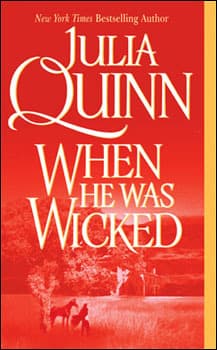
- When He Was Wicked
Julia Quinn
4.0 (34k) average on GoodreadsHistorical FictionAnother Bridgerton novel with a charming hero and a strong heroine.
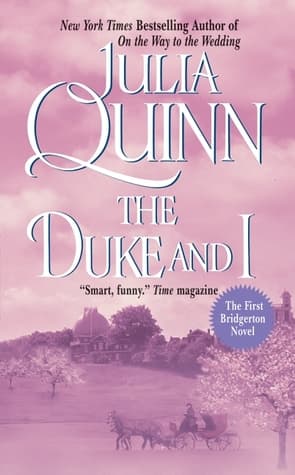
- The Duke and I
Julia Quinn
4.0 (87k) average on GoodreadsHistorical FictionThe first Bridgerton book, sharing the same lighthearted and romantic tone.
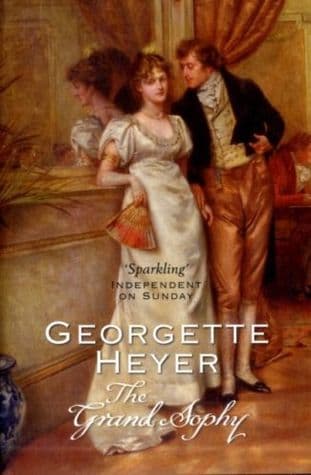
- The Grand Sophy
Georgette Heyer
4.2 (26k) average on GoodreadsHistorical FictionHeyer's novel offers a far more detailed and historically precise portrayal of Regency society, with meticulously crafted speech and manners. Quinn's novel is more emotionally driven and accessible, while Heyer prioritizes authenticity and social maneuvering over dramatic emotional declarations.
- Devil in Winter
Lisa Kleypas
4.3 (58k) average on GoodreadsHistorical FictionKleypas's novel delves into darker themes and more complex character backstories, often featuring protagonists with troubled pasts and a grittier portrayal of societal underbellies. Kleypas's prose is often more evocative and sensual, contrasting with Quinn's lighter, more comedic tone and focus on consistent light-heartedness.
- To Kill a Mockingbird
Harper Lee
4.3 (4.5M) average on GoodreadsHistorical FictionIn the 1930s Jim Crow South, Harper Lee writes about racial injustice, moral growth, and the quiet courage of a lawyer father, Atticus Finch, as seen through his young daughter's eyes.
- The Great Gatsby
F. Scott Fitzgerald
3.9 (3.8M) average on GoodreadsHistorical FictionIn the opulent Roaring Twenties, a mysterious millionaire's lavish parties hide his desperate, tragic pursuit of a lost love, exposing the emptiness within the American Dream.


Enjoyed the summary?
A summary gives you the shape of the book. The book itself has the detail, the examples and the voice.
Find On the Way to the Wedding on AmazonAs an Amazon Associate, BookBrief earns from qualifying purchases. How we're funded