
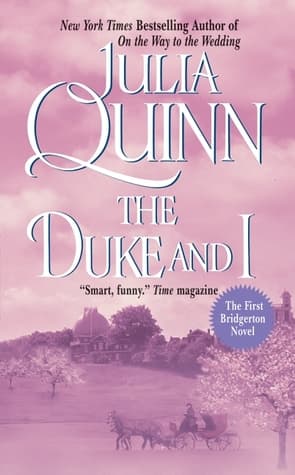
Synopsis
Covers the whole plot, including the ending.
- Difficulty
- Easy
- Pacing
- Moderate
- Mood
- Romantic, Witty, Charming, Passionate
- Read it if
- You enjoy charming, witty historical romances with a fake-relationship-to-real-love trope and steamy scenes.
- Skip it if
- You dislike historical settings, predictable romance plots, or stories with significant miscommunication between leads.
The Duke and I Plot Summary
Covers the whole plot, including the ending.
A Desperate Alliance
Daphne Bridgerton, after two social seasons, feels increasingly frustrated by her lack of suitable suitors. Eligible bachelors see her more as a friend, and her older brothers overshadow her. Meanwhile, Simon Basset, the new Duke of Hastings, has returned to London and is immediately surrounded by ambitious mothers and their daughters, all hoping to marry him. At a ball, Daphne, seeing Simon's problem and her own, suggests a plan: they will pretend to be courting. This arrangement will make Daphne seem desirable to other men, and make Simon appear unavailable, keeping persistent matchmakers away. Simon, at first unsure, agrees, finding the plan both entertaining and useful.
The Charade Begins
The fake courtship between Daphne and Simon quickly takes hold in London society, pleasing Lady Whistledown and annoying several mothers. They are seen dancing, talking closely, and spending time together at various social events. This public show of affection successfully deters Simon's pursuers, as he is now thought to be 'taken.' For Daphne, the plan also works; her perceived desirability by a duke suddenly makes other gentlemen interested in her, including the persistent Lord Berbrooke. The Bridgerton family, especially Daphne's mother Violet, is delighted, believing a real attachment is forming, unaware of their true arrangement.
Lord Berbrooke's Unwanted Advances
Lord Berbrooke, a rude and unpleasant man, begins to pursue Daphne with unwanted intensity, believing her available due to her apparent 'courtship' with Simon. He corners her in a garden during a ball and tries to force himself on her. Daphne, upset, tries to fight him off. Simon, seeing the scene, quickly steps in, punching Berbrooke and making sure Daphne is safe. This incident, while showing Simon's protective nature, also causes a small scandal. Later, the Bridgerton brothers, led by Anthony, uncover Berbrooke's past bad behavior, including a ruined former governess, and successfully force him to leave London, freeing Daphne from his unwelcome attention.
Developing Feelings
As Daphne and Simon spend more time together, their initial agreement to merely pretend begins to weaken. They share witty conversations, intimate talks, and moments of real connection. Daphne finds herself increasingly drawn to Simon's charm, intelligence, and unexpected kindness, realizing her feelings for him are becoming real. Simon, despite his strong decision against marriage, also finds himself enjoying Daphne's company more than he expected. He admires her spirit, wit, and compassion, and struggles to maintain the boundaries of their made-up relationship, feeling a growing, undeniable attraction to her. The lines between pretense and reality blur with each shared look and touch.
The Kiss
At an elegant ball, the tension between Daphne and Simon reaches a peak. After a dance, they find themselves in a private conservatory. The air is thick with unspoken emotions. Daphne, overwhelmed by her feelings and confused by Simon's mixed signals, confronts him, asking about their relationship. In a moment of strong passion, Simon kisses her deeply. The kiss is far from fake; it is passionate and real, surprising them both with its intensity and the undeniable feelings it awakens. This important moment breaks the illusion of their fake courtship, making them acknowledge the strong attraction and emotional bond that has grown between them.
Caught in the Act
Right after their passionate kiss in the conservatory, Daphne and Simon are discovered by Daphne's eldest brother, Anthony Bridgerton, who is furious at seeing such an intimate act. As the head of the Bridgerton family, Anthony feels Simon has damaged Daphne's reputation and demands satisfaction. He challenges Simon to a duel at dawn. The next morning, as they prepare to duel, Daphne steps in, stopping the fight and demanding that Simon marry her to protect her honor. Faced with either a duel to the death or marriage to Daphne, Simon reluctantly agrees to marry her, still struggling with his personal promise against having children.
A Marriage of Convenience (and Growing Affection)
Daphne and Simon marry in a quiet ceremony, quickly leaving for Clyvedon, Simon's family estate, for their honeymoon. At first, their physical intimacy is passionate and fulfilling, and Daphne believes Simon is falling in love with her. However, Simon remains emotionally guarded, consistently refusing to discuss children. He makes it clear that he cannot and will not have heirs, due to a deep promise he made to his abusive father on his deathbed: to end the Hastings line. Daphne, confused and hurt by his evasiveness and his refusal to consummate their marriage in a way that could lead to children, feels increasingly alone and unloved, despite their physical connection.
Daphne's Discovery and Simon's Secret
One night, Daphne realizes that Simon has been deliberately withdrawing before ejaculation to prevent conception, a method she had not known about. This discovery devastates her, as she feels betrayed and used. She confronts Simon, accusing him of deception and cruelty, understanding the full extent of his vow against having children. Simon, forced to explain, reveals the true, painful depth of his childhood trauma and his hatred for his father, and how his vow is a direct result of that abuse. The confrontation is explosive, leaving their new marriage in ruins, with Daphne feeling deeply hurt by Simon's lack of trust and his ultimate rejection of their potential future together.
Estrangement and Reconciliation
After their heated argument, Daphne and Simon enter a period of deep distance. They share the same house but barely speak, each hurt by the other. Daphne feels heartbroken by Simon's unwillingness to compromise and his perceived rejection of her desire for a family. Simon, meanwhile, struggles with his deep-seated vows and the pain of his past, realizing the harm he has caused Daphne. Eventually, during a country house party, Simon, seeing Daphne's true sadness and recognizing his own love for her, offers a heartfelt apology, admitting his fear and his love, and confessing that his vow was based on childish anger, not true belief, promising to try for a family.
A New Beginning
Following Simon's apology and his commitment to overcoming his past trauma, Daphne and Simon begin to heal their damaged marriage. They talk openly about their fears and desires, building a foundation of trust and understanding. Simon slowly starts to face the lingering pain of his childhood, realizing that his vow was a self-destructive act fueled by his father's cruelty, not a true reflection of his own desires. Their love deepens, and they actively begin trying for a family. The story ends with the promise of a future filled with children and happiness, with Daphne eventually giving birth to their first child, a daughter, and later, many more, fulfilling their shared dream.
Principal Figures
Daphne Bridgerton
Protagonist
The fourth Bridgerton child, known for her charm and wit, seeking a true love match.
Daphne is a spirited and intelligent young woman, the eldest Bridgerton daughter, who, despite her beauty and charm, struggles to find a suitable husband in her first two seasons. She is practical, kind, and possesses a sharp wit, often feeling overlooked by eligible bachelors who view her more as a friend or sister. Daphne deeply desires a family and a love match, and is determined to not settle for less. She is fiercely loyal to her family and possesses a strong moral compass. She is also surprisingly perceptive, often seeing through social facades.
Relationships: Simon Basset (Husband; initially a fake courtship partner, evolving into deep love and a challenging marriage.); Anthony Bridgerton (Eldest brother; protective and traditional.); Violet Bridgerton (Mother; supportive and eager for Daphne to marry well.); Colin Bridgerton (Brother; close friend and confidante.); Benedict Bridgerton (Brother; supportive and artistic.)
Simon Basset, Duke of Hastings
Protagonist
A handsome and enigmatic duke haunted by his past, determined never to marry or have children.
Simon is a tall, dark, and brooding duke, recently returned to London after years abroad. He is intelligent, charming when he chooses to be, and possesses a dry wit. Beneath his composed exterior, Simon carries deep emotional scars from his abusive childhood at the hands of his father, the previous duke, who resented his stammer. This trauma has led him to make a solemn vow never to marry or have children, thus ending the Hastings line as a final act of defiance against his father. He is fiercely independent and distrustful of intimacy, using his charm to keep people at a distance.
Relationships: Daphne Bridgerton (Wife; initially a fake courtship partner, evolving into deep love and a challenging marriage.); Lady Danbury (Godmother; a surrogate mother figure who encourages him to embrace life.); Duke of Hastings (father) (Deceased, abusive father whose cruelty shaped Simon's vow.); Lady Bridgerton (Violet) (Mother-in-law; a warm and welcoming figure who sees through his facade.)
Lady Violet Bridgerton
Supporting
The matriarch of the Bridgerton family, a loving and supportive mother.
Violet Bridgerton is the loving and devoted mother of eight children, including Daphne. She is a kind, intelligent, and perceptive woman, deeply invested in the happiness and well-being of her offspring. Having experienced a true love match with her late husband, she hopes for the same for her children. She is a comforting presence and a shrewd observer of society, often offering advice and guidance to Daphne, though she is initially unaware of the true nature of Daphne and Simon's courtship. She is a pillar of strength and affection for her family.
Relationships: Daphne Bridgerton (Daughter; provides maternal support and guidance.); Anthony Bridgerton (Eldest son; relies on him as the head of the family.); Edmund Bridgerton (late husband) (Deceased husband; their love story serves as an ideal for her children.)
Anthony Bridgerton
Supporting
The eldest Bridgerton brother and viscount, fiercely protective of his family's honor.
Anthony is the eldest Bridgerton sibling and the current Viscount Bridgerton. As the head of the family, he carries the weight of responsibility for his mother and younger siblings. He is fiercely protective of his sisters' reputations and honor, sometimes to a fault, as evidenced by his quick challenge to Simon. Anthony is generally traditional and takes his duties seriously, but he also has a hidden romantic side, though he attempts to suppress it. He is a strong presence in Daphne's life, always looking out for her best interests, even if his methods are sometimes impulsive.
Relationships: Daphne Bridgerton (Sister; fiercely protective of her honor.); Simon Basset (Brother-in-law; initially an antagonist, later accepts him.); Lady Violet Bridgerton (Mother; consults her on family matters.)
Lady Danbury
Supporting
Simon's formidable godmother, a sharp-witted and influential matriarch.
Lady Danbury is Simon Basset's godmother and a formidable figure in London society. Known for her blunt honesty, sharp wit, and no-nonsense attitude, she is a respected and sometimes feared matriarch. She raised Simon after his mother's death and his father's neglect, becoming a surrogate parent. Lady Danbury sees through social pretensions and is one of the few people who can challenge Simon. She genuinely cares for him and pushes him to overcome his past and find happiness, often acting as a catalyst for his growth.
Relationships: Simon Basset (Godson; a mentor and surrogate mother figure.); Daphne Bridgerton (Niece-in-law; approves of her and encourages her to help Simon.)
Lady Whistledown
Mentioned
The anonymous author of a scandalous society paper, observing and influencing London's elite.
Lady Whistledown is the anonymous author of the highly popular and influential society papers that chronicle the goings-on of the Ton. Her sharp observations, witty commentary, and often scandalous revelations can make or break reputations. She serves as a narrative device, providing exposition and reflecting society's reactions to events, particularly the courtship between Daphne and Simon. Her identity is a mystery to the characters, but her influence is undeniable, shaping public perception and adding an element of suspense and intrigue to the social season.
Relationships: Daphne Bridgerton (Subject of her society papers.); Simon Basset (Subject of her society papers.)
Themes & Insights
The Power of Appearance vs. Reality
The novel explores the difference between how things appear in society and the real truth. Daphne and Simon's entire courtship is a carefully built facade meant to control public opinion. While initially successful in deterring suitors for Simon and attracting them for Daphne, the pretense eventually blends with real emotion. This theme shows how society's judgment can be easily swayed by appearances, but true feelings and intentions always come out, as seen when Daphne and Simon's 'fake' kiss leads to real consequences and feelings.
“You may not have the best of reputations, but I trust you with my life. And that, dear brother, is more than I can say for most men in this room.”
Trauma and Forgiveness
Simon's character is deeply shaped by the severe emotional and verbal abuse he experienced from his father. His promise to never marry or have children comes directly from this trauma, a desperate attempt to break away from a painful past. The novel looks at the lasting impact of childhood trauma on adult relationships and choices. Simon's journey involves facing this past, realizing his vow was self-destructive, and ultimately learning to forgive, not necessarily his father, but himself, allowing himself to embrace love and a future he once rejected. Daphne's love helps him heal.
“I made a vow. To my father, on his deathbed. I swore I would never marry. I swore I would never have children. I swore I would end the Hastings line.”
Societal Expectations and Personal Desires
Both Daphne and Simon are limited by the strict social expectations of Regency England. Daphne faces great pressure to marry and secure her future, while Simon, as a duke, is expected to marry and have an heir. Their initial fake courtship is a direct response to these pressures, an attempt to navigate society on their own terms. However, as their personal desires for love and connection grow, they find themselves clashing with these very expectations. The novel explores the tension between following social norms and seeking individual happiness, especially regarding marriage and family.
“One does not simply walk away from a duke.”
The Nature of Love and Intimacy
The book explores different aspects of love and intimacy, from the first spark of attraction to the complexities of a marriage. It looks at physical intimacy, emotional connection, and the importance of talking to each other. Daphne and Simon's journey shows that love is not just about grand gestures but also about understanding, trust, and vulnerability. Their struggles with Simon's secret and Daphne's misunderstanding reveal that true intimacy requires honest communication and the willingness to face difficult truths, ultimately leading to a deeper, more profound love built on mutual respect and shared dreams.
“I love you,” he whispered. “I love you more than I have ever loved anything. I love you more than I love myself.”
Plot Devices & Literary Techniques
The Fake Courtship Trope
A classic romance trope where two characters pretend to be in a relationship, only to fall in love for real.
This central plot device drives the entire narrative. Daphne and Simon's agreement to feign a courtship is the catalyst for their initial interactions and the development of their relationship. It allows them to spend extensive time together, leading to intimate conversations and a gradual blurring of the lines between pretense and genuine feeling. This trope provides built-in conflict and irony, as they constantly remind themselves and each other of the 'fake' nature of their bond, even as their hearts betray them. It also cleverly addresses their individual societal problems, making their initial alliance logical.
Lady Whistledown's Society Papers
An anonymous gossip column that provides narrative exposition and social commentary.
Lady Whistledown's papers serve multiple functions: they introduce chapters, provide social context, reflect public opinion, and often foreshadow events or comment on character actions. Her witty and sometimes scathing observations act as a Greek chorus, guiding the reader through the social intricacies of the Ton. She is an unseen character who influences the plot by shaping reputations and public perception, often highlighting the hypocrisy and absurdities of high society. Her reports are crucial in demonstrating the effectiveness of Daphne and Simon's fake courtship and the reactions it elicits.
Childhood Trauma and Vows
Simon's past abuse by his father and his subsequent vow against having children as a major source of internal conflict.
Simon's childhood trauma and the vow he made to his dying father are the primary internal conflict for his character and the central obstacle to his happiness with Daphne. This device provides a deep psychological motivation for his actions and his resistance to marriage and family. It adds a layer of complexity and pathos to his character, explaining his guarded nature and his struggle to embrace love. The resolution of this trauma, through Daphne's love and his own introspection, is key to the story's emotional climax and the couple's ultimate reconciliation.
The Misunderstanding/Lack of Communication
A common romance device where key information is withheld or misinterpreted, creating conflict.
This device is particularly evident in the latter half of the book after Daphne and Simon's marriage. Simon's deliberate withholding of his method of birth control and Daphne's subsequent misunderstanding of conception create a significant emotional rift. This lack of open communication, stemming from Simon's fear and Daphne's inexperience, leads to a painful betrayal and estrangement. It highlights the importance of honesty and open dialogue in a marriage, and its resolution is crucial for the couple to move past their initial difficulties and build a foundation of trust.
The Duke and I Quotes
“I do not want to be a duchess if it means I have to be a simpering, brainless ninny.”
“You are, without a doubt, the most exasperating, infuriating, and utterly captivating woman I have ever met.”
“One does not simply 'decide' to fall in love. It happens, or it doesn't.”
“I may not have been born a duke, but I was born a gentleman. And a gentleman does not break his word.”
“Sometimes, the only way to get what you want is to pretend you don't want it at all.”
“There is nothing more irritating than a man who thinks he knows what's best for you.”
“A man should never underestimate the power of a woman's determination, especially when she's trying to get her own way.”
“It is a truth universally acknowledged, that a single man in possession of a good fortune, must be in want of a wife. Or, at least, his mother is.”
“I do not wish to marry. I wish to be left alone.”
“Perhaps the greatest adventure of all is to truly know another person, flaws and all.”
“He might be a duke, but he was still a man, and men, Daphne had discovered, were rather predictable creatures when it came to their affections.”
“Love, she was learning, wasn't always a grand declaration. Sometimes it was a quiet understanding, a shared glance, a hand held in the dark.”
“Happiness, she realized, was not something one found, but something one created.”
“He had never known that a woman's laughter could be so utterly intoxicating, so completely irresistible.”
Quiz
10 questions on the plot and the characters. Each answer comes with a short explanation.
Question 1
What is the initial primary reason for Simon Basset and Daphne Bridgerton's fake courtship?
- To make Daphne's former suitor jealous.
- To keep Simon free from the pursuit of marriage-minded mothers and help Daphne attract other suitors.
- To win a wager against Simon's friends.
- To secure Daphne's dowry by appearing to have a duke's interest.
Show answer
B. To keep Simon free from the pursuit of marriage-minded mothers and help Daphne attract other suitors. The synopsis clearly states their plan is 'to keep Simon free from marriage-minded society mothers' and for Daphne to 'attract some worthy suitors now that it seems a duke has declared her desirable.'
Question 2
Who is Simon Basset's best friend, whose sister is Daphne Bridgerton?
- Colin Bridgerton
- Benedict Bridgerton
- Anthony Bridgerton
- Gregory Bridgerton
Show answer
C. Anthony Bridgerton The book is part of the Bridgerton series, and Anthony is the eldest Bridgerton brother and Daphne's older brother, making him Simon's best friend.
Question 3
What is the name of the anonymous gossip columnist who reports on London society?
- Lady Danbury
- Lady Whistledown
- Lady Featherington
- Lady Bridgerton
Show answer
B. Lady Whistledown The very first line of the provided text mentions 'Lady Whistledown’s Society Papers, April 1813', identifying her as the gossip columnist.
Question 4
What significant personal detail about Simon Basset is a major source of conflict and misunderstanding regarding their future?
- He is secretly engaged to another woman.
- He has vowed never to marry.
- He has vowed never to have children.
- He plans to leave England permanently.
Show answer
C. He has vowed never to have children. A central conflict in the book stems from Simon's deep-seated vow not to have children, a vow made in rebellion against his abusive father, which Daphne initially misunderstands.
Question 5
What is Daphne's reputation in society before her fake courtship with Simon?
- She is considered a great beauty but lacking in wit.
- She is well-liked and considered amiable, but not particularly sought after by suitors.
- She is known for her scandalous behavior.
- She is considered a wallflower, rarely attending social events.
Show answer
B. She is well-liked and considered amiable, but not particularly sought after by suitors. Daphne is described as 'lovely—and almost-on-the-shelf', indicating she is pleasant but hasn't attracted serious suitors, hence the need for the scheme to make her more desirable.
Question 6
What event ultimately forces Simon and Daphne to marry, despite their initial 'sham' courtship?
- They are caught in a compromising position by Lady Whistledown.
- Daphne's brother Anthony catches them in a compromising position.
- Simon's family demands they marry to avoid scandal.
- Daphne is discovered to be pregnant.
Show answer
B. Daphne's brother Anthony catches them in a compromising position. They are discovered by Anthony Bridgerton kissing in a garden, which, in the social context of the time, necessitates marriage to protect Daphne's reputation.
Question 7
What is the primary theme explored through Simon's backstory and his relationship with his father?
- The importance of social status and wealth.
- The destructive nature of parental expectations and the cycle of abuse.
- The challenges of maintaining a secret identity.
- The pursuit of revenge against those who wronged him.
Show answer
B. The destructive nature of parental expectations and the cycle of abuse. Simon's stutter and his father's cruel reaction to it, leading to Simon's vow never to have children, highlight the theme of overcoming a damaging paternal legacy.
Question 8
What specific tactic does Daphne employ in an attempt to make Simon break his vow regarding children?
- She threatens to leave him if he doesn't change his mind.
- She secretly tampers with her birth control methods.
- She tries to convince his best friend, Anthony, to intervene.
- She stages a public display of affection to pressure him.
Show answer
B. She secretly tampers with her birth control methods. Daphne's desperate act of secretly trying to conceive by not using the withdrawal method Simon practices is a major point of marital conflict.
Question 9
What is the Duke of Hastings' family name?
- Bridgerton
- Sheffield
- Basset
- Clyvedon
Show answer
C. Basset The synopsis clearly states 'Simon Basset is on the verge of proposing...', indicating Basset is his surname.
Question 10
How does Daphne initially perceive her feelings for Simon as their fake courtship progresses?
- She views him as a brotherly figure and nothing more.
- She is annoyed by his constant presence and wishes he would leave.
- She finds herself genuinely falling in love with him, despite their agreement.
- She remains completely detached, seeing it only as a beneficial arrangement.
Show answer
C. She finds herself genuinely falling in love with him, despite their agreement. The synopsis states, 'somehow Daphne is falling for the dashing duke… for real! And now she must do the impossible and convince the handsome rogue that their clever little scheme deserves a slight alteration, and that nothing makes quite as much sense as falling in love…'
The Duke and I FAQ
What is the central premise of 'The Duke and I'?
The book centers on Daphne Bridgerton and Simon Basset, the Duke of Hastings, who enter into a fake courtship. Their agreement is designed to elevate Daphne's social standing and ward off persistent debutantes from Simon, but their pretense soon blurs the lines of their initial intentions.
Who is Lady Whistledown, and what role does she play in the story?
Lady Whistledown is the anonymous author of a scandalous society paper that chronicles the ton's comings and goings, particularly focusing on gossip and romantic entanglements. Her reports often influence public opinion and add significant pressure to characters like Daphne and Simon, shaping their interactions and decisions.
What is Simon Basset's primary motivation for entering the fake courtship?
Simon's main motivation is to escape the relentless pursuit of ambitious mothers eager to marry off their daughters to a duke. He also holds a deep-seated vow never to marry or have children, stemming from his traumatic childhood relationship with his emotionally abusive father.
What are Daphne Bridgerton's initial goals for the fake courtship?
Daphne's initial goal is to increase her desirability in the eyes of other eligible bachelors. By appearing to be courted by a duke, she hopes to attract more serious suitors and avoid being considered 'on the shelf' as she faces another social season.
How does the fake courtship between Daphne and Simon evolve into genuine feelings?
As Daphne and Simon spend more time together, engaging in witty banter, shared secrets, and intimate dances, their initial pretense gradually gives way to genuine affection and undeniable chemistry. The forced proximity and shared vulnerability expose their true feelings for each other, making the 'sham' increasingly real.
What significant event forces Daphne and Simon into a real marriage?
Daphne and Simon are caught in a compromising position by Lady Whistledown's brother and Daphne's older brother, Anthony. To protect Daphne's reputation and avoid a scandal that would ruin her, Simon is compelled to marry her, despite his earlier vow never to wed.
What is the true reason behind Simon's vow never to have children?
Simon's vow stems from a deep-seated trauma related to his abusive father, who scorned him as a child due to his stutter and only cared about producing an heir. Simon vowed to end his family line to spite his father's memory and prevent himself from becoming like him.
How does Daphne discover Simon's secret regarding his ability to have children?
Daphne overhears a conversation between Simon and his old tutor, Lady Danbury, where Simon clarifies that he *can* have children but *chooses* not to, to spite his deceased father. This revelation deeply wounds Daphne, as she believed he was physically incapable.
What role does the 'withdrawal' play in the conflict between Daphne and Simon?
The 'withdrawal' refers to Simon's method of contraception, which Daphne discovers he has been intentionally using to prevent conception. This discovery leads to a major conflict, as Daphne feels betrayed and manipulated, believing Simon deliberately misled her about his desire for children.
Analyze Simon's internal conflict regarding his father's legacy.
Simon is deeply scarred by his father's cruelty and rejection, which manifests as an intense desire to defy his father's expectations even after death. His vow to end the Basset line is a desperate attempt to assert control and prevent himself from perpetuating a cycle of coldness, yet it also traps him in his past, preventing true happiness.
How does Daphne's upbringing within the Bridgerton family influence her psychological approach to marriage and family?
Daphne's upbringing in a loving, boisterous family with many siblings instilled in her a deep desire for a large, happy family of her own. This contrasts sharply with Simon's isolated past and makes her inability to conceive, or rather Simon's prevention of it, particularly devastating to her.
Discuss the psychological impact of Simon's stutter on his character development.
Simon's childhood stutter, cruelly mocked by his father, contributed significantly to his feelings of inadequacy and his deep-seated resentment. While he largely overcame it, the memory of his father's disdain fueled his determination to be strong and independent, but also fostered a fear of vulnerability and a tendency to keep others at arm's length.
How does Daphne's initial naivety about intimacy and marriage evolve throughout the book?
Daphne begins the book with a limited, idealized understanding of marital intimacy and the mechanics of conception, influenced by the polite society's euphemisms. Through her marriage to Simon and her eventual discovery of his methods, she gains a much more mature, albeit painful, understanding of both physical intimacy and the complexities of male desire and control.
Is Simon's initial deception about his ability to have children justifiable given his traumatic past?
This is debatable. While Simon's traumatic past explains his deep-seated aversion to fatherhood, many argue it does not justify his deception towards Daphne. His failure to be fully honest about his intentions regarding children constitutes a significant betrayal of trust, regardless of his personal pain.
How does 'The Duke and I' challenge or uphold traditional Regency romance tropes?
The book both upholds and challenges tropes. It features a rake and an innocent heroine, and a marriage of convenience, but it subverts the expectation of a simple 'happily ever after' by introducing complex psychological trauma and significant marital conflict, particularly around the issue of procreation and deception.
Could Daphne have handled the conflict over children differently to achieve a better outcome?
Some readers might argue Daphne could have been more direct in discussing her desires for children with Simon *before* marriage, or sought more clarity on his 'inability'. However, given the societal constraints and her own limited knowledge, her actions were largely reactive to Simon's deliberate obfuscation, making her options limited.
What is the significance of the epilogue in resolving Simon's internal conflict?
The epilogue, showing Simon holding his child and anticipating another, is crucial. It signifies Simon finally overcoming his father's legacy and breaking the cycle of bitterness. His newfound joy in fatherhood demonstrates that he has healed from his past trauma and embraced a future he once vehemently rejected, finding true happiness with Daphne.
How does the author use the Bridgerton family dynamics to highlight Daphne's character?
The close, loving, and slightly chaotic Bridgerton family serves as a strong contrast to Simon's isolated upbringing. Daphne's comfort and confidence within her large family underscore her desire for a similar domestic life, making Simon's resistance to having children all the more heartbreaking and highlighting her resilience and capacity for love.
About the author

Julia Quinn is an American author known for her historical romance novels, particularly set in the Regency era. Her notable works include "The Duke and I," "The Viscount Who Loved Me," "Romancing Mister Bridgerton," "When He Was Wicked," "Just Like Heaven," and "The Secret Diaries of Miss Miranda Cheever." Quinn's writing often features witty dialogue and strong character development, contributing to her popularity in the genre.
Similar books
- The Viscount Who Loved Me
Julia Quinn
4.2 (53k) average on GoodreadsHistorical FictionAnother Bridgerton sibling's romance with a similar historical setting and witty dialogue.
- Pride and Prejudice
Jane Austen
4.3 (3M) average on GoodreadsHistorical FictionClassic enemies-to-lovers romance in a historical setting with societal pressures and witty banter.
- A Kingdom of Dreams
Judith McNaught
4.2 (45k) average on GoodreadsHistorical FictionWhile McNaught's novel, also a historical romance, shares the theme of a strong-willed heroine and a powerful hero, 'The Duke and I' distinguishes itself with its lighter, more comedic tone and less emphasis on epic, sweeping historical events. Quinn prioritizes sparkling dialogue and character-driven conflict over McNaught's often more intense, dramatic external plotlines and darker themes of abduction and revenge. McNaught's historical detail is often more rigorously researched and integrated.
- To Kill a Mockingbird
Harper Lee
4.3 (4.5M) average on GoodreadsHistorical FictionIn the 1930s Jim Crow South, Harper Lee writes about racial injustice, moral growth, and the quiet courage of a lawyer father, Atticus Finch, as seen through his young daughter's eyes.
- The Great Gatsby
F. Scott Fitzgerald
3.9 (3.8M) average on GoodreadsHistorical FictionIn the opulent Roaring Twenties, a mysterious millionaire's lavish parties hide his desperate, tragic pursuit of a lost love, exposing the emptiness within the American Dream.
- Angels & Demons
Dan Brown
3.9 (2.7M) average on GoodreadsThrillerA Harvard symbologist races through Rome's ancient sites, deciphering cryptic clues to unmask the Illuminati and stop a vengeful plot to destroy the Vatican with a stolen antimatter weapon.




Enjoyed the summary?
A summary gives you the shape of the book. The book itself has the detail, the examples and the voice.
Find The Duke and I on AmazonAs an Amazon Associate, BookBrief earns from qualifying purchases. How we're funded