
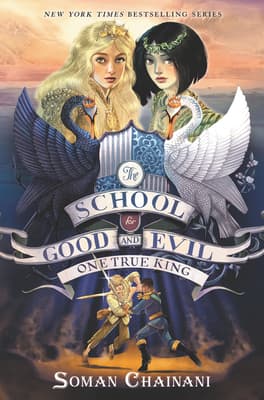
Synopsis
Covers the whole plot, including the ending.
- Difficulty
- Medium
- Pacing
- Fast
- Mood
- Epic, Emotional, Climactic, Romantic, Magical
- Read it if
- You've followed Sophie and Agatha's journey from the beginning and want to see how their epic fairy tale concludes.
- Skip it if
- You haven't read the previous books in the series, as this is the final installment and heavily relies on prior plot points.
One True King Plot Summary
Covers the whole plot, including the ending.
The Proposal and the Betrayal
King Tedros of Camelot, after uniting the Endless Woods, proposes to Agatha in a grand ceremony. Their upcoming marriage promises a new time of peace and the end of the Age of Evil. But their happiness is short-lived when Sophie, now Queen of the Northern Woods and seemingly evil, interrupts the celebration. She reveals she is pregnant with Rafal's child, a truth that shocks Agatha and makes Tedros question everything. Sophie's manipulation and Rafal's lingering power restart old fights and throw the Woods into chaos, threatening to undo the peace Tedros worked to create.
The Trial of Sophie
Sophie is put on trial in Camelot for her past wrongs and her part in Rafal's rule. Agatha, still upset by Sophie's news and her own mixed feelings, is chosen as the prosecutor by Tedros. The trial becomes a public show, forcing both girls to face their shared past and their complicated friendship. Sophie, in her defense, tries to say she was a victim of circumstance and Rafal's power, but her past actions, especially her alliance with the School Master, are held against her. The trial shows the deep divisions and unsolved issues in the Endless Woods.
The Threat of Rhian and Japeth
During the chaos, two new threats appear: Rhian and Japeth, King Arthur's long-lost sons, who believe they should be the kings of Camelot. They challenge Tedros's claim to the throne, using their royal background to gain support among unhappy groups in the Woods. Their arrival makes the political situation more complex, as many in the Woods question Tedros's right to rule, especially with Sophie's past and her link to Rafal. Rhian, charming and magnetic, quickly gains followers, while Japeth, more moody, shows a darker goal. Their presence further destabilizes the kingdom and pushes Tedros to prove his worth as king.
The Quest for the True King's Sword
To counter Rhian and Japeth's claims and secure his rule, Tedros is told to get Excalibur, King Arthur's legendary sword, which only the true king can use. He starts a dangerous journey, with his loyal knights, including Hort and Nicola. The journey tests his resolve, leadership, and belief in himself. Along the way, he faces magical creatures, dangerous lands, and inner doubts about his ability to live up to his father's name. This quest is not just for a sword, but for self-discovery and proof of his own goodness and strength as a leader.
Sophie's Plea and Agatha's Dilemma
After her trial, Sophie, desperate and weak, asks Agatha for help, stressing their strong bond. Despite her anger and hurt, Agatha is torn between her duty to Camelot and her deep loyalty to Sophie. She considers if Sophie might truly be trying to change, or if this is another one of her tricks. This inner struggle highlights the main idea of their friendship — its lasting nature despite constant betrayals and the unclear lines between good and evil that define their relationship. Agatha's choice will have big effects on both their futures.
The Revelation of Japeth's True Nature
As the conflict grows, Japeth's truly evil nature starts to show. It is revealed that he has been tricking Rhian and is linked to a strong, old evil that wants to plunge the Endless Woods into endless darkness. His goal goes beyond just ruling Camelot; he wants to undo the balance of good and evil entirely. This discovery creates a new, more frightening enemy, shifting the focus from a sibling fight to a battle against a universal threat. The stakes are much higher, as the very existence of the fairy tale world is now in danger, requiring everyone to unite against this growing darkness.
The Return of the School Master's Magic
Japeth successfully uses the old, powerful magic of the School Master, the series' original villain. He uses this dark energy to corrupt the Woods, turning its people against each other and powering his own twisted plans. The familiar dark forest magic, once thought gone, returns with terrible force, appearing as a widespread evil that warps lands and minds. This return forces Sophie, Agatha, and Tedros to face the lasting effects of Rafal and the School Master, realizing that the fight for good is never truly over and that their past struggles are directly connected to the current threat.
Sophie's Sacrifice and Redemption
In a key moment, Sophie, driven by her love for her unborn child and a strong desire to make amends, makes a selfless sacrifice to stop Japeth's plans. She uses her unique link to both good and evil magic, channeling a powerful force to counter Japeth's dark magic. This heroic act shows the end of her character's journey, proving her ability for true goodness and her willingness to put others before herself, even at great personal cost. Her sacrifice not only saves the Woods but also changes how she is remembered, proving that she can be a force for good despite her past.
Agatha's True Love and the King's Choice
With Sophie's sacrifice, Agatha fully accepts her love for Tedros, realizing their bond is the real foundation for the Woods' future. Tedros, however, faces a hard choice: to rule as a traditional king and keep old ways, or to take a new path that includes the lessons learned from Sophie's complex journey and the unclear lines of good and evil. His decision will shape the future of Camelot and the Endless Woods, showing a move away from the strict black-and-white morality of old fairy tales towards a more complex understanding of leadership and justice.
The New Era of Camelot
Tedros, with Agatha, chooses a path that accepts the complexities of the Endless Woods, moving past strict definitions of good and evil. He creates a new form of leadership, one that values understanding, empathy, and the grey areas of morality. Camelot becomes a place where even those who made mistakes can find redemption, and where the balance of the Woods is kept through wisdom rather than strict obedience to old laws. This new era marks the growth of all characters and the maturing of the fairy tale world itself, promising a future built on hope and a more open idea of 'happily ever after'.
One True King Characters
Agatha
Protagonist
The dark-clad girl from Gavaldon destined to be a queen.
Agatha is initially presented as a cynical, practical, and often grumpy girl who despises fairy tales and resists her destiny. She possesses a deep loyalty to Sophie, despite their tumultuous relationship, and a strong sense of justice. Throughout the series, she grapples with her own identity, often feeling like an outsider, and struggles to reconcile her 'good' nature with her love for Sophie and her own hidden complexities. Her strength lies in her unwavering moral compass and her ability to see beyond superficial appearances.
Relationships: Sophie (Best friend, rival, co-protagonist; deeply complex, love-hate bond); Tedros (True love, fiancé/husband, co-ruler); Hort (Friend, admirer)
Sophie
Protagonist
The beautiful, self-centered girl from Gavaldon who yearns for a fairy tale life.
Sophie is beautiful, vain, and obsessed with being a princess. She is driven by a desire for love, attention, and a perfect 'happily ever after,' often at the expense of others. Her journey is marked by a constant struggle between her inherent goodness and her susceptibility to evil and manipulation. She is incredibly powerful, possessing a unique connection to both good and evil magic. Despite her flaws, she craves acceptance and love, and her actions, though often misguided, stem from a deep-seated insecurity and a desire to belong.
Relationships: Agatha (Best friend, rival, co-protagonist; deeply complex, love-hate bond); Rafal (Former lover, father of her child; complicated, manipulative); Hort (Admirer, friend)
Tedros
Protagonist
The brave, sometimes arrogant, prince of Camelot and son of King Arthur.
Tedros is the quintessential fairy tale prince: handsome, courageous, and a skilled fighter. He is initially arrogant and struggles with the immense pressure of living up to his legendary father, King Arthur. His character arc involves learning humility, true leadership, and the complexities of love and justice. He is deeply devoted to Agatha and strives to be a good king for the Endless Woods, often battling his own insecurities and the expectations placed upon him. He represents the traditional ideals of good, but must learn to adapt to a changing world.
Relationships: Agatha (True love, fiancé/husband, co-ruler); Sophie (Former crush, rival, complex relationship due to Agatha); King Arthur (Father, influential figure, legacy he strives to uphold)
Hort
Supporting
The half-werewolf boy from the School for Evil, eternally devoted to Sophie.
Hort is a loyal, kind-hearted, and often clumsy boy from the School for Evil. Despite his appearance and his initial placement in the School for Evil, he possesses a good heart and an unwavering devotion to Sophie. He often acts as comic relief but also provides genuine emotional support and proves his bravery when it truly matters. He struggles with his identity as a 'villain' and yearns for acceptance, particularly from Sophie, whom he loves unconditionally. His journey is about finding his own worth and purpose beyond his crush.
Relationships: Sophie (Unrequited love, loyal friend); Nicola (Friend, fellow knight); Tedros (Loyal knight, friend)
Nicola
Supporting
A pragmatic and loyal knight in Tedros's service.
Nicola is a practical, no-nonsense knight who serves Tedros faithfully. She is a strong, capable warrior and a voice of reason amidst the chaos. She is loyal to Camelot and its ideals, but also possesses a compassionate side, particularly towards Hort. Nicola represents the steadfast commitment to duty and justice, providing a grounded perspective to the often-dramatic events unfolding around her. Her strength lies in her reliability and her unwavering support for her king and her friends.
Relationships: Tedros (Loyal knight, trusted advisor); Hort (Friend, comrade-in-arms)
Rhian
Antagonist
One of King Arthur's supposed sons, challenging Tedros for the throne.
Rhian is introduced as one of King Arthur's long-lost sons, a charismatic and seemingly noble figure who challenges Tedros's claim to the throne. He is charming and persuasive, easily garnering support from those dissatisfied with Tedros's rule. He embodies the superficial appeal of traditional royalty and a perceived 'pure' lineage. Initially, he appears to be a legitimate rival, but his true nature and motivations are later revealed to be more complex and manipulated by his brother, Japeth. He represents the danger of blind ambition and the ease with which one can be misled.
Relationships: Japeth (Brother, manipulator); Tedros (Rival for the throne)
Japeth
Antagonist
The true mastermind behind the challenge to Tedros, driven by ancient evil.
Japeth is the other supposed son of King Arthur, but he is far more sinister than his brother, Rhian. He is the true antagonist, a brooding and manipulative figure who secretly harbors a desire to unleash ancient dark magic and plunge the Woods into chaos. He is cunning, ruthless, and driven by a deep-seated resentment and a connection to the School Master's original evil. Japeth represents the ultimate threat to the balance of good and evil, embodying pure, unadulterated malevolence and a desire to unravel the very fabric of fairy tales.
Relationships: Rhian (Brother, pawn); The School Master (Rafal) (Spiritual successor to his dark magic)
Rafal (The School Master)
Mentioned
The former School Master and Sophie's deceased lover, whose legacy lingers.
Rafal, the former School Master, is deceased but his influence looms large over Sophie and the Endless Woods. He was a powerful and manipulative figure who embodied the seductive nature of evil. His actions set in motion many of the conflicts that plague the characters, particularly Sophie, with whom he shared a twisted love. His legacy is felt through Sophie's pregnancy and the lingering dark magic that Japeth seeks to harness. He represents the enduring power of past choices and the difficulty of truly escaping one's past connections.
Relationships: Sophie (Former lover, father of her child); Japeth (Spiritual successor to his dark magic)
One True King Themes
The Nuance of Good and Evil
This theme explores the idea that good and evil are not simple opposites, but rather complex forces within people and the world. Sophie's whole journey, from villain to hero, shows this, as she constantly deals with her ability for both. Agatha, too, struggles with her 'good' identity when her loyalty to Sophie is tested. Japeth's appearance, as he tries to destroy the balance, forces all characters to face the grey areas and the need to understand, rather than just judge, different kinds of magic and morality. The book ultimately argues for a world where good is not defined by purity, but by conscious choices and the ability to make amends, as seen in Sophie's final sacrifice.
“Good isn't a power. It’s a choice.”
Redemption and Second Chances
The idea of redemption is key, especially for Sophie. Throughout the series, she makes bad choices, but this last book offers her a way to truly make up for them. Her pregnancy with Rafal's child, at first seen as a sign of her past evil, becomes a reason for her selfless actions. Her sacrifice to save the Woods and her child shows her complete change. The story suggests that even those who have fallen furthest can find their way back to goodness through true selflessness and love. This theme also applies to how the Woods must learn to forgive and accept those who made mistakes, making way for a more inclusive future for Camelot.
“Perhaps 'happily ever after' isn't about being perfect. It's about being true.”
True Leadership and Legacy
Tedros's journey is a deep look at what it means to be a true king. He first struggles with his famous father, King Arthur, and the traditional expectations of royalty. The challenges from Rhian and Japeth force him to look beyond family line and brute strength. He learns that true leadership needs not just courage, but wisdom, empathy, and the ability to adapt to a changing world. His final decision to create a Camelot that accepts the complexities of the Woods, rather than forcing strict rules, shows his growth into a king who makes his own legacy, one built on understanding and a new idea of justice, instead of just repeating the past.
“A true king doesn't just inherit a crown. He earns it with every choice.”
The Power of Friendship and Love
At its core, the series, and especially this last book, is about the lasting power of Sophie and Agatha's bond, and the romantic love between Agatha and Tedros. Despite betrayals, rivalries, and dangerous conflicts, Sophie and Agatha's friendship continues, proving to be as strong as any magic. Their complex relationship is pushed to its limits, but in the end, their love for each other, however imperfect, helps them grow. Similarly, Tedros and Agatha's love for each other is shown as a stable, uniting force that helps them overcome problems and lead the Woods into a new era. These relationships are the emotional anchors of the story.
“Some loves are meant to break you. Others are meant to make you.”
Breaking Free from Destiny
The characters, especially Sophie and Agatha, constantly fight against set roles and the expectations placed on them by the School for Good and Evil, and by fairy tale ideas themselves. Sophie, at first meant for evil, fights to make her own path and proves that fate is not fixed. Agatha, the 'good' princess, accepts her own complexities. The whole story questions the idea of a fixed 'Ever After' and instead supports the idea that people can create their own futures, even if it means changing the rules of their world. This theme ends with the creation of a new Camelot that is not tied to old prophecies or strict categories.
“Your story isn't written in the stars, but in the choices you make.”
Plot Devices & Literary Techniques
The Sword in the Stone (Excalibur)
A legendary artifact used to prove rightful kingship.
Excalibur serves as a traditional symbol of legitimate rule and a plot device to challenge and validate Tedros's claim to the throne. Its retrieval becomes a quest for Tedros, forcing him to confront his own worthiness and leadership abilities. The success or failure in wielding it would either solidify his position or empower his rivals, Rhian and Japeth. It grounds the fantastical elements in Arthurian legend and provides a tangible goal for the protagonist, while also representing the weight of history and expectation upon him.
The Pregnancy of Sophie
A personal and narrative catalyst for Sophie's redemption.
Sophie's pregnancy with Rafal's child is a crucial plot device. It initially serves as a source of conflict and betrayal, further complicating her relationship with Agatha and Tedros. However, it ultimately becomes the driving force behind Sophie's profound transformation and selfless sacrifice. The child represents her last connection to Rafal and her first step towards unconditional love, pushing her to choose good over evil. It adds a layer of vulnerability and humanity to her character, making her redemption more impactful and believable, and elevates the stakes of the final conflict.
The Resurgence of the School Master's Magic
A returning dark force that threatens to unbalance the Woods.
The re-emergence of the School Master's dark magic, channeled by Japeth, acts as a major plot device to raise the stakes and provide a formidable, overarching antagonist. It connects the current conflict to the series' foundational lore and the initial battle between good and evil. This familiar threat forces the protagonists to confront the lingering consequences of past events and underscores the cyclical nature of conflict in the Woods. It also serves to unite the characters against a common, existential enemy, moving beyond their personal squabbles.
The Two Sons of Arthur
A classic literary trope used to challenge the protagonist's legitimacy.
Rhian and Japeth, presented as King Arthur's long-lost sons, embody a classic literary trope of usurpers or challengers to the throne. This device creates external conflict for Tedros, forcing him to defend his claim not just through strength, but through wisdom and true leadership. It serves to explore themes of lineage versus merit. More importantly, it allows for the revelation of Japeth as the true, darker antagonist, initially masking his evil intent behind the guise of a legitimate challenger, thus adding layers of deception and suspense to the plot.
One True King Quotes
“There are no fairy tales here, children. Not anymore.”
“Love isn't a story. It's a choice.”
“A king doesn't just rule his people. He rules himself.”
“To save a world, sometimes you have to break it first.”
“Even villains have their own fairy tales, if you look closely enough.”
“The greatest magic isn't in spells, but in the hearts that wield them.”
“Sometimes, the only way to find your true self is to get lost.”
“A crown doesn't make a king. The king makes the crown.”
“Hope is a dangerous thing, but despair is far worse.”
“The past isn't a prison, unless you let it be.”
“True friendship isn't about always agreeing, but about always being there.”
“Every ending is just a new beginning, waiting to be written.”
“You can't save everyone, but you can save someone.”
“The greatest power is the power to choose your own story.”
Quiz
10 questions on the plot and the characters. Each answer comes with a short explanation.
Question 1
What is the primary power that Agatha must utilize to have any chance against Sophie in their final confrontation?
- Her ability to summon creatures from the Endless Woods.
- Her love for Tedros and the people of Camelot.
- Her mastery of ancient Ever After spells.
- Her inherited powers from her witch mother.
Show answer
B. Her love for Tedros and the people of Camelot. Agatha's true strength and the source of her power against Sophie's darkness is ultimately her unwavering love and selflessness, particularly for Tedros and her kingdom.
Question 2
What entity or force does Sophie merge with or draw power from to become the 'One True King' of Evil?
- The spirit of the original School Master.
- The collective darkness of all Ever Never students.
- The void and the source of all evil in the multiverse.
- The power of Excalibur, stolen from Tedros.
Show answer
C. The void and the source of all evil in the multiverse. Sophie seeks to become the ultimate ruler of both good and evil, eventually merging with or drawing power from the very essence of the void and evil itself.
Question 3
What happens to Tedros's leadership and the stability of Camelot early in the book?
- He successfully rallies all kingdoms against Sophie.
- His reign is challenged, and Camelot faces internal strife and external threats from Sophie's forces.
- He abdicates the throne to join Agatha in her quest.
- He forms an alliance with the Neverlands to defeat Sophie.
Show answer
B. His reign is challenged, and Camelot faces internal strife and external threats from Sophie's forces. Tedros faces immense pressure and challenges to his rule, with Sophie's growing power threatening Camelot's very existence and causing widespread fear.
Question 4
What is the ultimate fate of the School for Good and Evil by the end of the series?
- It is destroyed completely in the final battle.
- It becomes a neutral ground for all students, regardless of good or evil.
- It is transformed into something new, reflecting the balance between good and evil.
- It remains as it was, continuing to sort students into Good or Evil.
Show answer
C. It is transformed into something new, reflecting the balance between good and evil. The School for Good and Evil, like the world itself, undergoes a transformation, moving beyond its rigid binaries to embrace a more nuanced understanding of stories and destiny.
Question 5
Which character, initially seen as an antagonist or minor player, makes a crucial sacrifice or plays a pivotal role in the final conflict against Sophie?
- Hort, proving his loyalty to Agatha.
- Dot, using her baking skills to create a magical potion.
- Anadil, sacrificing herself for Hester.
- Kiko, leading a charge of fairies.
Show answer
A. Hort, proving his loyalty to Agatha. Hort, despite his often-comedic and somewhat villainous past, shows immense bravery and loyalty, making a significant sacrifice to aid Agatha and Tedros.
Question 6
What is the nature of the 'End of Ends' that the title refers to?
- The destruction of all fairy tales in the Endless Woods.
- The final battle that will determine whether Good or Evil triumphs absolutely.
- The conclusion of the binary system of Good and Evil, ushering in a new era of balance.
- The literal end of the world, with all characters dying.
Show answer
C. The conclusion of the binary system of Good and Evil, ushering in a new era of balance. The 'End of Ends' signifies not just a final battle, but the end of the strict, black-and-white definitions of good and evil that have governed the fairy tale world, allowing for a more complex and balanced reality.
Question 7
What specific magical item or ancient power does Sophie try to obtain or control to solidify her claim as the 'One True King'?
- Merlin's Staff, hidden in the depths of Camelot.
- The Wishing Star, believed to grant any desire.
- The Storian, to rewrite all stories in her favor.
- The Crown of the Endless Woods, a symbol of ultimate power.
Show answer
C. The Storian, to rewrite all stories in her favor. Sophie aims to seize control of the Storian, the magical quill that writes all fairy tales, so she can dictate the destiny of the entire world and make herself the undisputed 'One True King'.
Question 8
How does the relationship between Sophie and Agatha ultimately resolve, or what state is it left in at the end of the series?
- They become bitter enemies, forever separated.
- They find a way to coexist, acknowledging their complex bond and shared history, even if not traditionally 'friends'.
- Sophie sacrifices herself completely for Agatha, ending her own existence.
- Agatha curses Sophie to live as a mundane, stripping her of all magic.
Show answer
B. They find a way to coexist, acknowledging their complex bond and shared history, even if not traditionally 'friends'. Their relationship is the core of the series. While they don't have a simple 'happily ever after' as friends, their bond, forged through extreme trials, evolves into a complex understanding and acceptance of each other's roles in the new world order.
Question 9
What key decision or action does Tedros take that signifies his growth as a king and his understanding of true leadership?
- He executes all of Sophie's followers to secure his throne.
- He chooses to rule with mercy and understanding, even towards his former enemies, embracing a new kind of 'good'.
- He gives up his crown to become a knight errant.
- He declares war on all kingdoms that supported Sophie.
Show answer
B. He chooses to rule with mercy and understanding, even towards his former enemies, embracing a new kind of 'good'. Tedros matures significantly, learning that true leadership involves more than just strength and tradition. He embraces compassion and a nuanced approach to justice, reflecting the series' overarching theme of transcending simple binaries.
Question 10
What is the ultimate 'cost' or consequence of Sophie's ambition to become the 'One True King' of everything?
- She loses all her magical abilities and becomes a normal girl.
- She achieves her goal but finds herself utterly alone and unfulfilled.
- She is trapped in the void forever, unable to return.
- She is forced to serve Agatha and Tedros for eternity.
Show answer
B. She achieves her goal but finds herself utterly alone and unfulfilled. Sophie's relentless pursuit of ultimate power and control, while seemingly successful at points, ultimately leaves her isolated and hollow, highlighting the theme that true happiness doesn't come from absolute dominance but from connection and balance.
One True King FAQ
What is the central conflict driving 'One True King'?
The central conflict revolves around the succession to Camelot's throne and the ultimate fate of the Endless Woods. With the loss of the Storian, the balance of Good and Evil is shattered, leading to a desperate struggle for power among Sophie, Agatha, Tedros, and other factions, each believing they are the rightful ruler or possess the key to restoring order.
How does the absence of the Storian impact the world and characters in this final book?
The absence of the Storian means that stories are no longer written or dictated by an external force, leading to unprecedented chaos and unpredictability. Characters like Sophie and Agatha must forge their own destinies without the safety net or constraints of pre-written tales, forcing them to confront their true desires and the consequences of their choices in a world without narrative rules.
What role does King Arthur's legacy play in the events of 'One True King'?
King Arthur's legacy is paramount, as the entire conflict centers on who will inherit his throne and embody the 'One True King' prophecy. His ideals of justice and unity are invoked by various characters, but the book ultimately challenges the traditional understanding of heroism and leadership, forcing Tedros, Sophie, and Agatha to redefine what it means to be a true ruler beyond mere lineage.
How do Sophie and Agatha's relationship dynamics evolve throughout the final book?
Sophie and Agatha's relationship undergoes its most profound transformation, oscillating between fierce loyalty and bitter rivalry. They are forced to confront the fundamental differences in their natures and their individual ambitions for power, ultimately leading to a complex understanding that transcends the simplistic 'Good vs. Evil' dynamic and explores the nuanced love and resentment that binds them.
What new challenges or threats do Tedros face in his quest for the throne?
Tedros faces immense pressure to prove his worthiness as Arthur's heir, battling not only external enemies like Rafal's lingering influence but also his own insecurities and the weight of his lineage. He struggles with the expectations placed upon him and must learn to lead independently, often clashing with Sophie and Agatha's differing visions for the Endless Woods.
What is the significance of the 'End of Ends' prophecy mentioned in the synopsis?
The 'End of Ends' signifies the ultimate conclusion to the fairy tale world as readers know it, representing a paradigm shift beyond the traditional Ever Afters. It implies not just the end of a conflict, but the potential redefinition of Good and Evil, and the very nature of stories themselves, leaving the future of the Endless Woods open to radical change.
Are there any subtle allusions to classic fairy tales or Arthurian legends that readers might miss?
Beyond the obvious Arthurian framework, the book subtly twists classic fairy tale tropes by subverting character expectations and moral binaries. For instance, the concept of a 'true king' is deconstructed, and traditional happy endings are challenged, forcing readers to question what truly constitutes 'good' or 'evil' in a world stripped of its narrative guide.
How do the character designs or magical abilities of minor characters play into the larger narrative?
Minor characters often serve as reflections or foils to the main trio, highlighting different facets of leadership, loyalty, or ambition. Their unique magical abilities, even seemingly small ones, can create unexpected plot twists or provide crucial aid, demonstrating that power comes in many forms beyond traditional heroism and villainy.
What is the psychological impact on Sophie and Agatha of constantly being pitted against each other?
The constant rivalry and forced opposition have deeply scarred Sophie and Agatha, leading to profound identity crises and a struggle with self-worth. They grapple with the fear that their love for each other might be a weakness, and the pressure to embody their respective 'Good' and 'Evil' roles has warped their understanding of their own desires and moral compasses.
How does Tedros's upbringing and the pressure of his lineage affect his decision-making in critical moments?
Tedros's upbringing as the son of King Arthur and Queen Guinevere instills in him a strong sense of duty and a desire to live up to his legendary parents, but also creates immense self-doubt and a tendency towards rigid, traditional heroism. This internal conflict often makes him hesitant or overly reliant on established rules, sometimes hindering his ability to adapt to the unpredictable nature of the 'End of Ends'.
In what ways do the concepts of 'Good' and 'Evil' become fluid or redefined for the characters?
The concepts of 'Good' and 'Evil' become entirely fluid, as characters like Sophie and Agatha transcend their original labels. Sophie often performs 'good' acts for selfish reasons, while Agatha makes difficult, morally ambiguous choices for the greater good. The book argues that true morality lies in intention and consequence, rather than inherent categorization, forcing characters to navigate a complex ethical landscape.
How does the series' overarching theme of 'Beyond Good and Evil' reach its climax in 'One True King'?
The theme of 'Beyond Good and Evil' culminates as the characters are forced to acknowledge that labels are arbitrary and limiting. The ultimate resolution isn't about one side triumphing, but about finding a balance or a new paradigm that integrates both aspects, suggesting that true leadership requires an understanding and acceptance of all facets of human nature.
What is the author's message regarding destiny versus free will in the context of the Storian's absence?
With the Storian gone, the author strongly emphasizes the triumph of free will over destiny. Characters are no longer bound by pre-written tales, allowing them to make choices that defy expectations and forge their own paths. This highlights the idea that true heroism and villainy are born from individual decisions, not predetermined narratives.
Is there a definitive 'winner' in the struggle for the throne, or is the resolution more nuanced?
The resolution is far more nuanced than a simple 'winner takes all' scenario. The struggle for the throne ultimately challenges the very idea of a single, absolute ruler. The ending suggests a new form of leadership or governance that integrates the strengths and perspectives of various characters, moving beyond traditional power structures to establish a more balanced future for the Endless Woods.
How does the ending of 'One True King' redefine what an 'Ever After' truly means for these characters?
The ending redefines 'Ever After' not as a static, perfect ending, but as a continuous journey of growth, balance, and co-existence. It moves beyond the simplistic notion of a happy ending to embrace a more complex, realistic future where characters continue to evolve and make choices, suggesting that true happiness lies in ongoing effort and adaptation rather than a fixed state.
What lingering questions might readers have after finishing the series, and how does the book address them?
Readers might wonder about the long-term stability of the new order, the continued evolution of magic without the Storian, and the fate of various supporting characters. The book addresses these by establishing a foundation for a new era, suggesting that while the immediate conflict is resolved, the world will continue to change, leaving room for imagination about its future.
How does the final confrontation challenge the traditional hero's journey narrative?
The final confrontation subverts the traditional hero's journey by not having a single, clear hero achieve a singular victory. Instead, it features multiple characters, each with their own complex motivations and flaws, contributing to a resolution that is less about individual triumph and more about collective redefinition of power and purpose, blurring the lines between protagonist and antagonist.
Does the book offer a commentary on the nature of storytelling itself?
Absolutely. By removing the Storian, the book directly comments on the power and limitations of narrative. It suggests that stories, while influential, can also be restrictive, and that true freedom comes from breaking free from pre-written tales to forge one's own destiny. It champions the idea that life is an ongoing, unscripted narrative.
About the author

Soman Chainani is an author known for his fantasy series, "The School for Good and Evil." His works include "A World Without Princes," "The Last Ever After," "Quests for Glory," "One True King," and "A Crystal of Time," which explore themes of friendship, adventure, and the complexities of good and evil. Chainani's storytelling has garnered a dedicated readership.
Similar books
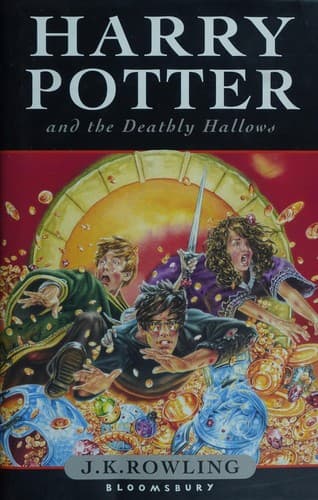
- Harry Potter and the Deathly Hallows
J.K. Rowling
Both novels serve as the climactic conclusion to highly popular children's fantasy series, featuring a grand final battle and the resolution of long-standing character arcs. Rowling's 'Deathly Hallows' is lauded for its masterful weaving of plot threads, character development, and emotional payoff, as noted by scholars like Elizabeth Heilman's analysis of the series. The sacrifices made by characters in Rowling's work feel earned and deeply impactful due to years of meticulous character building. In contrast, while 'One True King' aims for similar emotional resonance with Sophie's sacrifice, the rapid shifts in her character's motivations and allegiances throughout the series sometimes make her ultimate redemption feel less earned and more abrupt. Rowling also manages a broader scope of character resolutions, providing satisfying closure for a larger ensemble cast, whereas Chainani's focus remains very tightly on Sophie and Agatha.
- Harry Potter and the Sorcerer's Stone
J.K. Rowling
4.5 (7M) average on GoodreadsFantasyRescued from a miserable life under the stairs, an orphaned boy discovers he's a wizard destined for a magical school, where he uncovers a dangerous secret tied to the dark wizard who murdered his parents.
- The Hunger Games
Suzanne Collins
4.3 (6.4M) average on GoodreadsFantasyIn a future where children fight to the death on live television, Katniss Everdeen volunteers for the arena, turning a death sentence into a fight for survival and a spark of rebellion.
- 1984
George Orwell
4.2 (3.1M) average on GoodreadsPoliticsIn a future where surveillance and thought control are absolute, a man's search for truth clashes with the Party, showing that hope can be a form of rebellion.
- Divergent
Veronica Roth
4.2 (2.9M) average on GoodreadsFantasyIn a society divided by virtues, a sixteen-year-old's difference from the norm starts a rebellion that threatens her world.
- The Hobbit, or There and Back Again
J.R.R. Tolkien
4.3 (2.9M) average on GoodreadsFantasyA comfort-loving hobbit named Bilbo Baggins is whisked away by a mischievous wizard and a band of dwarves on an unexpected journey to reclaim stolen treasure from a fearsome dragon, discovering courage and a magical ring along the way.





Enjoyed the summary?
A summary gives you the shape of the book. The book itself has the detail, the examples and the voice.
Find One True King on AmazonAs an Amazon Associate, BookBrief earns from qualifying purchases. How we're funded