
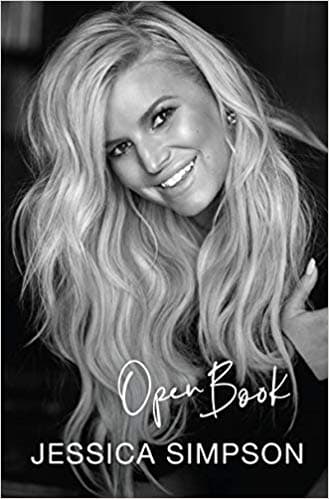
Core Idea
- Difficulty
- Easy
- Read it if
- You're interested in a candid, no-holds-barred celebrity memoir that delves into the darker side of fame, body image issues, addiction, and codependent relationships, offering a story of redemption and self-acceptance. Also recommended if you appreciate deeply personal narratives of reclaiming agency.
- Skip it if
- You prefer memoirs focused solely on career triumphs and lighthearted anecdotes, or if you are not interested in detailed accounts of personal struggles, particularly those involving addiction and emotional abuse.
Key Takeaways from Open Book
The Illusion of the All-American Girl
Beneath a carefully curated public image, private struggles festered from a young age.
Jessica Simpson's 'Open Book' clearly shows the difference between her public image as a cheerful pop star and the often painful truth of her private life. From childhood sexual abuse to the pressure of supporting her family financially as a teenager, Simpson had to hide her pain. Her public image, created by her team, trapped her, keeping her from facing her deepest wounds. The book powerfully illustrates how outside expectations can prevent genuine self-expression and delay healing. This contrast highlights the common myth of celebrity perfection and the high personal cost of keeping up such a front.
“I was an open book, but I kept so much of my own story hidden, even from myself.”
In the book: Simpson details her sexual abuse as a child by the daughter of a family friend, a trauma she kept secret for decades. Her 'Newlyweds' persona, while seemingly authentic, was also a performance for public consumption, obscuring deeper anxieties about her marriage and career.
Try this: Reflect on areas where your public image might diverge from your private reality. Seek spaces and relationships where you can be truly vulnerable and authentic, rather than conforming to external expectations. Prioritize internal well-being over external validation.
Related ideas: public-persona, childhood-trauma, celebrity-culture
The Tyranny of Early Success
Achieving fame too young can warp identity and create a lifelong burden of performance.
Simpson's fast rise to pop stardom at a young age, after not getting into the Mickey Mouse Club, meant her identity was closely tied to her career and public image. This early success, while financially rewarding, put immense pressure on her to always perform and meet industry standards. She became a product before fully developing as a person, blurring the lines between who she was and the persona needed for fame. This 'burden of early success' meant every choice, from her music to her relationships, was examined and often dictated by her career and her family's financial needs. It shows the often-ignored psychological toll of child stardom, where personal development is often sacrificed for career gain.
“I was a brand before I was a woman, and that brand had to be perfect.”
In the book: Her struggle to support her family financially from a young age, the pressure to maintain a specific image for Columbia Records, and the constant media scrutiny of her relationship with Nick Lachey.
Try this: For young professionals or those experiencing early career success, actively cultivate a strong sense of self outside of work. Establish clear boundaries between personal life and professional demands. Seek mentors who prioritize holistic well-being over solely career advancement.
Related ideas: child-stardom, identity-formation, career-pressure
The Perils of Codependent Relationships
Seeking validation in partners can lead to emotional abuse and a loss of self.
Simpson's honest talk about her relationships, especially with John Mayer, offers a warning about codependency and seeking approval from others. Having grown up in an environment where her worth was often linked to her performance and looks, she tried to find her identity and value through her partners. This vulnerability made her open to emotionally harmful dynamics, where her self-esteem was damaged and her voice silenced. Her description of Mayer's emotional manipulation and her own desperate attempts to please him show how the desire for love and acceptance can lead one to tolerate unhealthy behaviors, ultimately reducing one's sense of self. It stresses the importance of self-worth as a basis for healthy relationships.
“I kept trying to make myself smaller, to fit into a space that wasn't meant for me.”
In the book: Her detailed account of her relationship with John Mayer, describing his 'mind games' and how his words deeply affected her self-perception, particularly regarding her intellect and body.
Try this: Prioritize building self-worth independent of romantic relationships. Recognize red flags of emotional manipulation and codependency. Seek therapy or support systems to establish healthy boundaries and foster self-respect in relationships.
Related ideas: codependency, emotional-abuse, self-worth
Body Shaming: A Relentless Industry Scrutiny
The entertainment industry's obsession with appearance can inflict deep psychological wounds.
A key theme in 'Open Book' is Simpson's long struggle with body image and the constant judgment she faced from the media and public. From early in her career, her body was treated as a product and judged, leading to cycles of dieting, disordered eating, and intense self-consciousness. The famous 'mom jeans' event, where a photo caused widespread body shaming, shows the cruel nature of an industry obsessed with impossible beauty standards. This constant outside commentary hurt her self-esteem, showing how common body shaming can be, even for someone who seems to fit traditional beauty ideals. It's a strong reminder that our worth is not linked to our looks and that societal pressures can have devastating psychological effects.
“My body was a topic of conversation for the world, and I felt like I was constantly failing.”
In the book: Her detailed accounts of intense diets, the constant pressure to maintain a 'pop star' physique, and the public's cruel reaction to her weight gain after having children, culminating in the 'mom jeans' incident.
Try this: Cultivate body neutrality or positivity by focusing on what your body can do rather than how it looks. Unfollow accounts that promote unrealistic beauty standards. Practice self-compassion and challenge internal narratives influenced by societal body shaming.
Related ideas: body-image, body-shaming, media-scrutiny
Alcohol as a Coping Mechanism
Substance abuse often masks deeper pain and unresolved trauma.
Simpson's honesty about her fight with alcohol addiction is a vital lesson. She reveals how drinking became a way to cope with the trauma, anxiety, and self-doubt that troubled her for years. The book carefully describes her descent into heavy drinking, not as a moral failing, but as a desperate attempt to escape overwhelming emotional pain. Her realization that alcohol was not solving her problems but making them worse, especially after a moment where she couldn't dress her children, highlights the hidden danger of addiction. This story powerfully shows that substance abuse is often a sign of unresolved issues, emphasizing the need for understanding and professional help, not judgment.
“I was numbing myself, trying to quiet the voices in my head, but they just got louder.”
In the book: Her detailed description of her daily drinking habits, the specific incident where she realized she couldn't dress her children due to intoxication, and her subsequent decision to seek help and get sober.
Try this: If struggling with substance abuse, seek professional help immediately. Identify healthy coping mechanisms for stress and trauma, such as therapy, mindfulness, or creative expression. Be compassionate towards yourself and others struggling with addiction, recognizing its roots in pain.
Related ideas: alcoholism, addiction, coping-mechanisms
The Power of Forgiveness and Self-Acceptance
True healing begins when one confronts the past and embraces vulnerability.
Simpson's path to sobriety and self-acceptance is shaped by her commitment to facing her past traumas and forgiving herself and others. The book emphasizes that true healing means not forgetting or denying pain, but acknowledging it, processing it, and making it part of one's life story. Her choice to seek therapy and openly discuss her childhood abuse, difficult relationships, and alcohol struggles marks a major shift from hiding to healing. This act of vulnerability, both in her personal life and in writing 'Open Book,' shows the deep strength found in self-acceptance and the courage to drop the masks we wear. It's a powerful message that growth comes from embracing all parts of ourselves, even the difficult ones.
“I had to forgive myself for all the choices I made, good and bad, to truly move forward.”
In the book: Her extensive work with a therapist, her decision to share her story of childhood abuse publicly for the first time, and her active participation in her recovery from alcohol addiction.
Try this: Engage in practices of self-forgiveness and compassion. Seek therapeutic support to process past traumas. Practice vulnerability in trusted relationships to foster deeper connections and facilitate healing.
Related ideas: forgiveness, self-acceptance, healing-journey
Redefining Success Beyond Fame
Authentic fulfillment can be found in entrepreneurship, family, and personal growth.
After years of seeking fame and outside approval, Simpson finds real happiness in her billion-dollar clothing line and her family life with Eric Johnson and their children. This change in priorities shows a new definition of success. For Simpson, real achievement moved beyond album sales and movie roles to building a lasting business on her own terms and creating a loving, supportive family environment. Her entrepreneurial journey shows strength and good business sense, proving she is far more than the 'dumb blonde' image she was often given. This takeaway highlights that while celebrity can be fleeting and often unsatisfying, building something real, meaningful, and aligned with one's values can lead to lasting happiness and a deep sense of accomplishment.
“The greatest success wasn't the awards or the headlines, it was building something real.”
In the book: The success of her Jessica Simpson Collection, which became a billion-dollar brand, and her descriptions of her stable and loving marriage with Eric Johnson and their three children.
Try this: Define success on your own terms, beyond societal expectations. Invest time and energy into projects that bring genuine satisfaction and align with your values. Prioritize relationships and personal well-being over external accolades.
Related ideas: entrepreneurship, personal-fulfillment, redefining-success
The Enduring Power of Family (for better or worse)
Family dynamics, though complex, remain a foundational force in shaping identity.
Simpson's memoir consistently shows the deep and often conflicting role of her family. While her parents were her first supporters and managers, their involvement also created great pressure and blurred personal and professional lines. Her strong loyalty to her family, especially her sister Ashlee, is clear throughout. However, the book also subtly explores how family dynamics, including her father's past choices and the financial dependence placed upon her, influenced her decisions and struggles. This complex portrayal reminds us that family can be both a source of strength and a source of problems, shaping our earliest experiences and continuing to influence us throughout our lives. Understanding these dynamics is important for personal growth and setting healthy limits.
“My family was my anchor, but sometimes, an anchor holds you in place when you need to sail.”
In the book: Her parents' management of her career from a young age, the financial burden she felt to support her family, and her strong bond with her sister, Ashlee.
Try this: Reflect on how family dynamics have shaped your own life and choices. Establish healthy boundaries with family members where necessary. Appreciate the supportive aspects of family while acknowledging and addressing any challenging dynamics.
Related ideas: family-dynamics, parental-influence, boundaries
Voice and Agency: Reclaiming One's Narrative
Writing one's story is an act of empowerment and self-definition.
Ultimately, 'Open Book' is an act of taking back control of her story. For years, Simpson's story was told by tabloids, producers, and even her romantic partners. She was often reduced to simple descriptions – the 'dumb blonde,' the 'fashionista,' the 'ex-wife.' By writing this memoir, Simpson reclaims her voice, showing a complex, often flawed, but truly authentic self. The act of putting her painful experiences and hard-won wisdom on paper demonstrates her growth and new self-possession. This takeaway highlights the transformative power of storytelling, especially for those whose stories have been taken or misrepresented. It is a powerful reminder that owning your story is a key step toward self-acceptance and empowerment.
“This book is me, finally, telling my own story, in my own words.”
In the book: The entire memoir serves as evidence, as Simpson explicitly states her intention to finally tell her story in her own words, correcting misperceptions and revealing previously hidden truths.
Try this: Consider journaling or writing your own life story to gain perspective and reclaim your narrative. Speak your truth respectfully in situations where your voice has been silenced. Support others in sharing their authentic stories.
Related ideas: narrative-control, empowerment, autobiography
Open Book Quotes
“I was told that if I wasn't a size zero, I wasn't going to be a star.”
“The person you marry is supposed to be the person who makes you feel the most loved and safe. That wasn't my experience.”
“I thought I was supposed to be a virgin until I got married. It was a big deal to me.”
“I don't regret anything in my life. I think every single thing led me to where I am today.”
“I was drowning in my own thoughts and the expectations of everyone around me.”
“Sometimes you have to let go of who you were to become who you are.”
“I had to learn to love myself first, before I could truly love anyone else.”
“Alcohol became my coping mechanism, my crutch.”
“I wanted to be the girl next door, but I also wanted to be a sex symbol. It was a constant battle.”
“My voice was the one thing I always had, even when everything else felt like it was falling apart.”
“I realized that my purpose wasn't to be perfect, but to be real.”
“Being a mom changed everything for me. It gave me a purpose I never knew I was missing.”
“The truth is, I was hiding behind a persona for a very long time.”
“My book is an open book because I truly wanted to share my story, unfiltered.”
Quiz
10 questions on the main ideas. Each answer comes with a short explanation.
Question 1
Which specific traumatic event did Jessica Simpson reveal she experienced during her childhood in Texas?
- She was bullied by classmates at school.
- She witnessed a severe car accident.
- She was sexually abused by the daughter of a family friend.
- She lost a close family member unexpectedly.
Show answer
C. She was sexually abused by the daughter of a family friend. Jessica Simpson details in 'Open Book' that she was sexually abused by the daughter of a family friend while growing up in Texas, a significant early trauma.
Question 2
Before signing a record deal, Jessica Simpson unsuccessfully auditioned for which famous children's variety show?
- Star Search
- The Mickey Mouse Club
- America's Funniest Home Videos
- Kids Incorporated
Show answer
B. The Mickey Mouse Club At age 13, Jessica Simpson auditioned for The Mickey Mouse Club alongside future stars like Justin Timberlake and Ryan Gosling, but she was not selected.
Question 3
Which boy band member did Jessica Simpson marry, as detailed in her memoir?
- Joey Fatone from *NSYNC
- Nick Carter from Backstreet Boys
- Nick Lachey from 98 Degrees
- Lance Bass from *NSYNC
Show answer
C. Nick Lachey from 98 Degrees Jessica Simpson's first marriage was to Nick Lachey, a member of the boy band 98 Degrees, a significant part of her early public life and career.
Question 4
Jessica Simpson describes her relationship with which musician as 'emotionally abusive'?
- Justin Timberlake
- Adam Levine
- John Mayer
- Gavin Rossdale
Show answer
C. John Mayer In 'Open Book,' Simpson candidly discusses her relationship with musician John Mayer, characterizing it as emotionally abusive.
Question 5
What significant professional accomplishment does Jessica Simpson highlight as a positive turning point in her life?
- Winning a Grammy Award for her music
- Launching a successful billion-dollar apparel line
- Starring in an Oscar-winning film
- Becoming a highly sought-after fashion model
Show answer
B. Launching a successful billion-dollar apparel line Simpson concludes 'Open Book' on a positive note, emphasizing the success of her billion-dollar apparel line, which represents a major professional achievement beyond her music career.
Question 6
Beyond the emotional toll, what specific external pressure did Simpson face as a teenager that contributed to her struggles?
- Pressure to maintain perfect academic grades
- Pressure to support her family financially
- Pressure to become a professional athlete
- Pressure to master a classical musical instrument
Show answer
B. Pressure to support her family financially Simpson describes the immense pressure she felt as a teenager to financially support her family, a significant burden that added to her early struggles.
Question 7
Which professional football star did Jessica Simpson marry, with whom she has three children?
- Tom Brady
- Tony Romo
- Eric Johnson
- Peyton Manning
Show answer
C. Eric Johnson After her divorce from Nick Lachey and other relationships, Jessica Simpson found happiness and married former professional football player Eric Johnson.
Question 8
How does Simpson portray the music and entertainment industry's impact on her self-image throughout her career?
- As largely supportive and empowering of her individuality.
- As overly appearance-centered, leading to body-shaming.
- As indifferent to her physical appearance, focusing solely on talent.
- As a platform that celebrated diverse body types.
Show answer
B. As overly appearance-centered, leading to body-shaming. Simpson explicitly details enduring body-shaming within an overly appearance-centered industry, highlighting the negative impact on her self-image.
Question 9
What specific personal struggle, often linked to her emotional difficulties, does Simpson reveal she experienced bouts of?
- Gambling addiction
- Anorexia
- Heavy drinking
- Compulsive shopping
Show answer
C. Heavy drinking Jessica Simpson is candid about going through bouts of heavy drinking, which was one of the personal struggles she faced during difficult periods in her life.
Question 10
Which of the following experiences did Simpson NOT mention as a struggle in her memoir?
- Divorcing Nick Lachey
- Enduring an emotionally abusive relationship with John Mayer
- Experiencing financial bankruptcy
- Being body-shamed in the industry
Show answer
C. Experiencing financial bankruptcy While Simpson details numerous struggles, including divorce, an abusive relationship, and body-shaming, the memoir does not mention her experiencing financial bankruptcy.
Open Book FAQ
What is 'Open Book' by Jessica Simpson about?
'Open Book' is a candid memoir by Jessica Simpson, detailing her life from a childhood marked by sexual abuse and early career struggles to her rise as a pop star, reality TV personality, and fashion mogul. It delves into her high-profile relationships, battles with body image and alcohol, and ultimately, her journey to self-acceptance and success.
Does 'Open Book' discuss Jessica Simpson's marriage to Nick Lachey?
Yes, 'Open Book' extensively covers Jessica Simpson's marriage and eventual divorce from 98 Degrees member Nick Lachey. She provides an intimate look into the complexities of their relationship, including the pressures of fame and their reality show 'Newlyweds: Nick and Jessica'.
What is Jessica Simpson's experience with John Mayer as described in 'Open Book'?
Jessica Simpson describes her relationship with musician John Mayer as emotionally abusive in 'Open Book'. She recounts the intense highs and lows, the public scrutiny, and the profound impact it had on her self-esteem and mental well-being during that period of her life.
Does 'Open Book' address Jessica Simpson's struggles with body image and body shaming?
Absolutely, 'Open Book' frankly addresses Jessica Simpson's ongoing struggles with body image and the intense body shaming she experienced throughout her career in the appearance-centered entertainment industry. She shares how these pressures contributed to her personal battles and search for self-acceptance.
How does 'Open Book' differ from typical celebrity memoirs?
'Open Book' distinguishes itself from many celebrity memoirs by its raw honesty and vulnerability, particularly in discussing sensitive topics like sexual abuse, emotional abuse, and alcoholism. Simpson offers deep introspection rather than just a chronological recounting of events, providing a more personal and often painful perspective.
Does 'Open Book' cover Jessica Simpson's business ventures, such as her billion-dollar apparel line?
Yes, 'Open Book' concludes on a positive note by discussing Jessica Simpson's incredible success in the business world, particularly her billion-dollar apparel line. She shares insights into the growth of her brand and how she built her fashion empire after her music career.
What role does her family play in 'Open Book'?
Her family plays a significant role in 'Open Book,' from her childhood experiences and the pressure to support them as a teenager, to her current marriage with Eric Johnson and their three children. The book explores both the challenges and support she received from her family throughout her life.
Does Jessica Simpson discuss her journey to sobriety in 'Open Book'?
Yes, Jessica Simpson candidly discusses her bouts of heavy drinking and her eventual journey towards sobriety in 'Open Book.' She shares the personal struggles and the pivotal moments that led her to confront her relationship with alcohol and seek a healthier path.
Is 'Open Book' suitable for young readers?
Due to its frank discussions of sensitive and mature themes such as sexual abuse, emotional abuse, and alcoholism, 'Open Book' is generally more suitable for adult readers. Parents should exercise discretion for younger audiences.
About the author

Jessica Simpson is an American singer, actress, and author known for her contributions to pop music and reality television. In her memoir "Open Book," she shares personal stories and insights from her life, exploring themes of love, fame, and self-discovery. The book has received attention for its candidness and reflection on her experiences in the entertainment industry.
Similar books
- The Diary of a Young Girl
Anne Frank
4.2 (2.7M) average on GoodreadsBiographyDuring the Nazi occupation, a teenage girl's diary, written from a secret annex, shares observations on humanity, hope, and the wait for freedom.
- Eat, Pray, Love
Elizabeth Gilbert
3.6 (1.5M) average on GoodreadsLifestyleA heartbroken writer leaves her conventional life for a year-long global search for pleasure in Italy, spiritual devotion in India, and unexpected love and balance in Bali.
- Night
Elie Wiesel
4.3 (970k) average on GoodreadsBiographyIn the darkness of Auschwitz and Buchenwald, a teenage Elie Wiesel faces the extermination of his family, the loss of his faith, and the lasting scars of humanity's deepest cruelty.
- Steve Jobs
Walter Isaacson
4.1 (957k) average on GoodreadsBusinessSteve Jobs was a visionary who fused creativity and technology to revolutionize six industries and shape our digital world.
- The Glass Castle
Jeannette Walls
4.3 (903k) average on GoodreadsBiographyJeannette Walls's memoir describes her unusual childhood with brilliant, free-spirited parents whose poverty-stricken life shaped her independence and love despite family problems.
- Bossypants
Tina Fey
4.0 (848k) average on GoodreadsBiographyFrom a 'vicious nerd' with stress dreams to the comedic force behind Liz Lemon and 'Weekend Update,' Tina Fey chronicles her journey to proving that 'you're no one until someone calls you bossy.'






Enjoyed the summary?
A summary gives you the shape of the book. The book itself has the detail, the examples and the voice.
Find Open Book on AmazonAs an Amazon Associate, BookBrief earns from qualifying purchases. How we're funded