
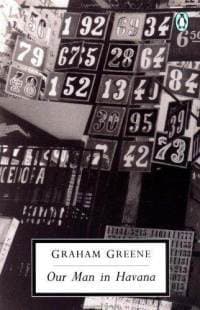
Synopsis
Covers the whole plot, including the ending.
- Difficulty
- Medium
- Pacing
- Moderate
- Mood
- Satirical, Suspenseful, Darkly Humorous, Absurdist
- Read it if
- You enjoy satirical thrillers that blend dark humor with genuine suspense, featuring an unlikely hero caught in bureaucratic absurdity.
- Skip it if
- You prefer straightforward, action-packed spy stories without much introspection or social commentary.
Our Man in Havana Plot Summary
Covers the whole plot, including the ending.
A Vacuum Cleaner Salesman's Desperate Measures
James Wormold, a British expatriate and widowed vacuum cleaner salesman in Havana, struggles financially to support his extravagant teenage daughter, Milly. His life changes when Hawthorne, a charming but persistent MI6 agent, approaches him. Hawthorne believes Wormold, with his British connections and seemingly innocuous business, would make an excellent spy. Despite having no experience or interest in espionage, Wormold, desperate for extra income to maintain Milly's lifestyle and pay for her riding lessons and Catholic school, reluctantly accepts. He is assigned the code name '59200/5' and told to recruit a sub-agent network and send reports on Cuba's political and military situation.
The Birth of Bogus Reports
Faced with generating intelligence but lacking any actual sources or knowledge of espionage, Wormold fabricates. He invents an entire network of sub-agents, drawing names from his Rotary Club list and local acquaintances, giving them fictional jobs like pilots and professors. To justify the expenses he claims for these non-existent agents, he invents elaborate reports. His most audacious creation is a detailed description of a secret military installation in the Cuban mountains, supposedly a sophisticated atomic weapons base, based on diagrams of a new vacuum cleaner model he is trying to sell. London eagerly receives these reports, complete with technical drawings and strategic implications.
The Arrival of Beatrice and the Increasing Stakes
London is so impressed by Wormold's 'intelligence' that they send him a dedicated radio operator, Beatrice Severn, to assist him and process his increasingly detailed reports. Beatrice, a no-nonsense and competent agent, initially does not know Wormold's entire operation is fake. Her arrival shows London's genuine belief in the threat from the fictional Cuban installation. Wormold finds himself in a deeper bind, as his fabrications now have real-world consequences, and he struggles to maintain the illusion while trying to keep Beatrice from discovering his deception. He continues to invent stories, now with Beatrice as an unwitting accomplice, further entangling himself in his lies.
The Unintended Consequences
Wormold's invented world starts to affect reality in alarming ways. One of his 'agents,' Dr. Hasselbacher, a German doctor and friend, is murdered, seemingly because of his fictional involvement in Wormold's network. Another 'agent,' a pilot named Raul, is involved in a suspicious plane crash. These events deeply disturb Wormold, making him realize that his harmless fabrications are having deadly repercussions. He becomes increasingly paranoid, suspecting that a real enemy intelligence agency has intercepted his reports and is now targeting his fictional network, or perhaps even himself. The line between his lies and the dangerous truth blurs, intensifying his fear and guilt.
A Dinner Party and a Deadly Encounter
Wormold and Beatrice attend a lavish dinner party hosted by Captain Segura, the chief of the secret police, who collects human eyelashes. During the party, a mysterious man tries to poison Wormold's drink. Beatrice, noticing the suspicious activity, intervenes and saves Wormold's life. This incident confirms Wormold's growing fear that a real enemy is targeting him. He now understands that a foreign power, likely the East German secret service, has taken his invented reports seriously and believes his fictional agents are genuine threats. The party, initially a social event, becomes a tense and dangerous encounter.
The Revelation and the Plan
Overwhelmed by the escalating danger and Dr. Hasselbacher's death, Wormold finally confesses the truth to Beatrice: his entire network and all his reports are fabrications. Beatrice, though initially shocked and angry, quickly grasps the gravity of the situation. Recognizing the real danger, she decides to help Wormold. They devise a plan to expose the truth to London in a way that will protect Wormold from severe repercussions, knowing that confessing outright might lead to his imprisonment or worse. Their plan involves subtly leaking information to discredit his previous reports without directly admitting deception, hoping to prompt London to recall them.
The Assassination Attempt and Wormold's Revenge
Wormold is invited to another Rotary Club luncheon, only to discover it is a trap. He is lured into the men's room where Carter, an enemy agent, tries to assassinate him. Wormold, in a moment of desperate self-preservation, accidentally kills Carter using a trick he learned from one of his vacuum cleaner demonstrations: a bottle of whisky with a broken neck. This violent act transforms Wormold from a reluctant fabricator into a genuine participant in the world of espionage. He feels a strange mix of horror and grim satisfaction, realizing he has crossed a line he never intended to, effectively becoming a real spy through circumstance and self-defense.
London's Response and the Cover-Up
London, having received Beatrice's coded warnings and perhaps sensing the truth, recalls Wormold and Beatrice to England. Upon their return, they meet the higher echelons of MI6. Instead of being punished for his elaborate deception, Wormold is surprisingly offered a new position. MI6, fearing a scandal and the embarrassment of being so thoroughly duped, decides to cover up Wormold's fabrications. They present his actions as a brilliant double-bluff, claiming he intentionally fed false information to flush out enemy agents. This official narrative allows them to save face and offers Wormold a path to escape severe consequences.
Milly's Future and Wormold's New Role
Wormold returns to England with Milly, who is thrilled to be in London and quickly finds a new sense of belonging. She even expresses a desire to convert to Catholicism, much to Wormold's amusement. Wormold, now free from the pressures of Havana and financially secure due to MI6's generosity, marries Beatrice. He is given a teaching position at an MI6 training school, where he ironically instructs new recruits on the intricacies of espionage, drawing lessons from his own bizarre and unintentional experiences. His journey from a struggling salesman to a respected (if unorthodox) spy instructor is complete, albeit with a lingering sense of absurdity.
The Enduring Absurdity
The novel concludes with Wormold settling into his new life, his past deceptions conveniently reinterpreted as strategic genius by MI6. The bureaucratic machinery of espionage, rather than admitting fault, simply absorbs Wormold's chaos into its own narrative. The deaths of Dr. Hasselbacher and Carter are brushed aside, and the entire episode is spun into a success story. Wormold, a man who stumbled into espionage and inadvertently caused real-world consequences with his lies, is ultimately rewarded. The ending highlights the novel's central theme of the absurd nature of power, bureaucracy, and the detached reality of the intelligence world, where truth is often less important than plausible deniability and maintaining appearances.
Principal Figures
James Wormold
Protagonist
A British vacuum cleaner salesman in Havana who reluctantly becomes an MI6 agent.
Wormold is a mild-mannered, somewhat naive, and deeply unheroic man. He is a widower devoted to his extravagant teenage daughter, Milly, for whom he feels immense responsibility and love. His primary motivation throughout the story is to earn enough money to support Milly's expensive tastes and provide her with a good life. He lacks any genuine interest or aptitude for espionage, preferring a quiet life. He is a man of habit and routine, whose moral compass is generally good, but his desperation leads him to unethical actions. He is imaginative, which ironically makes him a 'successful' spy.
Relationships: Milly Wormold (His beloved, extravagant daughter, his primary motivation.); Beatrice Severn (His MI6 radio operator who becomes his confidante and later his wife.); Dr. Hasselbacher (His friend and a fictional sub-agent whose death deeply affects him.); Hawthorne (The MI6 recruiter who brings Wormold into the service.)
Milly Wormold
Supporting
Wormold's beautiful, devout, and expensive teenage daughter.
Milly is a charming but demanding young woman with a strong Catholic faith and a love for luxury. She is largely unaware of her father's true activities and the extent of his financial struggles. Her innocence and her costly desires (pony rides, good schools, dresses) are the driving force behind Wormold's decision to become a spy. She represents the domestic, personal stakes for Wormold and is a symbol of the 'normal' life he is trying to preserve. Despite her extravagance, she is genuinely fond of her father and possesses a sweet nature.
Relationships: James Wormold (Her loving but financially strained father, whom she adores.); Captain Segura (A powerful and sinister figure who is infatuated with her.)
Beatrice Severn
Supporting
A pragmatic and intelligent MI6 radio operator sent to assist Wormold.
Beatrice is a capable, no-nonsense agent, initially dedicated to her mission and believing in the validity of Wormold's reports. She is intelligent, observant, and resourceful. Her character provides a contrast to Wormold's bumbling nature, bringing a degree of professional competence to the ludicrous situation. When she discovers Wormold's deception, she quickly adapts, demonstrating her loyalty and practicality by helping him navigate the dangerous consequences. She develops affection for Wormold, seeing past his flaws to his inherent decency.
Relationships: James Wormold (Her MI6 superior, whose deception she uncovers and then helps.)
Hawthorne
Supporting
The suave but somewhat incompetent MI6 recruiter who enlists Wormold.
Hawthorne is a charming, somewhat detached MI6 officer who operates with a sense of British superiority and a lack of understanding of the local context. He is the initial catalyst for Wormold's entanglement in espionage. He represents the bureaucratic, often absurd, nature of the intelligence service, which prioritizes appearance and procedure over genuine effectiveness. His misjudgment of Wormold's capabilities and the subsequent belief in his fabricated reports highlight the flaws within MI6.
Relationships: James Wormold (The agent he recruits, whose 'success' ironically validates Hawthorne's poor judgment.)
Captain Segura
Antagonist
The chillingly polite and powerful chief of the Cuban secret police.
Captain Segura is a menacing figure, known for his elegant brutality and his disturbing hobby of collecting human eyelashes from his victims. He is intelligent, observant, and wields significant power in Havana. He is infatuated with Milly, which adds another layer of threat and tension for Wormold. Segura represents the real, tangible danger and corruption present in Havana, a stark contrast to the often farcical nature of Wormold's spy games. He embodies the political instability and moral decay of the regime.
Relationships: Milly Wormold (He is infatuated with her, creating a personal threat for Wormold.); James Wormold (Wormold views him with fear and suspicion due to his power and interest in Milly.)
Dr. Hasselbacher
Supporting
A kind German doctor and friend of Wormold, who is tragically caught in the spy game.
Dr. Hasselbacher is an elderly, gentle German doctor and one of Wormold's few genuine friends in Havana. He is inadvertently named by Wormold as a sub-agent in his fabricated network. His murder is the first real-world consequence of Wormold's lies, deeply affecting Wormold and forcing him to confront the seriousness of his deception. Hasselbacher represents the innocent victims caught in the crossfire of political machinations, highlighting the destructive potential of even fictional espionage.
Relationships: James Wormold (A good friend, whose death prompts Wormold's guilt and fear.)
Carter
Antagonist
An enemy agent who attempts to assassinate Wormold.
Carter is a shadowy and dangerous character, an actual enemy agent (likely East German) who takes Wormold's fictional reports seriously. He is sent to eliminate Wormold, believing him to be a genuine threat. Carter represents the real, deadly side of espionage that Wormold inadvertently stumbles into. His presence underscores the fact that even absurd lies can have lethal consequences when misinterpreted by rival powers. He is professional and ruthless, contrasting sharply with Wormold's amateurism.
Relationships: James Wormold (His target, who ultimately kills him in self-defense.)
C
Mentioned
The unseen, ultimate head of MI6 in London.
C is the unseen, enigmatic head of MI6, whose presence is felt through the orders and communications received by Hawthorne and Beatrice. He represents the top-level authority and the ultimate bureaucracy of the British intelligence service. His decisions, such as sending Beatrice and later covering up Wormold's actions, demonstrate the organization's focus on maintaining appearances and avoiding scandal, even at the cost of truth. C embodies the detached, almost god-like power structure of the espionage world.
Themes & Insights
The Absurdity of Bureaucracy and Espionage
The novel satirizes the intelligence world, portraying it as a realm driven by bureaucracy, self-preservation, and a detached reality rather than genuine intelligence. MI6 eagerly accepts Wormold's fantastical reports, based on vacuum cleaner parts and Shakespeare, without critical analysis. This shows their gullibility and desire for easily digestible 'intelligence.' The ultimate cover-up, where Wormold's deception is spun as a brilliant double-bluff, further emphasizes how institutions prioritize maintaining appearances over confronting uncomfortable truths, turning the deadly serious business of spying into a farcical game.
“'It was difficult to believe that his reports were now circulating among the heads of government, being studied by grave men in underground war rooms.'”
The Nature of Truth and Deception
At its core, the novel explores the blurry lines between truth and deception. Wormold's fabricated stories, initially harmless lies to support his family, take on a dangerous reality when other intelligence agencies believe them. This raises questions about what constitutes 'truth' in a world where perception and belief are often more powerful than facts. The novel suggests that truth can be manufactured, and once accepted, it can have real, devastating consequences, as seen with Dr. Hasselbacher's death. MI6's inability to discern Wormold's lies highlights how easily deception can flourish within a closed system.
“'He was a man of facts, but a fact, he had discovered, could be a dangerous thing. It was sometimes safer to deal in fictions.'”
Moral Responsibility and Innocence Lost
Wormold begins as a relatively innocent man, motivated by love for his daughter, but his lies gradually drag him into a world of real violence and death. Dr. Hasselbacher's murder and Wormold's accidental killing of Carter force him to confront the moral ramifications of his actions, even if unintended. His journey shows how seemingly innocuous choices can lead to a loss of innocence and burden one with guilt. Despite his initial good intentions, Wormold becomes a participant in the brutality he initially only mimicked, questioning whether one can remain 'good' when involved in such a morally ambiguous profession.
“'He had invented a world, and it had become a real world, and now he had to live in it.'”
Colonialism and Post-Colonial Identity
Havana, a city under a corrupt regime, serves as a backdrop for the British intelligence operation. The novel subtly comments on British post-colonial attitudes, with characters like Hawthorne displaying a patronizing view of locals and a belief in British superiority. The British agents operate with a sense of entitlement, exploiting local conditions for their own geopolitical games, largely detached from the actual lives and struggles of the Cuban people. This highlights the lingering effects of colonial power dynamics, where foreign interests manipulate local situations without true understanding or regard for the consequences on the ground.
“'The British, Wormold sometimes thought, were like children who had been given a toy, a large and complicated toy, and now they didn't know what to do with it.'”
Love and Obligation
Wormold's deep love and sense of obligation towards his daughter, Milly, drive his actions. His desperate need to provide for her, even at the cost of his integrity, shows the powerful influence of familial bonds. Milly's expensive tastes and innocent demands push Wormold into a dangerous world, showing how personal affections can intertwine with larger, more cynical political forces. This theme provides a grounding human element to the otherwise absurd spy narrative, making Wormold's morally compromised choices understandable, if not entirely excusable.
“'He had to make money for Milly. That was the first, the only, the last excuse.'”
Plot Devices & Literary Techniques
Satire
The use of humor, irony, and exaggeration to criticize intelligence agencies.
Greene employs satire to mock the absurdity and incompetence of bureaucratic institutions, particularly MI6. Wormold's fabricated reports, based on vacuum cleaner diagrams and Shakespeare, are readily accepted by his superiors, highlighting the intelligence agency's detachment from reality and its desire for information, however bogus. The ultimate cover-up, where Wormold's deceptions are spun as strategic brilliance, further lampoons the self-serving nature of such organizations, turning what should be a serious profession into a farcical comedy of errors.
Dramatic Irony
The audience is aware of Wormold's deception, while MI6 is not.
Dramatic irony is central to the novel's comedic and suspenseful elements. The reader is privy to Wormold's elaborate lies from the outset, understanding that his 'intelligence' is entirely fabricated. This creates tension and humor as MI6 takes his reports increasingly seriously, sending him resources and personnel like Beatrice, and ultimately believing in the existence of the fantastical 'atomic' installation. This irony underscores the gullibility of the intelligence apparatus and builds suspense as Wormold's lies lead to real-world dangers, such as the deaths of Hasselbacher and Carter.
The MacGuffin
The 'secret weapon' installation that drives the plot but is ultimately meaningless.
The fictional 'atomic' weapon installation that Wormold invents serves as a classic MacGuffin. It is the central object of desire and concern for MI6 and rival agencies, driving much of the plot's tension and action. However, its non-existence makes it ultimately meaningless in terms of actual strategic value. Its purpose is solely to propel Wormold's story, expose the credulity of the intelligence world, and demonstrate how a fabricated threat can generate real-world consequences, even leading to death and political maneuvering, despite its utter lack of reality.
Coincidence and Serendipity
Unplanned events and chance encounters drive the plot and resolve conflicts.
The plot is frequently advanced by coincidence and serendipitous events. Wormold's initial recruitment by Hawthorne is somewhat arbitrary, and his 'success' as a spy is a stroke of accidental luck. More significantly, his survival and the resolution of his predicament are often due to chance, such as Beatrice noticing the poisoned drink or Wormold accidentally killing Carter with a broken bottle. This device emphasizes the chaotic, unpredictable nature of life and the spy world, suggesting that outcomes are often less about skill or planning and more about fortunate (or unfortunate) happenstance.
Our Man in Havana Quotes
“There are some people who are never content with what they have, however much it may be.”
“One day, when I am rich, I will buy a house, and I will have a garden, and I will grow roses.”
“The great thing about the British is that they don't care about anything. They just get on with it.”
“It was impossible to tell what was real and what was not. The whole world seemed to be a stage set, and he was an actor who had forgotten his lines.”
“People don't want to be told the truth. They want to be told a story.”
“He had invented a world, and now he was trapped in it.”
“In our profession, the first rule is: never trust anyone.”
“The trouble with you, Wormold, is that you have too much imagination.”
“He was a man who had stumbled into a game of chess without knowing the rules, and now he was making up his own.”
“The world was full of coincidences, but sometimes they were too neat to be true.”
“A man's life is a foreign country. They do things differently there.”
“It was astonishing how quickly one could adapt to a life of deception.”
“He felt a sudden pang of affection for the whole absurd, dangerous, and utterly improbable situation.”
Quiz
10 questions on the plot and the characters. Each answer comes with a short explanation.
Question 1
What was Wormold's profession before he was recruited by MI6?
- Insurance salesman
- Vacuum-cleaner salesman
- Hotel manager
- School teacher
Show answer
B. Vacuum-cleaner salesman Wormold was a vacuum-cleaner salesman before MI6 recruited him, a detail that later influences his fabricated reports.
Question 2
Why does Wormold initially accept the offer to become a secret agent?
- He is a fervent anti-communist.
- He seeks adventure and excitement.
- He needs the money to support his daughter, Milly.
- He wants to impress his wife.
Show answer
C. He needs the money to support his daughter, Milly. Wormold's primary motivation for becoming a spy is economic necessity, specifically to provide for his extravagant daughter, Milly.
Question 3
What literary work does Wormold use as inspiration for some of his fabricated spy reports?
- Aesop's Fables
- Lamb's Tales from Shakespeare
- Grimm's Fairy Tales
- Don Quixote
Show answer
B. Lamb's Tales from Shakespeare To generate convincing but false reports, Wormold draws inspiration from Lamb's Tales from Shakespeare, incorporating characters and plots into his dispatches.
Question 4
What kind of 'military installations' does Wormold describe in his reports, based on his former profession?
- Subterranean missile silos
- Advanced radar dishes
- Giant vacuum-cleaner parts
- Underwater communication cables
Show answer
C. Giant vacuum-cleaner parts Wormold invents elaborate 'military installations' by describing oversized vacuum-cleaner parts and designs, a humorous nod to his past career.
Question 5
Who is Captain Segura, the chief of police in Havana, and what is his relationship with Wormold?
- A rival spy who tries to expose Wormold.
- A close friend who helps Wormold with his schemes.
- Milly's admirer and Wormold's reluctant acquaintance, known for his brutality.
- Wormold's MI6 contact who gives him assignments.
Show answer
C. Milly's admirer and Wormold's reluctant acquaintance, known for his brutality. Captain Segura is a brutal police chief who is infatuated with Milly, creating an awkward and dangerous relationship with Wormold.
Question 6
What is the primary theme explored through Wormold's fabricated spy reports and their real-world consequences?
- The importance of international cooperation.
- The absurd and dangerous nature of espionage and bureaucracy.
- The triumph of good over evil.
- The pursuit of personal wealth at any cost.
Show answer
B. The absurd and dangerous nature of espionage and bureaucracy. The novel satirizes the spy world, highlighting how fabricated intelligence can be taken seriously and lead to real-world danger and death, emphasizing the absurdity and bureaucracy of espionage.
Question 7
Who is Hawthorne, the MI6 agent who recruits Wormold?
- A seasoned spy who is cynical about the intelligence world.
- A naive newcomer to the intelligence service.
- A double agent working for a rival power.
- Wormold's long-lost brother.
Show answer
A. A seasoned spy who is cynical about the intelligence world. Hawthorne is the MI6 agent who recruits Wormold, a character who embodies the weary and somewhat detached cynicism often associated with Greene's intelligence operatives.
Question 8
What significant event occurs as a direct consequence of Wormold's fabricated reports of 'military installations'?
- MI6 sends a team to investigate the non-existent structures.
- A rival spy network attempts to steal the 'plans' for these installations, leading to real deaths.
- The Cuban government launches a counter-espionage campaign.
- Wormold is promoted for his excellent intelligence gathering.
Show answer
B. A rival spy network attempts to steal the 'plans' for these installations, leading to real deaths. The central irony and turning point of the plot is that Wormold's fictional reports lead to very real and violent consequences, including the deaths of innocent people and other agents who are drawn into the fabricated conspiracy.
Question 9
What is the ultimate fate of Wormold after his fabricated reports are exposed (to some extent) by MI6?
- He is imprisoned for espionage and fraud.
- He is executed for treason.
- He is brought back to London, given a 'promotion,' and quietly absorbed back into the system.
- He becomes a celebrity and writes a tell-all book.
Show answer
C. He is brought back to London, given a 'promotion,' and quietly absorbed back into the system. Despite his deception, MI6, to avoid embarrassment, brings Wormold back to London, gives him a minor 'promotion' and a medal, effectively sweeping the scandal under the rug.
Question 10
The novel is described as one of Graham Greene's 'entertainments.' What does this classification generally imply about the book's tone and purpose?
- It is a purely comedic novel with no serious undertones.
- It is a lighter, more adventurous story, often with elements of satire and suspense, compared to his more overtly theological or philosophical works.
- It is a historical fiction piece meant to educate readers about a specific era.
- It is a children's book designed to entertain young audiences.
Show answer
B. It is a lighter, more adventurous story, often with elements of satire and suspense, compared to his more overtly theological or philosophical works. Greene often categorized his more suspenseful, adventurous, and often satirical novels as 'entertainments,' distinguishing them from his more profound or 'serious' literary works, though 'Our Man in Havana' still carries significant thematic weight.
Our Man in Havana FAQ
What is the central premise of 'Our Man in Havana'?
The novel centers on James Wormold, a British vacuum cleaner salesman in Havana who, facing financial difficulties, accepts an offer to become an MI6 agent. To impress his superiors and secure his income, he fabricates elaborate reports, inventing sources and even drawing 'secret' missile installations based on vacuum cleaner parts.
Who is James Wormold and what drives his actions?
James Wormold is a middle-aged, somewhat naive British expatriate in Havana, primarily concerned with providing for his extravagant teenage daughter, Milly. His financial struggles and desire to maintain his lifestyle and Milly's expensive education are the primary motivators for his increasingly elaborate deceit as an MI6 agent.
How does Wormold's fabricated spy network begin to unravel or cause real-world consequences?
Wormold's fictional agents and intelligence reports take on a life of their own when MI6 assigns him a secretary, Beatrice, and then sends a real agent, Hawthorne, to verify his claims. Furthermore, his invented 'collaborators' and 'threats' inadvertently draw the attention of real, dangerous individuals, leading to actual deaths.
What role does Milly, Wormold's daughter, play in the story?
Milly is Wormold's beloved, yet demanding and religiously devout, teenage daughter whose expensive tastes and future prospects are the main reason Wormold engages in his espionage charade. Her innocent conversations and the need to protect her often complicate Wormold's increasingly dangerous situation.
Who are Captain Segura and Dr. Hasselbacher, and how do they fit into Wormold's world?
Captain Segura is a menacing Cuban police chief who is infatuated with Milly and represents the oppressive authority in Havana. Dr. Hasselbacher is a German doctor and one of Wormold's closest friends, whom Wormold fictitiously lists as a key agent, leading to tragic consequences when real enemies target him.
How do Wormold's vacuum cleaner designs subtly foreshadow the novel's themes?
Wormold's use of vacuum cleaner parts to design 'secret' weapons and installations subtly highlights the absurdity and emptiness of the intelligence world he's stumbled into. The mundane objects transform into instruments of fabricated threats, symbolizing the 'vacuum' of actual intelligence and the reliance on imagination.
Are there any deeper connections between Wormold's fabrications and actual political tensions of the era?
While Wormold's reports are entirely fictional, the fear of secret weapons and enemy agents he invents, particularly the 'atomic pile' or 'missile base' in the mountains, mirrors the real-world anxieties of the Cold War and the Cuban Missile Crisis era, making his satire eerily prescient.
What is the significance of the 'Lamb's Tales from Shakespeare' reference in Wormold's reports?
Wormold's use of 'Lamb's Tales from Shakespeare' as a source for names and plot points in his reports is a subtle nod to the fantastical and often tragic nature of his fabricated spy world. It underscores the literary and imaginative basis of his 'intelligence' and contrasts it with the grim reality it eventually creates.
How does the character of Beatrice serve as a foil to Wormold?
Beatrice, Wormold's assigned MI6 secretary, is initially a by-the-book, serious agent seeking real intelligence, directly contrasting Wormold's imaginative and deceptive methods. Her gradual disillusionment and eventual empathy for Wormold highlight the absurdity and moral ambiguity of their shared profession.
How does Wormold's initial motivation for money evolve throughout the story?
Initially driven purely by financial necessity to support Milly, Wormold's motivations shift as his lies lead to real danger and death. He develops a sense of responsibility and guilt, leading him to take genuine, albeit clumsy, action to protect others and rectify the consequences of his deception.
Discuss the psychological impact of guilt on Wormold, particularly after Dr. Hasselbacher's death.
The death of Dr. Hasselbacher, a direct consequence of Wormold's fabricated reports, profoundly impacts him, leading to intense guilt and a desire for revenge. This event forces Wormold to confront the real-world implications of his lies, transforming him from a passive deceiver into an active, albeit reluctant, participant in the spy game.
How does Milly's unwavering faith influence Wormold's moral compass?
Milly's strong Catholic faith, while sometimes appearing naive, serves as a constant, if unspoken, moral reference point for Wormold. His desire to protect her innocence and maintain a semblance of respectability in her eyes often conflicts with his increasingly immoral actions as a spy, adding to his internal conflict.
What psychological defense mechanisms does Wormold employ to cope with his deceit?
Wormold primarily employs fantasy and denial, immersing himself in the creation of his fictional spy world as a coping mechanism for his financial woes and the drabness of his life. He initially compartmentalizes his lies, separating them from reality until the lines irrevocably blur.
How does the novel satirize the intelligence community and government bureaucracy?
The novel sharply satirizes the intelligence community by depicting MI6 as easily fooled, bureaucratic, and more concerned with maintaining appearances and budgets than with actual intelligence. Wormold's success in deceiving his superiors highlights the inherent flaws and self-serving nature of such organizations.
Is 'Our Man in Havana' primarily a comedy, a tragedy, or both?
The novel masterfully blends elements of both comedy and tragedy. Its initial premise and Wormold's imaginative deceit provide much dark humor, but the escalating consequences, particularly the deaths of innocent characters, inject a profound tragic dimension, making it a 'tragicomedy' that highlights the absurdities and dangers of the real world.
What is the significance of the ending, particularly Wormold's fate within MI6?
The ending, where Wormold is brought back to London, given a promotion, and used as an instructor, is highly ironic. It suggests that MI6, rather than punishing him, integrates his 'experience' into their system, further satirizing the agency's incompetence and its ability to turn even failure into a strategic asset.
How does the novel comment on the nature of truth and fiction in espionage?
The novel profoundly comments on how truth and fiction are intertwined and often indistinguishable in the world of espionage. Wormold's fabricated stories become dangerously real, suggesting that the perception of a threat can be as potent as the threat itself, and that intelligence agencies often create the very realities they claim to uncover.
Does the novel offer any hope or is its outlook entirely cynical?
While deeply cynical about institutions like government and intelligence agencies, the novel retains a glimmer of hope through Wormold's personal transformation and his belated attempts at moral action. His humanity, despite his flaws, stands in contrast to the dehumanizing nature of the spy world, suggesting individual integrity can still exist.
About the author
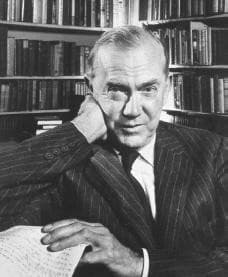
Henry Graham Greene was an English writer and journalist regarded by many as one of the leading English novelists of the 20th century.
Similar books
- The Spy Who Came in from the Cold
John le Carré
4.1 (77k) average on GoodreadsThrillerBoth are classic Cold War spy novels with a cynical view of espionage and morally ambiguous characters.
- Catch-22
Joseph Heller
4.0 (723k) average on GoodreadsHistorical FictionShares a similar tone of absurdist satire on bureaucracy and the devastating, often illogical, consequences of human systems.
- A Perfect Spy
John le Carré
4.0 (16k) average on GoodreadsThrillerExplores the psychological toll of espionage and the blurring lines between truth and fiction in a spy's life.
- Tinker Tailor Soldier Spy
John le Carré
4.1 (107k) average on GoodreadsFictionSimilar to 'Our Man in Havana,' 'Tinker Tailor Soldier Spy' delves into the internal politics and operational failures of an intelligence agency. However, le Carré's novel is a meticulously plotted, intricate puzzle focused on identifying a mole within 'The Circus,' demanding close attention to detail and character interactions. Greene's narrative, while engaging, is more focused on the external absurdity of fabricated intelligence and its immediate, often farcical consequences. 'Our Man in Havana' is a broader, more comedic satire of the idea of espionage, while 'Tinker Tailor' is a deep dive into the specific, often grimy, mechanics and betrayals within a spy organization. Greene's world is one where lies are believed because they fit, le Carré's is one where lies are believed because the truth is too painful or complex to confront.
- Angels & Demons
Dan Brown
3.9 (2.7M) average on GoodreadsThrillerA Harvard symbologist races through Rome's ancient sites, deciphering cryptic clues to unmask the Illuminati and stop a vengeful plot to destroy the Vatican with a stolen antimatter weapon.
- Gone Girl
Gillian Flynn
4.1 (2.3M) average on GoodreadsThrillerA wife's sudden disappearance on her fifth anniversary reveals a web of lies and psychological warfare, exposing the secrets within a seemingly perfect marriage.






Enjoyed the summary?
A summary gives you the shape of the book. The book itself has the detail, the examples and the voice.
Find Our Man in Havana on AmazonAs an Amazon Associate, BookBrief earns from qualifying purchases. How we're funded