
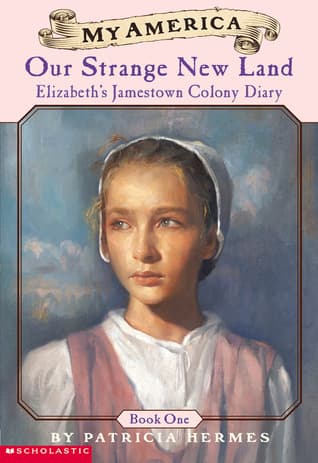
Synopsis
Covers the whole plot, including the ending.
- Difficulty
- Easy
- Pacing
- Moderate
- Mood
- Historical, Observational, Reflective, Hopeful
- Read it if
- You enjoy historical fiction for young readers, particularly stories set during the early American colonial period, and appreciate a diary-style narrative.
- Skip it if
- You prefer fast-paced adventure stories or books with complex adult themes.
Our Strange New Land Plot Summary
Covers the whole plot, including the ending.
A New Beginning in Jamestown
Elizabeth 'Lizzie' Baker, a nine-year-old, arrives in Jamestown, Virginia, in 1609 on a ship carrying the first women and children to the colony. She is happy to be on dry land after a long trip and immediately starts writing her thoughts in a diary for her twin brother, Caleb, who stayed in England because of his weak lungs. Lizzie is amazed by the many forests and the possibilities of this new land. She quickly makes friends with other children, including a boy named Samuel, and starts to get used to the hard but exciting life in the new colony. She is curious about the native Powhatan people.
First Encounters and New Friendships
Lizzie quickly settles into Jamestown, seeing the simple wooden houses and the busy activity. She becomes good friends with Samuel, a boy her age who is also new to the colony, and Ann, another young girl. They explore the areas right around the fort, always watched by adults. Lizzie is especially interested in the Powhatan Indians, watching them from a distance as they interact with the colonists, sometimes trading. She writes down her first thoughts about their clothes, customs, and how they move quietly through the forests, which is very different from the English settlers.
Learning and Trading with the Powhatan
As weeks pass, Lizzie learns more about the Powhatan Indians from her parents and other colonists. She sees how they trade, exchanging English goods like beads and tools for important things like corn, furs, and animal skins. Lizzie is impressed by the Powhatan's cleverness and their deep understanding of the land. She even has a few careful, supervised meetings with Powhatan children, though language makes deep talks difficult. These interactions make her more curious and respectful of their way of life, which she notes in her diary for Caleb.
Adventures Beyond the Fort Walls
Out of curiosity, Lizzie, Samuel, and Ann often find ways to leave the immediate area of the Jamestown fort. On one trip, they go deeper into the surrounding woods than they usually can. They find a hidden stream and are amazed by the different plants and animals. This adventure brings them close to a small Powhatan village, letting Lizzie see their daily lives – women tending fires, men making tools, and children playing. They stay hidden, and the experience is both exciting and a bit scary, making Lizzie understand more about the two different worlds in Virginia.
The Hardships of Winter and Scarcity
As autumn turns into a cold winter, the first good feelings in Jamestown start to fade. Food supplies quickly decrease, and the colonists face more hunger and sickness. Lizzie writes about the growing problems in her diary, noting the sad mood and the fight to survive. The relationship with the Powhatan Indians becomes more difficult as both groups compete for limited resources. Trading happens less often and with more suspicion. Lizzie sees the suffering firsthand, which is a sharp contrast to her earlier happy entries, making her deeply aware of how fragile their new life is.
A Moment of Connection and Understanding
During the growing tension and lack of food, Lizzie has a moving meeting with a Powhatan girl near the edge of the fort. Even with the language barrier, they share a few gestures and a moment of shared curiosity. Lizzie gives the girl a small, special trinket, and in return, gets a well-made basket. This small act of kindness and mutual respect stands out against the background of increasing hostility. Lizzie thinks about this interaction in her diary, seeing it as a small hope for understanding between their peoples, even as the larger conflict grows.
The Starving Time and Loss
The winter of 1609-1610 is known as the 'Starving Time,' a period of great suffering for the Jamestown colonists. Lizzie's diary entries become sadder and shorter, showing the harsh reality. She writes about the deaths of many settlers, including some of her friends, due to hunger, disease, and fights with the Powhatan. The colony is much smaller than it was. Lizzie herself experiences hunger and fear, and the once exciting new land now feels dangerous and unforgiving. Her entries show a deep sense of loss and the struggle to keep hope.
Spring's Arrival and Renewed Hope
As the hard winter finally ends, the arrival of spring brings a desperate but much-needed sense of relief. More importantly, supply ships arrive from England, bringing food, new settlers, and tools. Lizzie notes the immediate change in mood; the surviving colonists, though weak, are filled with a new desire to rebuild. While the memory of the 'Starving Time' remains, the fresh supplies and the promise of warmer weather offer hope. Lizzie's diary entries show this fragile optimism, focusing on planting and fixing the fort, looking forward instead of dwelling on the past.
Adapting and Looking Forward
After going through the hardest time in Jamestown's history, Lizzie has grown up a lot. Her diary entries still show her young spirit but also a deeper understanding of life in the new world. She continues to observe daily life in the colony, the efforts to grow crops, and the ongoing, though careful, interactions with the Powhatan. Lizzie sees the harsh realities but also the lasting potential of Virginia. She ends her diary with a hopeful, yet realistic, view, showing her strength and her continued effort to write about her strange new land for Caleb, knowing that the future, though uncertain, is theirs to build.
Principal Figures
Elizabeth 'Lizzie' Baker
Protagonist
A spirited and observant nine-year-old girl who chronicles her experiences in Jamestown.
Lizzie is a curious, resilient, and intelligent nine-year-old girl. She is the central narrator, sharing her experiences through her diary. Full of wonder and optimism at the start, she is eager to explore her new surroundings and learn about the Powhatan Indians. Despite her youth, she possesses a keen sense of observation and a strong emotional capacity, recording both the joys and the profound hardships of colonial life. Her primary motivation is to share her world with her twin brother, Caleb, who remained in England.
Relationships: Caleb Baker (Twin brother, her diary's intended recipient); Samuel (Close friend in Jamestown); Ann (Friend in Jamestown); Powhatan girl (Brief, meaningful connection)
Caleb Baker
Mentioned
Lizzie's twin brother in England, the intended audience for her diary.
Caleb is Lizzie's twin brother, who remains in England due to his weak lungs. Although he never appears directly in the story, his presence is constant as the recipient of Lizzie's diary entries. He serves as Lizzie's motivation to meticulously record her experiences, and through her descriptions, he symbolizes the world and family she left behind. His delicate health contrasts with Lizzie's robust spirit and her adventurous life in the New World.
Relationships: Elizabeth 'Lizzie' Baker (Twin sister)
Samuel
Supporting
Lizzie's adventurous friend in Jamestown.
Samuel is one of Lizzie's first and closest friends in Jamestown. He is adventurous and often accompanies Lizzie and Ann on their explorations outside the fort. His presence provides Lizzie with companionship and shared experiences, helping her navigate the initial strangeness of the new colony. He shares Lizzie's curiosity about the wilderness and the Powhatan people, acting as a fellow explorer and confidant.
Relationships: Elizabeth 'Lizzie' Baker (Close friend); Ann (Friend)
Ann
Supporting
Another young friend of Lizzie's in Jamestown.
Ann is another young girl who becomes friends with Lizzie and Samuel in Jamestown. She joins them on their adventures and shares in their discoveries and challenges. While perhaps less outspoken than Lizzie, Ann represents the collective experience of the children adapting to life in the colony. She provides another perspective and reinforces the sense of community among the young settlers.
Relationships: Elizabeth 'Lizzie' Baker (Friend); Samuel (Friend)
Powhatan People
Supporting
The indigenous inhabitants of the land surrounding Jamestown, whose presence profoundly impacts the colonists.
The Powhatan people are the native inhabitants of Virginia, whose complex culture and deep connection to the land are observed by Lizzie. They are initially seen as both a source of wonder and a potential threat. Their interactions with the colonists, ranging from cautious trade to outright conflict, are central to the story's historical context. Lizzie's observations highlight their resourcefulness, their distinct way of life, and the growing tensions that define their relationship with the English settlers.
Relationships: Elizabeth 'Lizzie' Baker (Observed and briefly interacted with); Jamestown Colonists (Complex relationship of trade, suspicion, and conflict)
Lizzie's Parents
Supporting
Adult figures who provide guidance and protection for Lizzie in the new colony.
Lizzie's parents are responsible and caring figures who bring her to Jamestown. They represent the adult colonists striving to establish a new life in a challenging environment. They provide Lizzie with a sense of security and structure, even amidst the chaos and hardships. Their guidance helps Lizzie understand the rules and dangers of the colony, and their efforts to survive mirror the broader struggle of the settlers.
Relationships: Elizabeth 'Lizzie' Baker (Parents); Caleb Baker (Parents)
Themes & Insights
Adaptation and Resilience
The story explores how people adjust, both physically and mentally, as the English colonists, especially Lizzie, get used to the harsh realities of the New World. Lizzie's first wonder turns into a practical understanding of survival, as seen during the 'Starving Time' when she sees great suffering and loss. Her ability to keep writing in her diary, find happy moments, and hold onto hope during despair (e.g., her entries about planting in spring after winter's destruction) shows her toughness and the human ability to adjust to extreme situations.
“It is a strange new land, Caleb, and sometimes a hard one. But it is ours now, and we will make it grow.”
The Clash of Cultures
The novel shows the meeting between the English settlers and the native Powhatan people. Lizzie's diary entries record her first interest, careful observations, and later, the growing tensions and misunderstandings between the two groups. Scenes of trading, her glimpse into a Powhatan village, and the conflicts highlight the very different ways of thinking, customs, and relationships with the land. The brief, meaningful connection Lizzie shares with a Powhatan girl shows the possibility for understanding that is often hidden by fear and competition.
“Their ways are so different from ours, Caleb. But sometimes, when I watch them, I wonder if they know something we do not about living in this wild place.”
Loss and Survival
The harsh 'Starving Time' is a main part of the story, making Lizzie and the other colonists face great loss – of life, of innocence, and of early dreams. Lizzie's diary entries become sadder as she writes about deaths and widespread hunger. Yet, even with such destruction, the idea of survival shines through. The colonists' decision to rebuild, plant crops, and wait for new supplies shows their will to live and stay, showing a spirit of enduring against great odds.
“So many are gone, Caleb. It is a quiet place now. But the sun still rises, and we still breathe. We will not give up.”
The Promise and Peril of a New World
Lizzie's journey shows the two sides of the New World – a place of great promise and great danger. At first, she is charmed by the many forests, rich resources, and the excitement of a new start, representing the dream of opportunity that brought many to Jamestown. However, this promise is quickly met with the harsh realities of unfamiliar wilderness, disease, lack of food, and conflict with native groups. Her experiences show how the 'new land' offers both endless possibilities and life-threatening problems, requiring constant watchfulness and sacrifice.
“It is a beautiful land, Caleb, but it can be cruel too. Like a fierce mother, giving and taking away.”
Plot Devices & Literary Techniques
First-Person Diary Narration
The entire story is told through Lizzie's personal diary entries.
This device provides an intimate and immediate perspective on the events in Jamestown. It allows the reader to experience the colony's early years through the eyes of a child, capturing her initial wonder, growing fears, and eventual resilience. The diary format also justifies Lizzie's detailed observations and reflections, making her a reliable, albeit youthful, chronicler of historical events. It emphasizes her personal connection to the story and makes the historical setting more relatable.
Foreshadowing (of Hardship)
Subtle hints of future difficulties appear early in Lizzie's optimistic entries.
Even in Lizzie's early, buoyant entries, there are subtle hints of the challenges to come. Her observations about the colonists' struggles with unfamiliar crops, the cautious nature of trade with the Powhatan, and the sheer effort required to build the settlement all subtly foreshadow the 'Starving Time' and the ongoing difficulties. This device builds a sense of impending tension, contrasting Lizzie's youthful optimism with the looming historical reality, making the eventual hardships more impactful.
Symbolism (Caleb and England)
Lizzie's brother, Caleb, and the memory of England symbolize the familiar past and her purpose.
Caleb, remaining in England due to his weak lungs, symbolizes the familiar, safer world Lizzie left behind. Her diary, written expressly for him, serves as her constant link to that past and provides a clear purpose for her observations. England itself represents the old world, contrasting sharply with the 'strange new land' of Virginia. This symbolism underscores Lizzie's emotional journey, highlighting her adaptation from her roots to her new, challenging reality, and her desire to bridge the distance with her brother.
Setting as Antagonist
The wilderness and harsh conditions of Virginia act as a primary opposing force.
Beyond human conflicts, the untamed wilderness of Virginia itself serves as a significant antagonist. The unfamiliar environment, harsh winters, scarcity of resources, and prevalence of disease pose constant threats to the colonists' survival. Lizzie's descriptions of the dense forests, the unforgiving cold, and the struggles to cultivate food illustrate how the land itself actively resists the settlers' efforts to tame it, forcing them to adapt or perish. It's a relentless, non-human force that tests their limits.
Our Strange New Land Quotes
“The wind carried the scent of pine and something else, something wild and untamed. It was the smell of a new beginning.”
“Every step we take into this wilderness is a step closer to who we are meant to be.”
“Fear is a shadow, but courage is the sun that makes it disappear.”
“A good story is like a warm fire on a cold night; it brings people together and keeps their spirits bright.”
“The river doesn't care about your plans, only about its own journey. We must learn to flow with it.”
“Home isn't just a place; it's the people you share your heart with, no matter where you are.”
“Sometimes the greatest strength comes from admitting when you are afraid.”
“The sun sets every day, but it always rises again. So too will our hopes, even after the darkest times.”
“To build something new, you first have to clear away the old, even if it's just old worries.”
“The whispers of the past can guide us, but we must walk our own path into the future.”
“Every small kindness is a seed planted, and you never know what beautiful garden it might grow into.”
“The truest map isn't drawn on paper, but etched in your heart by the journey itself.”
“Even the smallest hands can build mighty things when they work together.”
“The wilderness teaches you what truly matters, stripping away all that is unnecessary.”
Quiz
10 questions on the plot and the characters. Each answer comes with a short explanation.
Question 1
In what month and year did the three ships sail up the James River to establish the Jamestown colony?
- April 1607
- May 1607
- June 1609
- March 1609
Show answer
B. May 1607 The book states that the ships sailed up the James River in May 1607.
Question 2
What is the name of the main character who keeps a diary?
- Sarah Baker
- Mary Smith
- Elizabeth Baker
- Anne White
Show answer
C. Elizabeth Baker The main character and diarist is identified as nine-year-old Elizabeth Baker, also called Lizzie.
Question 3
For whom does Lizzie keep her diary?
- Her parents
- Her twin brother, Caleb
- Her new friends in Jamestown
- Future generations
Show answer
B. Her twin brother, Caleb Lizzie keeps her diary for Caleb, her twin brother who remained in England.
Question 4
What was the main reason Lizzie's twin brother, Caleb, stayed behind in England?
- He preferred to stay with relatives.
- He had a weak heart.
- He had weak lungs.
- He was too young to travel.
Show answer
C. He had weak lungs. The text explicitly states that Caleb stayed in England because of his weak lungs.
Question 5
How long was the sea voyage for Lizzie and the other passengers before they reached dry land?
- 30 days
- 71 days
- 90 days
- 120 days
Show answer
B. 71 days Lizzie was thrilled to be on dry land after 71 days at sea.
Question 6
What year did the first ship carrying women and children, including Lizzie, arrive in Jamestown?
- 1607
- 1608
- 1609
- 1610
Show answer
C. 1609 The first ship carrying women and children, which Lizzie was on, arrived in 1609.
Question 7
What is one of the main activities Lizzie describes in her diary entries regarding the indigenous people?
- Conflict and battles
- Trading with and learning from them
- Avoiding all contact
- Teaching them English customs
Show answer
B. Trading with and learning from them Lizzie's buoyant entries mention 'trading with and learning from the Indians' as a key activity.
Question 8
What was the name of the river the three ships sailed up to reach the Jamestown settlement?
- Potomac River
- York River
- James River
- Rappahannock River
Show answer
C. James River The text states the three ships sailed up the James River in Virginia.
Question 9
What specific characteristic describes Lizzie's diary entries?
- Melancholy and reflective
- Formal and factual
- Buoyant and adventurous
- Fearful and anxious
Show answer
C. Buoyant and adventurous The description notes that Lizzie tells of her experiences in 'her buoyant entries'.
Question 10
What was the primary purpose of establishing the settlement in Jamestown in May 1607?
- To establish a fur trading post.
- To find a new route to Asia.
- To establish the first permanent English colony.
- To convert the native population to Christianity.
Show answer
C. To establish the first permanent English colony. The text explicitly states the ships were 'establishing the first permanent English colony in Jamestown Virginia'.
Our Strange New Land FAQ
What is the primary setting and time period of 'Our Strange New Land'?
The story is set in the newly established Jamestown colony in Virginia, primarily during the year 1609, shortly after the arrival of the first ship carrying women and children. It vividly portrays the early struggles and daily life of the English settlers in this unfamiliar New World.
Who is the main protagonist and what is her key motivation?
The main protagonist is nine-year-old Elizabeth 'Lizzie' Baker. Her key motivation is to document her experiences in the new colony through a diary for her twin brother, Caleb, who remained in England due to his weak lungs, hoping to share the wonders and challenges of their new home with him.
What significant historical event does Lizzie's arrival coincide with?
Lizzie's arrival in Jamestown in 1609 coincides with the 'Starving Time,' a brutally difficult winter when the colony faced severe famine, disease, and conflict with the local Powhatan Confederacy. Her diary entries subtly reflect the deteriorating conditions even as she tries to maintain a positive outlook.
How does Lizzie interact with the Native American population?
Lizzie, along with other settlers, engages in trading with the local Native Americans, specifically the Powhatan people. She observes their customs, learns some of their language, and forms tentative friendships, often finding their knowledge of the land invaluable.
What role does Lizzie's diary play in the narrative?
Lizzie's diary is the primary narrative device, allowing readers to experience the events through her innocent yet observant eyes. It serves as a personal record for Caleb, capturing her hopes, fears, and daily adventures, while also subtly revealing the harsh realities of colonial life.
Are there any specific historical figures mentioned or alluded to in Lizzie's diary?
While not explicitly named in the prompt, it's highly probable that Captain John Smith, a prominent figure in early Jamestown, would be mentioned or interact with the settlers, influencing events Lizzie records. His leadership and interactions with the Powhatan people were crucial during this period.
How does the author use sensory details to convey the 'strange new land' aspect?
The author uses Lizzie's descriptions of the 'abundant forests,' unfamiliar wildlife, the taste of new foods, and the sounds of the wilderness to immerse the reader in the strangeness of the new environment. These details highlight the stark contrast with familiar England and the challenges of adaptation.
What subtle hints might Lizzie's diary contain about the growing tensions between settlers and Native Americans?
Lizzie's buoyant entries might subtly shift to mention fewer trading encounters, increased caution among settlers, or the dwindling availability of resources. These changes would hint at the escalating conflicts and distrust that characterized the 'Starving Time' and relations with the Powhatan Confederacy.
How does Lizzie's youth affect her perception of the hardships faced by the colonists?
Lizzie's youth often filters the harsh realities, allowing her to find wonder in the new land even amidst growing difficulties. While she records events, her perspective might not fully grasp the severity of starvation or disease, presenting a more optimistic, albeit sometimes naive, view for Caleb.
What psychological coping mechanisms does Lizzie employ to deal with being separated from Caleb and in a new, dangerous land?
Lizzie primarily copes by maintaining her diary for Caleb, a direct link to her brother and home. This act provides purpose and a sense of connection. Additionally, her adventurous spirit and ability to form new friendships serve as vital emotional anchors in her challenging environment.
How might Lizzie's initial 'thrilled' attitude evolve as the realities of colonial life set in?
While Lizzie starts 'thrilled,' her entries likely show a gradual shift towards resilience and pragmatism. She might still find joy, but her observations would become more acute regarding the challenges, reflecting a growing maturity and understanding of the sacrifices required to survive in Jamestown.
What is the psychological impact of documenting experiences for another person, as Lizzie does for Caleb?
Documenting experiences for Caleb likely provides Lizzie with a sense of responsibility and purpose, encouraging her to observe and articulate her world carefully. It also serves as a form of self-therapy, helping her process new information and maintain a connection to her past and loved ones.
Does the book lean more towards romanticizing colonial life or presenting its harsh realities?
Given it's a children's historical fiction, it likely strikes a balance. While Lizzie's buoyant entries initially romanticize the 'abundant forests' and 'adventures,' the underlying historical context of the 'Starving Time' suggests that the harsh realities will subtly, if not overtly, emerge through her observations, offering a nuanced view.
How does Lizzie's unique perspective as a child shape the historical narrative presented?
Lizzie's child's perspective offers a fresh, less politically charged view of historical events. She focuses on daily life, personal interactions, and immediate sensory experiences, making the history relatable and engaging for young readers, while still conveying the broader historical context through her observations.
What message about perseverance and adaptation can readers take away from Lizzie's story?
Lizzie's story strongly conveys messages of perseverance and adaptation. Despite being a young girl in a foreign and challenging environment, her resilience, curiosity, and ability to form new connections demonstrate the human capacity to endure and find hope even in the most difficult circumstances.
Could Lizzie's diary entries be seen as an unreliable narration in some aspects?
Yes, Lizzie's diary entries could be seen as subtly unreliable. As a child, her understanding of complex political or economic situations might be limited, and her inherent optimism might downplay dangers or hardships, offering a filtered version of events that readers must interpret against the historical backdrop.
How does the 'England's flag' detail at the beginning foreshadow themes in the book?
The mention of 'England's flag' immediately establishes the colonial context and the assertion of English presence in a new land. This foreshadows themes of cultural clash, the struggle for dominance, and the settlers' efforts to transplant their identity and way of life into a foreign environment.
Similar books
- The Sign of the Beaver
Elizabeth George Speare
3.8 (31k) average on GoodreadsChildren'sSpeare's novel, while also an older work with its own limitations in representing Indigenous perspectives, directly confronts the complexities of survival, cultural difference, and the tension between settler and Native American ways of life in a more direct and less idealized manner than Hermes. While both explore friendship across cultures, Speare's narrative often feels more grounded in the harsh realities and potential misunderstandings of such encounters, even if still from a colonial lens.
- Harry Potter and the Sorcerer's Stone
J.K. Rowling
4.5 (7M) average on GoodreadsFantasyRescued from a miserable life under the stairs, an orphaned boy discovers he's a wizard destined for a magical school, where he uncovers a dangerous secret tied to the dark wizard who murdered his parents.
- The Hobbit, or There and Back Again
J.R.R. Tolkien
4.3 (2.9M) average on GoodreadsFantasyA comfort-loving hobbit named Bilbo Baggins is whisked away by a mischievous wizard and a band of dwarves on an unexpected journey to reclaim stolen treasure from a fearsome dragon, discovering courage and a magical ring along the way.
- Harry Potter and the Goblet of Fire
J.K. Rowling
4.6 (2.6M) average on GoodreadsFantasyA bewildered Harry Potter, underage and thrust into a deadly Triwizard Tournament, must brave dragons, mermaids, and a resurgent dark magic to survive a year that will forever alter the wizarding world.
- Harry Potter and the Order of the Phoenix
J.K. Rowling
4.5 (2.5M) average on GoodreadsFantasyIn a year of oppressive secrets and the threat of Voldemort, Harry Potter and Dumbledore's Army secretly train for war, shown through Jim Kay and Neil Packer's dark illustrations.
- The Lightning Thief
Rick Riordan
4.3 (2M) average on GoodreadsFantasyThrust into a world of mythological monsters and divine treachery, an ordinary boy discovers he's the son of Poseidon and must embark on a perilous quest across modern America to prevent an Olympian war.





Enjoyed the summary?
A summary gives you the shape of the book. The book itself has the detail, the examples and the voice.
Find Our Strange New Land on AmazonAs an Amazon Associate, BookBrief earns from qualifying purchases. How we're funded