

Synopsis
Covers the whole plot, including the ending.
- Difficulty
- Medium
- Pacing
- Moderate
- Mood
- Thought-provoking, Spiritual, Adventurous, Reflective
- Read it if
- You enjoy classic science fiction with a strong philosophical and spiritual undercurrent, exploring themes of good vs. evil, colonialism, and humanity's place in the cosmos.
- Skip it if
- You prefer hard sci-fi, fast-paced action, or stories without overt spiritual allegory.
Out of the Silent Planet Plot Summary
Covers the whole plot, including the ending.
An Unwilling Journey to Malacandra
Dr. Elwin Ransom, a Cambridge philologist, is on a walking tour when he finds a remote country house. Looking for a drink, he is invited inside by his old schoolmate, Dick Devine, and the physicist, Professor Edward Weston. Ransom is drugged and wakes up imprisoned on a spherical spaceship. He hears Weston and Devine discussing their trip to Malacandra (Mars) and their need for a human sacrifice to the native inhabitants, whom they think are dangerous. Ransom realizes he is their intended offering. His terror grows with the unsettling experience of space travel, watching Earth shrink into a star, and seeing the strange beauty of space.
Arrival on Malacandra and First Encounters
After a long journey, the spaceship lands on Malacandra. Ransom, still afraid of his captors' plans, escapes when Weston and Devine are busy. He runs into the alien landscape, which has tall, slender trees and a dark sky despite the sun. Tired and confused, he eventually meets a Hross, a tall, otter-like creature with a long neck. Fearing it is the 'savage' his captors mentioned, Ransom first hides. But the creature's gentle manner and attempts to communicate interest him. This is his first direct meeting with a Malacandrian, changing his ideas about hostile aliens.
Living Among the Hrossa
The Hross, named Hyoi, takes Ransom to his village, a group of homes built among the slender trees by a river. Despite his initial fear and the language barrier, Ransom receives kindness and curiosity. He is given food and shelter and starts to learn the Hross language, 'Hlab-Eribol-ef-hru,' through immersion and Hyoi's patient teaching. He discovers the Hrossa are intelligent, artistic, and thoughtful beings who live simple lives of hunting, poetry, and storytelling. Ransom learns about their social structure, their love of water, and their respect for life. He slowly loses his Earth-centered biases and develops affection for his hosts.
The Warning and Hyoi's Death
As Ransom learns the language better, Hyoi tells him about the other two intelligent species on Malacandra: the Sorns (or 'Seroni'), tall, thin, intellectual beings, and the Pfifltriggi, frog-like artisans. More importantly, Hyoi tells him about Oyarsa, the unseen ruler of Malacandra, and the 'eldila,' invisible spirits that live on the planet. Hyoi also warns Ransom not to seek Oyarsa without permission. Sadly, while hunting a hnakra (a dangerous river beast), Weston and Devine, who have been tracking Ransom, shoot and kill Hyoi. This violence deeply upsets Ransom and confirms his understanding of his captors' destructive nature.
Journey to Meldilorn and the Sorns
After Hyoi's death, unseen eldila urge Ransom to travel to Meldilorn, Oyarsa's home. He begins a long, hard journey across the Malacandrian landscape, guided by faint, shimmering presences. During his trip, he meets a Sorn named Augray, who, despite his intimidating look, is gentle and wise. Augray explains more about Malacandrian beliefs, the nature of the eldila, and Oyarsa's role. He gives Ransom food and warm clothes for the colder, higher areas and even carries him part of the way, showing the Sorns' curiosity and peaceful nature.
The Presence of the Eldila
Augray, the Sorn, further explains the eldila to Ransom. He says there are two types: the 'lesser eldila' who are almost invisible and act as messengers and guides, and the 'great eldila' who are more powerful and watch over the planets. Oyarsa is the great eldil of Malacandra. Ransom starts to see these beings not as just spirits, but as real, though ethereal, entities that interact with the physical world. This changes his purely materialist view and introduces him to a spiritual dimension of the universe, where intelligence and purpose are not limited to physical forms.
Arrival at Meldilorn and the Pfifltriggi
Ransom eventually arrives at Meldilorn, a sacred, island-like place where Oyarsa lives. It is a place of beauty and importance. Here, he observes the Pfifltriggi, Malacandra's third intelligent species. These frog-like creatures are skilled artisans and miners, making intricate objects and digging for metals. Ransom sees them working diligently, their skill and artistic talent clear in their creations. Meldilorn itself has ancient ruins and deep spiritual meaning, showing the rich history and culture of Malacandra. This contrasts with Weston and Devine's practical view.
Audience with Oyarsa
Ransom finally meets Oyarsa, the invisible, powerful eldil who governs Malacandra. Oyarsa speaks to Ransom telepathically, revealing the universe's true nature. He explains that each planet has its own Oyarsa, a great eldil, and that Earth, or 'Thulcandra' (the Silent Planet), is unique because its Oyarsa has gone 'bent' and is imprisoned there, preventing communication with the rest of the solar system. This 'bent Oyarsa' causes evil and suffering on Earth. Oyarsa also reveals that Weston and Devine want to exploit Malacandra's resources, not sacrifice Ransom.
Weston and Devine's Condemnation
Weston and Devine are eventually caught and brought before Oyarsa. Oyarsa confronts them, and Weston, despite not understanding Malacandrian languages, tries to justify his actions. He gives a speech about humanity's right to conquer and colonize for its own survival and future. He states a purely materialistic and expansionist view, believing Earth's inhabitants are superior and should spread throughout the universe, even if it harms other life forms. Oyarsa patiently but firmly refutes Weston's arguments, showing the moral flaws and short-sightedness of his philosophy, emphasizing that all life is connected and creation is sacred.
The Return to Earth
After condemning Weston and Devine's actions and philosophy, Oyarsa decides to send all three Earthmen back to Thulcandra. He explains that their space travel is possible only through the eldila, and he gives them a strict time limit for their return journey, implying the eldila will stop helping if they delay. Oyarsa warns Ransom that Earth's 'bent Oyarsa' is still powerful. The three humans are put back in their spaceship, and with a final, powerful display from Oyarsa, they are launched back towards Earth, leaving the peaceful, spiritual Malacandra.
Back on the Silent Planet
Ransom, Weston, and Devine return safely to Earth. Ransom is deeply changed by his experiences, now knowing about a vast, spiritual universe beyond the 'silent planet.' He struggles to reconcile his new understanding with the ignorance and materialism he finds on Earth. The novel ends with Ransom telling his story to the narrator (implied to be C.S. Lewis), suggesting the ongoing conflict between Earth's 'bent' forces and the cosmos's benevolent forces, and the possibility of more adventures as he deals with the meaning of his journey to Malacandra.
Principal Figures
Dr. Elwin Ransom
Protagonist
A philologist abducted to Malacandra, who learns about the true nature of the universe.
Dr. Elwin Ransom is a Cambridge philologist (a scholar of language and literature) who is unexpectedly abducted by Weston and Devine. Initially fearful and naive about the universe beyond Earth, he undergoes a profound transformation on Malacandra. He is intelligent, observant, and possesses an innate moral compass that allows him to connect with the Malacandrians. His ability to learn languages quickly is crucial to his survival and understanding of the alien culture. He embodies curiosity and a willingness to transcend his own cultural biases.
Relationships: Weston (Captor, philosophical antagonist); Devine (Captor, accomplice); Hyoi (Hross mentor and friend); Augray (Sorn guide and teacher); Oyarsa (Malacandrian ruler, spiritual guide)
Professor Edward Rolles Weston
Antagonist
A brilliant but morally bankrupt physicist driven by a ruthless vision of human expansion.
Professor Weston is a renowned physicist whose scientific genius is matched only by his profound moral blindness. He believes humanity's survival and expansion are paramount, justifying any means necessary, including abduction and murder. He views other intelligent life as either resources to exploit or obstacles to overcome. His philosophy is one of extreme materialism and cosmic imperialism, devoid of spiritual or ethical considerations. He represents the dangers of scientific progress unchecked by moral reasoning.
Relationships: Ransom (Victim, philosophical opponent); Devine (Accomplice, business partner); Oyarsa (Judge, moral superior)
Dick Devine
Antagonist/Supporting
Weston's greedy, opportunistic accomplice.
Devine is Ransom's former schoolmate and Weston's accomplice. He is driven primarily by greed and a desire for material wealth, motivated by the prospect of Malacandra's gold. Unlike Weston, he lacks any grand philosophical vision; he is simply opportunistic and amoral. He is less intelligent and articulate than Weston, often serving as the brute force or practical enforcer of their schemes. His character highlights the more mundane, self-serving aspects of evil.
Relationships: Ransom (Victim, former acquaintance); Weston (Partner in crime); Oyarsa (Judge)
Hyoi
Supporting
A Hross who befriends Ransom and teaches him about Malacandran culture.
Hyoi is a Hross, an otter-like intelligent creature native to Malacandra. He is Ransom's first Malacandrian contact and becomes his patient teacher and friend. Hyoi embodies the Hrossa's gentle nature, love of poetry, hunting, and deep respect for the natural world and their spiritual traditions. He is wise, articulate, and possesses a strong sense of duty and honor. His tragic death at the hands of Weston and Devine is a pivotal moment, highlighting the destructive contrast between Earth's 'bent' nature and Malacandrian innocence.
Relationships: Ransom (Friend, student); Oyarsa (Ruler, revered figure)
Augray
Supporting
A Sorn who aids Ransom and shares Malacandrian knowledge.
Augray is a Sorn, a tall, thin, intellectual creature of Malacandra. He is a scholar and scientist, eager to learn from Ransom about Earth and willing to share his vast knowledge of Malacandrian cosmology, the eldila, and the universe. Despite his imposing appearance, he is kind, gentle, and profoundly intelligent, representing the philosophical and scientific aspects of Malacandrian culture. He provides Ransom with crucial information and practical assistance on his journey to Meldilorn.
Relationships: Ransom (Informant, guide, friend); Oyarsa (Ruler, revered figure)
Oyarsa
Supporting
The powerful, benevolent ruler and 'great eldil' of Malacandra.
Oyarsa is the 'great eldil' (an angelic, non-corporeal being) who governs Malacandra. Oyarsa is wise, just, and immensely powerful, embodying pure reason and divine authority. Oyarsa communicates telepathically and acts as a judge and teacher, revealing the true nature of the universe, the 'bent' condition of Earth, and the cosmic order. Oyarsa represents universal law, divine wisdom, and benevolent governance, providing a stark contrast to the corrupting influence of Earth's 'bent Oyarsa'.
Relationships: Ransom (Student, subject); Weston (Accused, philosophical opponent); Hrossa, Sorns, Pfifltriggi (Subjects, beloved creations)
Pfifltriggi
Mentioned/Supporting
The frog-like artisan and miner species of Malacandra.
The Pfifltriggi are the third intelligent species of Malacandra, described as frog-like beings with great manual dexterity. They are the artisans, builders, and miners of the planet, responsible for crafting beautiful objects and extracting precious metals. While Ransom doesn't interact with them as extensively as with the Hrossa and Sorns, their presence completes the picture of Malacandra's harmonious tripartite society, each species contributing uniquely to the planet's culture and economy. They represent the industrious and artistic aspect of Malacandrian life.
Relationships: Hrossa (Co-inhabitants, fellow subjects of Oyarsa); Sorns (Co-inhabitants, fellow subjects of Oyarsa); Oyarsa (Ruler, revered figure)
Hnakra
Mentioned/Supporting
A dangerous river creature hunted by the Hrossa.
The Hnakra is a dangerous, shark-like river beast that the Hrossa hunt as a rite of passage and for sustenance. It symbolizes the natural dangers and challenges inherent in the Malacandrian world, which the Hrossa face with courage and skill. The hunt for the hnakra is a significant cultural activity for the Hrossa, demonstrating their connection to nature and their traditional way of life. It is during a hnakra hunt that Hyoi is tragically killed by Weston and Devine.
Relationships: Hrossa (Prey, cultural symbol)
Themes & Insights
Colonialism and Imperialism
The novel criticizes human colonialism and imperialism. Weston and Devine show this theme, wanting to exploit Malacandra's resources and control its people, seeing them as lesser. Oyarsa's condemnation of Weston's ideas shows the moral emptiness of such expansion, contrasting it with the respectful coexistence on Malacandra. Earth's 'bent' nature is directly tied to its history of violence and conquest, suggesting that humanity's imperial tendencies come from a basic spiritual flaw.
“You are a Bent creature, trying to bend others, and you will be cast out.”
Materialism vs. Spirituality
A main theme is the conflict between a purely materialistic view and a spiritual understanding of the universe. Weston represents extreme materialism, valuing only physical survival and expansion, ignoring non-physical beings or moral rules. Ransom, initially a product of a materialistic Earth, slowly accepts the spiritual reality of the eldila and Oyarsa. Malacandra itself is a planet where physical and spiritual realms are connected, showing a peaceful existence that Earth has lost because of its 'bent' spiritual state.
“A world of people who have been taught to think of the spiritual as the imaginary, and the imaginary as the unreal.”
Language and Communication
Language helps Ransom's journey and understanding. His background in philology lets him learn the Hross language, which reveals Malacandra's culture and philosophy. Weston and Devine's inability to communicate with the Malacandrians, and their refusal to learn, shows their closed-mindedness and inability to understand other viewpoints. Oyarsa's telepathic communication goes beyond physical language, representing a higher form of understanding and unity, showing how language can either connect or separate worlds.
“To learn a new language is to acquire a new soul.”
The Nature of Good and Evil
The novel explores good and evil as active forces in the universe. Malacandra, under Oyarsa's rule, shows natural goodness and peace. Earth, or Thulcandra, has a 'bent' Oyarsa, leading to its history of violence, greed, and suffering. Weston and Devine personify Earth's 'bent' nature; their actions come from self-interest and a lack of respect for life. Ransom's journey involves recognizing and choosing between these opposing forces, eventually siding with the good of Malacandra's cosmic order.
“You come from the Silent Planet, where the Oyarsa is bent. It is a world of sorrow.”
Humanity's Place in the Universe
Ransom's journey deeply changes his view of humanity's place in the cosmos. He first believes Earth is central, but discovers it is just one planet among many, and a 'silent' or 'bent' one. The Malacandrians teach him humility and that humanity is not superior, but part of a larger, connected, spiritual universe. The novel challenges human arrogance, suggesting that real progress comes from understanding and respecting other life forms and the cosmic order, not from conquest.
“Do you think, Small One, that there is no life but the life that you know?”
Plot Devices & Literary Techniques
The Silent Planet (Thulcandra)
Earth's unique and tragic designation in the cosmos.
The concept of Earth as 'Thulcandra,' the Silent Planet, is a central plot device. It explains Earth's isolation from the rest of the solar system and its history of violence and suffering. This designation creates a sense of cosmic mystery and tragedy, highlighting Earth's unique spiritual condition, where its governing 'Oyarsa' (angelic being) has gone 'bent' and is imprisoned. It provides a theological explanation for human fallenness and sets up the conflict between Earth's destructive tendencies and the harmonious order of other planets.
The Eldila
Invisible, angelic beings that govern the cosmos.
The eldila are non-corporeal, angelic beings that inhabit the space between planets and govern them. They function as messengers, guides, and the very fabric of cosmic order. Ransom's gradual perception of them, from invisible presences to shimmering forms, signifies his spiritual awakening. The 'great eldila,' like Oyarsa, directly rule planets, while lesser eldila facilitate communication and travel. They are crucial to space travel, the maintenance of the universe, and represent the spiritual dimension that materialistic science ignores.
The Tripartite Society of Malacandra
Three distinct, intelligent species living in harmony.
Malacandra is inhabited by three intelligent species: the Hrossa (poetic hunters), the Sorns (intellectual scholars), and the Pfifltriggi (artisans and miners). This tripartite society serves as a model of harmonious coexistence and functional diversity, contrasting sharply with Earth's often warring and exploitative human-only society. Each species contributes uniquely to Malacandrian culture under the benevolent guidance of Oyarsa, illustrating a balanced, interdependent social structure where different talents are valued and integrated for the common good.
The Language Barrier and Philology
Ransom's linguistic skills as key to understanding the alien world.
Ransom's profession as a philologist is not incidental; his ability and willingness to learn the Hross language is the primary means by which he gains understanding and empathy for Malacandrian culture. The initial language barrier emphasizes his alienness and vulnerability, but its eventual преодоление allows for profound cross-species communication and revelation. Conversely, Weston and Devine's inability and unwillingness to learn the language underscore their arrogance and inability to connect with other beings, highlighting language as a tool for connection or isolation.
Out of the Silent Planet Quotes
“It’s a world, you know. I thought it was just a rather large moon. But it’s a real world with . . . with things on it.”
“A pleasure to be with you, Mr. Ransom,’ said the Professor, with a rather ghastly smile. ‘We have been looking forward to your visit.”
“You are not going to be eaten, you know. I’m afraid you have a rather melodramatic imagination.”
“To us, a journey to another world is a thing of horror. To you, it is a thing of . . . of profit.”
“You are a man, and therefore, as I understand it, you are in some sort of disgrace.”
“The love of knowledge is a great thing, but it is not the greatest.”
“Death is what the Eldila call the Great Change.”
“He had come out of the Silent Planet as he had gone into it, a man in a world of alien beings; but now he was no longer a frightened captive but a privileged guest.”
“The Bent One, he who rules your world, is of a different kind.”
“We are not made for the world of spirit, as you are. We are made for the world of matter.”
“To be a man is to be a creature who has fallen, but who can rise again.”
“The universe is a place of joy, and every creature in it has its own joy.”
“You can always get a man to do what he doesn't want to do, if you put it in the right way.”
“Good is always good, and bad is always bad. They do not change.”
Quiz
10 questions on the plot and the characters. Each answer comes with a short explanation.
Question 1
Who are the two human abductors who take Dr. Ransom to Malacandra?
- Weston and Devine
- Hyoi and Oyarsa
- Dick and Harry
- Professor Sorn and Dr. Drake
Show answer
A. Weston and Devine Dr. Ransom is abducted by the physicist Weston and his former pupil, Devine, who are motivated by scientific ambition and greed, respectively.
Question 2
What is the name Dr. Ransom learns for the red planet, Mars, from its inhabitants?
- Thulcandra
- Perelandra
- Malacandra
- Glundandra
Show answer
C. Malacandra The inhabitants of Mars refer to their own planet as Malacandra. Thulcandra is the name for Earth, and Perelandra is Venus.
Question 3
What is the primary motivation for Weston and Devine to bring Ransom to Malacandra?
- To establish a scientific research outpost
- To trade Earth goods for Malacandrian resources
- To sacrifice him to the native inhabitants for their planet's treasures
- To recruit him for a diplomatic mission
Show answer
C. To sacrifice him to the native inhabitants for their planet's treasures Weston and Devine intend to offer Ransom as a sacrifice to the 'sorns' (which they misunderstand as the true rulers) in exchange for access to Malacandra's perceived gold and other treasures.
Question 4
Which of the following is NOT one of the three intelligent species native to Malacandra?
- Hrossa
- Sorns (or Seroni)
- Pfifltriggi
- Eldila
Show answer
D. Eldila The Hrossa, Sorns (also called Seroni), and Pfifltriggi are the three physical intelligent species. The Eldila are non-corporeal, spiritual beings, not a physical species.
Question 5
What Malacandrian word does Ransom learn for Earth, which implies its isolation from the rest of the solar system?
- Perelandra
- Thulcandra
- Malacandra
- Handra
Show answer
B. Thulcandra Earth is known as Thulcandra, the 'Silent Planet', because it is cut off from the cosmic harmony and communication of the other worlds, due to its fallen state.
Question 6
Who is Oyarsa, and what is his role on Malacandra?
- The leader of the Hrossa, responsible for hunting and poetry.
- The physical king of Malacandra, residing in a grand palace.
- The 'Ruler' or 'Archon' of Malacandra, an unbodied intelligence who governs the planet.
- A wise old Sorn who acts as a scientific advisor to the other species.
Show answer
C. The 'Ruler' or 'Archon' of Malacandra, an unbodied intelligence who governs the planet. Oyarsa is the unbodied, spiritual ruler or 'Archon' of Malacandra, an Eldil who governs the planet and its inhabitants under the true God, Maleldil.
Question 7
What is the primary difference in the Malacandrians' understanding of 'progress' compared to Weston's view?
- Malacandrians prioritize technological advancement, while Weston emphasizes spiritual growth.
- Malacandrians see progress as fulfilling one's nature and living in harmony, while Weston sees it as the expansion and domination of his own species.
- Malacandrians believe in a cyclical view of history, while Weston believes in linear progress.
- Malacandrians value individual achievement, while Weston values communal well-being.
Show answer
B. Malacandrians see progress as fulfilling one's nature and living in harmony, while Weston sees it as the expansion and domination of his own species. Weston embodies a materialistic and species-centric view of 'progress,' believing humanity must conquer and expand regardless of other life. Malacandrians, guided by Oyarsa, understand progress as living in accordance with Maleldil's will, fulfilling their inherent purpose, and maintaining harmony within their world.
Question 8
Why does Oyarsa consider humans from Thulcandra (Earth) to be 'bent' or 'broken'?
- Because humans are physically weaker and less intelligent than Malacandrians.
- Because Earth's Oyarsa (the Bent One) rebelled against Maleldil, leading to humanity's fallen nature and isolation.
- Because humans are inherently violent and warlike, unlike the peaceful Malacandrians.
- Because humans have failed to develop space travel independently.
Show answer
B. Because Earth's Oyarsa (the Bent One) rebelled against Maleldil, leading to humanity's fallen nature and isolation. Oyarsa explains that Earth's 'Oyarsa' (the Archon of Earth) rebelled against Maleldil and became 'bent,' isolating Earth from the rest of the cosmos and corrupting humanity's nature, leading to their unique blend of destructive tendencies and potential.
Question 9
What is the significance of the 'hrass' (or 'hnéra' in the book) and 'hnau' concepts to Malacandrian society?
- They are different types of currency used for trade between species.
- They represent the distinct social classes, with 'hrass' being the elite and 'hnau' the commoners.
- 'Hrass' refers to the physical body, while 'hnau' refers to any rational, intelligent, and spiritual being.
- They are terms for the different seasons on Malacandra, impacting agricultural cycles.
Show answer
C. 'Hrass' refers to the physical body, while 'hnau' refers to any rational, intelligent, and spiritual being. The Malacandrians use 'hnau' to refer to any rational, sentient, and spiritual being (like humans, Hrossa, Sorns, Pfifltriggi). 'Hrass' (or 'hnéra' in some editions, especially when speaking of the Hrossa) specifically refers to the physical body of a hnau. This distinction highlights their understanding of beings as more than just their physical forms.
Question 10
How does Ransom ultimately escape the fate intended for him by Weston and Devine?
- He fights them off and steals their spaceship to return to Earth.
- He convinces the Malacandrians that he is a benevolent explorer, not a sacrifice.
- He flees into the Malacandrian wilderness and eventually makes contact with the native inhabitants who help him.
- Oyarsa intervenes telepathically to save him before the sacrifice can occur.
Show answer
C. He flees into the Malacandrian wilderness and eventually makes contact with the native inhabitants who help him. Ransom overhears his captors discussing his impending sacrifice and makes a desperate dash for freedom, fleeing into the Malacandrian landscape. This escape leads to his encounters with the Hrossa, Sorns, and eventually Oyarsa, allowing him to learn their language and culture.
Out of the Silent Planet FAQ
What is 'Out of the Silent Planet' about?
Out of the Silent Planet follows Dr. Elwin Ransom, a philologist, who is abducted by Weston and Devine and taken to Mars (Malacandra) to be sacrificed to the planet's inhabitants. Ransom escapes his captors and explores the planet, learning about its unique alien cultures and its spiritual hierarchy, ultimately discovering Earth's isolated and tragic place in the cosmos.
Why should I read 'Out of the Silent Planet'?
You should read 'Out of the Silent Planet' for its imaginative world-building, its profound philosophical and theological discussions disguised as a sci-fi adventure, and its unique take on humanity's place in the universe. It offers a fresh perspective on good versus evil and the nature of intelligence, challenging anthropocentric views.
What is the background/setting of 'Out of the Silent Planet'?
The story begins in rural England before quickly transitioning to the planet Malacandra (Mars), a vibrant world with three distinct intelligent species: the aquatic Hrossa, the scholarly Sorns, and the industrious Pfifltriggi. Malacandra is governed by Oyarsa, a powerful angelic being, and is characterized by its thin atmosphere, deep valleys, and unique flora and fauna.
What are the most memorable quotes?
One memorable quote is Ransom's realization, 'He had been wrong. The 'dead' world was alive, and his own was the silent one.' Another is Weston's chilling declaration, 'I am a man and I will not be a superstitious fool. I will not be a moralizing fool. I will not be a sentimental fool. I will be a scientific fool.'
What writing style does the author use?
C.S. Lewis employs an elegant, somewhat formal, yet accessible prose style, blending scientific speculation with philosophical depth and allegorical elements. His narrative is rich in descriptive detail, especially concerning Malacandra, and features clear, articulate dialogue that often serves to advance complex theological arguments.
What minor details add significant meaning?
The fact that Ransom is a philologist is crucial; his expertise in language allows him to learn the Malacandrian tongue, enabling communication and understanding between species, which is central to the book's themes of knowledge and connection. The specific names of the Malacandrian species (Hrossa, Sorns, Pfifltriggi) also subtly reflect their characteristics.
What are some subtle foreshadowing moments?
Early in the journey, Ransom observes the stars from the spaceship and feels a profound sense of awe and wonder, contrasting with Weston's purely utilitarian view. This foreshadows Ransom's eventual spiritual awakening and acceptance of the Malacandrian worldview, in opposition to his captors' materialistic outlook.
What unexpected character connections exist?
While not a direct connection, the shared language of the Malacandrian species (Old Solar) implies a deeper, ancient connection across the universe, suggesting a common origin or influence. Ransom's ability to learn it quickly connects him not only to the Malacandrians but also to a broader cosmic history.
What are unspoken character motivations?
Weston's unspoken motivation, beyond scientific progress, seems to be a deep-seated fear of human extinction and a messianic complex, believing only he can ensure humanity's survival, even if it means destroying other species. Devine's motivation is purely greed, masked by his association with Weston's grander schemes.
What psychological complexities do characters exhibit?
Ransom initially struggles with intense fear and xenophobia towards the alien beings, a natural human reaction. However, his intellectual curiosity and inherent goodness allow him to overcome these prejudices, demonstrating a capacity for empathy and adaptation that Weston and Devine lack, highlighting a key human psychological divide.
What are the major emotional turning points?
A major emotional turning point for Ransom is his first encounter with the Hrossa, where he overcomes his fear and begins to communicate, realizing the aliens are not monstrous but intelligent and benevolent. Another is his audience with Oyarsa, where he feels a profound sense of peace and understanding of the cosmic order.
How do relationship dynamics evolve?
Ransom's relationship with Weston and Devine quickly devolves from initial abduction to outright antagonism and ideological conflict. Conversely, his relationship with the Malacandrians evolves from fear and distrust to deep respect, friendship, and a shared understanding of cosmic truths, particularly with the Hrossa Hyoi and the Sorn Augray.
Which parts remain ambiguous or open-ended?
While the immediate conflict is resolved, the ultimate fate of Earth and its 'silent' status remains open-ended, implying a larger cosmic struggle yet to unfold. The full extent of the universe's spiritual hierarchy beyond Oyarsa is hinted at but not fully explored, leaving room for future revelations.
What are controversial scenes or decisions?
Weston's justification for human expansion, even at the cost of other intelligent life, is a highly controversial and morally repugnant stance within the book. His belief that 'humanity's future' justifies any atrocity is a direct challenge to the Malacandrian's ethical framework and the reader's own moral compass.
'Out of the Silent Planet' ending explained: how it ends & what it means
The book ends with Ransom, having successfully pleaded humanity's case before Oyarsa and exposed Weston and Devine's villainy, returning to Earth. Oyarsa sends Weston and Devine back with a warning, and Ransom is left with a profound understanding of Earth's unique, fallen status as the 'silent planet,' setting the stage for the broader cosmic conflict explored in the subsequent books.
About the author
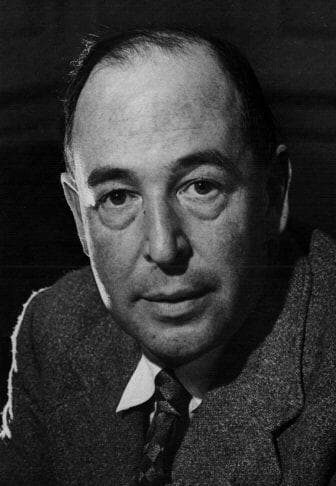
Clive Staples Lewis was a British writer, literary scholar, and Anglican lay theologian. He held academic positions in English literature at both Oxford University and Cambridge University. He is best known as the author of The Chronicles of Narnia, but he is also noted for his other works of fiction, such as The Screwtape Letters and The Space Trilogy, and for his non-fiction Christian apologetics, including Mere Christianity, Miracles, and The Problem of Pain.
Similar books
- A Wrinkle in Time
Madeleine L'Engle
4.0 (1.1M) average on GoodreadsFantasyExplores spiritual themes and cosmic journeys through a child's perspective, with benevolent higher beings.
- Dune
Frank Herbert
4.2 (766k) average on GoodreadsFantasyFeatures a protagonist immersed in an alien culture on a desert planet, dealing with themes of prophecy and resource exploitation.
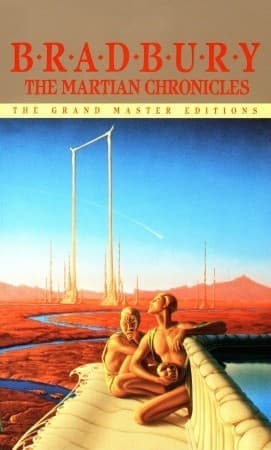
- The Martian Chronicles
Ray Bradbury
4.1 (210k) average on GoodreadsFantasyCollection of stories about human colonization of Mars and encounters with its indigenous, often melancholic, inhabitants.
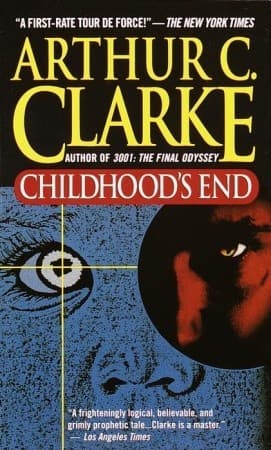
- Childhood's End
Arthur C. Clarke
4.1 (130k) average on GoodreadsFantasyChildhood's End also explores humanity's interaction with advanced alien species and evolutionary/spiritual themes. However, Clarke's approach is more speculative and less overtly theological, focusing on a post-human transcendence rather than a return to a pre-Fall ideal, as seen in Lewis. Clarke's aliens are enigmatic and powerful, leading humanity to an unknown future, while Lewis's eldila are part of a divinely ordered cosmos.
- Stranger in a Strange Land
Robert A. Heinlein
3.9 (275k) average on GoodreadsFantasyHeinlein's Stranger in a Strange Land delves into cultural relativism, alternative spiritualities, and social critique through an alien raised on Mars. While both feature an alien perspective on human society, Heinlein's focus is more humanistic, counter-cultural, and critiques traditional institutions from a largely secular standpoint, contrasting with Lewis's traditional Christian framework and critique of modernity from a theological perspective. Heinlein explores radical social restructuring, whereas Lewis posits a return to cosmic order.
- The War of the Worlds
H.G. Wells
3.8 (245k) average on GoodreadsFantasyWells's The War of the Worlds is a foundational work of alien invasion science fiction, depicting a brutal, materialistic alien race attacking Earth. While both involve aliens and Earth's vulnerability, Wells's novel is primarily a social commentary on imperialism and human insignificance in the face of superior technology, devoid of Lewis's spiritual cosmology. Wells presents a purely naturalistic, often bleak, view of the universe, directly opposing Lewis's spiritually vibrant and divinely ordered cosmos.



Enjoyed the summary?
A summary gives you the shape of the book. The book itself has the detail, the examples and the voice.
Find Out of the Silent Planet on AmazonAs an Amazon Associate, BookBrief earns from qualifying purchases. How we're funded