
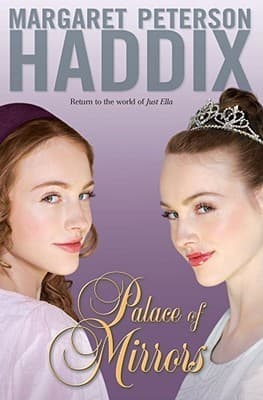
Synopsis
Covers the whole plot, including the ending.
- Difficulty
- Easy
- Pacing
- Moderate
- Mood
- Intriguing, Mysterious, Hopeful, Romantic
- Read it if
- You enjoy fairy tale retellings with a mystery twist, strong female characters, and themes of identity and political intrigue.
- Skip it if
- You prefer high fantasy with complex magic systems or don't enjoy stories centered on royal conspiracies.
Palace of Mirrors Plot Summary
Covers the whole plot, including the ending.
The Hidden Princess
Cecilia grows up in a small village, believing she is Princess Cecilia, the rightful heir to Suala. Her foster parents, Ma and Pa, constantly remind her of her royal lineage and the need for secrecy. They teach her history, statesmanship, and palace etiquette, preparing her to reclaim her birthright. The current occupant of the throne, Princess Desmia, is a decoy, placed there by 'evil forces' that supposedly killed Cecilia's parents. Cecilia's friend, Harper, is her only confidante, sharing her dreams and frustrations about their mundane village life. As Cecilia nears her sixteenth birthday, she feels an urgency to take her place.
The Journey to the Capital
Driven by conviction and restlessness, Cecilia decides to act. Against her foster parents' wishes, she and Harper secretly leave their village, traveling to the capital city and the Palace of Mirrors. Their journey has typical travel challenges, but Cecilia's belief in her destiny keeps her going. Harper, while supportive, occasionally voices practical concerns about their lack of resources and the dangers. Cecilia dismisses these worries, convinced that once she reaches the palace, everything will fall into place as she reclaims her position.
Arrival at the Palace of Mirrors
Upon reaching the capital, Cecilia and Harper are surprised by how easily they enter the Palace of Mirrors. They expected a fortress but find an open, bustling environment. Their initial plan is to confront Princess Desmia, but they quickly realize the situation is more complex. Princess Desmia, far from the tyrannical figure Cecilia imagined, appears to be a kind and benevolent ruler. She is also young, around Cecilia's age, and seems dedicated to her people. This unexpected reception plants the first seeds of doubt in Cecilia's narrative.
The Princess and the Peasant Girl
Due to misunderstandings and coincidences, Cecilia and Harper are offered positions within the palace, Cecilia as a lady-in-waiting to Princess Desmia, and Harper in the kitchens. This closeness allows Cecilia to observe Desmia daily. She searches for signs of the 'evil' she's been taught to expect but finds none. Desmia is diligent, compassionate, and seems burdened by her responsibilities. Cecilia starts to notice similarities between herself and Desmia, not just in age, but in their shared knowledge of Sualan history and customs, knowledge Cecilia believed was unique to her royal upbringing.
Unraveling the Truth
The true complexity of the situation is revealed when Cecilia overhears Desmia confiding in her trusted advisor, Dame Ming. Desmia recounts a story similar to Cecilia's: she believes she is the true Princess Cecilia, hidden in a village and then brought to the palace as a decoy to protect her from the 'usurper' – who she believes is the other Princess Cecilia. This revelation shatters Cecilia's worldview. She realizes both of them have been raised with the same narrative, but with their roles reversed. The 'evil forces' now seem less clear, and the foundation of her identity begins to crumble.
The Confession and the Conspiracy
Overwhelmed by the conflicting truths, Cecilia eventually confronts Desmia. The initial confrontation is tense and emotional, but through their shared confusion and undeniable similarities, they begin to trust each other. They realize they are both victims of a grand deception. With Harper's help and the cautious assistance of some palace staff, they investigate the origins of their stories. They discover that both sets of foster parents received similar instructions and artifacts to 'prove' their child's royal lineage. A deeper, more sinister plot begins to emerge, orchestrated by someone within the palace's past.
The Mastermind Revealed
Through their combined efforts, Cecilia and Desmia uncover the truth: they are not the only two 'true princesses.' There were many, perhaps dozens, of girls raised in villages across Suala, all believing themselves to be the rightful heir. The mastermind behind this scheme is Lord Valdis, a distant relative of the royal family. Valdis, desperate for power and unable to directly usurp the throne, orchestrated a long-term plan to destabilize the kingdom by creating multiple claimants. His goal was to plunge Suala into civil war, weakening it enough for him to seize control. He planted false evidence and trained foster parents to perpetuate the lie.
The Betrayal and the Climax
Lord Valdis, realizing his scheme is unraveling, tries to manipulate Cecilia and Desmia. He attempts to pit them against each other, offering each the 'true' throne if they denounce the other. However, having formed a bond and understood the extent of his deception, the girls refuse. A tense confrontation ensues where Valdis reveals his arrogance and ruthlessness. He tries to use his influence and planted loyalists to seize the palace, but Cecilia, Desmia, and their allies, including Harper and some loyal guards, thwart his immediate plans. The climax involves a struggle for control of the palace and the loyalty of the people.
The True Princess Identified
After Valdis's defeat, the true Princess Cecilia is identified. Desmia is the actual Princess Cecilia, placed in the palace as a decoy to protect her from initial threats, while Cecilia was a peasant girl, one of many used in Valdis's scheme. This realization is a moment for both girls. Desmia, though confirmed as royalty, feels the weight of her identity and the deception. Cecilia, while not royal, finds a new purpose and identity beyond the false one she carried. The kingdom faces the challenge of healing from the widespread deception.
A New Beginning for Suala
With Lord Valdis imprisoned and his conspiracy exposed, Princess Desmia officially takes her place as the undisputed ruler of Suala. She begins the difficult task of reuniting a kingdom shaken by years of uncertainty and deception. Cecilia, no longer believing herself a princess, finds a new and fulfilling role within the palace, using her knowledge of statesmanship and history to assist Desmia. Their friendship, forged in shared deception and discovery, becomes a cornerstone of the new court. Harper also finds her place, and the story concludes with a hopeful outlook for Suala, emphasizing truth, loyalty, and genuine leadership over birthright alone.
Principal Figures
Cecilia
Protagonist
A peasant girl raised to believe she is the hidden true princess.
Cecilia is a headstrong and determined young woman who has spent her life believing she is the rightful heir to the throne of Suala. Her identity is deeply intertwined with this belief, driving her ambition and sense of destiny. She is intelligent, well-versed in history and politics thanks to her foster parents' training, and possesses a strong moral compass. Initially, she is somewhat naive and quick to judge, seeing the world in black and white terms of good and evil, particularly regarding Desmia. Her journey forces her to confront the painful reality that her entire life has been a lie, leading to a profound re-evaluation of who she is.
Relationships: Harper (Best friend and confidante); Princess Desmia (Initial rival, then close friend and ally); Ma and Pa (Foster parents who raised her with the princess narrative)
Princess Desmia
Protagonist/Co-Protagonist
The reigning princess, who also believes she is the true heir in hiding.
Princess Desmia is initially perceived by Cecilia as a mere decoy or an antagonist, but she is revealed to be a kind, compassionate, and diligent ruler. She is intelligent and dedicated to her kingdom, often burdened by the responsibilities of her position. Like Cecilia, Desmia was raised with a similar narrative of being the true princess in hiding, making her equally a victim of the overarching deception. She is initially cautious and somewhat reserved, but her genuine desire for truth and justice allows her to form an unlikely alliance with Cecilia. Her strength lies in her empathy and her ability to lead with integrity.
Relationships: Cecilia (Initial rival, then close friend and ally); Dame Ming (Trusted advisor and mentor); Lord Valdis (Antagonist, orchestrator of the deception)
Harper
Supporting
Cecilia's loyal and pragmatic best friend.
Harper is Cecilia's closest friend and unwavering supporter. She is more grounded and practical than Cecilia, often voicing common-sense concerns about their ambitious plans. Despite her initial skepticism and fear, she remains fiercely loyal to Cecilia, accompanying her on her journey to the capital and supporting her through the unraveling truths. Harper's role is to provide a voice of reason and a source of emotional support for Cecilia, often lightening the mood with her down-to-earth perspective. She is brave in her own way, facing the dangers of the palace alongside Cecilia, even though she is not driven by royal aspirations.
Relationships: Cecilia (Best friend and confidante)
Lord Valdis
Antagonist
The power-hungry relative who orchestrated the 'princess' deception.
Lord Valdis is the true villain of the story, a cunning and manipulative distant relative of the royal family. Driven by an insatiable desire for power, he masterminded the elaborate plot to create multiple 'true princesses' to destabilize the kingdom and eventually seize the throne for himself. He is intelligent, patient, and ruthless, capable of orchestrating a deception that spans years and involves numerous innocent lives. Valdis views people as pawns in his grand scheme and possesses a chilling arrogance, believing himself superior to others. His motives are purely selfish, contrasting sharply with the genuine leadership qualities of Desmia and the evolving integrity of Cecilia.
Relationships: Princess Desmia (Target of his deception); Cecilia (Unwitting pawn in his scheme)
Dame Ming
Supporting
Princess Desmia's trusted and loyal advisor.
Dame Ming is a wise and experienced woman who serves as Princess Desmia's primary advisor and confidante. She is fiercely loyal to Desmia and the kingdom, offering sound counsel and a steady presence in the turbulent palace. Dame Ming is observant and intelligent, quickly noticing the unusual similarities between Cecilia and Desmia. While initially cautious of Cecilia, she eventually recognizes the genuine nature of the girls and becomes an invaluable ally in uncovering Lord Valdis's conspiracy. She embodies wisdom, duty, and unwavering integrity, representing the best of the palace's loyal old guard.
Relationships: Princess Desmia (Trusted advisor and mentor)
Ma and Pa
Supporting
Cecilia's foster parents, who raised her with the princess narrative.
Ma and Pa are the loving, if misguided, foster parents who raised Cecilia. They genuinely believe they are protecting the true princess and painstakingly teach Cecilia everything they know about royal history and etiquette. They are simple villagers, but their devotion to what they believe is their duty is profound. They are strict about secrecy and Cecilia's 'training,' often causing frustration for Cecilia, but their intentions are always rooted in love and a sense of responsibility. They are ultimately pawns in Lord Valdis's scheme, having been fed misinformation and false promises.
Relationships: Cecilia (Foster parents)
Themes & Insights
Identity and Self-Discovery
The novel explores identity, especially when foundational beliefs are shattered. Both Cecilia and Desmia are defined by being the 'true princess,' but when these narratives conflict and are proven false, they must redefine themselves. Cecilia, in particular, grapples with losing the royal identity she cherished, only to discover her true worth lies in her skills, integrity, and relationships, not birthright. The story suggests that true identity comes from experience and choice, rather than inherited status. This is clear when Cecilia realizes her knowledge is valuable even if she isn't royal, and Desmia embraces her confirmed royal identity with a new understanding of its responsibilities.
“Somewhere in the world I have a tiara in a little box. It is not safe for me to wear it... It is not safe for me even to tell anyone who I really am. But I know—I have always known.”
The Nature of Truth and Deception
A central theme is the pervasive nature of deception and the difficulty of discerning truth. The entire kingdom has been subjected to a decades-long lie by Lord Valdis, affecting countless individuals, including Cecilia and Desmia. The story shows how easily people can be manipulated by compelling, false narratives. It questions how one can trust anything when even personal histories and royal successions are fabricated. The girls' journey to uncover the truth highlights the importance of critical thinking, questioning assumptions, and seeking evidence beyond what one is told. The 'Palace of Mirrors' itself symbolizes how appearances can deceive and reflect distorted realities.
“Nothing was as it seemed. Not her, not the princess, not the entire country.”
Leadership and Responsibility
The book explores what makes a good leader. Initially, Cecilia believes leadership is simply about reclaiming a birthright, but she and Desmia learn it is about more than bloodline. Desmia, as the reigning princess, shows genuine care for her people and a willingness to listen and learn, embodying responsible leadership. Cecilia's journey, though she isn't royalty, prepares her to be an invaluable advisor, showing that leadership can manifest in various forms, not just on the throne. The contrast between Desmia's selfless dedication and Valdis's power-hungry ambition defines true leadership versus tyranny, emphasizing integrity, compassion, and commitment to the kingdom's welfare.
“A princess was supposed to be a leader, not just a symbol. She was supposed to do things.”
Friendship and Loyalty
The loyalty between Cecilia and Harper is a cornerstone of the story, giving Cecilia essential emotional support during her tumultuous journey. Their friendship endures despite dangers and shocking revelations. Also, the development of trust and friendship between Cecilia and Desmia, initially rivals, is crucial. Their ability to overcome their programmed animosity and work together allows them to expose the conspiracy. This theme highlights the power of human connection, emphasizing that strong bonds of friendship and loyalty are vital for navigating deception and achieving collective goals, ultimately being more powerful than any scheme designed to divide.
“You're my best friend, Cecilia. No matter what.”
Plot Devices & Literary Techniques
The Hidden Princess Trope
A familiar fantasy trope used as a central deception.
The novel utilizes the classic 'hidden princess' trope, where a royal heir is secretly raised among commoners to protect them from danger. However, Haddix cleverly subverts this device by having multiple characters believe they are the 'true' hidden princess, including both protagonists. This creates immediate conflict and deepens the mystery, as the reader, like the characters, must question who is truly royalty. The trope initially sets up Cecilia's motivation but is then revealed to be a meticulously crafted lie, becoming a key mechanism for the antagonist's overarching scheme to destabilize the kingdom, turning a traditional fantasy element into a tool of political manipulation.
Conflicting Narratives
Two opposing stories of royal lineage drive the central conflict.
A primary plot device is the existence of two equally compelling, yet entirely contradictory, narratives regarding the true princess. Cecilia believes she is the hidden heir, while Princess Desmia holds the same belief about herself, with their 'stories' differing only in who is the true royal and who is the decoy. This creates an immediate and profound mystery, forcing both characters and the reader to question which story, if either, is true. This device fuels the initial animosity between the girls but ultimately becomes the catalyst for their alliance, as they realize the conflicting narratives point to a larger, shared deception, compelling them to uncover the real truth.
Palace of Mirrors as Metaphor
The palace's name reflects the theme of deceptive appearances.
The 'Palace of Mirrors' serves as a potent metaphor for the novel's central themes of truth, deception, and identity. Mirrors reflect images, but they can also distort or multiply them, much like the conflicting narratives of the princesses. The palace, while grand, holds secrets and reflects the elaborate lies that have been perpetuated for years. Its very name suggests that nothing inside is quite what it seems, hinting at the illusions and manufactured realities that the characters must navigate. It symbolizes the confusion and the eventual clarity that comes from seeing beyond superficial reflections to the underlying truth.
The 'Proof' Artifacts
Physical objects used to legitimize false identities.
Both Cecilia and Desmia possess 'proof' of their royal heritage, such as unique toys, specific pieces of jewelry, or secret documents. These artifacts serve as tangible anchors for their respective false narratives. They are crucial in convincing the girls and their foster families of their royal status, giving weight to the elaborate lies. The identical nature of these 'proofs' for different girls eventually becomes a key clue in unraveling the conspiracy, demonstrating how easily physical evidence can be fabricated and manipulated to support a desired illusion, ultimately exposing the depth of Lord Valdis's deception.
Palace of Mirrors Quotes
“The palace shimmered like a dream, but dreams, Elara knew, could turn into nightmares in the blink of an eye.”
“Sometimes the bravest thing you can do is admit you're scared.”
“A princess, true or false, still had a duty to her people.”
“The truth was a weapon, and sometimes it was best kept sheathed.”
“Love, she realized, wasn't just about grand gestures, but about quiet trust and shared burdens.”
“Every mirror tells a different story, and none of them are entirely true.”
“A kingdom built on lies would surely crumble, no matter how beautiful its facade.”
“Some cages have invisible bars, stronger than any iron.”
“It's not about being the strongest, but about being the cleverest, and knowing when to fight and when to flee.”
“The greatest magic isn't in spells, but in courage and a good heart.”
“Even a small candle can defy the deepest darkness.”
“Sometimes, to find your true path, you have to get lost first.”
“The past is a stubborn ghost, always lingering, always whispering.”
“A crown doesn't make a queen; a queen makes the crown.”
Quiz
10 questions on the plot and the characters. Each answer comes with a short explanation.
Question 1
What is Cecilia's understanding of her true identity at the beginning of the story?
- She believes she is a commoner destined for a simple life.
- She knows she is the true princess, in hiding from evil forces.
- She thinks she is a decoy princess, like Desmia.
- She is uncertain of her identity but suspects noble lineage.
Show answer
B. She knows she is the true princess, in hiding from evil forces. The synopsis states, 'Cecilia knows that she is not just another peasant girl; she is actually the true princess, in hiding until the evil forces that killed her parents are vanquished.'
Question 2
Who is currently on the throne as a decoy, according to Cecilia's initial belief?
- Harper
- Desmia
- Cecilia's mother
- An unnamed regent
Show answer
B. Desmia The text explicitly states, 'A commoner named Desmia is on the throne as a decoy.'
Question 3
What prompts Cecilia to decide it's 'time to take charge'?
- She is tired of her peasant chores.
- She grows weary of secretly studying and pretending to be a commoner.
- Harper convinces her to act immediately.
- She receives a secret message from the palace.
Show answer
B. She grows weary of secretly studying and pretending to be a commoner. The synopsis mentions, 'As she gets older, Cecilia finds it harder to study statesmanship and palace protocol secretly at night and then pretend that she has nothing on her mind other than scrubbing the gruel stains out of her best apron by day. Cecilia knows that it is time to take charge.'
Question 4
What is the name of Cecilia's best friend who accompanies her to the capital city?
- Desmia
- Ella
- Harper
- Marley
Show answer
C. Harper The text states, 'Along with her best friend, Harper, she flees to the capital city...'
Question 5
What is the primary destination for Cecilia and Harper after they flee?
- A hidden rebel camp
- The Palace of Mirrors in the capital city
- A neighboring kingdom
- Their childhood village
Show answer
B. The Palace of Mirrors in the capital city The synopsis states, 'Along with her best friend, Harper, she flees to the capital city, determined to reclaim her throne and face the danger head on. When Harper and Cecilia reach the famed Palace of Mirrors...'
Question 6
What significant complication do Cecilia and Harper discover upon reaching the Palace of Mirrors?
- The palace is deserted.
- Princess Desmia believes a different version of the story about the throne.
- The evil forces are still actively controlling the palace.
- The 'Palace of Mirrors' is merely a legend.
Show answer
B. Princess Desmia believes a different version of the story about the throne. The synopsis explicitly states, 'When Harper and Cecilia reach the famed Palace of Mirrors, they discover complications: Princess Desmia believes an entirely different version of the story.'
Question 7
What is a central theme introduced by the complication at the Palace of Mirrors?
- The importance of friendship above all else.
- The idea that truth and reality can be subjective or misleading.
- The inevitable triumph of good over evil.
- The difficulty of maintaining a secret identity.
Show answer
B. The idea that truth and reality can be subjective or misleading. The phrase 'Princess Desmia believes an entirely different version of the story' and 'nothing is as it appears' strongly suggests a theme where truth, perception, and reality are central and often misleading.
Question 8
The book 'Palace of Mirrors' is set in the 'charmed world' of which other Margaret Peterson Haddix novel?
- Among the Hidden
- Found
- Just Ella
- Turnabout
Show answer
C. Just Ella The synopsis states, 'Acclaimed author Margaret Peterson Haddix returns to the charmed world of Just Ella...'
Question 9
What is the significance of the phrase 'Somewhere in the world I have a tiara in a little box. It is not safe for me to wear it...' at the beginning of the synopsis?
- It symbolizes Cecilia's hidden royal identity and the danger associated with it.
- It literally means Cecilia owns a hidden piece of jewelry.
- It is a clue to the location of the true throne.
- It foreshadows a future fashion dilemma for Cecilia.
Show answer
A. It symbolizes Cecilia's hidden royal identity and the danger associated with it. The tiara is a clear metaphor for her royal status. The context 'It is not safe for me to wear it... It is not safe for me even to tell anyone who I really am.' directly links it to her hidden identity and the danger she faces.
Question 10
Based on the synopsis, what is the core conflict Cecilia initially anticipates facing when reclaiming her throne?
- Convincing the common people she is the true princess.
- Overcoming the 'evil forces that killed her parents'.
- Dealing with Desmia's incompetence as a ruler.
- Learning the complex rules of palace protocol.
Show answer
B. Overcoming the 'evil forces that killed her parents'. Cecilia believes she is 'in hiding until the evil forces that killed her parents are vanquished' and flees 'determined to reclaim her throne and face the danger head on,' implying her primary anticipated conflict is with these evil forces.
Palace of Mirrors FAQ
What is the central premise of 'Palace of Mirrors'?
The story centers on Cecilia, a peasant girl who believes she is the true princess, hidden away until she can reclaim her throne from an impostor, Desmia. She has been secretly studying royal protocols and decides it's time to take action, leading her and her friend Harper to the capital to confront the situation.
Who is Cecilia and what does she believe about herself?
Cecilia is a young woman living as a peasant but firmly believes she is the legitimate princess of the kingdom. She thinks her parents were killed by evil forces and that a decoy, Desmia, currently occupies her rightful place on the throne, waiting for Cecilia to come of age.
Who is Desmia and what is her role in the kingdom?
Desmia is the girl currently on the throne, acting as the Princess. Cecilia believes Desmia is a decoy, but the book explores Desmia's own understanding of her identity and position, suggesting a more complex reality than Cecilia initially perceives.
What prompts Cecilia to leave her village and head to the capital?
Cecilia grows increasingly frustrated with her life as a peasant, finding it difficult to reconcile her secret studies of statesmanship with her mundane daily chores. She feels it's time to stop waiting and actively reclaim her destiny, believing she is ready to face the dangers.
Who is Harper and what is his relationship with Cecilia?
Harper is Cecilia's best friend and accompanies her on her journey to the capital city. He serves as her confidant and companion, supporting her in her ambitious quest to reclaim the throne, despite the inherent dangers.
How does 'Palace of Mirrors' connect to Margaret Peterson Haddix's previous work, 'Just Ella'?
'Palace of Mirrors' is set in the same charmed world as 'Just Ella.' While details aren't explicitly given in the synopsis, this suggests shared lore, perhaps recurring themes of identity, royalty, and societal expectations, or even subtle character cameos.
What is the significance of the title, 'Palace of Mirrors'?
The 'Palace of Mirrors' is the capital building where Desmia resides and where Cecilia expects to confront her. The 'mirrors' likely symbolize the themes of reflection, distorted realities, and differing perspectives, highlighting how characters see themselves and others.
Are there any clues about the 'evil forces' that supposedly killed Cecilia's parents?
The synopsis only mentions 'evil forces that killed her parents' as Cecilia's long-held belief. The nature or identity of these forces is left ambiguous, suggesting it might be a central mystery or even a misconception that will be unraveled during the story.
What internal conflict does Cecilia experience before leaving for the capital?
Cecilia struggles with the dichotomy of her perceived royal destiny and her current peasant life. She finds it increasingly difficult to secretly prepare for statesmanship while performing mundane chores, indicating a growing impatience and a desire for authenticity.
How does the concept of 'identity' play a role in the novel's psychological themes?
Identity is central, as both Cecilia and Desmia have strong beliefs about who they are and their rightful place. The clash of their self-perceptions, especially when they discover 'complications,' drives the psychological exploration of self-worth, belonging, and the impact of narrative on identity.
What psychological impact might the 'decoy' role have on Desmia?
Desmia, as the 'decoy' princess, likely experiences a complex psychological state, perhaps grappling with feelings of being a placeholder, a target, or even a fraud. Her 'entirely different version of the story' suggests she has her own sense of purpose or trauma related to her position.
How does 'knowing' one's true identity, as Cecilia claims, influence her actions and mindset?
Cecilia's absolute conviction that she 'has always known' her true identity as princess gives her immense resolve and purpose. This belief fuels her ambition and bravery, but also potentially blinds her to alternative truths or the complexities of the situation, leading to a clash with Desmia's perspective.
What kind of 'complications' are hinted at when Cecilia and Harper reach the Palace of Mirrors?
The 'complications' arise from Princess Desmia believing 'an entirely different version of the story.' This suggests that the history of the kingdom, the deaths of Cecilia's parents, or Desmia's own legitimacy are not as Cecilia understands them, setting up a major conflict of narratives.
Is it possible that Cecilia is not the true princess, despite her strong belief?
Given the mention of 'complications' and Desmia's 'entirely different version of the story,' it is highly probable that Cecilia's understanding of her lineage is flawed or incomplete. The narrative likely challenges her deeply held conviction, creating suspense and thematic depth.
What does the phrase 'nothing is as it appears' imply about the book's themes?
This phrase suggests a central theme of illusion versus reality, and the unreliability of perception. It implies that the reader, like Cecilia, will uncover layers of deception, hidden truths, and perhaps even magic that defy initial expectations about the characters' roles and the kingdom's history.
Could the 'evil forces' be more complex than a simple villain, perhaps even a misunderstanding?
Given the emphasis on differing perspectives and the idea that 'nothing is as it appears,' it's plausible that the 'evil forces' are not a straightforward antagonist. They could be a political faction, a historical event misinterpreted, or even a necessary sacrifice that Cecilia doesn't yet comprehend.
How might the 'romance' element manifest in the story?
While not detailed in the synopsis, the romance element could involve Cecilia and Harper, or perhaps a new character encountered at the palace. It might explore themes of love and loyalty amidst political intrigue and identity crises, adding another layer of personal stake to the plot.
About the author

Margaret Peterson Haddix is an American author known for her works of children's and young adult fiction. Some of her notable books include "Among the Hidden," "Just Ella," "Among the Impostors," "Among the Betrayed," "Running Out of Time," and "Among the Brave." Her stories often explore themes of identity, freedom, and the consequences of societal rules.
Similar books
- Just Ella
Margaret Peterson Haddix
3.8 (33k) average on GoodreadsFantasyShares the same author and a similar fairy tale world with a focus on a princess's struggles.
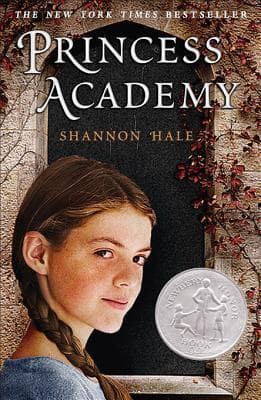
- Princess Academy
Shannon Hale
4.0 (105k) average on GoodreadsFantasyFeatures a young girl from humble beginnings thrust into a royal world with secrets and challenges.
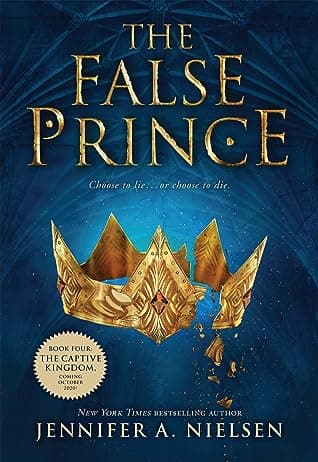
- The False Prince
Jennifer A. Nielsen
4.2 (76k) average on GoodreadsFantasyInvolves a commoner pretending to be a lost prince, with political intrigue and identity confusion.
- Ella Enchanted
Gail Carson Levine
4.0 (387k) average on GoodreadsFantasyBoth books feature a young female protagonist navigating challenges within a fantastical kingdom. However, Levine's Ella Enchanted primarily focuses on romance and a magical curse, reimagining a classic fairy tale. Haddix's Palace of Mirrors, conversely, delves into a complex political conspiracy and the struggle for rightful identity and inheritance, offering a more intricate exploration of power dynamics and deception.
- Harry Potter and the Sorcerer's Stone
J.K. Rowling
4.5 (7M) average on GoodreadsFantasyRescued from a miserable life under the stairs, an orphaned boy discovers he's a wizard destined for a magical school, where he uncovers a dangerous secret tied to the dark wizard who murdered his parents.
- The Hunger Games
Suzanne Collins
4.3 (6.4M) average on GoodreadsFantasyIn a future where children fight to the death on live television, Katniss Everdeen volunteers for the arena, turning a death sentence into a fight for survival and a spark of rebellion.




Enjoyed the summary?
A summary gives you the shape of the book. The book itself has the detail, the examples and the voice.
Find Palace of Mirrors on AmazonAs an Amazon Associate, BookBrief earns from qualifying purchases. How we're funded