

Synopsis
Covers the whole plot, including the ending.
- Difficulty
- Medium
- Pacing
- Moderate
- Mood
- Thought-provoking, Hopeful, Historical, Emotional, Resilient
- Read it if
- You enjoy historical fiction from a child's perspective, are interested in World War II beyond the European front, or appreciate stories of resilience and finding belonging.
- Skip it if
- You prefer fast-paced action or are looking for a lighthearted read without themes of war and displacement.
Pennies for Hitler Plot Summary
Covers the whole plot, including the ending.
A Boy in Nazi Germany: Georg's Early Life
In 1939, six-year-old Georg lives a privileged life in Germany with his English academic father and German mother. He attends school, where a teacher, Herr Professor Doktor Major Schneider, measures the children's heads to determine 'Aryan' traits, a concept Georg finds confusing. His best friend is Wolfgang, whose family are ardent Nazis. Georg's parents shield him from the worst realities, but he observes the increasing presence of Nazi ideology, such as the swastika flag and the 'Heil Hitler' salute. He enjoys cream cakes and playing, mostly unaware of the rising political tensions that are beginning to fracture society, though he senses an underlying unease from his parents.
The Family Secret and a Hasty Departure
Georg's stable world crumbles when his parents reveal a secret: his father is not his biological father. His biological father was Jewish, and his mother married his English father to protect him. The family realizes they are no longer safe in Germany, especially after a university graduation ceremony turns into a violent pro-Nazi demonstration where Georg's father, an outspoken critic, is targeted. With immediate danger, Georg is quickly packed off, first to a safe house, then smuggled out of Germany by train, a bewildering and frightening experience for the young boy who doesn't fully grasp the reasons for his sudden departure.
Arrival in War-Torn London
Georg arrives in London, a city already bracing for war. He is taken in by Mrs. Evans, a kind, elderly woman who lives with her daughter, Elizabeth. Georg struggles to adapt to the new language and customs, and the constant threat of air raids and the Blitz is terrifying. He experiences the reality of war firsthand, hearing bombs fall and seeing the destruction. Despite the danger, Mrs. Evans and Elizabeth provide him with a sense of safety and family, teaching him English and helping him adjust. He learns to count pennies, a new currency, symbolizing his new life.
The Journey to Australia
As the war intensifies in London, Georg is deemed safer in Australia. He is placed on a ship, the 'Duntroon,' filled with other child evacuees, for the long and dangerous journey across enemy-infested seas. The voyage is challenging, marked by crowded conditions, seasickness, and the constant fear of U-boat attacks. Georg befriends another boy, Paul, and together they navigate the ship's routines and the emotional toll of leaving everything behind. He carries with him memories of Germany and the longing for his parents, unsure if he will ever see them again.
A New Home in the Australian Bush
Upon arrival in Sydney, Georg is taken to a rural property in the Australian bush, a stark contrast to his European upbringing. He is placed with the Dunkel family, consisting of the stern but ultimately caring Mrs. Dunkel, her younger children, and the older, more understanding Mr. Dunkel. The family runs a farm, and Georg is expected to help with chores, something entirely new to him. He struggles with the heat, the unfamiliar surroundings, and the different way of life, feeling like an outsider and often misunderstood. The Dunkels, though initially distant, gradually begin to accept him.
Adjusting to Bush Life and New Friendships
Georg slowly begins to adapt to his new life. He learns to milk cows, gather eggs, and ride horses. He befriends the Dunkel children, particularly the youngest, Sally, who is fascinated by his stories of Germany. He attends the local one-room schoolhouse, where he faces some initial teasing for his accent but soon finds acceptance. He forms a close bond with his teacher, Miss Penny, who encourages his learning and helps him overcome his insecurities. He also learns about the local Aboriginal culture from some of the farmhands, broadening his understanding of the world.
The Shadow of War and Identity
Despite the distance, the war continues to cast a long shadow. Georg constantly worries about his parents and feels a deep sense of guilt and confusion about his German heritage. He is aware that Germany is the enemy, and he fears that if his true background is discovered, he will be ostracized or worse. He tries to suppress his memories and language, striving to become 'Australian.' This internal conflict over his identity is a significant struggle, as he tries to reconcile his past with his present, often feeling like he doesn't truly belong anywhere.
The Internment Camp and a Crucial Choice
Georg and the Dunkels visit a nearby internment camp where German and Italian immigrants are held, regardless of their political leanings. This visit is a stark reminder of the prejudice and suspicion directed towards anyone with enemy ties. He encounters a German man, Karl, who shares stories of his homeland, stirring conflicting emotions in Georg. This experience strengthens Georg's decision to fully embrace his new identity. He decides to change his name from Georg to George, a symbolic act of severing ties with his German past and committing to his new Australian life, believing it is essential for his survival and acceptance.
Growing Up and Finding Belonging
As the war continues, George grows older and more integrated into the Dunkel family and the community. He works hard on the farm, proving his worth and earning respect. He learns resilience and self-reliance, qualities forged by his journey. He and the Dunkels contribute to the war effort in small ways, such as collecting scrap metal. He forms lasting friendships and begins to feel a true sense of belonging in Australia, the place that has offered him refuge and a new beginning. He still thinks of his parents, but the acute pain of separation begins to lessen with time and the comfort of his new life.
The War Ends and a Glimmer of Hope
The war eventually ends, bringing relief but also uncertainty. George, now older, hears news of Germany's defeat and the atrocities committed by the Nazis. He grapples with the implications of his heritage and the immense suffering. While the war's end means an end to the immediate danger, it also brings the daunting prospect of what comes next. There is a faint hope that he might one day reunite with his parents, but he knows that even if they survived, their lives, like his, would be irrevocably changed. He has found a home and a family in Australia, and this new identity is now firmly his own.
Pennies for Hitler Characters
Georg (later George)
Protagonist
A German boy evacuated to Australia during WWII, grappling with his identity.
Georg is a sensitive and intelligent boy who begins the story at age six, living a sheltered life in Germany. He is initially naive about the political climate but keenly observant. His journey forces him to mature rapidly, adapting to multiple new cultures and languages. He struggles deeply with his German heritage and the fear of being perceived as the enemy, leading him to actively suppress his past. He is resilient, forming strong bonds with those who show him kindness, and ultimately finds a new sense of self and belonging in Australia.
Relationships: Georg's Mother (Biological mother, loving and protective); Georg's Father (English) (Adoptive father, academic, protective); Mrs. Evans (Kind guardian in London); Elizabeth (Mrs. Evans's daughter, friendly guardian); Mrs. Dunkel (Strict but eventually caring foster mother in Australia); Mr. Dunkel (Quietly understanding foster father in Australia); Sally Dunkel (Youngest Dunkel child, friend); Miss Penny (Supportive and kind teacher in Australia); Wolfgang (Best friend in Germany, from a Nazi family)
Georg's Mother
Supporting
A protective German woman who makes sacrifices for her son's safety.
Georg's biological mother is a loving and courageous woman who married an English academic to protect her son, whose biological father was Jewish. She is fiercely protective and makes the agonizing decision to send Georg away to ensure his survival, knowing it might be a permanent separation. Her actions are driven by profound maternal love and a clear understanding of the dangers posed by the Nazi regime. She remains a powerful, though absent, emotional anchor for Georg throughout his journey.
Relationships: Georg (Son); Georg's Father (English) (Husband)
Georg's Father (English)
Supporting
An English academic and adoptive father who risks his life to protect Georg.
Georg's adoptive father is an English academic living in Germany, a man of principle who openly criticizes the Nazi regime. He is intelligent, brave, and deeply devoted to Georg. He helps orchestrate Georg's escape from Germany, putting his own life in peril. His intellectual background contrasts with the growing anti-intellectualism of the Nazis, making him a target. He represents moral integrity and the sacrifices made to protect innocent lives during wartime.
Relationships: Georg (Adoptive son); Georg's Mother (Wife)
Mrs. Evans
Supporting
A kind, elderly London woman who offers Georg a temporary home.
Mrs. Evans is a compassionate and resilient woman living in war-torn London. She takes Georg in as an evacuee, providing him with warmth, food, and a sense of normalcy amidst the chaos of the Blitz. She teaches him English and introduces him to British customs, acting as a surrogate grandmother. Her kindness and practical nature help Georg navigate the initial shock of leaving Germany and adapting to a new country and the realities of war.
Relationships: Georg (Temporary guardian); Elizabeth (Daughter)
Mrs. Dunkel
Supporting
Georg's stern but ultimately caring foster mother in rural Australia.
Mrs. Dunkel is the matriarch of the Australian farming family who takes Georg in. She is initially strict, pragmatic, and somewhat reserved, expecting Georg to contribute to the household and farm work. Her initial demeanor can seem cold, but underneath, she possesses a deep sense of duty and a growing affection for Georg. She represents the resilience of rural Australians and the often-unspoken kindness found in demanding circumstances. She slowly opens up to Georg, eventually treating him as one of her own.
Relationships: Georg (Foster son); Mr. Dunkel (Husband); Sally Dunkel (Daughter)
Mr. Dunkel
Supporting
Georg's quiet and understanding foster father in the Australian bush.
Mr. Dunkel is the patriarch of the Dunkel family, a quiet and hardworking farmer. He is less outwardly expressive than his wife but possesses a deep, unspoken understanding and empathy. He teaches Georg practical farm skills and provides a stable, grounding presence. His acceptance of Georg is gradual but steadfast, offering a gentle male influence in Georg's new life. He embodies the stoic resilience and quiet strength often found in rural Australian communities.
Relationships: Georg (Foster son); Mrs. Dunkel (Wife)
Sally Dunkel
Supporting
The youngest Dunkel child, who befriends and accepts Georg.
Sally is the youngest of the Dunkel children, a lively and curious girl. She is one of the first to truly welcome Georg into the family, fascinated by his stories and his 'differentness.' Her innocence and open-mindedness help Georg feel more accepted and less isolated. She represents the capacity for uncomplicated friendship and the way children can often overcome prejudice more easily than adults. Her bond with Georg helps him to feel a part of his new family.
Relationships: Georg (Friend/Foster brother)
Miss Penny
Supporting
Georg's kind and encouraging teacher in the Australian bush.
Miss Penny is the teacher at the one-room schoolhouse in the Australian bush. She is intelligent, patient, and deeply empathetic, recognizing Georg's struggles and potential. She encourages his learning, helps him with English, and provides a safe and supportive environment where he can thrive academically and socially. She acts as a mentor and a source of stability, offering a crucial bridge between his past education and his new life.
Relationships: Georg (Teacher/Mentor)
Wolfgang
Mentioned
Georg's best friend in Germany, whose family are ardent Nazis.
Wolfgang is Georg's best friend in Germany, a lively boy from a family deeply committed to Nazi ideology. He represents the pervasive influence of Nazi propaganda on German youth, even at an early age. His friendship with Georg highlights the innocence of childhood friendships clashing with the harsh realities of political division. Wolfgang's character serves to illustrate the world Georg leaves behind and the stark contrast between their diverging paths.
Relationships: Georg (Best friend)
Pennies for Hitler Themes
Identity and Self-Discovery
Georg's journey is about defining himself. Forced to abandon his German identity, language, and name ('Georg' to 'George'), he struggles with who he is in a world that views his heritage with suspicion. He learns that identity is not solely tied to birth but also to experiences, choices, and the communities one embraces. His internal conflict reflects the universal search for belonging, especially when external forces try to dictate one's self-perception. His eventual acceptance of 'George' means finding a new, authentic self.
“He was no longer Georg from Germany. He was George, from the Dunkel farm, in the Australian bush.”
The Impact of War on Children
The novel portrays how war shatters the innocence of childhood. Georg experiences the trauma of forced displacement, the terror of air raids in London, the danger of sea travel, and the emotional toll of separation from his parents. His experience shows not only the physical dangers but also the psychological burden of living with constant fear, uncertainty, and the pressure to adapt to survive. The war forces him to grow up too quickly and make choices about his identity and loyalty at a very young age.
“Children, like bombs, landed in different places, exploding with different shrapnel wounds.”
Prejudice and Acceptance
Georg encounters various forms of prejudice, from Nazi ideology in Germany that persecutes based on race to the suspicion he faces in England and Australia for his German accent and heritage. The book explores how fear and propaganda can lead to generalized hatred. Conversely, it also shows acts of acceptance and kindness from strangers like Mrs. Evans, the Dunkels, and Miss Penny, demonstrating that empathy can transcend national boundaries and wartime animosity. His journey is about overcoming prejudice through individual acts of humanity.
“Hatred is contagious, but kindness can be, too.”
Resilience and Adaptation
Georg's story shows human resilience. He is uprooted multiple times, forced to learn new languages, customs, and ways of life in vastly different environments — from urban London to the rural Australian bush. Despite the trauma, loss, and fear, he continually finds ways to adapt, learn, and build new relationships. His ability to survive and ultimately thrive in challenging circumstances shows the strength of the human spirit, especially in children, to overcome adversity and find hope.
“He had learned to be a survivor. He had learned to be invisible when he needed to be, and to become Australian when that was what was required.”
The Meaning of Home
Initially, Georg's home is a physical place in Germany with his parents. However, as he is displaced, the concept of 'home' changes. It becomes less about a geographical location and more about where he finds safety, love, and acceptance. In London, Mrs. Evans's house becomes a temporary home; in Australia, the Dunkel farm, despite its initial strangeness, gradually becomes his true home. This theme explores how home is built on relationships and a sense of belonging, rather than just a fixed address.
“Home was not just a place. It was the people who loved you, and the memories you made.”
Plot Devices & Literary Techniques
First-Person Limited Perspective (Child Narrator)
Provides an intimate, often naive, view of complex historical events.
The story is told from Georg's perspective, primarily as a young child. This allows the reader to experience the unfolding horrors of WWII and the Nazi regime through innocent eyes, highlighting the absurdity and cruelty of the adult world. His limited understanding of political nuances makes the personal impact of the war more poignant and relatable, as he focuses on sensory details, immediate dangers, and the kindness or harshness of individuals rather than grand political schemes. This perspective emphasizes the human cost of conflict.
Symbolism of Names (Georg to George)
Represents a shift in identity and the severing of ties to the past.
The change of Georg's name to George is a potent symbol of his forced assimilation and the abandonment of his German identity for survival. It marks a conscious decision to shed his past and embrace his new Australian life, believing that his German name makes him an enemy. This act, though initially a survival mechanism, becomes a fundamental part of his self-discovery, illustrating how names can carry immense cultural and personal weight, and how changing them can signify profound internal and external transformations.
The Pennies
A recurring motif representing adaptation, resourcefulness, and a new life.
The pennies Georg learns to count in London, a new currency, symbolize his entry into a new world and his need to adapt. They represent the small, tangible aspects of his new life, a contrast to the abstract horrors of war. Later, the idea of 'pennies' can also subtly refer to the small acts of kindness or survival that accumulate, allowing him to build a new life, penny by penny. They are a concrete representation of his learning and integration into different cultures.
Contrasting Settings
Highlights Georg's journey and the vast differences in his experiences.
The story moves through three vastly different settings: pre-war Nazi Germany (urban, increasingly oppressive), war-torn London (urban, dangerous, resilient), and the rural Australian bush (vast, unfamiliar, isolated). These contrasting backdrops emphasize the magnitude of Georg's displacement and the extent of his adaptation. Each setting presents unique challenges and opportunities for growth, underscoring the universal theme of finding one's place in an ever-changing world.
Pennies for Hitler Quotes
“A penny for Hitler? No, pennies for Hitler. That's what they said. They wanted to send him pennies to help the war.”
“You are not a Nazi. You are a boy. Remember that.”
“Home isn't a place. It's the people who love you.”
“War makes monsters of us all, but we can choose not to be one.”
“Sometimes the bravest thing is to be kind when everyone else is cruel.”
“They called me enemy, but I was just a child who lost everything.”
“In the silence of the bush, I found a peace that bombs could not destroy.”
“A name is just a word. It's what you do that defines you.”
“We are all refugees from something, searching for a safe harbor.”
“The past is a shadow, but the future is a light you can walk toward.”
“Even in war, there are pockets of grace where humanity shines through.”
“You don't have to forget to forgive. You just have to choose to live.”
“A single kindness can be a raft in a sea of hatred.”
“They took my country, but they could not take my soul.”
Quiz
10 questions on the plot and the characters. Each answer comes with a short explanation.
Question 1
What event at a university graduation ceremony in Germany prompts Georg's family to smuggle him out of the country?
- A speech by Georg's father criticizing the Nazis
- A pro-Nazi demonstration that turns violent
- Georg being recognized as having a non-Aryan head shape
- The announcement of Britain declaring war on Germany
Show answer
B. A pro-Nazi demonstration that turns violent The book describes how a university graduation ceremony turns into a pro-Nazi demonstration, which serves as the catalyst for Georg's family to arrange his escape from Germany due to the increasing danger.
Question 2
What disturbing practice does Georg's teacher engage in at school in Germany?
- Forcing students to swear loyalty to Hitler
- Measuring pupils' heads to assess 'Aryan' characteristics
- Teaching propaganda about Jewish people
- Requiring students to report on their parents' political views
Show answer
B. Measuring pupils' heads to assess 'Aryan' characteristics Early in the book, Georg's teacher measures the students' heads to determine which have the most 'Aryan'-shaped heads, reflecting the Nazi ideology of racial purity that permeates daily life.
Question 3
Where does Georg ultimately find refuge after leaving Germany?
- The United States
- Canada
- Australia
- Switzerland
Show answer
C. Australia Georg is smuggled from Germany to war-torn London and then across enemy seas to Australia, where he must adapt to survive in a new country.
Question 4
What is Georg's father's profession in Germany?
- A doctor
- A journalist
- An academic
- A diplomat
Show answer
C. An academic Georg is described as the son of an English academic living in Germany, which influences his family's situation and the risks they face under the Nazi regime.
Question 5
Why must Georg forget his past and who he is after arriving in Australia?
- To avoid being sent back to Germany as a spy
- To blend in and survive in a new environment without drawing suspicion
- Because his new guardians forbid him from speaking German
- To escape memories of his parents' death
Show answer
B. To blend in and survive in a new environment without drawing suspicion As a German boy in Australia during WWII, Georg needs to conceal his identity to avoid prejudice and danger, focusing on survival in a hostile wartime context.
Question 6
What does the title 'Pennies for Hitler' metaphorically represent in the story?
- The small contributions children made to the war effort
- The idea that hatred, like small coins, can accumulate and spread
- A fundraising campaign Georg participates in
- The bribes paid to smuggle children out of Germany
Show answer
B. The idea that hatred, like small coins, can accumulate and spread The title symbolizes how hatred can be contagious and build up over time, much like collecting pennies, but the story also shows that kindness can spread similarly.
Question 7
How does the book portray Georg's initial life in Germany before his escape?
- As impoverished and desperate
- As idyllic with cream cakes and loving parents, despite underlying Nazi influences
- As strictly regimented by the Hitler Youth
- As isolated due to his English heritage
Show answer
B. As idyllic with cream cakes and loving parents, despite underlying Nazi influences The book opens with Georg enjoying a seemingly normal childhood with treats like cream cakes and a caring family, but this is contrasted with the creeping Nazi ideology, such as the head measurements.
Question 8
What is the relationship between 'Pennies for Hitler' and 'Hitler's Daughter' by Jackie French?
- 'Pennies for Hitler' is a direct sequel to 'Hitler's Daughter'
- They are companion books exploring WWII from different children's perspectives
- 'Pennies for Hitler' is a prequel about the same characters
- They are unrelated books by the same author
Show answer
B. They are companion books exploring WWII from different children's perspectives As stated in the book description, 'Pennies for Hitler' is a companion book to 'Hitler's Daughter', both examining children's lives during WWII but from different angles.
Question 9
Which of the following best captures a central theme of 'Pennies for Hitler'?
- The inevitability of war and its impact on all societies
- The struggle to maintain one's identity in the face of forced assimilation
- The technological advancements during WWII
- The political strategies of the Allied forces
Show answer
B. The struggle to maintain one's identity in the face of forced assimilation Georg's journey involves suppressing his German identity to survive in Australia, highlighting themes of identity loss and adaptation amidst war and prejudice.
Question 10
In what way does the book suggest kindness can be 'contagious', as mentioned in the description?
- Through organized charity programs in Australia
- By showing how small acts of compassion can spread and counteract hatred
- Via government propaganda promoting unity
- Through Georg's academic achievements inspiring others
Show answer
B. By showing how small acts of compassion can spread and counteract hatred The book contrasts the spread of hatred (like Nazism) with the potential for kindness to also propagate, as seen in Georg's interactions and the support he receives during his ordeal.
Pennies for Hitler FAQ
What is 'Pennies for Hitler' about?
The novel follows Georg, the son of an English academic living in Germany in 1939, whose life is upended when Nazi ideology infiltrates his school and community. After a university graduation turns into a pro-Nazi demonstration, Georg is smuggled to war-torn London and then to Australia, where he must conceal his German identity to survive while grappling with hatred and discovering the power of kindness.
Why should I read 'Pennies for Hitler'?
This book offers a unique perspective on World War II through the eyes of a child caught between identities, exploring themes of survival, prejudice, and resilience. As a companion to 'Hitler's Daughter,' it delves into how ordinary people, especially children, navigate hatred and find humanity in wartime, making it both educational and emotionally impactful for young readers.
What is the background/setting of 'Pennies for Hitler'?
The story begins in 1939 Germany, where Georg experiences the rise of Nazism through events like his teacher measuring pupils' heads for 'Aryan' traits. It then shifts to war-torn London after Georg is smuggled out, and finally to Australia, where he faces new challenges in a foreign land while trying to forget his past.
What are the most memorable quotes?
Key quotes include 'Hatred is contagious, but Georg finds that kindness can be, too,' highlighting the central theme, and descriptions of Georg's early life with 'cream cakes and loving parents' that contrast sharply with the later turmoil. These lines emphasize the loss of innocence and the struggle between hatred and compassion.
What writing style does the author use?
Jackie French employs a straightforward, accessible narrative style suitable for young adults, blending historical detail with emotional depth. The prose is descriptive yet concise, effectively conveying Georg's inner turmoil and the harsh realities of war without overwhelming younger readers.
What minor details add significant meaning?
Details like the teacher measuring heads for 'Aryan' traits subtly illustrate the insidious spread of Nazi ideology into everyday life. Georg's memories of cream cakes and loving parents symbolize lost innocence, while his journey to Australia represents a forced reinvention of identity under duress.
What are some subtle foreshadowing moments?
The pro-Nazi demonstration at the university graduation foreshadows Georg's need to flee Germany and the broader dangers of the regime. Early scenes of his comfortable life with academic parents hint at the drastic change coming, as his identity becomes a liability in a hate-filled world.
What unexpected character connections exist?
As a companion to 'Hitler's Daughter,' the book implicitly connects to themes of children affected by Nazism, though Georg's story is standalone. His journey from Germany to Australia links disparate wartime experiences, showing how global conflict intertwines lives across continents.
What are unspoken character motivations?
Georg is driven by a deep-seated fear of being discovered as German, motivating him to hide his past in Australia. His parents' decision to smuggle him out reflects their unspoken desperation to protect him from Nazi persecution, prioritizing survival over family unity.
What psychological complexities do characters exhibit?
Georg grapples with survivor's guilt and identity confusion, struggling to reconcile his German heritage with the need to assimilate in Australia. This internal conflict highlights the psychological toll of war on children, who must adapt to hatred while seeking kindness.
What are the major emotional turning points?
Key moments include the pro-Nazi demonstration shattering Georg's normalcy, his traumatic separation from family during the smuggling to London, and his arrival in Australia where he must consciously suppress his past. Each step forces him to confront loss and resilience.
How do relationship dynamics evolve?
Georg's relationships shift from the secure bond with his parents in Germany to isolation and fear in London, then to tentative connections in Australia as he learns to trust others despite his hidden identity. This evolution mirrors his journey from innocence to guarded survival.
Which parts remain ambiguous or open-ended?
The fates of Georg's parents after smuggling him out are left unclear, adding to the story's emotional weight. His long-term adjustment in Australia and whether he fully reconciles his identity are open to interpretation, emphasizing the ongoing impact of war.
What are controversial scenes or decisions?
Georg's need to deny his German heritage to survive in Australia raises questions about identity erasure and moral compromises in wartime. The portrayal of hatred as 'contagious' might spark debate on how prejudice spreads and whether kindness can truly counteract it.
'Pennies for Hitler' ending explained: how it ends & what it means
The book concludes with Georg in Australia, striving to forget his past to survive, symbolizing the painful choices war imposes on children. It suggests that while hatred is pervasive, kindness offers a path to healing, leaving readers to ponder whether Georg finds peace or remains haunted by his history.
About the author

Jackie French is an Australian author known for her contributions to children's and young adult literature. Her notable works include "Pennies for Hitler," which explores themes of war and loss, "They Came on Viking Ships," a historical narrative, and "Oracle," a story that intertwines mythology and adventure. French's writing often reflects her interest in history and the natural world.
Similar books
- When Hitler Stole Pink Rabbit
Judith Kerr
4.0 (14k) average on GoodreadsChildren'sFollows a Jewish family's escape from Nazi Germany and their experiences as refugees, similar to Georg's displacement.
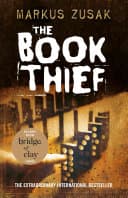
- The Book Thief
Markus Zusak
4.4 (1.8M) average on GoodreadsHistorical FictionZusak's 'The Book Thief' offers a more sophisticated, allegorical, and philosophically deep examination of wartime Germany, appealing to an older young adult audience with its complex narrative and thematic layers. French's novel is more straightforward and less intricate, designed for a younger age group, prioritizing emotional connection over complex moral ambiguities.
- Harry Potter and the Sorcerer's Stone
J.K. Rowling
4.5 (7M) average on GoodreadsFantasyRescued from a miserable life under the stairs, an orphaned boy discovers he's a wizard destined for a magical school, where he uncovers a dangerous secret tied to the dark wizard who murdered his parents.
- The Hobbit, or There and Back Again
J.R.R. Tolkien
4.3 (2.9M) average on GoodreadsFantasyA comfort-loving hobbit named Bilbo Baggins is whisked away by a mischievous wizard and a band of dwarves on an unexpected journey to reclaim stolen treasure from a fearsome dragon, discovering courage and a magical ring along the way.
- Harry Potter and the Goblet of Fire
J.K. Rowling
4.6 (2.6M) average on GoodreadsFantasyA bewildered Harry Potter, underage and thrust into a deadly Triwizard Tournament, must brave dragons, mermaids, and a resurgent dark magic to survive a year that will forever alter the wizarding world.
- Harry Potter and the Order of the Phoenix
J.K. Rowling
4.5 (2.5M) average on GoodreadsFantasyIn a year of oppressive secrets and the threat of Voldemort, Harry Potter and Dumbledore's Army secretly train for war, shown through Jim Kay and Neil Packer's dark illustrations.





Enjoyed the summary?
A summary gives you the shape of the book. The book itself has the detail, the examples and the voice.
Find Pennies for Hitler on AmazonAs an Amazon Associate, BookBrief earns from qualifying purchases. How we're funded