

Synopsis
Covers the whole plot, including the ending.
- Difficulty
- Easy
- Pacing
- Moderate
- Mood
- Nostalgic, Heartwarming, Reflective, Poignant
- Read it if
- You enjoy heartwarming historical fiction about family secrets, resilience, and coming of age in a specific historical context.
- Skip it if
- You prefer fast-paced plots with high stakes and minimal internal reflection.
Penny from Heaven Plot Summary
Covers the whole plot, including the ending.
Summer Begins with Restrictions
It's the summer of 1953, and eleven-year-old Penny Fiske is looking forward to swimming and baseball. Her mother, Eleanor, is overly cautious due to the polio epidemic, forbidding public pools. Penny lives with her mother and grandparents, Nonny and Pop-Pop, in a small New Jersey town. Her father, a police officer named Peter Fiske, died years ago, and his name is a forbidden topic, especially for Nonny, who often weeps at its mention. Penny feels a deep longing for connection to her father's side of the family, the Italian-American Poggi family, but there's a deep rift between them and her mother's Irish-American family.
The Arrival of the Poggi Uncles
Penny's summer brightens with the arrival of her father's brothers: Uncle Dominic, Uncle Louis, and Uncle Paulie. They are boisterous, fun-loving, and bring a much-needed sense of joy and adventure into Penny's life, a stark contrast to her mother's reserved nature. Uncle Paulie, in particular, becomes a close confidant. The uncles introduce Penny to her Italian-American heritage, including delicious food, lively family gatherings at Nonny Poggi's house, and a different way of looking at life. Their presence provides Penny with a connection to her deceased father she desperately wants.
Uncovering Family Secrets
Through eavesdropping and subtle questioning, Penny starts to uncover fragments of the past. She learns that her father, Peter Fiske, died in a car accident, not from an illness as she was led to believe. More disturbingly, she overhears hushed conversations hinting that her father wasn't alone in the car and that the accident involved alcohol. The deep animosity between her mother's family and the Poggi family seems to stem from this tragedy, with blame and grief creating a chasm. Penny feels torn between her two families, realizing the truth is more complicated than she imagined.
A Summer of Work and Worry
Penny takes a job picking beans for Mrs. Arlo, earning money for the first time. She notices that her Uncle Paulie is living in his car, a detail he tries to keep hidden, and she worries about his financial struggles. Despite his difficulties, Uncle Paulie maintains a cheerful demeanor and continues to be a source of fun and comfort for Penny. He teaches her about baseball and shares his dreams of opening a business. Penny starts to see the complexities of adult life and the burdens her beloved uncles carry, deepening her understanding of her family's struggles.
The Baseball Game and Growing Tensions
A seemingly innocent baseball game between the Poggi uncles and their friends, with Penny playing, becomes a microcosm of the family's fractured relationships. Her mother, Eleanor, disapproves of Penny spending so much time with the Poggi side, and the game itself is charged with underlying tensions. Penny observes the subtle digs and unspoken resentments, particularly between her mother and the uncles. The game, meant to be fun, highlights the deep-seated anger and unresolved grief that continues to separate the two families, leaving Penny feeling caught in the middle.
The Polio Scare
Penny's mother's worst fears are realized when Penny develops a high fever and muscle aches, symptoms indicative of polio. The family is plunged into panic and fear. Eleanor, already overwhelmed with grief and anxiety, becomes almost paralyzed with terror. Penny is taken to the hospital, where she undergoes tests and is isolated. This health scare forces the family to confront their vulnerabilities and highlights the pervasive fear of polio that gripped the nation in the 1950s. The experience is terrifying for Penny and deeply affects her mother.
A Moment of Shared Vulnerability
While Penny is recovering, weakened and vulnerable, her mother, Eleanor, sits by her bedside. In a rare moment of openness, Eleanor begins to talk about Penny's father, Peter. She reveals that Peter had been drinking the night of the accident and was driving with another woman, Mrs. Arlo's sister. This painful truth shatters Penny's idealized image of her father but also provides a crucial piece of the puzzle regarding the family feud. Eleanor's confession, born out of fear and love for her daughter, marks a turning point in their relationship, bringing them closer through shared vulnerability.
The Truth Revealed
Penny eventually learns the full, devastating truth about her father's death. Peter Fiske, while driving drunk, had an accident that killed not only himself but also the woman he was with. The woman's family subsequently sued Penny's mother, Eleanor, and the Poggi family, holding them responsible. This lawsuit exacerbated the existing tensions and grief, leading to the deep and bitter estrangement between Eleanor's family and the Poggis. The financial burden and emotional toll of the lawsuit further cemented the divide, leaving Penny's mother with a sense of injustice and betrayal.
Facing the Past Together
Armed with the full truth, Penny's mother, Eleanor, makes a difficult but courageous decision. She decides it's time to confront the past and attempt to reconcile with the Poggi family, particularly with Nonny Poggi, her deceased husband's mother. This decision is a sign of Eleanor's growth and her desire to heal the fractured family for Penny's sake. It's an acknowledgment that holding onto bitterness is harming everyone, especially Penny, who yearns for a complete family. The path to reconciliation is daunting, but Eleanor is determined to take the first step.
A Difficult Reunion
Eleanor and Penny visit Nonny Poggi. The initial meeting is strained, filled with unspoken grief and lingering resentment. However, Penny's presence and the shared love for Peter, despite his flaws, begin to thaw the ice. Nonny Poggi, still grieving her son, slowly opens up. The reconciliation is not immediate or complete, but it marks a significant step forward. It signifies the beginning of a long and difficult process of healing and forgiveness, demonstrating that love and family bonds can, over time, overcome even the deepest wounds. Penny finally feels a sense of belonging to both sides of her heritage.
A New Beginning
As the summer draws to a close, Penny's family, though still imperfect, is on a path to mending. The two sides of her family begin to interact more, cautiously at first, but with growing warmth. Penny finds a greater sense of peace and understanding about her father and her family's history. She realizes that families are complex, filled with love, pain, secrets, and resilience. She learns to appreciate the unique strengths and flaws of both her mother's and father's families, ultimately embracing her identity as a Fiske-Poggi. The summer, despite its challenges, has brought her closer to understanding herself and her place in the world.
Principal Figures
Penny Fiske
Protagonist
An imaginative and curious eleven-year-old girl seeking to understand her fractured family.
Penny is an eleven-year-old girl living in 1953, full of childhood wonder but also burdened by unspoken family secrets. She is imaginative, observant, and deeply curious about her deceased father and the mysterious feud between her mother's family and her Italian-American Poggi relatives. She loves baseball, butter pecan ice cream, and dreams of a carefree summer, but finds herself navigating complex adult emotions and historical prejudices. Her longing for connection to her father drives much of her actions and observations.
Relationships: Eleanor Fiske (Mother) (Loving but overprotective; initially secretive, later opens up.); Uncle Paulie Poggi (Close confidant, fun-loving, teaches her about her Italian heritage.); Nonny Fiske (Grandmother, loving but often tearful and resistant to discussing Penny's father.); Nonny Poggi (Paternal grandmother, initially distant, later reconciles.)
Eleanor Fiske
Supporting
Penny's protective and grief-stricken mother, haunted by her husband's death and family estrangement.
Eleanor is Penny's mother, a woman deeply affected by the death of her husband, Peter, and the subsequent family feud. She is overprotective of Penny, especially concerning polio, and is initially resistant to discussing the past or allowing Penny to spend time with the Poggi family. Her stern demeanor often masks profound grief, anger, and a sense of betrayal. She struggles with forgiveness and moving on, but her love for Penny ultimately motivates her to confront the painful truths and seek reconciliation.
Relationships: Penny Fiske (Daughter, fiercely protected and loved.); Peter Fiske (Deceased Husband) (Loved, but his actions caused deep pain and betrayal.); Nonny Fiske (Mother, supportive but shares some of Eleanor's guardedness.); Poggi Uncles (Brothers-in-law, initially estranged and viewed with resentment.)
Uncle Paulie Poggi
Supporting
Penny's beloved, charismatic uncle who provides a link to her Italian heritage and father.
Uncle Paulie is one of Penny's paternal uncles, a charming and free-spirited man who becomes a close friend and confidant to Penny. Despite his own struggles, including living out of his car, he maintains an optimistic outlook and a playful spirit. He shares his love for baseball and Italian culture with Penny, offering her a vital connection to her father's side of the family and a different perspective on life. He embodies resilience and a deep familial love, even amidst hardship.
Relationships: Penny Fiske (Niece, shares a special bond and mutual affection.); Peter Fiske (Deceased Brother) (Grieves his brother and carries his memory.); Poggi Uncles (Dominic, Louis) (Brothers, supportive of each other.)
Nonny Fiske
Supporting
Penny's maternal grandmother, a kind but often weepy woman who avoids painful topics.
Nonny Fiske is Penny's maternal grandmother, a gentle and loving woman who dotes on Penny. However, she is also prone to crying spells, especially when Penny's father, Peter, is mentioned. She supports her daughter, Eleanor, in her guardedness about the past and the Poggi family, but her sadness often hints at a deeper, shared grief. She represents the emotional toll the family secrets have taken, struggling to find peace with the past.
Relationships: Penny Fiske (Granddaughter, deeply loved and cared for.); Eleanor Fiske (Daughter, shares a bond of shared grief and protection.); Pop-Pop Fiske (Husband, her stable partner.)
Nonny Poggi
Supporting
Penny's paternal grandmother, initially distant due to grief and resentment, but ultimately open to reconciliation.
Nonny Poggi is Penny's paternal grandmother, Peter Fiske's mother. She is a strong-willed Italian-American woman who deeply loved her son and carries immense grief and resentment over his death and the subsequent family estrangement. She initially appears hardened by pain and wary of Eleanor, but her love for her grandchildren, particularly Penny, eventually allows her to open up. She represents the other side of the family feud, holding her own hurt and perspective.
Relationships: Penny Fiske (Granddaughter, loves her but initially kept distant.); Peter Fiske (Deceased Son) (Loved deeply, his death caused her immense pain and anger.); Poggi Uncles (Sons, looks to them for support and family connection.)
Peter Fiske
Mentioned
Penny's deceased father, whose mysterious death is the central catalyst for the family's division.
Peter Fiske is Penny's father, who died years before the story begins. His memory is idealized by Penny but shrouded in mystery and pain for the adults. He was a police officer, and his death in a car accident, involving another woman and alcohol, created the deep rift between the Fiske and Poggi families. He serves as a catalyst for the plot, with Penny's quest to understand him driving the narrative. His flawed humanity is slowly revealed through the unraveling of family secrets.
Relationships: Penny Fiske (Daughter, idealized and longed for.); Eleanor Fiske (Wife, loved but betrayed by his actions.); Poggi Family (Son/Brother, deeply loved but his actions caused pain for them too.)
Uncle Dominic Poggi
Supporting
One of Penny's paternal uncles, boisterous and a source of fun.
Uncle Dominic is one of Penny's father's brothers. He is lively, good-natured, and contributes to the boisterous atmosphere of the Poggi family gatherings. He, along with his brothers, provides Penny with a vibrant connection to her Italian heritage and a sense of fun that contrasts with her mother's more reserved household. He is loyal to his family and helps to bridge the gap for Penny.
Relationships: Penny Fiske (Niece, affectionate and welcoming.); Peter Fiske (Deceased Brother) (Brother, grieves his loss.); Uncle Paulie Poggi (Brother, supportive family bond.)
Uncle Louis Poggi
Supporting
Another of Penny's paternal uncles, part of the lively Poggi trio.
Uncle Louis is another of Penny's paternal uncles, completing the trio of brothers who bring life and laughter to Penny's summer. Like Dominic and Paulie, he is warm, engaging, and helps to introduce Penny to the rich traditions and close-knit nature of the Italian-American side of her family. He contributes to the sense of belonging and discovery Penny experiences with her father's relatives.
Relationships: Penny Fiske (Niece, affectionate and welcoming.); Peter Fiske (Deceased Brother) (Brother, grieves his loss.); Uncle Paulie Poggi (Brother, supportive family bond.)
Themes & Insights
The Weight of Secrets and the Power of Truth
The novel explores how family secrets, particularly surrounding Peter Fiske's death, create deep rifts and emotional burdens. Penny's innocent curiosity gradually uncovers the painful truth, forcing the adults to confront their past. The initial silence and half-truths perpetuate misunderstanding and resentment between the Fiske and Poggi families. Only when the full, complex truth is revealed, about Peter's drinking, the other woman, and the lawsuit, can healing begin. This shows that while truth can be painful, it is essential for genuine reconciliation and emotional freedom. This is evident when Eleanor finally tells Penny the full story, allowing them both to process the grief and betrayal.
“Secrets are like pennies. They add up.”
Family Identity and Belonging
Penny grapples with her identity, torn between her mother's Irish-American family and her father's Italian-American Poggi family, who are estranged. She longs to know her father and connect with his heritage, which feels vibrant and exciting compared to the more reserved atmosphere of her mother's home. The novel highlights the importance of understanding one's roots and the feeling of belonging to a complete family, even when that family is flawed and complicated. Penny's journey is one of integrating these two distinct parts of her heritage, ultimately finding wholeness in embracing both.
“I had two families, and they were like two halves of a penny, separated by a crack down the middle.”
Grief, Forgiveness, and Reconciliation
The story is steeped in the grief from Peter Fiske's death, which manifests as anger, silence, and overprotectiveness in Eleanor, and deep sadness in Nonny Fiske. The Poggi family also carries their own grief and resentment. The novel illustrates the destructive nature of unresolved grief and unforgiveness, showing how it poisons relationships for years. Penny's innocent presence and her mother's eventual courage to speak the truth slowly pave the way for forgiveness and a tentative reconciliation between the two families, suggesting that healing is a long process but ultimately possible through empathy and a willingness to confront pain.
“It was hard to forgive someone when you were still hurting so bad.”
Childhood Innocence and the Loss of It
Penny begins the summer of 1953 with typical childhood desires for swimming, ice cream, and baseball. However, her experiences, the polio scare, uncovering her father's complex past, and witnessing the adult world's pain and prejudice, force her to shed some of her innocence. She learns that adults are flawed, that life is not always fair, and that happiness can coexist with sadness. Her journey reflects a common theme in coming-of-age stories: the bittersweet transition from a shielded childhood to a more nuanced understanding of the world, where good and bad are often intertwined.
“Sometimes the truth was like a slap in the face. It hurt more than a lie.”
Historical Context and Social Prejudice
Set in 1953, the novel portrays the anxieties of the era, particularly the pervasive fear of polio, which dictates Penny's mother's overprotective behavior. It also subtly touches upon the lingering prejudice against Italian-Americans post-World War II, where being Italian could still carry a stigma, symbolized by the 'enemy' sentiment mentioned in the book's description. This historical backdrop adds layers to the family's struggles, showing how external societal pressures can exacerbate internal family conflicts and influence individual experiences.
“In 1953, being Italian meant that you were the enemy, even if the war was over.”
Plot Devices & Literary Techniques
The Polio Scare
A pervasive societal fear that drives Penny's mother's overprotective behavior and serves as a catalyst for emotional breakthroughs.
The widespread fear of polio in 1953 is a significant plot device. It explains Eleanor's strict rules, preventing Penny from swimming and limiting her freedom, thus contributing to Penny's initial feelings of isolation and yearning for escape. When Penny herself experiences polio-like symptoms, it creates intense family drama and vulnerability. This shared crisis ultimately breaks down Eleanor's emotional barriers, allowing her to confide in Penny about her father's true circumstances, which is a pivotal moment for character development and plot progression.
The Two Families (Fiske vs. Poggi)
A structural device creating internal and external conflict, representing Penny's fractured identity and the central mystery.
The division between Penny's maternal (Irish-American Fiske) and paternal (Italian-American Poggi) families serves as the primary structural and thematic device. This schism creates the central conflict, as Penny navigates loyalty, secrecy, and cultural differences. The distinct characteristics of each family—the Fiske's reserved nature versus the Poggi's boisterousness—highlight the cultural clash and Penny's internal struggle for identity. The gradual merging of these two worlds, driven by Penny's curiosity, propels the narrative toward reconciliation.
The Penny Coin
A recurring motif symbolizing connection, memory, and the accumulation of small truths.
The penny coin serves as a powerful motif throughout the story. It is directly referenced in the title, and Penny often finds or collects pennies. Symbolically, a penny represents small, often overlooked things that accumulate over time, much like the fragments of truth Penny gathers about her father and the family secrets. It also connects to the idea of 'two halves of a penny,' representing her divided family. The penny becomes a tangible link to her father, a small piece of good luck, and a reminder that even seemingly insignificant details can hold profound meaning.
Baseball
A symbol of American childhood, connection, and a subtle arena for family tension.
Baseball functions as a recurring symbol of American childhood and a means of connection, particularly between Penny and her Uncle Paulie, and her deceased father. It represents a simpler, joyful aspect of life that Penny longs for. However, a family baseball game also becomes an arena where underlying tensions between the Fiske and Poggi sides subtly manifest, highlighting the deep-seated resentments. It's a device that simultaneously offers escape and underscores the pervasive family conflicts.
Penny from Heaven Quotes
“Every day was a good day for a parade.”
“It was like the world was a big game of hide-and-seek, and I was always 'it.'”
“A penny saved is a penny earned, but a penny found is pure magic.”
“Secrets were like ice cream. Good at first, but then they melted and made a mess.”
“Some people have all the luck. Me, I just had a lot of questions.”
“The past was like a box of old photographs. You could look at them, but you couldn't go back inside.”
“Sometimes the best way to get something done was to do it yourself, even if you were just a kid.”
“Grown-ups were complicated. They said one thing and meant another, and sometimes they didn't even know what they meant themselves.”
“It was funny how a smell could bring back a whole summer.”
“Families were like quilts. Sometimes they had holes, but if you patched them up, they were still warm.”
“You didn't need a lot of money to have a good time. Just a little imagination and a lot of sunshine.”
“The hardest part about growing up was realizing that not everything had a happy ending.”
“Every family had its own kind of music, and ours was a little out of tune sometimes, but it was still ours.”
Quiz
10 questions on the plot and the characters. Each answer comes with a short explanation.
Question 1
What year does the story 'Penny from Heaven' primarily take place?
- 1945
- 1953
- 1960
- 1939
Show answer
B. 1953 The book explicitly states that it's 1953, and 11-year-old Penny dreams of her summer.
Question 2
What specific fear does Penny's mother have that prevents Penny from swimming?
- Drowning in the deep end
- Catching polio at the pool
- Getting a sunburn
- Being teased by other children
Show answer
B. Catching polio at the pool The synopsis clearly states, 'she can’t go swimming because her mother’s afraid she’ll catch polio at the pool.'
Question 3
Which family member is living in a car at the beginning of the story?
- Penny's father
- Penny's Nonny
- Penny's favorite uncle
- Penny's mother
Show answer
C. Penny's favorite uncle The description mentions, 'To make matters worse, her favorite uncle is living in a car.'
Question 4
What specific historical context is highlighted in the book regarding Italian Americans?
- The Great Depression's impact on Italian immigrants.
- The perception of Italian Americans as 'the enemy' during a certain time.
- The challenges of learning English for first-generation Italian Americans.
- The rise of Italian American political influence in the 1950s.
Show answer
B. The perception of Italian Americans as 'the enemy' during a certain time. The synopsis notes, 'a time in America’s history, not all that long ago, when being Italian meant that you were the enemy.'
Question 5
What is one of Penny's primary desires for her summer, besides swimming?
- Learning to play a musical instrument
- Going on a family vacation to the beach
- Enjoying butter pecan ice cream and baseball
- Helping her nonny with chores around the house
Show answer
C. Enjoying butter pecan ice cream and baseball Penny's dreams for summer include 'butter pecan ice cream, swimming, and baseball.'
Question 6
What is the primary conflict presented within Penny's immediate family structure?
- A disagreement over Penny's schooling.
- The two sides of her family aren’t speaking to each other.
- Penny's parents are considering moving to a new town.
- Penny's mother wants her to get a summer job.
Show answer
B. The two sides of her family aren’t speaking to each other. The text states, 'And the two sides of her family aren’t speaking to each other!'
Question 7
What is a recurring emotional reaction from Penny's Nonny, specifically related to Penny's father?
- She laughs whenever his name is mentioned.
- She cries every time his name is mentioned.
- She becomes angry and yells.
- She changes the subject quickly.
Show answer
B. She cries every time his name is mentioned. The synopsis mentions, 'Her Nonny cries every time her father’s name is mentioned,' indicating a deeper family issue.
Question 8
The author, Jennifer L. Holm, drew inspiration for 'Penny from Heaven' from what personal source?
- Research into historical events of the 1930s.
- Her own Italian American family.
- Stories told by her childhood friends.
- A dream she had about a young girl named Penny.
Show answer
B. Her own Italian American family. The text explicitly states, 'Inspired by Newbery Honor winner Jennifer Holm’s own Italian American family.'
Question 9
What overarching theme does the book explore regarding families?
- The importance of strict discipline in raising children.
- The things that tear them apart and bring them together.
- The advantages of living in a small, isolated community.
- The necessity of moving away from one's hometown to find success.
Show answer
B. The things that tear them apart and bring them together. The synopsis highlights, 'But most of all, it’s a story about families—about the things that tear them apart and bring them together.'
Question 10
What literary award has Jennifer Holm received, as mentioned in the synopsis, indicating her recognition as an author?
- Pulitzer Prize
- Caldecott Medal
- Newbery Honor
- National Book Award
Show answer
C. Newbery Honor The text refers to Jennifer Holm as a 'Newbery Honor winner,' indicating her past literary recognition.
Penny from Heaven FAQ
What is the central conflict in 'Penny from Heaven' and how does it affect Penny?
The central conflict revolves around the deep estrangement between Penny's maternal (Italian-American Falucci) and paternal (Irish O'Connell) families, stemming from her father's death. This division forces Penny to navigate two separate, often conflicting worlds, making her feel like an outsider in her own family and longing for a sense of wholeness she doesn't have.
Who is Penny's favorite uncle and what is his situation at the beginning of the story?
Penny's favorite uncle is Uncle Frankie, her mother's brother. At the beginning of the story, he is living in his car, having recently been released from prison. His presence adds a layer of mystery and concern for Penny, as she doesn't fully understand the circumstances of his past or why he can't live with the family.
Why is Penny's mother so concerned about polio, and how does this impact Penny's summer plans?
Penny's mother is intensely afraid of Penny contracting polio, a common fear in 1953. This fear restricts Penny from activities like swimming at the public pool, which is a major disappointment for her. It highlights the prevalent anxieties of the era and limits Penny's typical childhood summer experiences.
What role does Nonny play in Penny's life and the family dynamic?
Nonny, Penny's maternal grandmother, is a central figure providing comfort, traditional Italian meals, and a sense of family stability, despite her own grief. She embodies the warmth and tradition of the Falucci family, but also carries the unspoken pain of her daughter's past and Penny's father's death, often crying when his name is mentioned.
How does Penny's heritage as both Italian-American and Irish affect her identity in the story?
Penny's dual heritage places her at the crossroads of two feuding families, making her feel caught in the middle. The historical context of Italian-Americans being viewed as 'the enemy' post-WWII adds to the tension, as her Irish relatives likely view the Faluccis with prejudice, and vice-versa, forcing Penny to reconcile these disparate parts of herself.
What is the significance of the recurring motif of food, particularly Sunday dinners, in the Falucci family?
Food, especially Nonny's Sunday dinners, symbolizes the Falucci family's love, tradition, and resilience. It's a gathering point where bonds are strengthened, stories are shared, and comfort is found, even amidst unspoken tensions. It represents their cultural identity and a sense of belonging for Penny.
What does Penny discover about her father's past and the true cause of his death?
Penny eventually learns that her father, an Irish American, was killed in a car accident. The underlying tension and the Falucci family's reluctance to discuss him stem from the fact that her parents married against her family's wishes due to ethnic prejudice. The car accident itself may have had complications or circumstances that made it even harder for the families to reconcile.
How does the historical context of anti-Italian sentiment in post-WWII America subtly influence the family's struggles?
The historical anti-Italian sentiment, where Italian-Americans were sometimes viewed with suspicion or as 'the enemy,' exacerbates the Falucci family's isolation and contributes to the O'Connells' prejudice. This societal context makes the marriage between Penny's parents even more scandalous and difficult, deepening the family rift beyond personal animosity.
What is the true nature of Uncle Frankie's 'troubles' and how does Penny's understanding evolve?
Uncle Frankie's troubles are hinted to be related to his time in prison, possibly for a minor crime or involvement with less-than-reputable activities, reflecting the challenges faced by some returning veterans or those struggling to find their place. Penny initially sees him as mysterious, but as she learns more, she understands his vulnerability and the weight of his past, developing a deeper empathy.
How does Penny cope with the unspoken grief and secrets within her family?
Penny copes by observing, listening, and piecing together fragments of information, often relying on her imagination and innocent interpretations. She finds solace in her relationship with her Nonny and Uncle Frankie, and in her own quiet reflections, as she tries to make sense of the adult world's complexities and the silences surrounding her father.
Analyze the psychological impact of the family feud on Penny's mother.
Penny's mother carries immense psychological weight from the family feud and her husband's death. She is likely burdened by guilt, grief, and the strain of being ostracized by her own family for her marriage. This manifests as overprotectiveness towards Penny, a deep sadness, and a reluctance to address the past, making her seem emotionally guarded.
How does Penny's longing for a 'normal' summer reflect her deeper desire for family unity?
Penny's longing for typical summer activities like swimming and baseball is a surface manifestation of her deeper desire for a stable, unified family. A 'normal' summer implies a life free from the anxieties of family feuds, unspoken secrets, and the emotional burdens she carries, representing a childhood unmarred by adult conflicts.
Discuss the theme of resilience as portrayed through Penny and her family members.
Resilience is a strong theme, evident in Penny's ability to navigate complex family dynamics with optimism and curiosity. Her mother, despite her grief, continues to care for Penny, and Nonny sustains the family with tradition and love. Uncle Frankie, too, shows resilience in trying to rebuild his life after prison, demonstrating the family's enduring spirit despite hardship.
What is the author's message about the power of storytelling and memory in 'Penny from Heaven'?
The author emphasizes that storytelling and memory are crucial for healing and understanding, even if painful. The fragmented stories and silences surrounding Penny's father highlight the damage of suppressed memories. Ultimately, the book suggests that confronting and sharing these stories, however difficult, is essential for a family to move forward and for a child to fully understand their identity.
How does the ending of the novel offer a sense of hope and resolution, even without a complete mending of all family ties?
The ending offers hope by showing Penny gaining a clearer understanding of her father's past and her family's history, bringing a sense of personal peace and identity. While not all family rifts are entirely healed, the increased communication and Penny's newfound knowledge represent a significant step towards reconciliation and emotional closure, suggesting that healing is a process.
In what ways does Penny's relationship with her Nonny serve as a bridge between the past and present?
Nonny serves as a living bridge, embodying the traditions and history of the Falucci family. Through her cooking, stories, and emotional reactions, she connects Penny to her Italian heritage and the events that shaped her mother's life. Nonny's presence helps Penny understand the cultural context and the depth of the family's past, linking generations.
Could Penny's inability to swim due to polio fears be interpreted symbolically within the narrative?
Symbolically, Penny's inability to swim due to polio fears could represent her restricted emotional freedom and the dangers she perceives in the unknown depths of her family's past. Swimming, often associated with freedom and exploration, is denied, mirroring how the family's unspoken history and conflicts prevent her from fully immersing herself in a carefree childhood.
How does the title 'Penny from Heaven' relate to the themes of loss and unexpected blessings in the story?
The title 'Penny from Heaven' alludes to the song 'Pennies from Heaven,' suggesting unexpected good fortune or blessings. For Penny, it relates to the small moments of joy and understanding she finds amidst her family's troubles. It also subtly connects to her father, hinting that even in his absence, he is a source of love and his memory brings unexpected insights, acting as a 'penny from heaven' for her.
About the author

Jennifer L. Holm is an American author known for her children's and young adult fiction. Her notable works include "Sunny Side Up," "Turtle in Paradise," and "Penny from Heaven," which explore themes of family and friendship through engaging narratives. Holm's writing has received recognition, including multiple awards for her contributions to children's literature.
Similar books
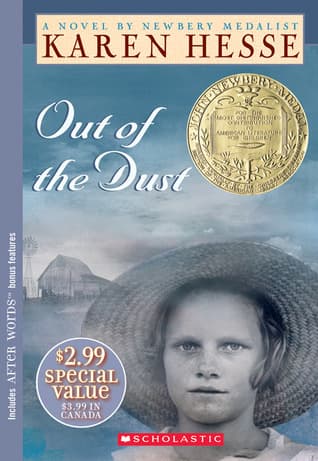
- Out of the Dust
Karen Hesse
3.8 (69k) average on GoodreadsChildren'sHistorical fiction, strong young female protagonist, deals with family hardship and resilience.
- A Tree Grows in Brooklyn
Betty Smith
4.3 (388k) average on GoodreadsHistorical FictionComing-of-age story, rich family dynamics, historical setting, focus on everyday struggles and triumphs.
- Harry Potter and the Sorcerer's Stone
J.K. Rowling
4.5 (7M) average on GoodreadsFantasyRescued from a miserable life under the stairs, an orphaned boy discovers he's a wizard destined for a magical school, where he uncovers a dangerous secret tied to the dark wizard who murdered his parents.
- The Hobbit, or There and Back Again
J.R.R. Tolkien
4.3 (2.9M) average on GoodreadsFantasyA comfort-loving hobbit named Bilbo Baggins is whisked away by a mischievous wizard and a band of dwarves on an unexpected journey to reclaim stolen treasure from a fearsome dragon, discovering courage and a magical ring along the way.
- Harry Potter and the Goblet of Fire
J.K. Rowling
4.6 (2.6M) average on GoodreadsFantasyA bewildered Harry Potter, underage and thrust into a deadly Triwizard Tournament, must brave dragons, mermaids, and a resurgent dark magic to survive a year that will forever alter the wizarding world.
- Harry Potter and the Order of the Phoenix
J.K. Rowling
4.5 (2.5M) average on GoodreadsFantasyIn a year of oppressive secrets and the threat of Voldemort, Harry Potter and Dumbledore's Army secretly train for war, shown through Jim Kay and Neil Packer's dark illustrations.





Enjoyed the summary?
A summary gives you the shape of the book. The book itself has the detail, the examples and the voice.
Find Penny from Heaven on AmazonAs an Amazon Associate, BookBrief earns from qualifying purchases. How we're funded