

Synopsis
Covers the whole plot, including the ending.
- Difficulty
- Medium
- Pacing
- Moderate
- Mood
- Dramatic, Revealing, Melancholy, Provocative
- Read it if
- You enjoy classic mid-20th century historical fiction exploring small-town secrets, social hypocrisy, and the hidden lives of women.
- Skip it if
- You prefer fast-paced thrillers or are uncomfortable with themes of sexual abuse and societal judgment.
Peyton Place Plot Summary
Covers the whole plot, including the ending.
A Town of Secrets
The novel begins in the seemingly peaceful New England town of Peyton Place in the late 1930s. It introduces the MacKenzie family: Constance, a reserved single mother, and her artistic daughter, Allison. Allison is best friends with Selena Cross, a girl from the poor and often disliked Cross family. The town is run by the wealthy Harrington family, especially Rodney Harrington, a rebellious young man, and his sister, Betty. Dr. Matthew Swain, the town's elderly doctor, notices the gossip, judgment, and hidden desires. Newcomers, such as Selena's handsome but mysterious stepfather Lucas Cross and the ambitious school principal Michael Rossi, begin to change the town's social dynamics, hinting at the secrets beneath its surface.
Allison's Aspirations and Selena's Struggles
Allison MacKenzie, who wants to be a writer, feels trapped by Peyton Place's small-town mindset. She spends her time watching the townspeople and writing in her journal, dreaming of a life beyond her mother's strictness and the town's gossip. Meanwhile, Selena Cross lives in poverty and suffers abuse from her stepfather, Lucas. Her mother, Nellie, is too weak to protect her. Selena finds comfort in her friendship with Allison and her relationship with Ted Carter, a kind young man from a respectable family. The difference between Allison's intellectual desires and Selena's harsh reality shows the clear social divisions and hidden suffering in the community.
Rodney's Recklessness and Betty's Betrayal
Rodney Harrington, known for his rebellious nature, starts a passionate affair with Betty Anderson, a local girl from a less privileged background. Their relationship involves secret meetings and reckless behavior, which leads to Betty becoming pregnant. Rodney's wealthy father, Leslie Harrington, is angry and forces Rodney to marry Betty to avoid a public scandal that would harm the family name. The forced marriage is without love, and Betty, despite her hopes, finds herself trapped, disliked by her husband and excluded by the town's elite. This event further shows the hypocrisy and class differences in Peyton Place.
The Arrival of Michael Rossi
Michael Rossi arrives in Peyton Place as the new high school principal. He is an outsider, educated and progressive, and quickly disagrees with the town's conservative school board and its old ways. Rossi supports modern teaching methods and challenges the narrow-minded attitudes of some residents. He is drawn to Constance MacKenzie, seeing a similar spirit beneath her reserved exterior. Their intellectual connection and mutual respect slowly grow into a deeper romantic interest, giving Constance a chance for companionship and emotional awakening after years of being alone. Rossi's presence changes the established order and brings a fresh perspective to the town.
Selena's Secret and its Tragic Consequences
Selena Cross's torment by Lucas gets worse. She becomes pregnant from his repeated assaults. Desperate and afraid, Selena confides in Dr. Swain, who, in a controversial decision, performs an abortion to save her life and future, keeping the secret to protect her. The trauma of the abuse and the procedure deeply affect Selena. Later, in extreme fear and self-defense during another attack, Selena kills Lucas. Overwhelmed and fearing the consequences, she runs away. Her mother, Nellie, discovers the body and confesses to the murder to protect her daughter, believing Selena had left town to escape the scandal.
The Trial of Nellie Cross
Nellie Cross is arrested and tried for Lucas's murder. The trial becomes a public event, bringing out the town's prejudices against the Cross family and their poor background. Despite Dr. Swain's quiet efforts to guide the legal process toward the truth, the community's judgment is harsh. Allison MacKenzie, loyal to Selena, struggles with her conscience, knowing Selena is innocent but unaware of the full story. The trial exposes the deep-seated classism and moral hypocrisy in Peyton Place, as many are quick to condemn Nellie without truly understanding the grim realities of the Cross household.
Allison Uncovers the Truth
After some time away pursuing her writing, Allison returns to Peyton Place. She is determined to understand the full truth behind Lucas's death and Nellie's conviction. Through conversations with Dr. Swain and by putting together pieces of information, Allison finally learns about the horrific abuse Selena endured, the abortion performed by Dr. Swain, and Selena's desperate act of self-defense. The revelation shatters Allison's innocent view of her hometown and strengthens her resolve to help clear Selena and Nellie's names. This discovery is a turning point for Allison, confirming her commitment to using her writing to expose the truth.
Constance's Confession
As Allison deals with Selena's story, Constance, prompted by her growing love for Michael Rossi and a desire for honesty with her daughter, makes a confession. She reveals that Allison is not the daughter of her deceased husband, Tom MacKenzie, but rather the child of an affair Constance had with a married man before moving to Peyton Place. She had carefully created a false identity and a life of respectability to hide her past and protect Allison from scandal. This revelation explains Constance's often cold behavior and her overprotective nature, and it deeply affects Allison, who must now reconcile her mother's carefully built image with this shocking truth.
The Return of Selena
With Allison's encouragement and the support of Dr. Swain and Michael Rossi, Selena Cross is persuaded to return to Peyton Place. She bravely testifies in court, recounting the years of abuse she suffered from Lucas, her forced pregnancy, and the circumstances leading to his death. Her testimony is difficult and moving, forcing the town to confront the ugly truths it had long ignored. The honesty of Selena's account finally brings justice for Nellie and exposes Lucas's depravity, shaking the foundations of Peyton Place's illusions of propriety and innocence.
Resolution and New Beginnings
Nellie Cross is cleared, and Selena, though scarred, begins to heal. She finds comfort in her renewed friendship with Allison and the support of the few who genuinely care for her. Constance and Michael Rossi finally marry, embracing their future together with honesty and love. Allison, now with a deeper understanding of human nature and her hometown's complexities, leaves Peyton Place once more, this time with a clearer vision for her writing. She is determined to tell the stories of people like Selena, exposing the hidden lives and secrets beneath the surface of seemingly perfect towns, fulfilling her destiny as a writer with a powerful voice.
Peyton Place Characters
Constance MacKenzie
Protagonist
A reserved single mother haunted by a secret past.
Constance is initially portrayed as a cold, distant, and overly protective mother to Allison. She meticulously maintains a facade of respectability in Peyton Place, driven by a deep-seated fear that her past will be exposed. Her reserved nature and strictness are a shield, designed to protect herself and Allison from the judgment of the town. She yearns for connection but struggles to express her emotions genuinely. Her internal conflict stems from her desire to be a good mother while hiding a truth that could shatter her carefully constructed life.
Relationships: Allison MacKenzie (Daughter, initially strained and secretive, later loving and honest.); Michael Rossi (Romantic interest, later husband, providing emotional support and love.)
Allison MacKenzie
Protagonist
An aspiring writer seeking truth and escape from small-town constraints.
Allison is an intelligent, observant, and sensitive young woman with a passion for writing. She feels stifled by the provincial attitudes and hidden hypocrisies of Peyton Place. She is initially naive about the darker undercurrents of her hometown but possesses a strong sense of justice and loyalty to her friends. Her artistic sensibilities make her an outsider, constantly observing and questioning the world around her, which fuels her desire to escape and tell stories that reveal deeper truths.
Relationships: Constance MacKenzie (Mother, initially distant, later understanding and close.); Selena Cross (Best friend, deeply loyal and supportive.); Ted Carter (Brief romantic interest.)
Selena Cross
Protagonist
A resilient young woman from the wrong side of the tracks, enduring immense suffering.
Selena is a beautiful, kind, and intelligent girl whose life is marked by poverty, social ostracization, and horrific abuse. Despite her circumstances, she possesses remarkable strength and resilience. She is fiercely loyal to Allison and yearns for a life free from the brutality of her stepfather, Lucas. Her quiet dignity and endurance in the face of unspeakable trauma make her one of the most sympathetic characters, representing the hidden suffering within the community.
Relationships: Allison MacKenzie (Best friend, source of hope and support.); Lucas Cross (Abusive stepfather.); Nellie Cross (Mother, weak and unable to protect her.); Ted Carter (Romantic interest, kind and supportive.)
Dr. Matthew Swain
Supporting
The wise and moral conscience of Peyton Place.
Dr. Swain is the elderly, respected, and deeply compassionate town doctor. He is one of the few characters who truly sees and understands the hidden lives and struggles of Peyton Place residents. He acts as a moral compass, often making difficult decisions based on what he believes is truly right, even if it defies conventional morality or law. He is a confidant to many and a quiet force for good, representing integrity and humanism in a town often consumed by gossip and judgment.
Relationships: Selena Cross (Patient and protector.); Allison MacKenzie (Confidant and mentor.)
Michael Rossi
Supporting
The progressive new principal who challenges the town's conservatism.
Michael Rossi is an educated and forward-thinking principal who arrives in Peyton Place as an outsider. He is intelligent, principled, and unafraid to challenge the town's entrenched conservatism and prejudice. He represents a modern perspective and a force for positive change. His genuine kindness and intellectual curiosity draw him to Constance, and he becomes a catalyst for her emotional awakening and a strong ally for Allison and Selena.
Relationships: Constance MacKenzie (Romantic interest, later husband.); Allison MacKenzie (Supportive friend and ally.)
Rodney Harrington
Supporting
The rebellious and entitled son of a wealthy family.
Rodney is the handsome, wild, and privileged son of Leslie Harrington, one of Peyton Place's most influential citizens. He embodies the destructive potential of unchecked privilege and a lack of moral guidance. His recklessness leads to significant consequences, affecting not only himself but also Betty Anderson. He is often driven by impulse and a desire to defy his father, but lacks true empathy or a sense of responsibility.
Relationships: Betty Anderson (Lover, later forced wife.); Leslie Harrington (Father, domineering and controlling.)
Betty Anderson
Supporting
A young woman who falls victim to social judgment and a forced marriage.
Betty is a local girl from a less affluent background who falls in love with Rodney Harrington. She is initially hopeful and somewhat naive, believing that her relationship with Rodney could lead to a better life. However, she becomes a victim of both Rodney's irresponsibility and the town's unforgiving social code, ending up in a loveless and isolating marriage. Her story highlights the harsh realities faced by women who transgress social norms in Peyton Place.
Relationships: Rodney Harrington (Lover, later forced husband.)
Lucas Cross
Antagonist
Selena's abusive stepfather and the source of her profound suffering.
Lucas Cross is the embodiment of evil and depravity in Peyton Place. He is Selena's stepfather, a shiftless, violent, and sexually abusive man who terrorizes his family, particularly Selena. He represents the hidden darkness and moral decay that can fester in overlooked corners of seemingly respectable communities. His actions are the catalyst for much of the novel's central conflict and tragedy.
Relationships: Selena Cross (Stepdaughter, victim of his abuse.); Nellie Cross (Wife, intimidated and controlled by him.)
Peyton Place Themes
Hypocrisy and Hidden Lives
Peyton Place shows the big difference between the town's perfect appearance and the dark, often scandalous, realities of its people. Characters like Constance MacKenzie create elaborate lies to seem respectable, while the wealthy Harrington family uses its power to cover up Rodney's wrongdoings. The townspeople are quick to judge the Cross family, ignoring the horrific abuse Selena suffers from Lucas. This theme is central to Allison's journey as a writer, as she learns to look past appearances and uncover the truths society prefers to hide. Nellie Cross's trial, where the truth of Lucas's abuse slowly comes out, perfectly shows this theme, forcing the town to face its own role in overlooking suffering.
“Peyton Place was a town where no one ever knew what was going on beneath the surface.”
Social Class and Prejudice
The novel clearly shows Peyton Place's strict class structure and the deep prejudices that come with it. The wealthy Harrington family has significant power, able to control legal outcomes and social standing. In contrast, the poor Cross family is marginalized, judged, and often dismissed by the 'respectable' townspeople. Selena's suffering is made worse by her family's low social status, making her an easy target for abuse and less likely to be believed or protected. The town's initial assumption of Nellie Cross's guilt comes from their existing biases against the 'poor white trash' of the Cross family, showing how class affects justice and perception.
“In Peyton Place, the rich were always right, and the poor were always wrong.”
Female Agency and Oppression
Peyton Place explores the limited choices and societal pressures women faced in the mid-20th century. Constance MacKenzie's entire life is shaped by her efforts to hide a past that would have made her an outcast as an unmarried mother. Betty Anderson is trapped in a loveless marriage because of an unplanned pregnancy and societal expectations. Most sadly, Selena Cross is a victim of extreme sexual violence, with her only options being a desperate act of self-defense and an illegal abortion, emphasizing the lack of legal and social protection for women in her situation. Allison, as a writer, represents an early form of female independence, using her voice to challenge the oppressive norms that silence other women.
“A woman's place in Peyton Place was a very small one, indeed.”
The Corrupting Power of Secrets
Secrets are essential to Peyton Place, shaping characters' identities and driving the plot. Constance's secret about Allison's father controls her entire life, making her guarded and emotionally distant. Dr. Swain's secret abortion for Selena is a morally complex act, yet one he believes is necessary to save a life, showing the ethical problems secrets can create. The town itself holds a collective secret of ignored abuse and hypocrisy, which grows and eventually leads to violence and scandal. The novel suggests that while secrets may offer temporary protection, they ultimately harm relationships, distort truth, and prevent real connection and healing, as seen in the strained relationship between Constance and Allison.
“Secrets were like diseases in Peyton Place; they festered and grew until they burst.”
Coming of Age and Disillusionment
Allison MacKenzie's journey is the main coming-of-age story. She starts as a naive, idealistic young woman who sees her town romantically. Through her experiences, especially her growing understanding of Selena's abuse, her mother's secret, and the town's deep-seated prejudices, Allison loses her innocence. She becomes disillusioned with the perfect image of Peyton Place, but this disillusionment fuels her growth as a writer and her determination to expose truth. Her story reflects the painful but necessary process of facing the harsh realities of the world and finding one's true voice amidst shattered illusions.
“Allison had thought she knew her town, but she had only known its pretty face.”
Plot Devices & Literary Techniques
The Outsider
Characters who arrive in Peyton Place and offer an external perspective.
The arrival of characters like Michael Rossi and, to a lesser extent, Allison's return from college, serve as 'outsider' plot devices. They are not fully ingrained in the town's intricate web of gossip and established norms, allowing them to observe Peyton Place with a fresh, often critical, perspective. Michael Rossi challenges the conservative school board and forms a bond with Constance, while Allison's distance allows her to objectively uncover the truths about Selena and her mother. These characters act as catalysts, unsettling the status quo and helping to expose the town's hidden realities.
The Confidant/Observer
A character who witnesses and understands much of the town's secrets but remains largely passive.
Dr. Matthew Swain fulfills the role of the confidant and observer. As the town doctor, he is privy to the most intimate secrets and struggles of Peyton Place's residents, from Selena's abuse to Constance's past. He holds a deep understanding of human nature and the town's undercurrents. While he occasionally intervenes, such as performing Selena's abortion, his primary function is to witness and understand, providing a moral compass and a source of exposition for the reader, often through his internal reflections or conversations with Allison. He represents the wise elder who knows the truth but must navigate the complexities of when and how to reveal it.
Foreshadowing through Gossip and Rumor
Subtle hints and whispers that build suspense and hint at future revelations.
The novel heavily uses gossip and rumor as a plot device to foreshadow upcoming events and reveal character traits. Early mentions of Lucas Cross's unsavory reputation or the town's whispers about Constance's past serve to create an atmosphere of unease and hint at the darker secrets that will eventually be exposed. This device not only builds suspense but also illustrates the destructive power of a small-town mentality, where reputations can be made or destroyed by unsubstantiated whispers, often reflecting the town's prejudices. It prepares the reader for the inevitable eruption of scandal and violence.
The Scandal as Catalyst
A public event that forces hidden truths into the open.
The murder of Lucas Cross and the subsequent trial of Nellie Cross serve as a major scandalous catalyst. This event forces the town to confront the previously hidden realities of the Cross family's life, particularly Selena's abuse. The trial, with its public testimony and legal proceedings, acts as a crucible where secrets are finally brought to light, disrupting the town's carefully maintained facade. It compels characters like Allison and Selena to take action and reveal truths that might otherwise have remained buried, leading to significant character development and plot resolution.
Peyton Place Quotes
“The people of Peyton Place had a way of knowing things without ever being told.”
“There was a certain kind of love that could only exist in a small town, where everyone knew your business and still pretended not to.”
“A woman's reputation was a fragile thing in Peyton Place, easily shattered by a whisper or a sideways glance.”
“Sometimes the ugliest truths were the ones that made the most beautiful stories.”
“It wasn't the big sins that destroyed people, it was the small, secret ones that ate away at them from the inside.”
“Peyton Place was a town where everyone had a secret, and everyone thought they were the only one.”
“The quietest people often had the loudest thoughts.”
“In Peyton Place, respect was something you earned, but scandal was something you inherited.”
“They talked about love as if it were a disease, something to be caught and then cured.”
“The truth was a weapon in Peyton Place, and everyone knew how to use it, or how to hide it.”
“You could leave Peyton Place, but Peyton Place never really left you.”
“Beneath the placid surface of their lives, the people of Peyton Place seethed with desires and resentments.”
“It was a town of whispers, where every window was an eye and every door an ear.”
Quiz
10 questions on the plot and the characters. Each answer comes with a short explanation.
Question 1
What is the central secret Constance MacKenzie hides from her daughter Allison for many years?
- She secretly owns a large share in the local mill.
- She had an affair with the town doctor.
- Allison is not her biological daughter, but her sister.
- Allison is actually her illegitimate daughter, not her niece.
Show answer
D. Allison is actually her illegitimate daughter, not her niece. Constance maintains for years that Allison is her niece, the daughter of her deceased sister, when in fact, Allison is her own illegitimate daughter from an affair with Lucas Cross.
Question 2
Which character is subjected to repeated sexual abuse by her stepfather, Lucas Cross?
- Allison MacKenzie
- Selena Cross
- Betty Anderson
- Roberta Cross
Show answer
B. Selena Cross Selena Cross endures years of sexual abuse at the hands of her stepfather, Lucas Cross, a central and tragic plot point.
Question 3
What is the primary reason Allison MacKenzie leaves Peyton Place?
- To marry Rodney Harrington.
- To pursue her dreams of becoming a writer in New York City.
- To care for a sick relative in another town.
- To escape the scandal surrounding Selena Cross.
Show answer
B. To pursue her dreams of becoming a writer in New York City. Allison, stifled by the small-town mentality, leaves Peyton Place to pursue her aspirations of becoming a writer in a larger city like New York.
Question 4
What is the nature of the relationship between Rodney Harrington and Betty Anderson?
- They are childhood sweethearts who eventually marry and live happily ever after.
- They are initially a couple, but their relationship is fraught with class differences and parental disapproval, leading to a forced marriage.
- They are distant cousins who share a brief, platonic friendship.
- Rodney is Betty's employer, and their relationship is strictly professional.
Show answer
B. They are initially a couple, but their relationship is fraught with class differences and parental disapproval, leading to a forced marriage. Rodney and Betty's relationship is complicated by their different social classes and his father's disapproval. Betty becomes pregnant, leading to a forced and unhappy marriage.
Question 5
What significant event occurs involving Selena Cross and her stepfather, Lucas, that leads to a trial?
- Selena attempts to run away with a local boy, causing Lucas to report her to the police.
- Selena accidentally causes a fire at the Cross home, injuring Lucas.
- Selena kills Lucas Cross after he attempts to abuse her again.
- Lucas Cross embezzles money from the town bank and frames Selena for the crime.
Show answer
C. Selena kills Lucas Cross after he attempts to abuse her again. After years of abuse, Selena finally retaliates and kills Lucas Cross when he attempts to assault her again, leading to a dramatic trial.
Question 6
How does Dr. Matthew Swain typically react to the gossip and secrets prevalent in Peyton Place?
- He actively participates in spreading the gossip and fueling the rumors.
- He is often the recipient of confidences and observes the town's secrets with a knowing, sometimes cynical, but ultimately compassionate understanding.
- He tries to publicly expose all the town's secrets to force honesty.
- He remains completely oblivious to any of the town's underlying issues.
Show answer
B. He is often the recipient of confidences and observes the town's secrets with a knowing, sometimes cynical, but ultimately compassionate understanding. Dr. Swain, as the town doctor, is privy to many personal secrets and observes the hypocrisy and suffering with a detached but empathetic perspective, often acting as a moral compass.
Question 7
What is a major theme explored through the character of Constance MacKenzie and her secret?
- The importance of financial independence for women.
- The destructive power of societal judgment and the lengths people go to maintain appearances.
- The inevitability of true love conquering all obstacles.
- The challenges of raising a child in a single-parent household.
Show answer
B. The destructive power of societal judgment and the lengths people go to maintain appearances. Constance's elaborate deception about Allison's parentage highlights the suffocating pressure of small-town morality and the fear of social ostracism for any perceived transgression.
Question 8
What is the ultimate outcome of Selena Cross's trial for the murder of Lucas Cross?
- She is found guilty of first-degree murder and sentenced to life in prison.
- She is acquitted, largely due to the efforts of her lawyer and the revelation of Lucas's abuse.
- She is found guilty of manslaughter and serves a short prison sentence.
- The trial is declared a mistrial due to a hung jury.
Show answer
B. She is acquitted, largely due to the efforts of her lawyer and the revelation of Lucas's abuse. Selena is ultimately acquitted of the charges, with her lawyer successfully arguing self-defense by exposing the years of sexual abuse she suffered at Lucas's hands, revealing the town's darkest secret.
Question 9
How does the town of Peyton Place react to the revelations and scandals that unfold, particularly during Selena's trial?
- The townspeople universally condemn Selena and side with Lucas Cross's memory.
- They are shocked and forced to confront the hypocrisy and dark undercurrents they had long ignored or suppressed.
- They quickly forget the events and return to their normal routines without reflection.
- The town rallies together to support Selena and denounce the abusers.
Show answer
B. They are shocked and forced to confront the hypocrisy and dark undercurrents they had long ignored or suppressed. The trial of Selena Cross forces Peyton Place to confront the ugly truths and hidden depravities that had been simmering beneath its picturesque surface, shattering its facade of respectability.
Question 10
What is the significance of the town's name, 'Peyton Place,' in the context of the novel's themes?
- It is named after the wealthy founding family who established the town's moral code.
- It suggests a seemingly idyllic, perfect small town that, upon closer inspection, harbors deep-seated secrets and corruption.
- It is a tribute to a real historical figure known for their integrity and honesty.
- The name has no particular symbolic meaning, it's just a geographical identifier.
Show answer
B. It suggests a seemingly idyllic, perfect small town that, upon closer inspection, harbors deep-seated secrets and corruption. The name 'Peyton Place' has become synonymous with a seemingly wholesome community that hides a darker, scandalous reality, perfectly encapsulating the novel's central theme of hidden lives and hypocrisy.
Peyton Place FAQ
What is the central premise of 'Peyton Place' and what kind of town is it?
'Peyton Place' delves into the hidden scandals, hypocrisies, and dark secrets of a seemingly idyllic New England town. Beneath its picturesque facade, the town is a hotbed of illicit affairs, violence, and social repression, challenging the idealized image of small-town American life.
Who are the three main female characters, and what connects them?
The narrative primarily follows Constance MacKenzie, a seemingly respectable shop owner with a hidden past; her daughter Allison, an aspiring writer struggling with the town's constraints; and Selena Cross, Allison's friend from a poorer background who endures immense hardship. Their lives are interwoven through friendship, shared experiences of repression, and the town's pervasive secrets.
What significant secret does Constance MacKenzie harbor for much of the novel?
Constance MacKenzie secretly gave birth to Allison out of wedlock with Lucas Cross, Selena's father, and has perpetuated the lie that Allison's father was a respectable, deceased husband. This secret deeply impacts her relationship with Allison and shapes her guarded personality.
How does Allison MacKenzie's character evolve throughout the story?
Allison begins as a naive, observant girl with a passion for writing, feeling stifled by Peyton Place's narrow-mindedness and her mother's protectiveness. As she uncovers truths about her family and friends, experiences first love and loss, she gains maturity and the resolve to leave town to pursue her literary ambitions.
What is the primary trauma Selena Cross endures, and how does it affect her?
Selena Cross suffers repeated sexual abuse from her stepfather, Lucas Cross, which culminates in her becoming pregnant and having an abortion. This trauma leads to her being falsely accused of murder and enduring a public trial, profoundly scarring her emotionally and physically.
What is the true nature of the relationship between Lucas Cross and Constance MacKenzie?
Lucas Cross is Allison MacKenzie's biological father, having had an affair with Constance years before the main events of the novel. This hidden connection makes the revelation of Selena's abuse by Lucas even more shocking and further entwines the lives of the MacKenzie and Cross families.
How does the character of Dr. Matthew Swain serve as a moral compass or observer?
Dr. Swain, the town physician, often serves as an omniscient observer and occasional moral commentator, aware of many of Peyton Place's hidden truths and the suffering of its inhabitants. He provides medical care and often emotional support, particularly to Selena, and represents a voice of quiet reason amidst the town's turmoil.
What is the significance of the town's name, 'Peyton Place,' in relation to the novel's themes?
The name 'Peyton Place' became synonymous with small-town scandal and hypocrisy, reflecting the novel's core theme that appearances can be deceiving. The seemingly innocent name belies the dark secrets and moral decay festering beneath the surface of its community.
How does the novel portray the psychological impact of repression on its characters?
Many characters, particularly Constance and Allison, suffer psychologically from the town's repressive atmosphere and their own hidden secrets. Constance's inability to be honest about Allison's paternity leads to a strained relationship, while Allison's creative spirit is initially stifled by the expectation of conformity, illustrating the toll of unexpressed truths.
Discuss the psychological motivations behind Constance MacKenzie's long-held secret.
Constance's primary motivation for hiding Allison's paternity is a combination of shame, fear of social ostracization, and a desire to maintain respectability in a judgmental community. She believes protecting Allison from the truth will also protect her from the stigma of illegitimacy, though it ironically creates a psychological distance between them.
How does Selena Cross's trauma manifest psychologically throughout the story?
Selena's repeated abuse leads to profound psychological trauma, including fear, isolation, and a deep sense of injustice. She internalizes much of her suffering, making her withdrawn and distrustful, and her eventual outburst during the trial reveals the immense pressure and emotional damage she has endured.
What psychological journey does Rodney Harrington undertake, particularly concerning his relationship with Allison and Betty?
Rodney initially embodies the rebellious, privileged youth, caught between his desire for Allison and his entanglement with Betty Anderson. His journey involves a growing understanding of responsibility and love, especially as he tries to do right by Betty after her pregnancy, though his path is tragically cut short.
How does the novel critique the societal norms and moral hypocrisy of the 1950s?
'Peyton Place' boldly challenges the idealized image of post-war American small-town life, exposing the rampant hypocrisy, sexual repression, and class divisions. It critiques the double standards applied to women and the devastating consequences of maintaining a facade of respectability at the expense of truth and justice.
In what ways can 'Peyton Place' be seen as a proto-feminist novel?
The novel can be interpreted as proto-feminist through its focus on the struggles of its female characters against patriarchal oppression, sexual violence, and societal expectations. It highlights women's limited choices, the judgment they face, and their resilience in seeking independence and truth, particularly through Allison's ambition and Selena's fight for justice.
What is the lasting legacy or impact of 'Peyton Place' on literature and popular culture?
'Peyton Place' broke significant taboos upon its publication, addressing themes of incest, abortion, and illegitimacy with unprecedented frankness. It paved the way for more realistic and controversial storytelling in literature and television, becoming a cultural phenomenon and setting a precedent for soap operas and dramas that explore the dark underbelly of seemingly perfect communities.
How does the ending of the novel offer a sense of resolution or continued ambiguity for Allison and Constance?
The ending provides a partial resolution for Allison as she leaves Peyton Place to pursue her writing career, symbolizing her escape from the town's stifling influence. For Constance, the truth about Allison's paternity is finally revealed, leading to a complex and somewhat ambiguous reconciliation, suggesting a difficult path forward for their relationship.
Discuss the symbolic role of the seasons or natural environment in the novel.
The changing seasons in Peyton Place often mirror the emotional and moral climate of the town and its characters. The harsh New England winters can symbolize the cold, repressive secrets, while the brief, vibrant springs and summers hint at fleeting moments of passion or hope before the inevitable return of darker times, reflecting the cyclical nature of the town's hidden dramas.
About the author
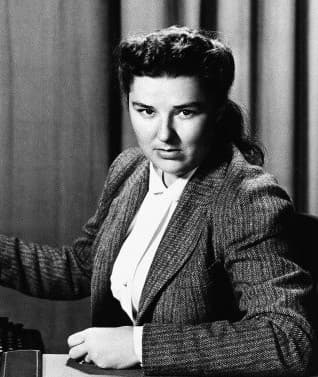
Grace Metalious was an American author known for her work in fiction during the mid-20th century. She is best recognized for her novel "Peyton Place," which explores the complexities of small-town life and social issues. The book gained significant attention upon its release in 1956, becoming a bestseller and later adapted into a film and television series.
Similar books
- East of Eden
John Steinbeck
4.4 (429k) average on GoodreadsLiterary FictionExplores multi-generational family secrets and moral complexities in a small-town setting.
- The Help
Kathryn Stockett
4.5 (2.2M) average on GoodreadsHistorical FictionUncovers uncomfortable truths and social dynamics in a seemingly perfect community.
- The Glass Castle
Jeannette Walls
4.3 (903k) average on GoodreadsBiographyFeatures strong female characters navigating difficult circumstances and societal judgment.
- The Catcher in the Rye
J.D. Salinger
3.8 (2.7M) average on GoodreadsYoung AdultWhile Peyton Place exposes the hypocrisy of adult small-town life, The Catcher in the Rye (1951) critiques the phoniness and alienation experienced by an adolescent in post-war urban America. Salinger's novel is celebrated for its distinctive narrative voice and psychological depth, focusing on internal turmoil. In contrast, Metalious employs a more omniscient, external perspective to reveal a community's collective secrets, making its social critique broader and more direct rather than intensely personal.
- A Tree Grows in Brooklyn
Betty Smith
4.3 (388k) average on GoodreadsHistorical FictionBoth Peyton Place and A Tree Grows in Brooklyn (1943) feature strong female protagonists navigating difficult circumstances and grappling with societal limitations. However, Smith's novel is a more sentimental and ultimately hopeful bildungsroman, focusing on the resilience and dreams of Francie Nolan amidst poverty in early 20th-century Brooklyn. Metalious, while also exploring aspirations, presents a far darker, more cynical view of human nature and societal structures, with less emphasis on individual triumph over adversity and more on the corrosive power of secrets and abuse within a seemingly respectable community.
- To Kill a Mockingbird
Harper Lee
4.3 (4.5M) average on GoodreadsHistorical FictionIn the 1930s Jim Crow South, Harper Lee writes about racial injustice, moral growth, and the quiet courage of a lawyer father, Atticus Finch, as seen through his young daughter's eyes.






Enjoyed the summary?
A summary gives you the shape of the book. The book itself has the detail, the examples and the voice.
Find Peyton Place on AmazonAs an Amazon Associate, BookBrief earns from qualifying purchases. How we're funded