
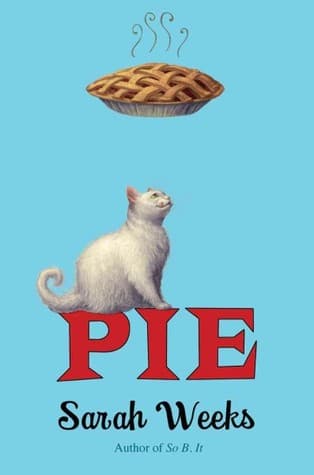
Synopsis
Covers the whole plot, including the ending.
- Difficulty
- Easy
- Pacing
- Moderate
- Mood
- Whimsical, Heartwarming, Mysterious, Sweet
- Read it if
- You enjoy heartwarming mysteries, stories about community and friendship, and a touch of culinary charm, perfect for young readers who appreciate a clever plot.
- Skip it if
- You dislike children's books, quirky small-town settings, or stories with a gentle, rather than intense, conflict.
Pie Plot Summary
Covers the whole plot, including the ending.
Aunt Polly's Unexpected Demise and a Peculiar Will
Eleven-year-old Alice Anderson lives a quiet life in Ipswitch, Pennsylvania. Her Aunt Polly is known as the "Pie Queen" for her pies and secret crust recipe. One day, Alice is called home with news that Aunt Polly has passed away peacefully. The town is distraught, and Alice is heartbroken. During the reading of the will, the town gathers, eager to hear who will inherit Polly's pie shop and, more importantly, her secret recipe. To everyone's astonishment, Polly leaves the pie shop to her assistant, Nora, and the secret pie crust recipe to her fat and ill-tempered cat, Lardo. Lardo, in turn, is left in the care of Alice, much to her surprise and the town's confusion.
The Town Goes Pie-Crazy
After the will's revelation, Ipswitch goes into a frenzy. Everyone, from local residents to ambitious bakers, becomes obsessed with how a cat could inherit a recipe and how they might get their hands on it. The annual Blueberry Pie Contest, which Aunt Polly always won, becomes the new battleground. People start baking excessively, trying to copy Polly's crust or invent their own pies. The once peaceful town becomes a hotbed of suspicion and rivalry. Neighbors accuse each other of trying to steal the recipe or gain an unfair advantage. Alice finds herself at the center of this chaos, constantly hounded by people trying to get information about Lardo or the recipe.
Alice and Charlie's Investigation Begins
Overwhelmed by the town's pie-mania and the responsibility of caring for Lardo, Alice confides in her best friend, Charlie Glimmer. Charlie, a bright and observant boy, is intrigued by the mystery. Together, they decide to investigate Aunt Polly's strange will. They start by examining Polly's belongings, hoping to find clues. Alice remembers Polly often saying, "The secret is in the crust," and wonders if there's a literal interpretation. Their initial searches yield no obvious recipe card or hidden message, but they begin to notice the unusual behavior of some townspeople, including Mrs. Neely and Mr. Hamner, who runs the local bakery.
A String of Suspicious Events
As Alice and Charlie investigate, suspicious events begin. Someone breaks into Aunt Polly's house, seemingly searching for something, though nothing appears to be stolen. Lardo, the seemingly unconcerned cat, becomes a target. Several attempts are made to catnap Lardo, including an incident involving a fishing net. Alice and Charlie realize that the pie crust recipe is not just a culinary secret but a valuable item people are willing to go to great lengths to acquire. These incidents confirm their suspicion that there is more to Polly's will, and that the secret is not simply written down somewhere.
Deciphering Polly's Clues
Alice begins to reflect on her memories of Aunt Polly, remembering specific phrases and habits. She recalls Polly's love for her old, worn-out recipe box, which seemingly contained only blank cards or mundane recipes. She also remembers Polly's frequent advice to "pay attention to the details" and her unique way of teaching without directly stating things. Alice realizes that Polly, a clever and whimsical woman, would not have made the recipe obvious. She and Charlie start to look for clues not in what Polly wrote, but in what she did and said, particularly around Lardo and the pie-making process.
The Significance of Lardo
Through their observations, Alice and Charlie begin to understand Lardo's true significance. They notice that Lardo was always present when Aunt Polly baked, often sitting on the counter. Alice remembers Polly kneading dough and humming a particular tune while Lardo watched. They also discover that Lardo's name, while seemingly just a reference to his size, might be another subtle hint. The attempts to steal Lardo further solidify their belief that the cat is not just a recipient of the will but an integral part of the secret itself, perhaps a living clue or a symbol for something larger.
The Blueberry Pie Contest and the Revelation
The annual Blueberry Pie Contest arrives, and the town is abuzz with anticipation. Alice decides to bake a pie, not to win, but to honor her aunt. As she bakes, she carefully follows the steps she remembers Polly taking, paying close attention to the way Polly handled the dough and the ingredients. She realizes that the secret is not a single ingredient or a hidden note, but a technique, a feeling, and a philosophy passed down through observation and practice. It is about love, patience, and the joy of baking. The true recipe is in the baker's hands and heart, not on a piece of paper.
The True Meaning of the Recipe
Alice, with Charlie's help, finally understands. Aunt Polly left the recipe to Lardo because Lardo, being a cat, cannot read or write. This forced people to look beyond the literal. The "secret" to the pie crust was not a hidden ingredient but a specific, delicate technique of handling the dough – a lightness of touch, a love for the process, and an understanding that the best results come from enjoyment, not competition. Polly wanted her legacy to be about the joy of baking and sharing, not about a competitive secret. The recipe was always there, in plain sight, demonstrated through her actions and her philosophy.
A New Chapter for Ipswitch
With the mystery solved, Alice bakes her pie for the contest, embodying the spirit of her aunt. While she does not win the contest, her pie is praised for its deliciousness. Many townspeople begin to appreciate the true meaning of Polly's legacy. The competitive frenzy starts to subside as people realize that the joy of baking and sharing is more rewarding than a secret recipe or a prize. Alice, having found a new purpose and understanding, continues to bake, honoring Aunt Polly's memory not by guarding a secret, but by sharing the love and joy that went into every pie. The town begins to heal, embracing community over competition.
The Unveiling of Aunt Polly's True Message
Alice and Charlie reflect on Aunt Polly's life and her intentions. They realize that Polly's will was a final lesson, a clever way to teach the town about what truly matters: connection, generosity, and the simple pleasure of creating. By leaving the recipe to Lardo, she forced everyone to stop focusing on a tangible secret and instead look for the intangible qualities that made her pies so special. Alice embraces her role as Lardo's caretaker and, in a way, as the keeper of Polly's true legacy – not just the pies, but the values she embodied. The book ends with a renewed sense of community and the enduring warmth of Aunt Polly's influence.
Pie Characters
Alice Anderson
Protagonist
An eleven-year-old girl who inherits her aunt's cat and embarks on a quest to understand her will.
Alice is a thoughtful and observant eleven-year-old who deeply loves her Aunt Polly. Initially shy and somewhat overshadowed by her aunt's fame, she grows significantly throughout the story. She is responsible, caring, and possesses a keen memory for details, which proves crucial in solving the mystery. Alice is driven by her affection for Polly and her desire to understand her aunt's final wishes, not by a wish for fame or money. Her journey is one of self-discovery, as she learns to trust her instincts and find her own place in the world.
Relationships: Aunt Polly (beloved aunt and mentor); Charlie Glimmer (best friend and investigative partner); Lardo (inherited cat and key to the mystery)
Aunt Polly
Supporting/Posthumous Catalyst
The beloved 'Pie Queen of Ipswitch' whose unusual will sets the entire plot in motion.
Aunt Polly is the heart of Ipswitch, known for her world-famous pies and a kind, whimsical nature. Though deceased at the start of the book, her personality and wisdom permeate every page through Alice's memories and the town's reactions to her. She is portrayed as clever, insightful, and a bit of a trickster, using her will as a final lesson rather than a simple distribution of assets. Her true legacy is not just her pie recipe, but her philosophy of life, centered on love, community, and the joy of creation.
Relationships: Alice Anderson (niece and chosen inheritor of her true legacy); Lardo (beloved pet and executor of her will's central puzzle); Nora (loyal assistant and inheritor of her pie shop)
Charlie Glimmer
Supporting
Alice's best friend, a logical and observant boy who helps her solve the mystery.
Charlie is Alice's loyal and intelligent best friend. He is practical, analytical, and provides a grounded perspective to Alice's more emotional approach. His observational skills and ability to connect disparate pieces of information are invaluable in their investigation. Charlie is a steadfast companion, always ready to support Alice, even when the town's pie-frenzy becomes chaotic. He represents the importance of friendship and teamwork in overcoming challenges.
Relationships: Alice Anderson (best friend and investigative partner)
Lardo
Supporting/Plot Device
Aunt Polly's extraordinarily fat cat, who is the unexpected inheritor of the secret pie recipe.
Lardo is Aunt Polly's large, somewhat grumpy, but ultimately significant cat. He is the central enigma of Polly's will, as he is bequeathed the secret pie crust recipe and left in Alice's care. Lardo's very existence as the recipe's inheritor forces the town, and Alice, to look beyond the literal. He acts as a living clue, his presence during Polly's baking, and his name, subtly guiding Alice towards the true nature of the secret. Despite his passive role, he is crucial to the plot's unfolding.
Relationships: Aunt Polly (owner and beloved companion); Alice Anderson (new caretaker)
Nora
Supporting
Aunt Polly's loyal assistant who inherits the pie shop.
Nora is Aunt Polly's long-time, dedicated assistant at the pie shop. She is a quiet and hardworking woman who initially seems overwhelmed by the responsibility of running the shop without Polly. She represents the practical side of Polly's legacy, ensuring the business continues. Nora is not involved in the mystery-solving, but her presence highlights the continuity of Polly's work and the community's reliance on the pie shop.
Relationships: Aunt Polly (employer and mentor)
Mrs. Neely
Supporting/Antagonistic
A seemingly sweet, elderly neighbor who harbors a competitive desire for the pie recipe.
Mrs. Neely appears to be a kindly, elderly neighbor, but she is one of the more aggressive competitors for the pie recipe. She attempts to ingratiate herself with Alice to get information about Lardo and the recipe. Her actions reveal the extent to which the town's obsession has corrupted even seemingly innocent individuals. She represents the darker, competitive side of the town's pie-mania, though her character is portrayed with a touch of humor.
Relationships: Alice Anderson (neighbor, attempts to manipulate for information)
Mr. Hamner
Supporting/Antagonistic
The owner of the local bakery, determined to win the pie contest and get the recipe.
Mr. Hamner owns the rival bakery in Ipswitch and is fiercely competitive, especially when it comes to the annual pie contest. He sees Aunt Polly's death as an opportunity to finally win and potentially acquire her secret recipe for his business. His competitive nature and thinly veiled attempts to get the recipe from Alice or Lardo make him a minor antagonist, reflecting the commercial pressures and greed that Polly's will challenges.
Relationships: Alice Anderson (competitor, attempts to get information)
The Town of Ipswitch
Collective Character/Setting
The community that descends into 'pie-mania' after Aunt Polly's death.
The town of Ipswitch functions almost as a character itself. Initially a charming, pie-loving community, it quickly transforms into a hotbed of suspicion, rivalry, and obsession after Aunt Polly's will is read. The collective actions and reactions of its residents (e.g., gossip, attempts to steal Lardo, the intense competition) drive much of the external conflict. It serves as a microcosm for how greed and misunderstanding can disrupt a community, and ultimately, how it can heal.
Relationships: Aunt Polly (beloved icon); Alice Anderson (object of curiosity and pressure)
Pie Themes
The True Meaning of Legacy
The book explores what constitutes a lasting legacy beyond material possessions or tangible secrets. Aunt Polly's will initially seems to be about a recipe, but it reveals that her true legacy is her philosophy of life, her love for baking, her generosity, and her ability to build community. Alice's journey is about understanding and carrying on this intangible legacy, rather than just finding a piece of paper. The shift in the town's focus from a secret recipe to the joy of baking shows this theme.
“The secret, Alice realized, wasn't in a special ingredient or a hidden note. It was in the hands that made the pie, the love that went into it, and the joy of sharing it.”
Community vs. Competition
The story portrays the contrast between a harmonious community and one consumed by competition. Before Polly's death, Ipswitch is united by its love for her pies. Afterward, the town devolves into suspicion and rivalry, with neighbors turning against each other in pursuit of the 'secret recipe.' The mystery's resolution brings the town back to understanding and appreciation for shared joy and collaboration. This shows the destructive nature of unchecked competition and the restorative power of community.
“The pie contest, once a friendly rivalry, had become a battleground for bragging rights and greed.”
Identity and Self-Discovery
Alice's journey is one of self-discovery. Initially, she feels like 'just Alice,' living in her famous aunt's shadow. Through deciphering Polly's will and caring for Lardo, Alice uncovers her own strengths, her memory, her intuition, and her ability to bake. She learns to trust herself and finds her voice, understanding that she can carry on her aunt's spirit in her own way, forging her own identity connected to Polly.
“Maybe the real secret wasn't about pie at all. Maybe it was about finding your own way to be happy, your own way to make something good.”
The Power of Observation and Memory
The mystery of the pie recipe is solved not through direct clues, but through Alice's careful observation of her aunt's habits and her memories of Polly's words and actions. Polly deliberately crafted her will to force people to pay attention to the details of her life and her baking process. This theme emphasizes that true understanding often comes from quiet attentiveness and reflection, rather than frantic searching or literal interpretation. Wisdom can be passed down subtly.
“Aunt Polly always said the secret was in the crust. But she never said it was written down anywhere.”
Love and Generosity
At its core, the book is about the power of love and generosity. Aunt Polly's actions, both in life and in death, are driven by a deep love for her community and a desire to impart a valuable lesson. Her pies were a symbol of her generosity. Alice, in turn, is motivated by her love for Polly, and her understanding of the recipe allows her to continue sharing that love through her own baking. This creates a sense of warmth and connection that goes beyond culinary skill.
“Baking, Polly had taught her, was an act of love. And love, like good pie, was meant to be shared.”
Plot Devices & Literary Techniques
The Peculiar Will
Aunt Polly's last will and testament that leaves the secret recipe to her cat, Lardo.
This is the primary inciting incident and a central plot device. By leaving the recipe to a cat, Aunt Polly creates an unsolvable riddle that forces the entire town, and especially Alice, to look beyond the literal. It acts as a catalyst for the mystery, the town's 'pie-mania,' and Alice's personal journey. The will is a clever narrative tool that allows the author to explore themes of legacy, observation, and the true meaning of value, by making the 'secret' an intangible one.
Lardo, the Cat
Aunt Polly's fat cat, the 'inheritor' of the recipe, serving as a living clue.
Lardo is more than just a pet; he's a crucial plot device. His physical presence, his name (potentially a pun on 'lard' for pie crust), and the fact that he cannot literally 'hold' a recipe, all point towards the intangible nature of the secret. The attempts to catnap him heighten the stakes and underscore the town's obsession. Lardo is a symbol of the riddle, guiding Alice to understand that the answer lies in observation and memory, not in a hidden document.
The Blueberry Pie Contest
The annual town event that becomes the battleground for the recipe's discovery.
The pie contest serves as a recurring plot point and a focal event that drives much of the external conflict. It provides a deadline and a stage for the town's competitive frenzy to play out. Ultimately, it becomes the setting for Alice's final act of understanding and her demonstration of her aunt's true legacy. It symbolizes both the destructive potential of competition and the unifying power of shared passion when approached with the right spirit.
Alice's Memories of Aunt Polly
Flashbacks and recollections that provide crucial insights into Polly's character and the recipe's secret.
Alice's memories are a vital narrative technique. Instead of a linear investigation, Alice's mind becomes the primary archive of clues. Recalling Polly's specific phrases, gestures, and habits (e.g., her way of kneading dough, her advice to 'pay attention') allows Alice to piece together the truth. This device emphasizes the theme of observation and shows how wisdom is often passed down through subtle, lived experiences rather than explicit instruction, making the reader experience the discovery alongside Alice.
Pie Quotes
“Sometimes the best way to find something is to stop looking for it.”
“A pie is more than just a dessert; it's a piece of someone's heart.”
“Secrets have a way of coming out, especially when they're baked into a crust.”
“You can't judge a person by the crumbs they leave behind.”
“Every family has its own recipe for love, and ours just happens to include a lot of butter.”
“The truth is like a pie crust—it might crumble, but it holds everything together.”
“Memories are the ingredients that make up who we are.”
“A good mystery is like a well-baked pie—it takes time and patience to get it right.”
“Sometimes the simplest things hold the deepest meanings.”
“Home isn't a place; it's the people who make you feel like you belong.”
“Courage isn't about being fearless; it's about doing what's right even when you're scared.”
“A recipe passed down is a story that never ends.”
“The sweetest things in life often come from the hardest work.”
“Loss leaves a hole, but love can fill it with something new.”
Quiz
10 questions on the plot and the characters. Each answer comes with a short explanation.
Question 1
What does Aunt Polly leave to her cat Lardo in her will?
- Her entire pie shop business
- The secret recipe for her world-famous pie crust
- A large sum of money
- Her collection of antique pie tins
Show answer
B. The secret recipe for her world-famous pie crust Aunt Polly's will specifically leaves her secret pie-crust recipe to her cat Lardo, which sets off the central mystery of the story as everyone wonders how a recipe can be left to a cat.
Question 2
Who is left in charge of caring for Lardo after Aunt Polly's death?
- Charlie
- The mayor of Ipswitch
- Alice
- A professional cat-sitter
Show answer
C. Alice Aunt Polly's will designates Alice, her niece, as the caretaker for Lardo, which brings Alice into the center of the pie recipe mystery.
Question 3
What nickname was Aunt Polly known by in her community?
- The Pastry Princess
- The Dessert Diva
- The Pie Queen of Ipswitch
- The Baking Baroness
Show answer
C. The Pie Queen of Ipswitch Aunt Polly was famously known as 'the Pie Queen of Ipswitch' due to her exceptional pie-making skills and the popularity of her pies in the community.
Question 4
Why does the town become 'pie-crazy' after Aunt Polly's death?
- Because they want to honor her memory with a pie festival
- Because everyone wants to win the upcoming pie contest and become the next famous pie maker
- Because Alice starts giving away free pies
- Because Lardo starts baking pies magically
Show answer
B. Because everyone wants to win the upcoming pie contest and become the next famous pie maker With Aunt Polly's secret recipe potentially up for grabs, many townspeople become obsessed with winning the pie contest to gain fame and recognition as the next great pie maker.
Question 5
What is the primary reason Alice and Charlie work together to solve the mystery?
- To win prize money from the pie contest
- To protect Lardo from being taken by other townspeople
- To understand Aunt Polly's true intentions and preserve what she valued
- To prove they are better detectives than the local police
Show answer
C. To understand Aunt Polly's true intentions and preserve what she valued Alice and Charlie are motivated by friendship and a desire to honor Aunt Polly's legacy, focusing on her values rather than personal gain from the recipe.
Question 6
How is Lardo described in the book?
- A small, friendly kitten who loves attention
- An extraordinarily fat and remarkably disagreeable cat
- A clever cat who helps solve mysteries
- A stray cat that Aunt Polly adopted shortly before her death
Show answer
B. An extraordinarily fat and remarkably disagreeable cat Lardo is humorously described as 'extraordinarily fat, remarkably disagreeable,' which adds character to the story and makes his inheritance of the recipe more surprising.
Question 7
What does the book suggest is the 'not-so-secret recipe for happiness' that Alice discovers?
- Winning competitions and gaining wealth
- Friendship, family, and doing things for the right reasons
- Keeping secrets to maintain mystery
- Baking perfect pies every time
Show answer
B. Friendship, family, and doing things for the right reasons Through her journey, Alice learns that true happiness comes from meaningful relationships and altruistic actions, not from secret recipes or fame.
Question 8
What is a key challenge Alice faces in caring for Lardo?
- Lardo runs away frequently, forcing Alice to search for him
- Other townspeople try to steal Lardo to get the recipe
- Alice is allergic to cats and struggles with sneezing
- Lardo refuses to eat anything but expensive gourmet food
Show answer
B. Other townspeople try to steal Lardo to get the recipe With many people wanting the pie recipe, Alice must protect Lardo from those who might try to take him to access the secret left to him in the will.
Question 9
In what way does the pie contest serve as a plot device in the story?
- It distracts the town while Alice and Charlie search for hidden treasure
- It creates pressure and competition that reveal characters' true motivations
- It is canceled due to Aunt Polly's death, causing disappointment
- It is where Alice first meets Charlie and they become friends
Show answer
B. It creates pressure and competition that reveal characters' true motivations The pie contest heightens the stakes, showing how some characters prioritize winning and fame over community and integrity, contrasting with Alice and Charlie's values.
Question 10
What broader lesson does the book convey about secrets and legacies?
- Secrets should always be kept to maintain family traditions
- Legacies are best preserved through written documents and legal wills
- The true value of a legacy lies in the love and memories shared, not in hidden knowledge
- Secrets are necessary to create mystery and excitement in life
Show answer
C. The true value of a legacy lies in the love and memories shared, not in hidden knowledge Aunt Polly's 'secret' recipe ultimately symbolizes how her real legacy was the joy and connections she fostered, teaching that intangible gifts like friendship matter more than tangible secrets.
Pie FAQ
What is 'Pie' by Sarah Weeks about?
The story follows Alice, whose Aunt Polly, the renowned 'Pie Queen of Ipswitch,' passes away and leaves her secret pie-crust recipe to her cat Lardo, with Alice tasked as the cat's caretaker. This unusual will sparks a town-wide frenzy as residents compete to uncover the recipe and win pie contests, leading Alice and her friend Charlie on a mystery to discover the true meaning of family, friendship, and doing things for the right reasons.
Why should I read 'Pie'?
This heartwarming children's novel blends mystery, humor, and historical fiction elements to explore themes of grief, community, and kindness through a lighthearted plot centered on pie-making. With relatable characters like Alice and Charlie, it offers a sweet, uplifting story that emphasizes values like friendship and integrity, making it perfect for young readers who enjoy cozy mysteries.
What is the background/setting of 'Pie'?
Set in the small town of Ipswitch, the story unfolds in a nostalgic, community-focused environment where Aunt Polly's pie shop was a beloved local institution. The historical fiction aspects highlight traditional baking and small-town dynamics, with the annual pie contest serving as a central event that drives the plot and reflects the town's competitive yet close-knit nature.
What are the most memorable quotes from 'Pie'?
Key quotes include Aunt Polly's wisdom, 'The secret ingredient is always love,' which underscores the book's theme that true happiness comes from heartfelt actions. Another notable line is when Alice reflects, 'Sometimes the best recipes aren't written down,' highlighting the idea that meaningful things in life, like family bonds, transcend material secrets.
What writing style does Sarah Weeks use in 'Pie'?
Sarah Weeks employs a warm, accessible narrative style with vivid descriptions of baking and small-town life, blending mystery elements with emotional depth. The prose is engaging for young readers, using humor and suspense to explore themes, while the inclusion of pie recipes at the end adds an interactive, cozy touch that enhances the story's charm.
What minor details add significant meaning in 'Pie'?
Small details like Aunt Polly's habit of humming while baking subtly convey her joyful spirit and love for pie-making, which influences Alice's memories. The recurring mention of Lardo's grumpy demeanor contrasts with his eventual role in bringing people together, symbolizing how unexpected things can foster connections and reveal deeper truths.
What are some subtle foreshadowing moments in 'Pie'?
Early hints include Aunt Polly's frequent remarks about 'doing things for the right reason,' which foreshadows the moral lesson Alice learns about integrity over winning. The town's obsession with the recipe is subtly foreshadowed by minor characters' competitive behavior, setting up the mystery and eventual realization that the recipe isn't the most important secret.
What unexpected character connections exist in 'Pie'?
Unexpected connections emerge as Alice discovers that various townspeople, including seemingly unrelated neighbors, have hidden ties to Aunt Polly through shared baking memories or past kindnesses. For example, Charlie's family history subtly links to Polly's pie shop, revealing how the community's bonds run deeper than the surface competition over the recipe.
What are unspoken character motivations in 'Pie'?
Alice's unspoken motivation is her desire to honor Aunt Polly's legacy and find closure after her loss, driving her to protect Lardo and solve the mystery. Many townspeople are secretly motivated by greed or a need for validation through winning the pie contest, which contrasts with Polly's genuine love for baking and community.
What psychological complexities do characters exhibit in 'Pie'?
Alice grapples with grief and responsibility, showing resilience as she navigates the town's chaos while cherishing memories of Polly. Characters like the competitive bakers display envy and insecurity, masking their deeper loneliness or desire for connection, which adds layers to the small-town dynamics and highlights themes of empathy.
What are the major emotional turning points in 'Pie'?
Key emotional moments include Alice's initial shock at inheriting Lardo, which sparks her journey of growth, and the climax where she realizes the recipe's true 'secret' is about love and community, not ingredients. Another turning point is when the town unites after the mystery is solved, shifting from rivalry to shared appreciation for Polly's legacy.
How do relationship dynamics evolve in 'Pie'?
Alice and Charlie's friendship deepens as they collaborate on the mystery, moving from casual acquaintances to trusted partners. The town's dynamics transform from cutthroat competition over the recipe to a renewed sense of unity, inspired by Polly's values, while Alice's bond with Lardo grows from duty to genuine affection, mirroring her connection to Polly.
Which parts of 'Pie' remain ambiguous or open-ended?
The exact contents of Aunt Polly's pie-crust recipe are never fully revealed, leaving it ambiguous whether it was ever written down or purely based on her techniques and love. Additionally, some townspeople's future actions after learning the lesson are open-ended, suggesting that personal growth and community harmony continue beyond the story's conclusion.
What are controversial scenes or decisions in 'Pie'?
Aunt Polly's decision to leave her recipe to a cat, Lardo, sparks debate among characters about fairness and practicality, with some viewing it as whimsical and others as frustrating. The townspeople's intense competition, including sneaky attempts to steal the recipe, raises questions about morality and whether ends justify means in pursuit of success.
'Pie' ending explained: how it ends & what it means
The story concludes with Alice and Charlie discovering that Aunt Polly's true 'secret' was her belief in doing things with love and for the right reasons, not a specific recipe. The town learns this lesson, ending the rivalry and honoring Polly's legacy through community baking. This ending emphasizes that happiness comes from friendship, family, and integrity, rather than material secrets or wins.
About the author

Sarah Weeks is an American author known for her contributions to children's literature. Her notable works include "Save Me a Seat," "Pie," and "As Simple as It Seems," which explore themes of friendship, family, and personal growth through engaging narratives. Weeks' writing often resonates with young readers, making her a significant figure in contemporary children's fiction.
Similar books
- Three Times Lucky
Sheila Turnage
4.0 (22k) average on GoodreadsChildren'sFeatures a young, spunky female protagonist solving a mystery in a quirky small town.
- A Snicker of Magic
Natalie Lloyd
4.1 (12k) average on GoodreadsFantasyCombines a magical realism feel with a small-town setting and a focus on family secrets and baking.
- Chasing Vermeer
Blue Balliett
3.7 (28k) average on GoodreadsChildren's'Chasing Vermeer' offers a more complex, intellectually challenging mystery with intricate puzzles and a deeper exploration of art history. 'Pie' provides a simpler, more emotionally resonant mystery, focusing more on community and personal growth rather than elaborate intellectual games.
- Harry Potter and the Sorcerer's Stone
J.K. Rowling
4.5 (7M) average on GoodreadsFantasyRescued from a miserable life under the stairs, an orphaned boy discovers he's a wizard destined for a magical school, where he uncovers a dangerous secret tied to the dark wizard who murdered his parents.
- The Hobbit, or There and Back Again
J.R.R. Tolkien
4.3 (2.9M) average on GoodreadsFantasyA comfort-loving hobbit named Bilbo Baggins is whisked away by a mischievous wizard and a band of dwarves on an unexpected journey to reclaim stolen treasure from a fearsome dragon, discovering courage and a magical ring along the way.
- Harry Potter and the Goblet of Fire
J.K. Rowling
4.6 (2.6M) average on GoodreadsFantasyA bewildered Harry Potter, underage and thrust into a deadly Triwizard Tournament, must brave dragons, mermaids, and a resurgent dark magic to survive a year that will forever alter the wizarding world.



Enjoyed the summary?
A summary gives you the shape of the book. The book itself has the detail, the examples and the voice.
Find Pie on AmazonAs an Amazon Associate, BookBrief earns from qualifying purchases. How we're funded