
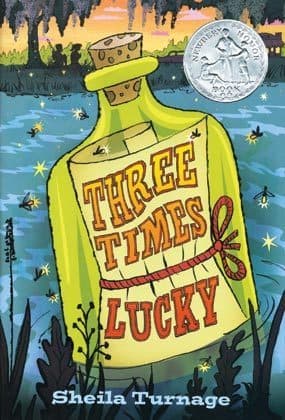
Synopsis
Covers the whole plot, including the ending.
- Difficulty
- Easy
- Pacing
- Moderate
- Mood
- Humorous, Heartwarming, Mysterious, Southern Gothic-lite
- Read it if
- You enjoy quirky characters, small-town mysteries, and a strong, feisty young protagonist with a unique voice.
- Skip it if
- You prefer fast-paced thrillers or dislike Southern charm and dialect in your reading.
Three Times Lucky Plot Summary
Covers the whole plot, including the ending.
The Arrival of Detective Starr
The story opens in Tupelo Landing, North Carolina, a small, quirky town, where eleven-year-old Mo LoBeau, an orphan who washed ashore in a hurricane, lives with the eccentric Colonel and the flamboyant Miss Lana, who run the café. Mo, who narrates the story, is constantly searching for her 'upstream mother.' Life is usually uneventful, but everything changes when Detective Starr arrives in town, investigating a murder that occurred outside of Tupelo Landing. The victim is a wealthy, rude man named Mr. Red Baker, who had recently passed through their town. The arrival of the detective and the news of the murder immediately pique Mo's and her best friend Dale Earnhardt Johnson III's curiosity, setting the stage for their amateur detective work.
The Colonel's Disappearance
Following Mr. Red Baker's murder, the town is abuzz with speculation. Things take a dramatic turn when the Colonel, Mo's guardian, mysteriously disappears. He leaves behind a cryptic note and a large sum of cash. This sudden vanishing act, combined with the fact that Mr. Red Baker had been seen arguing with the Colonel shortly before his death, immediately makes the Colonel a prime suspect in Detective Starr's investigation. Mo and Dale, fiercely loyal to the Colonel, refuse to believe he is a murderer. They decide to take matters into their own hands, convinced that if they can find the real killer, they can clear the Colonel's name and bring him home.
Amateur Detectives on the Case
Mo and Dale officially form the 'Desperado Detectives,' establishing their headquarters in the back of the café. Their first order of business is to interview the quirky residents of Tupelo Landing, each of whom seems to have a secret or a peculiar connection to the events. They question Miss Lana, who appears unusually flustered, and other townspeople like the grumpy Mr. Jesse and the gossipy Mrs. Pettibone. Their investigation uncovers various local grievances against Mr. Red Baker, providing a long list of potential suspects and motives. The children's methods are unconventional, often involving eavesdropping and bold questioning, but they are determined to find answers.
The Kidnapping of Miss Lana
Just as Mo and Dale start making progress, the situation escalates dramatically. Miss Lana, Mo's other guardian, is kidnapped. This abduction sends shockwaves through the small community and signals that the murder is part of a larger, more dangerous plot. The kidnappers demand a ransom, which further complicates the children's investigation and puts immense pressure on Detective Starr. Mo feels a heightened sense of urgency and fear for Miss Lana's safety, reinforcing her resolve to solve the mystery. The kidnapping suggests that the killer is still in town and is willing to go to extreme lengths to protect their secret.
Unraveling the Colonel's Past
As the investigation continues, Mo and Dale stumble upon clues that shed light on the Colonel's mysterious past. It's revealed that the Colonel suffers from amnesia, the result of a past accident, and has no memory of his life before arriving in Tupelo Landing. They discover that Mr. Red Baker was not just a rude visitor but someone connected to the Colonel's forgotten life, possibly a former business partner or even a family member. These revelations suggest that the Colonel's disappearance might be linked to his past catching up with him, rather than an admission of guilt for Mr. Red Baker's murder. Mo realizes the Colonel's secret is far more complex than she imagined.
The Role of Robert Slate
Through their relentless detective work, Mo and Dale uncover the identity of the true villain: Robert Slate. Slate is a dangerous criminal from the Colonel's past, a man who was involved in a jewel heist with the Colonel (whose real name is revealed to be Robert Agnew). Mr. Red Baker was also part of this criminal enterprise. Slate is the one who murdered Red Baker and kidnapped Miss Lana, believing she possesses information about the hidden loot from their past heist. This discovery explains the Colonel's sudden disappearance – he went to confront Slate and protect Miss Lana, trying to handle the situation on his own due to his amnesia and guilt.
The Showdown at the Old Mill
The climax of the story takes place at the old mill, where Robert Slate is holding Miss Lana captive. Mo and Dale, along with a reluctant but ultimately brave Dale's older brother, Skeeter, race against time to rescue her. Using their quick thinking and knowledge of the local terrain, the children manage to outwit Slate. Mo, with her characteristic grit and determination, plays a crucial role in distracting and confusing Slate, allowing for Miss Lana's escape and the eventual apprehension of the criminal. The confrontation is tense and dangerous, showing the children's courage and loyalty.
The Colonel's Return and Revelation
After Robert Slate is captured, the Colonel returns to Tupelo Landing. His memory is partially restored, and he is able to explain his true identity: Robert Agnew, a man who was once involved in a jewel heist with Slate and Baker. He had suffered amnesia after an accident during their escape and had unknowingly built a new, honest life in Tupelo Landing. The Colonel expresses his regret for his past actions and for putting Mo and Miss Lana in danger. His return brings a sense of relief and closure to Mo, solidifying their unique family bond despite the unsettling revelations about his past.
Mo's Upstream Mother
Amidst the resolution of the murder mystery, Mo receives a letter from her 'upstream mother.' The letter, which Mo has longed for her entire life, reveals that her birth mother is a woman named Harmonica LoBeau, a free-spirited musician who, due to circumstances, had to leave Mo as a baby. While the letter doesn't lead to an immediate reunion, it provides Mo with a sense of identity and connection to her past that she has always craved. It's a bittersweet moment, as Mo realizes that while she now knows who her birth mother is, her true family is the one she has built with the Colonel and Miss Lana in Tupelo Landing.
Life Returns to Normal (Mostly)
With the mystery solved and the criminals apprehended, Tupelo Landing slowly returns to its peculiar form of normalcy. The café thrives, and Mo, Dale, the Colonel, and Miss Lana resume their lives, albeit with a deeper understanding of each other and their shared history. Mo continues her quest for knowledge and adventure, now with the added context of her birth mother's letter. The events have strengthened the bonds within their unconventional family and solidified Mo's place in the quirky, loving community of Tupelo Landing. The town remains a haven for unique characters and unexpected events, forever imprinted by the dramatic events.
Three Times Lucky Characters
Moses 'Mo' LoBeau
Protagonist
A feisty, intelligent, and loyal eleven-year-old orphan.
Mo is the spirited and fiercely independent narrator, an orphan who washed ashore in a hurricane as a baby. She is driven by a deep desire to find her 'upstream mother' but also by an unwavering loyalty to her adoptive family, the Colonel and Miss Lana. Mo is sharp-witted, brave, and possesses a strong moral compass, often acting as the brains and brawn behind the 'Desperado Detectives.' Her adventurous spirit and determination to protect those she loves propel the narrative forward.
Relationships: The Colonel (Adoptive father figure, guardian); Miss Lana (Adoptive mother figure, guardian); Dale Earnhardt Johnson III (Best friend, detective partner); Harmonica LoBeau (Birth mother (revealed through letter))
Dale Earnhardt Johnson III
Supporting
Mo's loyal, somewhat timid, but ultimately brave best friend.
Dale is Mo's best friend and co-founder of the 'Desperado Detectives.' He is often more cautious and easily scared than Mo, but his loyalty to her and his family is absolute. Dale provides a grounding presence for Mo's more impulsive nature, and despite his initial hesitation, he always stands by her side, even in dangerous situations. He is the son of the local sheriff and comes from a large, somewhat chaotic family, which often provides comic relief.
Relationships: Moses LoBeau (Best friend, detective partner); Skeeter Johnson (Older brother); Sheriff Mo LoBeau (Johnson) (Father)
The Colonel
Supporting
Mo's eccentric guardian with a mysterious past and amnesia.
The Colonel is Mo's adoptive father figure and the owner of the café. He is a man of few words, often found lost in thought or meticulously polishing silverware. He suffers from amnesia, unable to recall his life before arriving in Tupelo Landing. His gentle demeanor hides a complex and dangerous past, which is gradually revealed throughout the story. Despite his quiet nature, he deeply cares for Mo and Miss Lana, his disappearance being motivated by a desire to protect them.
Relationships: Moses LoBeau (Adoptive daughter); Miss Lana (Romantic partner, co-guardian); Robert Slate (Former criminal associate, antagonist); Mr. Red Baker (Former criminal associate, murder victim)
Miss Lana
Supporting
Mo's glamorous and warm-hearted adoptive mother figure.
Miss Lana is the flamboyant and kind-hearted hostess of the café, and Mo's other adoptive guardian. She is known for her stylish outfits, her love of glamour, and her unwavering optimism. Miss Lana provides a nurturing and loving presence for Mo, often offering comfort and a sense of stability. She is fiercely protective of Mo and the Colonel, and her abduction by Robert Slate highlights the danger of the Colonel's past catching up to them. Her resilience and spirit are central to the family's strength.
Relationships: Moses LoBeau (Adoptive daughter); The Colonel (Romantic partner, co-guardian); Robert Slate (Kidnapper)
Detective Starr
Supporting
The earnest but sometimes overwhelmed lawman investigating the murder.
Detective Starr is the official law enforcement officer sent to Tupelo Landing to investigate Mr. Red Baker's murder. He is a serious, by-the-book detective who initially struggles to navigate the quirky personalities and unconventional logic of the town's residents, especially Mo and Dale. Despite his initial skepticism of the children's involvement, he eventually recognizes their resourcefulness and becomes a crucial ally in solving the case, often finding himself a step behind their intuitive leaps.
Relationships: Moses LoBeau (Informal informant, amateur detective); Dale Earnhardt Johnson III (Informal informant, amateur detective)
Robert Slate
Antagonist
A dangerous and ruthless criminal from the Colonel's past.
Robert Slate is the primary antagonist of the story. He is a ruthless and violent criminal, formerly involved in a jewel heist with the Colonel (Robert Agnew) and Mr. Red Baker. Slate murders Red Baker and kidnaps Miss Lana, believing she knows the location of the hidden loot. He is cunning, desperate, and poses a significant threat to Mo and her family. His actions drive the central conflict and force Mo to confront real danger.
Relationships: The Colonel (Former criminal associate, primary target); Miss Lana (Kidnapped victim); Mr. Red Baker (Former criminal associate, murder victim)
Mr. Jesse
Supporting
A grumpy but ultimately kind-hearted older resident of Tupelo Landing.
Mr. Jesse is an older, often curmudgeonly resident of Tupelo Landing. He initially appears gruff and uncooperative, but beneath his rough exterior lies a good heart and a deep affection for the town and its inhabitants. He is a Vietnam veteran and often dispenses cynical wisdom. His seemingly minor role becomes more significant as his past connections to the Colonel's forgotten life are revealed, and he plays a key part in the final confrontation.
Relationships: Moses LoBeau (Neighbor, sometimes reluctant ally); The Colonel (Friend, fellow town resident)
Skeeter Johnson
Supporting
Dale's older brother, initially a bully but later an ally.
Skeeter is Dale's older brother, known for his love of sports and for teasing Dale. He initially appears as a typical older brother, somewhat dismissive of Mo and Dale's 'detective' games. However, when Miss Lana is kidnapped and the danger becomes real, Skeeter steps up, demonstrating a surprising level of bravery and loyalty to his family and friends. He proves instrumental in the final confrontation with Robert Slate, showcasing a hidden maturity.
Relationships: Dale Earnhardt Johnson III (Younger brother); Moses LoBeau (Friend, ally)
Three Times Lucky Themes
The Meaning of Family
The novel explores the idea that family is not solely defined by blood ties but by love, loyalty, and shared experiences. Mo, an orphan, finds her true family in the unconventional trio of herself, the Colonel, and Miss Lana. Despite the Colonel's hidden past and Mo's longing for her 'upstream mother,' their bond is unwavering. This theme is evident when Mo relentlessly pursues the truth to clear the Colonel's name and rescue Miss Lana, demonstrating a fierce devotion that transcends traditional familial structures. The arrival of her birth mother's letter reinforces that while blood connection exists, her home and heart are with her chosen family in Tupelo Landing.
“Family is what you make it, not what you're born into. And I had made myself a family that was as strong and true as any blood kin.”
Identity and Belonging
Mo's central quest to find her 'upstream mother' is deeply tied to her search for identity and a sense of belonging. As an orphan, she constantly questions her origins and her place in the world. The quirky town of Tupelo Landing, with its eccentric residents, provides a unique backdrop for her to forge her own identity. The revelations about the Colonel's past and the eventual letter from her birth mother help Mo understand that her identity is a blend of her mysterious origins and the loving community that has raised her. She learns that belonging is not about fitting in perfectly, but about being cherished for who you are.
“I was Mo LoBeau, a girl who had washed ashore in a hurricane, and I was exactly where I was supposed to be.”
Justice and Morality
The murder mystery at the heart of the story raises questions about justice and morality, particularly through the lens of Mo and Dale's amateur detective work. They are driven by a strong sense of right and wrong, determined to find the real killer and clear the Colonel's name. The Colonel's past as a jewel thief complicates the traditional notions of good and bad, showing that people can change and seek redemption. The children's pursuit of justice is pure and unwavering, often contrasting with the more bureaucratic approach of Detective Starr. Ultimately, the story suggests that justice, even if unconventional, can prevail.
“It ain't right to let a good man take the fall for a bad one, no matter what his past.”
The Power of Community
Tupelo Landing itself functions as a character, embodying the theme of community. Despite its small size and quirky inhabitants, the town demonstrates a strong sense of interconnectedness and mutual support when faced with adversity. Even the most eccentric characters contribute to solving the mystery, whether through gossip, information, or direct action. The community rallies around Mo, Miss Lana, and the Colonel, highlighting the strength found in collective effort and shared concern. The town's unique charm and its residents' loyalty are crucial to the story's resolution and its overall heartwarming tone.
“In Tupelo Landing, everybody knew everybody's business, and sometimes, that was a good thing.”
Plot Devices & Literary Techniques
First-Person Narrative (Child Protagonist)
The story is told entirely from Mo LoBeau's unique perspective.
The use of Mo's first-person perspective allows readers to experience the mystery and the quirky world of Tupelo Landing through the eyes of an intelligent, witty, and emotionally resonant eleven-year-old. Her voice is distinct, filled with Southern colloquialisms and a charming blend of innocence and precociousness. This device enhances the humor, builds empathy for Mo's quest for identity, and allows for subjective interpretations of events, often contrasting Mo's intuitive leaps with the more logical, but sometimes slower, deductions of the adults.
Red Herring
Clues are deliberately placed to mislead the reader and characters.
The novel masterfully employs red herrings to deepen the mystery and keep readers guessing. The Colonel's sudden disappearance, coupled with his amnesia and a prior argument with the murder victim, strongly implicates him early in the investigation. This misdirection serves to heighten the stakes for Mo and Dale, as they are fighting to clear the name of their beloved guardian. Other minor characters with grudges against Mr. Red Baker also contribute to the list of false leads, making the eventual reveal of Robert Slate as the true antagonist more surprising and impactful.
Amnesia
The Colonel's forgotten past is a key element of the mystery.
The Colonel's amnesia is a central plot device that creates much of the initial mystery and tension. His inability to remember his past makes him a suspicious figure when a murder occurs, as he cannot account for his own actions or connections to the victim. This device allows for a gradual reveal of his true identity and his involvement in a past jewel heist, adding layers of complexity to his character and the overarching plot. It also provides a strong motivation for Mo's detective work, as she seeks to uncover the truth to protect her family.
Eccentric Supporting Characters
A cast of quirky town residents provides humor and vital clues.
The town of Tupelo Landing is populated by a colorful array of eccentric characters, each contributing to the unique charm and mystery of the story. From the gossipy Mrs. Pettibone to the curmudgeonly Mr. Jesse, these characters provide comic relief, local color, and often unexpected pieces of information that help Mo and Dale solve the case. Their distinct personalities and peculiar habits make the town feel alive and believable, while also serving as a rich source of potential suspects and motives, complicating the children's investigation in humorous ways.
Three Times Lucky Quotes
“I was born on a Tuesday. The day they bury you, or the day you get married.”
“The Colonel was like that, always finding the most complicated way to do the simplest thing, and then acting like he'd invented the wheel.”
“You can't spell 'Mo LoBeau' without 'beau.'”
“Sometimes the only way to find out what's true is to make a little trouble.”
“It's a fact: when you're a detective, everything looks like a clue.”
“Miss Lana always said that a person's past was like a quilt, pieced together with good and bad, and sometimes you just had to keep adding patches.”
“When you're a detective, you don't just look at things, you *see* them.”
“Every secret has a sound, if you know how to listen.”
“You can't be a hero if you don't have a villain.”
“The truth is a tricky thing. Sometimes it hides, and sometimes it's right in front of your face and you just don't want to see it.”
“Sometimes the best way to catch a bad guy is to think like a bad guy.”
“You can't choose your family, but you can choose your adventures.”
“It's a good thing I'm not afraid of the dark, because sometimes the best clues are hiding there.”
“Life is like a bowl of grits. Sometimes it's smooth, sometimes it's lumpy, but it's always there.”
Quiz
10 questions on the plot and the characters. Each answer comes with a short explanation.
Question 1
What is the name of the small town where Miss Moses LoBeau lives?
- Wilmington
- Tupelo Landing
- Greenville
- Asheville
Show answer
B. Tupelo Landing Mo LoBeau lives in the small, quirky town of Tupelo Landing, North Carolina.
Question 2
How old was Mo when she washed ashore in a hurricane?
- A newborn
- One year old
- Two years old
- Five years old
Show answer
A. A newborn Mo was a baby when she was found after a hurricane, leading to her nickname 'Moses' and her search for her 'upstream mother.'
Question 3
What is the primary motivation for Mo and Dale to investigate the murder?
- They want to become famous detectives.
- They are bored and looking for excitement.
- They want to save the Colonel and Miss Lana from suspicion.
- They believe the lawman is corrupt.
Show answer
C. They want to save the Colonel and Miss Lana from suspicion. Mo and Dale's main goal is to protect the Colonel and Miss Lana, who are the closest thing Mo has to family, from being implicated in the murder.
Question 4
What is the name of Mo LoBeau's best friend?
- Dale Earnhardt Johnson III
- Finley O'Dell
- Harmon Blanton
- Skeeter McMillan
Show answer
A. Dale Earnhardt Johnson III Mo's loyal best friend and partner in crime-solving is Dale Earnhardt Johnson III.
Question 5
What is Miss Lana's role in the Colonel's café?
- She is the cook.
- She is the hostess.
- She is the bookkeeper.
- She is the cleaner.
Show answer
B. She is the hostess. Miss Lana is described as the 'fabulous café hostess,' known for her style and charm.
Question 6
What is Mo's primary goal regarding her biological family?
- To inherit a fortune from them.
- To find her 'upstream mother.'
- To escape Tupelo Landing with them.
- To prove she was kidnapped.
Show answer
B. To find her 'upstream mother.' Mo regularly sends messages in bottles upstream, hoping to find her biological 'upstream mother' who she believes sent her downriver.
Question 7
What kind of business does the Colonel run?
- A general store
- A gas station
- A café
- A bait shop
Show answer
C. A café The Colonel owns and operates the local café, which serves as a central gathering place in Tupelo Landing.
Question 8
What is the significance of the phrase 'making waves' in relation to Mo?
- It literally means she enjoys swimming.
- It refers to her habit of causing trouble and being outspoken.
- It describes her talent for surfing.
- It's a metaphor for her love of the ocean.
Show answer
B. It refers to her habit of causing trouble and being outspoken. The description states Mo 'washed ashore... and she's been making waves ever since,' indicating her strong personality and tendency to stir things up in the town.
Question 9
What does the Colonel's 'forgotten past' imply about his character?
- He suffers from amnesia due to old age.
- He intentionally conceals aspects of his history.
- He simply has a poor memory for trivial details.
- He was never interesting enough to have a memorable past.
Show answer
B. He intentionally conceals aspects of his history. The phrase 'forgotten past of his own' suggests there are secrets or significant events in the Colonel's history that he either doesn't remember or chooses not to reveal, adding to the mystery of his character.
Question 10
What literary award is 'Three Times Lucky' an Edgar Award Finalist for?
- Best Children's Book
- Best Young Adult Novel
- Best Mystery Novel
- Best Juvenile Mystery
Show answer
D. Best Juvenile Mystery The Edgar Awards are presented by the Mystery Writers of America. Given the book's target audience and genre, it was a finalist for Best Juvenile Mystery.
Three Times Lucky FAQ
What is the central mystery that Mo and Dale investigate in Tupelo Landing?
The central mystery revolves around the murder of Mr. Jesse, a disagreeable transient, whose body is found in the creek. Mo and Dale, forming the 'Desperado Detectives', believe the Colonel or Miss Lana might be suspects due to their secretive natures and presence at the scene, leading them to investigate to clear their guardians' names.
Who are the primary adult figures in Mo LoBeau's life, and what is their relationship to her?
Mo lives with the Colonel, a quiet man who runs the café, and Miss Lana, the flamboyant café hostess. They are her guardians, having found her washed ashore during a hurricane eleven years prior. Despite their unconventional family structure, they provide Mo with love and a stable home, though their pasts remain largely mysterious to her.
What is Mo's main personal quest throughout the story, besides solving the murder?
Mo's main personal quest is to find her 'upstream mother,' the biological mother who sent her down the creek during the hurricane. She writes messages in bottles, hoping for a reply, and this desire for connection to her origins is a driving force behind her actions and emotional development.
Who is Dale Earnhardt Johnson III, and what is his role in the story?
Dale Earnhardt Johnson III is Mo's best friend and sidekick in their detective agency, the Desperado Detectives. He is often the more cautious and literal of the two, providing a grounding influence and loyal support for Mo's adventurous schemes. His family's financial struggles and his father's gruffness are also recurring elements.
How does Detective Starr's arrival impact the residents of Tupelo Landing?
Detective Starr's arrival in Tupelo Landing to investigate Mr. Jesse's murder stirs up the quiet town, making everyone suspicious of each other and disrupting their routines. His presence causes many residents, especially the Colonel and Miss Lana, to become even more guarded, which further fuels Mo's determination to uncover the truth.
What is the significance of the 'three times lucky' phrase in the book's title?
The phrase 'three times lucky' refers to Mo's belief that she has been lucky three times in her life: surviving the hurricane, being found by the Colonel and Miss Lana, and having Dale as a best friend. It encapsulates her resilient and optimistic outlook despite her unusual beginnings and the challenges she faces.
What is the true identity of the Colonel, and how is it revealed?
The Colonel is revealed to be Robert Slate, a man with a forgotten past due to amnesia from a car accident. His identity is slowly pieced together through flashbacks and the reappearance of characters from his past, including his former associate, Mr. Red, who is the real murderer.
How is Miss Lana connected to the Colonel's past?
Miss Lana was Robert Slate's (the Colonel's) former girlfriend before his amnesia. She recognized him after his accident and, out of love and a desire to protect him, chose to live with him and care for him, keeping his true identity a secret from him and Mo for many years.
What is the significance of Mo's 'upstream mother' and the messages in bottles?
Mo's 'upstream mother' represents her yearning for belonging and understanding her origins. The messages in bottles symbolize her hope and persistent search for identity, ultimately leading to a poignant resolution where she accepts her chosen family while still acknowledging her past.
How does Mo's status as an orphan influence her determination and sense of responsibility?
Mo's orphan status fuels her fierce loyalty and deep sense of responsibility towards the Colonel and Miss Lana, her chosen family. She feels a profound need to protect them, viewing them as her only anchor, which drives her to take risks and investigate the murder when they become suspects.
Discuss the psychological impact of amnesia on the Colonel's character.
The Colonel's amnesia leaves him quiet, reserved, and somewhat detached, creating a protective shell around him. It also makes him vulnerable to manipulation and misunderstanding, as he lacks the full context of his past actions and relationships, contributing to the mystery surrounding him.
How does the small-town setting of Tupelo Landing contribute to the characters' psychological development?
The small-town setting of Tupelo Landing fosters a strong sense of community but also intense gossip and scrutiny, which shapes characters like Mo into being resilient and observant. It creates an environment where secrets are hard to keep, forcing characters to confront their pasts and relationships more directly.
What role does humor play in Mo's coping mechanisms and her interactions with others?
Humor is a central coping mechanism for Mo, allowing her to navigate difficult situations and express her strong personality. Her witty remarks and playful banter help her forge connections, diffuse tension, and maintain a sense of control and optimism even in the face of danger or uncertainty.
Is the ending of the book truly happy for Mo, considering the revelations about her guardians?
While the murder is solved and Mo's guardians are cleared, the ending presents a complex happiness for Mo. She finds peace with her chosen family, understanding their sacrifices, but also grapples with the weight of their secrets. It's a realistic portrayal of finding joy amidst imperfections and acknowledging that family can be messy.
How does the author use Southern dialect and cultural references to enrich the narrative?
The author uses Southern dialect and cultural references to immerse the reader in the unique atmosphere of Tupelo Landing, making the characters and setting feel authentic. This regional flavor adds humor, warmth, and a distinct voice to the narrative, enhancing the reader's connection to Mo's world.
Could the Colonel's amnesia be interpreted as a metaphor for escaping one's past?
The Colonel's amnesia can be interpreted as a metaphor for escaping a troubled past, offering him a chance at a new, simpler life. However, the narrative also shows that the past eventually catches up, suggesting that true redemption or peace often requires confronting, rather than forgetting, one's history.
What message does the book convey about the definition of 'family'?
The book strongly conveys that 'family' is defined by love, loyalty, and shared experiences, rather than solely by blood ties. Mo's relationship with the Colonel and Miss Lana, despite their secrets and unconventional beginning, exemplifies a powerful and enduring family bond built on mutual care and protection.
How does the author balance the mystery elements with the coming-of-age themes?
The author skillfully balances the intriguing murder mystery with Mo's coming-of-age journey by intertwining them. The investigation serves as a catalyst for Mo's personal growth, forcing her to confront difficult truths about her guardians and herself, thus making the mystery integral to her development.
Was Miss Lana justified in keeping the Colonel's true identity a secret from him and Mo?
Miss Lana's justification for keeping the Colonel's identity a secret is debatable. From one perspective, she acted out of love and protection, wanting to shield him from a dangerous past. However, it also denied him agency and Mo the full truth, raising questions about the ethics of withholding such significant information.
About the author

Sheila Turnage is an American author known for her work in children's and young adult fiction. Her notable book, "Three Times Lucky," features a blend of mystery and humor set in a small Southern town. Turnage's writing often explores themes of friendship and resilience.
Similar books
- Where the Crawdads Sing
Delia Owens
4.5 (975k) average on GoodreadsHistorical FictionFeatures a strong, independent protagonist in a Southern setting with mystery elements.
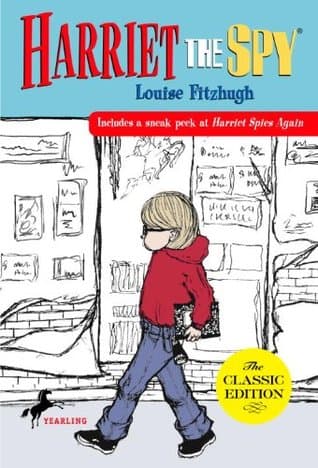
- Harriet the Spy
Louise Fitzhugh
4.0 (95k) average on GoodreadsChildren'sFollows a curious young girl who observes and investigates her world.
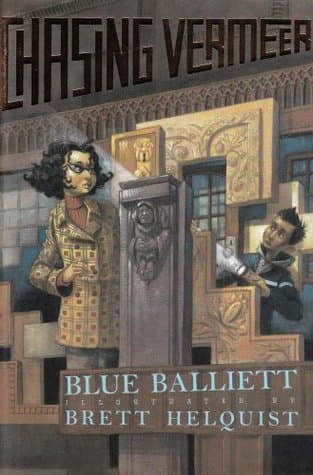
- Chasing Vermeer
Blue Balliett
3.7 (28k) average on GoodreadsChildren'sWhile both Three Times Lucky and Chasing Vermeer feature young protagonists solving mysteries, Turnage's novel distinguishes itself through its emphasis on character-driven charm and a strong sense of place. Balliett's work is more intellectually driven, focusing on art history and puzzles, with its characters serving largely as conduits for the mystery. Three Times Lucky prioritizes the emotional journey and the quirky community, making its mystery feel more integrated into the characters' lives rather than a standalone intellectual exercise. Turnage's voice is also more distinctly humorous and folksy compared to Balliett's more formal prose.
- From the Mixed-Up Files of Mrs. Basil E. Frankweiler
E.L. Konigsburg
4.2 (189k) average on GoodreadsChildren'sBoth novels explore themes of belonging and finding one's place, with children embarking on independent investigations. However, Konigsburg's classic focuses on two siblings seeking refuge and solving a mystery within the confines of the Metropolitan Museum of Art, emphasizing independence and intellectual curiosity in an urban setting. Three Times Lucky is rooted in a tight-knit, eccentric rural community, where the mystery is deeply personal and interwoven with the fabric of Mo's established, albeit unconventional, family. Turnage's narrative is also arguably more overtly humorous and action-packed than Konigsburg's more reflective and introspective tone.
- Harry Potter and the Sorcerer's Stone
J.K. Rowling
4.5 (7M) average on GoodreadsFantasyRescued from a miserable life under the stairs, an orphaned boy discovers he's a wizard destined for a magical school, where he uncovers a dangerous secret tied to the dark wizard who murdered his parents.
- The Hobbit, or There and Back Again
J.R.R. Tolkien
4.3 (2.9M) average on GoodreadsFantasyA comfort-loving hobbit named Bilbo Baggins is whisked away by a mischievous wizard and a band of dwarves on an unexpected journey to reclaim stolen treasure from a fearsome dragon, discovering courage and a magical ring along the way.




Enjoyed the summary?
A summary gives you the shape of the book. The book itself has the detail, the examples and the voice.
Find Three Times Lucky on AmazonAs an Amazon Associate, BookBrief earns from qualifying purchases. How we're funded