
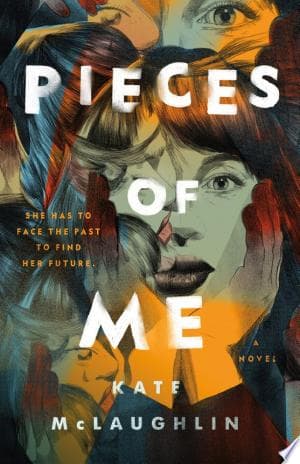
Core Idea
- Difficulty
- Medium
- Read it if
- You are interested in a deeply personal, nuanced, and empathetic exploration of dissociative identity disorder (DID), trauma, and the complex journey toward integration and self-understanding. This book is for readers seeking to understand the internal world of someone living with multiple identities and the adaptive strategies developed in response to severe trauma.
- Skip it if
- You are looking for a purely clinical textbook on DID, prefer a detached academic tone, or are not prepared for an intense, emotionally raw, and potentially triggering dive into themes of childhood trauma, abuse, and mental fragmentation.
Key Takeaways from Pieces of Me
The Enigma of Lost Time
Dissociation as a protective mechanism against unbearable trauma.
The book immediately puts the reader into the experience of significant memory loss, which is the main symptom leading to Dylan's Dissociative Identity Disorder (DID) diagnosis. This 'lost time' isn't just forgetfulness; it's a complete erasure of events, actions, and even entire days, showing a psychological split. This mechanism, while terrifying for the individual, is presented as the mind's ultimate defense, an attempt to wall off overwhelming trauma that would otherwise shatter the self. The narrative conveys the terror and confusion of waking up in an unfamiliar setting, confronted by strangers who claim intimacy, highlighting how alienating severe dissociation is.
“Dylan has lost time before, but never like this.”
In the book: Dylan's initial awakening in an unknown apartment, unable to recognize Connor or other people, and discovering she's been missing for three days, serves as the central inciting incident for her journey into understanding DID.
Try this: For those supporting individuals with memory gaps or suspected dissociation, approach with empathy and patience, understanding that the 'lost time' is not willful but a symptom of deep distress. Focus on creating a safe, stable environment rather than pressuring for recall.
Related ideas: dissociation, memory-loss, trauma-response
The Interior Crowded House
Understanding the multiplicity of selves within DID.
McLaughlin explains the concept of 'multiple personalities' by showing the alters (alternate identities) not as separate beings, but as parts of a single, traumatized individual. Each alter likely holds specific memories, emotions, or functions that the core personality couldn't integrate due to trauma. The book explores Dylan's initial shock and fear as she becomes aware of these distinct voices and presences, and the subsequent, often difficult, process of learning to communicate and coexist with them. This internal 'crowded house' shows the mind's ability to compartmentalize pain to allow for survival.
“she must grapple not only with the many people currently crammed inside her head, but that a secret from her past so terrible she’s blocked it out has put them there.”
In the book: Dylan's diagnosis with Dissociative Identity Disorder and her subsequent realization that there are 'many people currently crammed inside her head' who know things she doesn't.
Try this: Recognize that alters are not imaginary friends or demons, but complex psychological structures. The goal of therapy is often integration and cooperation among these parts, not eradication. Educate yourself on the nuances of DID to challenge common misconceptions.
Related ideas: dissociative-identity-disorder, alters, multiplicity
The Secret at the Core
Unearthing the past as a path to healing, or further fragmentation.
At the heart of Dylan's struggle is a 'terrible secret' from her past, so devastating that her mind created a system of alters to protect her from it. The journey of uncovering this truth is full of danger and uncertainty. The book builds suspense around this hidden trauma, making the reader question whether its revelation will lead to healing and integration, or if it will overwhelm Dylan and lead to further psychological disintegration. This tension shows the delicate balance in trauma recovery, where confronting the past is necessary but can also be incredibly destabilizing, requiring careful navigation and strong support systems.
“But as she gets closer to finding out the truth, Dylan wonders: will it heal her or fracture her further?”
In the book: The narrative explicitly states that a 'secret from her past so terrible she’s blocked it out has put them there' (referring to the alters).
Try this: For individuals with trauma, the timing and method of memory retrieval are critical. It should always be guided by a qualified therapist, ensuring the individual has sufficient coping mechanisms and support in place before confronting deeply painful memories.
Related ideas: trauma-recovery, repressed-memory, healing-journey
Connection Amidst Chaos
The unexpected solace of a budding relationship.
Amidst the internal chaos, Dylan finds stability and hope in her developing relationship with Connor. This connection is not just a distraction; it represents a human need for intimacy, acceptance, and being seen, even when one feels fractured. Connor's presence offers a grounding force, a mirror that reflects parts of Dylan back to herself, and a safe space where she can begin to explore her new reality without immediate judgment. This aspect of the story highlights the role of supportive relationships in mental health recovery, showing that even in dark times, human connection can offer light.
“Her only distraction is a budding new relationship with Connor.”
In the book: Dylan's relationship with Connor is explicitly mentioned as her 'only distraction' and a significant part of her journey.
Try this: Encourage and facilitate healthy social connections for those struggling with mental health. Provide non-judgmental support, active listening, and a consistent presence. Understand that relationships can be a powerful therapeutic tool, offering validation and reducing feelings of isolation.
Related ideas: support-systems, interpersonal-relationships, healing-connection
The Empathetic Lens
Challenging stigma and fostering understanding of DID.
The novel stands out for its empathetic and nuanced portrayal of Dissociative Identity Disorder, a condition often sensationalized and misunderstood in popular culture. McLaughlin avoids clichés, instead offering a raw, intimate, and human perspective on what it feels like to live with DID. By immersing the reader in Dylan's subjective experience, the book challenges stigmas and encourages a deeper understanding of the disorder as a legitimate response to extreme trauma. It is an important contribution to destigmatizing mental illness, illustrating the internal logic and protective function behind what might appear chaotic.
“Pieces of Me is a chilling, yet empathetic, look into Dissociative Identity Disorder. With her calm, pure, voice, Kate McLaughlin delves deep into the crevices of this misunderstood disorder and a young woman's mind.”
In the book: Hayley Krischer's endorsement explicitly praises McLaughlin's 'empathetic look into Dissociative Identity Disorder' and her 'calm, pure, voice' in exploring the disorder.
Try this: Seek out and consume media that offers accurate and empathetic portrayals of mental health conditions. Challenge misinformation and stereotypes about DID by sharing well-researched information and personal narratives that humanize the experience.
Related ideas: mental-health-stigma, empathy, accurate-portrayal
The Journey to Integration
Hope lies in understanding and unifying the fragmented self.
Despite the harrowing subject matter, the book is ultimately described as 'surprisingly hopeful.' This hope comes from the potential for integration, not necessarily the elimination of alters, but the process of improving communication, cooperation, and a shared sense of self among them. Dylan's journey is one of self-discovery, not just about her past trauma, but about the resilience of her mind and the possibility of finding wholeness. The message is clear: even from a state of fragmentation, healing is attainable through courage, self-acceptance, and dedicated therapeutic work. It shows the human capacity for resilience.
“Kate McLaughlin’s Pieces of Me is raw, intimate, and surprisingly hopeful.”
In the book: The jacket copy's description of the novel as 'surprisingly hopeful,' despite its raw and intimate exploration of DID.
Try this: For those with DID or supporting someone with it, focus on therapeutic approaches that promote communication between alters and work towards functional integration, rather than suppression. Celebrate small steps towards internal harmony and self-understanding.
Related ideas: integration, resilience, self-discovery
The Body Remembers
Physical sensations as clues to unremembered trauma.
While not explicitly detailed in the provided blurb, the experience of 'freaking out' despite an internal voice suggesting otherwise points to the body's experience of trauma. Individuals with DID often experience strong physical reactions, sensations, or emotional responses tied to past trauma, even when the explicit memory is blocked. Dylan's visceral reaction to her situation, independent of her conscious understanding, highlights how the body often holds the 'story' of what happened, providing clues even when the mind has suppressed the narrative. This emphasizes the importance of a holistic approach to trauma recovery, addressing both psychological and physiological manifestations.
“A voice inside her head keeps saying that everything is okay, but Dylan can’t help but freak out.”
In the book: Dylan's internal conflict where a 'voice inside her head keeps saying that everything is okay, but Dylan can’t help but freak out,' suggesting a disconnect between conscious thought and embodied experience.
Try this: Pay attention to your body's signals and unexplained physical reactions. Practices like mindfulness, somatic experiencing, and body-based therapies can be invaluable for individuals with trauma to safely process and release stored bodily memories.
Related ideas: somatic-trauma, embodied-memory, holistic-healing
The Power of Narrative Control
Reclaiming one's story through therapeutic processing.
A core aspect of healing from DID and complex trauma is the ability to create a coherent narrative of one's life, integrating fragmented experiences. For Dylan, this means not just remembering the 'terrible secret,' but understanding how it led to her dissociative system, and how each alter played a role in her survival. Reading such a book mirrors the therapeutic process: piecing together disparate parts of a story to form a complete picture. McLaughlin's storytelling invites the reader to actively participate in this process of understanding, which is ultimately what Dylan herself must do to regain control over her own life story.
“I had to keep reading not only to understand Dylan, the main character—but to understand all of the people inside Dylan’s head.”
In the book: Hayley Krischer's comment about needing to understand 'all of the people inside Dylan’s head' highlights the narrative challenge and the reader's active role in constructing understanding, mirroring Dylan's own journey.
Try this: Engage in journaling, storytelling, or guided narrative therapy to help process traumatic experiences and integrate fragmented memories into a cohesive life story. This process, facilitated by a therapist, empowers the individual to reclaim agency over their past.
Related ideas: narrative-therapy, storytelling, trauma-processing
Beyond the Diagnosis
Seeing the individual, not just the disorder.
While the diagnosis of Dissociative Identity Disorder is central to Dylan's story, the book's strength is its ability to portray Dylan as a complex individual first, rather than merely a case study. The reader is drawn into her emotional landscape, her fears, her budding romance, and her quest for truth, making her relatable despite the extraordinary nature of her condition. This focus on Dylan's humanity is important for combating the dehumanizing effects of mental illness stigma. It reminds us that behind every diagnosis is a person with a rich inner world, deserving of dignity, understanding, and compassion.
“I had to keep reading not only to understand Dylan, the main character—but to understand all of the people inside Dylan’s head.”
In the book: The review emphasizes understanding 'Dylan, the main character' *and* 'all of the people inside Dylan’s head,' prioritizing her individual experience.
Try this: When interacting with individuals with mental health diagnoses, make an effort to see beyond the label. Engage with them as whole people, respecting their experiences and focusing on their strengths, aspirations, and individual personalities, not just their symptoms.
Related ideas: person-first-language, de-stigmatization, humanity-in-illness
Pieces of Me Quotes
“I used to think that the world was this big, beautiful place, full of possibilities. But now I know it's just a lot of small, ugly rooms.”
“Sometimes I think the only way to survive is to pretend you're not really there. To be a ghost in your own life.”
“The thing about secrets is, they don't stay buried. They fester. They rot. And eventually, they burst.”
“He said I was broken. I told him I was just in pieces, and there's a difference. Pieces can be put back together.”
“Fear is a funny thing. It can make you run, or it can make you fight. Sometimes, it makes you do both at the same time.”
“You can't outrun your past. It's always there, breathing down your neck, waiting for you to trip.”
“Silence can be louder than any scream, especially when it's the silence inside your own head.”
“We all wear masks, don't we? Some of us just have more practice at making them believable.”
“Hope is a dangerous thing. It's a tiny spark that can set your whole world on fire, for better or worse.”
“There are some wounds that never truly heal. They just scar over, reminding you of what was lost.”
“Sometimes, the hardest thing to do is to forgive yourself. Especially when you don't even know what you're forgiving.”
“The truth isn't always pretty. But it's always necessary. Even when it shatters everything you thought you knew.”
“You build walls around yourself, brick by brick, until you can't even remember what you're trying to keep out, or what you're trying to keep in.”
Quiz
10 questions on the main ideas. Each answer comes with a short explanation.
Question 1
What is Dylan's initial reaction upon waking up in an unfamiliar apartment at the beginning of the novel?
- She calmly tries to piece together what happened.
- She experiences panic and freaks out.
- She immediately recognizes Connor and feels safe.
- She tries to call her parents without showing any distress.
Show answer
B. She experiences panic and freaks out. Despite a voice inside her head saying everything is okay, Dylan can't help but freak out upon realizing she's in an unfamiliar place and doesn't know the people around her.
Question 2
How long has Dylan been missing when she uses Connor's phone to call home?
- One day
- Two days
- Three days
- A week
Show answer
C. Three days When Dylan finally calls home using Connor's phone, she discovers she has been missing for three days, a longer period than her previous 'lost time' incidents.
Question 3
What mental health diagnosis does Dylan receive early in the story?
- Bipolar Disorder
- Schizophrenia
- Dissociative Identity Disorder (DID)
- Post-Traumatic Stress Disorder (PTSD)
Show answer
C. Dissociative Identity Disorder (DID) Soon after her initial experience, Dylan is diagnosed with Dissociative Identity Disorder (DID), which explains the 'many people currently crammed inside her head' and her lost time.
Question 4
According to the synopsis, what is the primary cause of Dylan's DID?
- A genetic predisposition to mental illness.
- A secret from her past so terrible she's blocked it out.
- An accidental head injury she sustained recently.
- The stress of her new relationship with Connor.
Show answer
B. A secret from her past so terrible she's blocked it out. The synopsis explicitly states that Dylan must grapple with the fact that 'a secret from her past so terrible she’s blocked it out has put them there' (referring to the alters).
Question 5
What role does Connor play in Dylan's life as she grapples with her diagnosis?
- He is her therapist, helping her integrate her alters.
- He is a distraction through a budding new relationship.
- He is a long-lost brother she doesn't remember.
- He is a manifestation of one of her alters.
Show answer
B. He is a distraction through a budding new relationship. The synopsis mentions that Dylan's 'only distraction is a budding new relationship with Connor,' indicating his role as a romantic interest providing a diversion.
Question 6
How does the author, Kate McLaughlin, approach the topic of Dissociative Identity Disorder in 'Pieces of Me'?
- She sensationalizes the disorder for dramatic effect.
- She offers a chilling, yet empathetic and pure look into DID.
- She focuses primarily on the medical treatment of DID.
- She dismisses the disorder as a coping mechanism without deeper roots.
Show answer
B. She offers a chilling, yet empathetic and pure look into DID. Hayley Krischer's quote describes the book as 'a chilling, yet empathetic, look into Dissociative Identity Disorder. With her calm, pure, voice, Kate McLaughlin delves deep into the crevices of this misunderstood disorder.'
Question 7
What is the central conflict Dylan faces as she gets closer to the truth about her past?
- Whether her relationship with Connor will survive the revelations.
- Whether the truth will heal her or fracture her further.
- How to escape from the apartment she woke up in.
- Which of her alters is the 'real' Dylan.
Show answer
B. Whether the truth will heal her or fracture her further. The synopsis poses the question: 'But as she gets closer to finding out the truth, Dylan wonders: will it heal her or fracture her further?' This highlights the central internal conflict.
Question 8
The description highlights the novel as 'raw, intimate, and surprisingly hopeful.' Which aspect contributes most to the 'hopeful' element?
- The focus on Dylan's initial confusion and fear.
- The exploration of a girl finding strength in not being alone.
- The revelation of the terrible secret from her past.
- The ongoing struggle with her many alters.
Show answer
B. The exploration of a girl finding strength in not being alone. The very first line of the synopsis states it's 'about a girl finding strength in not being alone,' directly correlating with the 'surprisingly hopeful' nature mentioned later.
Question 9
What distinguishes Dylan's most recent 'lost time' experience from her previous ones?
- It involved her meeting Connor for the first time.
- She was missing for a significantly longer duration (three days).
- She woke up in a different city entirely.
- She had no memory of her own name.
Show answer
B. She was missing for a significantly longer duration (three days). The text states, 'Dylan has lost time before, but never like this. Especially when she borrows Connor’s phone to call home and realizes she’s been missing for three days,' highlighting the unprecedented duration.
Question 10
Hayley Krischer's review mentions she 'had to keep reading not only to understand Dylan, the main character—but to understand all of the people inside Dylan’s head.' What literary device or narrative technique does this suggest the author employs effectively?
- An unreliable narrator perspective.
- Deep characterization and exploration of internal multiplicity.
- Extensive use of flashbacks to reveal the past.
- A fast-paced, action-driven plot.
Show answer
B. Deep characterization and exploration of internal multiplicity. The need to understand 'all of the people inside Dylan’s head' directly points to the author's ability to deeply characterize and differentiate Dylan's various alters, making them compelling to the reader.
Pieces of Me FAQ
What is Dissociative Identity Disorder (DID) as portrayed in 'Pieces of Me'?
'Pieces of Me' explores Dissociative Identity Disorder (DID) through the eyes of Dylan, an eighteen-year-old who discovers she has multiple personalities or 'alters' within her. The book delves into how DID manifests, including lost time and the presence of distinct internal voices and identities, often as a coping mechanism for past trauma.
Does 'Pieces of Me' accurately represent the experience of living with DID?
While 'Pieces of Me' is a fictional narrative, it strives to offer an empathetic and intimate portrayal of DID, drawing on research and personal insights to depict the challenges and complexities of the disorder. It aims to shed light on a often misunderstood condition through Dylan's journey of discovery and healing.
What kind of secrets does Dylan uncover about her past?
Dylan's journey in 'Pieces of Me' is driven by the revelation that a terrible secret from her past is responsible for the development of her Dissociative Identity Disorder. As she grapples with her diagnosis, she must confront these repressed memories, which are crucial to understanding her fractured self and moving towards healing.
How does the relationship with Connor impact Dylan's healing process?
Dylan's budding relationship with Connor serves as both a distraction and a potential catalyst in her healing process. While it offers her a sense of normalcy and connection, it also brings new challenges as she navigates intimacy and trust while grappling with her DID and the secrets of her past. Connor's role is integral to her journey.
Is 'Pieces of Me' a Young Adult (YA) novel?
Yes, 'Pieces of Me' is categorized as a Young Adult (YA) novel. It focuses on the experiences of an eighteen-year-old protagonist, Dylan, and explores themes relevant to young adults, such as identity, relationships, trauma, and self-discovery, within a compelling and accessible narrative.
How does 'Pieces of Me' differ from other books about mental health?
'Pieces of Me' distinguishes itself by offering a deeply intimate and raw exploration of Dissociative Identity Disorder, a condition often misrepresented or overlooked in fiction. It focuses on the internal struggle and the process of integration and healing, providing a hopeful perspective on living with DID, rather than solely focusing on the challenges.
What is the overall message or theme of 'Pieces of Me'?
The core message of 'Pieces of Me' is one of finding strength in not being alone, whether through internal support from alters or external connections. It emphasizes the importance of confronting trauma, understanding oneself, and the possibility of hope and healing even in the face of profound psychological challenges.
Is 'Pieces of Me' suitable for readers interested in psychology?
Yes, 'Pieces of Me' would appeal to readers interested in psychology, particularly those curious about Dissociative Identity Disorder. While a fictional story, it offers a compelling narrative lens through which to explore the complexities of DID, trauma, memory, and the human psyche, making it both engaging and thought-provoking.
Similar books
- When Rabbit Howls
Truddi Chase
4.0 (16k) average on GoodreadsPsychologyBoth books detail lives with DID. However, McLaughlin's narrative in 'Pieces of Me' feels more contemporary in its psychological framing and perhaps more accessible to a broader audience due to its less sensationalized, albeit still intense, approach to the condition, compared to the often harrowing and highly fragmented structure of 'When Rabbit Howls'.
- The Diary of a Young Girl
Anne Frank
4.2 (2.7M) average on GoodreadsBiographyDuring the Nazi occupation, a teenage girl's diary, written from a secret annex, shares observations on humanity, hope, and the wait for freedom.
- Twisted 1. Twisted love
Ana Huang
3.7 (1.7M) average on GoodreadsA quiet billionaire with a difficult past finds his guarded heart opening to the woman he must protect, but their growing passion uncovers dangerous secrets and a shared, traumatic history.
- Eat, Pray, Love
Elizabeth Gilbert
3.6 (1.5M) average on GoodreadsLifestyleA heartbroken writer leaves her conventional life for a year-long global search for pleasure in Italy, spiritual devotion in India, and unexpected love and balance in Bali.
- Night
Elie Wiesel
4.3 (970k) average on GoodreadsBiographyIn the darkness of Auschwitz and Buchenwald, a teenage Elie Wiesel faces the extermination of his family, the loss of his faith, and the lasting scars of humanity's deepest cruelty.
- Steve Jobs
Walter Isaacson
4.1 (957k) average on GoodreadsBusinessSteve Jobs was a visionary who fused creativity and technology to revolutionize six industries and shape our digital world.






Enjoyed the summary?
A summary gives you the shape of the book. The book itself has the detail, the examples and the voice.
Find Pieces of Me on AmazonAs an Amazon Associate, BookBrief earns from qualifying purchases. How we're funded