

Synopsis
Covers the whole plot, including the ending.
- Difficulty
- Easy
- Pacing
- Moderate
- Mood
- Somber, Poignant, Reflective, Educational
- Read it if
- You want a concise, emotionally impactful historical account of friendship and sacrifice during the Civil War, suitable for mature children and adults.
- Skip it if
- You prefer lighthearted stories or are sensitive to themes of war, death, and racial injustice, as this book is very sad.
Pink and Say Plot Summary
Covers the whole plot, including the ending.
A Battlefield Rescue
The story begins with Sheldon Russell Curtis, a fifteen-year-old white Union soldier from Ohio, badly wounded and left on a Civil War battlefield. He lies among the dead, sure he will die soon. His leg is broken, and he is weak from blood loss and fear. As night falls and battle sounds fade, a young Black soldier, Pinkus Aylee, finds Sheldon. Despite the danger and racial bias of the time, Pinkus, a soldier from the 48th Colored Troops, risks his life to save Sheldon, lifting him onto his back and carrying him away from the fighting, toward an unknown safety.
Journey to Safety
Pinkus, with great strength, carries the much larger Sheldon through the night. Sheldon, half-conscious and in pain, knows Pinkus is trying to save him and that Confederate patrols are a constant threat. Pinkus reassures him and keeps going, speaking softly of reaching his home where his mother, Moe Moe, can treat Sheldon's wounds. The journey is hard and dangerous, but Pinkus's steady resolve keeps them moving toward the hidden farm that is their only hope for shelter and medical care far behind enemy lines.
Moe Moe's Care
At Pinkus's small, isolated farm, Sheldon meets Moe Moe, Pinkus's mother. She is a strong, wise woman who immediately takes charge of Sheldon's care. With gentle hands, she cleans and bandages his infected wound, using traditional remedies and her knowledge of healing. Sheldon, at first cautious due to his ingrained biases, is deeply moved by her kindness. Moe Moe treats him like her own son, providing food, comfort, and a safe place, knowing the great danger she and Pinkus are in for hiding a white Union soldier, especially with Confederates in the area.
A Shared Humanity
While Sheldon recovers, he and Pinkus talk, sharing stories about their lives before the war. Sheldon tells about his family's farm in Ohio and his simple life. Pinkus, in turn, shares his experiences growing up as a free Black man in the South, explaining his choice to fight for the Union to ensure freedom for everyone, especially his enslaved ancestors. Despite their different backgrounds and the social rules of the time, a close friendship and mutual respect grow between them. They see each other's humanity and their shared wish for peace and justice, going beyond the racial lines society had drawn.
A Lesson in Reading
One day, Pinkus takes out a worn Bible, his only book, and starts to read from it. Sheldon admits he cannot read, which surprises Pinkus. Pinkus, who values reading as a way to freedom and knowledge, decides to teach Sheldon. He patiently guides Sheldon through the letters and words, showing the power of reading. For Pinkus, reading is not just a skill but a symbol of the freedom he is fighting for, a freedom he hopes will one day extend to all people, including his own mother.
The Confederate Patrol
As Sheldon's leg starts to heal, a feeling of dread settles over the farm. One morning, the quiet is broken by the sound of approaching horses. A Confederate patrol, having gotten a tip or just scouting, finds the isolated farm. There is no time to hide. The soldiers quickly overrun the small home, capturing both Sheldon and Pinkus. Moe Moe tries to step in, begging for her son and the wounded soldier, but her pleas are ignored. The harsh reality of war and its brutal results comes down on them, ending their short time of safety.
The Terrible Choice
The Confederate soldiers question Sheldon, demanding to know why he, a white Union soldier, was being sheltered by a Black family. They threaten him with serious consequences if he does not cooperate. Facing the immediate threat of death, and understanding his captors' racial biases, Sheldon is pressured to deny his friendship with Pinkus and to distance himself from the Black family. He is offered a chance to save himself by rejecting Pinkus, a choice that weighs heavily on his conscience, forcing him to face the moral complexity of his situation and the ultimate test of his character.
A Final Goodbye
Despite Sheldon's desperate inner struggle and the Confederates' attempts to separate them, the bond between Sheldon and Pinkus remains clear. The Confederates, seeing Pinkus as a Black Union soldier, treat him with extreme cruelty. They separate the two friends, taking Pinkus away while leaving Sheldon, likely because of his visible injury and race. As Pinkus is led away, he turns back, and his eyes meet Sheldon's, a silent goodbye passing between them, full of unspoken thanks, fear, and deep loss. This is their last interaction.
Sheldon's Fate
Sheldon, despite his injury, is not released. Instead, he is sent to Andersonville Prison, one of the most notorious Confederate prisoner-of-war camps. There, he endures terrible conditions: hunger, disease, exposure, and constant brutality. The experience is a living hell, harming him both physically and emotionally. He sees unspeakable suffering and death daily, a sharp contrast to the brief peace and kindness he found with Pinkus and Moe Moe. The memory of Pinkus and his mother, and the lessons learned, become a source of strength for Sheldon amidst the despair.
The Tragic News
After the war ends, Sheldon, a thin and broken man, is among the few survivors of Andersonville. He eventually returns home, changed forever by his experiences. He asks about Pinkus, hoping to find his friend alive. The news he gets is crushing: Pinkus Aylee, a soldier of the 48th Colored Troops, was taken to a nearby field and hanged immediately upon capture, a common and brutal fate for Black Union soldiers captured by the Confederacy. This news crushes Sheldon, confirming his worst fears and cementing the tragic end of his friendship.
A Promise Kept
Sheldon Russell Curtis carries the memory of Pinkus and Moe Moe for the rest of his long life. The lessons of courage, compassion, and the pointlessness of war, taught to him by his Black friends, stay deeply with him. He never forgets Pinkus's bravery, Moe Moe's kindness, or the impact they had on his understanding of humanity and injustice. The story ends with Sheldon, now an old man, telling this painful yet important experience to his granddaughter, making sure that Pinkus Aylee's sacrifice and their deep bond will not be forgotten by future generations.
Pink and Say Characters
Sheldon Russell Curtis
Protagonist
A young white Union soldier rescued by a Black soldier.
Sheldon is a fifteen-year-old white Union soldier from Ohio. Initially naive and somewhat prejudiced due to his upbringing, he is thrust into the brutal realities of the Civil War. He is severely wounded and left for dead, symbolizing the vulnerability of all soldiers regardless of background. His journey with Pinkus and Moe Moe profoundly challenges his worldview, teaching him about compassion, courage, and the shared humanity that transcends racial divides. He represents the common soldier caught in the war's grip.
Relationships: Pinkus Aylee (Close friend and savior, who rescues and cares for Sheldon.); Moe Moe (Caretaker and maternal figure who heals Sheldon and teaches him kindness.)
Pinkus Aylee
Supporting/Co-Protagonist
A brave Black Union soldier who saves Sheldon and embodies courage and hope.
Pinkus is a Black Union soldier from the 48th Colored Troops, a free man fighting for the liberation of his people. He embodies immense courage, compassion, and a deep sense of justice. He risks his life to save Sheldon, demonstrating humanity in the face of war and prejudice. Pinkus is also educated, cherishing literacy as a symbol of freedom and even teaching Sheldon to read. He represents the often-overlooked bravery and sacrifice of Black soldiers in the Civil War, and the fight for dignity and equality.
Relationships: Sheldon Russell Curtis (Close friend and the person he saves, forming a deep bond.); Moe Moe (His loving and wise mother.)
Moe Moe
Supporting
Pinkus's mother, a wise and compassionate woman who provides sanctuary.
Moe Moe is Pinkus's mother, a strong and nurturing woman who lives on an isolated farm. She possesses traditional healing knowledge and uses it to nurse Sheldon back to health. Her compassion extends beyond race, as she treats Sheldon with the same care she would her own son, despite the immense danger of harboring a white Union soldier in Confederate territory. Moe Moe represents the quiet strength, resilience, and unwavering humanity of those who offered aid and comfort during a brutal conflict, often at great personal risk.
Relationships: Pinkus Aylee (Her son, whom she loves deeply and is proud of.); Sheldon Russell Curtis (A wounded soldier she nurses back to health, treating him like a son.)
Confederate Soldiers
Antagonist
The soldiers who capture Pinkus and Sheldon, representing the brutal forces of the Confederacy.
The Confederate soldiers represent the opposing side of the Civil War and, more specifically, the entrenched racism and brutality of the Confederacy. They are depicted as harsh, unyielding, and prejudiced, particularly towards Pinkus, a Black Union soldier. Their capture of Sheldon and Pinkus shatters the brief peace found at Moe Moe's farm and directly leads to Pinkus's tragic fate and Sheldon's suffering at Andersonville. They symbolize the destructive and dehumanizing aspects of war and slavery.
Relationships: Sheldon Russell Curtis (Captor-prisoner relationship.); Pinkus Aylee (Captor-prisoner relationship, marked by extreme racial prejudice and brutality.)
Sheldon's Granddaughter
Mentioned
The recipient of Sheldon's story, ensuring its legacy.
Sheldon's granddaughter is the framing device for the story, representing the future generation to whom the painful yet vital lessons of the past are entrusted. While not an active participant in the main narrative, her presence underscores the importance of remembering history and the personal sacrifices made during the Civil War. She is the listener, allowing Sheldon's story of Pinkus and Moe Moe to live on and continue to teach about courage, compassion, and the senselessness of war.
Relationships: Sheldon Russell Curtis (Grandfather-granddaughter relationship, where she is the inheritor of his story.)
Pink and Say Themes
Humanity and Compassion Amidst War
The story shows acts of humanity and compassion even during the brutal Civil War. Pinkus saving Sheldon, a white Union soldier, and Moe Moe's selfless care for him go beyond racial divides and the violence of war. Moe Moe treating Sheldon's wounds like he is her own son, and Pinkus risking everything for a stranger, are powerful examples. This shows that even in the darkest times, kindness and connection can win, offering hope and fighting the dehumanizing effects of war.
“I couldn't leave you, child. Not with a leg like that.”
The Senselessness and Brutality of War
The story clearly shows the terrible reality and pointlessness of war. Sheldon, left for dead on a bloody field, immediately shows the high cost of conflict. Pinkus and Sheldon's capture, leading to Pinkus's tragic death and Sheldon's suffering in Andersonville, highlights the devastating and often random nature of wartime violence. The contrast between Moe Moe's peaceful farm and the sudden arrival of Confederate soldiers further shows how war shatters innocence and destroys lives, leaving lasting pain on those who survive.
“It was a terrible, terrible war. The worst of times. A time of much sorrow.”
Racial Prejudice and the Fight for Freedom
The story directly addresses the deep-seated racial biases of the Civil War era. Sheldon's upbringing likely taught him some prejudice, which Pinkus's and Moe Moe's actions challenge and ultimately overcome. Pinkus, as a Black Union soldier, represents the fight for freedom and equality, a cause for which he ultimately dies. The Confederates' brutal treatment of Pinkus—his immediate hanging—clearly shows the extreme racism and dehumanization Black soldiers faced. The story effectively exposes the injustice of slavery and the courage of those who fought against it.
“I'm fighting for my freedom, and the freedom of my people. It's why I joined up.”
The Power of Memory and Storytelling
The entire story is told as a memory by an elderly Sheldon to his granddaughter, stressing the importance of remembering and sharing historical truths. Sheldon's lifelong commitment to keeping Pinkus's story alive, despite the pain, shows how memory can honor sacrifice and teach future generations important lessons. By sharing his experiences, Sheldon ensures that Pinkus's bravery and the injustices of the war are not forgotten, turning a personal tragedy into a legacy of remembrance and a warning against hatred and war.
“And so, child, I tell you this story, so you will never forget.”
Plot Devices & Literary Techniques
Framing Device
An older Sheldon recounts his story to his granddaughter.
The story is framed by an elderly Sheldon Russell Curtis telling his granddaughter about his wartime experiences. This device immediately establishes a reflective and poignant tone, signaling that the events are being recalled from a significant distance in time. It also emphasizes the theme of memory and the importance of passing down history. By having an older Sheldon narrate, the reader understands that he survived, but the emotional weight of his past experiences, particularly Pinkus's fate, is carried throughout the narrative, making the ending more impactful.
Symbolism of Literacy (The Bible)
Pinkus's ability to read and his teaching of Sheldon.
Pinkus's possession of a Bible and his ability to read, contrasted with Sheldon's illiteracy, serves as a powerful symbol. For Pinkus, reading represents freedom, knowledge, and dignity – values often denied to enslaved Black people. His act of teaching Sheldon to read is not merely passing on a skill but sharing a path to empowerment and understanding. The Bible itself, as a sacred text, underscores the moral and spiritual dimensions of their bond and the inherent goodness they represent against the backdrop of war's depravity. It symbolizes hope and the potential for a better future.
Foil Characters
Sheldon and Pinkus, though different, highlight shared humanity.
Sheldon and Pinkus serve as foil characters. Sheldon is a young, white, initially prejudiced, and wounded soldier, representing a common perspective of the time. Pinkus is a free Black soldier, educated, courageous, and deeply committed to the cause of freedom for all. Their differences in race, social standing, and background highlight how humanity, compassion, and friendship can transcend societal barriers. Pinkus's altruism and moral clarity serve to illuminate Sheldon's internal growth and challenge his preconceived notions, ultimately forging a bond that emphasizes their shared humanity over their superficial differences.
Foreshadowing
Subtle hints of danger and an impending tragic outcome.
Foreshadowing is used subtly throughout the narrative to build tension and hint at the inevitable tragic climax. The isolated nature of Moe Moe's farm, while a sanctuary, also suggests its vulnerability to discovery. The constant threat of Confederate patrols is mentioned, creating a sense of unease. The very act of Pinkus, a Black Union soldier, harboring a white Union soldier in Confederate territory is inherently dangerous. These elements subtly prepare the reader for the eventual capture and the heartbreaking separation and fate that befall Pinkus, making the tragic ending feel both shocking and sadly inevitable.
Pink and Say Quotes
“War is a monster.”
“You are my brother now.”
“We'll be safe here, Say. No one will find us.”
“I never saw my mama again, Say.”
“My mama said, 'Don't you ever hate.'”
“He was just a boy, too, Say.”
“Pinkus, he was black. And I was white. We were on different sides of the war, but we were the same.”
“I want to go home, Pink.”
“Promise me, Saylor, that you will tell this story.”
“The memory of Pinkus and his mama kept me alive.”
“It was the hardest promise I ever kept.”
“He took my hand, and for a moment, the war was gone.”
“And I remembered Pinkus, and his mama, and the war, and how hate can steal the sweetness from everything.”
Quiz
10 questions on the plot and the characters. Each answer comes with a short explanation.
Question 1
Where does Pinkus 'Pink' Aylee find Sheldon 'Say' Russell after Say is wounded?
- In a Union Army hospital tent
- Under the branches of a bloody oak tree
- Inside a deserted farmhouse
- By a creek bed, trying to drink water
Show answer
B. Under the branches of a bloody oak tree Pink finds Say severely wounded and left for dead under an oak tree on a battlefield.
Question 2
What is Say Russell's initial reaction when he first sees Pinkus Aylee?
- He is grateful for the help.
- He is suspicious and fearful because Pink is Black.
- He tries to fight Pink off, thinking he is an enemy soldier.
- He mistakes Pink for his own brother.
Show answer
B. He is suspicious and fearful because Pink is Black. Say, having been raised in a society with racial prejudice, is initially fearful and distrustful of Pink because he is Black.
Question 3
What does Pinkus Aylee's mother, Moe Moe Bay, believe about the soil of their farm?
- That it is barren and infertile.
- That it is cursed due to the war.
- That it is 'hallowed ground' because her ancestors are buried there.
- That it will only grow cotton, nothing else.
Show answer
C. That it is 'hallowed ground' because her ancestors are buried there. Moe Moe Bay refers to their land as 'hallowed ground' because her family, including her ancestors, are buried there, giving it deep personal and historical significance.
Question 4
What significant item does Say Russell carry with him that represents his family and his home?
- A small wooden cross carved by his mother.
- A locket with a picture of his sweetheart.
- A small, worn Bible.
- A small, smooth stone from his family's creek.
Show answer
D. A small, smooth stone from his family's creek. Say carries a small, smooth stone from the creek on his family's farm, which he often touches as a reminder of home and his mother.
Question 5
What does Moe Moe Bay do for Say Russell that helps him heal both physically and emotionally?
- She teaches him how to read and write.
- She sings him lullabies and tells him stories of her youth.
- She cleans his wounds, feeds him, and treats him with kindness and dignity.
- She gives him a new uniform and boots.
Show answer
C. She cleans his wounds, feeds him, and treats him with kindness and dignity. Moe Moe Bay provides Say with crucial medical care, nourishment, and, most importantly, unconditional kindness and compassion, helping him recover from his physical and emotional trauma.
Question 6
What is the primary reason Pinkus Aylee is fighting in the Civil War?
- To gain personal fame and recognition.
- To defend his family's property from Confederate soldiers.
- To fight for the freedom of his people from slavery.
- He was conscripted against his will.
Show answer
C. To fight for the freedom of his people from slavery. As a Black soldier, Pink is fighting for the Union specifically to end slavery and secure freedom and equality for African Americans.
Question 7
What tragic event occurs when Confederate soldiers discover Pink, Say, and Moe Moe Bay?
- Say is killed trying to protect Pink and Moe Moe Bay.
- Moe Moe Bay is shot and killed by the soldiers.
- The farm is burned to the ground with everyone inside.
- Pink and Say manage to escape, leaving Moe Moe Bay behind.
Show answer
B. Moe Moe Bay is shot and killed by the soldiers. Confederate soldiers raid the farm, and tragically, Moe Moe Bay is shot and killed for trying to protect her home and the two soldiers.
Question 8
What is the ultimate fate of Pinkus Aylee after he and Say are captured by the Confederates?
- He is eventually released in a prisoner exchange.
- He escapes captivity and rejoins the Union Army.
- He is hanged before Say's eyes.
- He is sent to a prisoner-of-war camp and dies of disease.
Show answer
C. He is hanged before Say's eyes. After their capture, Pink is tragically hanged by the Confederate soldiers, a brutal reality for many Black soldiers captured during the Civil War.
Question 9
The story 'Pink and Say' is presented as a true family story passed down through generations. What does this narrative choice emphasize?
- The author's desire to create a fictional account that feels real.
- The lasting impact of historical events on individual lives and families.
- The unreliability of oral traditions in historical retelling.
- The importance of the specific battlefield where Say was found.
Show answer
B. The lasting impact of historical events on individual lives and families. Patricia Polacco explicitly states this is her great-great-grandpa Say's story, passed down. This framing emphasizes the personal, enduring impact of the Civil War, slavery, and racism on families, making the history tangible and emotionally resonant.
Question 10
What key theme is highlighted by the evolving relationship between Say Russell and Pinkus Aylee?
- The inherent differences between people from different regions.
- The power of human connection and empathy to overcome prejudice.
- The futility of trying to change deeply held beliefs.
- The importance of following military protocol above all else.
Show answer
B. The power of human connection and empathy to overcome prejudice. Despite Say's initial prejudice, the bond formed through shared vulnerability, compassion, and mutual respect between him and Pink demonstrates how human connection can transcend societal divisions like race and war.
Pink and Say FAQ
What is the core premise of 'Pink and Say'?
'Pink and Say' tells the harrowing true story of Sheldon Russell Curtis, a young white Union soldier, who is severely wounded and left for dead on a Civil War battlefield. He is miraculously found and saved by Pinkus, a young Black Union soldier, who then carries him to his home where Pinkus's mother, Moe Moe Bay, nurses Sheldon back to health.
Who are the main characters and what are their initial circumstances?
The main characters are Sheldon Russell Curtis, a white Union soldier from Ohio, and Pinkus, a Black Union soldier from Georgia. Sheldon is gravely wounded and abandoned, while Pinkus is actively searching for survivors or stragglers. Pinkus's mother, Moe Moe Bay, is an elderly Black woman living alone in the war-torn South.
What significant historical event forms the backdrop for the story?
The story is set during the American Civil War, specifically in the latter stages when Sherman's march through Georgia was devastating the Confederate South. This period saw immense destruction and hardship, particularly for those living in the path of the armies, as depicted by the desolate landscape and Moe Moe Bay's isolated home.
How does the story highlight the racial dynamics of the Civil War era?
The story starkly contrasts the experiences of white and Black soldiers and civilians. Sheldon, initially holding ingrained prejudices, is saved and cared for by Pinkus and Moe Moe Bay, who are former slaves. This interaction forces Sheldon to confront his preconceived notions about race and the humanity of Black people, revealing the deep-seated injustices of the time.
What is the ultimate fate of Pinkus and Sheldon?
Tragically, Pinkus and Sheldon are captured by Confederate soldiers shortly after Sheldon has recovered enough to walk. They are taken to Andersonville Prison. Sheldon, being white, is eventually exchanged and survives the war, but Pinkus, being Black, is summarily hanged outside the prison walls, illustrating the brutal racial discrimination even in death.
What is the significance of the 'Pink and Say' title?
The title refers to the two main characters: Pinkus and Sheldon. It subtly suggests their bond and the story's focus on their shared experience. The author, Patricia Polacco, also highlights that the story was passed down through her family, with 'Pink and Say' being the names used by her ancestors to refer to these two men.
What is the meaning behind Moe Moe Bay's actions when she washes Sheldon's feet?
Moe Moe Bay washing Sheldon's feet is a powerful act of humility, care, and spiritual significance. It echoes biblical traditions of hospitality and service, demonstrating her profound compassion regardless of Sheldon's race or initial prejudices. This act symbolizes her selfless love and humanity in a time of war and hatred.
How does the 'shame' Sheldon feels after being rescued by Pinkus evolve throughout the story?
Initially, Sheldon feels shame and humiliation at being saved by a Black soldier, reflecting the racial prejudices of his time. This shame transforms into a deeper sense of respect and gratitude as he witnesses Pinkus's bravery and Moe Moe Bay's kindness. By the end, his shame is replaced by profound grief and guilt over Pinkus's fate.
What psychological impact does the story suggest war has on individuals, specifically through Pinkus?
The story suggests war forces individuals to confront extreme situations and make profound moral choices. Pinkus's unwavering commitment to saving Sheldon, despite the personal risk and societal norms, reveals a deep sense of humanity forged in the crucible of war. He embodies resilience and compassion even amidst brutality.
How does Moe Moe Bay represent an archetype of strength and resilience?
Moe Moe Bay embodies an archetype of maternal strength and resilience. As a former slave, she has endured immense suffering, yet she maintains her humanity and compassion. Living alone in a devastated land, she selflessly nurtures Sheldon, demonstrating an unwavering spirit and a deep well of kindness despite her own vulnerability.
What is the significance of Pinkus teaching Sheldon to read?
Pinkus teaching Sheldon to read is a deeply symbolic act. At a time when literacy was often denied to Black people, Pinkus, a Black soldier, shares this valuable skill with a white soldier. This act signifies the breaking of societal barriers, the sharing of knowledge, and the forging of a bond that transcends race and status, highlighting Pinkus's inherent dignity and intelligence.
How does the story challenge traditional narratives of heroism in the Civil War?
The story challenges traditional narratives by centering on the heroism of a Black soldier, Pinkus, who risks his life for a white soldier, Sheldon. It highlights acts of compassion and inter-racial solidarity that are often overlooked in mainstream historical accounts, demonstrating that heroism transcends race and military rank, and can be found in acts of profound humanity.
What message about the 'senselessness of war' is conveyed by the ending?
The ending, with Pinkus's unjust hanging and Sheldon's inability to save him, powerfully conveys the senselessness of war and racial prejudice. Despite their shared humanity and the bond they formed, the societal structures of racism ultimately dictated Pinkus's tragic fate, illustrating how war exacerbates and is shaped by existing injustices, leading to arbitrary and heartbreaking losses.
What is the enduring legacy or lesson Patricia Polacco intends to pass on with this story?
Patricia Polacco intends to pass on the enduring lesson of the importance of remembering and sharing true stories, especially those that highlight human connection and the devastating impact of prejudice. By sharing her ancestor's tale, she emphasizes that love, courage, and humanity can flourish even in the darkest times, but also that the cost of hatred and war is immeasurable and must never be forgotten.
How does Polacco's distinctive art style contribute to the emotional impact of 'Pink and Say'?
Polacco's distinctive art style, characterized by expressive faces, detailed historical settings, and a mix of vibrant and somber colors, profoundly enhances the emotional impact. Her use of close-ups on characters' eyes conveys their inner turmoil and compassion, while the detailed, often desolate, landscapes underscore the harsh realities of war, drawing readers deeply into the characters' experiences and feelings.
Similar books
- The Boy in the Striped Pajamas
John Boyne
4.2 (518k) average on GoodreadsChildren'sExplores an unlikely friendship between children during a historical conflict, highlighting the senselessness of prejudice.
- Harry Potter and the Sorcerer's Stone
J.K. Rowling
4.5 (7M) average on GoodreadsFantasyRescued from a miserable life under the stairs, an orphaned boy discovers he's a wizard destined for a magical school, where he uncovers a dangerous secret tied to the dark wizard who murdered his parents.
- The Hobbit, or There and Back Again
J.R.R. Tolkien
4.3 (2.9M) average on GoodreadsFantasyA comfort-loving hobbit named Bilbo Baggins is whisked away by a mischievous wizard and a band of dwarves on an unexpected journey to reclaim stolen treasure from a fearsome dragon, discovering courage and a magical ring along the way.
- Harry Potter and the Goblet of Fire
J.K. Rowling
4.6 (2.6M) average on GoodreadsFantasyA bewildered Harry Potter, underage and thrust into a deadly Triwizard Tournament, must brave dragons, mermaids, and a resurgent dark magic to survive a year that will forever alter the wizarding world.
- Harry Potter and the Order of the Phoenix
J.K. Rowling
4.5 (2.5M) average on GoodreadsFantasyIn a year of oppressive secrets and the threat of Voldemort, Harry Potter and Dumbledore's Army secretly train for war, shown through Jim Kay and Neil Packer's dark illustrations.
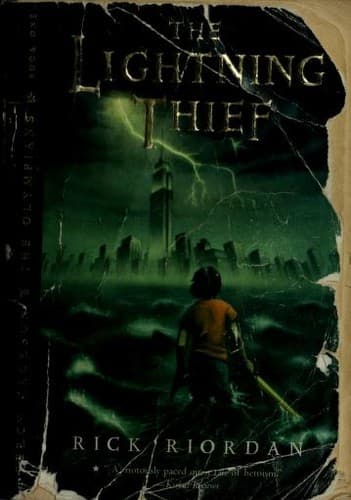
- The Lightning Thief
Rick Riordan
4.3 (2M) average on GoodreadsFantasyThrust into a world of mythological monsters and divine treachery, an ordinary boy discovers he's the son of Poseidon and must embark on a perilous quest across modern America to prevent an Olympian war.





Enjoyed the summary?
A summary gives you the shape of the book. The book itself has the detail, the examples and the voice.
Find Pink and Say on AmazonAs an Amazon Associate, BookBrief earns from qualifying purchases. How we're funded