
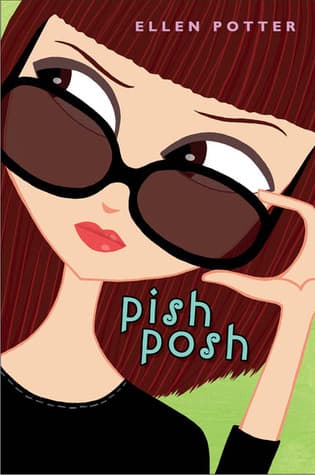
Synopsis
Covers the whole plot, including the ending.
- Difficulty
- Easy
- Pacing
- Fast
- Mood
- Whimsical, Adventurous, Humorous, Mysterious, Heartwarming
- Read it if
- You enjoy whimsical children's mysteries with a touch of fantasy, a strong character arc, and a fun, fast-paced adventure in a unique setting.
- Skip it if
- You prefer realistic fiction or stories without fantastical elements and a slightly over-the-top premise.
Pish Posh Plot Summary
Covers the whole plot, including the ending.
The Reign of Clara Frankofile
Clara Frankofile, an orphaned and wealthy eleven-year-old, lives alone in a lavish penthouse in New York City, which has an indoor roller coaster. She spends her nights at the Pish Posh restaurant, observing the city's elite from her private booth. With a nod or shake of her head, she decides which celebrities, socialites, and royalty are allowed to stay and which will be escorted out by Mr. Bobby, the restaurant's doorman. Her reputation for snobbery and power comes before her, making her a respected figure in high society despite her young age.
A Mysterious Disappearance
Clara's orderly world begins to fall apart when she notices a strange pattern at the Pish Posh. For three nights in a row, a different diner disappears from their table without a trace, leaving only their half-eaten dessert. First, a famous actress vanishes, then a renowned opera singer, and finally, an ordinary man. The disappearances are subtle, almost invisible to anyone not as observant as Clara. This anomaly sparks her curiosity and disturbs her control over the restaurant. She first dismisses it as minor, but soon realizes it is something more serious.
Befriending Hamlet, the Jewel Thief
Driven by growing suspicion, Clara decides to investigate the disappearances. Her first attempts are clumsy, showing her sheltered life. She then meets Hamlet, a twelve-year-old jewel thief who knows the city's hidden parts and has a sharp mind. Hamlet tries to pickpocket Clara, but she catches him. Clara, despite her snobbery, sees his street smarts and realizes she needs his help. She offers him a deal: help her solve the Pish Posh mystery, and she won't report him. Hamlet, interested in the challenge and a possible reward, agrees to the unlikely partnership.
The Secret Passageways
Clara and Hamlet's investigation leads them to a discovery under the Pish Posh restaurant. Following clues and Hamlet's keen eye, they find a hidden entrance to a network of secret passageways and tunnels. These tunnels, previously unknown to Clara, go far beyond the restaurant, winding beneath New York City. This discovery changes their understanding of the mystery, suggesting a much larger operation than they first thought. The tunnels are old, dusty, and full of forgotten items, hinting at a long-kept secret.
The Order of the Golden Spoon
Going deeper into the underground network, Clara and Hamlet find evidence of a secret group called the Order of the Golden Spoon. They find old scrolls, cryptic symbols, and historical records that show the Order's history and its connection to the Pish Posh restaurant, which was once a meeting place for this society. The Order's purpose remains unclear, but it becomes obvious that the disappearances relate to their activities. The duo realizes that the Pish Posh is more than just a restaurant; it is a front for something much more important and historical.
The Legend of the Missing Spoon
Through their research in the hidden tunnels, Clara and Hamlet piece together a 200-year-old legend about a powerful item: the original Golden Spoon. This spoon, they learn, is not just a symbol but is believed to have special powers, giving great wealth and influence to its owner. The legend says the spoon was lost centuries ago and has been sought by different parts of the Order ever since. The current disappearances, they realize, are part of a new effort by one of these groups to find the legendary artifact, believing the missing diners hold a piece of the puzzle.
Encountering the Antagonists
As Clara and Hamlet investigate further, they meet the current members of the Order of the Golden Spoon. These individuals, led by a ruthless figure, are behind the disappearances, using the Pish Posh as their base. They want to find the Golden Spoon and will do anything to get it. Clara and Hamlet find themselves against this powerful and dangerous group, realizing the true extent of their danger. The antagonists are clever and organized, making their quest even more risky.
The Puzzle Pieces
Clara and Hamlet discover that the disappearances are not random but targeted. The missing diners are descendants of the original members of the Order of the Golden Spoon. Each unknowingly carries a piece of the puzzle leading to the spoon's hiding place. These clues are often in family heirlooms, secret codes, or even in their unique talents. The antagonists have been taking these people to get the information they need, making it urgent for Clara and Hamlet to save them.
The Grand Heist
With the lives of the kidnapped diners at risk, Clara and Hamlet plan to infiltrate the Order's hidden base and rescue them. Hamlet's skills as a thief are valuable in planning the operation, while Clara's knowledge of the Pish Posh and her ability to adapt to danger complement his expertise. Their plan involves using the underground tunnels, getting past the Order's security, and confronting the antagonists. It is a high-stakes mission requiring courage, cleverness, and perfect execution.
The Confrontation and Resolution
Clara and Hamlet successfully carry out their plan, entering the Order's hidden lair. A tense confrontation happens with the leader of the modern-day Order. Using Clara's quick thinking and Hamlet's agility, they outsmart their enemies. They rescue the kidnapped diners and find the long-lost Golden Spoon. The spoon, however, does not have magical powers; its true power is in its history and the unity it represents. They expose the Order's plan to the authorities, ending their reign and the disappearances at the Pish Posh.
A Changed Clara
The dangerous adventure changes Clara Frankofile. Her experience in the real world, the dangers she faced, and her work with Hamlet break her old, isolated life. She learns about friendship, courage, and looking past appearances. Her interactions with Hamlet, a boy from a different background, broaden her view and challenge her ideas about people. She keeps some of her unique traits but comes out of the experience a more caring, understanding, and less entitled young girl, no longer defined by her wealth and power.
A Lasting Friendship
Despite their different backgrounds and initial disagreements, Clara and Hamlet become close friends. Their shared adventure and the challenges they overcame create a strong bond. Hamlet, once a lonely street urchin, finds a sense of belonging. Clara learns the real meaning of companionship. They continue to have adventures, their skills complementing each other. Their friendship crosses social lines, showing that true connection can be found in unexpected places and between unlikely people.
Principal Figures
Clara Frankofile
Protagonist
An ultra-wealthy, snobbish, but ultimately brave eleven-year-old.
Clara is an orphaned heiress living a life of extreme luxury and isolation in a New York City penthouse. She is known for her immense wealth, her private roller coaster, and her formidable power at the Pish Posh restaurant, where she dictates who is worthy of dining. Initially, she is incredibly snobby, judgmental, and self-absorbed, viewing the world through a lens of privilege and disdain for anyone she deems 'unimportant.' Her primary drive is maintaining control and order in her meticulously curated world.
Relationships: Hamlet (Unlikely partner-in-crime turned best friend); Mr. Bobby (Her intimidating doorman/bodyguard and caretaker)
Hamlet
Supporting/Co-Protagonist
A street-smart, agile, and witty twelve-year-old jewel thief.
Hamlet is a resourceful and clever twelve-year-old jewel thief who lives on the streets of New York City. He is independent, agile, and possesses an incredible knack for observation and problem-solving, honed by his life of survival. Despite his criminal tendencies, he has a strong moral compass and a surprising depth of character. He is driven by a need to survive and a desire for adventure, often using humor to mask his vulnerabilities. His street smarts are a stark contrast to Clara's sheltered existence.
Relationships: Clara Frankofile (Unlikely partner-in-crime turned best friend)
Mr. Bobby
Supporting
Clara's imposing doorman and loyal guardian.
Mr. Bobby is Clara's immense and intimidating doorman, who also serves as her primary caretaker and protector. He is a man of few words, but his presence alone is enough to instill fear in most. He is fiercely loyal to Clara and executes her commands at the Pish Posh without question. Despite his gruff exterior, he genuinely cares for Clara's well-being, often acting as a silent, watchful guardian. He represents the ordered, controlled world Clara inhabits.
Relationships: Clara Frankofile (Employer/Ward and loyal guardian)
The Leader of the Order of the Golden Spoon
Antagonist
The ambitious and ruthless individual leading the modern-day Order.
This unnamed character is the primary antagonist, a cunning and determined individual who leads the modern faction of the Order of the Golden Spoon. They are driven by an insatiable desire for power and wealth, believing that acquiring the legendary Golden Spoon will grant them ultimate control. They are ruthless in their methods, orchestrating the kidnappings of the descendants and manipulating events to achieve their goals. This character represents the corrupting influence of ambition and the danger of secret societies.
Relationships: Clara Frankofile (Rival/Opponent); Hamlet (Rival/Opponent)
The Missing Diners
Mentioned/Supporting
Descendants of the original Order, kidnapped for their connection to the Golden Spoon.
These are the various individuals who mysteriously disappear from the Pish Posh restaurant. They include a famous movie actress, an opera singer, and an unassuming man. They are not random victims but are later revealed to be descendants of the original members of the Order of the Golden Spoon. Each unknowingly holds a piece of the puzzle or a clue related to the location of the legendary artifact. Their disappearances drive the initial mystery and provide the moral imperative for Clara and Hamlet's investigation.
Themes & Insights
The Power of Friendship and Unlikely Alliances
The novel shows how real connections can overcome social differences and lead to personal growth. Clara, a spoiled heiress, and Hamlet, a street thief, seem incompatible. But their shared quest forces them to rely on each other, which breaks down Clara's snobbery and gives Hamlet a sense of belonging. Their friendship shows that true strength comes from working together and respecting each other, as they combine Clara's privileged knowledge with Hamlet's street smarts to solve the mystery and save the kidnapped diners.
“She had never imagined that someone from such a different world could understand her, let alone become her closest confidante.”
Appearance vs. Reality
The story questions the idea that things are as they seem. The Pish Posh restaurant, which looks like a glamorous eatery, hides secret tunnels and an old conspiracy. Clara, first seen as a bossy snob, shows vulnerability and courage. Hamlet, a jewel thief, proves to be smart and honorable. This theme is central to the mystery, as the true nature of the Order of the Golden Spoon and the legendary spoon are different from what the characters first believe, stressing the need to look beyond appearances.
“The most glittering surfaces often concealed the deepest secrets.”
Growing Up and Self-Discovery
Clara's journey is about growing up and finding herself beyond her wealth and social standing. Her sheltered life has limited her emotional growth, but the adventure forces her to face danger, make hard choices, and understand others. She learns to be brave, caring, and independent, shedding her snobbish outer layer to become a more capable and balanced person. This growth is clear in her willingness to give up her comfort for others and her new appreciation for experiences outside her privileged life.
“She realized that sometimes, the greatest treasures weren't found in a vault, but in the courage to face the unknown.”
The Allure and Corruption of Power
The Order of the Golden Spoon and its search for the artifact show how power and ambition can corrupt. The antagonists are willing to kidnap and endanger innocent people to get the Golden Spoon, believing it will give them ultimate control. This theme explores how the desire for power can make people abandon their morals and use harsh methods. The spoon's true 'power' is symbolic, highlighting that real influence comes from unity and history, not magical items.
“For two hundred years, the promise of the Golden Spoon had twisted minds and driven men to desperate acts.”
Plot Devices & Literary Techniques
The Secret Passageways
A hidden network of tunnels beneath the Pish Posh restaurant.
These secret passageways serve as a crucial plot device, transitioning the story from a simple restaurant mystery to a grander adventure. They physically connect the seemingly disparate elements of the plot – the Pish Posh, the Order of the Golden Spoon, and the historical legend. The tunnels provide a means for Clara and Hamlet to move undetected, discover vital clues, and eventually infiltrate the antagonist's stronghold. They symbolize the hidden layers of history and secrets beneath the polished surface of New York City.
The Golden Spoon
A legendary artifact believed to possess immense power.
The Golden Spoon acts as the central MacGuffin of the story, driving the entire plot. Its mythical power and lost status motivate the antagonists to commit their crimes and propel Clara and Hamlet into their investigation. While its magical properties are ultimately debunked, its symbolic value as a historical artifact and a representation of unity remains significant. The pursuit of the spoon creates urgency and provides a clear objective for both the heroes and villains, structuring the narrative around its discovery.
The Disappearing Diners
A series of mysterious abductions from the Pish Posh restaurant.
The disappearances are the inciting incident that kickstarts the entire mystery. They pique Clara's curiosity and force her out of her complacent routine. This device establishes the stakes, introduces the central conflict, and provides the initial clues that Clara and Hamlet must unravel. The pattern of the disappearances, and the revelation that the victims are connected to the Order, transforms the seemingly random events into a targeted and organized crime, deepening the mystery and raising the tension.
Pish Posh Quotes
“The world is full of magic, if only you know where to look.”
“Sometimes the most ordinary things hold the greatest secrets.”
“Fear is a funny thing. It can make you run, or it can make you fight.”
“True friendship isn't about being perfect, it's about being there.”
“Every story has a beginning, a middle, and an end. But not always in that order.”
“Never underestimate the power of a good cup of tea and a quiet moment.”
“The best way to find something lost is to stop looking for it so hard.”
“What you believe to be true often becomes true, at least for you.”
“Even the darkest cloud has a silver lining, if you're brave enough to look for it.”
“Sometimes the answers you seek are not in grand pronouncements, but in tiny whispers.”
“A secret shared is a burden halved, and sometimes, a mystery solved.”
“The greatest adventures often begin with a single, unexpected knock at the door.”
“It's not about being perfect, it's about being brave enough to try.”
“Curiosity may have killed the cat, but satisfaction brought it back.”
Quiz
10 questions on the plot and the characters. Each answer comes with a short explanation.
Question 1
What is Clara Frankofile's primary characteristic at the beginning of the story?
- Shy and reserved
- Ultra-snobby and wealthy
- Kind and generous
- Adventurous and reckless
Show answer
B. Ultra-snobby and wealthy The book description explicitly states Clara Frankofile is 'ultra-snobby' and 'fabulously wealthy,' living alone in a penthouse.
Question 2
Where does Clara Frankofile spend her evenings, deciding who is important enough to stay?
- Her penthouse balcony
- The Pish Posh restaurant
- A private club in the city
- A Broadway theater
Show answer
B. The Pish Posh restaurant The synopsis states, 'Each night at the Pish Posh restaurant, she watches the glittery movie actresses and princesses, and decides who is important enough to stay.'
Question 3
What unique feature does Clara Frankofile's penthouse apartment possess?
- A secret garden
- An indoor swimming pool
- Its own roller coaster
- A private zoo
Show answer
C. Its own roller coaster The description mentions Clara 'lives alone in a penthouse apartment with its own roller coaster.'
Question 4
What turns Clara Frankofile's world 'upside down'?
- She loses her wealth
- She discovers a peculiar mystery happening in the Pish Posh restaurant
- She is forced to move out of her penthouse
- She makes a new friend at school
Show answer
B. She discovers a peculiar mystery happening in the Pish Posh restaurant The text states, 'But Clara’s world is turned upside down when she discovers that a peculiar mystery is happening in the restaurant, right under her upturned nose.'
Question 5
Who helps Clara Frankofile embark on her mission to solve the secret?
- Her butler
- A detective she hires
- A whip-smart twelve-year-old jewel thief
- Her parents
Show answer
C. A whip-smart twelve-year-old jewel thief The synopsis explicitly mentions, 'With the help of a whip-smart twelve-year-old jewel thief, Clara embarks on a wildly dangerous mission.'
Question 6
How old is the secret Clara and her helper are trying to solve?
- 50 years old
- 100 years old
- 200 years old
- A brand new mystery
Show answer
C. 200 years old The text specifies they are trying 'to solve a 200-hundred-year-old secret.'
Question 7
What is the general setting for Clara's adventures in solving the mystery?
- The quiet suburbs of a small town
- Through the streets of New York
- A remote island
- An ancient European castle
Show answer
B. Through the streets of New York The description states Clara's mission takes her 'through the streets of New York.'
Question 8
What does the phrase 'all of New York City is afraid of her' reveal about Clara's initial reputation?
- She is a notorious criminal.
- She holds significant social power and influence, despite her age.
- She is physically intimidating.
- She is a ghost haunting the city.
Show answer
B. She holds significant social power and influence, despite her age. Given her snobby nature and ability to 'kick to the sidewalk in disgrace' those she deems unimportant, 'afraid of her' implies a fear of her social judgment and power, not physical threat or criminal activity.
Question 9
The mission Clara embarks on is described as 'wildly dangerous.' What does this suggest about the stakes involved in solving the mystery?
- The danger is mostly imagined by Clara's overactive imagination.
- The mystery involves significant risks, possibly physical or reputational, for Clara and her helper.
- The danger refers to the difficulty of solving the puzzle, not physical harm.
- It's a metaphor for the social challenges Clara faces.
Show answer
B. The mystery involves significant risks, possibly physical or reputational, for Clara and her helper. The phrase 'wildly dangerous mission' implies that the pursuit of the 200-year-old secret carries real and significant risks, going beyond mere intellectual challenge.
Question 10
How does Clara's character likely evolve throughout the story, given her initial snobbiness and the nature of her adventure?
- She becomes even more snobby and isolated.
- She likely learns humility, teamwork, and a broader perspective beyond her privileged world.
- She remains unchanged, her adventure simply a diversion.
- She becomes a full-time jewel thief herself.
Show answer
B. She likely learns humility, teamwork, and a broader perspective beyond her privileged world. Stories featuring a snobby protagonist forced into a 'wildly dangerous mission' with a 'whip-smart jewel thief' typically involve a character arc where the protagonist develops empathy, learns from others, and grows beyond their initial narrow worldview.
Pish Posh FAQ
What is the basic premise of 'Pish Posh'?
Pish Posh follows Clara Frankofile, an ultra-snobby, wealthy eleven-year-old who lives in a penthouse with a roller coaster and dictates the clientele of the exclusive Pish Posh restaurant. Her opulent world is disrupted when she uncovers a peculiar, centuries-old mystery unfolding within the restaurant itself.
Who is Clara Frankofile and what are her defining characteristics at the beginning of the story?
Clara Frankofile is an eleven-year-old girl who embodies extreme wealth and snobbery. She lives an isolated life in a penthouse, possesses immense power over the Pish Posh restaurant's patrons, and is known for her intimidating presence that makes New York City residents fear her.
What role does the Pish Posh restaurant play in Clara's life and the story's setting?
The Pish Posh restaurant is central to Clara's daily routine, serving as her nightly observation post where she exercises her power by deciding who among the elite can stay. It's also the primary location where the 200-year-old mystery begins to unravel, fundamentally altering her perception of her privileged life.
Who helps Clara solve the mystery, and what is their background?
Clara receives assistance from a whip-smart twelve-year-old jewel thief. This character brings a contrasting background of street smarts and a different perspective to Clara's sheltered world, proving invaluable in navigating the dangers of New York City.
What kind of mystery does Clara uncover, and how old is it?
Clara uncovers a peculiar and dangerous mystery that has been hidden for 200 years. This ancient secret is deeply embedded within the Pish Posh restaurant, suggesting a long history of hidden events beneath its glamorous facade.
What specific 'hidden details' about the restaurant's architecture or staff might be clues to the 200-year-old secret?
The book likely hints at hidden passages, secret rooms, or unusual routines among the Pish Posh staff that are not immediately apparent to patrons. Perhaps certain staff members have unusually long tenures or peculiar knowledge of the building's history, pointing towards the ancient mystery.
Are there any subtle indications early on that Clara's wealthy, isolated life is not as perfect as it seems?
Clara's isolation, despite her wealth, and her need to control others at the Pish Posh could subtly indicate a deeper loneliness or dissatisfaction. The emphasis on 'all of New York City is afraid of her' might hint at a lack of genuine connection rather than true happiness.
How does the 'roller coaster' in Clara's apartment serve as a metaphor or a literal plot device beyond just showing her wealth?
The roller coaster in Clara's apartment could symbolize her own emotional highs and lows, or the tumultuous journey she embarks on. It might also literally be used as a means of quick escape or access to hidden parts of her residence during the mystery.
What emotional transformation does Clara undergo from being 'ultra-snobby' to embarking on a 'wildly dangerous mission'?
Clara's transformation involves moving from a state of self-importance and control to one of vulnerability and cooperation. The danger of the mission forces her to shed her snobbery and rely on others, particularly the jewel thief, fostering empathy and courage.
How does the relationship between Clara and the jewel thief challenge Clara's preconceived notions about people and social class?
Clara's interactions with the jewel thief force her to confront her judgments based on wealth and status. She learns that intelligence, resourcefulness, and bravery are not exclusive to the elite, leading her to value the thief's skills and character over their social standing.
What psychological need does Clara's power over the Pish Posh restaurant clientele fulfill for her?
Clara's power to decide who stays and who leaves at the Pish Posh likely fulfills a need for control and significance, possibly compensating for her isolated life and lack of genuine connection. It gives her a sense of importance and authority in a world where she might otherwise feel alone.
How does the discovery of the 200-year-old secret impact Clara's sense of identity and her understanding of her family's legacy?
The ancient secret likely reveals a darker or more complex history connected to the Pish Posh restaurant, potentially implicating her own family's past. This discovery could shatter her pristine image of her family's legacy and force her to re-evaluate her own identity in relation to their actions.
Is the 'fear' New York City has of Clara a genuine fear, or a reflection of her perceived power and the city's social dynamics?
The 'fear' is likely a blend of both; while an eleven-year-old might not instill literal terror, her immense wealth and ability to influence social standing at the Pish Posh can create a powerful deterrent. It reflects the social dynamics where perceived power can be as impactful as genuine threat.
What broader message about wealth, privilege, and responsibility might the book be trying to convey through Clara's journey?
The book likely conveys that immense wealth and privilege can lead to isolation and a skewed perception of reality, but also that they come with a responsibility to do good. Clara's journey suggests that true fulfillment comes from empathy, courage, and using one's resources for a greater purpose.
How does the 'fantasy' element of the book manifest, beyond just a wealthy girl with a roller coaster, given it's also a mystery?
The fantasy elements might involve whimsical or magical aspects directly tied to the 200-year-old mystery, such as enchanted objects, hidden abilities, or fantastical creatures connected to the restaurant's secret. It could blend the mundane with the extraordinary in unexpected ways.
Could the 'peculiar mystery' have a symbolic meaning related to Clara's own internal struggles or the superficiality of her world?
Yes, the mystery could symbolize the hidden truths and complexities beneath the superficial glamour of Clara's world. Solving it might represent her confronting her own inner demons or the emptiness of her privileged but isolated existence, leading to self-discovery.
What is the significance of the 200-year age of the secret? Does it imply a generational curse, a forgotten history, or something else?
The 200-year age of the secret suggests a deep-rooted historical injustice, a forgotten legacy, or an enduring consequence that has impacted generations. It implies that the mystery is not just a recent event but a fundamental part of the restaurant's, and perhaps Clara's family's, origin story.
Similar books
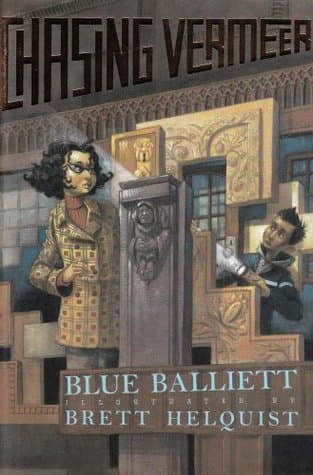
- Chasing Vermeer
Blue Balliett
3.7 (28k) average on GoodreadsChildren'sMystery involving art, two young protagonists, and a unique Chicago setting.
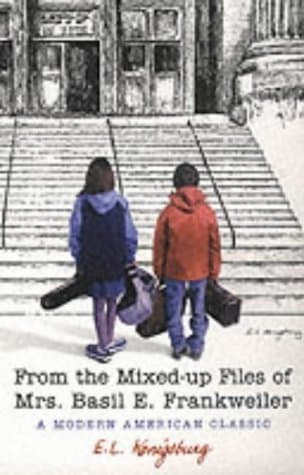
- From the Mixed-Up Files of Mrs. Basil E. Frankweiler
E.L. Konigsburg
4.2 (189k) average on GoodreadsChildren'sChildren's classic about siblings running away to a museum and solving a mystery.
- The Mysterious Benedict Society
Trenton Lee Stewart
4.2 (123k) average on GoodreadsFantasyGroup of unique children solving a mystery with clever puzzles and challenges.
- Harry Potter and the Sorcerer's Stone
J.K. Rowling
4.5 (7M) average on GoodreadsFantasyRescued from a miserable life under the stairs, an orphaned boy discovers he's a wizard destined for a magical school, where he uncovers a dangerous secret tied to the dark wizard who murdered his parents.
- The Hunger Games
Suzanne Collins
4.3 (6.4M) average on GoodreadsFantasyIn a future where children fight to the death on live television, Katniss Everdeen volunteers for the arena, turning a death sentence into a fight for survival and a spark of rebellion.
- 1984
George Orwell
4.2 (3.1M) average on GoodreadsPoliticsIn a future where surveillance and thought control are absolute, a man's search for truth clashes with the Party, showing that hope can be a form of rebellion.




Enjoyed the summary?
A summary gives you the shape of the book. The book itself has the detail, the examples and the voice.
Find Pish Posh on AmazonAs an Amazon Associate, BookBrief earns from qualifying purchases. How we're funded