
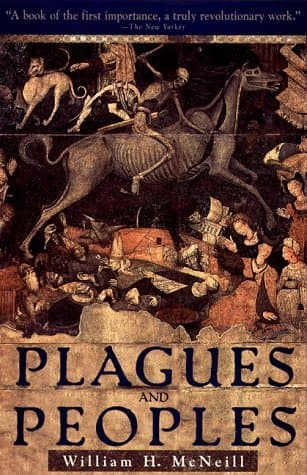
Core Idea
- Difficulty
- Medium
- Read it if
- You are interested in a grand historical narrative that places disease at the center of human development, offering a biological lens through which to understand the rise and fall of empires, migrations, and cultural shifts.
- Skip it if
- You prefer history focused solely on political, economic, or social structures without deep biological or ecological considerations, or if you are looking for a light, narrative-driven read.
Key Takeaways from Plagues and Peoples
Microparasitism as a Historical Engine
Diseases, not just human actions, are primary drivers of societal change.
McNeill argues that infectious diseases are not just minor historical details but fundamental shapers of human societies. They have greatly influenced population numbers, economies, political systems, and cultural beliefs. This view challenges human-centered history by suggesting that non-human biological agents often have more power in shaping events than human decisions alone. It is a humbling but important idea, making us look at history through an ecological lens. Humans are just one species in a complex web of life, always dealing with unseen biological forces.
“The long-term impact of epidemic disease on patterns of human history has been systematically underestimated.”
In the book: The devastation of indigenous populations in the Americas by Old World diseases like smallpox, measles, and influenza, which decimated up to 90% of some populations, enabling European conquest more effectively than military might.
Try this: When analyzing historical events or contemporary crises, actively consider the role of disease and environmental factors, not just human agency. This encourages a more holistic and less human-centric understanding of cause and effect.
Related ideas: microparasitism, ecological-history, disease-demography
Disease as a Unifier and Destroyer
Pathogens both forge and fracture human communities.
Diseases do more than kill; they reorganize societies. An epidemic can create stronger community bonds, leading to group action, shared rituals, and public health systems. On the other hand, diseases can worsen social divisions, leading to blame, loss of trust, and the collapse of established systems. McNeill shows how the Black Death, for example, led to both higher wages for surviving workers (a kind of unity through shared scarcity) and widespread social unrest, religious questioning, and persecution of minorities. Disease can both unify and destroy, showing the complex interaction between biological threats and human social resilience.
“Disease, like fire, can clear the ground for new growth, but at a terrible price.”
In the book: The impact of the Black Death (14th century) on European society, leading to labor shortages, the decline of feudalism, and shifts in religious and artistic expression, while also fostering new forms of public health measures like quarantine.
Try this: In times of crisis, observe how shared threats can either bring people together or tear them apart, and consider strategies that promote unity and resilience rather than division and blame.
Related ideas: social-cohesion, epidemic-impact, societal-collapse
The 'Virgin Soil' Epidemic Advantage
Immunological naivety drastically alters power dynamics.
One of McNeill's strongest arguments is about 'virgin soil' epidemics. These happen when a population that has never been exposed to a disease encounters it for the first time. The destruction is often huge because the population lacks any immunity. This was key in the European conquest of the Americas. Native populations, isolated for thousands of years, had no defense against Old World diseases, leading to death tolls far greater than military casualties. This biological advantage greatly shifted the balance of power, showing how ecological factors can be more decisive than technology in shaping history. It highlights how vulnerable populations are when they lack immunity.
“The most effective weapon of the European conquerors of the New World was not their steel or their gunpowder, but their diseases.”
In the book: The rapid and widespread death of Aztec and Inca populations due to smallpox introduced by the Spanish conquistadors, which severely weakened their resistance to conquest.
Try this: When considering global health initiatives or the impact of travel, recognize the critical importance of immunological history and the potential for devastating consequences when new pathogens encounter 'virgin' populations.
Related ideas: virgin-soil-epidemics, immunological-naivety, columbian-exchange
Disease Ecologies and Civilizational Rise
The patterns of disease contribute to the rise and fall of civilizations.
McNeill suggests that different regions and civilizations had distinct 'disease pools,' which influenced their development. For example, the dense populations and large trade networks of Eurasia led to many different pathogens. Over thousands of years, this caused a population to be culled by and adapt to many infectious diseases. This created a certain resilience, though at a high cost, and also provided an immunological 'weapon' against less exposed populations. In contrast, regions with fewer people or geographic isolation developed different disease patterns. The constant interaction between human settlement, farming, and the evolution of pathogens is a key factor in understanding civilizational success and failure.
“Different disease pools shaped the character and capabilities of different civilizations.”
In the book: The differing disease ecologies of Afro-Eurasia (characterized by zoonotic diseases from domesticated animals and high population density) versus the Americas (with fewer domesticated animals and lower initial population densities), which led to distinct immunological profiles and vulnerabilities.
Try this: When studying ancient civilizations, consider the environmental context, including typical disease burdens, as a factor in their societal organization, technological development, and interactions with other groups.
Related ideas: disease-pools, civilizational-ecology, zoonotic-diseases
The Enduring Co-evolutionary Dance
Humans and pathogens are locked in an endless evolutionary struggle.
McNeill emphasizes that the relationship between humans and pathogens is not fixed but is a dynamic, evolving process. As humans develop immunities, medical treatments, or change their behavior to fight diseases, pathogens evolve new strains, resistance, or ways to spread. This constant competition means that victory is always temporary, and new challenges will always arise. Drug-resistant bacteria, new viruses, and diseases jumping from animals to humans are modern examples of this old struggle. Understanding this continuous evolutionary pressure is important for recognizing humanity's ongoing vulnerability and the need for constant watchfulness and adaptation in public health.
“The history of humankind has been one long series of encounters with infectious disease, punctuated by new adaptations on both sides.”
In the book: The historical record of influenza pandemics, where new strains emerge periodically, or the ongoing challenge of antibiotic-resistant bacteria, demonstrating pathogens' ability to adapt to human interventions.
Try this: Approach public health with a long-term, adaptive mindset, recognizing that pathogens will always evolve. Invest in ongoing research, surveillance, and flexible response systems rather than seeking definitive 'cures' that might soon be obsolete.
Related ideas: co-evolution, pathogen-evolution, antibiotic-resistance
Human Mobility: The Ultimate Vector
Trade, migration, and warfare are primary facilitators of disease spread.
McNeill details how human movement—for trade, conquest, pilgrimage, or migration—has been the main way diseases have spread globally throughout history. The Silk Road, Roman armies, sea trade routes, and Crusader armies were not just paths for goods or ideas but also for pathogens. The more connected the world becomes, the faster and wider diseases can travel. This idea is especially relevant today with fast global travel, where a local outbreak can quickly become a pandemic. It shows the natural tension between humans' desire for connection and expansion, and the biological reality of disease spread, highlighting the need for global health control and cooperation.
“Wherever humans have gone, their diseases have followed, and often preceded, them.”
In the book: The spread of the Black Death across Eurasia via Mongol conquests and established trade routes, or the transmission of diseases across continents during the Age of Exploration.
Try this: Recognize that global interconnectedness, while beneficial in many ways, inherently increases pandemic risk. Advocate for robust international health organizations, rapid data sharing, and coordinated travel restrictions during outbreaks.
Related ideas: disease-transmission, globalization-health, pandemic-vectors
The Psychological and Cultural Impact
Epidemics profoundly alter human belief systems and social norms.
Beyond physical harm, McNeill explores the deep psychological and cultural effects of widespread disease. Epidemics often cause major crises, leading to changes in religious beliefs, moral codes, art, and social rituals. People seek explanations, often turning to supernatural causes, blaming others, or making drastic lifestyle changes. The fear of contagion can lead to social isolation and distrust, while mass death can reduce faith in authorities and institutions. Understanding these psychological and cultural responses is vital because they often determine how societies react to and recover from health crises, sometimes leading to long-lasting societal changes or even revolutions.
“The terror and bewilderment that epidemics provoked profoundly influenced human thought and behavior.”
In the book: The rise of flagellants and other penitential movements during the Black Death, the increased focus on mortality in medieval art, or the widespread accusations of witchcraft during periods of plague.
Try this: When addressing public health crises, acknowledge and address the psychological and cultural dimensions. Provide clear, empathetic communication, combat misinformation, and understand that fear and grief can significantly impact adherence to health measures.
Related ideas: epidemic-psychology, cultural-response, collective-trauma
Shifting Immunological Landscapes
The balance of disease power is dynamic and ever-changing.
McNeill argues that the world's 'immunological landscape' is always changing. Populations gain immunity to some diseases but remain vulnerable to others, and new pathogens are always appearing. A relatively mild disease in one region can become a devastating epidemic in another. This constant change means there is no permanent 'victory' over disease, only periods of relative balance. The rise of new diseases, the return of old ones, and the effect of environmental changes on pathogen sources all contribute to this constant flow. This idea prevents overconfidence and highlights the need for continuous adaptation and global surveillance in public health.
“No population is ever entirely free from the threat of disease; immunity is always relative and temporary.”
In the book: The cyclical nature of influenza pandemics, the re-emergence of diseases like tuberculosis, or the emergence of entirely new diseases like HIV/AIDS, all demonstrate the constant shifts in disease patterns and human vulnerability.
Try this: Support continuous global disease surveillance and research into emerging pathogens. Avoid a false sense of security based on past successes, as the immunological landscape is always evolving.
Related ideas: immunological-landscape, emerging-diseases, global-health-security
The Unseen Architects of Empire
Disease often built and dismantled empires more effectively than armies.
McNeill shows that disease has been an 'unseen architect' of empires, helping them expand and contributing to their fall. Europeans' resilience to common diseases, built over thousands of years of exposure, gave them a clear advantage when colonizing new lands. Conversely, new diseases could cripple native resistance, as seen in the Americas. However, empires themselves were also vulnerable; dense populations and extensive movement within empires could create good conditions for devastating epidemics that weakened central power, disrupted trade, and eroded social cohesion, eventually leading to their collapse. This view makes disease a geopolitical force of great importance.
“Disease has always been a silent partner in the rise and fall of empires, often more decisive than any general.”
In the book: The decline of the Roman Empire, partly exacerbated by waves of plague that decimated its population and weakened its military and economic capacity, or the role of smallpox in the Spanish conquest of the Americas.
Try this: When studying historical empires, consider how their unique disease environments and vulnerabilities might have shaped their expansion, governance, and eventual decline, beyond purely military or economic factors.
Related ideas: empire-decline, geopolitical-disease, colonialism-disease
Human Adaptation: A Double-Edged Sword
Our adaptations to disease sometimes create new vulnerabilities.
McNeill highlights that human adaptations to disease, while often helpful, can also accidentally create new weaknesses or worsen existing ones. For example, farming led to denser populations and closer contact with farm animals, which helped many diseases spread from animals to humans. Cities, while helping trade and new ideas, also created ideal conditions for fast-spreading epidemics. Even modern medical advances, like antibiotics, can lead to antibiotic resistance, creating 'superbugs.' This idea shows the cyclical nature of human-pathogen interactions and that solutions to one problem can often create future challenges, requiring constant foresight and ethical thought in our actions.
“Every human adaptation to disease carries with it new risks and new possibilities for vulnerability.”
In the book: The transition from nomadic hunter-gatherer societies to settled agricultural communities, which led to a significant increase in infectious disease burden due to higher population densities and close contact with livestock.
Try this: When designing public health interventions or technological solutions, anticipate potential unintended consequences and long-term ecological impacts. Prioritize sustainable, holistic approaches over quick fixes that might create new problems.
Related ideas: unintended-consequences, agricultural-revolution-disease, medical-ethics
Plagues and Peoples Quotes
“The microparasites that cause disease and the macroparasites that cause famine and war are not independent of one another.”
“The history of humankind is a history of being preyed upon by parasites, and of learning, slowly and painfully, how to limit their ravages.”
“Each major breakthrough in human organization and technology has created new opportunities for disease organisms to spread and flourish.”
“The Black Death, for example, was not merely a demographic catastrophe; it was also a profound cultural and social upheaval.”
“Disease has always been a major determinant of the limits and possibilities of human action.”
“The success of any human population in altering its environment inevitably opens up new ecological niches for microbial populations to exploit.”
“The establishment of sedentary agriculture, by creating larger, denser, and more interconnected human communities, also created ideal conditions for the rapid evolution and spread of infectious diseases.”
“The epidemiological consequences of the European expansion overseas were perhaps the most decisive factor in shaping the new world order.”
“Infectious disease, in short, is one of the fundamental parameters of human history.”
“The development of civilization itself was a sort of sustained effort to manipulate the disease environment, often with unforeseen and contradictory results.”
“The capacity of new pathogens to emerge and old ones to re-emerge remains a permanent feature of the human condition.”
“Immunological experience, accumulated over generations, constitutes an important part of any population's invisible cultural heritage.”
“The story of disease is, in many ways, the story of mankind's interaction with the rest of the biosphere.”
“War and pestilence have often marched hand in hand, each exacerbating the other's destructive power.”
Quiz
10 questions on the main ideas. Each answer comes with a short explanation.
Question 1
According to McNeill, what was a primary factor, often overlooked, that significantly aided the Spanish conquest of Mexico?
- Superior Spanish military tactics and weaponry
- Widespread internal dissent and civil war among the Aztec Empire
- The devastating impact of Old World diseases, particularly smallpox, on indigenous populations
- The timely arrival of reinforcements from Europe
Show answer
C. The devastating impact of Old World diseases, particularly smallpox, on indigenous populations McNeill argues that the demographic collapse caused by diseases like smallpox, to which indigenous populations had no immunity, was a more profound factor in the conquest of Mexico than purely military prowess.
Question 2
Which of the following best describes McNeill's central thesis regarding the role of disease in world history?
- Disease is a random and unpredictable force that occasionally impacts human societies.
- Disease primarily affects only the weakest members of a society, leading to natural selection.
- Disease acts as a fundamental and pervasive shaper of human culture, politics, demographics, and ecology.
- Technological advancements have largely eliminated the historical impact of disease on human societies.
Show answer
C. Disease acts as a fundamental and pervasive shaper of human culture, politics, demographics, and ecology. McNeill's core argument is that disease is not merely an occasional disruptor but a constant and powerful force that has profoundly shaped the trajectory of human civilization across all facets.
Question 3
McNeill dedicates significant attention to the bubonic plague. What was a key ecological factor he identifies in its spread during the Black Death in Europe?
- Increased human migration due to trade routes
- The role of rats and their flea vectors in transmitting the disease
- Contaminated water sources in urban centers
- Poor agricultural practices leading to famine
Show answer
B. The role of rats and their flea vectors in transmitting the disease McNeill details how the ecology of rats and their fleas, particularly the black rat, was crucial to the rapid and devastating spread of the bubonic plague across Eurasia.
Question 4
How does McNeill's interpretation of the 'Columbian Exchange' differ from more traditional historical accounts?
- He emphasizes the exchange of goods and technologies over biological factors.
- He highlights the disproportionate and devastating impact of Old World diseases on New World populations.
- He argues that New World diseases had a similar devastating impact on European populations.
- He focuses solely on the agricultural benefits of the exchange.
Show answer
B. He highlights the disproportionate and devastating impact of Old World diseases on New World populations. While acknowledging other aspects, McNeill's work emphasizes the profound and often catastrophic demographic consequences for indigenous peoples due to the introduction of Old World pathogens, making it a central feature of the Columbian Exchange.
Question 5
McNeill discusses the concept of 'disease pools.' What does this term primarily refer to?
- Specific geographic locations where diseases originated.
- A reservoir of pathogens and host populations that have co-evolved, leading to a degree of mutual adjustment.
- The collection of medical treatments available in a particular historical period.
- Areas where diseases are actively being studied by scientists.
Show answer
B. A reservoir of pathogens and host populations that have co-evolved, leading to a degree of mutual adjustment. A disease pool, in McNeill's context, refers to a stable, long-standing relationship between a set of pathogens and a human (and sometimes animal) population, where a degree of immunity and reduced virulence has developed over time.
Question 6
How does McNeill relate the rise of agriculture and settled communities to the evolution of human disease patterns?
- Agriculture primarily led to improved nutrition and a decrease in disease incidence.
- Settled communities increased population density and contact with domesticated animals, creating new opportunities for pathogens to evolve and spread.
- The development of agriculture had no significant impact on disease patterns.
- It led to a universal increase in human immunity to all diseases.
Show answer
B. Settled communities increased population density and contact with domesticated animals, creating new opportunities for pathogens to evolve and spread. McNeill argues that the shift to agriculture created conditions (higher population density, close proximity to livestock, accumulation of waste) that fostered the emergence and sustained transmission of many epidemic diseases.
Question 7
McNeill suggests that the relative isolation of populations before extensive global trade led to what specific dynamic concerning disease?
- A complete absence of epidemic diseases in isolated regions.
- The development of unique disease pools within isolated regions, leading to devastating impacts when these pools mixed.
- Universal immunity to all common pathogens within each isolated group.
- A decrease in the overall mutation rate of pathogens.
Show answer
B. The development of unique disease pools within isolated regions, leading to devastating impacts when these pools mixed. Isolation allowed distinct disease ecologies to develop. When these previously isolated populations (and their pathogens) came into contact, particularly with European expansion, the lack of immunity in one group to the other's diseases often led to catastrophic epidemics.
Question 8
In his updated edition, McNeill includes a new introduction prompted by the identification of AIDS. How does he integrate AIDS into his overarching historical framework?
- He views AIDS as an anomaly, outside the historical patterns of disease he previously described.
- He uses AIDS as a contemporary example to reinforce his argument about the continuous and evolving impact of disease on human societies.
- He argues that AIDS demonstrates a complete shift in human-pathogen relationships due to modern medicine.
- He suggests AIDS is primarily a result of bioterrorism, not natural evolution.
Show answer
B. He uses AIDS as a contemporary example to reinforce his argument about the continuous and evolving impact of disease on human societies. McNeill views AIDS as a stark contemporary illustration of his thesis: that new diseases can emerge and profoundly alter human societies, reminding readers that the 'history of disease is the history of humankind' is an ongoing process.
Question 9
McNeill posits that the development of specialized immune systems in human populations is a direct evolutionary response to what?
- Changes in diet and nutrition over millennia.
- The constant pressure and challenge posed by infectious microorganisms throughout human history.
- Exposure to diverse environmental toxins.
- The need to adapt to varying climates and geographical conditions.
Show answer
B. The constant pressure and challenge posed by infectious microorganisms throughout human history. A core argument in the book is that the co-evolution of humans and pathogens has driven significant biological adaptations, including the sophisticated and specialized nature of the human immune system, as a defense mechanism against a relentless microbial world.
Question 10
According to McNeill, what was a significant consequence of the recurring waves of plague and other epidemics in medieval Europe beyond immediate mortality?
- A strengthening of feudal structures due to increased labor supply.
- Significant social, economic, and political restructuring, including changes in labor relations and the decline of serfdom.
- A complete abandonment of trade routes and urban centers.
- The immediate development of effective public health measures across the continent.
Show answer
B. Significant social, economic, and political restructuring, including changes in labor relations and the decline of serfdom. McNeill details how the massive population losses from the Black Death and subsequent epidemics led to a severe labor shortage, empowering peasants and contributing to the breakdown of the feudal system, leading to profound social and economic transformations.
Plagues and Peoples FAQ
What is the main argument of 'Plagues and Peoples'?
'Plagues and Peoples' argues that infectious diseases have been a primary, often overlooked, driver of human history, shaping civilizations, demographics, political structures, and cultural developments more profoundly than conventional historical narratives suggest.
Does 'Plagues and Peoples' cover modern epidemics like AIDS?
Yes, later editions of 'Plagues and Peoples' include new introductions by William H. McNeill that address more recent epidemics, such as the identification of AIDS in the early 1980s, placing them within the broader historical framework established by the book.
What is 'disease ecology' as presented in the book?
'Disease ecology' refers to the complex interplay between human populations, their environments, and the pathogens that cause disease. McNeill illustrates how changes in human behavior, technology, and social organization create new ecological niches for diseases to emerge and spread.
How did disease impact the conquest of Mexico, according to McNeill?
McNeill posits that smallpox, introduced by the Spanish, played a far more decisive role in the conquest of Mexico than military might alone. The devastating epidemic decimated indigenous populations, weakened their resistance, and profoundly altered the course of history in the Americas.
How is 'Plagues and Peoples' different from other world history books?
Unlike many traditional world history books that focus primarily on political leaders, wars, and economic systems, 'Plagues and Peoples' offers a unique perspective by centering disease as a fundamental force of historical change, providing a biological lens through which to understand human development.
Does 'Plagues and Peoples' suggest that all historical events are determined by disease?
While emphasizing the profound impact of disease, McNeill does not argue for a purely deterministic view. Instead, he integrates the influence of disease with other historical factors, presenting it as a crucial, often underappreciated, element in a complex web of causation.
What role did disease play in the rise and fall of ancient civilizations?
McNeill demonstrates how recurrent plagues, like the bubonic plague or various fevers, contributed significantly to the weakening and eventual collapse of ancient empires by reducing populations, disrupting trade, undermining social order, and impacting military strength.
Is 'Plagues and Peoples' still relevant today, given modern medicine?
Absolutely. The book's core insights into the ecological relationship between humans and pathogens remain highly relevant. It provides a historical framework for understanding contemporary global health challenges, the emergence of new diseases, and the ongoing vulnerability of human societies to epidemics.
About the author
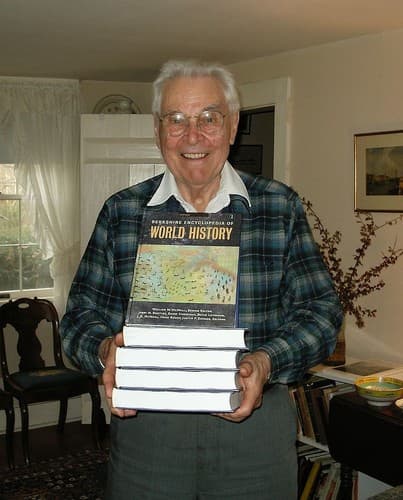
William H. McNeill was a historian known for his work in the field of world history. His notable book, "Plagues and Peoples," explores the impact of disease on human societies throughout history. McNeill's scholarship has significantly influenced the understanding of historical processes and the interconnectedness of cultures.
Similar books
- The Diary of a Young Girl
Anne Frank
4.2 (2.7M) average on GoodreadsBiographyDuring the Nazi occupation, a teenage girl's diary, written from a secret annex, shares observations on humanity, hope, and the wait for freedom.
- Night
Elie Wiesel
4.3 (970k) average on GoodreadsBiographyIn the darkness of Auschwitz and Buchenwald, a teenage Elie Wiesel faces the extermination of his family, the loss of his faith, and the lasting scars of humanity's deepest cruelty.
- Steve Jobs
Walter Isaacson
4.1 (957k) average on GoodreadsBusinessSteve Jobs was a visionary who fused creativity and technology to revolutionize six industries and shape our digital world.
- Unbroken: A World War II Story of Survival, Resilience and Redemption
Laura Hillenbrand
4.4 (767k) average on GoodreadsBiographyLouis Zamperini's incredible World War II odyssey transforms him from a rebellious youth and Olympic runner into a survivor of a plane crash, shark-infested waters, and brutal Japanese POW camps, only to find redemption through forgiveness.
- The Immortal Life of Henrietta Lacks
Rebecca Skloot
4.1 (587k) average on GoodreadsBiographyA poor Southern tobacco farmer's unwitting contribution of 'immortal' cells starts a journey through scientific breakthroughs, medical ethics, and her family's decades-long fight for recognition and understanding.
- Angela's Ashes
Frank McCourt
4.1 (540k) average on GoodreadsBiographyIn Depression-era Limerick, young Frank McCourt navigates an impoverished Irish Catholic childhood, sustained by his father's captivating stories and his own spirit, turning hardship into a tale of resilience, humor, and ultimate forgiveness.






Enjoyed the summary?
A summary gives you the shape of the book. The book itself has the detail, the examples and the voice.
Find Plagues and Peoples on AmazonAs an Amazon Associate, BookBrief earns from qualifying purchases. How we're funded