
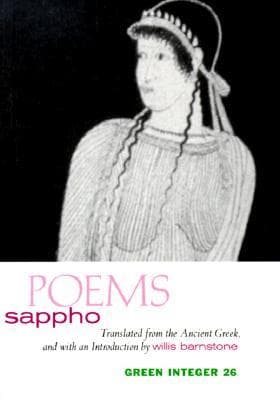
Synopsis
Covers the whole plot, including the ending.
- Difficulty
- Medium
- Pacing
- Variable
- Mood
- Lyrical, Passionate, Melancholy, Intimate, Evocative
- Read it if
- You are interested in the origins of lyric poetry, ancient Greek literature, or exploring themes of love and desire from a profoundly personal and historically significant female voice.
- Skip it if
- You prefer narrative-driven stories, complete poems with clear resolutions, or are put off by highly fragmented texts that require imaginative reconstruction.
Poems Plot Summary
Covers the whole plot, including the ending.
Fragment 1: To Aphrodite, Immortal Queen
Sappho opens by calling directly on Aphrodite, calling her the 'immortal queen' and 'child of Zeus.' She remembers a time when Aphrodite answered her calls, arriving in a chariot pulled by sparrows. The goddess, with a smile on her 'immortal face,' asked Sappho what new trouble had made her call. Aphrodite promised to make the beloved follow Sappho, even if they currently ran, and to offer gifts even if they refused them. Sappho ends by asking Aphrodite to free her from her current pain, asking the goddess to be her friend again in her romantic efforts.
Fragment 16: Some Say a Host of Horsemen
Sappho starts by saying that some think a cavalry unit, others an army of soldiers, and still others a fleet of ships, are the most beautiful things on the dark earth. However, she clearly states that the most beautiful sight is whatever one loves. To show this, she mentions Helen, who, driven by love, left her husband, child, and parents to sail to Troy, ignoring her family's honor. Sappho wants to see her beloved Anactoria, who is now away, remembering her graceful walk and the bright sparkle in her face, valuing this personal connection above all else.
Fragment 31: He Seems to Me Equal to Gods
Sappho describes a man sitting across from her beloved, listening to her sweet voice and charming laughter, as being 'equal to gods' in his calm state. In strong contrast, Sappho herself is overcome with a powerful, weakening reaction. When she sees her beloved, her voice fails, her tongue is still, and a subtle fire runs under her skin. Her eyes see nothing, her ears ring, and sweat pours from her body. A trembling takes her, she becomes paler than grass, and feels as if she is about to die. She ends this fragment by regretting her suffering, suggesting her helplessness in the face of such strong emotion.
Fragment 44: The Wedding of Hector and Andromache
This fragment describes the large procession and celebration around the wedding of Hector and Andromache. The herald, Idaios, arrives with news, and the people of Troy get ready for the arrival of the bridal party. The fragment details the journey from Thebes, with Hector and Andromache escorted by many people. The city is full of the sounds of lyres, flutes, and castanets, and the women make a sacred shout. The scene is one of great joy and festivity, with the Trojans welcoming their new princess and celebrating the marriage of their hero Hector to the beautiful Andromache, showing the community's joy for a big wedding.
Fragment 47: Love Shakes My Soul
Sappho clearly states how much love affects her. She says that 'Love shakes my soul / like a wind tearing through oaks / on a mountain.' This clear comparison shows the powerful, uncontrollable, and even destructive force that love has on her. It suggests that love is not a gentle feeling but a stormy, almost violent, upset that leaves her feeling weak and exposed, much like a tree hit by a strong wind. The fragment highlights love's ability to disturb inner peace and stability.
Fragment 94: I Wish I Were Dead
Sappho tells of a sad goodbye with a woman who cried a lot and said, 'I wish I were dead.' The woman regretted their separation, saying she was leaving Sappho against her will. Sappho then tells of the many beautiful things they shared, including garlands of violets, roses, and crocuses wrapped around her neck. They lay together on soft beds, and Sappho hints at close moments and shared joys. The fragment brings out a strong feeling of looking back and the pain of lost friendship, emphasizing the deep bond and shared experiences now broken by their separation.
Fragment 102: Sweet Mother, I Cannot Weave
In this short but clear fragment, Sappho talks to her mother, admitting she cannot do a simple home task. She says, 'Sweet mother, I cannot weave; / I am overcome with love / for a boy, because of slender Aphrodite.' This confession shows how consuming her love is. Her passion for the young man is so strong that it makes her unable to focus on normal chores. She blames this overwhelming feeling directly on Aphrodite, the goddess of love, suggesting her feelings are divinely inspired and impossible to resist.
Fragment 105a: As the Sweet Apple
This fragment uses the comparison of a sweet red apple, ripening on the highest branch of a tree. It is so high that the apple pickers have forgotten it, or perhaps, more accurately, they could not reach it. This image suggests a woman of great beauty and desirability, who remains untouched and perhaps impossible to get, either because of her high status or the sheer difficulty of reaching her. The 'sweetness' implies her appeal, while her position shows her uniqueness and perhaps her purity, waiting for a worthy suitor or simply existing in her own high state.
Fragment 111: The Doorkeeper
This fragment offers a playful and over-the-top description of a doorkeeper at a wedding. Sappho says that the doorkeeper's feet are seven fathoms long, and his sandals are made of five ox-hides. This exaggeration is clearly meant to be funny, painting a picture of an absurdly large and perhaps scary figure guarding the wedding party. The fragment adds to the theme of weddings in Sappho's poetry, often shown with a mix of respect and playful observation, highlighting the festive mood and the larger-than-life characters involved in such celebrations.
Fragment 130: Eros the Melted Limbs
Sappho makes Eros, the god of love, a person, as a force that 'again now melts my limbs and shakes me / a sweetbitter, impossible to fight beast.' This description shows love's two sides: it is 'sweet' in its appeal and pleasure, but also 'bitter' in its pain, longing, and the trouble it causes. Eros is shown as an irresistible 'beast,' highlighting love's basic, uncontrollable nature. The phrase 'impossible to fight' shows how useless it is to resist its power, suggesting that Sappho is completely taken over by its influence, her body and spirit overwhelmed.
Poems Characters
Sappho
Protagonist
The lyrical poet whose fragmented works express deep personal emotion.
Sappho is the central voice of the collection, a highly emotional and observant poet from the island of Lesbos. She is deeply attuned to the nuances of love, desire, and loss, often expressing these feelings with raw intensity and vulnerability. Her poetry reveals a profound connection to the natural world and a rich inner life. She is a teacher and mentor to young women, fostering a community where art, beauty, and emotional expression are valued. Her identity as a woman loving women is central to many of her most famous fragments.
Relationships: Aphrodite (Invoked deity, a source of both aid and the cause of her suffering in love.); Anactoria (A beloved woman whose beauty Sappho longs to see.); Various unnamed women/girls (Students, friends, and objects of Sappho's affection and poetic focus.); Unnamed 'boy' or 'man' (Objects of desire, sometimes causing intense physical and emotional reactions.)
Aphrodite
Supporting/Divine Influence
The goddess of love, beauty, pleasure, and procreation, frequently invoked by Sappho.
Aphrodite appears as a powerful, often benevolent, but also demanding, divine figure in Sappho's poetry. She is the ultimate source of love and desire, capable of both inspiring passionate feelings and intervening in mortal affairs to aid her devotees. Sappho frequently calls upon Aphrodite for help in matters of the heart, seeing her as a sympathetic deity who understands the complexities of romantic longing. However, Aphrodite's influence is also the very force that causes Sappho's intense, sometimes painful, emotional states.
Relationships: Sappho (Recipient of Sappho's prayers and invocations for assistance in love.)
Helen
Mentioned/Symbolic
A mythological figure used as an example of love's overwhelming power.
Helen of Troy is referenced in Sappho's poetry as a powerful example of someone who prioritized personal love above all else. Her decision to abandon her family and homeland for Paris serves as a grand illustration of the idea that what one loves is the most beautiful thing, regardless of societal expectations or consequences. She embodies the disruptive and all-consuming nature of passion, validating Sappho's own intense feelings by comparing them to a foundational myth.
Relationships: Paris (Her lover, for whom she abandoned everything.)
Anactoria
Mentioned/Beloved
A woman whose beauty and presence Sappho deeply misses and admires.
Anactoria is one of the specific women Sappho names as a beloved. She is described with particular fondness, with Sappho longing to see her 'graceful walk' and the 'brilliant sparkle in her face.' Anactoria represents a personal, tangible object of Sappho's affection, grounding the more abstract expressions of love in a concrete individual. Her absence intensifies Sappho's longing, making her a symbol of cherished, yet currently unavailable, beauty and companionship.
Relationships: Sappho (Object of Sappho's deep affection and longing.)
Eros
Personified Force/Supporting
The personification of desire and love, often depicted as a powerful, unsettling force.
Eros, the god of love and desire, is frequently invoked or personified in Sappho's poetry. Unlike the more benevolent Aphrodite, Eros is often described as a disruptive, even violent, force. He 'melts limbs,' 'shakes' the soul, and is depicted as a 'sweetbitter, impossible to fight beast.' Eros represents the primal, uncontrollable, and often painful aspects of love, highlighting its ability to overwhelm and incapacitate the individual. He is the embodiment of raw, unbridled passion.
Relationships: Sappho (The primary recipient and victim of Eros's overwhelming power.)
Hector
Mentioned/Symbolic
A Trojan hero, whose marriage is celebrated as a communal joyous event.
Hector is featured in a fragment describing his wedding to Andromache, serving as a symbol of heroic and communal celebration. His marriage is depicted not just as a personal union, but as a grand event that brings joy and festivity to an entire city. This fragment, while distinct from Sappho's more personal love poems, shows her ability to capture broader social and cultural events, celebrating the power of love and union within a community context, even if it's a legendary one.
Relationships: Andromache (His wife, celebrated alongside him in their wedding.)
Andromache
Mentioned/Symbolic
The wife of Hector, whose wedding is a scene of communal joy.
Andromache appears alongside Hector in the description of their wedding. She represents the bride in a grand, celebrated union, bringing joy and festivity to the city of Troy. Her arrival is met with music and communal shouts, emphasizing the importance of marriage and new beginnings within the social fabric. Like Helen, her presence is drawn from mythology, providing a contrast to Sappho's more intimate and often solitary expressions of love.
Relationships: Hector (Her husband, celebrated alongside her.)
Poems Themes
The Overwhelming Power of Love and Desire
Sappho often shows love not as a gentle feeling, but as a strong, often uncontrollable force that upsets a person's physical and emotional balance. In Fragment 31, seeing her beloved with another causes Sappho to have extreme physical symptoms: her voice fails, her tongue is still, fire runs under her skin, and she feels about to die. Similarly, Fragment 47 describes love as shaking her soul 'like a wind tearing through oaks,' a strong and almost violent upset. This theme highlights love's ability to both lift up and destroy, making the lover helpless before its strength.
“Love shakes my soul / like a wind tearing through oaks / on a mountain.”
Beauty and the Female Gaze
Sappho's poetry often focuses on women's beauty, often from a woman's point of view. She describes 'the brilliant sparkle in [Anactoria's] face' (Fragment 16) and tells of shared close moments with other women, decorated with 'garlands of violets, roses, and crocuses' (Fragment 94). Her liking for female beauty is not just about looks but is deeply emotional and sensual, celebrating the grace, appeal, and friendship found in these relationships. This theme goes against common male-dominated views by focusing on female desire and admiration.
“some say a host of horsemen / is the most beautiful thing on the dark earth / but I say whatever one loves.”
Longing, Loss, and Absence
A large part of Sappho's fragments express deep longing for absent loved ones and the pain of being separated. In Fragment 16, she wants to see Anactoria, who is 'not here.' Fragment 94 clearly tells of a sad goodbye with a woman who cried and said, 'I wish I were dead,' emphasizing the deep bond now broken. This theme highlights how fragile human connection is and the lasting ache of absence, suggesting that even in joy, the shadow of possible loss is always there. The fragments themselves, being incomplete, reflect this feeling of loss and what is missing.
“I wish I were dead. / Weeping she left me / against her will.”
Divine Intervention and Human Emotion
Sappho often calls on and blames her emotional states on the gods, especially Aphrodite and Eros. In Fragment 1, she directly asks Aphrodite for help, remembering past divine help in her love affairs. In Fragment 102, she says, 'I cannot weave; / I am overcome with love / for a boy, because of slender Aphrodite.' This theme suggests that human emotions, especially love, are not just internal but are influenced and even controlled by divine forces. It frames strong passion as a sacred, rather than just personal, experience, giving a wider context for her overwhelming feelings.
“Sweet mother, I cannot weave; / I am overcome with love / for a boy, because of slender Aphrodite.”
Plot Devices & Literary Techniques
Invocation of Deities
Directly addressing gods to seek help or attribute emotional states.
Sappho frequently invokes Aphrodite, the goddess of love, beauty, and pleasure, particularly when she is experiencing intense romantic turmoil. This device serves multiple functions: it elevates her personal suffering to a cosmic level, suggesting divine influence rather than mere human weakness; it provides a framework for understanding the overwhelming power of love; and it establishes a direct, intimate relationship between the poet and the divine. For example, in Fragment 1, Sappho directly calls upon Aphrodite, recalling past interventions and requesting aid in her current romantic predicament. This not only sets a supplicant tone but also implies a shared understanding of love's complexities between the mortal and the immortal.
Vivid Imagery and Sensory Detail
Using strong visual, auditory, and tactile descriptions to convey emotional states.
Sappho masterfully employs rich sensory details to make her emotional experiences palpable to the reader. In Fragment 31, the physical symptoms of her love are described with striking clarity: 'a subtle fire runs beneath my skin,' 'my eyes see nothing,' 'my ears ring,' and 'sweat pours from my body.' This device allows the reader to viscerally feel Sappho's internal turmoil, translating abstract emotions into concrete, relatable sensations. Beyond personal suffering, she uses imagery for beauty, like 'garlands of violets, roses, and crocuses' (Fragment 94) or the 'graceful walk' and 'brilliant sparkle' in Anactoria's face (Fragment 16), creating a rich, immersive world of feeling and observation.
Simile and Metaphor
Comparing disparate things to illuminate emotional intensity or abstract concepts.
Sappho frequently uses similes and metaphors to convey the intensity and nature of her emotions, often drawing from the natural world. In Fragment 47, she compares love shaking her soul to 'a wind tearing through oaks / on a mountain,' vividly illustrating love's powerful, uncontrollable, and potentially destructive force. Fragment 130 describes Eros as a 'sweetbitter, impossible to fight beast,' capturing the duality of love's pleasure and pain, and its overwhelming, primal nature. These comparisons make abstract emotional experiences concrete and relatable, enhancing the depth and impact of her lyrical expressions.
Apostrophe
Directly addressing an absent person or an abstract entity.
Apostrophe is a prominent device in Sappho's work, particularly in her direct addresses to Aphrodite (Fragment 1) or to her 'sweet mother' (Fragment 102). This device creates a sense of immediacy and intimacy, as if the reader is privy to a private conversation or prayer. By speaking directly to a deity or a loved one, Sappho expresses her deepest desires, confessions, and laments with raw emotion, even if the addressee is not physically present or capable of responding in a literal sense. It amplifies the personal and confessional tone of her poetry, drawing the reader into her emotional landscape.
Poems Quotes
“Some say a host of cavalry, others of infantry, others of ships, is the most beautiful thing on the dark earth, but I say it is what one loves.”
“And you, O Atthis, have become hateful to me to think of.”
“Eros shook my soul, a wind on the mountain, falling on oaks.”
“And you burn me.”
“Leave Crete and come to me here in this holy temple, where the charming grove of apple trees is, and altars smoking with frankincense.”
“He seems to me equal to a god, that man who sits facing you and listens nearby to your sweet speaking and lovely laughing.”
“For when I look at you, then my voice gives out, and my tongue is broken, and a subtle fire runs through my skin.”
“And for you, I would loosen my maiden's zone.”
“Someone, I say, will remember us in the future.”
“You came, and you did well. I longed for you, and you cooled my burning heart.”
“The moon has set, and the Pleiades; it is midnight, the hour passes, and I sleep alone.”
“And you, my darling, once were a tender girl.”
“And the desire for you consumes me.”
“Come, divine lyre, speak to me and become a voice.”
Quiz
10 questions on the plot and the characters. Each answer comes with a short explanation.
Question 1
Which translator's edition of Sappho's 'Poems' is explicitly mentioned as having filled in many of Sappho's fragments with their own Greek lines?
- Willis Barnstone
- Mary Barnard
- J.M. Edmonds
- Sappho herself
Show answer
C. J.M. Edmonds The text states that Mary Barnard's translation was based on the 1928 Loeb edition by J.M. Edmonds, who 'filled in many of Sappho's fragment with his own Greek lines.'
Question 2
What characteristic does Willis Barnstone's translation emphasize regarding Sappho's idiom?
- Its sentimentality and 'prettiness'
- Its darkly antiromantic idiom that rejects sentimentality and 'prettiness'
- Its focus on epic narratives
- Its use of modern slang
Show answer
B. Its darkly antiromantic idiom that rejects sentimentality and 'prettiness' The description highlights that Barnstone's translation presents Sappho's work 'in its darkly antiromantic idiom that rejects sentimentality and 'prettiness.'
Question 3
What is the primary goal of the contemporary translation provided in this edition of Sappho's 'Poems'?
- To add new, original poems to Sappho's collection
- To create a romanticized version of Sappho's work
- To capture the spareness and intensity of Sappho's line for the modern reader
- To solely focus on the historical context without modern interpretation
Show answer
C. To capture the spareness and intensity of Sappho's line for the modern reader The text states the edition 'provides a vivid, contemporary translation, which captures the spareness and the intensity of Sappho's line.'
Question 4
According to the description, what was a significant issue with the 1928 Loeb edition by J.M. Edmonds that affected subsequent translations like Mary Barnard's?
- It used an outdated Greek alphabet.
- It contained Edmonds's own Greek lines filling in Sappho's fragments.
- It incorrectly identified Sappho's gender.
- It omitted several known Sappho fragments entirely.
Show answer
B. It contained Edmonds's own Greek lines filling in Sappho's fragments. The text explicitly states that J.M. Edmonds 'filled in many of Sappho's fragment with his own Greek lines,' which was a basis for Barnard's translation.
Question 5
How does Willis Barnstone's translation approach the presentation of Sappho's work compared to previous editions?
- It attempts to reconstruct Sappho's complete poems from historical records.
- It presents Sappho's work 'as we have inherited it,' acknowledging its fragmentary nature.
- It adds modern poetic devices to make the poems more accessible.
- It focuses solely on the biographical aspects of Sappho's life.
Show answer
B. It presents Sappho's work 'as we have inherited it,' acknowledging its fragmentary nature. Barnstone's translation 'is presented as we have inherited it,' implying an honest presentation of the fragments rather than adding to them.
Question 6
Which of the following books is NOT listed as a translation by Willis Barnstone?
- The Cosmic Fragments of Heraclitus
- Greek Lyric Poetry
- The Iliad
- A literary translation of the New Testament
Show answer
C. The Iliad The text lists 'The Cosmic Fragments of Heraclitus,' 'Greek Lyric Poetry,' and 'a literary translation of the New Testament' as Barnstone's translations, but 'The Iliad' is not mentioned.
Question 7
The description states that Willis Barnstone's translation captures a 'darkly antiromantic idiom' that 'rejects sentimentality and 'prettiness.'' How does this approach contrast with typical modern understandings of 'romance' in poetry?
- It aligns perfectly with modern romantic poetry, which often emphasizes sentimentality.
- It suggests a focus on raw emotion and unembellished expression, rather than idealized or overly sweet portrayals of love.
- It indicates a complete absence of love or affection in Sappho's poems.
- It implies the poems are primarily philosophical treatises, devoid of personal feelings.
Show answer
B. It suggests a focus on raw emotion and unembellished expression, rather than idealized or overly sweet portrayals of love. An 'antiromantic idiom' rejecting 'sentimentality and 'prettiness'' suggests a starker, more authentic portrayal of emotion, contrasting with the often idealized or sentimental nature of modern romantic poetry.
Question 8
Given the information provided, what can be inferred about the evolution of Sappho's translations over time, particularly in terms of fidelity to the original fragments?
- Early translations were more accurate because they had access to more complete texts.
- There has been a shift from filling in fragments with translator's own work towards presenting the work 'as we have inherited it,' acknowledging its incomplete nature.
- Modern translators are less concerned with accuracy and more with making the poems palatable to a contemporary audience.
- The fragments of Sappho's work have become more complete over time due to new discoveries.
Show answer
B. There has been a shift from filling in fragments with translator's own work towards presenting the work 'as we have inherited it,' acknowledging its incomplete nature. The text contrasts Edmonds filling in fragments with Barnstone presenting the work 'as we have inherited it,' indicating a move towards greater fidelity to the fragmentary nature of the original.
Question 9
Willis Barnstone is described as 'one of the most noted translators of today.' What specific aspect of his work on Sappho's 'Poems' contributes to this reputation as highlighted in the provided text?
- His ability to discover entirely new fragments of Sappho's poetry.
- His brilliant translation that presents Sappho's work authentically, rejecting sentimentality and 'prettiness,' unlike earlier attempts.
- His focus on translating Sappho into various modern languages simultaneously.
- His extensive academic papers on the historical context of Sappho's life.
Show answer
B. His brilliant translation that presents Sappho's work authentically, rejecting sentimentality and 'prettiness,' unlike earlier attempts. Barnstone's 'brilliant translation' is highlighted for presenting Sappho's work 'as we have inherited it, in its darkly antiromantic idiom that rejects sentimentality and 'prettiness,'' distinguishing it from translations like Edmonds's.
Question 10
The provided text implicitly critiques earlier translations by J.M. Edmonds and, by extension, Mary Barnard. What is the core reason for this implicit critique?
- Their translations were too difficult for the modern reader to understand.
- They imposed their own interpretations and additions onto Sappho's fragments rather than presenting the work authentically.
- They failed to translate the full scope of Sappho's known fragments.
- They used an outdated poetic style that did not resonate with the contemporary reader.
Show answer
B. They imposed their own interpretations and additions onto Sappho's fragments rather than presenting the work authentically. The critique stems from Edmonds 'filling in many of Sappho's fragment with his own Greek lines,' which is contrasted with Barnstone's approach of presenting the work 'as we have inherited it.'
Poems FAQ
What is the primary goal of Willis Barnstone's translation of Sappho's 'Poems'?
Willis Barnstone's translation aims to reintroduce Sappho to the modern reader by providing a vivid, contemporary rendition that captures the spareness and intensity of her original lines. It specifically seeks to present Sappho's work in its authentic, darkly antiromantic idiom, rejecting sentimentality and 'prettiness' that may have been added in previous interpretations.
How does Barnstone's translation differ from Mary Barnard's earlier version?
Barnstone's translation significantly differs from Mary Barnard's by presenting Sappho's work as it has been truly inherited, preserving the fragmented nature of the poems. Barnard's translation, unfortunately, was based on the 1928 Loeb edition by J.M. Edmonds, who took liberties by filling in many of Sappho's fragments with his own conjectural Greek lines, thereby altering the original intent.
What kind of 'idiom' does Barnstone's translation emphasize in Sappho's poetry?
Barnstone's translation emphasizes a 'darkly antiromantic idiom' in Sappho's poetry. This means it deliberately avoids sentimental or 'pretty' language, focusing instead on the raw, intense, and often stark emotional landscape of Sappho's original fragments, providing a more authentic and unembellished reading experience.
What specific textual issue does Barnstone's edition correct regarding previous translations?
Barnstone's edition corrects the issue of textual interpolation present in previous translations, specifically addressing the problem found in J.M. Edmonds's 1928 Loeb edition. Edmonds had filled in Sappho's fragments with his own Greek lines, which Barnstone meticulously removes to present the poetry in its true, fragmented form as it was passed down through history.
What does the 'spareness' of Sappho's line, as mentioned in the description, refer to?
The 'spareness' of Sappho's line refers to the concise, unadorned, and often fragmented nature of her poetry. It implies a lack of excessive embellishment or flowery language, allowing the raw emotion and imagery to stand out powerfully without being diluted by unnecessary words, which Barnstone's translation strives to maintain.
How does the 'darkly antiromantic idiom' challenge common perceptions of Sappho's work?
The 'darkly antiromantic idiom' challenges common perceptions by stripping away any romanticized or overly sentimental interpretations often projected onto Sappho's poetry due to her association with love and desire. It suggests a more complex, perhaps melancholic or starker, emotional landscape, moving beyond simplistic notions of 'romance' in a modern sense.
What might be lost if a translator, like Edmonds, 'fills in' Sappho's fragments?
If a translator like Edmonds 'fills in' Sappho's fragments, the reader loses the authentic experience of Sappho's original work, including its inherent ambiguity and the power of its silences. The translator's own voice and interpretations are imposed, potentially altering the intended emotional impact, thematic focus, and historical context of the fragments.
How does the 'intensity' of Sappho's line, as preserved by Barnstone, manifest in the poetry?
The 'intensity' in Sappho's line, as preserved by Barnstone, manifests through direct, powerful imagery and unvarnished emotional expression, even within fragments. It allows each carefully chosen word or phrase to carry significant weight, conveying profound feelings of love, longing, jealousy, or observation without needing extensive narrative or description, making each fragment impactful.
What does the choice to present Sappho's work 'as we have inherited it' imply about academic integrity?
The choice to present Sappho's work 'as we have inherited it' implies a strong commitment to academic integrity and historical accuracy. It prioritizes fidelity to the surviving texts, even if incomplete, over speculative reconstruction, acknowledging the limitations of modern scholarship and respecting the original author's voice as much as possible.
How might the fragmented nature of Sappho's poems impact a reader's psychological engagement?
The fragmented nature of Sappho's poems can deeply impact a reader's psychological engagement by inviting active participation and imaginative reconstruction. Readers are prompted to fill in the gaps, ponder potential meanings, and confront the incompleteness of human experience and historical record, fostering a more personal and introspective connection to the text.
What psychological effect might the 'darkly antiromantic idiom' have on readers expecting traditional love poetry?
For readers expecting traditional love poetry, the 'darkly antiromantic idiom' might evoke a sense of surprise, melancholy, or even discomfort. It challenges preconceived notions of romance, potentially leading to a deeper, more nuanced understanding of love's complexities, its pains, and its less idealized facets, rather than simple adoration or joy.
In what ways might the 'intensity' of Sappho's lines contribute to a sense of catharsis for the reader?
The 'intensity' of Sappho's lines can contribute to catharsis by directly tapping into powerful, universal human emotions like longing, desire, or loss. By expressing these feelings with such raw force and conciseness, the poems allow readers to recognize and process their own intense emotional experiences, finding resonance and release.
How does confronting the 'prettiness' Sappho supposedly rejects influence a reader's appreciation of authenticity?
Confronting the 'prettiness' Sappho supposedly rejects can significantly enhance a reader's appreciation for authenticity by highlighting the value of unvarnished truth over superficial aesthetics. It encourages a deeper engagement with the raw emotional core of the poetry, valuing genuine expression over decorative language and fostering a more critical eye towards sentimentality.
Is Sappho's rejection of 'sentimentality' a sign of emotional detachment or profound feeling?
Sappho's rejection of 'sentimentality' in Barnstone's translation is more likely a sign of profound feeling rather than emotional detachment. Sentimentality often sugarcoats or exaggerates emotions; by rejecting it, Sappho's poetry, as presented, aims for a direct, unadorned expression of intense emotion, suggesting a deeper, more authentic engagement with her subjects.
How might the 'darkly antiromantic idiom' redefine what constitutes 'romance' in a classical context?
The 'darkly antiromantic idiom' could redefine 'romance' by suggesting that classical expressions of love and desire were not always idyllic or idealized. It might highlight aspects of passion, jealousy, longing, and even despair as integral parts of romantic experience, moving beyond modern notions of purely blissful or 'pretty' love, aligning with a more realistic human experience.
What is the scholarly debate surrounding the 'filling in' of Sappho's fragments, and which side does Barnstone's translation take?
The scholarly debate centers on whether to reconstruct incomplete ancient texts with conjectural additions or to present them 'as is.' Barnstone's translation firmly takes the latter side, rejecting the practice of 'filling in' fragments, as done by J.M. Edmonds, to maintain the integrity and authenticity of the inherited text, even if incomplete.
Does Barnstone's translation imply Sappho herself was 'antiromantic' in her personal life or just in her poetic style?
Barnstone's translation primarily implies that Sappho's poetic style, as inherited, is 'darkly antiromantic,' focusing on the idiom of her work. It doesn't necessarily make a definitive statement about her personal life, but rather highlights how her artistic expression avoided sentimentality and 'prettiness' in favor of starker, more intense emotional truths.
How might a contemporary reader, accustomed to modern romance, interpret Sappho's 'intensity' without the 'prettiness'?
A contemporary reader, accustomed to modern romance, might interpret Sappho's 'intensity' without 'prettiness' as raw, visceral, and perhaps even unsettling. They might find it refreshing in its honesty, recognizing a timeless quality of human emotion unburdened by conventional romantic tropes, appreciating its directness and emotional power.
About the author
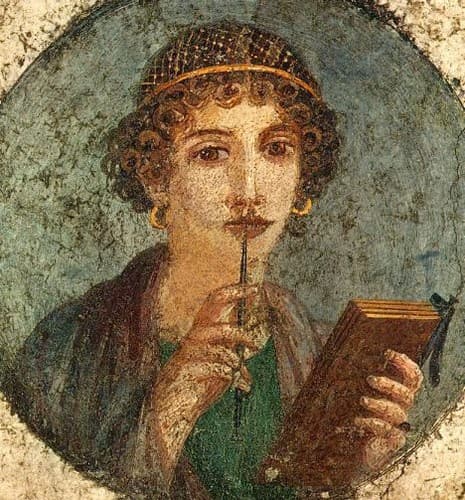
Sappho was an ancient Greek poet from the island of Lesbos, known for her lyric poetry that often explores themes of love and desire. Her works, including the collection "Sappho; Poems," have had a lasting influence on literature and are recognized for their emotional depth and innovative use of language. Much of her poetry survives only in fragments, yet she remains a significant figure in the study of classical literature.
Similar books
- Ariel
Sylvia Plath
4.2 (54k) average on GoodreadsPsychologyFeatures intense, confessional, and often raw emotional expression, though with a different thematic focus and modern style.
- The Hunger Games
Suzanne Collins
4.3 (6.4M) average on GoodreadsFantasyIn a future where children fight to the death on live television, Katniss Everdeen volunteers for the arena, turning a death sentence into a fight for survival and a spark of rebellion.
- The Great Gatsby
F. Scott Fitzgerald
3.9 (3.8M) average on GoodreadsHistorical FictionIn the opulent Roaring Twenties, a mysterious millionaire's lavish parties hide his desperate, tragic pursuit of a lost love, exposing the emptiness within the American Dream.
- The Fault in Our Stars
John Green
4.2 (3.6M) average on GoodreadsYoung AdultA girl with a terminal illness finds her story rewritten when a charming boy with a similar past enters her life at a cancer support group, leading to a star-crossed romance.
- Pride and Prejudice
Jane Austen
4.3 (3M) average on GoodreadsHistorical FictionIn a society focused on status and money, Elizabeth Bennet navigates love and pride, challenging Mr. Darcy and social expectations to find true affection.
- Divergent
Veronica Roth
4.2 (2.9M) average on GoodreadsFantasyIn a society divided by virtues, a sixteen-year-old's difference from the norm starts a rebellion that threatens her world.





Enjoyed the summary?
A summary gives you the shape of the book. The book itself has the detail, the examples and the voice.
Find Poems on AmazonAs an Amazon Associate, BookBrief earns from qualifying purchases. How we're funded