

Synopsis
Covers the whole plot, including the ending.
- Difficulty
- Medium
- Pacing
- Moderate
- Mood
- Epic, Inspirational, Dramatic, Historical, Intense
- Read it if
- You enjoy epic historical fiction with a strong, intelligent female protagonist who defies societal norms and explores themes of faith, power, and identity.
- Skip it if
- You prefer fast-paced thrillers or are uncomfortable with detailed historical portrayals of religious institutions and their darker aspects.
Pope Joan Plot Summary
Covers the whole plot, including the ending.
A Childhood of Forbidden Knowledge
Joan is born in 814 A.D. in Ingelheim, a village in the Carolingian Empire, to an English priest, Father Gerold, and a Saxon mother, Gudrun. Her father, a strict and cruel man, believes women should be subservient and uneducated. But Joan shows great curiosity and intelligence from a young age. Despite his rules, she secretly learns to read and write, first by watching and later with help from her older brother, Matthew. Her younger brother, John, is her only true friend; he shares her desire for knowledge and often protects her from their father. The local bishop, a more open-minded man, sees Joan's intelligence. Against her father's wishes, he lets her study basic Latin texts with her brothers, a rare chance for a girl then. This early learning fuels her ambition and sets her apart from other girls.
Tragedy and Transformation
A Viking raid on Ingelheim leads to the murder of Joan's younger brother, John, and the destruction of their home. In the chaos, Joan's family is separated. Overwhelmed by grief, but also seeing a way to escape the limited life of a woman, Joan makes a big decision. Remembering John's dream of being a scholar, she cuts her hair short, puts on his clothes, and pretends to be 'Brother John Anglicus.' She goes to the monastery of Fulda, where she had met a kind scholar, Brother Odo. Her disguise, at first a way to survive and honor her brother, becomes her ticket to an education and a life of intellectual pursuit, a path completely closed to her as a woman.
Life as Brother John at Fulda
As Brother John Anglicus, Joan quickly stands out among the monks at Fulda. Her sharp mind, memory, and desire for learning let her master Latin, Greek, theology, and philosophy quickly. She becomes known for her debates and her ability to recall complex texts. Beyond academics, she also gains a reputation as a skilled healer, using herbal remedies and medical knowledge she learned from her mother and local women. Her kind nature and effective treatments earn her respect, including from the abbot. Despite constant fear of being discovered, Joan thrives in this male world, finding a freedom and purpose she could never have as a woman, all while keeping her secret carefully.
A Dangerous Alliance and Flight
At Fulda, Joan meets Count Gerold, a powerful nobleman. Gerold is immediately drawn to Brother John's intelligence and kindness, and they become close friends. For Joan, this friendship has an unspoken romantic tension. However, a jealous monk, Father Adrian, resents Brother John's popularity and intelligence. Adrian starts to suspect Joan's true identity, noticing subtle feminine traits and inconsistencies. Fearing exposure, which would mean certain death, Gerold helps Joan escape Fulda. They travel together, at first seeking safety, but their time deepens their bond. Joan finds herself more and more conflicted by her growing feelings for Gerold, which she must hide to keep her disguise.
Rome and the Papal Court
Joan, still disguised as Brother John, eventually goes to Rome, the center of Christendom. Her reputation as a brilliant scholar and skilled doctor goes before her, and she quickly gains favor in the Papal Court. She becomes a respected teacher, a sought-after medical advisor, and a trusted counsel to various cardinals and even the Pope. Her intellect and wisdom are valuable in navigating the complex political and religious world of Rome. Joan sees the corruption, power struggles, and hypocrisy within the Church, but also its potential for good. Her rise is fast and seems unstoppable, driven by her real desire to serve God and humanity, despite the constant struggle of living a lie and hiding her true identity and desires.
Love and Confession
Count Gerold, after being away for some time, also arrives in Rome and is reunited with 'Brother John.' Their friendship, already strong, turns into undeniable love. Gerold, at first confused by his strong feelings for a man, is eventually overcome by his emotions. Joan, unable to deny her own love for him, and burdened by her secret, finally tells him her true identity as a woman. Gerold is shocked but accepts and embraces her, their love deepening with this confession. They begin a secret affair, a dangerous relationship that risks everything Joan has achieved and her life, but offers her the only true intimacy and fulfillment she has known outside her intellectual pursuits. This relationship becomes a main conflict for Joan, balancing her public role with her private desires.
The Ascent to Papacy
After the sudden death of the Pope, a power vacuum occurs. The cardinals, impressed by 'Brother John's' intellect, piety, and diplomatic skills, and unaware of her true gender, elect her as the new Pope. She chooses the name Pope John VIII. Joan's time as Pope is known for wisdom, compassion, and a real commitment to reform. She helps the poor, promotes education, and works to solve conflicts between groups. She becomes a loved and respected leader, bringing peace and stability to the Church. However, the immense pressure of her position, along with the constant threat of exposure and her secret affair with Gerold, takes a toll on her, making her reign a delicate balance between public duty and private life.
A Secret Pregnancy
Despite extreme care, Joan discovers she is pregnant with Gerold's child. This development causes her panic and despair. A papal pregnancy is an unimaginable scandal, an act that would cost her the papacy and her life, and forever damage the Church. She tries desperately to hide her condition, using loose robes and avoiding public appearances. Gerold, equally terrified for her and their child, tries to plan their escape. The secret pregnancy becomes a ticking time bomb, threatening to expose the deception and shatter the world Joan has built, putting her and her unborn child in danger.
The Ill-Fated Procession
During a traditional Easter procession through the streets of Rome, Joan, weakened and in advanced labor, is suddenly overcome by contractions. In front of cheering crowds, surrounded by cardinals and clergy, she collapses and gives birth to her child in full view of the horrified people. The revelation of a female Pope, and a mother, shocks Rome. The crowd, at first stunned, turns into an angry mob, feeling betrayed. Gerold, trying to protect her, is killed in the chaos. Joan's reign, built on deception, comes to a tragic and violent end, as the truth of her identity is exposed in a devastating way.
Death and Legacy
After the traumatic public birth and Gerold's death, Joan herself dies shortly after, either from childbirth complications or at the hands of the mob. The Church, desperate to hide the scandal and keep its authority, immediately works to erase all traces of Pope Joan from history. Her name is removed from records, and the route of the procession where she gave birth is forever avoided. Despite these efforts, the legend of Pope Joan continues through whispers and folk tales for centuries. Her story shows her great intellect and resilience, a tragic symbol of a woman who dared to defy the rules of her time and reached the highest power, only to be undone by the very nature she tried to hide.
Principal Figures
Joan
Protagonist
The brilliant and courageous woman who disguises herself as a man to become Pope.
Born in 814 AD, Joan possesses an extraordinary intellect and an insatiable thirst for knowledge, traits severely stifled by the patriarchal society of the 9th century. She is compassionate, resilient, and deeply spiritual, but also fiercely independent. Her experiences as a woman facing oppression and as a man wielding power give her a unique perspective on human nature and the Church. She is driven by a desire for learning and a genuine calling to serve God, but also by a longing for a life of purpose denied to her gender. Her greatest weakness is her inability to fully reconcile her true self with her assumed identity, leading to a tragic end.
Relationships: Father Gerold (Abusive, restrictive father); Gudrun (Loving, supportive mother); Matthew (Older brother, initial teacher, protective); John (Younger brother, intellectual companion, whose identity she assumes); Brother Odo (Mentor at Fulda, kind and encouraging); Count Gerold (Lover and protector); Father Adrian (Antagonist, jealous monk who suspects her identity)
Count Gerold
Supporting
The noble warrior who becomes Joan's protector and lover.
Count Gerold is a powerful, honorable, and compassionate nobleman. He is initially drawn to 'Brother John's' intelligence and wisdom, developing a deep and respectful friendship. When he discovers Joan's true identity, his love for her is unwavering, and he becomes her fierce protector and devoted lover. He represents the possibility of genuine connection and acceptance for Joan, offering her a glimpse of a fulfilling personal life. His loyalty and bravery are evident in his attempts to shield Joan from danger and his ultimate sacrifice for her. Gerold is a moral compass for Joan, grounding her in her humanity amidst the pressures of her disguise.
Relationships: Joan (Lover and protector); Emperor Louis (Loyal subject and advisor)
Father Gerold
Antagonist
Joan's strict, misogynistic father, a priest.
Father Gerold is a rigid and cruel English priest, deeply entrenched in the patriarchal beliefs of his time. He views women as inherently inferior and believes their sole purpose is subservience and childbearing. He actively suppresses Joan's intellectual curiosity, often resorting to physical and emotional abuse. His dogmatic interpretation of scripture and his unyielding nature make him a formidable obstacle in Joan's early life. He represents the oppressive societal forces Joan must overcome, and his influence shapes her initial rebellion against societal norms. His actions instill in Joan a deep-seated fear of male authority but also a fierce determination to defy it.
Relationships: Joan (Abusive father); Gudrun (Dominant husband); Matthew (Favored son); John (Favored son)
Gudrun
Supporting
Joan's Saxon mother, a compassionate and practical woman.
Gudrun is Joan's long-suffering but resilient Saxon mother. Despite the harshness of her life and her husband's cruelty, she possesses a deep well of compassion and practical wisdom, especially concerning healing and herbal remedies. She quietly supports Joan's intellectual curiosity, often providing solace and protection from Father Gerold's wrath. Gudrun represents the strength and resilience of women in a restrictive society, and her maternal love is a crucial source of comfort and early knowledge for Joan. She instills in Joan a sense of empathy and a practical understanding of the world, contrasting with her father's rigid dogma.
Relationships: Joan (Loving mother); Father Gerold (Submissive wife); Matthew (Mother); John (Mother)
John
Supporting
Joan's younger brother, whose identity she assumes.
John is Joan's younger brother and her closest confidant in childhood. He shares her intellectual curiosity and is a kind, gentle soul. He is Joan's only true friend and often shields her from their father's anger. His dream is to become a scholar, a dream tragically cut short by a Viking raid. His death is the catalyst for Joan's transformation, as she assumes his identity to pursue the life denied to her as a girl. John's memory serves as a constant reminder and justification for Joan's disguise, embodying the lost potential that fuels her ambition.
Relationships: Joan (Closest sibling, intellectual companion); Father Gerold (Son)
Matthew
Supporting
Joan's older brother, who secretly teaches her to read.
Matthew is Joan's older brother, initially her secret teacher and protector. He is intelligent and somewhat rebellious, recognizing Joan's extraordinary gifts even when his father denies them. He teaches Joan to read and write in secret, defying their father's prohibitions. Although he later pursues his own path within the Church, Matthew's early support is crucial to Joan's intellectual development. He represents the rare instances of male support Joan receives in her early life, providing her with the tools she needs to eventually transcend her gender's limitations.
Relationships: Joan (Older brother, secret tutor); Father Gerold (Son)
Brother Odo
Supporting
A kind and insightful scholar at Fulda who mentors Joan.
Brother Odo is a learned and compassionate monk at the monastery of Fulda. He is one of the first to recognize 'Brother John's' exceptional intellect and becomes a mentor to Joan, encouraging her studies and providing her with access to the monastery's vast library. Odo represents the more enlightened and genuinely spiritual side of the Church, valuing knowledge and wisdom regardless of external factors. His kindness and intellectual guidance are instrumental in Joan's development as a scholar and a spiritual leader, offering her a safe haven and intellectual stimulation during her time at Fulda.
Relationships: Joan (Mentor and friend)
Father Adrian
Antagonist
A jealous monk at Fulda who suspects Joan's true identity.
Father Adrian is a jealous and ambitious monk at Fulda. He resents 'Brother John's' rapid ascent and intellectual superiority, viewing her as an outsider and a threat to his own position. His suspicion and animosity lead him to observe Joan closely, eventually noticing subtle feminine traits and inconsistencies in her behavior. Adrian represents the constant threat of exposure and the dangers of envy and prejudice within the Church. His actions ultimately force Joan to flee Fulda, propelling her further on her journey to Rome.
Relationships: Joan (Antagonistic rival)
Themes & Insights
Gender and Identity
The novel explores the limits placed on women in the 9th century and how far an intelligent woman must go to achieve her potential. Joan's adoption of a male identity is not just a disguise but a full immersion into a different way of being, giving her access to education, power, and respect. Her internal struggle between her female nature and her male persona shows how society constructs gender and the personal cost of denying one's true self. The eventual public revelation of her gender highlights how impossible it is to truly escape societal expectations and the harsh consequences for those who break them, as seen when she gives birth during the procession.
“She was not a woman. She was not a man. She was a scholar. And that was all she wanted to be.”
The Pursuit of Knowledge vs. Dogma
A main theme is the conflict between seeking knowledge and the strict beliefs of the medieval Church. Joan's great curiosity and brilliant mind often clash with the restrictive, often misogynistic, rules enforced by figures like her father. Her journey through monasteries and the Papal Court reveals both the Church's ability to learn and its resistance to new ideas, especially those that challenge established power structures. Joan's medical practices, based on observation, often go against common superstitions, showing the tension between understanding and blind faith. Her ultimate success as Pope is partly due to her intellect, but her downfall is due to the Church's inability to accept her as a woman.
“Knowledge was a dangerous thing for a woman. But for Joan, it was the air she breathed.”
Power and Corruption
The novel shows the political schemes, corruption, and power struggles within the medieval Church and secular leadership. From local bishoprics to the Papal Court in Rome, ambition, bribery, and violence are common ways to gain influence. Joan, as 'Brother John' and later Pope, navigates this dangerous world, often using her intellect and moral integrity to rise. However, she also sees the dangers of power, how it can corrupt even those with good intentions. Her own position as Pope, while letting her make positive changes, is built on a lie, showing the compromises often needed to use power within a corrupt system, and how vulnerable even the most powerful are to political plots.
“Rome was a city of God, but also a city of men, and the sins of men were everywhere to be found.”
Faith and Hypocrisy
The book looks at the complexities of faith in a world where religious institutions often have hypocrisy. Joan herself has a deep, real spirituality, finding comfort and guidance in her belief in God. However, she constantly sees the clear difference between the Church's stated ideals and the often-unholy actions of its leaders and members. Priests like her father preach piety while being cruel, and cardinals engage in political intrigue under the guise of divine will. Joan's own life as a 'male' Pope is a profound act of hypocrisy, yet it also comes from a real desire to serve God in a way she could not as a woman. This theme questions the nature of true faith versus organized religion.
“It was not God she questioned, but the men who claimed to speak for Him.”
Plot Devices & Literary Techniques
Disguise and Secret Identity
Joan's adoption of a male identity to access forbidden education and power.
The central plot device is Joan's disguise as 'Brother John Anglicus.' This allows her to transcend the severe gender restrictions of the 9th century, gaining access to education, scholarly pursuits, and ultimately, the highest office in Christendom. The disguise creates constant tension, as Joan lives in perpetual fear of exposure, which would mean immediate death. It also forces her to suppress her true emotions, desires, and even her physical body, creating profound internal conflict. The device highlights the societal barriers faced by women and serves as the engine for all major plot developments, from her entry into Fulda to her eventual papacy and tragic downfall.
Foreshadowing
Hints and clues throughout the narrative that predict future events or revelations.
The novel employs foreshadowing, particularly regarding the eventual revelation of Joan's gender. Early on, Joan's physical changes during puberty and her internal struggles with her developing body subtly hint at the challenges she will face in maintaining her disguise. The constant fear of exposure, expressed through her internal monologues and observations by other characters (like Father Adrian), builds suspense. The legend of Pope Joan itself, known to the reader, acts as a meta-foreshadowing device, creating an anticipation of how the historical account will unfold within the fictional narrative. This device heightens the dramatic tension and prepares the reader for the inevitable tragic climax.
Irony
The contrast between expectation and reality, particularly concerning Joan's gender and role.
Irony is a pervasive device in the novel, most notably situational irony. The greatest irony lies in a woman, disguised as a man, becoming the Pope – the head of the patriarchal Catholic Church. This contrasts sharply with the societal and religious doctrines that strictly forbid women from holding any position of authority, let alone the highest. Further irony arises from 'Brother John's' reputation for wisdom and piety, while secretly living a life of deception and eventually engaging in a forbidden love affair and pregnancy. The fact that the Church, so concerned with purity and truth, is unwittingly led by a woman, underscores the hypocrisy and blind spots within the institution. This device serves to highlight the absurdities and injustices of the era's gender roles.
Catalyst
A specific event that triggers a major turning point in the protagonist's journey.
The Viking raid on Ingelheim, resulting in the death of Joan's younger brother John, serves as the primary catalyst. This traumatic event shatters Joan's existing life and provides her with both the impetus and the opportunity to assume John's identity. Without this tragedy, Joan would likely have remained trapped in the limited life of a medieval woman. The raid propels her onto a completely different path, enabling her to pursue an education and ultimately ascend to power. It is the pivotal moment that transforms her from a girl yearning for knowledge into 'Brother John Anglicus,' setting the entire plot in motion.
Pope Joan Quotes
“There are some things you cannot learn from a book. You have to feel them.”
“God does not make mistakes. He makes women.”
“The greatest prison people live in is the fear of what other people think.”
“Ignorance is not innocence, but sin.”
“To be a woman in the eyes of God is not a curse, but a blessing.”
“The truth is a river that carves its own path.”
“One cannot serve God by denying the mind He gave us.”
“Power is a strange beast. It consumes those who wield it and those who are subject to it.”
“The world is not what it seems to be. It is what we make of it.”
“A mind unfettered by dogma is a mind truly free.”
“Love, like faith, is a leap into the unknown.”
“Sometimes, the greatest heresy is to speak the truth.”
“The light of knowledge can dispel the darkest shadows of superstition.”
“To be truly free, one must first be free within oneself.”
Quiz
10 questions on the plot and the characters. Each answer comes with a short explanation.
Question 1
What event directly leads Joan to take on her brother's identity and enter the monastery?
- Her parents arrange a marriage for her against her will.
- Her brother is brutally killed during a Viking attack.
- She is excommunicated from the church for studying forbidden texts.
- She decides to seek a higher education that is denied to women.
Show answer
B. Her brother is brutally killed during a Viking attack. The synopsis explicitly states, 'When her brother is brutally killed during a Viking attack, Joan takes up his cloak–and his identity–and enters the monastery of Fulda.'
Question 2
What name does Joan adopt when she disguises herself as a man to enter the monastery?
- Brother Thomas
- Brother Michael
- Brother John Anglicus
- Brother Peter
Show answer
C. Brother John Anglicus The synopsis states, 'As Brother John Anglicus, Joan distinguishes herself as a great scholar and healer.'
Question 3
Which of the following describes the primary societal restriction Joan rebels against in her early life?
- Restrictions on women owning property.
- Restrictions forbidding women to learn.
- Restrictions on women participating in trade.
- Restrictions on women traveling alone.
Show answer
B. Restrictions forbidding women to learn. The synopsis clearly states, 'Brilliant and talented, young Joan rebels against medieval social strictures forbidding women to learn.'
Question 4
Where does Joan first distinguish herself as a scholar and healer while disguised as a man?
- The University of Paris
- The monastery of Fulda
- A remote hermitage in the Alps
- The Vatican library in Rome
Show answer
B. The monastery of Fulda After taking on her brother's identity, 'Joan takes up his cloak–and his identity–and enters the monastery of Fulda. As Brother John Anglicus, Joan distinguishes herself as a great scholar and healer.'
Question 5
What is the ultimate office Joan attains in Christendom, according to the synopsis?
- Archbishop of Canterbury
- Empress of the Holy Roman Empire
- Pope
- Abbess of the largest convent
Show answer
C. Pope The synopsis explicitly states she 'rose to become the only female ever to sit on the throne of St. Peter' and 'she finally attains the highest office in Christendom'. This refers to the Papacy.
Question 6
The novel is set during which historical period, often characterized by its harshness and lack of enlightenment?
- The Renaissance
- The Age of Enlightenment
- The Dark Ages
- The Roman Empire
Show answer
C. The Dark Ages The synopsis mentions that Donna Woolfolk Cross 'brings the Dark Ages to life in all their brutal splendor'.
Question 7
What is the central conflict Joan faces, as highlighted by the synopsis?
- Her struggle against invading Viking forces.
- Her internal conflict between faith and science.
- Her struggle against societal restrictions she cannot accept.
- Her battle against a specific political rival in Rome.
Show answer
C. Her struggle against societal restrictions she cannot accept. The synopsis states she 'struggles against restrictions her soul cannot accept' and 'led her to defy the social restrictions of her day.'
Question 8
According to the description, what is the 'price' that comes with the great power Joan attains?
- She loses her faith and becomes an atheist.
- She is forced to betray her closest allies.
- The synopsis hints at a personal cost associated with her power, but doesn't specify the exact nature of the price, implying it is significant and inherent to such power.
- She must give up her identity as a woman forever.
Show answer
C. The synopsis hints at a personal cost associated with her power, but doesn't specify the exact nature of the price, implying it is significant and inherent to such power. The synopsis concludes with 'But such power always comes at a price . . .' without revealing the specific nature of that price, leaving it as an intriguing element of the plot.
Question 9
The book is described as 'historical fiction.' Which element from the synopsis best supports this genre classification?
- The focus on a 'world-wide bestseller' and 'major motion picture.'
- The portrayal of a legendary figure, Pope Joan, whose existence has been denied for a thousand years, within a vividly depicted 'Dark Ages' setting.
- The theme of a woman defying social restrictions.
- The detailed explanation of theological concepts.
Show answer
B. The portrayal of a legendary figure, Pope Joan, whose existence has been denied for a thousand years, within a vividly depicted 'Dark Ages' setting. Historical fiction combines historical settings and events with fictional narratives. The mention of 'Pope Joan, the ninth-century woman who disguised herself as a man,' and the author bringing 'the Dark Ages to life' strongly indicates this blend of history and story.
Question 10
What kind of 'web' does Joan become enmeshed in when she is drawn to Rome?
- A complex web of family feuds and inheritances.
- A dangerous web of love, passion, and politics.
- A scholarly web of theological debates and philosophical arguments.
- A secret web of espionage and international intrigue.
Show answer
B. A dangerous web of love, passion, and politics. The synopsis states, 'Eventually, she is drawn to Rome, where she becomes enmeshed in a dangerous web of love, passion, and politics.'
Pope Joan FAQ
What is the central premise of 'Pope Joan'?
'Pope Joan' tells the story of a brilliant and determined woman in the 9th century who, due to societal restrictions on female education and advancement, disguises herself as a man to pursue scholarly and ecclesiastical ambitions, eventually rising to become Pope.
Who is Joan and what motivates her initial deception?
Joan is the protagonist, born into a restrictive Anglo-Saxon family. Her initial deception of taking on her deceased brother's identity, John Anglicus, is primarily motivated by her insatiable thirst for knowledge and her desire to escape the confines of medieval womanhood, which offered no avenues for intellectual pursuit.
How does Joan's gender affect her journey through the male-dominated Church hierarchy?
Joan's hidden gender is a constant source of tension and danger. It forces her to maintain a meticulous disguise, suppress her emotional and physical needs, and live in perpetual fear of exposure, even as her intellect and compassion propel her through the ranks from monk to Pope.
Who are some of the key figures in Joan's life and what roles do they play?
Gereold is her loyal protector and lover, providing emotional support and risking his own life for her. Bishop Arnaldo is her mentor who recognizes her brilliance, while Pope Leo IV is her predecessor whose death opens the door for her ascension. Anastasius is her cunning political rival.
What ultimate price does Joan pay for her extraordinary rise to power?
The ultimate price Joan pays is a tragic one: her secret is revealed when she gives birth during a public procession, leading to her violent death at the hands of an enraged mob, along with the death of her newborn child.
Are there any subtle foreshadowing elements regarding Joan's eventual discovery?
Yes, subtle hints include Joan's recurring dreams of being exposed, her anxieties about physical examinations or close contact, and the increasing difficulty of concealing her pregnancy symptoms as she nears term, all building tension towards her inevitable revelation.
How does the author use the character of Anastasius to highlight the political machinations of the Vatican?
Anastasius embodies the ruthless political ambition and corruption within the Church. His constant scheming, manipulation, and desire for power serve as a foil to Joan's more principled approach, illustrating the dangerous web of politics she navigates.
What significance does the monastery of Fulda hold in Joan's development?
Fulda is crucial as it's where Joan, as Brother John, truly flourishes intellectually. It provides her with access to vast libraries and esteemed scholars, honing her skills as a physician and theologian, and establishing her reputation long before she reaches Rome.
How does Joan's relationship with Gereold evolve and what does it represent for her?
Their relationship evolves from a childhood bond to a deep, forbidden love. For Joan, Gereold represents her suppressed female self, her emotional needs, and a connection to a life she sacrificed. He is her confidant and her only true sanctuary from her demanding double life.
Discuss the psychological toll of Joan's deception and the internal conflict it creates.
The deception takes a severe psychological toll, causing constant anxiety, isolation, and a profound sense of living a lie. Joan struggles with her authentic self versus her public persona, leading to internal conflict between her ambition and her desire for genuine connection and womanhood.
How does Joan's early childhood experiences shape her later resilience and drive?
Joan's harsh childhood, marked by her father's cruelty, her mother's resignation, and the early death of her siblings, instills in her an extraordinary resilience and a fierce determination to transcend her circumstances. These experiences harden her resolve to seek knowledge and carve her own path.
In what ways does Joan's leadership as Pope differ from what might be expected of a male Pope of that era?
Joan's leadership, influenced by her unique perspective, often prioritizes compassion, practical solutions, and the welfare of the common people. She demonstrates a deeper empathy than many male counterparts, using diplomacy and healing rather than pure political might, although she is certainly capable of strategic thought.
To what extent does the novel critique the patriarchal structures of the medieval Church and society?
The novel profoundly critiques these structures by showcasing how they stifle talent, promote injustice, and force individuals like Joan to extreme measures. It highlights the inherent unfairness that denied women education, power, and even basic respect, emphasizing the loss to society when half its population is suppressed.
Is 'Pope Joan' a feminist novel, and what message does it convey about women's roles?
Yes, it can be interpreted as a feminist novel, advocating for women's right to education, leadership, and self-determination. It conveys the message that women are equally capable as men and that societal restrictions on their roles are not only unjust but also detrimental to progress and human potential.
How does the book balance historical accuracy with fictional embellishment?
The book meticulously recreates the historical setting, daily life, and political climate of the 9th century, grounding the narrative in period detail. However, the central figure of Pope Joan herself is a legend, allowing the author to embellish with rich character development and a compelling plot while staying true to the spirit of the era.
What is the significance of the 'Director's Cut' TV mini-series in relation to the book's themes?
The 'Director's Cut' mini-series could potentially delve deeper into the psychological complexities of Joan's character and the political intrigue of the Vatican. It might expand upon secondary characters, explore the nuances of medieval life, and perhaps offer a more explicit visual interpretation of the book's feminist undertones, reaching a wider audience.
How does Joan's intellectual prowess challenge the prevailing view of women in the Dark Ages?
Joan's exceptional intellect directly contradicts the prevailing medieval view that women were inherently inferior and incapable of rigorous study or leadership. Her achievements as a scholar, physician, and theologian demonstrate a mind far superior to many of her male contemporaries, shattering gender stereotypes.
What ethical dilemmas does Joan face due to her deception, particularly in her role as Pope?
As Pope, Joan faces immense ethical dilemmas, constantly balancing her duties to God and the Church with the profound lie of her identity. She must make decisions for Christendom while living a secret life, grappling with the morality of her deception even as she strives to be a good and just leader.
About the author

Donna Woolfolk Cross is a critically acclaimed author known for her meticulously researched historical fiction. Her most famous novel, "Pope Joan," is an international bestseller that explores the legend of a woman who allegedly disguised herself as a man to become pope. Cross's work is celebrated for its compelling narratives and deep dives into historical periods.
Similar books
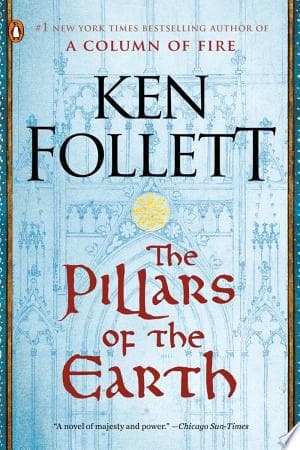
- The Pillars of the Earth
Ken Follett
4.3 (649k) average on GoodreadsFantasySweeping historical epic set in a similar medieval period, focusing on character ambition and societal challenges.
- The Red Tent
Anita Diamant
4.2 (520k) average on GoodreadsHistorical FictionRetelling of a biblical story from a female perspective, emphasizing women's roles and struggles in ancient societies.
- The Name of the Rose
Umberto Eco
4.1 (301k) average on GoodreadsHistorical FictionWhile both are set in medieval times and involve intellectual pursuits within religious institutions, Eco's novel prioritizes complex philosophical and semiotic discourse and intricate plot over deep character interiority. Cross's Pope Joan offers a more emotionally resonant and character-driven narrative, focusing on Joan's personal struggles and triumphs, making her journey more relatable than the intellectual puzzles in Eco's work.
- To Kill a Mockingbird
Harper Lee
4.3 (4.5M) average on GoodreadsHistorical FictionIn the 1930s Jim Crow South, Harper Lee writes about racial injustice, moral growth, and the quiet courage of a lawyer father, Atticus Finch, as seen through his young daughter's eyes.
- The Great Gatsby
F. Scott Fitzgerald
3.9 (3.8M) average on GoodreadsHistorical FictionIn the opulent Roaring Twenties, a mysterious millionaire's lavish parties hide his desperate, tragic pursuit of a lost love, exposing the emptiness within the American Dream.
- Pride and Prejudice
Jane Austen
4.3 (3M) average on GoodreadsHistorical FictionIn a society focused on status and money, Elizabeth Bennet navigates love and pride, challenging Mr. Darcy and social expectations to find true affection.





Enjoyed the summary?
A summary gives you the shape of the book. The book itself has the detail, the examples and the voice.
Find Pope Joan on AmazonAs an Amazon Associate, BookBrief earns from qualifying purchases. How we're funded