
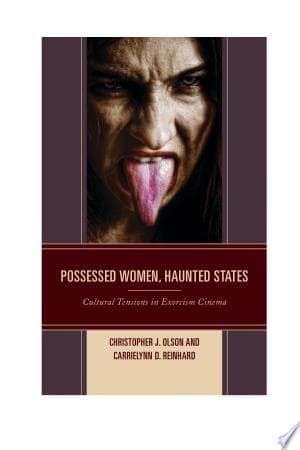
Core Idea
- Difficulty
- Medium
Key Takeaways from Possessed Women, Haunted States
The Exorcist as a Narrative Template
The 1973 film established a rigid blueprint for subsequent exorcism cinema.
Olson argues that 'The Exorcist' is a foundational film that set the narrative structure for almost every exorcism movie that followed. This blueprint includes specific stages of possession, increasing horror, male religious figures, and the final, often violent, expulsion ritual. This rigid structure shows a surprising lack of new ideas in the subgenre, even decades later. The book's analysis depends on this idea, looking at how films either follow or, less often, subtly challenge this established formula, revealing the lasting cultural worries in its repeated elements.
“The traditional exorcism narrative often functions as the central plot of the exorcism film, with only the rare film deviating from this structure.”
In the book: Analysis of 'The Exorcist' (1973) as the genre's originating and defining narrative.
Try this: When watching an exorcism film, identify the specific elements that directly echo 'The Exorcist's' plot points and character archetypes.
Possession as a Metaphor for Female Empowerment
Demonic possession in film often symbolizes and then demonizes female agency and sexuality.
This is the book's strongest insight. Olson says that the possessed woman, especially the young, often sexually awakening female, becomes a vessel for societal fears about female power and independence. Her 'demonic' behavior—defiance, vulgarity, sexual openness—reflects traits seen as threatening by male-dominated structures. The exorcism, then, is not just a spiritual fight but a ritualistic reassertion of control, disempowering the woman and returning her to a 'proper,' submissive state. This view helps explain the subgenre's continued popularity.
“Exorcism films appear to explore tensions or fears regarding empowered and sexually active women, and frequently reinforce the belief that such individuals need to be subjugated and disempowered.”
In the book: Recurring portrayal of young, often pubescent or sexually active women as the primary targets of possession; the 'cure' often involves physical and spiritual subjugation.
Try this: Analyze how possessed women in films express agency or sexuality before their exorcism, and how their post-exorcism state reflects a return to traditional feminine roles.
The Male Gaze of Salvation
Male religious figures are almost exclusively depicted as the sole agents capable of saving possessed women.
Olson points out the consistent gender dynamic in exorcism films: the victim is almost always female, and the savior is almost always male, typically a priest or group of priests. This reinforces a story where women, once 'corrupted' or 'empowered' by the demonic, cannot save themselves and need male help to be 'purified' and returned to their place. This dynamic reinforces traditional gender roles and positions male religious authority as the ultimate judge of female morality and well-being, a theme with significant cultural implications beyond horror.
“Only male religious figures can exorcise [the demon], thereby saving the women from eventual damnation.”
In the book: The overwhelming majority of exorcism films feature male priests as the central figures in performing the ritual.
Try this: Consider how the absence of female exorcists or self-rescuing female protagonists impacts the film's underlying message about gender and power.
Third-Wave Feminism's Limited Impact
Even post-2000s exorcism films largely fail to challenge established gender tropes.
A surprising and somewhat discouraging conclusion from Olson's analysis is the subgenre's resistance to changing cultural views, especially those from third-wave feminism. Despite a broader societal shift towards greater female empowerment and discussions about sexual liberation, exorcism films largely continue to present female agency and sexuality, when 'demonic,' as dangerous and needing suppression. This suggests a deep-seated cultural anxiety that the genre effectively uses, showing how certain stories can persist and even thrive against progressive social movements. This argument highlights the limits of pop culture in reflecting immediate social change.
“Even more recent films, produced after the emergence of third wave feminism, typically reflect this concern about women. Very rarely do exorcism films present empowered women and feminine sexuality as non-threatening.”
In the book: Analysis of post-2000s exorcism films demonstrating continuity with earlier gender representations rather than significant shifts.
Try this: When watching a contemporary exorcism film, actively look for subtle or overt ways it either perpetuates or, if rare, challenges the traditional depiction of women and their sexuality.
Beyond Gender: Minorities and Homosexuality
Exorcism narratives occasionally reflect anxieties about other marginalized groups.
While the focus on women is main, Olson's framework extends to how exorcism films, though less often, can also deal with anxieties about racial minorities and homosexual individuals. The 'otherness' of the demon can sometimes be mapped onto other marginalized identities, suggesting that the fear of the unknown or the 'deviant' goes beyond gender. This broadens the book's critical scope, showing how horror, especially the exorcism subgenre, can be a canvas for broader societal prejudices and fears, even if these representations are not as consistently dominant as those concerning women.
“Using various cultural and critical theories, this book examines how representations of possession and exorcism reflect, reinforce or challenge prevailing social, cultural, and historical views of women, minorities, and homosexuals.”
In the book: References to specific films where racial or sexual 'otherness' is subtly linked to the demonic or possessed state.
Try this: Look for instances where the possessed individual or the demon's characteristics might subtly or overtly mirror stereotypes or fears associated with racial minorities or LGBTQ+ individuals.
The Body as a Battleground
The possessed body becomes a site for moral, spiritual, and social conflict.
Olson implicitly shows how the physical body of the possessed individual, especially the young woman, becomes the main stage for the film's ideological struggles. It's not just a spiritual battle for the soul, but a physical showing of societal fears and a battleground for control over female independence and expression. The contortions, violence, and vulgarity shown by the possessed body are not just scare tactics; they are symbolic expressions of the 'deviant' behaviors society tries to repress. The exorcism itself is a violent reclaiming of this body, forcing it back into 'purity' and obedience, reinforcing the idea of bodily control as a social command.
“The analysis presented in this book considers how exorcism films reflect, reinforce or challenge this traditional exorcism narrative.”
In the book: Detailed descriptions of the physical transformations and behaviors of possessed characters in various films.
Try this: Pay attention to the specific physical changes and actions of the possessed individual and consider what societal 'norms' these actions are transgressing.
The Scarcity of Critical Scrutiny
The exorcism subgenre has been largely overlooked by serious critical analysis.
Olson's work fills a gap in film studies. He argues that despite its cultural impact and popularity, the exorcism subgenre has been surprisingly overlooked by cultural critics. This oversight means that the social and psychological messages in these films have gone mostly unexamined. This book's contribution is bringing a critical lens to a body of work often dismissed as just 'genre horror,' revealing its potential for commenting on historical anxieties and power dynamics. This justifies the book's existence and shows its academic value.
“This book looks at films that have not received much critical scrutiny regarding the messages they contain and how they relate to and comment upon the historical periods in which they were produced and initially received.”
In the book: The author's explicit statement about the lack of prior critical analysis on the subgenre.
Try this: Recognize that even seemingly 'lowbrow' horror films can contain complex social commentary worthy of academic study.
The Necessity of Popular Culture Analysis
Examining horror cinema reveals deeper societal values and fears.
The main point from Olson's work is a call for the serious study of popular culture, especially horror. He shows that seemingly simple entertainment forms like exorcism films are not just escapist but are cultural artifacts that reflect, reinforce, and sometimes subtly challenge social norms and anxieties. By examining these stories, we gain insight into collective fears about gender, power, sexuality, and 'otherness' that might not be openly discussed in mainstream discourse. This reinforces the broader academic argument for the value of cultural studies.
“Given the results of this analysis, this book concludes on the necessity to examine how possession and exorcism are portrayed in popular culture.”
In the book: The entire preceding analysis of the films serves as evidence for this concluding statement.
Try this: When consuming any form of popular media, question the underlying messages about gender, power, and societal norms, rather than simply accepting them at face value.
Subtle Deviations, Strong Reinforcements
Rare departures from the template often end up reinforcing its core messages.
While Olson notes the 'rare film deviating from this structure,' his overall analysis suggests that even these deviations often serve to ultimately reinforce the genre's core ideas about female subjugation. A film might introduce a stronger female character or a more nuanced possession, but the resolution often returns to the established pattern of male-led salvation and the restoration of a 'proper' social order. This observation is important because it highlights the genre's ability to maintain its conservative messages, even when trying to appear progressive. It shows the subtle ways ideology can persist despite superficial changes.
“The analysis presented in this book considers how exorcism films reflect, reinforce or challenge this traditional exorcism narrative.”
In the book: Examples of films that initially seem to challenge the norm but ultimately revert to traditional outcomes.
Try this: Identify films that present themselves as subversive or modern within the subgenre, and then critically evaluate whether their ending truly breaks from the traditional narrative or merely offers a superficial twist.
The 'Threat' of the Uncontrolled
Possession embodies the ultimate fear of losing control – both personal and societal.
Beyond specific gender or minority anxieties, Olson's work implicitly shows that possession in these films is fundamentally about the fear of the uncontrolled – an individual losing control of their body and mind, and by extension, society losing control over its members. The demon represents chaos, transgression, and the breakdown of order. The exorcism, therefore, is a ritualistic reassertion of control, not just over the individual but over society itself. This broader idea of 'threat' explains why the genre resonates so deeply, tapping into universal human fears of anarchy and the unknown, projected onto the most vulnerable bodies.
“Such individuals need to be subjugated and disempowered so that they no longer pose a threat to those around them.”
In the book: The violent and chaotic behavior of possessed individuals, often disrupting social norms and family structures.
Try this: Consider how the demon's actions in a film specifically challenge established social order, morality, or personal boundaries, and how the exorcism re-establishes them.
Quiz
10 questions on the main ideas. Each answer comes with a short explanation.
Question 1
What is the primary focus of Christopher J. Olson's book "Possessed Women, Haunted States"?
- The historical accuracy of demonic possession.
- The cinematic depiction of exorcism narratives, particularly concerning young women.
- The psychological effects of religious trauma.
- The evolution of horror film special effects.
Show answer
B. The cinematic depiction of exorcism narratives, particularly concerning young women. The book analyzes the history of exorcism cinema and how the traditional exorcism narrative recurs across the subgenre.
Question 2
According to the book, what event significantly influenced the surge of exorcism movies featuring young women?
- The release of "The Exorcist" in 1973.
- The Vatican's official stance on demonic possession.
- A series of real-life exorcism cases.
- The rise of feminist film theory.
Show answer
A. The release of "The Exorcist" in 1973. The text explicitly states that "Since the release of The Exorcist in 1973, there has been a surge of movies depicting young women becoming possessed."
Question 3
What role does the 'traditional exorcism narrative' established in "The Exorcist" typically play in exorcism films, according to Olson?
- It is rarely used, with most films deviating from it.
- It serves as a minor subplot.
- It functions as the central plot.
- It is a narrative device used only in foreign films.
Show answer
C. It functions as the central plot. The book states that "This traditional exorcism narrative often functions as the central plot of the exorcism film, with only the rare film deviating from this structure."
Question 4
How do exorcism films, as analyzed in the book, often represent empowered and sexually active women?
- As non-threatening and to be celebrated.
- As individuals who need to be subjugated and disempowered.
- As figures of spiritual guidance.
- As victims of societal oppression, independent of possession.
Show answer
B. As individuals who need to be subjugated and disempowered. The book notes that exorcism films "frequently reinforce the belief that such individuals need to be subjugated and disempowered so that they no longer pose a threat to those around them."
Question 5
What is a common theme explored in exorcism films related to female characters, according to the book's analysis?
- The inherent strength of feminine spirituality.
- The liberation of women from patriarchal structures.
- Tensions or fears regarding empowered and sexually active women.
- The positive integration of feminine sexuality into society.
Show answer
C. Tensions or fears regarding empowered and sexually active women. The text highlights that "exorcism films appear to explore tensions or fears regarding empowered and sexually active women."
Question 6
The book uses various cultural and critical theories to examine how exorcism films relate to which societal aspects?
- Economic policies and global trade.
- Technological advancements and digital culture.
- Social, cultural, and historical views of women, minorities, and homosexuals.
- The history of medicine and psychiatry.
Show answer
C. Social, cultural, and historical views of women, minorities, and homosexuals. The book examines "how representations of possession and exorcism reflect, reinforce or challenge prevailing social, cultural, and historical views of women, minorities, and homosexuals."
Question 7
According to the book, how often do exorcism films present empowered women and feminine sexuality as non-threatening?
- Very often.
- Frequently.
- Rarely.
- Always.
Show answer
C. Rarely. The text states, "Very rarely do exorcism films present empowered women and feminine sexuality as non-threatening."
Question 8
Olson's book focuses on exorcism films that are typically:
- Critically acclaimed blockbusters.
- Independent art-house productions.
- Films that have not received much critical scrutiny.
- Documentaries about real exorcisms.
Show answer
C. Films that have not received much critical scrutiny. The book looks at "films that have not received much critical scrutiny regarding the messages they contain."
Question 9
What is the book's ultimate conclusion regarding the portrayal of possession and exorcism in popular culture?
- It is a dying subgenre with little cultural relevance.
- It requires examination of how these themes are portrayed.
- It primarily serves as entertainment with no deeper meaning.
- It needs to be censored due to its harmful messages.
Show answer
B. It requires examination of how these themes are portrayed. The book "concludes on the necessity to examine how possession and exorcism are portrayed in popular culture."
Question 10
The analysis in "Possessed Women, Haunted States" suggests that exorcism films often reinforce the idea that traditional gender roles need to be upheld to prevent societal disruption. Which of the following groups are also mentioned as being subjects of these films' reflections, reinforcements, or challenges?
- Politicians and world leaders.
- Artists and musicians.
- Minorities and homosexuals.
- Scientists and academics.
Show answer
C. Minorities and homosexuals. The book examines how representations of possession and exorcism reflect, reinforce or challenge prevailing social, cultural, and historical views of women, minorities, and homosexuals.
Possessed Women, Haunted States FAQ
What is the main focus of 'Possessed Women, Haunted States'?
This book analyzes the recurring traditional exorcism narrative in cinema, particularly how it depicts female possession and exorcism, and examines its reflection of social, cultural, and historical views on women, minorities, and homosexuals.
How does 'The Exorcist' influence exorcism films, according to the book?
The book argues that 'The Exorcist' established a traditional exorcism narrative that recurs across the subgenre, often serving as the central plot structure for depicting possession and its ritualistic cure.
What social issues does the book explore through exorcism cinema?
It examines how exorcism films reflect, reinforce, or challenge prevailing social, cultural, and historical views regarding empowered and sexually active women, as well as minorities and homosexuals.
Do exorcism films typically portray empowered women positively?
Rarely. The book suggests that exorcism films often explore tensions around empowered and sexually active women, frequently reinforcing the idea that they need to be disempowered to be seen as non-threatening.
Does the book focus on well-known or less-analyzed exorcism films?
The book delves into exorcism films that have not received extensive critical scrutiny, examining their messages and their connection to the historical periods in which they were produced and received.
What is the significance of the traditional exorcism narrative?
The traditional exorcism narrative, established by 'The Exorcist,' often functions as the primary plot in films, dictating how demonic possession and its resolution are portrayed, with few films deviating from this structure.
How does the book relate exorcism films to feminism?
Even films made after the emergence of third-wave feminism often reflect concerns about women and tend to reinforce the subjugation of empowered female figures, rather than presenting them as non-threatening.
What is the book's conclusion about possession in popular culture?
The book concludes that it is necessary to critically examine how possession and exorcism are portrayed in popular culture and what these representations reveal about societal attitudes.
Who is the author of 'Possessed Women, Haunted States'?
The author of 'Possessed Women, Haunted States' is Christopher J. Olson.
Similar books
- The Diary of a Young Girl
Anne Frank
4.2 (2.7M) average on GoodreadsBiographyDuring the Nazi occupation, a teenage girl's diary, written from a secret annex, shares observations on humanity, hope, and the wait for freedom.
- Twisted 1. Twisted love
Ana Huang
3.7 (1.7M) average on GoodreadsA quiet billionaire with a difficult past finds his guarded heart opening to the woman he must protect, but their growing passion uncovers dangerous secrets and a shared, traumatic history.
- Eat, Pray, Love
Elizabeth Gilbert
3.6 (1.5M) average on GoodreadsLifestyleA heartbroken writer leaves her conventional life for a year-long global search for pleasure in Italy, spiritual devotion in India, and unexpected love and balance in Bali.
- Night
Elie Wiesel
4.3 (970k) average on GoodreadsBiographyIn the darkness of Auschwitz and Buchenwald, a teenage Elie Wiesel faces the extermination of his family, the loss of his faith, and the lasting scars of humanity's deepest cruelty.
- Steve Jobs
Walter Isaacson
4.1 (957k) average on GoodreadsBusinessSteve Jobs was a visionary who fused creativity and technology to revolutionize six industries and shape our digital world.
- The Glass Castle
Jeannette Walls
4.3 (903k) average on GoodreadsBiographyJeannette Walls's memoir describes her unusual childhood with brilliant, free-spirited parents whose poverty-stricken life shaped her independence and love despite family problems.






Enjoyed the summary?
A summary gives you the shape of the book. The book itself has the detail, the examples and the voice.
Find Possessed Women, Haunted States on AmazonAs an Amazon Associate, BookBrief earns from qualifying purchases. How we're funded