
Synopsis
Covers the whole plot, including the ending.
- Difficulty
- Medium
- Pacing
- Moderate
- Mood
- Suspenseful, Dark, Thrilling, Psychological
- Read it if
- You enjoy legal thrillers with shocking twists, psychological depth, and a morally ambiguous protagonist.
- Skip it if
- You prefer straightforward mysteries without complex psychological elements or morally grey endings.
Primal Fear Plot Summary
Covers the whole plot, including the ending.
The Archbishop's Murder and Aaron's Arrest
The novel opens with the murder of Archbishop Richard Rushman, a beloved figure in Chicago. Rushman is found stabbed 78 times in his rectory. Shortly after, a terrified, stuttering young man named Aaron Stampler is apprehended, covered in blood and clutching a butcher's knife, fleeing the scene. The evidence against him appears overwhelming, and the media quickly calls him the killer. Martin Vail, a flamboyant and ambitious defense attorney known for taking high-profile, unwinnable cases, sees an opportunity to further his career and, against the advice of many, takes on Aaron's defense pro bono, believing there might be more to the story. He assembles his team, including his former lover and rival prosecutor, Janet Venable, who is assigned to the prosecution.
Vail Takes the Case and Assembles His Team
Martin Vail, known for his courtroom presence and his ability to manipulate public perception, decides to represent Aaron Stampler. He wants a challenge and potential for publicity. Vail's initial assessment of Aaron reveals a seemingly innocent, fragile young man who claims to have blacked out and remembers nothing of the murder. Vail's defense strategy begins to form around the idea of Aaron's innocence or mental instability. He brings together a team, including his investigator, Tommy Goodman, and Dr. Molly Arrington, a psychologist, to look into Aaron's past and the circumstances surrounding the murder. State's Attorney John Shaughnessy, a political rival of Vail's, is determined to secure a quick conviction against Aaron to boost his own public image.
Uncovering Aaron's Traumatic Past
As the defense team investigates, particularly Dr. Molly Arrington during her psychiatric evaluations, they uncover disturbing details about Aaron's past. Aaron reveals fragmented memories and trauma related to his childhood. It becomes apparent that Archbishop Rushman, far from being a saintly figure, was a pedophile who sexually abused Aaron and other altar boys. This revelation shifts Vail's defense strategy from simple innocence to one of justifiable homicide or a plea of insanity due to psychological trauma. Aaron's suppressed memories of the abuse are important, and Dr. Arrington believes Aaron might be suffering from Dissociative Identity Disorder (DID), formerly known as Multiple Personality Disorder, creating a more aggressive personality named 'Roy'.
The Emergence of Roy
During a particularly intense session with Dr. Arrington, Aaron's demeanor drastically changes. His stutter disappears, his voice deepens, and he becomes aggressive and vulgar. This new personality, 'Roy,' emerges, claiming responsibility for the murder of Archbishop Rushman. Roy describes, in detail, how he killed Rushman as an act of revenge for the abuse Aaron suffered. This dramatic shift provides Vail with a powerful, albeit risky, defense: not guilty by reason of insanity, arguing that Aaron's alternate personality, Roy, committed the crime. The prosecution, led by Janet Venable, initially dismisses this as a clever act orchestrated by Vail and Aaron, but the compelling nature of Roy's emergence begins to sow doubt.
The Courtroom Battle Begins
The trial of Aaron Stampler begins, drawing public and media attention. Martin Vail, with his characteristic flair, presents his defense centered on Aaron's dissociative identity disorder. Dr. Molly Arrington takes the stand, testifying about Aaron's condition and the emergence of Roy. Vail cross-examines witnesses, attempting to discredit the initial police investigation and highlight the Archbishop's hidden depravity. Janet Venable, for the prosecution, works to portray Aaron as a manipulative killer and Roy as a fabricated personality, bringing in her own psychological experts to counter Dr. Arrington's testimony. The courtroom becomes a battleground of psychological theories, legal maneuvering, and emotional appeals, with Aaron's fate hanging in the balance.
The Prosecution's Counter-Arguments
Janet Venable and her team work to dismantle Vail's defense. They look into Aaron's background, searching for any evidence that could suggest he is faking his condition. They highlight inconsistencies in Aaron's story and attempt to portray him as a cunning individual capable of deception. The prosecution's strategy is to convince the jury that Aaron is a cold-blooded murderer who is using the DID defense as a smokescreen. They call witnesses who knew Aaron, trying to show he was capable of violence or manipulation even before the murder. The pressure mounts on Vail as Venable effectively pokes holes in the defense's narrative, making the jury question the authenticity of Roy.
The Climax: Roy's Testimony
In a dramatic turn, Martin Vail orchestrates for Roy to appear on the witness stand. Under intense questioning, Aaron visibly transforms into Roy, his stutter vanishing, his demeanor hardening, and his voice changing. Roy, with a lack of remorse, confesses to killing Archbishop Rushman, detailing the abuse and his motive for revenge. The courtroom is stunned by this transformation, and the jury is affected. Despite Janet Venable's attempts to cross-examine Roy and expose him as a fraud, the force and apparent authenticity of Roy's persona prove overwhelming. The jury, convinced that Aaron is mentally ill and not solely responsible for the act, finds him not guilty by reason of insanity, leading to his committal to a mental institution.
The Aftermath and Vail's Triumph
Martin Vail enjoys his victory. The media hails him as a genius, and his reputation as the 'bad-boy' lawyer is cemented. Aaron is sent to a state mental hospital, seemingly to receive treatment for his dissociative identity disorder. Vail visits Aaron in his cell to discuss the future and what the next steps will be. He feels a mix of professional triumph and personal satisfaction, having saved a seemingly innocent man. However, a subtle unease begins to settle over Vail as he observes Aaron, a feeling that something about the case, or Aaron himself, is not entirely resolved or understood.
The Chilling Revelation
During a final conversation in Aaron's cell at the mental institution, the truth is revealed. Aaron, without his stutter, and with a calm and intelligent demeanor, informs Vail that 'Roy' was entirely a fabrication. He confesses that he planned and executed the murder of Archbishop Rushman and then created the 'Aaron' persona and the 'Roy' alter ego to manipulate the legal system and escape punishment. He reveals that he is a highly intelligent psychopath who has been faking his mental illness all along. The revelation shatters Vail's perception of the case and his client, leaving him aghast and horrified by the deception. He realizes he has been manipulated by a true monster.
Vail's Disillusionment and Aaron's Escape
The final scene leaves Martin Vail devastated and morally compromised. His celebrated victory is now a bitter defeat, a sign of his unwitting role in freeing a dangerous psychopath. He is left to grapple with the ethical implications of his actions and the chilling realization that he was outmaneuvered by his own client. Aaron Stampler, having successfully feigned mental illness, is now securely institutionalized, but with a clear path to eventual freedom, having escaped the death penalty or a lengthy prison sentence. The novel concludes with Vail's disillusionment and the unsettling knowledge that Aaron, a truly evil individual, has successfully manipulated everyone, including the brilliant lawyer, and is now free to commit more atrocities.
Principal Figures
Martin Vail
Protagonist
Brilliant, ambitious, and morally ambiguous defense attorney
Martin Vail is a high-profile, charismatic defense attorney in Chicago, known for taking on seemingly unwinnable cases and often representing the most notorious criminals. He is driven by ambition, a love for the spotlight, and a genuine, though sometimes misplaced, belief in the underdog. Vail is intelligent, cunning, and unafraid to employ unorthodox tactics, often blurring ethical lines to achieve a win. He genuinely believes in Aaron's innocence, or at least his mental illness, which makes the final revelation particularly devastating for him. His journey is one from professional triumph to profound moral reckoning.
Relationships: Aaron Stampler (Client, ultimately his deceiver); Janet Venable (Former lover, legal rival, prosecutor); Dr. Molly Arrington (Psychologist on his defense team); Tommy Goodman (Investigator on his defense team)
Aaron Stampler
Antagonist
The seemingly innocent altar boy accused of murder, who harbors a dark secret.
Aaron Stampler initially appears as a terrified, stuttering, and deeply traumatized young man, a victim of abuse. He presents as fragile and vulnerable, eliciting sympathy from Vail and the jury. However, this persona is a carefully constructed facade. Aaron is, in reality, a highly intelligent and cunning psychopath, a master manipulator who meticulously planned the murder of Archbishop Rushman and then fabricated dissociative identity disorder, including the aggressive 'Roy' persona, to evade justice. His true nature is revealed in the novel's shocking climax, exposing him as the ultimate villain.
Relationships: Martin Vail (His defense attorney, whom he manipulates); Archbishop Richard Rushman (His abuser and murder victim); Janet Venable (His prosecutor, whom he deceives); Dr. Molly Arrington (His evaluating psychologist, whom he deceives)
Janet Venable
Supporting
The dedicated and sharp prosecutor, Vail's former lover and rival.
Janet Venable is a sharp, determined prosecutor assigned to Aaron Stampler's case, putting her in direct opposition to her former lover, Martin Vail. She is intelligent, ethical, and committed to justice, initially convinced of Aaron's guilt. Despite her personal history with Vail, she maintains professional integrity and works tirelessly to secure a conviction. She is skeptical of the DID defense but ultimately swayed by the dramatic courtroom presentation of 'Roy.' Her role highlights the complexities of the justice system and the blurred lines between personal and professional relationships.
Relationships: Martin Vail (Former lover, legal rival); Aaron Stampler (The defendant she prosecutes); John Shaughnessy (Her boss, State's Attorney)
Dr. Molly Arrington
Supporting
A compassionate and insightful psychologist on Vail's defense team.
Dr. Molly Arrington is a highly skilled and compassionate psychologist brought in by Martin Vail to evaluate Aaron Stampler. She is instrumental in uncovering Aaron's traumatic past and diagnosing him with Dissociative Identity Disorder, believing in the authenticity of 'Roy.' She genuinely cares for Aaron and is deeply invested in understanding his psychological state. Her expertise and testimony are crucial to Vail's defense. Like Vail, she is completely deceived by Aaron's performance, making her a sympathetic figure who genuinely tries to help a perceived victim.
Relationships: Aaron Stampler (Her patient, whom she believes she is treating); Martin Vail (Colleague on the defense team)
Archbishop Richard Rushman
Mentioned
The revered but secretly depraved murder victim.
Archbishop Richard Rushman is the seemingly saintly and beloved head of the Chicago archdiocese whose brutal murder sets the entire plot in motion. Initially portrayed as a victim, the investigation gradually reveals his dark secret: he was a pedophile who sexually abused altar boys, including Aaron Stampler. His hidden depravity provides the motive for his murder and complicates the moral landscape of the story. His death unmasks the hypocrisy within religious institutions and serves as the catalyst for Aaron's elaborate scheme.
Relationships: Aaron Stampler (His abuser and murder victim)
John Shaughnessy
Supporting
The ambitious State's Attorney and Vail's political rival.
John Shaughnessy is the State's Attorney, Janet Venable's boss, and a political rival of Martin Vail. He is a calculating and opportunistic politician primarily concerned with his public image and career advancement. He sees Aaron Stampler's case as a high-profile opportunity to secure a quick conviction and boost his approval ratings. Shaughnessy pressures Venable to ensure a guilty verdict, embodying the political pressures that often influence the justice system. His ambition contrasts sharply with Vail's more maverick approach, though both are driven by a desire for success.
Relationships: Janet Venable (His subordinate); Martin Vail (His political rival)
Tommy Goodman
Supporting
Vail's loyal and resourceful private investigator.
Tommy Goodman is Martin Vail's trusted private investigator. He is resourceful, street-smart, and fiercely loyal to Vail. Goodman plays a crucial role in digging up background information, tracking down witnesses, and uncovering details that support the defense's case, particularly regarding Archbishop Rushman's hidden life. He provides practical support and often serves as a sounding board for Vail's theories. His dedication is vital to the defense's ability to build a case against overwhelming initial evidence.
Relationships: Martin Vail (His boss and colleague)
Judge Miriam Shoat
Supporting
The presiding judge in Aaron Stampler's murder trial.
Judge Miriam Shoat presides over the high-profile murder trial of Aaron Stampler. She is portrayed as a seasoned and generally fair judge, attempting to maintain order and adherence to legal procedure amidst the courtroom drama and media frenzy. She makes key rulings that impact the course of the trial, including allowing the testimony regarding Aaron's dissociative identity disorder. Her decisions contribute to the unfolding of the plot and the eventual verdict, demonstrating the judicial system's efforts to navigate complex legal and psychological arguments.
Relationships: Martin Vail (Defense attorney in her court); Janet Venable (Prosecutor in her court)
Themes & Insights
Appearance vs. Reality
This theme is central to 'Primal Fear,' showing most powerfully in Aaron Stampler himself. Initially, Aaron appears as a meek, stuttering victim, but he is ultimately revealed to be a cunning, psychopathic manipulator. Archbishop Rushman is publicly revered as a saintly figure, yet is privately a pedophile. Martin Vail, too, projects an image of moral ambiguity but is driven by a desire for justice (or glory), only to discover he was part of a grand deception. The novel constantly challenges the reader to question what they see and believe, ending with the shocking twist that redefines every character's perception.
“There are no facts, only interpretations.”
Justice and the Legal System
The novel examines the mechanisms and limitations of the American legal system. It explores how ambition, media influence, and psychological theories can sway the course of justice. Martin Vail manipulates the system through his courtroom theatrics and strategic use of the DID defense, ultimately securing an acquittal for a guilty man. The outcome highlights the system's vulnerability to manipulation and its reliance on perception and expert testimony. The ending forces a reconsideration of what 'justice' truly means when a murderer walks free due to a fabricated mental illness, leaving the protagonist and the reader to question its efficacy.
“The law is a weapon, and like all weapons, it can be used for good or ill.”
Manipulation and Deception
Manipulation is a driving force throughout the narrative, primarily embodied by Aaron Stampler. Aaron's performance of dissociative identity disorder, including the creation of 'Roy,' is a prolonged act of deception designed to manipulate Vail, Dr. Arrington, Janet Venable, the jury, and the entire justice system. Vail, in turn, is a master manipulator of public opinion and courtroom dynamics, albeit for what he believes to be a just cause. The theme explores the power of psychological manipulation and how easily people, even professionals, can be deceived by a skilled psychopath.
“He played us all, like a goddamn violin.”
The Nature of Evil
The novel looks into the nature of psychopathy and evil. Archbishop Rushman represents a hidden, institutional evil through his abuse of power and children. More profoundly, Aaron Stampler embodies a cold, calculating evil that exists without remorse or empathy. His ability to perfectly feign mental illness and manipulate those around him suggests a form of evil that is not born of trauma (though he uses it as a pretext) but is intrinsic and deeply disturbing. The story challenges the idea that all criminals are products of their environment, presenting a character who is simply, purely, and terrifyingly evil.
“Some evil is just… evil. No reason, no excuse, just evil.”
Trauma and Its Aftermath
While ultimately revealed as a manipulative fabrication, the initial portrayal of Aaron's trauma, stemming from the Archbishop's abuse, highlights the devastating effects of child abuse. Dr. Arrington's work focuses on the psychological scars left by such experiences, exploring how trauma can lead to extreme coping mechanisms like dissociative identity disorder. Even though Aaron's DID is fake, the underlying reality of the abuse he suffered is genuine, grounding the story in a real and tragic social issue. This theme initially provides a sympathetic lens through which to view Aaron, before it is subverted.
“The mind protects itself, sometimes by breaking into pieces.”
Plot Devices & Literary Techniques
The Unreliable Narrator/Character
Aaron Stampler's deceptive portrayal of himself.
Aaron Stampler himself functions as the ultimate unreliable character. From the moment he is introduced, his meekness, stutter, and claims of amnesia are all part of a meticulously crafted performance. The entire narrative, particularly through Vail's perspective, is built on the premise that Aaron is a victim or mentally ill, only for this perception to be completely shattered in the final pages. This device creates immense suspense and a shocking twist, forcing the reader to re-evaluate every interaction and piece of evidence presented throughout the book.
The Courtroom Drama
The trial setting as the primary stage for conflict and revelation.
The courtroom serves as the central arena for conflict, character development, and the gradual unfolding of the plot. The structure of the novel is heavily influenced by legal proceedings, with testimonies, cross-examinations, and legal strategies driving the narrative forward. This device allows for the dramatic reveal of information, the clash of opposing viewpoints (Vail vs. Venable), and the theatrical presentation of Aaron's 'Roy' persona. The courtroom setting also emphasizes themes of justice, truth, and deception within the legal system.
The 'Twist' Ending
The shocking revelation of Aaron's true nature at the climax.
The novel employs a classic 'twist' ending, where the entire understanding of the protagonist's journey and the antagonist's nature is completely upended in the final moments. The revelation that Aaron Stampler fabricated his dissociative identity disorder and manipulated everyone is a powerful and memorable plot device. It recontextualizes every prior event, interaction, and character motivation, leaving the reader stunned and forcing a re-evaluation of the entire story. This twist serves to underscore the theme of appearance vs. reality and the chilling nature of psychopathy.
Dissociative Identity Disorder (DID)
A psychological condition used as a central plot point and a tool for deception.
DID, or Multiple Personality Disorder, is a critical plot device. It provides the framework for Vail's defense, allowing for the introduction of 'Roy' as the perpetrator. The detailed exploration and expert testimony surrounding DID lend credibility to Aaron's performance, making the eventual twist more impactful. The condition itself becomes a weapon in Aaron's hands, demonstrating how a complex psychological concept can be exploited to manipulate the legal system and public perception, blurring the lines between genuine illness and cunning deception.
Primal Fear Quotes
“The law is a weapon, and like any weapon, it can be used for good or ill. The trick is to make sure it's in the right hands.”
“Everyone has a dark side. Some just keep theirs locked up tighter than others.”
“Innocence is a fragile thing. Once broken, it can never truly be mended.”
“The truth is rarely pure and never simple.”
“Sometimes, the biggest monster wears the most innocent face.”
“Justice isn't about what's right; it's about what you can prove.”
“Fear is a powerful motivator. It can make you do things you never thought possible.”
“The mind is a labyrinth, and sometimes even its owner gets lost.”
“Every man has his price. It's just a matter of finding what it is.”
“You can't save everyone, no matter how hard you try.”
“The greatest trick the devil ever pulled was convincing the world he didn't exist.”
“There are no easy answers, only difficult choices.”
“The past isn't dead. It isn't even past.”
“Sometimes, the only way to win is to break the rules.”
Quiz
10 questions on the plot and the characters. Each answer comes with a short explanation.
Question 1
Who is the 'bad-boy' lawyer defending Aaron Stampler?
- Tommy Goodman
- Martin Vail
- John Shaughnessy
- Joey Pinero
Show answer
B. Martin Vail Martin Vail is introduced as the brilliant, unorthodox lawyer who takes on Aaron Stampler's defense, despite the overwhelming evidence against him.
Question 2
What object was Aaron Stampler found holding near the murdered archbishop?
- A bloody candlestick
- A broken crucifix
- A bloody butcher's knife
- A metal pipe
Show answer
C. A bloody butcher's knife The book description explicitly states Aaron was found 'holding a bloody butcher's knife near a murdered archbishop,' making the initial evidence against him seem conclusive.
Question 3
What is Martin Vail's primary motivation for taking on Aaron Stampler's seemingly unwinnable case?
- He genuinely believes Aaron is innocent from the start.
- He wants to expose corruption within the church.
- He thrives on impossible cases and the publicity they bring.
- He was assigned the case by the public defender's office.
Show answer
C. He thrives on impossible cases and the publicity they bring. Vail is known as a 'bad-boy' lawyer who enjoys the challenge and notoriety of high-profile, difficult cases, using them to further his reputation.
Question 4
What specific psychological condition does Aaron Stampler appear to suffer from during the trial?
- Schizophrenia
- Post-traumatic stress disorder
- Dissociative Identity Disorder (multiple personalities)
- Paranoid delusions
Show answer
C. Dissociative Identity Disorder (multiple personalities) A key element of Aaron's defense relies on the revelation that he has multiple personalities, specifically the violent 'Roy' persona, which he claims committed the murder.
Question 5
Which of these is NOT a characteristic of Martin Vail's legal approach?
- Unorthodox methods
- Building a tight legal team
- Strict adherence to traditional courtroom procedures
- Seeking the 'extraordinary truth'
Show answer
C. Strict adherence to traditional courtroom procedures The description highlights Vail's 'unorthodox ways' and his reputation as a 'bad-boy' lawyer, indicating he does NOT adhere strictly to traditional procedures.
Question 6
What is the ultimate 'surprise' that the book's climax delivers to the reader?
- The archbishop faked his own death.
- Martin Vail was secretly involved in the murder.
- Aaron Stampler was faking his multiple personalities and was the sole, calculating murderer.
- The entire trial was a setup by the church.
Show answer
C. Aaron Stampler was faking his multiple personalities and was the sole, calculating murderer. The 'heart-stopping climax' reveals that Aaron Stampler's dissociative identity disorder was a fabrication, and he was fully aware and responsible for the murder, having skillfully manipulated Vail and the court.
Question 7
What role does Janet Venable play in the story, initially?
- Aaron Stampler's former therapist
- A key witness for the prosecution
- The prosecutor assigned to the case
- A journalist covering the trial
Show answer
C. The prosecutor assigned to the case Janet Venable is Martin Vail's ex-girlfriend and the prosecutor who is initially tasked with securing a conviction against Aaron Stampler, setting up a direct legal confrontation between them.
Question 8
What theme is most central to 'Primal Fear' given its resolution?
- The corruption of religious institutions
- The fallibility of the justice system and human perception
- The power of redemption and forgiveness
- The importance of family loyalty
Show answer
B. The fallibility of the justice system and human perception The ultimate twist, where Aaron faked his condition, deeply underscores how easily the justice system, even brilliant lawyers, can be deceived, highlighting the theme of human fallibility in judgment and perception.
Question 9
How does Martin Vail typically select his legal team for complex cases?
- He only works with seasoned, highly experienced partners.
- He uses his unorthodox ways to assemble a tight group of diverse individuals.
- He relies solely on court-appointed assistants.
- He prefers to work alone to maintain full control.
Show answer
B. He uses his unorthodox ways to assemble a tight group of diverse individuals. The synopsis mentions Vail 'uses his unorthodox ways to good advantage when choosing his legal team—a tight group of men and women who must uncover the extraordinary truth.'
Question 10
What is the significance of the title 'Primal Fear' in relation to the book's core revelation?
- It refers to the archbishop's fear of exposure.
- It describes the fear Aaron experiences during his 'blackouts'.
- It relates to the core, unmasked violent nature within Aaron, which he cleverly hides.
- It symbolizes the public's fear of a serial killer.
Show answer
C. It relates to the core, unmasked violent nature within Aaron, which he cleverly hides. The title 'Primal Fear' directly hints at the fundamental, unadulterated evil and violent nature (the 'primal' side) that Aaron Stampler possesses and successfully conceals behind his innocent facade and fabricated mental illness.
Primal Fear FAQ
What is Primal Fear about?
Primal Fear centers on hotshot defense attorney Martin Vail, who takes on the seemingly unwinnable case of Aaron Stampler, a young, stuttering altar boy accused of brutally murdering Archbishop Richard Rush. Vail, driven by ego and a thirst for high-profile cases, believes there's more to Aaron's story than meets the eye, uncovering layers of corruption and psychological complexity within the church and Aaron himself.
Why should I read Primal Fear?
You should read Primal Fear for its intricate plot, gripping courtroom drama, and a truly shocking twist ending that redefines everything you thought you knew. William Diehl crafts compelling characters, particularly the charismatic Martin Vail and the enigmatic Aaron Stampler, making for a page-turner filled with suspense, moral dilemmas, and psychological depth.
What is the background/setting of Primal Fear?
The story is primarily set in the gritty, politically charged environment of Chicago's legal system, with significant portions taking place in courtrooms, law offices, and the dark underbelly of the city. The background also includes the conservative, often secretive world of the Catholic Church, which becomes central to the murder investigation.
What writing style does the author use?
William Diehl employs a fast-paced, direct, and engaging writing style, characteristic of a legal thriller. He uses vivid descriptions to build atmosphere, sharp dialogue to drive character interaction and plot, and maintains a high level of suspense throughout, particularly through Martin Vail's internal monologues and strategic legal maneuvers.
What minor details add significant meaning?
Aaron Stampler's stuttering and his seemingly timid demeanor, initially presented as symptoms of his dissociative identity disorder (DID), are crucial minor details. These traits are later revealed to be part of a calculated act, meticulously crafted to manipulate the legal system and deflect suspicion from his true, violent personality, Roy.
What are some subtle foreshadowing moments?
One subtle foreshadowing moment is Aaron's occasional flashes of intense anger or unusual composure, which Martin Vail's team often dismisses as part of his fractured personality. Additionally, the meticulous planning behind the murder, which seems too sophisticated for the 'innocent' Aaron, hints at a more cunning mind at work.
What unexpected character connections exist?
The most unexpected character connection is between Aaron Stampler and Archbishop Rush, revealing a history of abuse that serves as a twisted motive. Another subtle connection is between Martin Vail and Janet Venable, the prosecuting attorney and Vail's former lover, whose personal history adds tension and complexity to the courtroom battle.
What are unspoken character motivations?
Martin Vail's unspoken motivation extends beyond justice; he's driven by a deep-seated need to win, to prove his intellectual superiority, and to challenge the established order, often using his clients as means to this end. His defense of Aaron is as much about his own ego as it is about uncovering the truth.
What psychological complexities do characters exhibit?
Aaron Stampler exhibits profound psychological complexity, initially appearing to suffer from Dissociative Identity Disorder (DID) with distinct personalities like the timid Aaron and the aggressive Roy. However, the ultimate revelation exposes a chilling psychopathy, where the DID was a deliberate fabrication used to evade responsibility and manipulate those around him.
What are the major emotional turning points?
A major emotional turning point is when Martin Vail's team uncovers the video evidence of Archbishop Rush's abuse, shifting public and legal perception of Aaron from a clear killer to a potential victim. The ultimate turning point, however, is the shocking revelation in the final moments that Aaron's DID was a fabrication.
How do relationship dynamics evolve?
The relationship between Martin Vail and Aaron Stampler evolves from a lawyer-client dynamic of initial skepticism to one of growing trust and protectiveness on Vail's part, only to be shattered by the final twist. Vail's relationship with Janet Venable also shifts from adversarial ex-lovers to a complex alliance born of shared pursuit of justice, before their roles are ultimately defined by the shocking truth.
Which parts remain ambiguous or open-ended?
While the core mystery is resolved with a definitive twist, the long-term psychological impact on Martin Vail and Janet Venable after discovering Aaron's true nature remains somewhat open-ended. The full extent of the church's cover-up beyond Archbishop Rush's immediate circle is also left for the reader to ponder.
What are controversial scenes or decisions?
The most controversial scene is the revelation of Archbishop Rush's hidden abuse, which forces a re-evaluation of the victim and perpetrator roles. Martin Vail's decision to use Aaron's apparent mental illness as a defense, even if he initially believed it, becomes controversial in hindsight due to the ultimate truth.
Primal Fear ending explained: how it ends & what it means
The book ends with the shocking revelation that Aaron Stampler's dissociative identity disorder, particularly the aggressive personality 'Roy,' was a complete fabrication. Aaron, a highly intelligent psychopath, confesses to Martin Vail that he faked his mental illness to escape punishment for the murder, chillingly stating that 'there never was a stutter.' This ending means that Vail was completely duped, exposing the terrifying cunning of a true criminal and the fragility of the justice system when faced with such manipulation.
Similar books
- The Lincoln Lawyer
Michael Connelly
4.2 (193k) average on GoodreadsThrillerFeatures a brilliant, unconventional defense attorney navigating a complex legal case.
- A Time to Kill
John Grisham
4.1 (703k) average on GoodreadsThrillerExplores intense courtroom drama and moral dilemmas within the justice system.
- Shutter Island
Dennis Lehane
4.1 (163k) average on GoodreadsThrillerOffers psychological twists and unreliable narration that challenge the reader's perception of reality.
- The Firm
John Grisham
4.1 (43k) average on GoodreadsThrillerWhile both are legal thrillers, The Firm focuses more on external corporate conspiracy and fast-paced action, whereas Primal Fear delves deeply into internal psychological states and the complexities of human identity within the legal system. Grisham's work typically prioritizes plot-driven suspense over psychological depth.
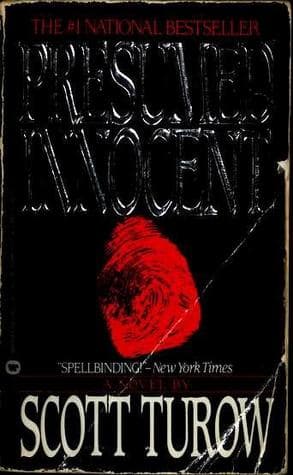
- Presumed Innocent
Scott Turow
4.1 (107k) average on GoodreadsThrillerPresumed Innocent is also a court-room drama with a murder mystery, but its focus is more on political corruption, personal betrayal, and the unraveling of a prosecutor's life. Primal Fear, in contrast, utilizes a more extreme psychological condition (DID) as the central enigma, making the question of guilt and identity far more ambiguous and central to the narrative than in Turow's more grounded mystery.
- Angels & Demons
Dan Brown
3.9 (2.7M) average on GoodreadsThrillerA Harvard symbologist races through Rome's ancient sites, deciphering cryptic clues to unmask the Illuminati and stop a vengeful plot to destroy the Vatican with a stolen antimatter weapon.





Enjoyed the summary?
A summary gives you the shape of the book. The book itself has the detail, the examples and the voice.
Find Primal Fear on AmazonAs an Amazon Associate, BookBrief earns from qualifying purchases. How we're funded