
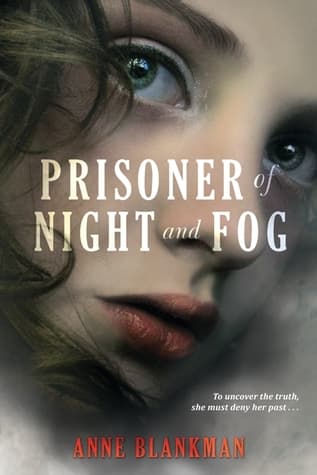
Synopsis
Covers the whole plot, including the ending.
- Difficulty
- Medium
- Pacing
- Moderate
- Mood
- Suspenseful, Romantic, Intense, Thought-provoking, Dark
- Read it if
- You enjoy historical fiction with a strong romantic subplot, set against the backdrop of a pivotal and dangerous historical period.
- Skip it if
- You prefer lighthearted reads or find historical fiction set during WWII-era Germany too intense or disturbing.
Prisoner of Night and Fog Plot Summary
Covers the whole plot, including the ending.
The Führer's Niece
In 1931 Munich, sixteen-year-old Gretchen Müller lives under the protective wing of her 'Uncle Dolf' (Adolf Hitler), whom she adores. Her father, a respected Nazi, supposedly died saving Hitler's life during the 1923 Beer Hall Putsch. Gretchen, along with her younger brother, Walter, and her mother, lives in an apartment provided by Hitler. She is a loyal member of the League of German Girls and believes in Nazi ideology, including its antisemitism. Her life centers on party events and the constant presence of Hitler's inner circle, particularly his chauffeur, Emil Maurice, and his physician, Dr. Otto Dietrich. Gretchen is completely devoted to Hitler, seeing him as a father figure and Germany's savior.
A Chance Encounter
While delivering a gift from Hitler to his half-niece, Geli Raubal, Gretchen meets Daniel Cohen, who she realizes is Jewish. Despite her prejudice, she is intrigued by his assertiveness. Daniel, a reporter, tells her a shocking claim: her father, the Nazi hero, was murdered by one of Hitler's own men. He suggests Hitler himself may have helped cover it up. Gretchen is offended and dismisses his words as Jewish propaganda, but his words create a doubt she struggles to ignore, especially given the secretive nature of her father's death.
Seeds of Doubt
Daniel's words echo in Gretchen's mind, especially after she sees a disturbing scene between Hitler and Geli Raubal. Hitler's possessive and volatile behavior towards Geli, ending in a violent outburst, unsettles Gretchen. She sees the fear in Geli's eyes and the control Hitler has over her life, which clashes with the image of the benevolent leader she has always held. This incident, combined with Daniel's accusation, causes Gretchen to look at her 'uncle' with a critical eye for the first time, starting to see flaws in the man she idolizes.
A Forbidden Alliance
Unable to shake Daniel's claims, Gretchen, against her beliefs, seeks him out. They meet in secret, and Daniel shows her evidence he has uncovered regarding her father's death, suggesting it was not the heroic sacrifice she was taught. He reveals that her father was a close friend of Gregor Strasser, a rival within the Nazi party, and that their deaths might be connected. Despite the danger, Gretchen agrees to work with him to find the truth, driven by a need to understand her father's final moments. This alliance forces her to confront her prejudices about Jews and to question the foundation of her life.
Uncovering Lies
Gretchen and Daniel investigate the mystery. They visit archives, interview people who knew her father, and try to piece together the timeline of events surrounding the Beer Hall Putsch. They discover inconsistencies in the official Nazi account and realize that many people are afraid to speak about the past. Their investigations lead them to suspect that Hitler's inner circle, particularly Emil Maurice and Dr. Dietrich, may be involved in the cover-up. As they get closer to the truth, they face increasing danger, including being followed and receiving threats, showing the risks of challenging the Nazi regime.
The Truth About Geli
The investigation turns darker when Gretchen learns of Geli Raubal's suicide. Daniel, through his contacts, reveals that Geli was not only Hitler's half-niece but also his lover, and that Hitler was possessive and controlling. Evidence suggests that Geli's death was not a simple suicide but possibly a result of Hitler's abuse or even a murder. This revelation shatters Gretchen's remaining illusions about Hitler. She realizes the extent of his cruelty and hypocrisy, understanding that he is not the benevolent leader she once believed him to be, but a dangerous, manipulative man.
A Brother's Betrayal
As Gretchen pulls away from the Nazi party, her younger brother, Walter, becomes more involved. He joins the Hitler Youth and repeats Nazi propaganda, including antisemitic rhetoric. He sees Gretchen's growing skepticism as a betrayal of their father's memory and of Hitler. This ideological divide creates a painful rift between the siblings, as Gretchen tries to protect Walter from the ideology she is now fighting against, while Walter sees her as an enemy. His loyalty to Hitler highlights the indoctrination affecting Germany's youth.
The Confession
Gretchen and Daniel corner Emil Maurice, Hitler's chauffeur and a key figure in the Beer Hall Putsch. Through threats and appeals to his conscience, they get him to confess. Maurice reveals that Gretchen's father was murdered, not by enemies, but by another Nazi during the chaos of the Putsch, possibly on Hitler's orders, because he knew too much about Hitler's intentions or because he was close to Strasser. Maurice admits to helping cover up the truth to protect Hitler. This confession confirms Daniel's claims and exposes Hitler's deceit and ruthlessness.
A Desperate Plan
Armed with Maurice's confession and other evidence, Gretchen and Daniel make a desperate plan. They intend to expose Hitler's role in her father's murder and the cover-up, hoping to discredit him before he gains absolute power. They realize this will put their lives in extreme danger and decide they must flee Munich immediately after revealing the truth. Their plan is dangerous, as they are against the most powerful man in Germany and his loyal followers. Their love for each other strengthens their resolve, but the stakes are very high.
The Escape Attempt
Gretchen and Daniel put their plan into action, attempting to share their evidence. However, Hitler's network of informants is too vast, and their efforts are quickly discovered. They become targets, hunted by the SA and Hitler's personal guard. A chase ensues through the streets of Munich, as they try to evade capture, knowing that if they are caught, they will be silenced permanently. They narrowly escape several traps, relying on their wits and their growing trust in each other to survive, showing the oppressive reach of the Nazi regime.
Confrontation and Sacrifice
Gretchen confronts Hitler directly. She denounces his lies and reveals her knowledge of her father's murder and Geli's death. In a climactic moment, someone close to Gretchen, possibly Maurice or another sympathetic character, makes a crucial sacrifice, either by creating a diversion or by revealing additional evidence, allowing Gretchen and Daniel a chance to escape. This act of defiance and sacrifice shows the moral courage needed to stand against tyranny and allows the truth a moment of exposure, even if it does not immediately stop Hitler's rise.
A New Beginning
Gretchen and Daniel, battered but alive, manage to escape Germany, likely crossing the border into Austria or Switzerland. They leave behind everything they once knew: Gretchen, her family and former life of privilege; Daniel, his home and journalistic career. They are now fugitives, but they are together, and they carry the truth with them. Their future is uncertain, but they have found love and a shared purpose in fighting for justice and freedom. The ending signifies their personal triumph over indoctrination and fear, choosing love and truth over loyalty to a destructive ideology.
Prisoner of Night and Fog Characters
Gretchen Müller
Protagonist
Adolf Hitler's beloved 'niece' who uncovers the dark truths of the Nazi regime.
Gretchen is a sixteen-year-old German girl, initially a fervent supporter of the Nazi Party and deeply loyal to her 'Uncle Dolf' (Adolf Hitler). She is intelligent, observant, and fiercely protective of her family's honor, especially that of her martyred father. Her upbringing has instilled in her strong antisemitic beliefs and a sense of pride in her German heritage. Despite her initial prejudices, she possesses an innate sense of justice and a deep-seated curiosity that drives her to question the official narratives presented by the Nazis.
Relationships: Adolf Hitler (Adoptive uncle figure; initially adored, later despised for his true nature and manipulation.); Daniel Cohen (Romantic interest; initially an enemy, becomes her partner in investigation and love.); Walter Müller (Younger brother; initially close, becomes ideologically estranged due to Nazi indoctrination.); Frau Müller (Mother; loving but somewhat naive, dependent on Hitler, resistant to Gretchen's truth-seeking.); Geli Raubal (Hitler's half-niece and lover; Gretchen's friend, her tragic fate further opens Gretchen's eyes.)
Daniel Cohen
Supporting/Love Interest
A fearless young Jewish reporter who challenges Gretchen's worldview and aids her quest for truth.
Daniel is a courageous and intelligent Jewish reporter in Munich, dedicated to exposing the truth about the rising Nazi Party. He is sharp-witted, persistent, and unafraid to challenge authority, even when it puts his life at risk. Despite the dangers he faces as a Jew in 1930s Germany, he maintains a strong moral compass and a belief in justice. He is initially cynical about Gretchen due to her Nazi affiliations but comes to see her sincerity and inner conflict, developing deep respect and affection for her.
Relationships: Gretchen Müller (Romantic interest; initially antagonistic, becomes her partner in investigation and love.)
Adolf Hitler
Antagonist
Gretchen's manipulative 'uncle' and the ruthless leader of the Nazi Party.
Adolf Hitler is portrayed as Gretchen's charismatic yet deeply sinister 'Uncle Dolf.' He is a master manipulator, capable of inspiring fervent loyalty while harboring a ruthless and violent nature. He uses his charm to control those around him, including Gretchen and her family, and is obsessed with maintaining his image and power. He is responsible for the cover-up of Gretchen's father's death and the tragic fate of Geli Raubal, revealing his true character as a dangerous tyrant. His ambition and cruelty drive much of the novel's conflict.
Relationships: Gretchen Müller (Adoptive uncle figure; initially admired, later revealed as her primary antagonist.); Geli Raubal (Half-niece and lover; his possessive and abusive behavior leads to her tragic death.); Emil Maurice (Chauffeur and loyal subordinate; complicit in Hitler's cover-ups.)
Walter Müller
Supporting
Gretchen's younger brother, who becomes increasingly indoctrinated by Nazi ideology.
Walter is Gretchen's impressionable younger brother. He is eager to please and easily swayed by the propaganda of the Hitler Youth and the Nazi Party. He genuinely believes in the ideals of the Third Reich and idolizes Hitler. As Gretchen begins to question the regime, Walter becomes a symbol of the pervasive indoctrination affecting German youth, often echoing antisemitic sentiments and criticizing Gretchen's changing views. His unwavering loyalty to Hitler creates a significant emotional conflict for Gretchen.
Relationships: Gretchen Müller (Sister; initially close, their bond is strained by ideological differences.); Adolf Hitler (Idolized leader; Walter is completely devoted to Hitler and the Nazi Party.)
Geli Raubal
Supporting/Mentioned
Hitler's half-niece and lover, whose tragic death exposes his dark side.
Geli Raubal is Hitler's beautiful half-niece, with whom he has a complex and ultimately tragic relationship. She is portrayed as vivacious but also trapped and controlled by Hitler's possessiveness. Gretchen considers her a friend, but Geli's isolation and fear are evident. Her suicide (or suspected murder) serves as a critical turning point for Gretchen, exposing the true, abusive nature of Hitler and shattering Gretchen's idealized image of him. Her story highlights the personal cost of being entangled with powerful, dangerous figures.
Relationships: Adolf Hitler (Half-niece and lover; their relationship is abusive and possessive, leading to her death.); Gretchen Müller (Friend; Gretchen is fond of Geli and her fate deeply affects her.)
Emil Maurice
Supporting
Hitler's loyal chauffeur, complicit in the cover-up of Gretchen's father's death.
Emil Maurice is Hitler's long-serving chauffeur and a member of his inner circle. He is fiercely loyal to Hitler and deeply involved in the early days of the Nazi Party. Maurice is initially presented as a steadfast, albeit intimidating, figure. He knows many of Hitler's secrets, including the truth about Gretchen's father's death. His fear of Hitler and his complicity in the cover-up make him a key figure in Gretchen's investigation. He is a conflicted character, torn between loyalty and a lingering conscience.
Relationships: Adolf Hitler (Loyal subordinate and confidante; complicit in his secrets.); Gretchen Müller (Initially an obstacle, later a reluctant source of information.)
Frau Müller
Supporting
Gretchen's mother, dependent on Hitler and resistant to questioning the Nazi narrative.
Frau Müller is Gretchen's mother, a widow who, along with her children, lives off Hitler's generosity. She is deeply grateful to Hitler, believing he saved their family after her husband's heroic death. She is somewhat naive and emotionally dependent on Hitler's patronage, making her resistant to any information that challenges the official Nazi narrative. She prioritizes the family's safety and comfort above truth, often clashing with Gretchen's growing desire to uncover the past. Her character represents the ordinary German citizen who, out of fear or benefit, accepts the regime's lies.
Relationships: Gretchen Müller (Daughter; their relationship is strained by Gretchen's rebellion against Nazi ideology.); Adolf Hitler (Benefactor; grateful and loyal to him for his perceived support.)
Dr. Otto Dietrich
Supporting
Hitler's personal physician, another member of the inner circle involved in cover-ups.
Dr. Otto Dietrich is Hitler's personal physician and another member of his close circle. He is portrayed as a calculating and pragmatic individual, deeply embedded in the Nazi Party's hierarchy. Like Maurice, he is privy to many of Hitler's secrets and is complicit in maintaining the official narratives, even if they are false. He represents the educated class who lent their support and expertise to the regime, helping to legitimize its actions and cover its tracks. He is a formidable obstacle in Gretchen and Daniel's investigation.
Relationships: Adolf Hitler (Subordinate and confidante; complicit in his secrets.); Gretchen Müller (An antagonist who obstructs her investigation.)
Prisoner of Night and Fog Themes
The Corrupting Power of Ideology and Propaganda
The novel shows how Nazi ideology and propaganda can warp perceptions and create blind loyalty. Gretchen, initially a fervent believer, shows how a generation can be indoctrinated from childhood. Her brother, Walter, further illustrates this, joining the Hitler Youth and repeating antisemitic rhetoric. The story highlights how people can be drawn into a destructive system through manipulation and constructed narratives, making it difficult to tell truth from falsehood. The constant presence of Nazi symbols, slogans, and Hitler's speeches shows the pervasive nature of this theme, which Gretchen must actively fight to overcome.
“How could I have been so blind? All my life, I'd believed his lies, his promises. He was a monster, hiding behind the mask of a benevolent leader.”
The Search for Truth Amidst Deception
At its core, the novel is a mystery driven by Gretchen's quest for the truth about her father's death. This search forces her to dismantle every belief she once held. The difference between the official Nazi story and Daniel's accusations drives the plot. Gretchen's journey involves sifting through lies, uncovering hidden documents, and confronting those who benefit from the deception. Her investigation into her father's murder and Geli Raubal's death reveals the network of lies and cover-ups orchestrated by Hitler and his inner circle. This theme emphasizes the courage required to seek truth when it is dangerous and unpopular.
“The truth was a heavy burden, a dangerous one, but it was mine to carry now. I couldn't unsee what I'd seen, couldn't unhear what I'd heard.”
Love and Loyalty vs. Prejudice and Duty
A central conflict for Gretchen is the clash between her prejudice and feelings for Daniel, and her loyalty to Hitler and duty to the Nazi Party. She has been taught to despise Jews, yet Daniel's intelligence, bravery, and kindness challenge these beliefs. Her love for Daniel grows as she realizes the hypocrisy and evil of the regime she once served. This theme explores how human connection can overcome societal barriers and hatred, forcing Gretchen to choose between the safety of her former life and the dangerous path of truth and love. Her choice reflects a personal and moral awakening.
“He was a Jew. I was a German, a Nazi. Everything I'd been taught said we should be enemies. But my heart... my heart didn't listen.”
The Personal Cost of Resistance
The novel shows the personal cost of resisting a totalitarian regime. Gretchen's decision to investigate her father's death and expose Hitler puts her life, and the lives of those she cares about, in danger. She faces threats, surveillance, and betrayal, and must ultimately abandon her family, home, and former identity to survive. Daniel, as a Jewish reporter, experiences this cost daily. The story highlights the sacrifices demanded of those who speak truth to power, emphasizing that resistance is not only physically dangerous but also emotionally isolating. Their escape signifies a victory, but one born of loss.
“We were fugitives now, hunted by the very people I'd once called family. But at least we were free. And we had the truth.”
Plot Devices & Literary Techniques
The MacGuffin: Gretchen's Father's Death
The central mystery that drives Gretchen's investigation and unravels her world.
The mysterious circumstances surrounding Gretchen's father's death during the Beer Hall Putsch serve as the primary MacGuffin. It's the object of desire (the truth) that propels Gretchen's actions and initiates the entire plot. While the father's death itself isn't the ultimate goal, uncovering the truth about it directly leads Gretchen to discover Hitler's true nature, the corruption of the Nazi Party, and ultimately, her own path to redemption. It provides a personal stake for Gretchen, making her quest more compelling than a purely ideological one.
Forbidden Romance
A relationship between characters from opposing sides, symbolizing the breaking of ideological barriers.
The burgeoning romance between Gretchen, a Nazi darling, and Daniel, a Jewish reporter, is a classic forbidden romance. This device heightens the stakes, as their connection is not only personally dangerous but also ideologically transgressive. It serves as a powerful symbol of love's ability to transcend hatred and prejudice. Their relationship forces Gretchen to confront her ingrained antisemitism and ultimately choose humanity and love over the hateful doctrines she was raised with. It provides an emotional core to the political thriller aspect of the story.
The Mentor Figure (Reluctant/Antagonistic)
Daniel Cohen, who guides Gretchen's investigation and challenges her beliefs.
Daniel Cohen functions as a reluctant mentor figure for Gretchen. Initially, he is an antagonist who challenges her worldview and forces her to question everything. As they begin to work together, he provides her with crucial information, journalistic skills, and a different perspective, effectively guiding her through the maze of lies. He introduces her to a world beyond Nazi propaganda and helps her develop critical thinking skills necessary to uncover the truth, despite their initial ideological differences and personal risks.
Dramatic Irony
The audience's awareness of Hitler's future atrocities, contrasting with Gretchen's initial ignorance.
Dramatic irony is heavily employed throughout the novel. The reader is acutely aware of the horrific future that Adolf Hitler and the Nazi Party will bring, a future that Gretchen, in 1931, cannot yet comprehend. Her initial adoration of 'Uncle Dolf' and her belief in the Nazi cause are steeped in irony, as the audience knows the monstrous reality hidden beneath his charismatic facade. This device creates a constant sense of dread and urgency, amplifying the stakes of Gretchen's investigation and her eventual disillusionment, making her journey of discovery all the more impactful.
Prisoner of Night and Fog Quotes
“There are two sides to every story, and sometimes three, and four, and five.”
“I had been taught all my life that the Jews were to blame for everything. It was a comfortable thought, a simple one, and it didn't require me to think too deeply.”
“Fear is a powerful weapon, and the one who wields it can control many.”
“Sometimes the bravest thing you can do is to question what you've always believed.”
“The truth, I was learning, was a messy thing, not clean and simple like the lies I’d been fed.”
“Love, I realized, was not about ownership or control, but about freedom and trust.”
“You cannot fight a monster by becoming one yourself.”
“Silence is not always consent. Sometimes it's fear.”
“The past is never truly dead. It lives on in the present, shaping our future.”
“It's easy to hate when you don't know the other side, when you don't see their humanity.”
“Even in the darkest times, there are always those who choose to shine a light.”
“A lie told often enough becomes the truth for those who want to believe it.”
“To know the truth and do nothing is to be complicit in the lie.”
“Sometimes, the greatest act of rebellion is simply to live, to love, and to remember.”
Quiz
10 questions on the plot and the characters. Each answer comes with a short explanation.
Question 1
Who is Gretchen Müller's 'uncle' Dolf in the book?
- Heinrich Himmler
- Adolf Hitler
- Joseph Goebbels
- Ernst Röhm
Show answer
B. Adolf Hitler The book explicitly states that Gretchen's 'uncle' Dolf is Adolf Hitler, the leader of the National Socialist Party.
Question 2
What is the profession of Daniel Cohen, the young Jewish man Gretchen meets?
- A doctor
- A musician
- A reporter
- A lawyer
Show answer
C. A reporter Daniel Cohen is introduced as a 'fearless and handsome young Jewish reporter' who approaches Gretchen with information.
Question 3
What shocking claim does Daniel make to Gretchen about her father?
- Her father faked his death.
- Her father was a spy for the Allies.
- Her father was murdered by an unknown comrade.
- Her father was secretly Jewish.
Show answer
C. Her father was murdered by an unknown comrade. Daniel tells Gretchen that her father, the adored Nazi martyr, was actually murdered by an unknown comrade, which contradicts the official narrative.
Question 4
In what city does the story primarily take place?
- Berlin
- Vienna
- Munich
- Hamburg
Show answer
C. Munich The synopsis explicitly states the setting as '1930s Munich', where danger and secrets are prevalent.
Question 5
What is the central internal conflict Gretchen faces throughout the novel?
- Her desire for wealth versus her desire for power.
- Her loyalty to her upbringing and 'uncle' versus the truth and her growing feelings for Daniel.
- Her ambition to join the Nazi Party versus her fear of political involvement.
- Her love for her mother versus her loyalty to her deceased father.
Show answer
B. Her loyalty to her upbringing and 'uncle' versus the truth and her growing feelings for Daniel. Gretchen must choose between the 'safety of her former life as a Nazi darling' and 'to dig up the truth' while grappling with her attraction to Daniel, a Jewish man.
Question 6
What event from Gretchen's past is directly linked to her 'uncle' Dolf's rise to power?
- Her father's emigration to America.
- Her father trading his life for Dolf's.
- Her mother's marriage to a high-ranking Nazi official.
- Her own public declaration of loyalty to the Party.
Show answer
B. Her father trading his life for Dolf's. The text states Gretchen 'has been shielded from that side of society ever since her father traded his life for Dolf's,' making her father a Nazi martyr and solidifying Dolf's influence over her.
Question 7
What is the primary genre of 'Prisoner of Night and Fog'?
- Science Fiction
- Fantasy
- Historical Fiction
- Contemporary Romance
Show answer
C. Historical Fiction The genre is explicitly stated as 'Historical Fiction, Mystery, Young Adult, Romance' in the provided description, with Historical Fiction being the primary overarching genre.
Question 8
What is the main ideological conflict presented through Gretchen's character arc?
- Capitalism versus Communism.
- Blind faith in a totalitarian regime versus seeking truth and independent thought.
- Monarchy versus Republic.
- Rural life versus urban life.
Show answer
B. Blind faith in a totalitarian regime versus seeking truth and independent thought. Gretchen is forced to question 'everything she's ever believed' due to Daniel's revelations and her own investigations, shifting from blind loyalty to seeking truth, a core theme against the backdrop of Nazi Germany.
Question 9
Why is Gretchen considered 'Dolf's favorite' or 'his pet'?
- She possesses a unique artistic talent he admires.
- She is a gifted public speaker for the Party.
- Her father died saving Dolf's life, creating a debt of loyalty and a special bond.
- She is his biological niece.
Show answer
C. Her father died saving Dolf's life, creating a debt of loyalty and a special bond. Gretchen's special status stems from her father having 'traded his life for Dolf's,' making her a symbol of sacrifice and loyalty to him.
Question 10
What is the potential consequence for Gretchen and Daniel if they uncover the truth about her father's death?
- They will be exiled from Germany.
- They could become wealthy and famous.
- It could get them killed.
- They will be forced to join the military.
Show answer
C. It could get them killed. The synopsis clearly states the high stakes: Gretchen must decide whether to 'dig up the truth—even if it could get her and Daniel killed?'
Prisoner of Night and Fog FAQ
What is the central conflict Gretchen Müller faces throughout the story?
Gretchen's central conflict is the struggle between her deeply ingrained loyalty to 'Uncle Dolf' (Adolf Hitler) and the Nazi party, and the burgeoning truth revealed by Daniel Cohen that her father was murdered by a Nazi comrade, not a hero. This forces her to question everything she's ever believed and choose between a comfortable lie and a dangerous truth.
Who is Daniel Cohen and what role does he play in Gretchen's awakening?
Daniel Cohen is a fearless young Jewish reporter who confronts Gretchen with the controversial claim that her father, a revered Nazi martyr, was actually murdered by someone within the party. His evidence and his very presence challenge Gretchen's antisemitic conditioning and spark her investigation, ultimately leading her away from Nazi ideology.
How does Gretchen's relationship with 'Uncle Dolf' evolve from the beginning to the end of the book?
Initially, Gretchen views 'Uncle Dolf' with unwavering admiration and affection, seeing him as a paternal figure who saved her family. As she uncovers the truth about her father's death and witnesses the regime's brutality firsthand, her perception shatters, transforming into horror and betrayal, ultimately leading her to actively defy him.
What major secret about her father's death does Gretchen uncover?
Gretchen discovers that her father, an SA officer, was not a martyr who died saving Hitler's life, but was instead murdered by Ernst Röhm, the head of the SA, under Hitler's orders. Her father was killed because he knew too much about Hitler's past and was becoming a political liability.
What is the historical setting and how does it influence the plot?
The story is set in 1930s Munich, Germany, during the rise of the Nazi Party. This volatile historical backdrop directly influences the plot by providing the oppressive political climate, the pervasive antisemitism, and the constant danger that Gretchen and Daniel face as they investigate the truth against the powerful Nazi regime.
What specific detail regarding Hitler's past is alluded to as the motive for Gretchen's father's murder?
The book hints that Gretchen's father knew about Hitler's 'degenerate' past, possibly involving his mother's death or other unsavory family secrets. This knowledge made him a threat, leading to his assassination to prevent these details from becoming public and damaging Hitler's carefully crafted image.
Beyond Daniel, are there any other characters who subtly challenge Gretchen's Nazi upbringing before her full awakening?
Yes, Gretchen's grandmother, Mutti, often expresses quiet disapproval of the Nazi regime and its rhetoric, though she fears openly defying it. Her subtle skepticism and concern for Gretchen's safety plant early seeds of doubt, providing a contrasting perspective to the party's propaganda.
How does the 'Night of the Long Knives' (Röhm Putsch) play a role in the climax of the story?
The 'Night of the Long Knives' is a crucial historical event woven into the climax. It provides the chaotic backdrop for Gretchen's escape and her final confrontation with the truth, as Röhm and other SA leaders are purged, which directly ties into her father's murder and the political machinations she uncovers.
What is the significance of the locket Gretchen's father left her?
The locket is a significant symbol and plot device. It contains a hidden message or clue that Gretchen must decipher, serving as a tangible link to her father's true past and guiding her investigation into his murder. Its contents ultimately confirm the conspiracy.
How does the concept of cognitive dissonance manifest in Gretchen's initial reactions to Daniel's claims?
Gretchen experiences profound cognitive dissonance, struggling to reconcile her deeply held beliefs about her heroic father and benevolent 'Uncle Dolf' with Daniel's shocking accusations. She initially dismisses him and feels anger, as accepting his truth would shatter her entire worldview and sense of identity.
Discuss Gretchen's psychological journey from unquestioning loyalty to critical independence.
Gretchen's journey is a profound psychological transformation. She moves from a state of blind obedience and emotional dependence on Hitler, reinforced by years of indoctrination, to developing critical thinking skills as she gathers evidence. This leads to a painful but necessary detachment from her former beliefs and the courage to forge her own moral compass.
How does fear, both personal and societal, influence the characters' actions and inactions?
Fear is a pervasive force. Personal fear for their lives motivates Gretchen and Daniel, while societal fear of the Nazi regime silences dissent, compels conformity from characters like Mutti, and allows atrocities to occur. The novel highlights how fear can paralyze individuals or, conversely, spur them to courageous action.
What role does propaganda play in shaping Gretchen's initial understanding of the world and her identity?
Propaganda is central to Gretchen's initial worldview. She is a product of Nazi indoctrination, having been raised to believe in the superiority of the Aryan race, the heroism of her father, and the divine leadership of 'Uncle Dolf.' This shapes her identity as a loyal German girl and fuels her initial prejudice against Jews.
Is Gretchen's eventual rejection of Nazism purely intellectual, or is there a strong emotional component?
Gretchen's rejection of Nazism is deeply emotional, driven by both personal betrayal and her growing empathy. While the intellectual discovery of truth is vital, her emotional attachment to her father's memory, her love for Daniel, and her horror at the regime's cruelty are powerful catalysts that solidify her moral shift.
How does the book explore the theme of 'nature vs. nurture' through Gretchen's character?
The book strongly emphasizes 'nurture.' Gretchen is born into a loving family but is raised within a toxic political ideology. Her initial prejudice and loyalty are learned behaviors. Her ability to overcome this indoctrination and embrace truth suggests that innate human empathy can challenge even the most powerful external influences.
What message does the author convey about the power of individual choice in the face of overwhelming societal pressure?
The author conveys a powerful message about individual agency. Despite the overwhelming societal pressure and personal danger, Gretchen chooses to seek and act upon the truth, demonstrating that even one person's courage can defy an oppressive system. It emphasizes that morality ultimately resides in personal decision, not forced conformity.
How does the romance between Gretchen and Daniel contribute to or complicate the overarching themes of the novel?
The romance between Gretchen and Daniel is central; it's a powerful catalyst for Gretchen's transformation. It complicates her loyalty to the Nazis and directly challenges her ingrained antisemitism, forcing her to confront her prejudices. Their forbidden love symbolizes the possibility of bridging divides and choosing humanity over hate.
Does the novel offer any hope for reconciliation or redemption within a society consumed by hatred, or is its message more cautionary?
The novel offers a glimmer of hope through Gretchen and Daniel's escape and their commitment to fighting for truth, suggesting that individuals can resist and find a better path. However, it is also deeply cautionary, highlighting the devastating consequences of unchecked power and the ease with which a society can succumb to hatred, making the characters' struggle feel acutely urgent.
What is the significance of the title, 'Prisoner of Night and Fog'?
The title is symbolic. 'Night and Fog' refers to the Nazi decree (Nacht und Nebel) for dissidents to disappear without a trace, but it also represents Gretchen's initial intellectual and moral imprisonment within the darkness and confusion of Nazi ideology. She is a prisoner of the lies and the oppressive atmosphere until she breaks free into the light of truth.
Similar books
- The Book Thief
Markus Zusak
4.4 (1.8M) average on GoodreadsHistorical FictionFeatures a young protagonist navigating life in Nazi Germany and explores themes of morality and resistance.
- Code Name Verity
Elizabeth Wein
4.0 (97k) average on GoodreadsHistorical FictionA historical YA novel with strong female characters, wartime espionage, and intense emotional stakes.
- To Kill a Mockingbird
Harper Lee
4.3 (4.5M) average on GoodreadsHistorical FictionIn the 1930s Jim Crow South, Harper Lee writes about racial injustice, moral growth, and the quiet courage of a lawyer father, Atticus Finch, as seen through his young daughter's eyes.
- The Great Gatsby
F. Scott Fitzgerald
3.9 (3.8M) average on GoodreadsHistorical FictionIn the opulent Roaring Twenties, a mysterious millionaire's lavish parties hide his desperate, tragic pursuit of a lost love, exposing the emptiness within the American Dream.
- Pride and Prejudice
Jane Austen
4.3 (3M) average on GoodreadsHistorical FictionIn a society focused on status and money, Elizabeth Bennet navigates love and pride, challenging Mr. Darcy and social expectations to find true affection.
- Angels & Demons
Dan Brown
3.9 (2.7M) average on GoodreadsThrillerA Harvard symbologist races through Rome's ancient sites, deciphering cryptic clues to unmask the Illuminati and stop a vengeful plot to destroy the Vatican with a stolen antimatter weapon.






Enjoyed the summary?
A summary gives you the shape of the book. The book itself has the detail, the examples and the voice.
Find Prisoner of Night and Fog on AmazonAs an Amazon Associate, BookBrief earns from qualifying purchases. How we're funded