
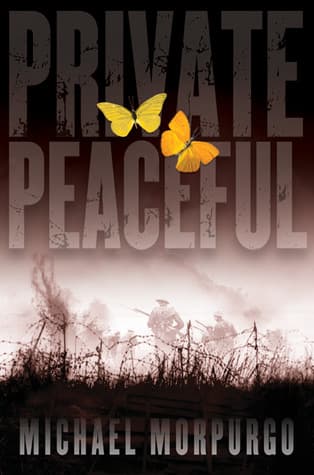
Synopsis
Covers the whole plot, including the ending.
- Difficulty
- Easy
- Pacing
- Moderate
- Mood
- Melancholy, Reflective, Somber, Poignant
- Read it if
- You enjoy poignant historical fiction about brotherhood and the harsh realities of war, told from a child's perspective.
- Skip it if
- You prefer lighthearted stories or are sensitive to themes of war, death, and injustice.
Private Peaceful Plot Summary
Covers the whole plot, including the ending.
A Life Remembered on the Eve of Battle
The story opens with Private Tommo Peaceful on night watch in the trenches of World War I, reflecting on his life as dawn approaches. He begins to recount his childhood in rural Devon, focusing on his family: his mother, his older brothers Charlie and Big Joe, and Molly, who eventually becomes the love of his life. Tommo’s narrative is structured by the ringing of a church clock, each hour marking a new chapter in his memories. He recalls life in the English countryside, free from the horrors of war. This introductory section establishes Tommo’s reflective state and the dual timeline structure of the novel, setting the stage for his past to unfold.
Childhood Idylle and Early Tragedy
Tommo recalls his early childhood, dominated by his close bond with his older brother, Charlie, and their intellectually disabled brother, Big Joe. They live in a small cottage, with their father working as a forester for the Colonel. Their father is killed by a falling tree, an accident Tommo blames himself for, having lingered behind to fish. This tragic event leads the family to poverty, forcing their mother to take on cleaning jobs at the Big House and the boys to contribute to the household income. The Colonel, despite benefiting from their labor, shows little compassion, frequently threatening them with eviction.
School, Friendship, and First Love
The Peaceful brothers attend the local village school, where Tommo struggles with academics but shows loyalty and spirit. Here they meet Molly, a bright girl who quickly becomes an inseparable part of their lives. Molly is initially befriended by Charlie, but Tommo also develops a deep affection for her. Their childhood is filled with adventures in the countryside, often involving Big Joe, who is connected to nature and their pet dog, Bertie. The trio's bond strengthens, laying the foundation for the relationships that will define their adult lives, all while under the watchful eye of the village and the Colonel.
Growing Up and Working for the Colonel
As Tommo and Charlie grow older, they leave school to work for the Colonel on his estate to help support their family. They experience the harsh realities of class distinction and the Colonel's authoritarian nature. The Colonel is a cruel man, frequently punishing the boys, particularly Charlie, for minor infractions. Tommo sees Charlie's bravery and defiance in the face of injustice, further solidifying his admiration for his older brother. These experiences give Tommo a sense of resentment towards the class system and the arbitrary power wielded by figures like the Colonel, shaping his views on authority and fairness.
Molly's Pregnancy and Family Outrage
The bond between Charlie, Tommo, and Molly deepens, leading to a romantic relationship between Charlie and Molly. This relationship results in Molly becoming pregnant. When her parents discover her condition, they are outraged and force her out of their home, publicly shaming her. The Peaceful family, defying village gossip and the Colonel's disapproval, takes Molly in. Tommo, despite his own unexpressed love for Molly, supports Charlie and accepts the situation, showing his loyalty to his brother and his family. This event further isolates the Peaceful family from the community but strengthens their internal bonds against external judgment.
Charlie's Defiance and Enlistment
The Colonel, angered by Molly's pregnancy and the Peacefuls' defiance, threatens to evict them from their cottage. Charlie, in a moment of defiance, confronts the Colonel, defending Molly and his family's honor. This act of insubordination further enrages the Colonel, who makes good on his threat. Faced with homelessness, Charlie, feeling a sense of responsibility and a desire to provide for Molly and their unborn child, decides to enlist in the army. Tommo, out of loyalty and a desire to stay with his brother, lies about his age and enlists alongside Charlie, despite being underage.
Training and Deployment to France
Tommo and Charlie undergo basic training, where Tommo struggles with the discipline but finds solace in Charlie's presence. They are soon deployed to the Western Front in France, a stark contrast to their Devon countryside. The realities of trench warfare immediately confront them, with constant shelling, mud, rats, and the threat of death. Tommo relies heavily on Charlie's strength, pragmatism, and protective nature to cope with the horrors. They meet other soldiers, like Sergeant Hanley, who represents rigid military authority, and reinforce the bond between the two brothers as they face unimaginable conditions together.
Life in the Trenches and Acts of Bravery
Life in the trenches is a cycle of fear, boredom, and sudden violence. Tommo witnesses the deaths of comrades and experiences the psychological toll of war. Charlie, however, is a beacon of strength and courage, often looking out for Tommo and even defying orders to protect him or other soldiers. He shows bravery, such as rescuing an injured comrade from No Man's Land under heavy fire, earning him respect from his peers but also putting him at odds with strict military protocol. Tommo sees Charlie as his hero, a figure of unwavering moral compass amidst the chaos.
Charlie's Court-Martial and Condemnation
A critical incident occurs during an attack when Sergeant Hanley orders Charlie to lead his men over the top into certain death. Charlie, seeing the futility and danger of the order, hesitates and refuses, prioritizing the lives of his men over blind obedience. This act of insubordination leads to his arrest and court-martial. Despite Tommo's pleas and attempts to explain Charlie's actions, military law is unyielding. Charlie is found guilty of cowardice and desertion, a charge that deeply wounds Tommo, knowing his brother's true bravery.
The Final Dawn and Charlie's Execution
As the final hour of Tommo's night watch approaches, the memories converge with the present. The church clock strikes six, signaling the dawn and the time for Charlie's execution. Tommo, heartbroken, watches as his beloved brother is led out to be shot by a firing squad. He stands by Charlie until the last moment, holding his hand, sharing a final farewell. Charlie faces his death with dignity and courage, still trying to protect Tommo by telling him to look away. The sound of the shots shatters Tommo's world, leaving him alone with his grief and the sense of injustice.
Aftermath and Lingering Grief
In the immediate aftermath, Tommo is numb with grief and shock. He reflects on the irony of Charlie, a man of bravery and loyalty, being executed for 'cowardice.' The experience leaves a mark on Tommo, shaping his understanding of justice, war, and sacrifice. He is left to carry on fighting, but the spirit that once connected him so deeply to his brother and his past is broken. The novel concludes with Tommo, a solitary figure, facing an uncertain future, forever haunted by the memory of Charlie Peaceful, the brother who was his protector and his hero.
Principal Figures
Thomas 'Tommo' Peaceful
Protagonist
Youngest Peaceful brother, deeply loyal and reflective, experiencing the horrors of war.
Tommo is the narrator and protagonist of the story, the youngest of the Peaceful brothers. He is initially portrayed as a timid and somewhat naive boy who deeply admires and depends on his older brother, Charlie. Throughout his childhood, Tommo struggles with feelings of guilt over his father's death and often feels overshadowed. He harbors a secret love for Molly. As he experiences the brutal realities of World War I, he matures, but his core loyalty to Charlie remains his defining trait. He is sensitive, observant, and deeply affected by the injustices he witnesses, particularly Charlie's court-martial and execution.
Relationships: Charlie Peaceful (Older brother and protector, Tommo's hero and closest confidant); Big Joe Peaceful (Intellectually disabled older brother, whom Tommo cares for); Molly (Childhood friend and unrequited love; later Charlie's wife); Mother (Loving but struggling mother); The Colonel (Antagonistic employer, symbol of class inequality)
Charlie Peaceful
Supporting/Deuteragonist
Tommo's brave and protective older brother, a symbol of defiance and integrity.
Charlie is Tommo's older brother and a central figure in Tommo's life and narrative. He is strong, brave, and possesses a strong sense of justice and loyalty. Charlie consistently stands up for his family, especially Big Joe and Molly, and protects Tommo from both bullies and the harsh realities of life. He is defiant against authority figures like the Colonel and later Sergeant Hanley, prioritizing human life and moral integrity over strict military orders. His relationship with Molly leads to a child, for whom he feels immense responsibility, driving his decision to enlist. His execution for 'cowardice' is the tragic climax of the story.
Relationships: Thomas 'Tommo' Peaceful (Younger brother, whom he deeply protects and cares for); Molly (Love interest and wife, mother of his child); Big Joe Peaceful (Intellectually disabled brother, whom he protects); Mother (His mother, whom he supports); The Colonel (Antagonist, a figure of class oppression); Sergeant Hanley (Antagonistic superior officer in the army)
Molly
Supporting
Childhood friend of the Peaceful brothers, later Charlie's wife and mother of his child.
Molly is a bright, spirited, and kind-hearted girl who becomes an integral part of the Peaceful brothers' lives from a young age. She shares an idyllic childhood with Tommo and Charlie, and later falls in love with Charlie, becoming pregnant with his child. Despite the social ostracization and hardship this brings, Molly remains resilient and devoted to Charlie and their child. Her presence in Tommo's memories represents innocence, love, and the life left behind in England. She symbolizes the hope and future that the war threatens to destroy.
Relationships: Charlie Peaceful (Love interest, husband, and father of her child); Thomas 'Tommo' Peaceful (Close childhood friend, object of Tommo's unrequited love); Mother Peaceful (Accepted into the Peaceful family)
Big Joe Peaceful
Supporting
Intellectually disabled older brother, deeply connected to nature and loved by his family.
Big Joe is the eldest of the Peaceful brothers and is intellectually disabled. He is gentle, innocent, and has a deep, almost mystical connection to nature, often singing 'Oranges and Lemons'. Despite his challenges, he is deeply loved and protected by his family, especially Charlie and Tommo. Big Joe represents the vulnerability and purity that the war threatens. His simple joy and connection to the natural world serve as a poignant contrast to the brutality and destruction of the trenches, reminding the brothers of the home they left behind.
Relationships: Charlie Peaceful (Protective younger brother); Thomas 'Tommo' Peaceful (Caring younger brother); Mother (Loving mother)
Mother Peaceful
Supporting
Resilient matriarch of the Peaceful family, struggling to keep her family together.
Mother Peaceful is a hardworking and resilient woman who faces immense hardship after the death of her husband. She takes on cleaning jobs at the Big House to support her children and fiercely protects her family, particularly Big Joe, from the judgment of others. She demonstrates immense strength and love, especially when she takes in Molly despite social disapproval. She represents the enduring spirit of family and the sacrifices made by those left behind during wartime, waiting and worrying for their loved ones.
Relationships: Thomas 'Tommo' Peaceful (Son); Charlie Peaceful (Son); Big Joe Peaceful (Son); Molly (Daughter-in-law figure, whom she accepts into the family)
The Colonel
Antagonist
Wealthy, authoritarian landowner who exploits and oppresses the Peaceful family.
The Colonel is the wealthy landowner for whom the Peaceful family works. He represents the rigid class system and the arbitrary power wielded by the privileged. He is depicted as harsh, unforgiving, and uncaring, constantly threatening the family with eviction and showing no compassion even after their father's death. His actions, particularly his anger over Molly's pregnancy and his threats, directly contribute to Charlie and Tommo's decision to enlist. He embodies the social injustices that the brothers faced even before the war.
Relationships: Peaceful family (Exploitative employer and landlord)
Sergeant Hanley
Antagonist
Cruel and rigid commanding officer in the trenches, representing military bureaucracy.
Sergeant Hanley is Charlie and Tommo's commanding officer in the trenches. He is depicted as a harsh, unfeeling, and by-the-book officer who prioritizes military discipline over human lives. He frequently abuses his power, often targeting Charlie for his independent spirit. Hanley represents the rigid, often inhumane, aspects of military authority that lead to Charlie's court-martial and execution. He is a direct catalyst for the tragic climax, embodying the injustice inherent in the military system.
Relationships: Charlie Peaceful (Superior officer, source of conflict and ultimate condemnation); Thomas 'Tommo' Peaceful (Superior officer)
Father Peaceful
Mentioned
Forester whose accidental death deeply impacts the family.
Father Peaceful is the patriarch of the family at the beginning of the story. He works as a forester for the Colonel and is a loving and kind father. His accidental death, caused by a falling tree, is a pivotal event that plunges the family into poverty and guilt, particularly for Tommo, who blames himself. Though he appears only in Tommo's early memories, his death sets in motion the family's struggles and indirectly influences the brothers' later decisions.
Relationships: Mother Peaceful (Wife); Thomas 'Tommo' Peaceful (Son); Charlie Peaceful (Son); Big Joe Peaceful (Son)
Themes & Insights
The Horrors and Futility of War
The novel portrays the realities of trench warfare, exposing its violence, psychological toll, and physical degradation. Through Tommo's eyes, readers witness the threat of death, unsanitary conditions, loss of comrades, and moral compromises demanded of soldiers. The narrative questions the glory often associated with war, instead showing its impact on individuals and families. Charlie's execution for 'cowardice' highlights the futility and injustice of a system that sacrifices brave men for rigid adherence to rules, making his death a strong anti-war statement.
“'But there are no heroes in war, Tommo. Only victims.'”
Brotherly Love and Loyalty
The bond between Tommo and Charlie is the emotional core of the novel. Charlie is Tommo's protector, mentor, and hero from childhood through the trenches. Tommo's decision to enlist, despite being underage, is driven by his desire to stay with Charlie. Their shared experiences, both idyllic and horrific, create a loyalty that transcends all else. This theme is shown by Tommo's presence at Charlie's execution, a love that endures even in the face of tragedy. Their relationship shows the strength found in familial bonds amidst chaos.
“'He was my brother, my protector, my hero, my best friend. And now they were going to kill him.'”
Innocence Lost and the Transition to Adulthood
The novel charts Tommo's rapid transition from a sheltered childhood in rural Devon to the realities of the Western Front. His memories of home, family, and first love contrast with the mud, blood, and death of the trenches. The war forces Tommo to confront the loss of innocence, not just his own, but that of his generation. The scenes of his youth show how his world, and his sense of self, has been shattered by the conflict, forcing him into a premature and harsh adulthood.
“'I was a boy when I came here. I'm a man now.'”
Social Injustice and Class Inequality
Even before the war, the Peaceful family faces social injustice and class inequality from the wealthy Colonel. Their poverty, the Colonel's arbitrary power, and the social stigma surrounding Molly's pregnancy show the realities of their pre-war life. These injustices are mirrored in the military system, where Charlie, a man of courage, is condemned by rigid rules and class-based authority (Sergeant Hanley). The novel critiques how power and privilege can dictate the fate of ordinary people, both in society and in the military, leading to tragic outcomes.
“'We were just the poor folk, the tenant farmers, the ones who had to do what we were told, or starve.'”
Memory and Reflection
The entire narrative is framed by Tommo's memories as he reflects on his life during his final night watch. The church clock striking the hours is a structural device, guiding his reflections from childhood to the present. This reflective structure allows the reader to understand the impact of his past on his present state of mind. Memory is both a comfort and a torment, providing solace through happy recollections but also intensifying the pain of impending loss. It shows how past experiences shape identity and how the trauma of war alters one's perspective.
“'I want tonight to be long, as long as my life . . . I want to remember everything.'”
Plot Devices & Literary Techniques
Dual Timeline/Flashback Narrative
Alternates between Tommo's present on the battlefield and his past memories.
The novel employs a dual timeline structure, constantly shifting between Tommo's present reality on night watch in the trenches of World War I and his extensive flashbacks to his idyllic childhood in rural Devon. This device allows Morpurgo to build suspense as the reader anticipates the approaching dawn and Charlie's fate, while simultaneously providing deep character development and context for the brothers' bond. The contrast between the two timelines powerfully emphasizes the loss of innocence and the devastating impact of war, making the eventual tragedy more poignant.
First-Person Retrospective Narration
Tommo recounts his entire life story from his personal perspective.
The story is told entirely from Tommo Peaceful's first-person perspective, looking back on his life. This narrative choice creates an intimate and subjective account, allowing readers to deeply connect with Tommo's emotions, fears, and unwavering love for his brother. His retrospective gaze, often tinged with nostalgia and impending dread, shapes the reader's understanding of events and characters, making the themes of loss, loyalty, and injustice particularly resonant. His voice carries the weight of memory and the burden of his experiences.
The Chiming Clock
A recurring auditory motif that marks the passage of time and segments Tommo's memories.
The chiming of a church clock, heard by Tommo in the present, serves as a crucial structural and symbolic device. Each hour's chime signals a new 'chapter' in Tommo's life story, guiding the narrative through his memories from childhood up to the eve of Charlie's execution. The clock's relentless progression creates a powerful sense of impending doom, heightening the tension as the narrative moves closer to the inevitable tragic climax. It also symbolizes the finite nature of time and the preciousness of the memories Tommo is trying to preserve.
Symbolism of 'Oranges and Lemons'
A children's rhyme sung by Big Joe, symbolizing innocence and home.
The children's rhyme 'Oranges and Lemons' is frequently sung by Big Joe throughout the novel. This song acts as a powerful symbol of innocence, childhood, and the idyllic home life that the Peaceful brothers leave behind. In the context of the war, the simple, playful tune becomes a poignant reminder of what has been lost and what they are fighting for. Big Joe's continued singing of it, even in memories, contrasts sharply with the grim realities of the trenches, highlighting the purity and vulnerability that the war threatens to extinguish.
The Big House and The Colonel
Symbols of class division and social injustice.
The Big House and its owner, the Colonel, serve as potent symbols of class inequality and social injustice in pre-war England. The Colonel's arbitrary power, his exploitation of the Peaceful family, and his role in their eviction represent the oppressive class system that dictates their lives. This social hierarchy foreshadows the rigid and often unjust military hierarchy that Charlie and Tommo encounter in the army. These elements highlight that the brothers faced a form of 'war' against an unfair system even before enlisting.
Private Peaceful Quotes
“I've been here since I was born. I've been here all my life.”
“I remember every minute of it, every second.”
“It was a beautiful day, a day for remembering.”
“There were just the three of us then, three brothers against the world.”
“War changes everything. It changes everyone.”
“He was always there for me, always. My big brother, Charlie.”
“We were all just boys, really. Just boys pretending to be men.”
“The shelling started again, like a giant hammering at the gates of hell.”
“You can't do that, Charlie. You can't just leave me.”
“I will never forget him. Never.”
“It was a crime, what they did to him. A crime.”
“He died for nothing. Absolutely nothing.”
“I'm still here. Still alive. And I remember.”
“Every second counts. Every single second.”
Quiz
10 questions on the plot and the characters. Each answer comes with a short explanation.
Question 1
What is the primary narrative structure of 'Private Peaceful'?
- It is told chronologically from birth to death.
- It alternates between present-day battlefield experiences and past childhood memories.
- It is a collection of letters written from the front lines.
- It is narrated by multiple characters' perspectives.
Show answer
B. It alternates between present-day battlefield experiences and past childhood memories. The story is structured around Thomas Peaceful's memories of his childhood, which he recalls during his final night on watch in the trenches of World War I.
Question 2
Who is 'Big Joe' in Private Peaceful's family?
- Their father, who died before the war.
- Their uncle, who lived with them.
- Their older brother, who has a developmental disability.
- A family friend who helped out on the farm.
Show answer
C. Their older brother, who has a developmental disability. Big Joe is Tommo's and Charlie's older brother, who is depicted as having a developmental disability and a deep love for nature and animals.
Question 3
What significant event from their childhood directly impacts the Peaceful brothers' family finances and living situation?
- Their mother losing her job.
- The death of their father in a tree-felling accident.
- A fire that destroyed their home.
- Big Joe getting lost and requiring extensive searching.
Show answer
B. The death of their father in a tree-felling accident. Their father's death early in the book, while felling a tree, forces the family to move out of their cottage and into a smaller home, leading their mother to work as a cleaner for the Colonel.
Question 4
Why does Thomas (Tommo) follow his brother Charlie to war, despite being underage?
- He was conscripted and had no choice.
- He wanted to escape a difficult home life.
- He felt a strong sense of patriotic duty.
- Out of loyalty and love for Charlie, he couldn't bear to be separated.
Show answer
D. Out of loyalty and love for Charlie, he couldn't bear to be separated. Tommo idolizes Charlie and cannot imagine life without him, so he lies about his age to enlist alongside his brother.
Question 5
What is the relationship between Tommo, Charlie, and Molly?
- Molly is Charlie's sister, and Tommo is her friend.
- Molly is a girl both brothers love, but she ultimately marries Charlie.
- Molly is Tommo's girlfriend, and Charlie is his best friend.
- Molly is a distant cousin who lives with them.
Show answer
B. Molly is a girl both brothers love, but she ultimately marries Charlie. Both Tommo and Charlie are in love with Molly, their childhood friend. Molly becomes pregnant with Charlie's child and they eventually marry, causing a brief period of sadness for Tommo.
Question 6
What recurring symbol or motif represents the innocence and beauty of childhood throughout the book?
- The village church bell.
- The Colonel's grand estate.
- The countryside, particularly the woods and river.
- The schoolhouse lessons.
Show answer
C. The countryside, particularly the woods and river. Tommo's memories are filled with idyllic descriptions of the Devon countryside, the woods, and the river, which contrast sharply with the grim reality of the trenches.
Question 7
Why is Charlie Peaceful court-martialed and ultimately executed?
- He attempted to desert his post.
- He refused to obey a direct order to charge, staying with a wounded Tommo.
- He was caught stealing rations from his fellow soldiers.
- He accidentally killed a superior officer.
Show answer
B. He refused to obey a direct order to charge, staying with a wounded Tommo. Charlie is executed for 'cowardice' after he refuses to leave a badly wounded Tommo during an attack, prioritizing his brother's life over a suicidal charge.
Question 8
What is the primary theme explored through Charlie's fate in the war?
- The importance of strict military discipline.
- The arbitrary and cruel nature of military justice during WWI.
- The necessity of sacrifice for one's country.
- The distinction between bravery and recklessness.
Show answer
B. The arbitrary and cruel nature of military justice during WWI. Charlie's execution for 'cowardice,' despite his act being one of profound loyalty and bravery towards his brother, highlights the injustice and harshness of court-martials for shell shock and 'desertion' during WWI.
Question 9
How does the Colonel's character evolve or reveal itself throughout the story?
- He remains consistently kind and supportive of the Peaceful family.
- He starts as a benevolent employer but becomes increasingly cruel.
- He is initially portrayed as a harsh, class-conscious figure, but later shows a moment of unexpected kindness.
- He is a minor character with no significant personal development.
Show answer
C. He is initially portrayed as a harsh, class-conscious figure, but later shows a moment of unexpected kindness. The Colonel is initially presented as a stern, class-conscious employer who punishes the boys for poaching. However, he shows a moment of compassion by giving Molly a wedding gift after she is ostracized, revealing a more complex character.
Question 10
What is the significance of the repeating phrase, 'I've been alive for . . . hours' that Tommo uses throughout the book?
- It's a way for him to keep track of his age.
- It emphasizes the slow passage of time in the trenches and his reflection on his life before a critical moment.
- It's a countdown to when his enlistment ends.
- It's a diary entry he writes to record events.
Show answer
B. It emphasizes the slow passage of time in the trenches and his reflection on his life before a critical moment. This phrase marks the chapters, each representing an hour of his final night on watch, making the reader acutely aware of the ticking clock as Tommo relives his past before facing an uncertain, likely fatal, future.
Private Peaceful FAQ
What is Private Peaceful about?
Private Peaceful tells the story of Thomas 'Tommo' Peaceful, a young British soldier on the front lines of World War I, who recounts his life and childhood memories over a single night while on sentry duty, awaiting an uncertain fate at dawn. His reflections center on his idyllic rural upbringing, his strong bond with his older brother Charlie and their friend Molly, and the circumstances that led them both to the trenches.
Why should I read Private Peaceful?
You should read Private Peaceful for its poignant portrayal of the human cost of war, seen through the eyes of a young, innocent soldier. It beautifully contrasts the horrors of the battlefield with the warmth of family love and a lost childhood, offering a powerful, accessible introduction to WWI themes for young adult readers, and a moving reflection on brotherhood, sacrifice, and injustice for all ages.
What is the background/setting of Private Peaceful?
The book is set primarily in two contrasting periods: rural Devon, England, in the early 20th century, depicting Tommo's idyllic childhood before the war, and the muddy, dangerous trenches of the Western Front during World War I. The story unfolds over one night in the trenches, with flashbacks to his life with his family, particularly his brothers Charlie and Big Joe, and Molly.
What are the most memorable quotes?
One memorable quote is, 'I want tonight to be long, as long as my life.' This line encapsulates Tommo's desperate desire to cling to his memories and delay the inevitable. Another is Charlie's defiant 'I won't let them take you!' when protecting Tommo, highlighting their unbreakable bond and Charlie's protective nature.
What writing style does the author use?
Michael Morpurgo uses a first-person narrative, told from Tommo Peaceful's perspective, which allows for deep emotional connection and intimacy. The language is clear and accessible, often lyrical when describing childhood memories, but stark and immediate during war scenes. The narrative structure alternates between present-day trench observations and chronological flashbacks, building suspense and emotional depth.
What minor details add significant meaning?
The repeated motif of the yellow hammer bird's song, associated with Tommo's childhood, serves as a powerful symbol of innocence and home, sharply contrasting with the sounds of war. The 'Big Bertha' shell casing kept by the family, initially a curiosity, later foreshadows the destructive power they will face. Also, the strict class system subtly shown through the Colonel's treatment of the Peaceful family highlights wider societal injustices.
What are some subtle foreshadowing moments?
The death of Tommo and Charlie's father in a tree-felling accident, caused by the Colonel's negligence, subtly foreshadows the arbitrary and unjust deaths they will witness and experience in the war. Additionally, Charlie's constant protectiveness of Tommo throughout their childhood, like taking the blame for Tommo's misdeeds, hints at the ultimate sacrifice he will make for his brother.
What unexpected character connections exist?
While not entirely unexpected given their close-knit community, the deep romantic connection between Charlie and Molly, which results in a child, adds a profound layer to the story. This bond becomes a central motivation for Charlie's actions and solidifies the family unit, even as Tommo secretly harbored feelings for Molly himself, creating a poignant love triangle.
What are unspoken character motivations?
Tommo's unspoken motivation for following Charlie to war, despite being underage, is a desperate desire to remain with his beloved brother and protector, driven by a fear of abandonment and an intense loyalty. His love for Molly also plays a role, as he wants to be part of the life Charlie is building, even if it means being a third wheel.
What psychological complexities do characters exhibit?
Charlie exhibits immense psychological complexity, torn between his duty as a soldier and his unwavering loyalty to his brother and his family back home. His act of defiance in refusing to leave a wounded Tommo, leading to his court-martial, showcases a profound moral conflict between military obedience and personal ethics, ultimately prioritizing love over rules.
What are the major emotional turning points?
A major emotional turning point is the death of Tommo and Charlie's father, which profoundly impacts their family dynamics and introduces an early sense of loss and injustice. Another is the moment Charlie is court-martialed for insubordination after refusing to abandon a wounded Tommo, leading to his execution, which is the emotional climax of the story and the reason for Tommo's all-night vigil.
How do relationship dynamics evolve?
The relationship between Tommo and Charlie evolves from a typical older-younger sibling dynamic, with Charlie as the protector, to an unbreakable bond forged by shared trauma and love. Their relationship with Molly transforms from childhood friendship into a complex love triangle, where Molly chooses Charlie, but maintains a deep affection for Tommo, highlighting the enduring nature of their connection.
Which parts remain ambiguous or open-ended?
While the ending is clear about Charlie's fate, the ultimate fate of Tommo remains ambiguous at the very end. The book concludes with him having spent his night of reflection, with dawn breaking and the whistle about to blow for the next attack. Morpurgo leaves the reader to infer whether Tommo survives the ensuing battle, emphasizing the precariousness of life on the front.
What are controversial scenes or decisions?
The most controversial decision in the book is the military's court-martial and execution of Charlie for insubordination. This scene highlights the harsh, often inhumane discipline of WWI armies and sparks debate about justice, compassion, and the 'cowardice' label applied to soldiers suffering from shell shock or making human choices in impossible situations.
Private Peaceful ending explained: how it ends & what it means
The book ends with Tommo having spent his long night recounting his life. As dawn breaks, he hears the whistle for the 'big push,' signaling an impending attack. He watches his brother Charlie being led away to be executed by firing squad for insubordination, having refused to leave a wounded Tommo. The ending signifies the ultimate sacrifice of Charlie, the profound injustice of military law, and leaves Tommo's own survival ambiguous, underscoring the arbitrary nature of life and death in the trenches. It is a powerful anti-war statement, mourning lost innocence and the senseless destruction of young lives.
About the author

Michael Morpurgo is a British author known for his children's fiction, often exploring themes of war and nature. His notable works include "War Horse," "Private Peaceful," "The Butterfly Lion," "An Elephant in the Garden," "The Amazing Story of Adolphus Tips," and "Born to Run." Morpurgo's storytelling often combines historical events with imaginative narratives.
Similar books
- War Horse
Michael Morpurgo
4.1 (42k) average on GoodreadsChildren'sAnother WWI story by the same author, focusing on the impact of war through a unique perspective.
- Harry Potter and the Sorcerer's Stone
J.K. Rowling
4.5 (7M) average on GoodreadsFantasyRescued from a miserable life under the stairs, an orphaned boy discovers he's a wizard destined for a magical school, where he uncovers a dangerous secret tied to the dark wizard who murdered his parents.
- The Hobbit, or There and Back Again
J.R.R. Tolkien
4.3 (2.9M) average on GoodreadsFantasyA comfort-loving hobbit named Bilbo Baggins is whisked away by a mischievous wizard and a band of dwarves on an unexpected journey to reclaim stolen treasure from a fearsome dragon, discovering courage and a magical ring along the way.
- Harry Potter and the Goblet of Fire
J.K. Rowling
4.6 (2.6M) average on GoodreadsFantasyA bewildered Harry Potter, underage and thrust into a deadly Triwizard Tournament, must brave dragons, mermaids, and a resurgent dark magic to survive a year that will forever alter the wizarding world.
- Harry Potter and the Order of the Phoenix
J.K. Rowling
4.5 (2.5M) average on GoodreadsFantasyIn a year of oppressive secrets and the threat of Voldemort, Harry Potter and Dumbledore's Army secretly train for war, shown through Jim Kay and Neil Packer's dark illustrations.
- The Lightning Thief
Rick Riordan
4.3 (2M) average on GoodreadsFantasyThrust into a world of mythological monsters and divine treachery, an ordinary boy discovers he's the son of Poseidon and must embark on a perilous quest across modern America to prevent an Olympian war.





Enjoyed the summary?
A summary gives you the shape of the book. The book itself has the detail, the examples and the voice.
Find Private Peaceful on AmazonAs an Amazon Associate, BookBrief earns from qualifying purchases. How we're funded