
Synopsis
Covers the whole plot, including the ending.
- Difficulty
- Medium
- Pacing
- Slow
- Mood
- Tragic, Defiant, Philosophical, Stark
- Read it if
- You are interested in classical Greek tragedy, stories of defiance against tyranny, or philosophical explorations of justice and suffering.
- Skip it if
- You prefer fast-paced plots, clear-cut resolutions, or stories with a large cast of characters and intricate subplots.
Prometheus Bound Plot Summary
Covers the whole plot, including the ending.
The Binding of Prometheus
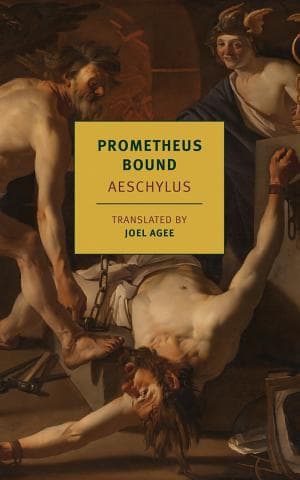
The play opens on a desolate cliff in Scythia, where Kratos (Might) and Bia (Force), personifications of Zeus's power, have brought the Titan Prometheus. Hephaestus, the smith god, is forced by Kratos to shackle Prometheus to the rock with unbreakable chains. Hephaestus pities Prometheus, recognizing the injustice of the punishment, but Kratos pushes him on, stating that Zeus's will is absolute. Prometheus remains silent during the brutal binding, enduring the pain inflicted for his defiance against Zeus and his kindness towards humanity. This scene shows the extreme power imbalance and the harshness of Zeus's new rule.
Prometheus's Lament and the Chorus's Arrival
Once Kratos, Bia, and Hephaestus leave, Prometheus speaks, lamenting his unjust suffering and calling upon the elements—the sky, winds, rivers, and sea—to witness his torment. He speaks of the immense pain and the endless duration of his punishment. Soon after, the Chorus of Oceanids, daughters of Oceanus, arrive in a winged chariot, concerned for Prometheus. They are his friends and express deep sympathy, marveling at Zeus's cruelty. They ask him to explain his suffering, offering a sympathetic ear and shared outrage against the new ruler of the gods.
The Titan's Account of His Benevolence
Prometheus begins to explain his history and the reasons for his punishment. He reveals that he sided with Zeus during the Titanomachy, the war against the elder Titans, and provided the strategic advice that led to Zeus's victory and rise to power. However, once Zeus became supreme ruler, he planned to destroy humankind and create a new race. Prometheus, out of compassion, intervened, stealing fire from the gods and giving it to mortals, along with various arts and sciences—architecture, mathematics, writing, medicine, and the ability to interpret signs. This act of defiance and philanthropy is the direct cause of his agonizing punishment.
Oceanus's Counsel
Prometheus's uncle, Oceanus, arrives on a winged griffin, expressing sorrow and offering what he believes is practical advice. He urges Prometheus to humble himself before Zeus, to stop his defiant words, and to seek an end to his suffering through submission. Oceanus offers to speak with Zeus on Prometheus's behalf, believing he can soften the tyrant's heart. Prometheus, however, scorns this advice, reminding Oceanus of the fate of other Titans who opposed Zeus, and firmly rejects any notion of submission or begging for mercy. He warns Oceanus against getting involved, fearing he too will incur Zeus's wrath.
Prometheus's Secret Prophecy
Despite his suffering, Prometheus holds a vital secret: knowledge of a future marriage of Zeus that will produce a son destined to overthrow him. He hints at this prophecy several times, suggesting that he alone holds the key to Zeus's ultimate downfall or continued reign. This secret is his leverage and his ultimate act of defiance, as he refuses to reveal it, even under extreme duress. The Chorus is intrigued and disturbed by this revelation, recognizing the immense power such knowledge holds over the seemingly invincible Zeus. Prometheus's refusal to speak is his final, most potent weapon.
The Arrival of Io
A new figure appears: Io, a mortal princess transformed into a heifer by Zeus to hide his affair, and then relentlessly pursued across the world by a gadfly sent by a jealous Hera. Io is driven mad by her suffering and the incessant stinging. She recognizes Prometheus and, in her anguish, begs him to reveal her future and the end of her torment. Her appearance shows the collateral damage of divine power struggles and Zeus's cruelty, further solidifying Prometheus's view of the Olympian king as a tyrannical oppressor of both gods and mortals.
Prometheus Foretells Io's Future
Prometheus, with his prophetic vision, describes Io's arduous future journey across vast lands and seas, detailing the many peoples and dangers she will encounter. He describes her eventual arrival in Egypt, where Zeus will restore her to human form and she will give birth to Epaphus. Importantly, Prometheus reveals that a descendant of Io, many generations later, will be the hero Heracles, who is destined to release him from his chains. This prophecy provides a glimmer of hope amidst the suffering and links Io's fate to Prometheus's eventual liberation, reinforcing the theme of enduring suffering leading to justice.
The Chorus's Fear of Zeus
After hearing Io's tragic story and Prometheus's prophecies, the Chorus of Oceanids expresses deep concern and fear regarding Zeus's absolute power. They lament the dangers of unequal unions, particularly between mortals and gods, and the terrible consequences of incurring divine wrath. Their fear contrasts with Prometheus's unwavering defiance, showing the immense courage needed to stand against the supreme ruler. They warn against arrogance and the folly of challenging the established order, even as they sympathize with Prometheus's suffering and the injustice of his punishment.
Hermes's Demand and Prometheus's Refusal
Hermes, Zeus's messenger, descends to the cliff, arrogant and imperious. He delivers an ultimatum from Zeus: Prometheus must immediately reveal the precise identity of the marriage and the mother who will bear the son destined to overthrow Zeus. Hermes threatens even greater torment if Prometheus refuses. Prometheus, however, meets Hermes's threats with scorn and defiance. He refuses to betray his secret, asserting his moral superiority over the tyrannical Zeus and declaring that he would rather endure further suffering than bow to his oppressor. He remains steadfast in his commitment to his cause.
The Cataclysmic Ending
Enraged by Prometheus's continued defiance, Hermes warns him of Zeus's impending wrath. The sky darkens, thunder rolls, and lightning flashes. Despite the terrifying display of divine power, Prometheus remains unyielding, urging the Chorus to flee to safety. The Oceanids, however, choose to stay by their friend, refusing to abandon him in his final moments of torment. Zeus unleashes a colossal storm, a cosmic upheaval that shakes the earth and sky. Prometheus, still chained, is swallowed by the chasm that opens beneath him, sent hurtling into the depths of Tartarus, enduring even greater suffering.
Principal Figures
Prometheus
Protagonist
The defiant Titan who stole fire for humanity and suffers eternal punishment.
Prometheus is a Titan, a god of foresight, and the central figure of the play. He is a benefactor of humankind, having given them fire and the civilizing arts, thereby defying Zeus's will. He is portrayed as intelligent, resolute, and unyielding in his principles, enduring immense physical suffering without breaking his spirit or revealing his vital secret. His defiance stems from a deep sense of justice and compassion for mortals, contrasting sharply with Zeus's tyranny. He is a symbol of rebellious intellect and enduring suffering for a noble cause.
Relationships: Zeus (Antagonistic; Prometheus defied him and holds a secret that threatens his reign.); Oceanids (Sympathetic friends and chorus, offering emotional support and moral commentary.); Hephaestus (Reluctant enforcer, feels pity for Prometheus.); Io (Fellow victim of Zeus's tyranny, to whom Prometheus offers prophecy and hope.); Oceanus (Uncle and well-meaning but pragmatic advisor, urges submission.)
Zeus
Antagonist (offstage)
The tyrannical king of the Olympian gods, who punishes Prometheus.
Zeus is the supreme ruler of the cosmos, having overthrown the Titans with Prometheus's help. He is portrayed as a ruthless, absolute, and paranoid tyrant, obsessed with maintaining his power and crushing any dissent. He does not appear onstage but his presence is felt through his enforcers (Kratos, Bia, Hermes) and through the suffering he inflicts upon Prometheus and Io. His character embodies unchecked power and divine injustice, creating a stark moral contrast with Prometheus's benevolence. His fear of losing power drives his cruelty.
Relationships: Prometheus (Oppressor, punishes Prometheus for defiance and benevolence towards humanity.); Kratos & Bia (Loyal enforcers of his will.); Hermes (Messenger and executor of his commands.); Io (Her torment is a result of his affair and Hera's jealousy, a testament to his casual cruelty.)
Kratos (Might)
Supporting
A personification of Zeus's brutal power, overseeing Prometheus's binding.
Kratos, whose name means 'Might' or 'Power', is a personification of Zeus's absolute and unyielding authority. He is depicted as cruel, unfeeling, and completely dedicated to executing Zeus's commands without question or pity. He relishes Prometheus's suffering and constantly berates Hephaestus for his reluctance, embodying the oppressive and dehumanizing aspects of tyranny. He serves as a direct representation of the force by which Zeus maintains his rule, highlighting the lack of compassion in the new Olympian order.
Relationships: Zeus (Servant and enforcer of his will.); Prometheus (Tormentor and jailer.); Hephaestus (Forces him to perform the binding, mocking his pity.)
Bia (Force)
Supporting
A silent personification of Zeus's brute force.
Bia, meaning 'Force', is the silent companion to Kratos. She represents the physical, unthinking power behind Zeus's reign. She doesn't speak, but her presence underscores the sheer, overwhelming force used to subjugate Prometheus. Her silence makes her an even more chilling representation of the raw, unquestioning power that supports tyranny, a stark contrast to Prometheus's eloquent defiance and intellectual resistance.
Relationships: Zeus (Servant and enforcer of his will.); Kratos (Companion in enforcing Zeus's will.)
Hephaestus
Supporting
The smith god, reluctantly forced to shackle Prometheus.
Hephaestus is the god of smithing and fire, and is compelled by Kratos to forge and apply Prometheus's chains. He expresses profound pity and sorrow for Prometheus's fate, acknowledging the injustice of the punishment and the cruelty of Zeus. His reluctance and compassion highlight his own moral integrity and serve to humanize the divine realm, contrasting with the cold brutality of Kratos and Bia. Hephaestus's internal conflict between duty and empathy makes him a sympathetic figure.
Relationships: Zeus (Servant, forced to execute his commands.); Prometheus (Feels pity and sorrow for his suffering.); Kratos (Coerced and mocked by Kratos.)
Chorus of Oceanids
Supporting
Daughters of Oceanus, they offer solace and commentary to Prometheus.
The Oceanids are a chorus of sea nymphs, daughters of Oceanus, who are friends and sympathizers of Prometheus. They arrive to offer him comfort and express their sorrow and outrage at his unjust punishment. They serve as a moral barometer for the audience, reflecting human emotions of pity, fear, and concern. While they sympathize deeply with Prometheus, they also express fear of Zeus's power and caution against outright defiance, embodying a more pragmatic, less rebellious stance than Prometheus. They provide lyrical interludes and commentary on the unfolding tragedy.
Relationships: Prometheus (Sympathetic friends, offer comfort and moral support.); Oceanus (Their father.); Zeus (Fear his power and wrath.)
Oceanus
Supporting
An elder Titan, uncle to Prometheus, who advises submission to Zeus.
Oceanus is an elder Titan, a god of the ocean, and Prometheus's uncle. He visits Prometheus, offering well-intentioned but ultimately pragmatic advice: to humble himself before Zeus and seek an end to his suffering through submission. He believes he can intercede with Zeus and mitigate the punishment. Oceanus represents a perspective of cautious diplomacy and self-preservation, contrasting with Prometheus's radical defiance. His advice, though seemingly wise, highlights the moral compromise that Prometheus refuses to make, underscoring the Titan's unwavering integrity.
Relationships: Prometheus (Uncle, offers advice to submit to Zeus.); Zeus (Seeks to appease him to help Prometheus.); Oceanids (Their father.)
Io
Supporting
A mortal princess tormented by Zeus and Hera, whose fate intertwines with Prometheus's.
Io is a mortal princess, a victim of Zeus's lust and Hera's jealousy. Transformed into a heifer by Zeus to conceal his affair, she is then driven relentlessly across the world by a gadfly sent by Hera. Her appearance highlights the suffering inflicted upon mortals by the arbitrary and cruel whims of the gods, mirroring Prometheus's own torment. She is a symbol of innocent suffering and the collateral damage of divine power struggles. Prometheus's prophecy of her future and the eventual birth of Heracles links her destiny directly to his own eventual liberation.
Relationships: Zeus (Her seducer and transformer, the cause of her initial plight.); Hera (Her tormentor, who sends the gadfly.); Prometheus (Reveals her future and prophesies her descendant will free him.)
Hermes
Supporting
Zeus's arrogant messenger, who demands Prometheus's secret.
Hermes is the messenger god, sent by Zeus to demand that Prometheus reveal his secret concerning Zeus's potential downfall. He is portrayed as arrogant, insolent, and completely subservient to Zeus's will, mirroring the harshness of Kratos but with a more cunning and verbal approach. He threatens Prometheus with even greater torments if he refuses to comply. Hermes embodies the coercive power of Zeus's reign, lacking any empathy or understanding of Prometheus's moral stance, serving as the final, direct challenge to the Titan's unwavering defiance.
Relationships: Zeus (Loyal messenger and enforcer.); Prometheus (Demands his secret, threatens him with further torment.)
Themes & Insights
Justice vs. Tyranny
The central conflict of the play is the clash between Zeus's tyrannical rule and Prometheus's fight for justice and compassion. Zeus's justice is arbitrary and cruel, driven by paranoia and the desire for absolute power, as seen in the brutal binding of Prometheus and the relentless torment of Io. Prometheus, conversely, embodies a higher form of justice, one rooted in kindness towards humanity and a willingness to suffer for a noble cause. His defiance questions the legitimacy of Zeus's power, suggesting that true authority should be based on something more than brute force. The play asks what constitutes legitimate rule and whether might truly makes right, as shown by Kratos's unwavering loyalty to Zeus's power.
“For know this well: I would not swap my suffering for your servitude. Better to be bound to this rock than be a loyal messenger to Father Zeus!”
Suffering and Endurance
Prometheus's physical and psychological suffering is a core theme. He endures unimaginable pain, yet he maintains an unbroken spirit. His suffering is not meaningless; it is a consequence of his noble actions and a sign of his unwavering commitment to humanity. The play explores how suffering can refine and strengthen character, and how it can be a source of resistance against oppression. Io's suffering, though different in origin, mirrors Prometheus's, showing the universal nature of pain under tyrannical rule, yet both characters find a way to endure and hope for future release.
“Let him hurl his blazing fire, let him stir the world with white-winged snow and thunder-claps and earth-shaking depths! None of this will bend me.”
Knowledge and Foresight
Prometheus, whose name means 'fore-thinker', has the gift of prophecy and knowledge, which is both a source of his power and his suffering. His foresight allowed him to aid Zeus initially, but also to anticipate Zeus's cruelty towards humanity and thus intervene. Importantly, his knowledge of Zeus's future downfall is his ultimate weapon and his leverage. The play emphasizes the power of knowledge, particularly secret knowledge, in challenging established power. Prometheus's refusal to reveal his secret, despite immense pressure, shows that knowledge can be a form of freedom and resistance, a dangerous truth that tyrants try to suppress.
“I know all, and I know it well, and I know that I must bear what is fated.”
Humanity's Progress and Divine Intervention
The play highlights Prometheus's transformative role in the development of humankind. By giving mortals fire and the arts of civilization (writing, mathematics, medicine, architecture), he raised them from ignorance and helplessness. This theme suggests that human progress is not solely self-generated but can be shaped by divine intervention, for better or worse. Prometheus's actions show a kind, nurturing form of divine interaction, contrasting sharply with Zeus's destructive and indifferent approach to mortals. It raises questions about the responsibility of gods towards their creations and the potential for divine compassion.
“In short, all human arts are from Prometheus.”
Rebellion vs. Submission
The core dramatic tension comes from the choice between rebellion and submission when facing overwhelming power. Prometheus embodies unwavering rebellion, choosing eternal suffering over giving in to Zeus's tyranny. His defiance is not rash but deeply principled. Oceanus, on the other hand, advises submission and appeasement, representing a pragmatic approach to survival. The Chorus, while sympathetic, also expresses fear and caution against angering Zeus. The play explores the moral implications of these choices, suggesting that true freedom and dignity can sometimes only be maintained through steadfast resistance, even against impossible odds, and that submission can lead to a loss of self.
“Better to be a slave to this rock than to be a loyal messenger to Father Zeus!”
Plot Devices & Literary Techniques
The Unbreakable Chains
Symbol of Zeus's absolute power and Prometheus's inescapable torment.
The unbreakable chains, forged by Hephaestus under Kratos's command, are a potent symbol of Zeus's absolute and inescapable power. They physically bind Prometheus, representing the tyranny that seeks to crush all defiance. Yet, paradoxically, while they restrict his body, they highlight the unyielding nature of his spirit. The chains are a constant visual reminder of his suffering and the seemingly insurmountable odds he faces, reinforcing the theme of endurance against overwhelming force. Their very 'unbreakableness' underscores the finality and severity of Zeus's punishment.
Prophecy and Foresight
Prometheus's gift of knowing the future, which is both his curse and his ultimate weapon.
Prometheus's prophetic abilities are a crucial plot device. His foresight allowed him to aid Zeus in the Titanomachy, but also to anticipate Zeus's plan to destroy humanity, leading to his benevolent intervention. Most importantly, his knowledge of a future marriage that will lead to Zeus's overthrow is his leverage and his ultimate act of defiance. This device creates dramatic tension, as Zeus desperately seeks this information, and it offers a glimmer of hope for Prometheus's eventual release (through Heracles, a descendant of Io). It establishes a cosmic order beyond Zeus's immediate control.
The Offstage Antagonist (Zeus)
Zeus's tyrannical presence is felt through his agents and the suffering he inflicts, without ever appearing.
Zeus never appears on stage, yet he is the primary antagonist whose power and cruelty drive the entire plot. His offstage presence magnifies his tyrannical nature, making him an unseen, omnipotent force. His will is enacted through his agents—Kratos, Bia, Hermes—and his actions are described by Prometheus and the Chorus. This device allows the audience to focus on Prometheus's suffering and defiance, while still understanding the immense power he is up against, making Zeus's tyranny feel more pervasive and absolute because it doesn't need to be physically present to exert its control.
The Chorus
The Oceanids provide commentary, emotional response, and moral perspective.
The Chorus of Oceanids serves multiple functions. They are sympathetic friends to Prometheus, offering solace and emotional support. They also provide lyrical interludes that comment on the action, articulate the shared fear of Zeus's power, and reflect on the themes of justice, suffering, and divine will. Their reactions and moral questions often mirror those of the audience, guiding interpretation and emphasizing the profound ethical dilemmas presented by Prometheus's plight. Their decision to stay with Prometheus at the end underscores loyalty and compassion in the face of terror.
The Gadfly
A physical manifestation of Hera's jealous torment of Io, symbolizing arbitrary divine cruelty.
The gadfly, sent by Hera to relentlessly pursue and sting Io, is a vivid physical manifestation of arbitrary divine cruelty and jealousy. It symbolizes the continuous, maddening torment inflicted upon an innocent victim of the gods' whims. For Io, it is the immediate cause of her endless wanderings and madness. As a plot device, it underscores the collateral damage of divine power struggles and highlights the suffering that mortals endure at the hands of indifferent or malicious deities, drawing a parallel to Prometheus's own unjust torment by Zeus.
Prometheus Bound Quotes
“I am yoked in a compelling fate, and I know I am not to struggle against the divine will.”
“It is sweet to suffer, having done good to mortals.”
“For every tyrant who is afraid, there is an oppressed people who are not afraid.”
“I gave them fire, and with it, knowledge.”
“The mind of Zeus is hard to bend, and every one who comes near him is bruised.”
“No pain, no gain.”
“For a god to suffer, that is a new thing, and it does not please me.”
“Know this, that I would not exchange my evil fortune for your servile state.”
“All time, as it rolls on, teaches much.”
“Only the ignorant boast of their own wisdom.”
“The future, though it may be distant, is certain to come.”
“It is a bitter thing to suffer, but it is worse to suffer in silence.”
“Zeus, though he be mighty, shall one day fall from his throne.”
“He who is wise will not contend with destiny.”
“I taught them the courses of the stars, and the risings and settings of the sun.”
Quiz
10 questions on the plot and the characters. Each answer comes with a short explanation.
Question 1
What is the primary reason for Prometheus's punishment by Zeus?
- He stole Zeus's throne.
- He gave the gift of fire to humankind.
- He refused to worship Zeus.
- He helped the Titans in the war against the Olympians.
Show answer
B. He gave the gift of fire to humankind. Prometheus is punished for defying Zeus's will by bestowing fire upon humanity, a gift Zeus had intended to withhold.
Question 2
Where is Prometheus shackled as part of his punishment?
- Mount Olympus
- The Underworld
- A rock in the Caucasus mountains
- The island of Crete
Show answer
C. A rock in the Caucasus mountains The play explicitly states that Prometheus is shackled to a rock in the Caucasus.
Question 3
Besides fire, what other knowledge did Prometheus impart to humanity?
- Navigation and astronomy
- Agriculture and metallurgy
- Writing, mathematics, medicine, and architecture
- Poetry and music
Show answer
C. Writing, mathematics, medicine, and architecture The text lists writing, mathematics, medicine, and architecture as other crucial gifts Prometheus gave to humankind.
Question 4
What was Zeus's initial intention regarding the human race before Prometheus intervened?
- To elevate them to godhood.
- To exterminate them.
- To enslave them.
- To grant them immortality.
Show answer
B. To exterminate them. The synopsis states that Prometheus thwarted Zeus’s decision to exterminate the human race.
Question 5
Who demands that Prometheus divulge his secret about how Zeus will be brought low?
- Oceanus
- Hephaestus
- Hermes
- Io
Show answer
C. Hermes Hermes is the messenger god sent by Zeus to demand Prometheus's secret, as mentioned in the text.
Question 6
What is the ultimate consequence Prometheus faces for his continued defiance at the end of the play?
- He is freed by the Fates.
- He is reconciled with Zeus.
- He is sent spinning into the abyss by a divine thunderbolt.
- He is forced to watch humanity suffer.
Show answer
C. He is sent spinning into the abyss by a divine thunderbolt. Because he refuses to divulge his secret, Prometheus is sent 'spinning into the abyss by a divine thunderbolt.'
Question 7
What overarching thematic conflict is highlighted by the question 'To whom does humanity look for guidance: to the supreme deity or to the rebel Titan?'
- The conflict between fate and free will.
- The clash between divine authority and human progress/rebellion.
- The struggle between good and evil.
- The importance of loyalty to one's family.
Show answer
B. The clash between divine authority and human progress/rebellion. This question directly addresses the core tension between Zeus's supreme power and Prometheus's rebellious advocacy for humanity.
Question 8
The play describes the relationship between god and man as 'radically, irreconcilably at odds.' What aspect of Prometheus's character best exemplifies this 'irreconcilable' nature?
- His occasional expressions of despair.
- His commitment to humanity despite unceasing pain and refusal to recant.
- His conversations with the Chorus.
- His knowledge of future events.
Show answer
B. His commitment to humanity despite unceasing pain and refusal to recant. Prometheus's unwavering commitment to humanity, even when facing extreme torture and the opportunity to appease Zeus, demonstrates the 'irreconcilable' conflict.
Question 9
The description notes 'Prometheus Bound' as the 'starkest and strangest of the classic Greek tragedies.' What unique characteristic contributes most to this description, particularly concerning the central conflict?
- The presence of a large chorus.
- The focus on a single, prolonged punishment rather than a developing tragic arc of a hero's downfall.
- The use of mythological figures.
- The dialogue being primarily in verse.
Show answer
B. The focus on a single, prolonged punishment rather than a developing tragic arc of a hero's downfall. Unlike many tragedies that track a hero's rise and fall, 'Prometheus Bound' focuses almost entirely on the static, unceasing suffering and defiance of Prometheus, making it 'stark' and 'strange' in its presentation of conflict.
Question 10
What is the significance of Prometheus's knowledge that 'Zeus will be brought low in the future'?
- It implies that Prometheus will eventually escape his chains through brute force.
- It underscores the theme of a cyclical power struggle among gods and hints at the limitations of even supreme power.
- It suggests that humanity will rise up and overthrow Zeus.
- It is a false prophecy designed to mislead Hermes.
Show answer
B. It underscores the theme of a cyclical power struggle among gods and hints at the limitations of even supreme power. This secret knowledge establishes a future vulnerability for Zeus, suggesting that even the supreme deity is not immune to fate or change, a key element of the power dynamics in the play.
Prometheus Bound FAQ
What is the central conflict that drives the plot of 'Prometheus Bound'?
The central conflict revolves around Prometheus's defiance of Zeus's tyrannical rule. Prometheus is punished for bestowing fire and knowledge upon humanity, thereby thwarting Zeus's plan to annihilate mankind and establish a new order of gods without human interference.
What specific gifts did Prometheus give to humankind, beyond just fire?
Beyond the gift of fire, Prometheus also endowed humanity with essential knowledge and skills. These included writing, mathematics, medicine, architecture, and the ability to interpret omens, transforming humanity from a primitive state to one capable of civilization and progress.
Who are the primary characters involved in the initial shackling of Prometheus, and what are their roles?
The initial shackling involves Kratos (Might) and Bia (Force), who are Zeus's enforcers, and Hephaestus, the smith god. Kratos and Bia are ruthless in their duty, while Hephaestus, though compelled, expresses reluctance and pity for Prometheus's suffering.
What is the significance of the Chorus of Oceanids in the play?
The Chorus of Oceanids serves as Prometheus's primary confidantes and moral support throughout his ordeal. They represent a sympathetic, albeit ultimately powerless, perspective on his suffering and challenge him to consider appeasing Zeus, though they remain loyal.
What is the 'secret' that Prometheus possesses regarding Zeus's future, and why is it so crucial?
Prometheus possesses knowledge of a future marriage involving Zeus that will result in a son destined to overthrow him. This secret is crucial because it offers Prometheus potential leverage against Zeus's tyranny and represents the ultimate threat to Zeus's reign.
How does Io's prophecy connect to Prometheus's own fate and the larger cosmic narrative?
Io, cursed and tormented by Zeus, is destined to give birth to a descendant who will eventually free Prometheus. This prophecy links their suffering and establishes a long-term cosmic plan where human and divine fates are intertwined, hinting at a future resolution.
What is the role of Oceanus in the play, and why does Prometheus reject his offer of help?
Oceanus, a fellow Titan and Prometheus's kinsman, offers to intercede with Zeus on Prometheus's behalf. Prometheus rejects this offer, fearing that Oceanus's intervention would be futile and only lead to Oceanus suffering a similar fate for defying Zeus.
How does the play subtly foreshadow the potential for Zeus's downfall, beyond Prometheus's direct hints?
The play foreshadows Zeus's downfall through the repeated emphasis on his new and unstable reign, his fear of being overthrown, and the cyclical nature of power shifts among the gods (Uranus to Cronus to Zeus). Io's prophecy further solidifies this inevitability.
What is the psychological impact of Prometheus's isolation and physical torment on his character?
Despite his immense physical torment and isolation, Prometheus's will remains unbroken, solidifying his identity as an unyielding rebel. His suffering intensifies his resolve and self-righteousness, rather than breaking him, making him a symbol of enduring defiance.
How does Zeus's character, though unseen, manifest psychologically through the actions of his emissaries?
Zeus's character is projected through the fear and absolute obedience of his emissaries like Kratos, Bia, and Hermes. Their harshness and unyielding demands reflect Zeus's own tyrannical, insecure, and vengeful psychological state, emphasizing his absolute power and lack of mercy.
Discuss the psychological motivations behind Prometheus's unwavering commitment to humanity, even at immense personal cost.
Prometheus's commitment stems from a deep empathy for humanity's plight and a sense of justice against Zeus's cruelty. He identifies with the oppressed and views his actions as a necessary rebellion against tyranny, finding purpose and meaning in his sacrifice for a greater good.
How does the play explore the psychological burden of prophecy and foreknowledge, particularly for Prometheus and Io?
Both Prometheus and Io bear the psychological burden of knowing their future suffering and the paths laid out by fate. For Prometheus, it's the knowledge of his eventual release; for Io, it's the endless wanderings. This foreknowledge adds a layer of tragic irony and emphasizes their helplessness against divine will, even with knowledge.
Is Prometheus a tragic hero or simply a stubborn rebel? Discuss the nuances of his character.
Prometheus embodies elements of both. He is a tragic figure due to his immense suffering for a noble cause, yet his unwavering defiance and refusal to compromise also mark him as a stubborn rebel. His heroism lies in his self-sacrifice and commitment to justice, while his hubris is in directly challenging absolute power.
The play famously ends with Prometheus being cast into the abyss. What does this ambiguous ending imply about the nature of justice and power in the cosmos?
The ambiguous ending, with Prometheus's continued suffering and Zeus's unchallenged power, implies that divine justice is harsh and absolute, not necessarily moral by human standards. It questions whether true justice exists under a tyrannical ruler and leaves the audience to ponder the ultimate fate of both the rebel and the oppressor.
To what extent does 'Prometheus Bound' criticize or endorse the concept of divine authority and the rule of Zeus?
The play heavily criticizes Zeus's tyrannical and arbitrary exercise of power, portraying him as a feared oppressor rather than a benevolent ruler. While it doesn't explicitly endorse rebellion, it certainly highlights the moral failings of absolute divine authority and the suffering it inflicts, prompting a critical view of such rule.
How does the play challenge traditional notions of 'good' and 'evil' by presenting a suffering god and a tyrannical supreme deity?
The play subverts traditional notions by presenting Prometheus, a god, as a suffering benefactor, embodying 'good' through his altruism, while Zeus, the supreme deity, is depicted as a cruel tyrant, representing 'evil' through his injustice. This inversion forces the audience to question conventional morality and divine righteousness.
What is the significance of Prometheus's refusal to divulge his secret, even under extreme duress from Hermes?
Prometheus's refusal is a powerful act of defiance, demonstrating his unwavering will and his commitment to his principles above all else. It signifies his ultimate rejection of Zeus's authority and his determination to hold onto the only leverage he possesses, even if it means prolonged suffering.
About the author
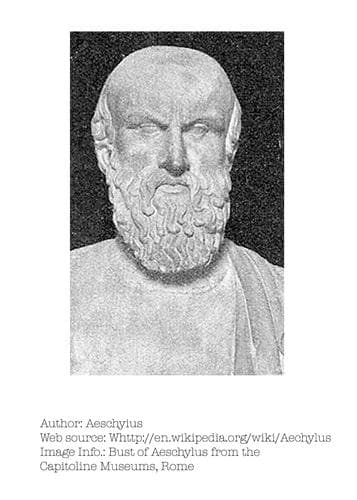
Aeschylus was an ancient Greek tragedian, and is often described as the father of tragedy. Academic knowledge of the genre begins with his work, and understanding of earlier Greek tragedy is largely based on inferences made from reading his surviving plays. According to Aristotle, he expanded the number of characters in the theatre and allowed conflict among them. Formerly, characters interacted only with the chorus.
Similar books
- Oedipus Rex
Sophocles
3.7 (171k) average on GoodreadsFictionAnother foundational Greek tragedy exploring fate, suffering, and divine will.
- Antigone
Sophocles
3.8 (17k) average on GoodreadsFictionFeatures a strong protagonist defying unjust authority and facing dire consequences.
- Paradise Lost
John Milton
4.1 (6k) average on GoodreadsMysteryEpic poem with a defiant, suffering protagonist challenging divine power.
- Medea
Euripides
4.1 (3k) average on GoodreadsPhilosophyWhile both plays feature powerful, suffering protagonists, "Prometheus Bound" elevates the suffering to a cosmic scale, making Prometheus a symbolic figure of humanity's struggle against overwhelming forces. "Medea" centers on personal revenge, the destructive force of passion, and the tragic consequences of betrayal within a human context.
- Nineteen Eighty-Four
George Orwell
4.2 (5.5M) average on GoodreadsFictionWinston Smith dreams of truth and rebellion in a world where Big Brother watches all, but he confronts the terrifying power of a regime that controls not just actions, but thoughts.
- The Frozen River
Ariel Lawhon
4.4 (600k) average on GoodreadsFictionIn 1789 Maine, a heroic midwife's diary helps her expose a murder and get justice in a town that wants to silence her.




Enjoyed the summary?
A summary gives you the shape of the book. The book itself has the detail, the examples and the voice.
Find Prometheus Bound on AmazonAs an Amazon Associate, BookBrief earns from qualifying purchases. How we're funded