
Synopsis
Covers the whole plot, including the ending.
- Difficulty
- Medium
- Pacing
- Fast
- Mood
- Gritty, Action-packed, Politically charged, Suspenseful
- Read it if
- You enjoy flintlock fantasy with intricate political intrigue, magic-users who manipulate gunpowder, and a fast-paced military-focused plot.
- Skip it if
- You prefer low-magic settings or slower, character-driven narratives without much action or political maneuvering.
Promise of Blood Plot Summary
Covers the whole plot, including the ending.
The Coup and its Aftermath
Field Marshal Tamas, leader of the Royal Adran Army, stages a coup against King Manhouch IX. He executes the king, his royal family, and much of the aristocracy. This act, meant to end corruption and feed the starving, immediately throws Adro into chaos. Tamas's son, Taniel Two-shot, a powerful Powder Mage, helps clear the royal palace. However, internal groups, including a newly strong Church, worker's unions, and a nervous public, challenge the coup's success. The neighboring Nine Nations prepare for war, seeing the regicide as aggression. Tamas struggles to establish a new government amid the bloodshed and political maneuvering.
Adamat's Investigation Begins
Adamat, a retired police inspector, is called back to service by Tamas. His first task is to investigate the disappearance of the royal treasury, money and artifacts that vanished during the coup. Adamat's investigation quickly uncovers a deeper conspiracy, suggesting not all is as it seems after the coup. He discovers a secret society called the 'Privileged,' powerful mages who seem to work against Tamas's new regime. Adamat's loyalty to Tamas is tested when a mysterious figure blackmails him, threatening his family. This forces him to keep certain findings secret while trying to uncover the truth of the missing funds and the opposition.
Taniel's Personal Struggles and the Privileged Threat
Taniel Two-shot, Tamas's son and a Powder Mage, struggles with the coup's aftermath and his difficult relationship with his father. He is haunted by past events, especially the death of his fiancée, which he blames on his father. Taniel's main mission is to hunt down and eliminate the remaining Privileged, powerful mages who were part of the King's guard and now threaten Tamas's new government. He faces several Privileged, including the ruthless Lord Clareview. During these fights, Taniel's marksmanship and powder mage abilities are tested. He begins to suspect a larger, more organized force behind the Privileged resistance than he first thought.
Nila's Awakening and the Gods
Nila, a young laundress in the Adran capital, finds her life changed by vivid and disturbing visions. These visions, often involving ancient gods and prophecies, lead her to a mysterious, powerful man named Ka-poel. Ka-poel appears to be a mute savage but has a connection to the supernatural. Ka-poel becomes Nila's protector as Nila's abilities develop, revealing her to be a 'bone-eye,' someone who can see and interact with the spirit world. Nila's journey introduces the idea of ancient gods reawakening and their possible involvement in Adro's political turmoil, suggesting the conflict is more than a mortal power struggle.
The Nine Nations Declare War
After King Manhouch's execution, the neighboring Nine Nations, led by Delv, declare war on Adro. They see Tamas's coup as an unforgivable act and a threat to monarchies. Tamas, already dealing with internal dissent and economic problems, must prepare Adro for a full invasion. The war adds pressure to his stretched resources and forces difficult strategic decisions, showing the precarious state of his new government. The conflict with the Nine Nations also distracts him, potentially allowing other threats to gain power within Adro.
Adamat Uncovers the God's Plans
As Adamat investigates, he uncovers evidence that the missing royal funds and the Privileged's actions are part of an older plan. He learns about the 'Kresimir,' an ancient god thought dead, and realizes the coup is being manipulated to awaken Kresimir. The blackmailer, a powerful Privileged working for Kresimir, forces Adamat to betray Tamas by giving crucial information. Adamat's discovery raises the stakes from a political struggle to a battle against a divine entity, threatening Adro and its people.
Taniel's Confrontation with Lord Clareview
Taniel hunts Lord Clareview, a dangerous Privileged. Their conflict ends in a brutal fight where Taniel's powder mage abilities are pushed to their limits. During the battle, Clareview reveals parts of the larger conspiracy, hinting at Kresimir's reawakening and manipulation by unseen forces. Taniel, despite his personal issues, understands the seriousness of the situation and the threat to Adro. This encounter strengthens his resolve to fight not just for his father's regime, but for his nation's survival against an ancient and terrifying enemy.
Tamas's Desperate Defense
Tamas, focused on the military threat, gathers Adro's remaining forces for a defense against the invading armies of the Nine Nations. He makes strategic decisions, sacrificing territories to consolidate defenses around the capital. Despite his military skill, Tamas is isolated, facing betrayal from within his ranks and struggling to control various factions. He remains largely unaware of the Kresimir conspiracy, believing the main threat is political and military, which leaves him open to the ancient god's plans and its followers.
The Ritual and Kresimir's Return
The conspiracy ends in a ritual to fully awaken Kresimir. The missing royal funds and artifacts are key to this ritual, acting as conduits for the god's power. Adamat, now understanding the plot, tries to warn Tamas, but the Privileged and his compromised position hinder him. The ritual, performed by powerful Privileged mages, succeeds, and Kresimir begins to manifest, showing immense power. This event marks a turning point, as the threat moves from a human conspiracy to a direct fight with a divine entity.
The Battle for Adro and Divine Intervention
The final battle sees Tamas's forces fighting the invading Nine Nations while trying to stop the awakened Kresimir. Taniel, using his powder mage abilities, fights with skill against the Privileged and Kresimir's growing influence. Nila, guided by Ka-poel, plays a role, using her bone-eye abilities to understand and counter Kresimir's power. Adamat, despite his earlier compromises, works to expose the truth and help Tamas. The battle is chaotic and devastating, with mortal and divine powers clashing, and Adro's fate hanging in the balance as Tamas and his allies try to defeat Kresimir and repel the invaders.
Sacrifice and a New World
In the climax, a sacrifice is made to defeat Kresimir, though its exact nature and success are somewhat unclear. The defeat of the ancient god comes at a cost, leaving Adro devastated and its leadership changed. Tamas, having faced both invasion and divine threats, must rebuild his nation. The war with the Nine Nations is not fully resolved, and the power vacuum left by Kresimir's defeat creates new opportunities and dangers. The ending sets the stage for future conflicts, with the world altered by the reawakening of gods and the power of powder mages.
Principal Figures
Field Marshal Tamas
Protagonist
The pragmatic and ruthless leader who overthrows the king of Adro.
Tamas is the brilliant, albeit brutal, Field Marshal of Adro. He is a pragmatic and decisive leader, driven by a desire to end the corruption and suffering he witnessed under the monarchy. His coup is born of conviction, but he grapples with the immense moral cost and the chaos it unleashes. He is a skilled military strategist and a powerful Powder Mage, capable of drawing strength from gunpowder. Despite his hardened exterior, he harbors a complex, strained relationship with his son, Taniel, and struggles with the weight of his decisions.
Relationships: Taniel Two-shot (Estranged son, fellow Powder Mage, complicated paternal relationship); Adamat (Trusted, loyal, and blackmailed former police inspector); King Manhouch IX (The deposed and executed king)
Taniel Two-shot
Protagonist
Tamas's estranged, brilliant, and volatile Powder Mage son.
Taniel is a prodigiously talented Powder Mage and an unparalleled marksman, capable of guiding bullets with his mind. He is Tamas's son, but their relationship is deeply fractured by past tragedies, particularly the death of his fiancé. Taniel is impulsive and often reckless, prone to drinking, but fiercely loyal to those he cares about. He is haunted by his past and struggles to find his place in the new Adro. His combat skills are essential to Tamas's regime, but his personal demons often get the better of him.
Relationships: Field Marshal Tamas (Estranged father, complicated paternal relationship); Ka-poel (Mysterious savage, protector, and friend); Nila (Acquaintance, later ally in the fight against Kresimir)
Adamat
Supporting
A brilliant, retired police inspector blackmailed into investigating the coup's secrets.
Adamat is a meticulous, intelligent, and highly observant retired police inspector with an eidetic memory. He is a family man, deeply devoted to his wife and daughter. His loyalty to Tamas is strong, but it is severely tested when he is blackmailed by a mysterious figure threatening his family. This forces him into a moral dilemma, trying to uncover the truth of the conspiracy while simultaneously concealing information. He relies on his sharp intellect and network of contacts rather than magical abilities, making him a grounded perspective in a world of mages.
Relationships: Field Marshal Tamas (Employer, trusted friend); Blackmailer/Privileged (Manipulator, antagonist); His Wife & Daughter (Beloved family, motivation for his blackmail)
Nila
Supporting
A young laundress who awakens to ancient powers and visions.
Nila is an ordinary young laundress who initially wants nothing more than to survive in the new, tumultuous Adro. She is thrust into the supernatural world when she begins experiencing vivid visions and dreams, marking her as a 'bone-eye' – someone capable of seeing and interacting with the spirit world and ancient gods. She is initially terrified and overwhelmed by her abilities but gradually learns to accept and control them with the help of Ka-poel. Nila represents the common people of Adro, caught in a conflict far beyond their understanding.
Relationships: Ka-poel (Protector, guide, and spiritual mentor); Taniel Two-shot (Acquaintance, later ally)
Ka-poel
Supporting
A mute, savage woman with a deep connection to ancient magic and Nila's protector.
Ka-poel is a mysterious, mute 'savage' from a distant land, possessing an ancient and powerful connection to magic and the spirit world. She appears to be fiercely loyal to Taniel, having saved his life in the past, and becomes Nila's enigmatic protector and guide as Nila's bone-eye abilities awaken. Ka-poel communicates through gestures and a unique form of sign language, often displaying an uncanny understanding of the divine and the true nature of the threats facing Adro. Her origins and full capabilities remain largely unknown, adding to her mystique.
Relationships: Taniel Two-shot (Close companion, one to whom she owes a life debt); Nila (Protégée, spiritual guide)
Lord Clareview
Antagonist
A powerful and ruthless Privileged mage serving the reawakening god.
Lord Clareview is a cunning and dangerous Privileged mage, one of the King's former advisors, who survives the coup and becomes a key figure in the resistance against Tamas. He is a master of elemental magic, capable of manipulating fire, earth, and other forces with devastating effect. Clareview is deeply entrenched in the conspiracy to reawaken Kresimir, acting as one of the god's primary agents. He is intelligent, manipulative, and utterly ruthless, posing a significant threat to Taniel and Tamas's regime.
Relationships: Taniel Two-shot (Arch-rival, target); Kresimir (indirectly) (Servant, worshipper)
Kresimir
Antagonist
An ancient, vengeful god seeking to reawaken and reclaim his dominion.
Kresimir is an ancient god, long thought dead or mythical, whose reawakening is the central antagonist force of the story. He is a being of immense, terrifying power, capable of manipulating reality and possessing mortals. His motivations are rooted in a desire to reclaim his former dominion over the world, seeing humanity as mere pawns. Kresimir operates through his followers, the Privileged, and manipulates events, including Tamas's coup, to facilitate his return. His presence introduces a cosmic scale to the conflict, elevating it beyond mere political struggle.
Relationships: The Privileged (Fanatical followers, instruments of his return); Nila (Target of his influence, an opposing divine force)
Marshal Vlora
Supporting
A loyal and capable general under Tamas's command.
Marshal Vlora is one of Tamas's most trusted and capable generals, a formidable military leader who stands by him throughout the coup and its aftermath. She is a strong, pragmatic woman, skilled in strategy and combat. Vlora commands respect from her soldiers and provides a steady hand in the chaos of the new regime. While she may question some of Tamas's methods, her loyalty to him and her commitment to Adro are unwavering. She is not a mage but relies on her military acumen and leadership.
Relationships: Field Marshal Tamas (Trusted subordinate, loyal general)
Themes & Insights
The Price of Revolution
The novel explores the cost and unforeseen results of political change. Tamas's coup, meant to free Adro from corruption, instead brings civil war, economic instability, and external conflict. The 'Age of Kings' ends, but the new 'Age of the People' begins in fire and chaos, showing that overthrowing an old order often creates more problems than it solves. The executions, power struggles, and constant threat of war show that revolution rarely leads to immediate peace.
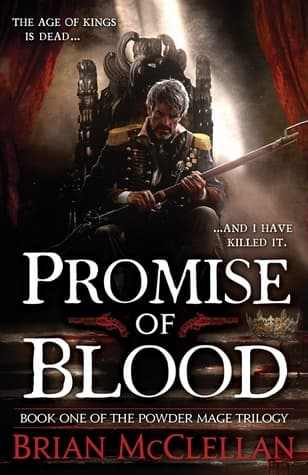
“The Age of Kings is dead... and I have killed it. It's a bloody business overthrowing a king.”
Power and Corruption
The book examines how power, whether political, magical, or divine, corrupts and is sought. The old monarchy was corrupt, but Tamas's new regime immediately faces challenges from the Church, worker's unions, and ambitious individuals, all seeking influence. The Privileged, with their magical power, use it for their own ends and to serve the awakening Kresimir. This theme suggests that power is a dangerous force, regardless of who wields it, and that its pursuit often leads to morally ambiguous choices and betrayal. Adamat's investigation constantly reveals deceit and self-interest.
“Power is like a cannon. Dangerous, loud, and you're better off not being in front of it.”
Faith vs. Reason (and the Return of the Divine)
Initially, Adro seems to be a world where magic and technology coexist, with a strong sense of scientific reason. Educated men like Tamas and Adamat dismiss old legends about gods. However, the story gradually shows that ancient gods are real and actively manipulating events. Nila's journey as a 'bone-eye' challenges the rational worldview, forcing characters to confront the reality of divine intervention. This theme explores the tension between modern skepticism and ancient belief, asserting that some truths are beyond human understanding and scientific explanation.
“Gods were just stories, nursery rhymes to keep the children in line. No modern, educated man believed in them.”
Father-Son Relationships
The strained relationship between Field Marshal Tamas and his son, Taniel, forms an emotional core of the novel. Their shared magical abilities and military skill are clear, but personal tragedies and Tamas's single-minded devotion to his cause have created a deep rift. Taniel blames his father for his fiancée's death, leading to resentment and self-destructive behavior. Despite their separation, a deep, unspoken bond of love and respect exists, appearing during moments of extreme danger. Their journey explores forgiveness, duty, and the burden of legacy.
“He hated his father. He loved his father. He didn't know which was stronger.”
Loyalty and Betrayal
The novel is full of shifting loyalties and betrayal. Tamas's coup is an act of betrayal against the king, but he then faces betrayal from supposed allies, the Church, and individuals like Adamat who are forced into compromise. Adamat's blackmail forces him to choose between loyalty to Tamas and his family's safety. The Privileged's devotion to Kresimir, even as they manipulate and sacrifice others, highlights the dark side of loyalty. This theme shows the precariousness of trust in a world undergoing radical change and divine intervention.
“Loyalty was a strange thing. Sometimes it meant doing the right thing. Sometimes it meant doing the dirty thing.”
Plot Devices & Literary Techniques
Powder Mages
Individuals who can metabolize gunpowder, granting them enhanced senses, strength, and control over bullets.
Powder Mages are a unique magical class in Adro, able to draw energy from ingesting gunpowder. This grants them superhuman speed, strength, heightened senses (allowing them to 'see' for miles), and the ability to telekinetically guide bullets after they're fired. They are integral to Adran warfare, acting as elite soldiers and marksmen. Tamas and Taniel are both powerful Powder Mages, and their abilities are crucial in battles, allowing them to turn the tide against both mortal armies and magical threats. Their power is limited by their access to gunpowder, making supply lines critical.
Privileged Mages
Powerful mages who wield elemental and other forms of magic, often serving the old aristocracy or ancient gods.
Privileged Mages are another class of magic-users, distinct from Powder Mages. They manipulate elemental forces (fire, earth, air, water) and possess other potent magical abilities, such as mind control or creating illusions. They were historically tied to the monarchy and are often seen as more 'refined' but also more dangerous than Powder Mages. They form the core of the resistance against Tamas and are the primary agents of Kresimir's reawakening. Their power is immense, often requiring specialized training and rituals, and they pose a significant threat to the Powder Mages and the new regime.
Bone-Eyes
Individuals with the rare ability to see and interact with the spirit world and ancient gods.
Bone-Eyes are a rare and ancient type of seer, exemplified by Nila. They possess the unique ability to perceive and communicate with spirits, ghosts, and even ancient gods. This power allows them to understand divine machinations and prophecies, often serving as conduits for supernatural forces. While not directly combative like Powder Mages or Privileged, their ability to perceive the true nature of the divine threat (Kresimir) makes them invaluable. Their visions and interactions with the spirit world provide crucial exposition and guide the plot towards the larger, cosmic conflict.
The Guillotine
A symbol of the revolution's brutality and its promise of swift, egalitarian justice.
The guillotine is a potent symbol throughout the novel, representing the swift, brutal, and supposedly egalitarian justice of Tamas's revolution. It is prominently featured in the opening scenes, as King Manhouch and the aristocracy are publicly executed. While intended to symbolize a clean break from the old regime and a new era of fairness, its presence also highlights the inherent violence and bloodshed of the coup. It serves as a constant reminder of the revolution's unforgiving nature and the high stakes involved for anyone who opposes the new order, whether royalist or revolutionary.
Promise of Blood Quotes
“There are no gods left, Kael. None that will answer.”
“Power is a funny thing. You only know how much you have when you try to use it.”
“The greatest trick the Devil ever pulled was convincing the world he didn't exist. The greatest trick a Privileged ever pulled was convincing the world he was human.”
“A revolution is not a dinner party, or writing an essay, or painting a picture, or doing embroidery; it cannot be so refined, so leisurely and gentle, so temperate, kind, courteous, restrained and magnanimous.”
“Sometimes, the only way to save a man's life is to take it.”
“You can't have a revolution without breaking a few eggs. Or a few thousand heads.”
“The gods are dead, and we have killed them.”
“War is a numbers game. And sometimes, you just don't have enough numbers.”
“Hope is a dangerous thing, but it’s the only thing that keeps us going.”
“A man who cannot control his anger is a man who cannot control himself. And a man who cannot control himself is a danger to everyone around him.”
“The world doesn't care about your intentions. It cares about your results.”
“There’s always a bigger fish, Adamat. Always.”
“Magic is a tool, Kael. Like a hammer or a sword. It can build, or it can destroy.”
Quiz
10 questions on the plot and the characters. Each answer comes with a short explanation.
Question 1
Which character leads the coup against the King and becomes the new head of state?
- Taniel
- Adamat
- Field Marshal Tamas
- Lord Vlora
Show answer
C. Field Marshal Tamas Field Marshal Tamas is explicitly stated as the leader of the coup, overthrowing the king and taking control.
Question 2
What kind of magical ability do 'powder mages' possess, as described in the book's premise?
- Control over fire and lightning
- Manipulation of earth and stone
- Control over gunpowder and bullets
- Healing and regeneration
Show answer
C. Control over gunpowder and bullets The premise clearly states that powder mages are those 'that control gunpowder and bullets,' mixing magic with technology.
Question 3
What is the primary consequence of Tamas's coup, leading to external conflict?
- A famine across the land
- An alliance with the Nine Nations
- War with the Nine Nations
- Economic collapse
Show answer
C. War with the Nine Nations The synopsis explicitly states that the coup 'provoked war with the Nine Nations,' causing external conflict.
Question 4
Who is Taniel to Field Marshal Tamas, and what is his defining skill?
- His loyal general, a master strategist
- His estranged son, a brilliant marksman
- A mercenary leader, known for his leadership
- A royalist fanatic, an expert in explosives
Show answer
B. His estranged son, a brilliant marksman Taniel is described as Tamas's 'estranged son' and 'a brilliant marksman,' indicating both his familial relationship and his skill.
Question 5
What groups are identified as Tamas's 'supposed allies' who are scrambling for money and power?
- The Royal Guard, the nobility, and foreign diplomats
- The Church, workers unions, and mercenary forces
- The merchants' guild, the farmers, and the common folk
- The scientists, the engineers, and the scholars
Show answer
B. The Church, workers unions, and mercenary forces The text states that 'the Church, workers unions, and mercenary forces' are among Tamas's supposed allies who are now seeking power.
Question 6
What is Adamat's former profession, and how is his loyalty being tested?
- A military strategist, tested by battlefield defeats
- A royalist spy, tested by conflicting loyalties
- A retired police inspector, tested by blackmail
- A religious leader, tested by prophecies of doom
Show answer
C. A retired police inspector, tested by blackmail Adamat is identified as 'a retired police inspector whose loyalty is being tested by blackmail.'
Question 7
What 'old peasant legends' are beginning to be whispered about, which 'modern educated men' dismiss but shouldn't?
- Tales of ancient kings returning to claim their thrones
- Omens of death and destruction, involving gods waking to walk the earth
- Stories of a new magical age dawning
- Myths about a hidden treasure that could save the nation
Show answer
B. Omens of death and destruction, involving gods waking to walk the earth The text mentions 'whispering about omens of death and destruction. Just old peasant legends about the gods waking to walk the earth,' which the educated dismiss.
Question 8
What is the central thematic conflict suggested by the phrase 'The Age of Kings is dead . . . and I have killed it'?
- The struggle between magic and technology
- The clash between tradition and revolution, and the moral ambiguities of power
- The fight for survival against supernatural forces
- The personal quest for redemption and forgiveness
Show answer
B. The clash between tradition and revolution, and the moral ambiguities of power This phrase, coupled with the description of the coup and its messy aftermath, highlights the theme of revolutionary change, the overthrow of old systems, and the difficult consequences of seizing power.
Question 9
How does the world's setting, described as 'a rich, distinctive world that mixes magic with technology,' influence the nature of warfare or conflict within the story?
- It implies that traditional swords and shields are the primary weapons, unaffected by magic.
- It suggests that magical abilities are entirely separate from any technological advancements.
- It creates a unique dynamic where gunpowder weapons are enhanced and controlled by mages, making them incredibly powerful.
- It means technology has completely superseded magic, making mages obsolete.
Show answer
C. It creates a unique dynamic where gunpowder weapons are enhanced and controlled by mages, making them incredibly powerful. The description of 'powder mages that control gunpowder and bullets' directly shows how magic and technology are combined, giving rise to a distinct and powerful form of warfare where mages enhance and wield modern weaponry.
Question 10
What is the primary internal threat to Tamas's new regime, beyond the scrambling of allies for power?
- A widespread economic depression causing mass riots
- Attacks by royalist fanatics
- A plague decimating the population
- A rebellion led by his estranged son, Taniel
Show answer
B. Attacks by royalist fanatics The synopsis mentions 'internal attacks by royalist fanatics' as a significant threat to Tamas's regime, alongside the opportunistic behavior of his allies.
Promise of Blood FAQ
What is the central conflict driving the plot of 'Promise of Blood'?
The central conflict revolves around Field Marshal Tamas's struggle to stabilize his new republic after assassinating King Manhouch and the royal family. He faces external war with the Nine Nations, internal threats from royalist fanatics, and the machinations of his supposed allies like the Church and powerful unions, all while a hidden magical threat involving ancient gods begins to emerge.
Who are the primary protagonists we follow in the story?
The story primarily follows three protagonists: Field Marshal Tamas, the mastermind behind the coup; Taniel Two-shot, Tamas's estranged son and a powerful, drug-addicted powder mage; and Adamat, a retired police inspector blackmailed into investigating a mysterious prophecy and a series of murders.
What unique magical system is featured in 'Promise of Blood'?
The unique magical system centers on 'powder mages,' individuals who can metabolize gunpowder, gaining enhanced senses, strength, and the ability to manipulate bullets and gunpowder. There are also 'Privileged,' mages who manipulate elemental magic through intricate hand gestures, and an emerging, ancient form of magic tied to forgotten gods.
What is the significance of the coup led by Tamas at the beginning of the book?
Tamas's coup signifies the overthrow of a corrupt monarchy and the establishment of a nascent republic, ushering in a new political order. It aims to bring justice and food to the starving populace but immediately plunges the nation into war and internal turmoil, challenging the very ideals it was founded upon.
What is the role of the Nine Nations in the unfolding events?
The Nine Nations represent the external threat to Tamas's new regime. They declare war on Adro, viewing the coup as an act of regicide and a dangerous precedent, seeking to exploit the internal chaos and potentially restore a monarchical system, or at least gain territory and influence.
What is the true nature of the 'Prophecy of the White-Eyed God' that Adamat investigates?
The 'Prophecy of the White-Eyed God' is not merely a peasant legend but a genuine harbinger of ancient gods awakening and returning to the world. Adamat's investigation reveals a cult dedicated to these gods and a plot to bring them back to full power, leading to devastating magical consequences.
How is the character of Ka-poel connected to the larger magical threats?
Ka-poel, Taniel's mute companion, is revealed to be a powerful Kresimir-worshipping shaman with unique abilities to communicate with and manipulate ancient spirits and gods. Her presence is crucial in understanding the true nature of the awakening gods and provides a vital magical defense against them.
What is the significance of the 'gods' in the narrative, and are they truly divine?
The 'gods' are ancient, powerful magical beings with immense, destructive capabilities, not merely figures of myth. Their awakening signifies a shift in the magical landscape of the world, challenging the established order of powder mages and Privileged, and posing an existential threat to humanity.
What is the underlying reason for Taniel's drug addiction and estrangement from Tamas?
Taniel's drug addiction stems from the trauma of his experiences in the war, particularly the loss of his fiancé, and the immense pressure of being a powerful powder mage. His estrangement from Tamas is rooted in a history of paternal neglect and the emotional distance created by Tamas's single-minded focus on military and political ambitions.
Analyze Tamas's leadership style and its psychological impact on those around him.
Tamas is a pragmatic, ruthless, and decisive leader driven by a strong sense of justice for the common people, but he often alienates those closest to him. His unwavering commitment to his goals, even at personal cost, creates both loyalty and resentment, particularly in his son Taniel, and puts immense pressure on his subordinates like Adamat.
How does Adamat's character embody the moral compromises inherent in revolutionary change?
Adamat embodies moral compromise as he is blackmailed into serving a regime he doesn't fully trust, forced to use his skills for purposes that challenge his personal ethics. He navigates a world where justice is subjective and power dictates morality, constantly weighing his loyalty to his family against his personal integrity and the greater good.
Discuss the psychological toll of being a powder mage, as exemplified by Taniel.
Being a powder mage, particularly one as powerful as Taniel, exacts a significant psychological toll. The constant exposure to violence, the unique abilities that separate them from others, and the inherent dangers of their powers lead to trauma, addiction, and a sense of isolation, as seen in Taniel's struggles with substance abuse and emotional detachment.
Is Tamas's coup ultimately justified, given the chaos it unleashes?
Whether Tamas's coup is justified is a central interpretive question. While it overthrows a corrupt monarchy and addresses immediate suffering, it also plunges the nation into war, internal strife, and inadvertently awakens ancient gods. The narrative presents a complex picture, leaving readers to weigh the benefits of freedom against the costs of revolution.
How does the blend of magic and technology (gunpowder) contribute to the book's unique atmosphere and themes?
The blend of magic and technology creates a unique, gritty atmosphere that grounds the fantasy elements in a more industrial, realistic setting. It emphasizes the idea that even with advanced weaponry, ancient magical forces can still pose a profound threat, highlighting themes of progress versus tradition and the limits of human ingenuity against primordial power.
What does the ending of 'Promise of Blood' suggest about the future of Adro and its characters?
The ending suggests that Adro is on the brink of an even greater conflict, with the full awakening of the gods confirmed and their destructive power unleashed. Tamas faces an existential threat, Taniel is poised for a confrontation with a god, and the political landscape remains unstable, promising continued struggle and a higher stakes battle for survival.
How does the book explore the theme of father-son relationships through Tamas and Taniel?
The book explores the complexities of father-son relationships through Tamas and Taniel, highlighting the emotional distance, unmet expectations, and underlying love that exists despite their estrangement. Tamas's demanding nature and Taniel's resentment are central, yet their shared goals and moments of connection hint at a deeper, albeit troubled, bond that evolves throughout the story.
What is the significance of the Church in the post-coup Adro, and what role does it play?
The Church, led by Arch-Diocesan Manhouch (the late King's brother), initially appears to support Tamas but quickly becomes a powerful, self-serving entity vying for control. It uses its influence over the populace and its wealth to challenge Tamas's authority, representing another internal threat and the struggle between secular and religious power in the nascent republic.
How does the concept of 'Privileged' mages differ from 'powder mages', and what are their respective strengths and weaknesses?
Privileged mages manipulate elemental forces like fire, earth, and air through complex gestures, requiring focus and often specific materials, making them powerful but somewhat slower and more vulnerable. Powder mages, by contrast, are faster, more direct, and enhance their physical capabilities, making them deadly marksmen and close-quarters combatants, but they are dependent on gunpowder and susceptible to its physical effects.
About the author

Brian McClellan is a fantasy author known for his Powder Mage series, including "Promise of Blood" and "The Autumn Republic." His work often blends magic with military themes and has been praised for its intricate world-building and fast-paced action. McClellan holds an MFA in Creative Writing.
Similar books
- The Way of Kings
Brandon Sanderson
4.6 (305k) average on GoodreadsFantasyWhile both Promise of Blood and The Way of Kings are epic fantasies with complex magic systems, McClellan's 'powder mage' system is more immediate and action-oriented, blending technology (gunpowder) with magic. Sanderson's 'Surgebinding' is more intricate, with deeper philosophical underpinnings and a 'hard magic' approach that meticulously defines its rules. The Way of Kings has a slower, more expansive build-up of world and character, whereas Promise of Blood plunges directly into intense political and military conflict.
- Harry Potter and the Sorcerer's Stone
J.K. Rowling
4.5 (7M) average on GoodreadsFantasyRescued from a miserable life under the stairs, an orphaned boy discovers he's a wizard destined for a magical school, where he uncovers a dangerous secret tied to the dark wizard who murdered his parents.
- The Hunger Games
Suzanne Collins
4.3 (6.4M) average on GoodreadsFantasyIn a future where children fight to the death on live television, Katniss Everdeen volunteers for the arena, turning a death sentence into a fight for survival and a spark of rebellion.
- 1984
George Orwell
4.2 (3.1M) average on GoodreadsPoliticsIn a future where surveillance and thought control are absolute, a man's search for truth clashes with the Party, showing that hope can be a form of rebellion.
- Divergent
Veronica Roth
4.2 (2.9M) average on GoodreadsFantasyIn a society divided by virtues, a sixteen-year-old's difference from the norm starts a rebellion that threatens her world.
- The Hobbit, or There and Back Again
J.R.R. Tolkien
4.3 (2.9M) average on GoodreadsFantasyA comfort-loving hobbit named Bilbo Baggins is whisked away by a mischievous wizard and a band of dwarves on an unexpected journey to reclaim stolen treasure from a fearsome dragon, discovering courage and a magical ring along the way.






Enjoyed the summary?
A summary gives you the shape of the book. The book itself has the detail, the examples and the voice.
Find Promise of Blood on AmazonAs an Amazon Associate, BookBrief earns from qualifying purchases. How we're funded