

Synopsis
Covers the whole plot, including the ending.
- Difficulty
- Medium
- Pacing
- Moderate
- Mood
- Adventurous, Magical, Introspective, Slightly Dark
- Read it if
- You enjoy magical school settings, complex character arcs, and a blend of adventure and internal conflict, especially if you're a fan of the 'School for Good and Evil' series.
- Skip it if
- You prefer standalone stories or are looking for a very light, uncomplicated fantasy without much focus on moral ambiguity and character development.
Quests for Glory Plot Summary
Covers the whole plot, including the ending.
The Camelot Years Begin
After the School Master's defeat, students return for their fourth year, now called 'The Camelot Years.' The old 'Ever After' is replaced by required quests; success means lasting fame, failure means obscurity. Agatha and Tedros, now Camelot's Queen and King, must restore the kingdom. Sophie, Dean of the School for Evil, aims to redefine Evil beyond the School Master's influence. The initial excitement quickly fades as they realize these quests are far more complex and isolating than anything they have faced, setting the stage for personal struggles and unexpected dangers.
Agatha and Tedros's Royal Quest
Agatha and Tedros begin their quest to rule and restore Camelot. Tedros wants to prove himself worthy of his father's legacy, but he struggles with leadership and doubts his abilities. Agatha, loyal to Tedros and their dream, finds queenly duties stifling and politics tiring. Their relationship suffers under the weight of royal duties and expectations. They learn that Camelot is more than a kingdom; it is deeply tied to the balance of Good and Evil, and its restoration requires more than just rules. Old threats and hints of a forgotten past start to appear, challenging their rule.
Sophie's Redefinition of Evil
Sophie, Dean of the School for Evil, begins her quest to redefine Evil. She believes true villainy can be a force for change, not just destruction. She tries to introduce new lessons and ideas, encouraging students to find their own 'Evil' without the School Master's methods. However, she faces resistance from students, who are set in old ways, and from the school itself, which seems to resist her changes. Sophie also struggles with her own identity, trying to make a path separate from her past as both a villain and a hero, always questioning if she can truly escape her nature.
The First Quest Fails: Hort's Misfortune
The first student quest goes wrong, showing how dangerous 'The Camelot Years' are. Hort, wanting to impress Sophie and show bravery, goes on a quest to catch a beast. He fails and disappears, leaving only destruction. This incident creates fear and uncertainty among the schools and students. It reminds everyone that these quests are real challenges with serious, possibly deadly, results. His disappearance also increases Sophie's worries about protecting her students and leading the School for Evil.
Dot's Quest for Culinary Glory
Dot, known for her love of sweets, goes on a quest to open a candy shop in the Endless Woods, hoping to bring joy. Her business starts well, attracting customers with her unique creations. However, her quest soon faces unexpected magical interference. Her candies begin to have strange effects on those who eat them, causing chaos and driving customers away. Dot struggles to find the source of the magic and fix the problem, fearing her dream is falling apart. This forces her to face the unpredictable nature of the Woods and the hidden dangers even in simple endeavors.
Kiko and Anadil's Quest for a New Home
Kiko and Anadil try to create a safe place for magical creatures in the Endless Woods, hoping for peace and harmony for all. But their good intentions are quickly challenged by ancient, wild magic in the chosen spot. They find that the land is not empty, and its natural inhabitants resist their efforts. They also find traces of the School Master's dark influence, which still corrupts the Woods, making their task much more dangerous and complex. They must learn to handle these unseen forces to succeed.
The Growing Isolation
Despite their linked fates, Agatha, Tedros, and Sophie feel very isolated as their quests unfold. Tedros feels the pressure of kingship, burdened by Camelot's legacy and his subjects' expectations, causing him to pull away from Agatha. Agatha feels restricted by royal life and a lack of real connection, longing for her old life and friendship with Sophie. Sophie, despite her leadership, struggles to earn respect from her Evil students and feels increasingly alone in her quest to redefine villainy. The strong bonds between the three begin to weaken under the weight of their duties and unique challenges, making them question their paths and future together.
Chaos in the Endless Woods
The failures of individual student quests start to form a larger, more threatening pattern. Hort's disappearance, Dot's magical candy problems, and Kiko and Anadil's struggles are not separate events but signs of a deeper problem in the Endless Woods. The balance between Good and Evil, carefully restored after the School Master's defeat, seems to be breaking down. Magical creatures become erratic, old spells awaken, and a general unease fills the realm. The students, initially focused on their own quests, begin to realize that a bigger threat is at play, one that could endanger not only their futures but their world's existence. This shared crisis needs a united response.
The Call to Leadership
As the situation in the Endless Woods worsens and more quests fail, it becomes clear that individual efforts are not enough. The students are in danger, and their world's balance is at risk. A leader is needed to gather the scattered students, understand the chaos, and plan to save them all. The story moves towards a moment where one of the main characters—Sophie, Agatha, or Tedros—must overcome personal struggles and isolation to take charge. This shift means moving from individual quests to a shared mission, forcing the characters to face old rivalries and form new alliances for the greater good, hinting at a new, shared goal.
A Glimmer of Hope and a New Threat
Just as despair threatens to take over the students and their mentors, a small understanding of the chaos begins to appear. This insight suggests a possible way forward, a path to not only saving the quests but perhaps restoring the lost balance. However, this hope is brief. The characters soon realize that the disturbances are not random magic but are caused by a new, powerful enemy—one whose existence was unknown or underestimated. This discovery changes the focus from fixing damage to facing a strong, intelligent threat, setting the stage for a bigger, more dangerous conflict that will test their courage, magic, and unity.
Quests for Glory Characters
Agatha of Woods Beyond
Protagonist
Queen of Camelot, struggling with her royal duties and yearning for a simpler life.
Agatha, once the 'ugly' girl from Gavaldon, has transformed into a queen, but she struggles with the expectations and demands of her new role in Camelot. She is inherently good, compassionate, and possesses a strong moral compass. She values genuine connection and authenticity, finding the pomp and politics of royalty stifling. Her deep love for Tedros and her friendship with Sophie are central to her identity, but these bonds are tested by the pressures of their new lives. She often feels like an outsider, even as a queen, and questions whether she truly belongs in a world of Ever Afters.
Relationships: Tedros (Fiancé and King, a complex relationship strained by royal duties and personal insecurities.); Sophie (Best friend, a strained but enduring bond tested by their differing paths and roles.); Hort (Friend, though often exasperated by his antics.)
Tedros of Camelot
Protagonist
King of Camelot, determined to prove his worth and restore his kingdom's glory.
Tedros, the heir to King Arthur and now King of Camelot, is a valiant and often proud young man. He is driven by a deep desire to live up to his legendary father's legacy and restore Camelot to its former glory. Despite his outward confidence, he harbors insecurities about his leadership abilities and fears failing his kingdom and Agatha. He is fiercely protective of those he loves but can be stubborn and quick to anger. His quest is not just about ruling, but about finding his own identity as a king, separate from his father's shadow, and proving his worth to himself and his people.
Relationships: Agatha (Fiancée and Queen, a loving but often tense relationship under the strain of their royal responsibilities.); Sophie (Former rival, now an uneasy ally, their past conflicts still linger.); Lancelot (father) (An absent father figure whose legacy Tedros strives to emulate.)
Sophie of Woods Beyond
Protagonist
Dean of the School for Evil, attempting to redefine villainy and struggling with her own identity.
Sophie, once obsessed with being a princess, has embraced her role as Dean of the School for Evil, albeit with her own unique vision. She is ambitious, cunning, and fiercely independent, determined to prove that Evil can be something more than crude villainy. She struggles with her past, constantly fighting the urge to revert to her old, selfish ways, while also trying to forge a new path that is neither entirely Good nor entirely Evil. She cares deeply for her students, particularly Hort, and is driven by a desire to protect them and validate her own worth. Her quest is a deeply personal one, intertwined with her ongoing search for identity and belonging.
Relationships: Agatha (Best friend, their bond is complex and often strained, but deeply rooted.); Hort (Student and admirer, she feels a protective responsibility towards him.); School Master (Former mentor/antagonist, whose shadow she is trying to escape.)
Hort of Bloodbrook
Supporting
A loyal but often unlucky Never, seeking to prove his worth and win Sophie's affection.
Hort is a werewolf-boy from Bloodbrook, perpetually unlucky but possessing a good heart beneath his rough exterior. He is deeply devoted to Sophie, constantly seeking her approval and affection, which often leads him into comical or dangerous situations. Despite his aspirations to be a formidable villain, he frequently fails due to his inherent kindness and clumsiness. His quest is driven by a desire to prove his bravery and competence, not just to Sophie, but to himself. His disappearance early in the book highlights the immediate dangers of the quests and serves as a catalyst for others' concerns.
Relationships: Sophie (Unrequited love interest, he is fiercely loyal to her.); Dot (Friend, they share a bond as 'Nevers'.)
Dot
Supporting
A kind-hearted Never with a love for sweets, whose quest takes an unexpected magical turn.
Dot is a good-natured Never from the School for Evil, known for her love of candy and her empathetic personality. Despite being a 'villain,' she possesses a strong sense of kindness and often acts as a moral compass for her friends. Her quest to open a candy shop reflects her desire to bring joy and comfort to others, but it quickly becomes complicated by unforeseen magical forces. She is resourceful and determined, though sometimes overwhelmed by the challenges she faces. Her struggles highlight the unpredictable nature of magic in the Endless Woods and the difficulty of achieving even the simplest dreams.
Relationships: Hort (Friend, a fellow Never.); Kiko (Friend, often sharing their experiences in the School for Evil.)
Kiko
Supporting
A cheerful and optimistic Never, embarking on a quest to protect magical creatures.
Kiko is a vibrant and optimistic Never, known for her colorful personality and her love for animals. She approaches her quest to establish a creature sanctuary with enthusiasm and a genuine desire to do good, despite being from the School for Evil. She is often seen with Anadil, her close friend. Kiko's cheerful demeanor belies a strong will and a deep compassion for the magical creatures of the Endless Woods. Her quest explores the complexities of protecting nature and confronting the lingering dark influences that still plague the realm, even after the School Master's defeat.
Relationships: Anadil (Close friend and quest partner.); Sophie (Her Dean at the School for Evil.)
Anadil
Supporting
A cynical but loyal Never, partnering with Kiko on a quest for creature sanctuary.
Anadil is a cynical and often sarcastic Never, known for her pale complexion and her three pet rats. Despite her outwardly grim demeanor, she is fiercely loyal to her friends, especially Kiko. She often acts as a voice of reason or caution, balancing Kiko's optimism. Her quest to create a creature sanctuary, alongside Kiko, challenges her own preconceived notions about Good and Evil, forcing her to engage with the natural world in a way she hasn't before. She is pragmatic and observant, often noticing details that others miss, making her a valuable asset to any endeavor.
Relationships: Kiko (Close friend and quest partner.); Sophie (Her Dean at the School for Evil.)
Lady Lesso
Supporting
Former Dean of Evil, now a mentor figure to Sophie, trying to guide her through the complexities of her new role.
Lady Lesso is the formidable former Dean of the School for Evil, now serving as a mentor and advisor to Sophie. She is stern, intelligent, and deeply committed to the principles of Evil as she understands them. While she supports Sophie in her new role, she often challenges Sophie's progressive ideas, believing in the traditional ways of villainy. She provides a grounding force for Sophie, offering advice and warnings based on her vast experience. Her presence reminds Sophie of the deep-seated history and nature of the School for Evil, and the difficulty of truly changing its essence.
Relationships: Sophie (Mentor/mentee, their relationship is a blend of guidance and ideological clashes.); Professor Dovey (Colleague, a long-standing rivalry/partnership.)
Professor Dovey
Supporting
Former Dean of Good, now a mentor figure, supporting Agatha and Tedros while observing the unfolding chaos.
Professor Dovey is the elegant and kind former Dean of the School for Good, now serving as a wise advisor to Agatha and Tedros in Camelot. She embodies the ideals of Goodness and is a constant source of support and encouragement for the young rulers. She is observant and perceptive, quickly noticing the growing unrest and the struggles of the students. While she champions Good, she also understands the delicate balance between Good and Evil, and the dangers of upsetting it. Her role is to provide guidance and wisdom, helping the students navigate the treacherous waters of their quests and the broader challenges facing their world.
Relationships: Agatha (Mentor, a source of comfort and wisdom.); Tedros (Mentor, guiding him in his royal duties.); Lady Lesso (Colleague, a long-standing rivalry/partnership.)
Quests for Glory Themes
The Burden of Leadership and Expectation
This theme explores the great pressure on the main characters as they take on new leadership roles. Tedros struggles with King Arthur's legacy and Camelot's expectations, feeling insufficient. Agatha, though queen, finds royal duties restrictive and wants a simpler life, questioning if she suits the throne. Sophie, as Dean of Evil, fights against old villainous traditions and her students' expectations, while also dealing with her own past. Each character faces the loneliness that comes with their position, showing that power often costs personal freedom and real connection, as seen when Tedros pulls away from Agatha due to his crown's burden.
“A crown is a heavy thing, Agatha. It weighs on your head, yes, but more so on your soul.”
Redefining Good and Evil
The novel explores the changing and complex nature of Good and Evil, especially through Sophie's quest. She tries to redefine Evil, moving from the School Master's destructive path to a more nuanced, perhaps even constructive, form of villainy. However, this is hard as her students and the very essence of the School for Evil resist change. Similarly, 'Good' quests are not simple; Dot's good intentions with her candy shop cause chaos, and Agatha and Tedros find that ruling Camelot requires difficult, morally unclear decisions. The story suggests that the lines between Good and Evil are not as clear as the schools once taught, and intentions do not always determine outcomes.
“Evil isn't just about cackling and curses, Hester. It's about choices. Our choices.”
The Search for Identity and Belonging
All three main characters, and many supporting ones, seek their identity. Sophie struggles with who she is after being both a villain and a hero, trying to create a new path separate from her past. Agatha struggles with her identity as a queen, feeling like an outsider despite her title, and questioning where she belongs. Tedros tries to define himself as a king, separate from his father's legendary shadow, and prove his worth. Even characters like Hort want to find their place and be accepted, especially by Sophie. This theme highlights the journey of self-discovery amid outside pressures and the constant negotiation of one's true self within a defined world.
“Sometimes, the hardest quest isn't for a crown or a spell, but for who you really are.”
The Peril of Individualism vs. Collective Action
Initially, 'The Camelot Years' requires individual quests, focusing on personal glory or failure. But as the story progresses and more quests fail, a pattern of widespread chaos appears, showing the limits of individual effort. Hort's disappearance, Dot's magical problems, and others' struggles reveal that the problems are connected and need a united response. The growing isolation felt by Agatha, Tedros, and Sophie further shows this. The story moves towards the understanding that to overcome the main threat, they must put aside individual goals and work together, showing the power of cooperation over isolated ambition when facing a common enemy.
“We're not just fighting for our own Ever Afters anymore. We're fighting for all of them.”
The Persistence of the Past
The past, especially the School Master's influence and Camelot's history, affects the present. Tedros is constantly compared to King Arthur, struggling to create his own legacy. Sophie's attempts to redefine Evil face resistance from students and the school itself, which is steeped in the School Master's legacy. Even in the Endless Woods, ancient magic and lingering dark influences from past conflicts still affect the present, complicating quests like Kiko and Anadil's. This theme emphasizes that history is not easily overcome and often shapes current challenges and choices, requiring characters to confront and integrate their past into their future.
“The past isn't just a story, Sophie. It's a wound that never truly heals, unless you choose to mend it.”
Plot Devices & Literary Techniques
The Quests
Mandatory fourth-year challenges dictating students' futures.
The Quests serve as the central inciting incident and driving force of the plot. They replace the traditional 'Ever After' and force students, including the main trio, into real-world challenges outside the school's direct supervision. Each quest is tailored to the student's presumed path (e.g., ruling Camelot for Agatha and Tedros, redefining Evil for Sophie), acting as a crucible for their character development. The stakes are high – eternal adoration for success, obscurity for failure – creating intense pressure and revealing hidden strengths and weaknesses. The Quests also serve to gradually unravel a larger mystery, as their individual failures point to a more significant, underlying threat in the Endless Woods.
The Endless Woods
The magical, unpredictable setting where the quests unfold.
The Endless Woods functions as more than just a setting; it is a dynamic and often antagonistic force in the story. After the defeat of the School Master, the Woods are no longer merely a backdrop but an active participant in the chaos. Its ancient magic is unpredictable, influencing quests like Dot's candy shop and posing direct threats to others. The Woods represent the untamed, primal magic of their world, a realm where Good and Evil constantly clash and where the past lingers. Its chaotic nature reflects the internal turmoil of the characters and the broader instability of their world, pushing them beyond the safety of the schools.
The Camelot Legacy
The historical and mythical weight of King Arthur's kingdom.
The Camelot Legacy is a powerful plot device, particularly for Tedros and Agatha. It represents the pinnacle of 'Good' and the weight of history. For Tedros, it's a burden of expectation, as he strives to live up to his legendary father, King Arthur. For Agatha, it's a gilded cage, as she struggles with the duties of queenship. The state of Camelot itself—a kingdom needing restoration—symbolizes the precarious balance of Good in their world. Its past glory and present challenges provide a constant source of conflict and motivation, influencing political decisions, personal relationships, and the very fabric of their world, reminding them that history is not easily shaken off.
The School Master's Lingering Influence
The subtle but persistent after-effects of the previous antagonist's reign.
Despite his defeat, the School Master's influence continues to permeate the Endless Woods and the minds of the characters. For Sophie, she is constantly trying to redefine Evil away from his destructive vision, yet her students are still drawn to his methods. The 'dark magic' that interferes with quests, like Kiko and Anadil's sanctuary, often hints at his lingering corruption or the aftershocks of his reign. This device ensures that the victory of the previous book is not absolute, creating a new layer of challenges where characters must contend not just with new threats, but with the echoes of their greatest past enemy, highlighting how deeply intertwined his presence was with their world.
Quests for Glory Quotes
“There are two sides to every story, and sometimes, even three.”
“Evil isn't born. It's made. By choices. By pain. By fear.”
“The greatest battles aren't fought with swords, but in the heart.”
“Sometimes, the only way to save someone is to let them save themselves.”
“A true leader knows when to lead, and when to follow.”
“Fairytales aren't just stories; they're warnings. And sometimes, promises.”
“Love isn't always pretty. Sometimes it's messy, complicated, and utterly terrifying.”
“The greatest magic isn't in spells, but in believing in yourself.”
“Even the most beautiful roses have thorns. And sometimes, the thorns are what protect them.”
“To truly understand a villain, you must understand their wounds.”
“Friendship isn't about being perfect, it's about being there.”
“The future isn't written in the stars; it's written in our choices.”
“Sometimes, the hardest quest is the one to find yourself.”
“There's a difference between being good and doing good.”
Quiz
10 questions on the plot and the characters. Each answer comes with a short explanation.
Question 1
What is the primary new era that the students enter at the beginning of 'Quests for Glory'?
- The Age of Heroes
- The Camelot Years
- The Endless Woods Era
- The School Master's Legacy
Show answer
B. The Camelot Years The book description explicitly states that the students begin 'The Camelot Years' after vanquishing the School Master.
Question 2
What is the consequence of failure for the students' fourth-year quests?
- They are expelled from the school.
- They become servants to the School Master.
- They face obscurity forever.
- They are turned into beasts.
Show answer
C. They face obscurity forever. The summary states that 'failure means obscurity forever' for the students' quests.
Question 3
What is Sophie's primary goal for her quest as Dean?
- To find true love.
- To restore the School for Good.
- To mold Evil in her own image.
- To become the new School Master.
Show answer
C. To mold Evil in her own image. The text states, 'For her quest, Dean Sophie seeks to mold Evil in her own image.'
Question 4
Who are the two characters attempting to return Camelot to its former splendor as queen and king?
- Sophie and Hort
- Agatha and Tedros
- Nicola and Tedros
- Agatha and Rafal
Show answer
B. Agatha and Tedros The description specifies, 'For their quests, Agatha and Tedros are trying to return Camelot to its former splendor as queen and king.'
Question 5
What significant event occurred immediately before the start of the 'Quests for Glory' and the Camelot Years?
- The discovery of a new magical realm.
- The vanquishing of the malevolent School Master.
- A great war between kingdoms.
- The graduation of the first class.
Show answer
B. The vanquishing of the malevolent School Master. The summary states, 'The students at the School for Good and Evil thought they had found their final Ever After when they vanquished the malevolent School Master.'
Question 6
What common feeling do Sophie, Agatha, and Tedros begin to experience despite their quests?
- Overwhelming joy and success.
- Growing more isolated and alone.
- An intense rivalry with each other.
- A desire to return to their old lives.
Show answer
B. Growing more isolated and alone. The text notes, 'But soon they all feel themselves growing more isolated and alone.'
Question 7
What is the ultimate reward for successful completion of the fourth-year quests?
- A lifetime supply of wishes.
- Eternal adoration.
- A position as a professor at the school.
- The ability to grant wishes to others.
Show answer
B. Eternal adoration. The summary states, 'success brings eternal adoration, and failure means obscurity forever.'
Question 8
The description mentions 'Evers and Nevers alike must move beyond the bounds of school'. What does this imply about their new adventures?
- They are confined to the school grounds but with new rules.
- Their quests will take them outside the familiar environment of the School for Good and Evil.
- They will no longer be classified as Evers or Nevers.
- They are now responsible for teaching new students.
Show answer
B. Their quests will take them outside the familiar environment of the School for Good and Evil. Moving 'beyond the bounds of school' directly implies that their adventures will occur outside the school's physical and metaphorical confines.
Question 9
What event eventually prompts someone to lead the charge to save the classmates?
- A new villain emerges from the Endless Woods.
- Agatha and Tedros fail their quest.
- Their classmates' quests plunge into chaos.
- Sophie abandons her role as Dean.
Show answer
C. Their classmates' quests plunge into chaos. The summary states, 'When their classmates’ quests plunge into chaos, however, someone must lead the charge to save them...'
Question 10
The phrase 'With every end comes a new beginning' sets what thematic tone for 'Quests for Glory'?
- A return to the simplicity of childhood.
- The cyclical nature of good and evil.
- Transition and the challenges of moving past previous victories into new, uncertain futures.
- The inevitability of despair after great success.
Show answer
C. Transition and the challenges of moving past previous victories into new, uncertain futures. This phrase, combined with the context of vanquishing the School Master and starting 'new' quests, emphasizes the theme of transition and the challenges that arise after a major conflict is resolved, leading to new adventures.
Quests for Glory FAQ
What is the primary setting for 'Quests for Glory' and how does it differ from previous books?
'Quests for Glory' shifts the primary setting from the School for Good and Evil to the broader Endless Woods, specifically focusing on the new era called 'The Camelot Years.' Students are no longer confined to school walls but embark on individual quests, signifying a move beyond traditional schooling into real-world challenges and adventures.
What are Agatha and Tedros's main objectives at the beginning of the book?
Agatha and Tedros's primary quest is to restore Camelot to its former glory as its new queen and king. Their challenge involves not just ruling, but also uniting the diverse factions of the Endless Woods, proving their worth as leaders, and navigating the complexities of their royal duties.
What is Sophie's role and her personal quest in 'Quests for Glory'?
Sophie, now Dean of the School for Evil, undertakes a quest to mold Evil in her own image, aiming to redefine what it means to be 'evil' and perhaps make it more palatable or even fashionable. Her journey explores her complex identity and her desire for influence and control over her own destiny.
What are the stakes for the students' fourth-year quests?
The stakes for the fourth-year quests are incredibly high: success promises eternal adoration and a lasting legacy, while failure condemns students to obscurity forever. This creates immense pressure and forces the characters to confront their deepest fears and ambitions.
How do the quests impact the relationships between Sophie, Agatha, and Tedros?
The individual quests initially cause Sophie, Agatha, and Tedros to feel more isolated and alone, pulling them apart as they focus on their separate challenges. However, as their classmates' quests descend into chaos, their paths begin to intertwine again, forcing them to reconsider their alliances and leadership roles.
What is the significance of the 'Doom Room' and how does it tie into the new quest system?
The Doom Room, a place where students' quests are revealed and failures are broadcast, serves as a constant reminder of the high stakes and public scrutiny. It functions as a psychological pressure point, amplifying the fear of failure and the desire for glory, directly linking to the new quest system's emphasis on public perception and legacy.
Are there any lingering effects from the vanquished School Master that influence the plot?
While the School Master is vanquished, his influence subtly persists through the lingering biases and divisions he fostered between Good and Evil, which still plague the Endless Woods. The characters also grapple with the power vacuum and the new challenges of establishing order in a world previously shaped by his manipulative rule.
How does the concept of 'Ever After' evolve in this book compared to previous installments?
In 'Quests for Glory,' 'Ever After' is no longer a simple, predetermined outcome tied to a fairytale ending. Instead, it becomes a dynamic, earned status dependent on the success of one's quest, requiring active effort and defining one's own legacy rather than simply living happily ever after.
What role do the other students, beyond the main trio, play in the unfolding chaos?
The other students' quests are crucial as their failures and successes directly contribute to the 'chaos' that eventually requires leadership. Their individual struggles and choices highlight the broader instability of the Endless Woods and create the urgent need for someone to step up and unite them.
How does Sophie's quest to 'mold Evil in her own image' reflect her internal struggle with identity?
Sophie's quest is a direct manifestation of her ongoing identity crisis. By trying to redefine Evil, she's attempting to reconcile her past actions and her desire for acceptance with her inherent nature. It's an effort to control her narrative and prove that 'evil' can be sophisticated and powerful, rather than simply villainous.
Discuss Tedros's psychological challenges in trying to restore Camelot.
Tedros faces immense psychological pressure as he strives to live up to the legacy of King Arthur and establish himself as a worthy king. He grapples with self-doubt, the burden of expectation, and the struggle to command respect and loyalty from a populace that views him as a former schoolboy, not a true leader.
How does Agatha's role as queen affect her self-perception and her relationship with Tedros?
Agatha, initially reluctant to embrace royalty, finds her self-perception challenged as she navigates the responsibilities of queen. The demands of leadership and the expectations placed upon her create tension with Tedros, as they both struggle to find their individual voices while also ruling as a united front, often leading to clashes in their vision for Camelot.
What psychological impact does the threat of 'obscurity forever' have on the characters?
The threat of 'obscurity forever' creates profound anxiety and fuels the characters' desperate pursuit of glory. It taps into deep-seated fears of insignificance and being forgotten, driving them to take extreme risks and making their quests not just about success, but about achieving a lasting legacy and validation.
Is Sophie's desire to redefine Evil a genuine attempt at reform or another manifestation of her ego?
This is open to interpretation, but it appears to be a complex mix. While Sophie might genuinely believe in a 'better' kind of Evil, her actions are heavily driven by her ego, her need for control, and her desire to be admired and influential. Her 'reform' often serves to elevate her own status rather than truly benefit others.
How does the book challenge or reinforce traditional notions of 'Good' and 'Evil'?
The book continues to challenge traditional notions by showing that 'Good' can be flawed and 'Evil' can have complex motivations, often blurring the lines. It reinforces that true heroism isn't about inherent alignment but about choices and actions, particularly when characters like Sophie try to manipulate the very definitions.
What is the implied meaning of 'With every end comes a new beginning' in the context of this book?
This phrase signifies the transition from the structured school environment to the more unpredictable challenges of adulthood and leadership. The 'end' of the School Master's reign and formal schooling leads to the 'new beginning' of the Camelot Years, where characters must forge their own paths and define their own destinies beyond predefined roles.
Does the book suggest that true leadership requires sacrificing personal desires for the greater good, or finding a balance?
The book explores both perspectives. Tedros and Agatha often struggle with sacrificing personal desires for Camelot, highlighting the immense pressure. Sophie, conversely, often prioritizes personal gain. Ultimately, the narrative suggests that effective leadership requires a difficult balance between personal ambition and selfless service, a struggle many characters face.
How does the recurring theme of 'isolation' affect the protagonists' growth throughout their quests?
The recurring theme of isolation initially hinders the protagonists, forcing them to confront their insecurities and make difficult decisions alone. However, this isolation ultimately pushes them towards self-reliance and forces them to re-evaluate the importance of their relationships, leading to significant personal growth when they eventually reunite.
About the author

Soman Chainani is an author known for his fantasy series, "The School for Good and Evil." His works include "A World Without Princes," "The Last Ever After," "Quests for Glory," "One True King," and "A Crystal of Time," which explore themes of friendship, adventure, and the complexities of good and evil. Chainani's storytelling has garnered a dedicated readership.
Similar books
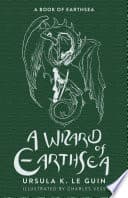
- A Wizard of Earthsea
Ursula K. Le Guin
4.0 (241k) average on GoodreadsFantasyLe Guin's A Wizard of Earthsea offers a more introspective and philosophical take on magic, power, and self-discovery, focusing deeply on a single protagonist's internal and external struggles. While Chainani explores similar themes of good and evil, his approach is more ensemble-driven and externally focused, with a lighter tone and a greater emphasis on plot twists. Le Guin's world-building is subtle and deeply resonant, whereas Chainani's is more overtly fantastical and constantly expanding, often sacrificing deep philosophical inquiry for broader narrative scope and playful subversion.
- Harry Potter and the Sorcerer's Stone
J.K. Rowling
4.5 (7M) average on GoodreadsFantasyRescued from a miserable life under the stairs, an orphaned boy discovers he's a wizard destined for a magical school, where he uncovers a dangerous secret tied to the dark wizard who murdered his parents.
- The Hunger Games
Suzanne Collins
4.3 (6.4M) average on GoodreadsFantasyIn a future where children fight to the death on live television, Katniss Everdeen volunteers for the arena, turning a death sentence into a fight for survival and a spark of rebellion.
- 1984
George Orwell
4.2 (3.1M) average on GoodreadsPoliticsIn a future where surveillance and thought control are absolute, a man's search for truth clashes with the Party, showing that hope can be a form of rebellion.
- Divergent
Veronica Roth
4.2 (2.9M) average on GoodreadsFantasyIn a society divided by virtues, a sixteen-year-old's difference from the norm starts a rebellion that threatens her world.
- The Hobbit, or There and Back Again
J.R.R. Tolkien
4.3 (2.9M) average on GoodreadsFantasyA comfort-loving hobbit named Bilbo Baggins is whisked away by a mischievous wizard and a band of dwarves on an unexpected journey to reclaim stolen treasure from a fearsome dragon, discovering courage and a magical ring along the way.





Enjoyed the summary?
A summary gives you the shape of the book. The book itself has the detail, the examples and the voice.
Find Quests for Glory on AmazonAs an Amazon Associate, BookBrief earns from qualifying purchases. How we're funded