

Synopsis
Covers the whole plot, including the ending.
- Difficulty
- Medium
- Pacing
- Moderate
- Mood
- Epic, Spiritual, Romantic, Tragic, Hopeful
- Read it if
- You enjoy sweeping historical sagas with strong romantic and spiritual themes, set against a backdrop of significant historical events like the Roman Empire's decline and the rise of Christianity.
- Skip it if
- You prefer fast-paced thrillers or are uncomfortable with detailed descriptions of historical persecution and religious themes.
Quo Vadis Plot Summary
Covers the whole plot, including the ending.
A Roman Patrician Meets a Lygian Princess
The story begins in Rome. Marcus Vinicius, a wealthy and important patrician, returns from military service. He visits his uncle, Petronius, a sophisticated and cynical man in Nero's court. At the house of Aulus Plautius, a respected former consul and general, Vinicius meets Lygia Callina. She is a Lygian princess held as a hostage by Rome, living with Aulus Plautius and his Christian wife, Pomponia Graecina. Vinicius is immediately drawn to Lygia's purity and grace, which contrasts with Rome's decadence. He wants her and, with Petronius's cynical advice, plans to make her his mistress, not knowing she is Christian.
Nero's Decree and Lygia's Escape
Petronius uses his influence with Nero to arrange for Lygia to be officially claimed by the emperor and then given to Vinicius. Lygia, upset at the idea of becoming Vinicius's concubine and being exposed to the court's depravity, is brought to the imperial palace. During a feast, her loyal Lygian bodyguard, Ursus, and other Christians rescue her. They lead her through Rome's alleys, leaving Vinicius angry and determined to find her. This event starts Vinicius's search, which also connects him with the growing Christian community.
Vinicius's Search and Encounter with Christianity
Vinicius, wanting to find Lygia, hires Chilo Chilonides, a cunning and immoral Greek philosopher, to track her. Chilo finds the Christian community in Trastevere. Vinicius, in disguise, tries to kidnap Lygia from a Christian gathering but is stopped by Ursus, who, defending Lygia, badly injures Vinicius. Instead of leaving him, Lygia and her Christian friends, including the physician Glaucus, nurse him back to health. While recovering, Vinicius sees the Christians' compassion and selflessness. This confuses and challenges his Roman view, especially Lygia's faith and kindness to him.
The Seeds of Conversion
While recovering among the Christians, Vinicius starts to see Lygia as more than an object of desire; she is a woman of deep spiritual conviction. He observes their simple, loving community and their teachings of forgiveness and charity. The Apostle Peter, a respected Christian leader, visits Vinicius and Lygia, explaining Christian beliefs further. Vinicius begins to question his own values and the emptiness of Roman pleasure-seeking. He tells Lygia he loves her, now wanting a relationship based on mutual respect and faith, a change from his first intentions.
The Great Fire of Rome
Nero, wanting to rebuild Rome more grandly and inspired by Troy's destruction, arranges the Great Fire of Rome. The city burns, causing widespread destruction and suffering. Vinicius, now truly worried about Lygia, searches for her in the chaos. The Roman people, seeing the emperor's indifference, become restless and angry. To shift blame and calm the public, Tigellinus, Nero's prefect of the Praetorian Guard, suggests blaming the Christians for the fire.
The Persecution Begins
After Nero's order, a harsh persecution of Christians begins. They are rounded up in large numbers, imprisoned, and tortured. Vinicius, now a convert in all but baptism, uses his influence to try and protect Lygia and her community. But his efforts fail against the Roman state. Many Christians, including Glaucus and Crispus, are killed. Prisons overflow. The Roman public, initially swayed by propaganda, starts to feel uneasy at the extreme cruelty of the persecutions, especially as Christians face death with faith and dignity.
Lygia's Imprisonment and Vinicius's Despair
Despite Vinicius's efforts, Lygia is captured and imprisoned in the Mamertine Prison, awaiting her death in the arena. Vinicius falls into despair. His Roman powerlessness contrasts with the Christians' calm acceptance of their fate. He sees many acts of martyrdom, which strengthen his faith. The Apostle Peter baptizes him, and he fully embraces Christianity, finding comfort in his new belief, even as Lygia's death nears. His love for Lygia becomes part of his love for Christ.
The Arena and Ursus's Triumph
Lygia is sentenced to be killed by a wild bull in the arena, a show for the Roman crowd. She is tied to the back of the large bull. Ursus, her loyal protector, must fight it bare-handed. In an amazing show of strength and devotion, Ursus wrestles the bull to the ground and breaks its neck. The Roman crowd, moved by Ursus's bravery and Lygia's innocence and beauty, demands their release. Nero, under public pressure and Petronius's subtle influence, reluctantly grants them mercy, a rare event.
Petronius's Final Act
Petronius, having lost favor with Nero due to his critical views and refusal to flatter the emperor, receives an order to kill himself. Instead of dying by Nero's hand or in disgrace, Petronius holds a grand farewell feast. Surrounded by friends and his slave, Eunice, he calmly opens his veins, dying with dignity. Before his death, he dictates a letter to Nero. It is not a plea, but a harsh critique of the emperor's artistic lack and moral depravity, a final act of defiance.
The Apostles' Departure and Rome's Decline
After their escape, Vinicius and Lygia, now married, leave Rome for a life of peace and Christian devotion. The Apostles Peter and Paul, having spread faith throughout Rome, also prepare to leave. Peter, at first hesitant, is convinced by a vision of Christ (the 'Quo Vadis?' encounter) to return to Rome to face his death. Paul, too, understands his fate. Nero's reign continues its decline, marked by paranoia, tyranny, and public unhappiness. The novel hints at Nero's eventual downfall and Christianity's triumph over pagan Rome.
Principal Figures
Marcus Vinicius
Protagonist
A Roman patrician whose love for Lygia leads him to Christianity.
Vinicius is a proud, wealthy, and influential Roman patrician and a military tribune. Initially, he embodies the hedonistic and arrogant values of the Roman elite, viewing Lygia as an object to possess. His character undergoes a profound transformation, moving from carnal desire to spiritual love, from paganism to Christianity. His relentless pursuit of Lygia, his exposure to Christian suffering, and his witnessing of their unwavering faith gradually break down his Roman pride and lead him to embrace a new moral and spiritual code. He is passionate, sometimes impulsive, but ultimately capable of deep change.
Relationships: Lygia Callina (Love interest, later wife); Petronius (Uncle and mentor); Nero (Emperor, initially admired, later despised)
Lygia Callina (Kallina)
Protagonist
A Lygian princess and devout Christian, embodying purity and unwavering faith.
Lygia is a princess of the Lygian tribe, held as a hostage in Rome but raised in the Christian faith by Pomponia Graecina. She is characterized by her innocence, purity, unwavering faith, and compassion. Despite being desired and pursued by Vinicius, she steadfastly adheres to her Christian principles, refusing to compromise her virtue. Her inner strength and serene acceptance of suffering deeply impact Vinicius. She represents the moral fortitude and spiritual beauty of early Christianity, contrasting sharply with the decadence of Roman society.
Relationships: Marcus Vinicius (Love interest, later husband); Ursus (Loyal bodyguard and protector); Pomponia Graecina (Adoptive mother and spiritual guide)
Petronius
Supporting
Nero's 'Arbiter of Elegance,' a cynical yet insightful Roman patrician.
Petronius is Vinicius's uncle and a prominent figure in Nero's court, known as the 'Arbiter of Elegance.' He is highly intelligent, cultured, and cynical, possessing a keen aesthetic sense and a detached amusement at the world's follies, including Nero's. While outwardly conforming to Roman decadence, he secretly despises Nero's vulgarity and lack of true artistic talent. He provides cynical advice to Vinicius but also displays moments of genuine affection and wisdom. His philosophical approach to life and death, culminating in his dignified suicide, reflects a certain pagan ideal of honor.
Relationships: Marcus Vinicius (Nephew and confidant); Nero (Emperor, whom he subtly manipulates and despises); Eunice (Beloved slave and companion)
Nero
Antagonist
The tyrannical and megalomaniacal Roman Emperor.
Nero is depicted as a vain, cruel, and megalomaniacal emperor, obsessed with his own artistic genius (poetry, singing, acting) despite having little talent. He is impulsive, easily flattered, and prone to fits of rage and paranoia. His reign is marked by extreme luxury, debauchery, and ultimately, tyranny. He orchestrates the burning of Rome for his own artistic vision and blames the Christians, initiating their brutal persecution. He serves as the primary antagonist, representing the destructive power of unchecked imperial authority and pagan decadence.
Relationships: Petronius (Initially favored, later despised advisor); Tigellinus (Loyal, sycophantic prefect); Poppaea Sabina (Empress, often manipulated by Nero)
Ursus
Supporting
Lygia's loyal Lygian bodyguard, possessing immense physical strength and simple faith.
Ursus is Lygia's devoted Lygian bodyguard, a man of immense physical strength and unwavering loyalty. He embodies the simple, unshakeable faith and protective instincts of the early Christians. Despite his brute force, he is gentle and kind-hearted, only using his strength in defense of Lygia and his fellow believers. His most iconic moment is his wrestling of the aurochs in the arena, saving Lygia's life and demonstrating the power of faith and love. He is a symbol of physical prowess united with spiritual purity.
Relationships: Lygia Callina (Protector and devoted servant); Marcus Vinicius (Initially adversary, later ally and friend)
Chilo Chilonides
Supporting
A cunning and unscrupulous Greek philosopher, initially an antagonist, who undergoes a dramatic conversion.
Chilo is a Greek philosopher, initially a morally corrupt and opportunistic character. He is employed by Vinicius to find Lygia and profits from the suffering of others. He is a coward, a liar, and a betrayer, initially persecuting Christians. However, witnessing the martyrdom of Glaucus, whom he had betrayed, and experiencing the profound forgiveness of the Christians, leads to his dramatic and genuine conversion. His transformation from a despicable scoundrel to a martyr for Christ is one of the most powerful character arcs in the novel, demonstrating the transformative power of faith.
Relationships: Marcus Vinicius (Initially employer, later observer of his conversion); Glaucus (Victim of his betrayal, whose forgiveness leads to his conversion)
Saint Peter
Supporting
The Apostle, a foundational figure of the Christian community in Rome.
Saint Peter is portrayed as a venerable and wise leader of the Christian community in Rome. He preaches the teachings of Christ, offering spiritual guidance, comfort, and hope to his followers. He plays a crucial role in Vinicius's conversion, baptizing him and offering profound insights into the nature of Christian love and sacrifice. His presence gives the early Christian community authority and spiritual depth, and his ultimate return to Rome for martyrdom (the 'Quo Vadis' encounter) signifies the enduring power of faith.
Relationships: Marcus Vinicius (Spiritual guide and baptizer); Lygia Callina (Spiritual leader and comforter); Saint Paul (Fellow Apostle)
Pomponia Graecina
Supporting
A devout Christian Roman noblewoman, Lygia's adoptive mother.
Pomponia Graecina is the wife of Aulus Plautius and Lygia's adoptive mother. She is a devout and virtuous Christian, living a life of quiet piety and charity amidst the pagan excesses of Rome. Her gentle nature and unwavering faith provide a stark contrast to the surrounding corruption. She serves as an early example of Christian virtue and a spiritual mentor for Lygia, demonstrating that faith can exist even within the highest echelons of Roman society.
Relationships: Lygia Callina (Adoptive mother and spiritual mentor); Aulus Plautius (Husband, a respected Roman general)
Tigellinus
Supporting
Nero's ruthless and opportunistic prefect of the Praetorian Guard.
Tigellinus is Nero's most influential and ruthless advisor, the prefect of the Praetorian Guard. He is cunning, cruel, and utterly without scruples, constantly vying for Nero's favor and willing to commit any atrocity to maintain his position. He is instrumental in suggesting and carrying out the persecution of the Christians, using them as scapegoats for the Great Fire. He embodies the darkest aspects of Roman political intrigue and brutality, contrasting sharply with Petronius's more subtle manipulation.
Relationships: Nero (Loyal, yet opportunistic, advisor); Petronius (Rival for Nero's favor)
Themes & Insights
The Conflict Between Paganism and Christianity
This is the main theme, showing the conflict of two different views. Pagan Rome, represented by Nero's court, shows pleasure-seeking, cruelty, power, and art without morals. Christianity, represented by Lygia, Peter, and the Christian community, champions love, forgiveness, sacrifice, and spiritual purity. The novel details Rome's moral decay and the new faith's strength, showing how Christian values challenge and begin to replace the pagan order. The persecution scenes highlight this conflict through the contrast between Roman brutality and Christian resolve.
“For the first time, Vinicius understood that there was a power in the world which was able to overcome all others, and that was the power of love, of truth, and of suffering for the truth.”
Love and Transformation
The theme of love is shown in several ways. Vinicius's initial desire for Lygia changes into a deep, spiritual love, reflecting his conversion to Christianity. Lygia's purity and the Christian idea of unconditional love drive this personal change. The novel suggests that true love, based on spiritual connection rather than physical desire or possession, can redeem and change people. This contrasts with the fleeting and often cruel 'love' in Nero's court. The love between Vinicius and Lygia becomes a symbol of Christian values winning.
“He understood that what he had felt for her before was not love, but a desire of the senses, while now he loved her with his whole soul, and that this love was not of the earth but of heaven.”
Martyrdom and Faith
The book shows martyrdom as proof of strong faith. During the Great Persecution, many Christians choose death over giving up their beliefs, facing tortures with calm and even joy. Figures like Glaucus, Crispus, and Peter and Paul, show the ultimate sacrifice for their faith. This theme emphasizes spiritual conviction's power to overcome physical suffering and death. It shows the effect of Christian witness on both believers and non-believers, including Chilo's conversion and the Roman crowd's sympathy for Lygia.
“They died not for Rome, but for Christ, and in their death, they conquered Rome.”
The Decadence and Decline of Rome
Sienkiewicz details the moral and political decline of Imperial Rome under Nero. The feasts, the artistic pursuits, the casual cruelty, and the desire for shows and pleasure all paint a picture of a society nearing collapse. Nero's tyranny, his court's corruption, and the common people's suffering show the flaws of a system built on power, greed, and idolatry. This decadence contrasts with the purity and moral strength of the growing Christian community, hinting at the Roman Empire's eventual fall.
“Bread and circuses! That was all they asked, and with that, they were content, while Rome was perishing.”
Redemption and Forgiveness
The theme of redemption is shown through Vinicius's and especially Chilo Chilonides's character changes. Vinicius, at first arrogant and cruel, finds redemption through his love for Lygia and his acceptance of Christianity. Chilo, a truly bad character, experiences a change after seeing Glaucus's forgiveness and the martyrs' steadfastness. This leads to his own redemption and martyrdom. This theme shows the Christian belief that past sins can be forgiven and that faith can transform even the most morally compromised people.
“He who had once betrayed them, now cried out their name, and for them, he died.”
Plot Devices & Literary Techniques
The Great Fire of Rome
A historical event serving as a catalyst for the Christian persecution and a symbol of Roman destruction.
The Great Fire of Rome is a pivotal plot device. Historically accurate, it serves as the catastrophic event that Nero exploits to blame the Christians, thus initiating the widespread persecutions. Symbolically, the fire represents the destructive nature of Nero's megalomania and the moral decay of pagan Rome, literally cleansing the old order to make way for the new. It also forces characters like Vinicius to confront the true horror of Nero's reign and compels Lygia and other Christians into hiding, increasing their vulnerability and highlighting their resilience.
'Quo Vadis, Domine?' (Where are you going, Lord?)
A legendary encounter that reinforces the theme of martyrdom and divine will.
This legendary encounter, where Saint Peter, fleeing Rome, meets a vision of Christ walking towards the city, is a crucial spiritual and symbolic moment. Christ's reply, 'I am going to Rome to be crucified a second time,' convinces Peter to return and face his own martyrdom. This device emphasizes the theme of sacrifice, divine purpose, and the foundational role of martyrdom in early Christianity. It reassures the reader of the eventual triumph of faith, even in the face of apparent defeat, and highlights the spiritual authority of the Apostles.
The Roman Arena Spectacles
A setting for both Roman cruelty and Christian steadfastness, culminating in a miraculous reprieve.
The arena serves as a powerful plot device, representing the pinnacle of Roman brutality and entertainment. It is where Christians are publicly tortured and executed, showcasing the depths of pagan cruelty. However, it also becomes a stage for Christian steadfastness and miracles, most notably when Ursus saves Lygia from the bull. This event, witnessed by the Roman populace, demonstrates the moral power of Christian faith and love, even swaying the cruel Roman crowd, thus turning a place of death into a site of unexpected mercy and a turning point for the public's perception of Christians.
Petronius's Letters and Epigrams
A literary device used for social commentary and character insight.
Petronius's witty remarks, cynical observations, and particularly his final letter to Nero, serve as a device for social commentary. Through his sharp intellect, Sienkiewicz critiques the excesses and artistic pretensions of Nero's court. Petronius's epigrams and letters offer an insider's view of the imperial circle, highlighting its absurdity and moral emptiness. His final, scathing letter to Nero is a powerful act of defiance, revealing the emperor's true character and providing a philosophical counterpoint to the Christian message, representing a certain noble paganism.
Quo Vadis Quotes
“Christians are like the sands of the sea. You can scatter them, but you cannot destroy them.”
“O, Caesar, to what a pass hast thou brought us, that we must needs be saved by the very men whom we have condemned to the beasts!”
“For the blood of martyrs is the seed of the Church.”
“Love is stronger than death, and the truth will set you free.”
“The world belongs to the strong, but the future belongs to the just.”
“He who has seen the truth cannot again find peace in falsehood.”
“The greatest evil is not to commit a sin, but to be unaware of it.”
“Even a beast, when it loves, becomes human.”
“To die for Christ is not a loss, but a gain.”
“The world changes, but human nature remains the same.”
“There are two kinds of gods: those who demand sacrifices, and those who make them.”
“Caesar is great, but Christ is greater.”
“Only the pure of heart can see God.”
“Life is a dream, and love is its interpreter.”
Quiz
10 questions on the plot and the characters. Each answer comes with a short explanation.
Question 1
Which Roman general, recently returned from war, initially falls in love with Lygia?
- Petronius
- Vinicius
- Chilon Chilonides
- Tigellinus
Show answer
B. Vinicius Marcus Vinicius, a nephew of Petronius, is the Roman general who returns from war and becomes infatuated with Lygia, setting in motion the central romantic plot.
Question 2
What is the primary reason Lygia initially resists Vinicius's advances and flees from him?
- She is already betrothed to another man.
- She fears the corrupting influence of Roman society and his pagan lifestyle.
- She believes he is too old for her.
- She is afraid of Nero's disapproval of their union.
Show answer
B. She fears the corrupting influence of Roman society and his pagan lifestyle. Lygia, as a devout Christian, is repulsed by Vinicius's initial hedonistic Roman lifestyle and the moral decay of Nero's court, which leads her to flee to the Christian community.
Question 3
Who is the 'Arbiter Elegantiae' at Nero's court, known for his refined taste and subtle criticism of the emperor?
- Seneca
- Tigellinus
- Petronius
- Chilon Chilonides
Show answer
C. Petronius Gaius Petronius, Vinicius's uncle, holds the title 'Arbiter Elegantiae' (Judge of Elegance) and is renowned for his sophisticated taste and ability to subtly manipulate Nero while maintaining his own integrity.
Question 4
What significant event does Nero falsely blame on the Christians, leading to their widespread persecution?
- The assassination attempt on his life.
- A widespread famine in Rome.
- The Great Fire of Rome.
- A revolt in one of the Roman provinces.
Show answer
C. The Great Fire of Rome. Nero, facing public outrage for the Great Fire of Rome, deflects suspicion from himself by falsely accusing the Christians, initiating a brutal period of persecution.
Question 5
How does Vinicius's character transform throughout the novel?
- He becomes more cynical and embraces Roman hedonism even further.
- He remains largely unchanged, focused solely on military conquest.
- He evolves from a selfish, pagan Roman into a compassionate Christian.
- He becomes a powerful political leader, challenging Nero's authority.
Show answer
C. He evolves from a selfish, pagan Roman into a compassionate Christian. Vinicius undergoes a profound spiritual transformation, moving from a self-absorbed Roman patrician driven by lust to a devoted Christian who embraces love, forgiveness, and sacrifice.
Question 6
What is the fate of Chilon Chilonides, the Greek philosopher and informer, towards the end of the novel?
- He escapes Rome and lives a quiet life in Greece.
- He is pardoned by Nero and joins his court.
- He converts to Christianity and is martyred for his faith.
- He betrays the Christians one last time and flees Rome.
Show answer
C. He converts to Christianity and is martyred for his faith. Chilon, after initially betraying the Christians, experiences a powerful conversion and publicly denounces Nero, leading to his own brutal martyrdom for his newfound faith.
Question 7
Which of the following describes the role of the apostle Peter in the novel?
- He is a minor character who appears only in a few scenes.
- He serves as a spiritual guide and a symbol of Christian fortitude and hope.
- He leads a military rebellion against Nero.
- He is primarily responsible for Lygia's escape from Vinicius.
Show answer
B. He serves as a spiritual guide and a symbol of Christian fortitude and hope. Saint Peter is a pivotal spiritual figure, providing guidance, comfort, and leadership to the early Christian community in Rome, and his presence solidifies the themes of faith and martyrdom.
Question 8
What does the title 'Quo Vadis' literally mean, and to whom is it attributed in the novel?
- 'To whom do you go?' spoken by Vinicius to Lygia.
- 'Where are you going?' spoken by Christ to Peter.
- 'What is your destiny?' spoken by Nero to Petronius.
- 'Whither Rome?' spoken by a Roman citizen during the fire.
Show answer
B. 'Where are you going?' spoken by Christ to Peter. The title 'Quo Vadis, Domine?' (Where are you going, Lord?) refers to the apocryphal encounter between Saint Peter and Christ on the Appian Way, where Christ's question inspires Peter to return to Rome and face martyrdom.
Question 9
How does Petronius ultimately meet his end in the novel?
- He is executed by Nero's guards for treason.
- He commits suicide in a lavish banquet, defying Nero with dignity.
- He converts to Christianity and is martyred alongside Vinicius.
- He dies of natural causes, having retired from court life.
Show answer
B. He commits suicide in a lavish banquet, defying Nero with dignity. Facing an inevitable death sentence from Nero, Petronius chooses to open his veins during a final, elegant banquet, dictating a letter that mocks Nero's artistic pretensions, thus preserving his dignity and defying the emperor.
Question 10
Which specific act of heroism by Ursus saves Lygia from death in the arena?
- He leads a rebellion of gladiators against the guards.
- He single-handedly kills a wild bull with his bare hands.
- He uses his strength to break open the arena gates.
- He sacrifices himself by taking Lygia's place in the arena.
Show answer
B. He single-handedly kills a wild bull with his bare hands. In a climactic scene, Ursus, Lygia's Lygian bodyguard, displays immense strength by wrestling and killing a gigantic aurochs (wild bull) that has Lygia tied to its horns, earning him the crowd's favor and saving her life.
Quo Vadis FAQ
What is Quo Vadis about?
Quo Vadis is an epic historical novel set in Nero's Rome (A.D. 54-68), chronicling the forbidden romance between Marcus Vinicius, a Roman patrician and military commander, and Lygia, a devout Christian hostage. It vividly portrays the clash between the decadent Roman Empire and the burgeoning, persecuted Christian faith, leading up to the Great Fire of Rome and the subsequent brutal persecution of Christians.
Why should I read Quo Vadis?
You should read Quo Vadis for its gripping historical narrative, rich character development, and profound exploration of faith, love, and sacrifice amidst extreme persecution. It offers a fascinating glimpse into ancient Rome's opulence and cruelty, while celebrating the enduring power of the human spirit and the transformative nature of early Christianity.
What is the background/setting of Quo Vadis?
The novel is set in Imperial Rome during the reign of Emperor Nero, specifically between A.D. 54 and 68. This period is characterized by immense Roman power, architectural grandeur, but also extreme moral decay, political intrigue, and the brutal repression of new religions like Christianity, which was still a secret, underground movement.
What are the most memorable quotes?
One memorable quote is 'Quo vadis, Domine?' (Whither goest thou, Lord?), spoken by Peter to Christ, symbolizing the turning point for Peter and the early Church. Another is Petronius's cynical yet elegant observations on Roman society, such as his musings on art and life, which often satirize Nero's pretensions.
What writing style does the author use?
Henryk Sienkiewicz employs a grand, sweeping historical narrative style, rich in descriptive detail and dramatic tension. His prose is often formal and evocative, balancing meticulous historical research with vivid characterization and emotional depth, reflecting the epic scope of the story.
What minor details add significant meaning?
The recurrent motif of the fish symbol, used by Christians to identify each other, subtly highlights their secret network and resilience. Also, the contrast between the lavish, often grotesque, Roman banquets and the simple, communal Christian agape meals underscores the profound moral chasm between the two worlds.
What are some subtle foreshadowing moments?
Petronius's increasing weariness with Nero's artistic pretensions and cruelty subtly foreshadows his eventual elegant suicide, a final act of defiance against the emperor's tyranny. Additionally, the early descriptions of Rome's dry summer and Nero's desire for a 'new' Rome hint at the coming Great Fire.
What unexpected character connections exist?
The unexpected connection between Chilon Chilonides, a cunning Greek philosopher, and the Christian community, particularly Ursus and Peter, is significant. Chilon initially betrays Christians but later undergoes a profound spiritual conversion, becoming a martyr himself, demonstrating the transformative power of faith even in the most cynical.
What are unspoken character motivations?
Nero's unspoken motivation for persecuting Christians, beyond just finding a scapegoat for the fire, is often his desire for dramatic spectacle and a twisted sense of artistic inspiration, viewing their suffering as a grand performance for his own amusement and poetic endeavors.
What psychological complexities do characters exhibit?
Marcus Vinicius exhibits significant psychological complexity, transitioning from a proud, entitled Roman patrician who initially seeks Lygia as a possession, to a man deeply humbled and transformed by love and faith. His struggle between his Roman identity and his burgeoning Christian beliefs forms the core of his psychological journey.
What are the major emotional turning points?
A major emotional turning point is Vinicius's near-fatal injury and subsequent care by Lygia and her Christian community, which softens his heart and allows him to see their compassion firsthand. Another is Peter's 'Quo Vadis' encounter with Christ, which renews his resolve to return to Rome and face martyrdom.
How do relationship dynamics evolve?
The relationship between Vinicius and Lygia evolves dramatically from initial infatuation and Vinicius's possessive desire into a deep, spiritual love founded on mutual respect and shared faith. Similarly, the dynamic between Peter and Paul, initially distinct in their ministries, develops into a unified front for the early Church in Rome.
Which parts remain ambiguous or open-ended?
While the main plotlines resolve, the ultimate fate of some minor characters who witnessed the Christian persecutions but did not convert is left somewhat ambiguous. The long-term impact of the Christian movement on the wider Roman Empire beyond Nero's reign is implied rather than explicitly detailed, leaving room for historical interpretation.
What are controversial scenes or decisions?
The graphic descriptions of the Christian persecutions, including crucifixion, being fed to wild beasts, and being burned alive as 'Nero's living torches,' are controversial for their brutality. Nero's decision to blame Christians for the Great Fire of Rome, despite historical debate, is presented as a definitive act of imperial cruelty within the novel.
Quo Vadis ending explained: how it ends & what it means
The novel ends with the martyrdoms of Peter and Paul, and the deaths of Nero and Petronius, signifying the end of an era of Roman tyranny and pagan excess. Vinicius and Lygia, having survived the persecutions through divine intervention and courage, are free to live out their lives together in Sicily, representing the triumph of Christian love and faith over imperial cruelty and the promise of a new spiritual age.
About the author
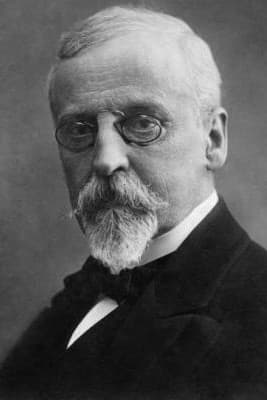
Henryk Adam Aleksander Pius Sienkiewicz, also known by the pseudonym Litwos, was a Polish writer. He is best remembered for his historical novels, such as the Trilogy series and especially for his internationally known best-seller Quo Vadis (1896).
Similar books
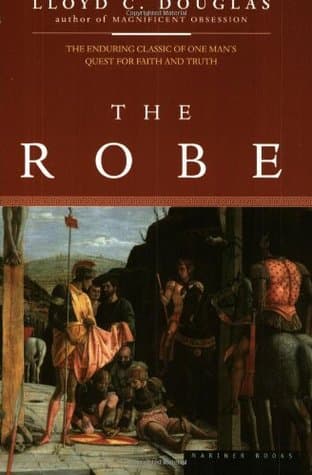
- The Robe
Lloyd C. Douglas
4.2 (23k) average on GoodreadsHistorical FictionExplores the early days of Christianity and its impact on Roman lives.
- To Kill a Mockingbird
Harper Lee
4.3 (4.5M) average on GoodreadsHistorical FictionIn the 1930s Jim Crow South, Harper Lee writes about racial injustice, moral growth, and the quiet courage of a lawyer father, Atticus Finch, as seen through his young daughter's eyes.
- The Great Gatsby
F. Scott Fitzgerald
3.9 (3.8M) average on GoodreadsHistorical FictionIn the opulent Roaring Twenties, a mysterious millionaire's lavish parties hide his desperate, tragic pursuit of a lost love, exposing the emptiness within the American Dream.
- Pride and Prejudice
Jane Austen
4.3 (3M) average on GoodreadsHistorical FictionIn a society focused on status and money, Elizabeth Bennet navigates love and pride, challenging Mr. Darcy and social expectations to find true affection.
- Angels & Demons
Dan Brown
3.9 (2.7M) average on GoodreadsThrillerA Harvard symbologist races through Rome's ancient sites, deciphering cryptic clues to unmask the Illuminati and stop a vengeful plot to destroy the Vatican with a stolen antimatter weapon.
- The Kite Runner
Khaled Hosseini
4.3 (2.4M) average on GoodreadsHistorical FictionIn pre-Taliban Afghanistan, a wealthy boy's betrayal of his servant's son during a kite-running tournament starts a lifelong journey for amends as his country collapses.





Enjoyed the summary?
A summary gives you the shape of the book. The book itself has the detail, the examples and the voice.
Find Quo Vadis on AmazonAs an Amazon Associate, BookBrief earns from qualifying purchases. How we're funded