
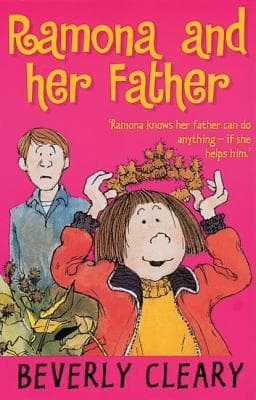
Synopsis
Covers the whole plot, including the ending.
- Difficulty
- Easy
- Pacing
- Moderate
- Mood
- Heartwarming, Humorous, Realistic, Slightly Melancholy
- Read it if
- You enjoy heartwarming, realistic stories about family life and childhood struggles, told with humor and a touch of mischief.
- Skip it if
- You prefer high-fantasy, action-packed plots, or stories without a strong focus on everyday family dynamics.
Ramona and Her Father Plot Summary
Covers the whole plot, including the ending.
The Dwindling Paycheck
The story begins with Ramona Quimby, now in second grade, noticing a change in her father, Robert. He is often tired and irritable after work, and the family's evening conversations lessen. One evening, Mr. Quimby announces he has been laid off from his job as a commercial artist. The news causes anxiety in the family. Mrs. Quimby, though supportive, immediately starts calculating finances and discussing cutting expenses. Ramona and her older sister, Beezus, are confused and worried, sensing their parents' stress. The sudden loss of income forces the family into an uncertain period of adjustment, affecting everyone's mood and daily routines.
A Father's Frustration
With Mr. Quimby out of work, he struggles to find a new job. He spends his days sending out resumes and making phone calls, often without success. The strain of unemployment shows, as he becomes more withdrawn and easily frustrated. He tries to help around the house, but his efforts sometimes clash with Mrs. Quimby's routines, leading to minor arguments. Ramona observes her father's growing sadness, sensing his loss of purpose and the pressure he feels to provide for his family. This period highlights the psychological cost of job loss, not just the financial impact, as Mr. Quimby deals with his identity and worth.
Ramona's Attempts to Help
Troubled by her father's sadness and the general gloom, Ramona decides she must do something. She first tries to earn money by making a 'commercial' for her father, hoping to get him a job, but it is not well-received. Later, she tries to become a child star, believing that if she earns a lot of money, her father will not have to work. She imagines herself performing in commercials and movies, but adults often misunderstand or dismiss her dramatic expressions. Ramona's childlike logic and her desire to fix the family's problems lead to several comical but ineffective schemes, showing her innocent view of adult issues.
The Tuna Fish Disaster
One evening, while Mrs. Quimby is working at her part-time job and Mr. Quimby is still searching for work, Ramona decides to make dinner to surprise and help her family. She chooses to make a tuna fish casserole, a dish she believes is simple. However, without proper cooking experience, she makes a big mess, spilling ingredients and using too many dishes. When Mrs. Quimby returns home, tired, she finds the kitchen in disarray and the casserole not quite edible. While Ramona meant well, her cooking adds more stress to her mother's already burdened day, showing the gap between Ramona's desire to help and her actual abilities.
Beezus's Burden
Beezus, the older sister, feels the weight of the family's situation differently. She is expected to be more responsible, help more around the house, and often supervise Ramona. The money problems mean fewer new clothes and less freedom. She also deals with Ramona's sometimes annoying attempts to help, which often create more work. Beezus often finds herself caught between her parents' stress and Ramona's childish behavior, leading to moments of resentment and frustration. She wants things to return to normal, and her own artistic endeavors, like drawing, become a quiet escape from the household tension.
The Book of Klickitat
Amidst his job search, Mr. Quimby starts spending time drawing and writing, initially to pass the time and express his frustration. He begins to develop a children's book based on his childhood memories of a place called Klickitat. This creative outlet becomes a source of comfort and renewed purpose for him. He shares his illustrations and stories with Ramona and Beezus, who become his first audience. The project provides a needed distraction from his unemployment worries and allows him to use his artistic talents in a new, meaningful way, shifting his focus from what he has lost to what he can create.
Ramona's TV Commercial
Driven by her desire to be a child star and earn money, Ramona performs a spirited, if exaggerated, television commercial in front of her second-grade class during show-and-tell. She acts out a commercial for a breakfast cereal, with dramatic gestures and loud words. Her teacher, Miss Griggs, misunderstands Ramona's enthusiastic performance, believing she is being disruptive and showing off. This incident shows Ramona's imagination and her difficulty following expected classroom behavior, especially when her intentions come from a genuine desire to help her family. It also shows the difference between her inner world and how adults see her actions.
The Family Dinner
Despite the ongoing financial difficulties and stress, the Quimby family finds joy and connection. One evening, Mrs. Quimby prepares a special dinner, and the family gathers to eat together. The conversation flows more easily, and the usual tension is briefly gone. Mr. Quimby shares some progress on his Klickitat book, and Ramona and Beezus contribute to the discussion. This scene shows the family's resilience and their ability to find comfort and strength in each other's company, even when faced with hard times. It is a reminder that love and support are important during difficult times.
Mr. Quimby's Breakthrough
Mr. Quimby continues to work on his Klickitat book. He eventually sends samples of his illustrations and manuscript to a publisher. After waiting, he receives a positive response. While it is not an immediate solution to all their financial problems, the publisher expresses interest in his work, offering a contract and the possibility of publication. This breakthrough is a significant boost for Mr. Quimby, giving him a renewed sense of purpose and confirming his artistic talent. The news brings relief and excitement to the entire Quimby family, suggesting that a new, more positive chapter might begin.
Ramona's Growing Up
As the story progresses, Ramona, though still a child, begins to understand the deeper implications of her father's unemployment. She realizes that her simple solutions are not always effective and that adult problems are more complex than she first thought. Her attempts to help, while often clumsy, come from a genuine love for her family. By the end of the book, she does not fully grasp the details of financial hardship, but she understands the emotional toll it takes on her parents. This subtle shift in her understanding marks a step in her emotional development, showing her growing empathy and awareness of the world beyond her immediate desires.
A New Chapter
With the prospect of Mr. Quimby's book being published, the family begins to adjust to their new reality. While he still has to find a more stable income, the book offers a promising new direction. Mrs. Quimby continues her part-time work, and the family keeps their frugal habits. The emotional atmosphere in the house lightens significantly, as the burden of uncertainty is somewhat lifted. The Quimbys learn to adapt to change and find strength in their unity. The story ends with the family looking forward to the future, accepting that life will continue to present challenges, but confident in their ability to face them together.
Ramona and Her Father Characters
Ramona Quimby
Protagonist
A spirited and imaginative second-grader who tries to solve her family's problems in her own unique way.
Ramona is a lively, imaginative, and often impulsive second-grader. She feels things deeply and expresses herself with unbridled enthusiasm, which sometimes leads to misunderstandings with adults. Her primary motivation in this story is to alleviate her family's suffering and cheer up her father after he loses his job. She approaches problems with a childlike logic, believing that if she can earn money or make her father happy, everything will return to normal. Despite her sometimes exasperating antics, Ramona is driven by a deep love for her family and a desire to contribute meaningfully.
Relationships: Robert Quimby (Father) (Adoring, sometimes frustrating; Ramona deeply loves and wants to help him.); Dorothy Quimby (Mother) (Supportive, patient, but sometimes overwhelmed by Ramona's antics.); Beezus Quimby (Sister) (Typical sibling rivalry; Beezus often finds Ramona annoying but also cares for her.); Miss Griggs (Teacher) (Misunderstanding; Miss Griggs often struggles to manage Ramona's unconventional behavior.)
Robert Quimby (Mr. Quimby)
Supporting Character / Central Figure of Conflict
Ramona's father, an out-of-work commercial artist struggling with the emotional and financial burden of unemployment.
Mr. Quimby is a kind and artistic man who experiences a significant blow to his self-esteem and identity after being laid off from his job. He becomes withdrawn, irritable, and anxious, grappling with the pressure to provide for his family. His struggle is central to the plot, driving much of the family's emotional landscape. He eventually finds solace and renewed purpose in his passion for art, beginning to write and illustrate a children's book. His journey highlights the psychological toll of unemployment and the importance of finding new avenues for personal fulfillment.
Relationships: Ramona Quimby (Daughter) (Loving; he appreciates her spirit but is sometimes overwhelmed by her energy.); Dorothy Quimby (Wife) (Supportive, loving, but also strained by the financial hardship and his mood swings.); Beezus Quimby (Daughter) (Affectionate; he relies on her maturity during difficult times.)
Dorothy Quimby (Mrs. Quimby)
Supporting Character
Ramona's practical and resilient mother, who takes on extra work and manages the household during a crisis.
Mrs. Quimby is the pragmatic and steady force in the family. When her husband loses his job, she immediately steps up, taking on a part-time job and carefully managing their dwindling finances. She is often tired and stressed but remains a source of stability and love for her daughters. She tries to maintain a sense of normalcy for Ramona and Beezus while quietly bearing the weight of their financial struggles. Her resilience and unwavering support are crucial for the family's ability to cope with their difficult situation.
Relationships: Robert Quimby (Husband) (Supportive, loving, but also burdened by his emotional state and the financial strain.); Ramona Quimby (Daughter) (Loving, patient, but often exasperated by Ramona's antics and messes.); Beezus Quimby (Daughter) (Supportive; she relies on Beezus's maturity and help.)
Beezus Quimby
Supporting Character
Ramona's older sister, who struggles with added responsibilities and the pressure of being the 'good' child.
Beezus, Ramona's older sister, is more reserved and responsible. She feels the family's financial strain keenly, missing the comforts they once had. She often finds herself caught between her parents' stress and Ramona's boisterous nature, frequently having to supervise her younger sister. Beezus is a talented artist in her own right, finding an escape in drawing. She sometimes resents Ramona's attention-seeking behavior but deeply loves her family and tries to be helpful, even when it means sacrificing her own desires. She embodies the struggles of an older child trying to navigate complex adult problems.
Relationships: Ramona Quimby (Sister) (Typical sibling rivalry; often annoyed by Ramona but ultimately caring.); Robert Quimby (Father) (Affectionate; she worries about his sadness.); Dorothy Quimby (Mother) (Supportive; she tries to help her mother as much as possible.)
Miss Griggs
Supporting Character / Mentioned
Ramona's second-grade teacher, who often struggles to understand Ramona's unique personality and behavior.
Miss Griggs is Ramona's second-grade teacher. She is generally well-meaning but often misinterprets Ramona's imaginative and unconventional behavior, viewing it as disruptive or attention-seeking. Her interactions with Ramona highlight the challenges some teachers face in understanding and nurturing highly creative and spirited children who don't always conform to classroom norms. She represents the adult world's difficulty in truly seeing Ramona's underlying intentions.
Relationships: Ramona Quimby (Teacher-student; often a source of misunderstanding due to Ramona's behavior.)
Ramona and Her Father Themes
The Impact of Economic Hardship on Families
The main theme explores how losing a parent's job affects every family member, financially and emotionally. Mr. Quimby's unemployment leads to increased tension, irritability, and a sense of hopelessness for the adults. The children, Ramona and Beezus, struggle to understand and cope with the sudden changes. Scenes like the family cutting expenses, Mrs. Quimby taking a part-time job, and Mr. Quimby's withdrawal show the widespread stress. The story shows how financial struggles can strain relationships and change daily routines, forcing a family to adapt and find new ways to support each other.
“Money was on everyone's mind, and it hung in the air like a cloud.”
Childhood Imagination vs. Adult Reality
Ramona's imagination is a core element, often clashing with her family's difficult reality. She believes she can solve complex adult problems through simple, childlike schemes, such as becoming a child star or making a 'commercial' for her father. Her elaborate inner world, where she is a successful actress, contrasts with the family's growing financial worries. This theme highlights childhood innocence and the difficulty children have in fully grasping adult life's complexities, while also showing how imagination can be a way to cope, even if not practical. Her 'commercial' in class is a prime example of this clash.
“She would be a child star, and her father would not have to worry about money anymore. It was so simple.”
The Search for Purpose and Identity
Mr. Quimby's journey after losing his job is an exploration of identity. His work as a commercial artist was tied to his self-worth, and unemployment leaves him feeling lost. His irritability and withdrawal come from this identity crisis. The turning point is when he rediscovers his passion for art by creating a children's book based on his childhood memories of Klickitat. This creative project allows him to find a new sense of purpose and confirm his artistic talent outside of commercial demands, showing that identity can be redefined even in challenging circumstances.
“He discovered that drawing for himself was different from drawing for a trucking company.”
Family Resilience and Support
Despite the significant challenges, the Quimby family shows resilience and a strong bond. Even when stressed and irritable, they ultimately rely on each other. Mrs. Quimby's practical support, Beezus's quiet responsibility, and even Ramona's misguided attempts to help, all contribute to the family's ability to handle their crisis. Moments of shared laughter, like a rare pleasant family dinner, highlight their lasting love and unity. The story emphasizes that while external circumstances can be devastating, the internal strength of family connections can provide the necessary foundation for coping and moving forward.
“They were a family, and families stuck together, even when things were hard.”
Plot Devices & Literary Techniques
Symbolism of Mr. Quimby's Drawings
Mr. Quimby's artistic endeavors symbolize his search for purpose and emotional well-being.
Initially, Mr. Quimby's drawings for the trucking company represent his unfulfilling job. After losing it, his artistic talent is dormant, reflecting his despondency. However, when he begins to draw and write his children's book about Klickitat, his art transforms into a symbol of hope, self-expression, and renewed purpose. The act of creating something purely for himself, rather than for commercial gain, becomes his path to rediscovering his identity and finding joy amidst unemployment. The illustrations he creates for the book are not just pictures; they are a visual representation of his emotional journey and eventual breakthrough.
Ramona's Inner Monologues and Fantasies
Ramona's internal thoughts and imaginative scenarios provide insight into her childlike perspective and coping mechanisms.
Throughout the story, Ramona frequently engages in vivid inner monologues and elaborate fantasies, such as imagining herself as a famous child star or devising a 'commercial' for her father. These internal narratives serve as a crucial plot device, allowing the reader to understand Ramona's innocent yet determined approach to complex adult problems. They highlight her difficulty in distinguishing between fantasy and reality in her pursuit of solutions, while also providing comic relief and emphasizing the innocence of her intentions. This device contrasts her inner world with the often harsh external reality.
The Family Dinner Table
The dinner table serves as a recurring setting that reflects the family's emotional state and evolving dynamics.
The dinner table is more than just a place to eat; it's a barometer for the Quimby family's emotional climate. At the beginning, the quiet, strained dinners reflect Mr. Quimby's stress and the overall tension from his job loss. Later, Ramona's disastrous attempt to make dinner highlights her well-intentioned but clumsy efforts to help. A subsequent, more pleasant family dinner, where Mr. Quimby shares his book progress, symbolizes a return to connection and hope. This setting effectively illustrates the ebb and flow of their emotional journey, showing how shared meals can either amplify or alleviate family stress.
Ramona and Her Father Quotes
“Ramona did not want a new baby. She wanted everything to stay the same.”
“Mr. Quimby, who was an artist, said that a father's job was to earn money and a mother's job was to take care of the house and children. He was wrong.”
“She was not a baby. She was Ramona, and she was going to be a big sister, whether she liked it or not.”
“It was not fair that her father was home all day and still did not have time to play with her.”
“Being a grown-up was much harder than it looked.”
“She wanted to be a good girl, but sometimes it was so hard.”
“Her father was not a failure. He was just a man who had lost his job.”
“Ramona decided that she would not be a baby anymore. She would be a big girl, and she would help her family.”
“A father's job, Ramona decided, was to love his children, not just to earn money.”
“The world was full of interesting things, and Ramona was going to see all of them.”
“She liked her father best when he was being himself, not when he was trying to be someone else.”
“It was hard to be brave when you were little and the world was big.”
“Sometimes grown-ups needed cheering up, too.”
Quiz
10 questions on the plot and the characters. Each answer comes with a short explanation.
Question 1
Why did Ramona's father lose his job?
- He was fired for being late too often.
- His company downsized and eliminated his department.
- He decided to quit and pursue a different career.
- He had a disagreement with his boss.
Show answer
B. His company downsized and eliminated his department. Ramona's father, Mr. Quimby, lost his job because his company was downsizing and eliminated his department, leaving him unemployed.
Question 2
What is one of the first ways Ramona tries to help the family save money?
- She suggests they stop buying all new clothes.
- She tries to make a tuna casserole from a magazine recipe.
- She offers to get a part-time job herself.
- She proposes they only eat out once a month.
Show answer
B. She tries to make a tuna casserole from a magazine recipe. Ramona, wanting to help with the family's financial struggles, attempts to cook a tuna casserole recipe she found in a magazine, but it doesn't turn out well.
Question 3
What is the name of Ramona's older sister?
- Beezus
- Susan
- Mary Jane
- Roberta
Show answer
A. Beezus Ramona's older sister, who often finds Ramona's antics exasperating, is named Beezus.
Question 4
What unusual food item does Ramona try to convince her family to eat to save money and be more 'primitive'?
- Dandelion greens
- Rabbit stew
- Fried chicken feet
- Powdered eggs
Show answer
D. Powdered eggs Ramona, in her attempt to be helpful and 'primitive' like pioneers, suggests they eat powdered eggs for breakfast, much to her family's dismay.
Question 5
What special item does Ramona's father make for her to help her feel better about his unemployment?
- A new dollhouse
- A paper bag owl mask
- A hand-carved wooden bird
- A special drawing of the family
Show answer
B. A paper bag owl mask Mr. Quimby, despite his own worries, makes Ramona a unique paper bag owl mask, which she cherishes and uses for imaginative play.
Question 6
What does Ramona do with her father's cigarettes that causes a stir?
- She hides them so he can't smoke.
- She tries to sell them to her friends.
- She throws them in the toilet.
- She draws on the cigarette pack.
Show answer
C. She throws them in the toilet. Ramona, concerned about her father's health and the cost, disposes of his cigarettes by flushing them down the toilet, leading to a tense family moment.
Question 7
What is the main theme explored through Ramona's father's unemployment?
- The importance of education for career success.
- The resilience of a family facing financial hardship and the emotional impact on children.
- The difficulties of finding a new job in a competitive market.
- The need for government assistance during economic downturns.
Show answer
B. The resilience of a family facing financial hardship and the emotional impact on children. The book primarily explores how a family copes with the stress and changes brought on by unemployment, particularly from a child's perspective, highlighting their resilience and emotional adjustments.
Question 8
What does Ramona try to do at school to make her father proud and get attention for his job search?
- She tries to get a perfect score on a spelling test.
- She draws a picture of her father looking for a job during art class.
- She tries to act like a 'show-off' during show-and-tell, making funny noises.
- She writes a story about her father's struggles for a class assignment.
Show answer
C. She tries to act like a 'show-off' during show-and-tell, making funny noises. Ramona, wanting to make her father happy and perhaps get positive attention, acts out during show-and-tell, making 'vroom-vroom' noises, hoping to cheer him up or get a reaction.
Question 9
How does Ramona's father eventually find a new job?
- He gets a job offer from a friend.
- He decides to go back to school for a new career.
- He finds a job in a grocery store after a long search.
- He starts his own small business.
Show answer
C. He finds a job in a grocery store after a long search. After a period of unemployment and searching, Ramona's father eventually finds a job working in a grocery store.
Question 10
What significant emotional development does Ramona experience by the end of the book regarding her father's situation?
- She becomes completely independent and no longer needs her father's attention.
- She learns to accept that things won't always be perfect and that her family is strong together.
- She decides she wants to be the primary breadwinner for the family when she grows up.
- She becomes cynical about the future and stops trying to help.
Show answer
B. She learns to accept that things won't always be perfect and that her family is strong together. Ramona, through her experiences, comes to understand the complexities of adult problems and the resilience of her family, learning to accept the ups and downs while appreciating their collective strength.
Ramona and Her Father FAQ
What is the central conflict Ramona and her family face at the beginning of the book?
The central conflict is that Ramona's father, Mr. Quimby, loses his job as a graphic artist, causing significant financial strain and emotional distress for the entire family. This sudden unemployment forces Mrs. Quimby to return to full-time work and creates a pervasive sense of worry and tension in their household.
How does Ramona initially try to help her father cope with his unemployment?
Ramona, in her earnest but often misguided way, tries to cheer her father up by drawing pictures for him and attempting to make him laugh. She also attempts to be helpful around the house, though her efforts sometimes lead to more chaos than assistance, reflecting her age and limited understanding of adult problems.
What is the significance of the Beezus and Ramona's 'Great Cereal Battle'?
The 'Great Cereal Battle' symbolizes the heightened tension and irritability within the household due to Mr. Quimby's unemployment. It's a manifestation of the stress the children feel, lashing out at each other because they can't directly address the larger family problem, highlighting how adult worries trickle down to children's behavior.
How does Mrs. Quimby's role change after Mr. Quimby loses his job?
Mrs. Quimby's role shifts dramatically as she returns to working full-time, taking on the primary breadwinner responsibility. This change means she is often tired and less available, leading to increased household chores for Beezus and Ramona, and a general disruption of the family's previous routines and dynamics.
What is the 'dawnzer lee light' and why is it important to Ramona?
The 'dawnzer lee light' is Ramona's mishearing of the phrase 'Oh, say can you see, by the dawn's early light' from 'The Star-Spangled Banner.' It's important because it represents her struggle with understanding the adult world and language, and her attempts to make sense of things by creating her own interpretations, which often lead to humorous misunderstandings.
What specific detail about Mr. Quimby's job search highlights his frustration?
Mr. Quimby's frustration is subtly shown through his increasing irritability and his habit of spending long hours in his den, often with the door closed, trying to generate new ideas or work on projects. The detail of him drawing a picture of a man on a desert island, symbolizing his feeling of isolation and helplessness, particularly highlights his despair.
How does Ramona's desire to be a 'TV star' connect to the family's financial situation?
Ramona's desire to be a 'TV star' is a childish fantasy fueled by her innocent belief that fame could solve the family's money problems. She imagines earning enough money to buy her father a new job and bring happiness back, showing her simplistic yet earnest attempt to understand and fix complex adult issues.
Is there any subtle foreshadowing of Mr. Quimby's eventual return to work or a new venture?
Yes, there is subtle foreshadowing when Mr. Quimby begins to spend more time drawing and working on his own creative projects, even if they aren't immediately profitable. His continued artistic endeavors, despite the setbacks, hint at his eventual return to a creative field, perhaps even starting his own business, showing his resilience.
What does Ramona's 'screaming meemie' tantrum in the supermarket reveal about her emotional state?
Ramona's 'screaming meemie' tantrum in the supermarket reveals her intense frustration, anxiety, and feeling of powerlessness. It's a primal scream expressing all the unarticulated stress she absorbs from her parents' worries, a classic child's response when overwhelmed by emotions they can't verbalize or understand.
How does Beezus's reaction to the family's troubles differ psychologically from Ramona's?
Beezus reacts by becoming more responsible, withdrawn, and prone to anxiety, often internalizing her worries and trying to be a 'good girl' to help. Ramona, in contrast, externalizes her stress through mischievous behavior, grand gestures, and emotional outbursts, seeking attention and attempting to directly 'fix' things in her own way.
What is the psychological impact of Mr. Quimby's unemployment on his self-esteem?
Mr. Quimby's unemployment significantly impacts his self-esteem, leading to feelings of inadequacy, frustration, and a sense of failure. He becomes more withdrawn, irritable, and struggles with his identity as a provider, showcasing the psychological toll job loss can take on an individual's sense of worth.
How does the book explore the concept of resilience in children?
The book explores resilience through Ramona's unwavering, albeit sometimes chaotic, attempts to make her family happy and to adapt to new circumstances. Despite her own fears and misunderstandings, she consistently tries to find joy and solutions, demonstrating children's innate capacity to cope and bounce back from adversity.
Is Ramona's behavior primarily selfish or an innocent attempt to help?
While Ramona's actions often appear self-centered due to her age and perspective, her underlying motivation is almost always an innocent, albeit often misguided, attempt to help and bring happiness to her family. Her 'selfish' acts are typically a child's way of processing stress and trying to exert control.
Does the ending of the book offer a complete resolution to the family's financial problems?
The ending offers a hopeful, but not entirely complete, resolution. Mr. Quimby finds new work, but it's not explicitly stated to be a full return to his previous stability. The book suggests the family is on the path to recovery, emphasizing their renewed optimism and unity rather than a definitive financial 'happily ever after.'
What message does 'Ramona and Her Father' convey about family dynamics during hardship?
The book conveys that during hardship, family dynamics are strained but ultimately strengthened by love, communication, and mutual support. It shows how each member copes differently, but their collective efforts, even Ramona's eccentric ones, contribute to overcoming challenges and reaffirming their bond.
How does the book challenge typical portrayals of fathers in children's literature?
'Ramona and Her Father' challenges typical portrayals by presenting a father who is vulnerable, struggles with unemployment, and openly experiences frustration and sadness. Mr. Quimby is not just a stoic provider but a complex character dealing with a blow to his identity, offering a more realistic and nuanced male figure.
What is the symbolic meaning of Ramona's drawing of the 'dawnzer lee light' for her father?
Ramona's drawing of the 'dawnzer lee light' for her father symbolizes her pure, childlike love and her attempt to offer comfort and understanding in her own unique way. It represents her effort to share her world with him and to connect, even when adult problems seem overwhelming and incomprehensible to her.
How does the book use humor to address serious topics like unemployment?
The book uses humor, particularly through Ramona's antics and misunderstandings, to lighten the heavy topic of unemployment and make it accessible to young readers. This humor provides comic relief, allows readers to empathize with the family's struggles without being overwhelmed, and highlights the resilience of childhood joy.
About the author
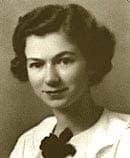
Beverly Cleary was a beloved American children's author, celebrated for her realistic and humorous portrayal of childhood. Her iconic characters, including Ramona Quimby and Henry Huggins, resonated with generations of readers. Cleary's extensive body of work, featuring titles like 'The Mouse and the Motorcycle' and 'Ramona the Brave,' earned her numerous accolades, including the Newbery Medal and the National Medal of Arts.
Similar books
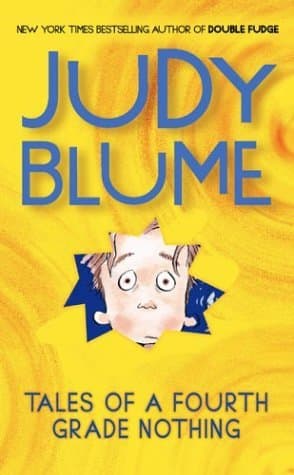
- Tales of a Fourth Grade Nothing
Judy Blume
4.1 (132k) average on GoodreadsChildren'sExplores sibling dynamics and family life with humor from a child's perspective.
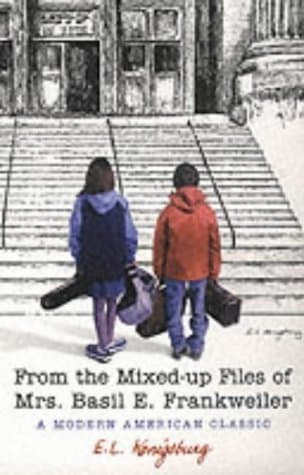
- From the Mixed-Up Files of Mrs. Basil E. Frankweiler
E.L. Konigsburg
4.2 (189k) average on GoodreadsChildren'sFeatures resourceful and slightly mischievous child protagonists navigating unique situations.
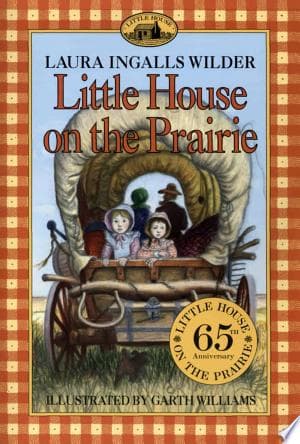
- Little House on the Prairie
Laura Ingalls Wilder
4.2 (256k) average on GoodreadsChildren'sWilder's series also depicts financial hardship and resourcefulness, but within a historical context of pioneering and self-sufficiency. Cleary's work presents a more contemporary, relatable struggle within an urban middle-class setting, making the themes of job loss and economic anxiety more immediately resonant with modern young readers.
- Harry Potter and the Sorcerer's Stone
J.K. Rowling
4.5 (7M) average on GoodreadsFantasyRescued from a miserable life under the stairs, an orphaned boy discovers he's a wizard destined for a magical school, where he uncovers a dangerous secret tied to the dark wizard who murdered his parents.
- The Hobbit, or There and Back Again
J.R.R. Tolkien
4.3 (2.9M) average on GoodreadsFantasyA comfort-loving hobbit named Bilbo Baggins is whisked away by a mischievous wizard and a band of dwarves on an unexpected journey to reclaim stolen treasure from a fearsome dragon, discovering courage and a magical ring along the way.
- Harry Potter and the Goblet of Fire
J.K. Rowling
4.6 (2.6M) average on GoodreadsFantasyA bewildered Harry Potter, underage and thrust into a deadly Triwizard Tournament, must brave dragons, mermaids, and a resurgent dark magic to survive a year that will forever alter the wizarding world.



Enjoyed the summary?
A summary gives you the shape of the book. The book itself has the detail, the examples and the voice.
Find Ramona and Her Father on AmazonAs an Amazon Associate, BookBrief earns from qualifying purchases. How we're funded