

Synopsis
Covers the whole plot, including the ending.
- Difficulty
- Hard
- Pacing
- Variable
- Mood
- Dark, Satirical, Disturbing, Philosophical, Chaotic
- Read it if
- You enjoy unconventional narratives, dark humor, social commentary, and stories that challenge your perception of reality and time.
- Skip it if
- You prefer linear plots, clear-cut resolutions, or are sensitive to graphic descriptions of violence, bodily fluids, and disease.
Rant Plot Summary
Covers the whole plot, including the ending.
The Birth and Early Peculiarities of Rant Casey
The story begins as an oral history, gathering interviews about Buster 'Rant' Casey, a figure both admired and disliked after his death. Rant's early life in Middleton, Ohio, is marked by strange and dangerous habits. From a young age, Rant intentionally contracted and spread diseases, including rabies, believing it created immunity and connection. He engaged in rituals, such as eating poisonous spiders and letting venomous snakes bite him, seeing these acts as 'immunization.' His parents, especially his mother, struggled to understand or control his extreme behaviors. His childhood friend, Shot Dunyun, describes Rant's ability to attract animals and his resilience to illness, setting the stage for his later, more destructive actions.
Rant's Teenage Rebellion and the 'Middleton Massacre'
As a teenager, Rant's oddities grow. He becomes a social outcast, known for his unsettling behaviors. His interest in diseases turns into a fascination with the body's limits and the idea of 'time zones' within human experience. The end of his Middleton period is the 'Middleton Massacre,' an event with conflicting accounts. Some believe Rant was responsible for violent attacks on townspeople, while others suggest he was framed or that the events were not as they seemed. The incident involves multiple victims and much chaos, solidifying Rant's reputation as a dangerous force and leading to his departure from Middleton.
Arrival in the City and the Dawn of Party Crashing
After the events in Middleton, Rant moves to a sprawling city, seeking a new life. Here, he discovers 'Party Crashing,' an urban demolition derby where participants intentionally crash their cars at night. This activity is divided into 'Daytimers' and 'Nighttimers,' with a social hierarchy and unspoken rules. Rant, with his disregard for safety and his understanding of risk, quickly succeeds as a 'Nighttimer.' He becomes a known figure, his reckless abandon and survival instincts earning him a legendary status among the Party Crashers. His actions begin to attract a devoted following, drawn to his charisma and the thrill he embodies.
The Rules and Rituals of Party Crashing
The interviews describe the social structure of Party Crashing. Daytimers crash during the day, often for sport or to relieve frustration, following rules to reduce serious injury. Nighttimers operate with greater intensity and danger, often resulting in severe injuries or death. For Nighttimers, Party Crashing is more than a game; it is a ritualistic pursuit of a higher state of consciousness, a way to manipulate time and experience. Rant's unique approach to crashing, his ability to survive and thrive in these deadly encounters, establishes his reputation as a legend among the Nighttimers, who see him as a messianic figure.
Rant's Romance with Echo and the Concept of Time Travel
Rant forms a relationship with Echo Fanning, a fellow Party Crasher and one of his followers. Their bond is intense and unusual, based on their shared understanding of Party Crashing's deeper meanings. Through Echo and other Nighttimers, the true purpose of the crashes is revealed: they are not just random destruction but attempts to manipulate time. By crashing at specific speeds and angles, Nighttimers believe they can create 'time zones' or 'time slips,' allowing them to experience moments outside the normal flow of time. Rant, with his connection to these temporal anomalies, is seen as the key to unlocking this potential.
The Conspiracy of the 'Time Worms' and the Royal Family
The oral history gradually uncovers an ancient conspiracy involving the 'Royal Family' — a group that controls the city and time. It is revealed that the Royal Family has manipulated human genetics for generations, creating 'time worms' or individuals with the ability to travel through time. Rant, it turns out, is a direct descendant of this Royal Family, predisposed to these temporal abilities. His mother, Carla, and his father, Shot Dunyun (who is revealed to be Rant's future self), are part of this lineage and the time-traveling scheme. Party Crashing is not just a subculture; it is a controlled experiment, a mechanism used by the Royal Family to identify and cultivate individuals like Rant.
Rant's Mission and the Creation of His Own Past
The central revelation of the book is Rant's mission: to travel back in time to impregnate his own mother, becoming his own father, Shot Dunyun. This paradox is the core of the Royal Family's plan, designed to continue a specific genetic line capable of controlling time. Rant's entire life, from his childhood to his involvement in Party Crashing, has been orchestrated to prepare him for this act. Echo Fanning is also part of this design, as she is destined to be Rant's mother, Carla, in the past. The crashes are about generating the temporal energy for Rant to make this jump. His 'death' in the present is a transition point for his journey into the past.
The Final Crash and Rant's Transformation
The book ends with detailed accounts of Rant's 'spectacular highway death.' This event, which appears to be a tragic accident, is Rant's calculated, final act of Party Crashing. It is the moment when he generates enough temporal energy to jump back in time. The testimonies describe the chaos and devastation of the crash, but also hint at the strange circumstances surrounding it. Rant does not truly die; he transcends, becoming Shot Dunyun, his own father. The crash is not an end but a beginning, fulfilling the cyclical prophecy of the Royal Family and ensuring the continuation of their time-traveling lineage.
The Legacy of Rant and the Endless Loop
The oral history concludes with the understanding that Rant's life, death, and transformation are part of an endless, self-sustaining loop. His existence as Rant Casey is a precursor to his role as Shot Dunyun, who then fathers Rant, ensuring the cycle continues. The interviews reflect on the implications of this temporal paradox, leaving readers to ponder free will versus predestination. The survivors and chroniclers of Rant's story are left to deal with the reality that their memories and experiences are part of a meticulously planned scheme. Rant's legacy is not just violence and rebellion, but a manipulation of time and identity, shaping the past and future.
Rant Characters
Buster 'Rant' Casey
Protagonist
The legendary Party Crasher who becomes his own father.
Rant is a charismatic, enigmatic, and ultimately destructive figure. From his childhood in Middleton, where he deliberately contracted and spread diseases, to his leadership of the Nighttime Party Crashers, Rant defies conventional norms. He is driven by an instinctual understanding of time and risk, viewing his dangerous activities as a path to a higher state of consciousness. His peculiar habits and resilience make him both feared and revered. He possesses an almost supernatural ability to survive catastrophic events, a trait linked to his genetic destiny. Rant's actions, initially perceived as random acts of rebellion, are revealed to be part of a larger, preordained plan to manipulate time.
Relationships: Shot Dunyun (Future self/father); Carla Casey (Mother); Echo Fanning (Lover/future mother); Green Casey (Sister)
Shot Dunyun
Supporting/Antagonist (initially perceived)
Rant's childhood friend and, ultimately, Rant himself.
Shot Dunyun is initially presented as Rant's childhood friend and confidante from Middleton, offering key insights into Rant's early peculiarities. He is one of the primary narrators in the oral history, providing a seemingly objective perspective. However, it is later revealed that Shot Dunyun is, in fact, Rant Casey from the future, having traveled back in time to impregnate Carla Casey (Echo Fanning in the past) and become Rant's biological father. His role is crucial to understanding the temporal paradox at the heart of the story, as he orchestrates events to ensure Rant's destiny is fulfilled.
Relationships: Rant Casey (Past self/son); Carla Casey (Wife/mother of Rant)
Echo Fanning
Supporting/Love Interest
A devoted Party Crasher and Rant's lover, destined to become his mother.
Echo Fanning is a Nighttime Party Crasher who becomes Rant's lover and one of his most fervent disciples. She is deeply immersed in the philosophy of time zones and the pursuit of temporal manipulation through crashing. Echo understands Rant's unique nature and is drawn to his dangerous charisma. Her relationship with Rant is intense and unconventional, based on their shared pursuit of extreme experiences. It is eventually revealed that Echo is destined to travel back in time and become Carla Casey, Rant's mother, thereby completing another crucial link in the temporal paradox and ensuring Rant's birth.
Relationships: Rant Casey (Lover/future son); Carla Casey (Future self)
Carla Casey
Supporting
Rant's mother, part of the orchestrated genetic lineage.
Carla Casey is Rant's mother, who struggles to understand and cope with her son's bizarre and dangerous behaviors during his childhood in Middleton. She is a seemingly ordinary woman thrust into extraordinary circumstances. Her experiences with Rant are often fraught with fear and confusion. However, it is revealed that Carla is the past version of Echo Fanning, having traveled back in time to fulfill her role in the Royal Family's genetic plan. She is an unwitting participant in the larger scheme, her existence crucial for the perpetuation of Rant's lineage and the time loop.
Relationships: Rant Casey (Son); Shot Dunyun (Husband/father of Rant); Echo Fanning (Future self)
Green Casey
Supporting
Rant's sister, a witness to his early life.
Green Casey is Rant's sister and another of the many narrators contributing to the oral history. She provides an intimate, albeit often exasperated, perspective on Rant's childhood and teenage years in Middleton. Green recounts her brother's unsettling habits, such as his deliberate infection with diseases and his generally disruptive presence. Her testimony helps to paint a picture of Rant's early life and the impact he had on his immediate family, highlighting the challenges of growing up alongside such an unconventional and dangerous sibling.
Relationships: Rant Casey (Brother); Carla Casey (Mother)
Chester 'Chet' Casey
Supporting
Rant's father, a quiet and often bewildered figure.
Chester 'Chet' Casey is Rant's biological father, though later revealed to be Rant's future self, Shot Dunyun. In the present timeline of Rant's childhood, Chet is depicted as a somewhat bewildered and passive figure, struggling to assert authority over his peculiar son. He is a 'Daytimer' at heart, preferring order and predictability, which puts him at odds with Rant's chaotic nature. His perspective adds to the complexity of Rant's upbringing and the challenges faced by his family. His true identity as Shot Dunyun is a major plot twist, making him a crucial, if initially understated, character.
Relationships: Rant Casey (Son); Carla Casey (Wife); Shot Dunyun (Future self)
The Royal Family
Antagonists/Controlling Force
A clandestine group manipulating time and genetics.
The Royal Family is a shadowy, powerful organization that secretly controls the city and, more importantly, the flow of time. They are responsible for orchestrating the entire temporal paradox surrounding Rant Casey, using Party Crashing as a means to identify and cultivate individuals with specific genetic markers for time travel. Their ultimate goal is to perpetuate a lineage capable of manipulating time, ensuring their continued influence and control. They operate behind the scenes, their machinations slowly revealed through the collected testimonies, demonstrating their extensive reach and ancient origins.
Relationships: Rant Casey (Genetic subject/instrument); Shot Dunyun (Genetic subject/instrument); Echo Fanning (Genetic subject/instrument)
Ivy
Supporting
A fellow Party Crasher and one of Rant's early followers.
Ivy is a Nighttime Party Crasher who is drawn to Rant's magnetic personality and reckless abandon. She provides firsthand accounts of Rant's exploits in the urban demolition derby, describing his unique driving style and his almost mythical status among the crashers. Ivy's testimony helps to illustrate the culture of Party Crashing and Rant's impact on its participants. She represents the broader group of individuals who are both inspired and bewildered by Rant's actions, seeing him as a leader who pushes the boundaries of their dangerous sport.
Relationships: Rant Casey (Leader/fellow Party Crasher)
Rant Themes
Identity and Self-Creation
The book explores how identity is constructed, particularly through the idea of Rant becoming his own father. Rant's self-infection, his embrace of Party Crashing, and his temporal journey are acts of self-creation. They challenge linear ideas of lineage and individuality. The oral history format fragments Rant's identity, showing how each narrator perceives him differently, creating a mosaic rather than a single self. The revelation that Shot Dunyun is Rant's future self forces a re-evaluation of who Rant 'is' and how his identity is linked to his past and future actions.
“If you don’t know what you want, you’ll never find it. If you don’t know what you deserve, you’ll always settle for less. You will become what you believe.”
Time and Paradox
A central theme is the manipulation of time and the resulting paradoxes. Party Crashing is a ritualistic method for creating 'time zones' or 'time slips,' letting characters experience moments outside linear chronology. The plot depends on the temporal loop where Rant Casey travels back in time to become his own father, Shot Dunyun, who then fathers Rant. This cyclical structure challenges how we understand cause and effect, suggesting a deterministic universe where past, present, and future are intertwined. The 'Royal Family' orchestrates these temporal manipulations, showing hidden control over destiny.
“Time is not a line, but a series of now-points, each with its own gravity, its own pull.”
Rebellion and Social Deviance
Rant's life is an act of rebellion against societal norms. From his childhood interest in disease, which he sees as 'immunization' against the mundane, to his leadership of the Party Crashing subculture, Rant chooses paths that challenge established order. Party Crashing itself is a violent, anti-establishment activity that rejects the safety and predictability of 'Daytimer' society. This theme explores the allure of danger, the thrill of breaking rules, and the formation of alternative communities that find meaning outside mainstream acceptance, often through self-destruction or extreme experiences.
“It’s not enough to be a rebel. You have to be a martyr. You have to die for your cause.”
Contagion and Immunity
From a young age, Rant is interested in disease, deliberately contracting and spreading rabies and other illnesses. He sees this as 'immunization,' believing that exposure to danger makes one stronger and more connected to life. This theme extends beyond literal disease to metaphorical contagion, where Rant's ideas and behaviors 'infect' those around him, especially the Party Crashers. His actions suggest a philosophy where embracing risk and even sickness is a path to enlightenment or a deeper understanding of existence, challenging the societal obsession with sterility and safety.
“You can’t be truly alive unless you’re prepared to die. You can’t be truly healthy unless you’re prepared to get sick.”
Urban Decay and Subculture
The unnamed city is a backdrop for the novel's exploration of urban decay and the emergence of extreme subcultures. The sprawling, neglected urban environment provides the setting for Party Crashing, a dangerous activity that thrives in the anonymity and abandoned spaces of the city. The division between 'Daytimers' and 'Nighttimers' reflects a broader societal stratification and the hidden lives lived outside mainstream view. The city itself is a character, a place where rules are fluid and identities are made in the shadows. It shows the contrast between sterile societal expectations and the raw, often violent, realities of its underbelly.
“The city was a wound, festering and beautiful, and we were the maggots, feasting on its rot.”
Plot Devices & Literary Techniques
Oral History/Multiple Perspectives
The entire novel is constructed as a collection of interviews and testimonies.
The novel is presented entirely as an oral history, compiled after Rant's death. This means the reader experiences Rant's life through the fragmented, often contradictory, and highly subjective accounts of various characters who knew him. This device creates an unreliable narrator effect, forcing the reader to piece together the 'truth' from conflicting viewpoints. It also mirrors the theme of fragmented identity and the idea that no single person can fully grasp Rant's complex nature. The multiple perspectives build suspense, gradually revealing the larger conspiracy and the true nature of Rant's existence, making the final revelations more impactful.
Temporal Paradox/Bootstrap Paradox
Rant becomes his own father, creating a self-sustaining time loop.
The core plot device is the bootstrap paradox, specifically the 'ontological paradox' where Rant Casey travels back in time to become Shot Dunyun, who then fathers Rant. This creates a closed causal loop where Rant is both his own ancestor and descendant, with no clear origin point for his existence. This paradox is not merely a plot twist but the central mechanism driving the entire narrative, explaining Rant's unique genetic predispositions and the Royal Family's intricate scheme. It challenges linear notions of time and causality, making Rant's entire life a preordained cycle.
Foreshadowing and Retrospection
Hints and clues about the temporal paradox are scattered throughout the early testimonies.
The oral history format allows for extensive use of foreshadowing and retrospection. Narrators often allude to strange events or Rant's peculiar insights into time from his childhood, which only make sense in light of the later revelations. Details about Shot Dunyun's past, Rant's 'immunization' theories, and the nature of Party Crashing are subtly introduced, building a sense of mystery. As the story progresses, these seemingly innocent details are recontextualized, revealing their true significance and the intricate planning behind Rant's life, making the reader re-evaluate everything they've learned.
The 'Time Zone' Concept
A pseudo-scientific explanation for temporal manipulation through Party Crashing.
The concept of 'time zones' or 'time slips' is a pseudo-scientific device used to explain how Party Crashing functions as a means of temporal manipulation. Nighttimers believe that by crashing at specific speeds, angles, and with certain mental states, they can create localized distortions in time, allowing them to experience moments outside the normal flow. This device provides a mystical, yet somewhat rationalized, framework for the extreme behaviors of the Party Crashers and their pursuit of temporal travel, tying their dangerous sport directly to the overarching plot of time manipulation and the Royal Family's agenda.
Rant Quotes
“Your life is a work of art that you are creating.”
“Every generation has its own ways of rebelling.”
“We are all just a collection of memories and experiences.”
“The only way to truly live is to embrace chaos.”
“History is a game of telephone played across centuries.”
“Sometimes the best way to get what you want is to not want it at all.”
“We are all just passengers on a runaway train.”
“The future is just a series of present moments that haven't happened yet.”
“You can't truly know someone until you've seen them at their worst.”
“Every ending is just a new beginning in disguise.”
“To truly understand something, you must first disassemble it.”
“The greatest freedom is the freedom from fear.”
“Life is a constant process of becoming, never truly arriving.”
Quiz
10 questions on the plot and the characters. Each answer comes with a short explanation.
Question 1
What is the primary activity that Rant Casey becomes known for leading in the big city?
- Underground street racing circuits
- An urban demolition derby called Party Crashing
- A secret society of night-time graffiti artists
- A movement to reclaim abandoned buildings for housing
Show answer
B. An urban demolition derby called Party Crashing The book description explicitly states that Rant becomes the leader of an urban demolition derby called Party Crashing, which is central to his activities in the city.
Question 2
How is Rant Casey's life story primarily presented to the reader?
- Through a first-person narrative from Rant himself
- As a series of newspaper articles and police reports
- Through an oral history compiled from friends' testimonies
- By a detached, omniscient narrator observing his life
Show answer
C. Through an oral history compiled from friends' testimonies The description states that after Rant's death, his friends 'gather the testimony needed to build an oral history of his short, violent life,' indicating this is the narrative structure.
Question 3
What is Rant Casey's ultimate fate, as mentioned in the book's premise?
- He is imprisoned for his serial killer activities
- He disappears without a trace, becoming a legend
- He dies a spectacular highway death
- He returns to his small town, reformed
Show answer
C. He dies a spectacular highway death The summary clearly states, 'Rant Casey will die a spectacular highway death,' which is a key plot point framing the narrative.
Question 4
What characteristic is attributed to Rant Casey regarding his potential as a killer?
- He is described as a reluctant killer, acting only in self-defense.
- He is called 'the most efficient serial killer of our time.'
- His killings are random acts of passion, not premeditated.
- He is a vigilante, only targeting known criminals.
Show answer
B. He is called 'the most efficient serial killer of our time.' The description introduces Rant by stating, 'Buster “Rant” Casey just may be the most efficient serial killer of our time,' highlighting his unique and chilling nature.
Question 5
Before moving to the big city, what was Rant Casey's social status in his small town?
- He was a quiet, academically gifted student.
- He was considered the town's golden boy, popular and athletic.
- He was known as a high school rebel.
- He was an outcast, largely ignored by his peers.
Show answer
C. He was known as a high school rebel. The text states, 'A high school rebel, Rant Casey escapes from his small town home...', indicating his rebellious nature as a youth.
Question 6
What genre elements are explicitly mentioned for 'Rant'?
- Mystery and Romance
- Fantasy and Historical Fiction
- Thriller and Science Fiction
- Comedy and Drama
Show answer
C. Thriller and Science Fiction The provided information explicitly labels the book as 'Thriller, Science Fiction.'
Question 7
The narrative structure of 'Rant' heavily relies on which literary device to tell its story?
- Epistolary format, using letters and diary entries
- Stream of consciousness from a single protagonist
- Multiple perspectives forming an oral history
- Flashbacks interspersed with a linear present-day plot
Show answer
C. Multiple perspectives forming an oral history The book is described as an 'oral history' built from the 'testimony' of Rant's friends, which means it uses multiple perspectives to piece together the story.
Question 8
Considering the themes often explored by Chuck Palahniuk and the provided synopsis, what might 'Party Crashing' symbolize beyond a simple demolition derby?
- A nostalgic return to simpler, pre-industrial forms of entertainment.
- A critique of urban planning and the need for more public spaces.
- A destructive act of rebellion against societal order and consumerism.
- A community-building exercise that fosters camaraderie among participants.
Show answer
C. A destructive act of rebellion against societal order and consumerism. Given Palahniuk's style and Rant's 'rebel' nature, 'Party Crashing' likely represents a chaotic, destructive, and anti-establishment form of rebellion against conventional urban life and its values.
Question 9
The description implies a non-linear narrative structure. What effect does presenting Rant's life as an 'oral history' after his death likely have on the reader's experience?
- It creates a straightforward, chronological understanding of his actions.
- It allows for a more objective, unbiased account of his character.
- It builds suspense and forces the reader to piece together a fragmented, possibly unreliable truth about Rant.
- It primarily serves to introduce a large cast of characters without focusing on Rant.
Show answer
C. It builds suspense and forces the reader to piece together a fragmented, possibly unreliable truth about Rant. An oral history compiled post-mortem from multiple sources inherently introduces subjectivity, potential contradictions, and fragmentation, forcing the reader to actively construct the truth about Rant, thereby building suspense and complexity.
Question 10
How does the juxtaposition of Rant being a 'high school rebel' who 'escapes from his small town' and becoming a 'serial killer' and leader of 'Party Crashing' contribute to the book's potential themes?
- It suggests a simple coming-of-age story where a youth finds his place in the world.
- It highlights the corrupting influence of the big city on innocent small-town individuals.
- It explores the escalation of rebellious tendencies into extreme, destructive behaviors and a critique of societal norms.
- It indicates a transformation from a quiet observer to an active participant in community events.
Show answer
C. It explores the escalation of rebellious tendencies into extreme, destructive behaviors and a critique of societal norms. The progression from a 'rebel' to a 'serial killer' and leader of a 'demolition derby' suggests an escalating rejection of conventional society, exploring how rebellion can transform into destructive and anti-social behavior, a common theme in Palahniuk's work.
Rant FAQ
What is 'Rant' about?
'Rant' by Chuck Palahniuk is an oral history compiled after the spectacular death of its titular character, Buster 'Rant' Casey. Through interviews with his friends, family, and associates, the book unravels Rant's bizarre life, from his origins as a rabies carrier in a small town to his rise as a leader of urban demolition derbies known as Party Crashing, ultimately exploring themes of time travel, destiny, and societal rebellion.
Why should I read 'Rant'?
You should read 'Rant' for its unique narrative structure, dark humor, and provocative exploration of societal norms, time, and destiny. It offers a thrilling, often unsettling, look into a counter-culture movement and challenges conventional notions of heroism and villainy, all wrapped in Palahniuk's signature transgressive style.
What is the background/setting of 'Rant'?
The story is primarily set in a near-future urban environment where society is divided into 'Daytimers' and 'Nighttimers', and a subculture of 'Party Crashers' engages in violent vehicular collisions for sport and social bonding. Rant's early life is depicted in the isolated, rabies-ridden rural town of Middleton, providing a stark contrast to his eventual metropolitan exploits.
What are the most memorable quotes?
Some memorable quotes include 'We're all going to die, it's just a question of when and how.' and 'You are the sum total of your memories. A collective of experiences, all bound together by the thin string of consciousness.' These lines encapsulate the book's fatalistic outlook and its deep dive into the nature of identity and existence.
What writing style does the author use?
Chuck Palahniuk employs an oral history format, presenting the narrative through a series of interconnected testimonies from various characters. This fragmented, non-linear style allows for multiple perspectives and often contradictory accounts, mirroring the unreliable nature of memory and perception, and is characterized by his usual stark, visceral prose.
What minor details add significant meaning?
The recurring motif of rabies, initially a literal infection in Rant's small town, evolves into a metaphor for a contagious rebellion against societal norms and a means of transcending conventional timelines. The seemingly insignificant details about Rant's unique scent and his ability to attract vermin subtly hint at his true nature as a 'time bomb' and a catalyst for change.
What are some subtle foreshadowing moments?
Early descriptions of Rant's unusual resistance to pain and his seemingly accidental, yet destructive, tendencies in Middleton foreshadow his eventual role as a pivotal figure in the Party Crashing movement. The repeated mentions of his 'perfect' highway death, long before it occurs, subtly prepare the reader for its significance as a fixed point in time.
What unexpected character connections exist?
It is revealed that many of the Party Crashers, including characters like Shot Dunyun and Green Light, are not just Rant's contemporaries but are, in fact, his descendants, unknowingly participating in a generational cycle orchestrated by Rant himself across different timelines. This twist profoundly redefines their relationships and Rant's ultimate purpose.
What are unspoken character motivations?
Many characters are driven by an unspoken desire for belonging and significance within the chaotic Party Crashing subculture, seeking a release from the mundane strictures of Daytimer society. Rant himself is motivated by a deep-seated, almost instinctual drive to fulfill his destiny as a 'time bomb' and reset aspects of the timeline, a motivation he may not fully articulate even to himself.
What psychological complexities do characters exhibit?
Rant exhibits a complex blend of innocence and destructive impulse, often appearing oblivious to the consequences of his actions while simultaneously orchestrating grand, time-altering schemes. Characters like Green Light struggle with their loyalty to Rant versus their own sense of self-preservation, grappling with the allure and danger of their chosen lifestyle.
What are the major emotional turning points?
A major emotional turning point is the revelation of Rant's true nature as a 'time bomb' and the architect of his own lineage, which recontextualizes all the preceding violence and chaos as part of a larger, predetermined plan. The moments where characters realize their own roles in Rant's grand design evoke both awe and terror.
How do relationship dynamics evolve?
Initially, relationships are built on the shared thrill and camaraderie of Party Crashing. However, as the truth about Rant and the nature of time travel is unveiled, these dynamics shift dramatically. Friendships transform into ancestral bonds, and perceptions of Rant evolve from a reckless leader to a pivotal, almost mythical figure whose influence spans generations.
Which parts remain ambiguous or open-ended?
The ultimate success or failure of Rant's 'time bomb' mission remains somewhat ambiguous. While the narrative strongly suggests a reset or alteration of the timeline, the precise nature of the 'better' future he aimed to create, and whether it was truly achieved, is left to the reader's interpretation, allowing for lingering questions about destiny versus free will.
What are controversial scenes or decisions?
The explicit and graphic descriptions of Party Crashing, involving severe injuries and fatalities, are inherently controversial. Rant's decision to infect himself with rabies as a child, and his subsequent use of the disease as a means of communication and a catalyst for time manipulation, is a particularly shocking and morally ambiguous plot point.
'Rant' ending explained: how it ends & what it means
The book ends with the culmination of Rant's 'perfect' highway death, which is revealed to be a fixed point in time and the trigger for his 'time bomb' effect. This event causes a temporal reset, essentially allowing Rant to go back and 're-seed' the past with his own genetic material through his descendants, ultimately aiming to create a more resilient or 'better' future for humanity by correcting the mistakes of his own timeline. It means Rant was not just a destructive force, but a necessary, albeit violent, agent of change, destined to alter the course of history.
About the author

Chuck Palahniuk is a highly influential contemporary author, best known for his debut novel "Fight Club." His works, including "Haunted" and "Guts," are characterized by their transgressive themes, dark humor, and often shocking narratives. Palahniuk's distinctive style has earned him a significant cult following and cemented his reputation as a master of postmodern fiction.
Similar books
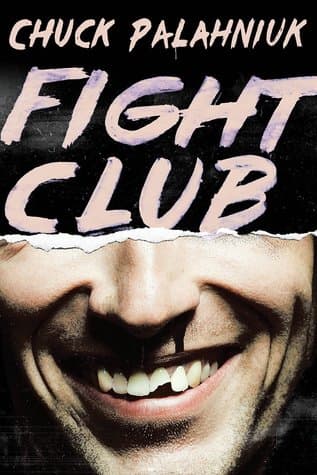
- Fight Club
Chuck Palahniuk
4.2 (499k) average on GoodreadsThrillerShares Palahniuk's signature transgressive style, social critique, and unreliable narration.
- House of Leaves
Mark Z. Danielewski
4.1 (131k) average on GoodreadsThrillerFeatures an experimental narrative structure and a deep dive into psychological horror and metafiction.
- Trainspotting
Irvine Welsh
4.1 (153k) average on GoodreadsThrillerWhile both Rant and Trainspotting explore fringe subcultures and utilize multiple perspectives, Trainspotting's narrative is more linear and character-focused, depicting its characters' struggles directly. Rant, conversely, uses its oral biography structure to construct a posthumous, fragmented portrait, making it a more experimental and less direct character study.
- Angels & Demons
Dan Brown
3.9 (2.7M) average on GoodreadsThrillerA Harvard symbologist races through Rome's ancient sites, deciphering cryptic clues to unmask the Illuminati and stop a vengeful plot to destroy the Vatican with a stolen antimatter weapon.
- Gone Girl
Gillian Flynn
4.1 (2.3M) average on GoodreadsThrillerA wife's sudden disappearance on her fifth anniversary reveals a web of lies and psychological warfare, exposing the secrets within a seemingly perfect marriage.
- The Girl on the Train
Paula Hawkins
3.9 (2.1M) average on GoodreadsThrillerA woman’s fascination with a seemingly perfect couple she watches from her daily train commute leads her into a dark investigation when she witnesses something that shatters their idyllic image.




Enjoyed the summary?
A summary gives you the shape of the book. The book itself has the detail, the examples and the voice.
Find Rant on AmazonAs an Amazon Associate, BookBrief earns from qualifying purchases. How we're funded