
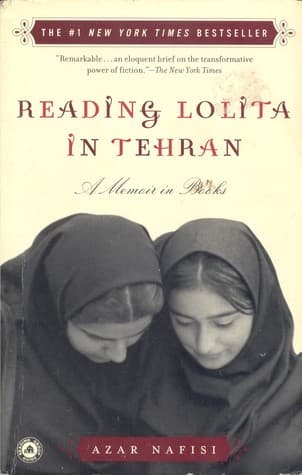
Core Idea
- Difficulty
- Medium
Key Takeaways from Reading Lolita in Tehran
Literature as an Act of Resistance
Reading forbidden texts becomes a subversive act against totalitarianism.
Nafisi shows how reading Western classics in post-revolutionary Iran became an act of defiance. In a society where women had to wear veils and artistic expression was stopped by a 'blind censor,' these secret literary discussions offered intellectual freedom. The characters in Austen, Fitzgerald, and Nabokov reflected the students' struggles with identity, love, and independence under an oppressive government. This takeaway highlights the book's main idea: literature is not just an escape, but a tool for self-preservation and resistance, helping people build an inner world that tyranny cannot touch. Discussing these novels, often without their mandatory veils, directly challenged the state's control over their minds and bodies.
“Every morning when I looked at the mirror I'd be confronted by a woman I didn't recognize, and I would spend the day trying to re-create myself in her image.”
In the book: The secret Thursday morning classes where students removed their veils and openly discussed authors like Nabokov, a direct violation of state-imposed dress codes and intellectual censorship.
Try this: Recognize the power of art and literature not just for entertainment, but as a crucial means of fostering critical thinking, empathy, and personal freedom, especially in environments that seek to suppress individual thought.
The Tyranny of the Collective vs. Individual Identity
The Islamic Revolution sought to erase individual identity, but literature offered a path to self-discovery.
Nafisi describes the systematic breakdown of individual identity by the Islamic Republic. The government imposed a single, collective identity, especially on women, through mandatory veiling, control of public spaces, and suppression of personal expression. This collective identity demanded conformity and punished any deviation. However, in the pages of forbidden novels, Nafisi and her students found characters who dealt with their own desires, moral problems, and personal freedoms. Reading 'The Great Gatsby,' for example, let them explore themes of illusion and reality, mirroring their own disappointment with the revolution's promises. This engagement with diverse individual experiences in literature became an act of self-affirmation, helping them reclaim their distinct selves amid the suffocating uniformity the state imposed.
“The public sphere was suffocating; the private sphere was shrinking.”
In the book: The personal stories of students like Sanaz and Mitra, whose individual struggles with love, family, and societal expectations are juxtaposed with the collective demands of the regime, finding resonance in literary characters.
Try this: Actively cultivate and protect individual thought and expression, especially when faced with pressures to conform to a dominant narrative or group identity. Engage with diverse perspectives to broaden understanding of self and others.
The Power of Imagination in Confined Realities
Literature provides an escape and a means to process an unbearable reality.
In a world increasingly lacking beauty and freedom, Nafisi and her students used literature as a tool for imaginative resistance. The worlds of Austen's Meryton or Fitzgerald's West Egg offered not just distraction, but a way to understand and criticize their own harsh reality. The students engaged with characters like Elizabeth Bennet, who challenged social norms, or Daisy Buchanan, who represented elusive dreams, finding parallels to their own confined lives. This imaginative engagement was not mere escapism; it was a psychological survival method. By entering these fictional realms, they could mentally go beyond the physical and ideological barriers of their oppressive environment, maintaining their humanity and hope in the face of despair. This argument strongly demonstrates the practical, therapeutic role of art.
“You have to imagine a world that doesn't exist. You have to imagine a world that you want to exist.”
In the book: The students' intense discussions about the moral choices and psychological landscapes of characters, treating them as real people whose experiences offered insights into their own lives under the Islamic Republic.
Try this: Actively seek out and engage with imaginative works (books, art, music) as a means of processing complex realities, fostering empathy, and maintaining mental resilience, especially during challenging times.
The Universal Language of Storytelling
Despite cultural differences, great literature speaks to universal human experiences.
Nafisi's memoir shows that great literature's power goes beyond geographical and cultural limits. Despite the differences between 19th-century England or 1920s America and revolutionary Iran, her students found meaning in the themes Austen, James, and Fitzgerald explored. The universal struggles of love, betrayal, class, identity, and the search for meaning spoke directly to their lives. For example, the situation of women in Austen's novels, limited by social expectations and few choices, mirrored the students' own realities, though in different historical contexts. This shows how well-crafted stories can connect different human experiences, building empathy and understanding across cultures, even when those cultures are in ideological opposition.
“For us, the world of fiction was a place to hide, a place to think, a place to dream.”
In the book: The students' passionate debates and personal connections to characters like Elizabeth Bennet ('Pride and Prejudice') or Jay Gatsby ('The Great Gatsby'), despite the vastly different cultural contexts.
Try this: Seek out and engage with literature and art from diverse cultures to broaden understanding of shared human experiences and foster cross-cultural empathy, even in politically charged environments.
The Double Life of the Oppressed
Living under tyranny necessitates a public performance and a private self.
A repeated idea in 'Reading Lolita in Tehran' is the need to live a 'double life' under an authoritarian government. In public, Nafisi and her students followed the state's rules—veiling, adhering to strict social codes, and censoring their speech. However, in the privacy of Nafisi's living room, they removed their veils and spoke freely, showing their true selves and critical thoughts. This duality is not just a survival method but also a psychological burden, creating tension between the authentic self and the performed self. Nafisi explores this through her own experiences and those of her students, highlighting how this forced split affects their relationships, sense of identity, and ability to trust. The book suggests this constant performance erodes authenticity and trust in public life.
“We were all living a double life. We had to.”
In the book: Nafisi's detailed descriptions of her students transforming from veiled, quiet figures in public to vibrant, outspoken individuals in her private class, and her own struggles teaching within the university system while holding dissenting views.
Try this: Recognize the psychological toll of suppressing one's true self and the importance of creating safe spaces where authenticity can thrive. Be aware of how societal pressures can force individuals into performing roles that diverge from their inner beliefs.
The Erosion of Language and Meaning
Totalitarianism corrupts language, making literature essential for reclaiming meaning.
Nafisi notes how the Islamic Republic distorted language to control thought and enforce its ideology. Words like 'freedom' or 'justice' lost their original meaning and were re-used to fit the state's story. This corruption of language made real communication difficult and created a climate of suspicion. In contrast, the precision and nuance of literary language became a refuge. By carefully analyzing the prose of Nabokov or the dialogue of Henry James, Nafisi and her students reclaimed meaning. They learned to see subtle truths and resist the simplistic, often deceptive, rhetoric of the government. This insight shows literature's role not just as entertainment, but as a tool for critical thinking and maintaining intellectual integrity in the face of propaganda.
“In a totalitarian regime, words are not meant to transmit meaning but to create a uniform reality.”
In the book: Nafisi's discussions on how official rhetoric redefined terms and how her students struggled to articulate nuanced thoughts in an environment where language was weaponized, contrasting this with their deep dives into literary texts.
Try this: Cultivate critical literacy by questioning official narratives and examining the precise use of language in media and political discourse. Engage with complex texts to hone the ability to discern nuance and resist oversimplification.
The Teacher as a Beacon of Hope
A dedicated teacher can provide intellectual and emotional sanctuary.
Nafisi portrays herself not just as an instructor, but as a mentor and emotional support for her students. Her home became a 'sanctuary' where intellectual and personal matters mixed. She created an environment of trust and open discussion, letting her students express fears, hopes, and critical opinions that were forbidden elsewhere. This relationship went beyond literary analysis; Nafisi offered guidance, empathy, and a consistent presence in their difficult lives. She understood that education in such an oppressive context was not just about sharing knowledge, but about nurturing the human spirit and validating individual experiences. This highlights the impact a dedicated educator can have, especially when bravely creating spaces for intellectual freedom against great odds.
“My students were my reason for being, my link to the future, my hope.”
In the book: The students' deep personal confessions and reliance on Nafisi for emotional support and intellectual guidance, alongside their literary discussions, during the secret classes.
Try this: Support and value educators who foster critical thinking, empathy, and safe spaces for dialogue, recognizing their crucial role in nurturing individual and societal well-being, especially in challenging circumstances.
The Personal is Political, and Vice Versa
Individual lives are inextricably shaped by political realities.
Nafisi skillfully blends the personal stories of her students with the political changes of post-revolutionary Iran. The novel shows how the government's ideological rules directly affected the most intimate parts of life: dress, relationships, career choices, and even thoughts. The students' struggles with arranged marriages, forbidden love, and academic suppression are not just personal dramas but direct results of the political climate. Similarly, their engagement with literature, though seemingly private, becomes political as it challenges state control over their minds. This constant interaction between the personal and the political is a core idea of the book, illustrating that in a totalitarian society, no part of life remains untouched by the state's influence. This insight helps understand the full nature of oppression.
“Our private lives were now public property, and our public lives were now controlled by the state.”
In the book: The stories of students like Yassi, whose personal choice of a boyfriend leads to severe repercussions, or Manna, whose family struggles with the regime's economic and social policies, all directly tied to the political landscape.
Try this: Recognize how political systems profoundly influence individual lives and choices. Advocate for systems that protect personal freedoms and autonomy, understanding that the personal sphere is vulnerable to political encroachment.
Memory and the Act of Storytelling
Memoir itself is a testament to the enduring power of narrative against erasure.
Beyond the stories in the books, Nafisi's memoir itself is an act of storytelling meant to preserve memory against a government that tried to rewrite history and erase dissenting voices. The book is a personal recollection, but it also is a historical document, capturing the experience of intellectual and emotional resistance in a specific time and place. By narrating her own journey and those of her students, Nafisi counters the official state narrative, ensuring that the complexities, suffering, and resilience of individuals are not forgotten. This layer of writing and remembering reinforces the idea that stories, whether fictional or factual, are essential for truth-telling and maintaining human dignity when attempts are made to control or distort reality. This is a subtle but powerful part of the book's message.
“The greatest tragedy is to live in a country where one is not allowed to remember.”
In the book: The entire structure of the book as a memoir, blending personal experience with literary analysis and historical context to provide a counter-narrative to official Iranian history.
Try this: Actively engage in preserving personal and collective histories, especially those that challenge dominant narratives. Support and create platforms for diverse voices and stories to ensure a richer, more accurate understanding of the past.
The Limitations of Literature
While powerful, literature alone cannot overthrow a totalitarian regime.
While Nafisi argues for literature's liberating power, her memoir also acknowledges its limits. The books gave intellectual and emotional comfort, encouraged critical thinking, and preserved individual identity, but they could not directly dismantle the oppressive government. The students remained in their country, subject to its laws and dangers. The outcome for many, including Nafisi, was exile or continued struggle within Iran. This perspective keeps the book from being overly idealistic. It suggests that while art is essential for the spirit, real-world change often requires political action and collective mobilization, which literature can inspire but not directly achieve. This acknowledgment adds realism and depth to the narrative, reminding readers of the harsh realities faced by those under tyranny.
“Literature cannot give you freedom, but it can make you aware of your imprisonment.”
In the book: Nafisi's eventual decision to leave Iran and her students' ongoing struggles, despite their profound engagement with literature, demonstrating that intellectual freedom does not always translate to political freedom.
Try this: Understand that while art and intellectual pursuits are vital for personal growth and societal critique, they are often precursors or companions to, rather than substitutes for, direct action and systemic change in addressing injustice.
Quiz
10 questions on the main ideas. Each answer comes with a short explanation.
Question 1
What is the primary setting for the secret gatherings described in the book?
- A university classroom
- A public library
- Azar Nafisi's living room
- A hidden basement
Show answer
C. Azar Nafisi's living room The memoir explicitly states that the secret gatherings took place in Azar Nafisi's living room.
Question 2
Who is the author of 'Reading Lolita in Tehran: A Memoir in Books'?
- Jane Austen
- F. Scott Fitzgerald
- Vladimir Nabokov
- Azar Nafisi
Show answer
D. Azar Nafisi The book is a memoir written by Azar Nafisi, detailing her experiences.
Question 3
What kind of books were the students secretly reading?
- Religious texts
- Forbidden Western classics
- Contemporary Iranian literature
- Political manifestos
Show answer
B. Forbidden Western classics The memoir highlights the reading of forbidden Western classics by authors like Austen, Fitzgerald, James, and Nabokov.
Question 4
What was the political and social climate in Tehran during the time of the memoir?
- A period of liberal reform and openness
- Strict Islamic rule with censorship and raids
- A neutral state with limited government intervention
- A war-torn nation with widespread destruction
Show answer
B. Strict Islamic rule with censorship and raids The text describes the 'Islamic Republic of Iran,' 'Islamic morality squads,' 'arbitrary raids,' and a 'blind censor,' indicating a strict and oppressive environment.
Question 5
What risk did the female students take by attending these secret readings?
- Being expelled from university
- Facing public humiliation
- Having their property confiscated
- All of the above, including removing their veils
Show answer
D. All of the above, including removing their veils The memoir mentions that the girls 'risked removing their veils' and implies significant danger from the authorities, making all options plausible risks in such a climate.
Question 6
The memoir suggests that the stories of the students and the characters they read became:
- Completely separate and unrelated
- Intertwined and connected
- A source of conflict between them
- Only relevant to the students' personal lives
Show answer
B. Intertwined and connected The text explicitly states, 'In this extraordinary memoir, their stories become intertwined with the ones they are reading.'
Question 7
Which of the following authors is NOT mentioned as being read by the students?
- Jane Austen
- Virginia Woolf
- F. Scott Fitzgerald
- Henry James
Show answer
B. Virginia Woolf The memoir lists Jane Austen, F. Scott Fitzgerald, Henry James, and Vladimir Nabokov. Virginia Woolf is not mentioned in the provided excerpt.
Question 8
What does the memoir celebrate as a liberating force?
- Political activism
- Religious devotion
- The power of literature
- Economic independence
Show answer
C. The power of literature The final sentence of the excerpt states it is 'a celebration of the liberating power of literature.'
Question 9
The phrase 'arbitrary raids' in the context of Islamic morality squads suggests:
- Raids that were carefully planned and predictable
- Raids that were random, unpredictable, and potentially without clear justification
- Raids conducted only with legal warrants
- Raids focused on specific, pre-identified targets
Show answer
B. Raids that were random, unpredictable, and potentially without clear justification 'Arbitrary' means based on random choice or personal whim, rather than any reason or system. This implies unpredictability and lack of clear justification for the raids.
Question 10
What is the overarching theme explored through the students' clandestine reading sessions?
- The limitations of education in oppressive societies
- The importance of adhering to moral codes
- Resilience against tyranny and the transformative nature of reading
- The conflict between Western and Eastern cultural values
Show answer
C. Resilience against tyranny and the transformative nature of reading The memoir is described as an 'exploration of resilience in the face of tyranny and a celebration of the liberating power of literature,' which encompasses the transformative nature of reading.
Reading Lolita in Tehran FAQ
What is 'Reading Lolita in Tehran' about?
'Reading Lolita in Tehran' is a memoir by Azar Nafisi that recounts her experiences teaching forbidden Western literature to a group of female students in Iran. It weaves together their personal stories with the classic novels they read.
Who is the author of 'Reading Lolita in Tehran'?
The author of 'Reading Lolita in Tehran' is Azar Nafisi, an Iranian-American scholar and writer.
What is the setting of 'Reading Lolita in Tehran'?
The memoir is set in the Islamic Republic of Iran, specifically in Tehran, during a period of strict religious and political control.
What kind of books did Azar Nafisi teach?
Azar Nafisi taught forbidden Western classics, including works by authors like Jane Austen, F. Scott Fitzgerald, Henry James, and Vladimir Nabokov.
Why were the books considered forbidden?
The books were considered forbidden because they dealt with themes and ideas that were contrary to the strict Islamic morality and censorship enforced by the regime in Iran at the time.
What does the memoir say about the power of literature?
The memoir celebrates literature as a source of freedom, imagination, and resistance, showing how it can offer solace and a means of challenging oppressive regimes.
What is the significance of the students reading in secret?
Reading in secret highlights the risks the students and Azar Nafisi took to engage with ideas and art that were suppressed by the authorities. It underscores their bravery and desire for intellectual freedom.
How does the memoir intertwine personal stories with literature?
The memoir uses the themes and characters from the novels the students read as mirrors or parallels to their own lives, experiences, and struggles under the Iranian regime.
Is 'Reading Lolita in Tehran' a fictional novel?
No, 'Reading Lolita in Tehran' is a memoir, meaning it is a non-fictional account of Azar Nafisi's personal experiences and reflections.
What themes are explored in 'Reading Lolita in Tehran'?
The memoir explores themes of resilience, resistance, freedom, censorship, the role of women in society, and the enduring power of literature and storytelling.
About the author

Azar Nafisi is an Iranian-American writer and academic, best known for her memoir "Reading Lolita in Tehran." This critically acclaimed work explores the lives of women in Iran through the lens of forbidden Western literature. Nafisi's writing often delves into themes of freedom, self-expression, and the power of books in repressive societies.
Similar books
- Persepolis: The Story of a Childhood
Marjane Satrapi
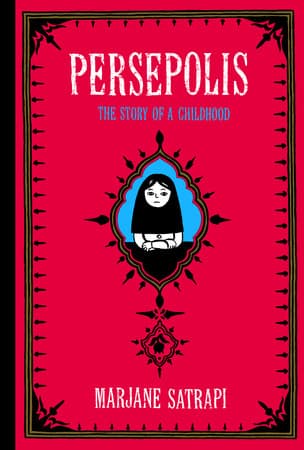
4.3 (158k) average on GoodreadsBiographyWhile both "Reading Lolita in Tehran" and "Persepolis" offer intimate perspectives on Iran during and after the Islamic Revolution, they differ significantly in their approach and audience. Satrapi's graphic novel provides a more immediate, visual, and often humorous account of childhood experiences, making it highly accessible to a broad readership, including younger audiences. Nafisi's work is more academic and introspective, delving deeply into literary theory and its application to adult life under oppression, appealing to readers interested in intellectual discourse and the role of literature. Satrapi focuses more on the societal changes and personal impact through a child's eyes, while Nafisi explores the intellectual and emotional resistance of adults through the lens of forbidden books.
- The Kite Runner
Khaled Hosseini
4.3 (2.4M) average on GoodreadsHistorical Fiction"Reading Lolita in Tehran" and "The Kite Runner" both explore themes of identity, memory, and the impact of political upheaval in the Middle East, but through distinct narrative forms. Hosseini's novel is a fictional saga set in Afghanistan, focusing on a personal story of friendship, betrayal, and redemption against a historical backdrop. While it evokes strong emotional responses and offers insights into Afghan culture, its primary goal is storytelling. Nafisi's memoir, conversely, is non-fiction and explicitly didactic, using real-life experiences and literary analysis to make a philosophical argument about the power of imagination and the human spirit under totalitarianism. Hosseini prioritizes plot and character development within a fictional framework, whereas Nafisi prioritizes intellectual exploration and personal reflection within a factual framework.
- The Diary of a Young Girl
Anne Frank
4.2 (2.7M) average on GoodreadsBiographyDuring the Nazi occupation, a teenage girl's diary, written from a secret annex, shares observations on humanity, hope, and the wait for freedom.
- Eat, Pray, Love
Elizabeth Gilbert
3.6 (1.5M) average on GoodreadsLifestyleA heartbroken writer leaves her conventional life for a year-long global search for pleasure in Italy, spiritual devotion in India, and unexpected love and balance in Bali.
- Night
Elie Wiesel
4.3 (970k) average on GoodreadsBiographyIn the darkness of Auschwitz and Buchenwald, a teenage Elie Wiesel faces the extermination of his family, the loss of his faith, and the lasting scars of humanity's deepest cruelty.
- Steve Jobs
Walter Isaacson
4.1 (957k) average on GoodreadsBusinessSteve Jobs was a visionary who fused creativity and technology to revolutionize six industries and shape our digital world.





Enjoyed the summary?
A summary gives you the shape of the book. The book itself has the detail, the examples and the voice.
Find Reading Lolita in Tehran on AmazonAs an Amazon Associate, BookBrief earns from qualifying purchases. How we're funded