
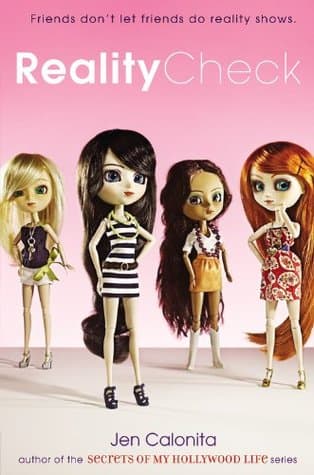
Synopsis
Covers the whole plot, including the ending.
- Difficulty
- Easy
- Pacing
- Moderate
- Mood
- Humorous, Dramatic, Thought-provoking, Engaging
- Read it if
- You enjoy stories about friendship, the pitfalls of fame, and characters standing up to injustice, especially in a contemporary teen setting.
- Skip it if
- You dislike young adult drama or stories that focus on the negative aspects of reality television.
Reality Check Plot Summary
Covers the whole plot, including the ending.
The Big Pitch
Sixteen-year-olds Charlie, Keiran, Brooke, and Hallie, close friends in suburban Connecticut, meet Mr. Harris, a TV executive from the Global Network. He offers them a reality show, describing it as a mix of 'The Hills' and 'The Secret Life of the American Teenager,' promising fame and money. The girls are excited by the unexpected chance, seeing it as a dream. Despite some concerns about constant cameras, the idea of being 'the hottest thing on our network' is too appealing, and they sign contracts, unaware of reality television's manipulative nature.
Filming Begins: The Honeymoon Phase
Cameras follow Charlie, Keiran, Brooke, and Hallie everywhere—at school, home, and their usual spots. The newness is exciting but also makes them self-conscious. Producers, led by the seemingly friendly but subtle Marissa, start directing their interactions, asking them to re-enact conversations or exaggerate reactions. Brooke, naturally outgoing, quickly adapts to the cameras, often playing up her personality. Keiran, more private, finds it harder to be herself. Charlie tries to keep things normal, and Hallie notices the group changing with growing unease.
Brooke's Star Power
As filming continues, Brooke seeks the spotlight more, often performing for the cameras and making dramatic statements. She starts to value screen time over real interactions, often suggesting 'storylines' or creating small conflicts for the camera. This behavior bothers Charlie, Keiran, and Hallie, who feel Brooke is no longer acting like their friend. However, the producers encourage Brooke, praising her 'natural talent' and 'on-screen presence,' which fuels her desire for fame and widens the gap between her and the others.
Keiran's Exit
During a production meeting, Mr. Harris and Marissa tell the girls that Keiran's on-screen persona isn't 'rating well' with test audiences; she's 'too quiet' and 'not dramatic enough.' To Charlie and Hallie's shock, Keiran is abruptly written out of the show. This decision devastates Keiran, who feels rejected. The producers subtly encourage the remaining girls to distance themselves from Keiran, implying her presence would hurt their success. This makes Charlie and Hallie feel guilty, while Brooke, though surprised, quickly moves on, solidifying Keiran's painful exclusion from both the show and, increasingly, their friendship.
Charlie's Growing Suspicion
After Keiran's unfair dismissal, Charlie grows suspicious of the producers' goals. She notices how conversations are steered, how 'spontaneous' events are often planned, and how conflicts are exaggerated or made up. She overhears producers discussing their cynical approach to drama. Charlie feels uneasy and betrayed, realizing their lives are being scripted and their friendships sacrificed for entertainment. Her initial excitement turns into a determined watch of the show's manipulative tactics.
Hallie's Discomfort and Brooke's Transformation
Hallie, the most sensitive of the group, finds the constant filming and manufactured drama harder to handle. She misses their old connection and struggles with Brooke's changed personality. Brooke, meanwhile, fully embraces her 'reality TV persona,' becoming more self-absorbed, competitive, and less caring toward her friends. She sees the show as her path to stardom and will do whatever producers suggest to stay in the limelight, further alienating her from Charlie and Hallie, who see their friend change into someone unrecognizable.
The Breaking Point
The producers arrange a major on-screen conflict between Brooke and Hallie, based on a small misunderstanding that is exaggerated for drama. Seeing Hallie truly upset and Brooke enjoying the manufactured drama, Charlie knows she can't just watch. This incident pushes her to expose the show's manipulative practices. She understands the show isn't just documenting their lives; it's destroying them and their friendships, and she feels she must act.
Charlie's Plan Takes Shape
Determined to give the studio and audience a "reality check," Charlie secretly plans her rebellion. She starts documenting producer manipulation, subtle cues, and staged scenes. She realizes she needs to use the show's own platform against it. Her plan involves a strategic and public display of the show's artificiality, designed to be undeniable to both network executives and viewers. She decides to ask Hallie for help, carefully approaching her with the idea.
Enlisting Hallie and Reaching Out to Keiran
Charlie tells Hallie her plan to expose the show. Hallie, relieved someone else shares her feelings, agrees to help. Together, they coordinate their efforts, gathering more evidence and preparing for their public statement. Charlie also realizes Keiran needs to be involved for their "reality check" to be effective. She reaches out to Keiran, apologizing for not supporting her earlier and explaining the producers' manipulation. Despite initial hurt, Keiran agrees to join, seeing a chance for vindication.
The Live Reveal
During what is meant to be a live segment or reunion special, Charlie, Hallie, and Keiran carry out their plan. They use pre-arranged signals and coded language to expose specific instances of producer interference, staged events, and how their emotions were used. Charlie gives a powerful, unscripted speech directly to the camera, explaining how their friendships were broken for ratings. The honesty and evidence shock the producers, studio audience, and viewers at home, creating a viral moment that forces the network to address its ethical failures.
The Aftermath and Public Reaction
The "reality check" goes viral, causing widespread public discussion and anger. The network, facing a public relations crisis, cancels the show. Mr. Harris and Marissa are discredited. The girls face both public support and criticism; some fault them for biting the hand that fed them, while many more praise their courage. Charlie, Hallie, and Keiran feel free and vindicated, but also bear the weight of their new fame. Brooke, at first defensive and angry, finds herself alone and must face the true cost of her ambition.
Rebuilding Friendships and Moving Forward
Afterward, Charlie, Hallie, and Keiran slowly begin to repair their friendships, finding strength in their shared experience. They rediscover the genuine connections the show nearly destroyed. Brooke, humbled by the experience and her isolation, eventually reaches out, regretting her actions and acknowledging how the show changed her. While full reconciliation takes time, the girls learn important lessons about being real, loyalty, and the deceptive nature of fame. They emerge with a clearer understanding of themselves and what true friendship means.
Principal Figures
Charlie
Protagonist
The observant and morally-driven leader who exposes the show's deception.
Charlie is initially excited but quickly becomes the most skeptical of the four friends. She possesses a strong moral compass and a keen sense of observation, allowing her to see through the producers' manipulations. She values authenticity and loyalty above fame, making her deeply uncomfortable with the show's impact on her friendships. Her initial passivity transforms into a determined resolve to fight back against the exploitation, demonstrating her inner strength and leadership qualities.
Relationships: Keiran (Best friend, initially feels guilt for not defending her); Brooke (Best friend, grows distant due to Brooke's ambition); Hallie (Best friend and closest confidante in exposing the show); Mr. Harris/Marissa (Adversarial, manipulative figures)
Keiran
Supporting
The quiet, sensitive friend who becomes the first casualty of the show's ratings game.
Keiran is the most reserved and introspective of the group. She is uncomfortable with the constant scrutiny of the cameras and struggles to perform for the show, leading to her being deemed 'not dramatic enough.' Her dismissal from the show is a painful betrayal that deeply impacts her self-esteem and her friendships. She represents the innocent victims of reality television, highlighting its cruel and arbitrary nature. Despite her initial hurt, she eventually finds the courage to stand with Charlie.
Relationships: Charlie (Best friend, feels betrayed by her initial inaction); Brooke (Best friend, feels abandoned by her); Hallie (Best friend); Mr. Harris/Marissa (The figures who unjustly dismiss her)
Brooke
Supporting/Antagonist (at times)
The ambitious and attention-seeking friend who embraces the reality TV persona.
Brooke is outgoing, charismatic, and initially thrilled by the prospect of fame. She quickly adapts to the cameras, actively seeking attention and playing up drama for the show. Her ambition overrides her loyalty to her friends, and she becomes increasingly self-absorbed and competitive, willing to follow the producers' directives to stay in the spotlight. She embodies the allure and corrupting influence of reality television, losing herself in a manufactured persona. Her journey highlights the dangers of prioritizing fame over genuine connection.
Relationships: Charlie (Best friend, growing conflict due to her ambition); Keiran (Best friend, abandons her for the show); Hallie (Best friend, creates conflict with her for ratings); Mr. Harris/Marissa (Allies in her pursuit of fame)
Hallie
Supporting
The sensitive and empathetic friend who struggles with the show's manufactured drama.
Hallie is the most sensitive and emotional of the group, easily affected by the show's manufactured conflicts and the changing dynamics of her friendships. She values harmony and genuine connection, making her deeply uncomfortable with the show's exploitative nature. She struggles with the moral compromises and the loss of authenticity, often feeling distressed by Brooke's behavior and Keiran's dismissal. Her empathy makes her a natural ally for Charlie's plan to expose the truth, as she deeply feels the impact of the show's manipulations.
Relationships: Charlie (Best friend and closest confidante); Keiran (Best friend, sympathizes with her dismissal); Brooke (Best friend, distressed by her transformation)
Mr. Harris
Antagonist
The network executive who sees the girls as a product for ratings.
Mr. Harris is the slick, Armani-suited television executive who offers the girls their reality show. He is driven solely by ratings and profit, viewing the girls and their lives as mere content to be exploited for entertainment. He embodies the corporate, manipulative side of the media industry, completely devoid of ethical considerations regarding the impact on the individuals involved. He is the ultimate decision-maker behind the show's direction and the one who ultimately dismisses Keiran.
Relationships: Charlie, Keiran, Brooke, Hallie (Business relationship, exploitative); Marissa (Professional subordinate)
Marissa
Antagonist
The lead producer who actively manipulates the girls and their storylines.
Marissa is the lead producer on the reality show, directly responsible for orchestrating the drama and guiding the girls' interactions. She appears friendly but is subtly manipulative, planting ideas, encouraging conflicts, and subtly scripting their lives to create compelling television. She is a direct agent of the show's deceptive practices, consistently prioritizing dramatic effect over the girls' well-being or genuine relationships. She embodies the 'behind-the-scenes' manipulation that Charlie works to expose.
Relationships: Charlie, Keiran, Brooke, Hallie (Professional, manipulative relationship); Mr. Harris (Professional superior)
Themes & Insights
The Corrupting Influence of Fame and Media
The novel shows how seeking fame, especially through reality television, can change people and ruin relationships. Brooke's change from a loyal friend to a self-absorbed, drama-seeking 'character' is a clear example. The constant cameras and producer manipulation (like Marissa encouraging conflict or Mr. Harris dismissing Keiran for 'low ratings') erode the girls' honesty, making them prioritize screen time over real connection. The idea of 'reality' becomes a made-up thing, manipulated for entertainment.
“'You'll be The Hills meets The Secret Life of the American Teenager,' the Armani-suited executive tells them, 'and the hottest thing on our network.”
The Power of Authenticity vs. Performance
A main theme is the struggle between being true to yourself and performing for an audience. Keiran's difficulty being 'dramatic enough' and her dismissal highlight the cost of not fitting a manufactured image. Charlie's growing discomfort comes from the show making them act instead of just living. The climax, where Charlie, Hallie, and Keiran expose the show's fakery, is a strong statement for authenticity. They choose to reveal the truth, even if it means giving up their celebrity, showing that real self-expression wins over superficial performance.
“Because friends don't let friends do reality shows.”
The True Meaning of Friendship
At its core, the book is about how strong and fragile friendship can be when facing outside pressures. The initial bond between Charlie, Keiran, Brooke, and Hallie is strong, but the show systematically breaks it apart through competition, created drama, and the pursuit of individual fame. Keiran's abandonment and Brooke's changed priorities are painful reminders of how easily friendships can be damaged. Charlie's goal is not just to expose the show but to save their bond, showing that true friendship requires loyalty, support, and a shared commitment to being real, even when it's hard.
“Friends don't let friends do reality shows.”
Ethical Implications of Reality Television
The novel examines the ethical duties of media producers and their impact on participants. Mr. Harris and Marissa are shown as caring only about ratings, not the emotional well-being of the teenage girls. Keiran's dismissal for 'ratings' and the intentional creation of conflict between Brooke and Hallie show the industry's exploitative nature. The 'reality check' given by Charlie and her friends forces a public reckoning, raising questions about ethical entertainment and the line between showing life and actively manipulating it.
“They can't even believe it. 'You'll be The Hills meets The Secret Life of the American Teenager,' the Armani-suited executive tells them, 'and the hottest thing on our network.'”
Plot Devices & Literary Techniques
The Reality Show as a Metaphor
The reality show itself serves as a central symbol for manipulation and the loss of authenticity.
The reality show 'Reality Check' is not just a setting but a powerful metaphor for how media can distort truth and relationships. It represents the external forces that test the characters' values and the seductive power of fame. Its manufactured drama and scripted 'reality' mirror the broader societal pressures to perform and conform, rather than to be genuinely authentic. The show's ultimate cancellation symbolizes the triumph of truth over deception and the rejection of superficiality.
Dramatic Irony
The audience is often aware of the producers' manipulations before the characters are.
Dramatic irony is employed to highlight the deceptive nature of reality television. The narrative often provides glimpses into the producers' intentions and behind-the-scenes machinations (e.g., Marissa subtly prompting a reaction) that the girls themselves are initially unaware of. This creates tension and allows the reader to understand the sinister undertones of seemingly innocent requests, making Charlie's eventual realization and rebellion more impactful as the audience has already been privy to the manipulation.
Character Foils
Brooke and Keiran serve as foils, representing contrasting responses to the show's demands.
Brooke and Keiran act as character foils, highlighting different reactions to the pressures of reality television. Brooke eagerly embraces the spotlight and performs for the cameras, sacrificing her authenticity for fame. Keiran, in contrast, struggles with the artificiality and remains true to her quieter nature, leading to her dismissal. Their contrasting fates underscore the novel's themes about authenticity versus performance and the corrupting influence of media. Charlie and Hallie also serve as foils to Brooke's ambition, representing loyalty and integrity.
The Unscripted Monologue
Charlie's live, unscripted monologue serves as the climax and a powerful 'reality check.'
Charlie's unscripted monologue during a live segment is the pivotal plot device that serves as the climax of the story. It is the moment where the manufactured reality is shattered by genuine emotion and truth. This direct address to the audience, breaking the fourth wall of the 'show,' is designed to expose the manipulation to both the in-universe viewers and the network executives. It's a powerful act of defiance that reclaims narrative control from the producers and delivers the ultimate 'reality check' promised by the title.
Reality Check Quotes
“Every story has a beginning, a middle, and an end. But not every story has to follow the rules.”
“Sometimes the best way to find yourself is to get a little bit lost.”
“Being a hero isn't about having superpowers. It's about doing the right thing, even when it's hard.”
“Imagination is a powerful thing. It can create worlds, and it can change them.”
“You can't live your life in the margins. You have to be part of the story.”
“The greatest adventures are often the ones you never planned for.”
“Just because something isn't real, doesn't mean it can't be true.”
“Sometimes the people who seem the most put-together are the ones who need a little chaos to shake things up.”
“Every character has a purpose, even if they don't know it yet.”
“It's okay to rewrite your own ending.”
“The world is bigger than the pages of a book, but books can help you see the world differently.”
“Friendship can be found in the most unlikely places, and with the most unlikely people.”
“Don't let fear keep you from turning the page.”
“A little bit of magic can make even the most ordinary day extraordinary.”
Quiz
10 questions on the plot and the characters. Each answer comes with a short explanation.
Question 1
Which character is 'abruptly written out of the show' when she doesn't rate well?
- Charlie
- Brooke
- Keiran
- Hallie
Show answer
C. Keiran Keiran is the character whose low ratings lead to her being removed from the reality show and subsequently the friend group.
Question 2
What is the primary genre comparison the Armani-suited executive uses to describe the friends' new reality show?
- Jersey Shore meets Gossip Girl
- The Real World meets Pretty Little Liars
- The Hills meets The Secret Life of the American Teenager
- Keeping Up with the Kardashians meets One Tree Hill
Show answer
C. The Hills meets The Secret Life of the American Teenager The executive explicitly states the show will be 'The Hills meets The Secret Life of the American Teenager'.
Question 3
Which character is described as wanting 'all the screen time'?
- Charlie
- Brooke
- Keiran
- Hallie
Show answer
B. Brooke Brooke is noted for her desire for screen time, contributing to the tension within the group.
Question 4
What is Charlie's ultimate goal once she realizes the negative impact of the reality show?
- To get Keiran back on the show at any cost.
- To become the sole star of the show.
- To expose the manipulative nature of reality television to the audience and studio.
- To convince the producers to change the show's format to be more authentic.
Show answer
C. To expose the manipulative nature of reality television to the audience and studio. Charlie figures out 'the perfect way to give the studio and her home audience a much-needed reality check,' implying an exposé of the show's artificiality.
Question 5
How do the producers primarily interfere with the friends' lives on the show?
- By actively telling them what to say and do in every scene.
- By subtly scripting their lives and manipulating events.
- By forcing them to attend events they don't want to.
- By editing out all positive interactions between the friends.
Show answer
B. By subtly scripting their lives and manipulating events. The text states 'interfering producers surreptitiously scripting their lives start to affect the four best friends' relationship,' indicating subtle manipulation.
Question 6
What is the central conflict or tension that arises among the friends due to the reality show?
- Disagreements over fashion choices for filming.
- Arguments about sharing their personal secrets.
- The show's influence on their relationships and individual ambitions for screen time.
- Jealousy over monetary compensation from the show.
Show answer
C. The show's influence on their relationships and individual ambitions for screen time. The summary explicitly states that 'cameras following them everywhere and interfering producers surreptitiously scripting their lives start to affect the four best friends' relationship,' and mentions Brooke wanting screen time and Keiran being cut.
Question 7
What age group are the four main characters when they sign up for the show?
- Fifteen-year-olds
- Sixteen-year-olds
- Seventeen-year-olds
- Eighteen-year-olds
Show answer
B. Sixteen-year-olds The book description clearly states, 'Sixteen-year-olds Charlie, Keiran, Brooke, and Hallie have just been signed up for their own reality television show.'
Question 8
What is the implied thematic message Charlie's actions aim to convey at the end of the book?
- That fame and fortune are worth any sacrifice.
- That reality television accurately reflects real life.
- That authentic friendship is more valuable than manufactured reality and fleeting celebrity.
- That producers always have the best interests of the cast at heart.
Show answer
C. That authentic friendship is more valuable than manufactured reality and fleeting celebrity. Charlie's desire to give a 'reality check' and the concluding statement, 'Because friends don't let friends do reality shows,' strongly imply a theme about the corrosive nature of reality TV on genuine relationships.
Question 9
Considering the impact on Keiran and Brooke, what specific aspect of reality TV production is most detrimental to the group's friendship?
- The long filming hours and exhaustion.
- The focus on individual ratings and screen time over group dynamics.
- The lack of privacy from constant camera surveillance.
- The pressure to maintain a specific public image.
Show answer
B. The focus on individual ratings and screen time over group dynamics. Keiran is 'written out' because she 'doesn't rate well,' and Brooke 'seems to want all the screen time.' This highlights how individual performance metrics and ambition for visibility, driven by the show's structure, damage their collective bond.
Question 10
The phrase 'friends don't let friends do reality shows' suggests what about the author's stance on reality television?
- It is an excellent opportunity for personal growth and fun.
- It is ultimately harmful to genuine relationships and personal well-being.
- It is a neutral form of entertainment with no significant impact.
- It is only problematic for people who are not naturally dramatic.
Show answer
B. It is ultimately harmful to genuine relationships and personal well-being. The concluding statement acts as a moral, indicating that participation in reality shows is detrimental enough that true friends should prevent each other from engaging in it, implying a negative view of its effects.
Reality Check FAQ
What is the core premise of 'Reality Check'?
'Reality Check' follows four best friends, Charlie, Keiran, Brooke, and Hallie, all sixteen years old, as they embark on a journey to star in their own reality television show. Initially thrilled by the prospect of fame and being like 'The Hills meets The Secret Life of the American Teenager,' they quickly discover the intrusive and manipulative nature of reality TV.
Who are the main characters in the book?
The main characters are Charlie, the protagonist who eventually seeks to expose the show's manipulation; Brooke, who becomes increasingly focused on screen time; Keiran, who is unfairly written out of the show; and Hallie, the fourth friend whose role is also affected by the production. Their dynamic as best friends forms the emotional core.
How does the reality show initially impact the friends' lives?
Initially, the friends are excited by the glamour and potential fame, believing it's a dream come true. However, the constant presence of cameras and the subtle, then overt, interference of producers in their daily lives quickly begin to strain their relationships and alter their perceptions of authenticity.
What role do the producers play in shaping the narrative?
The producers are portrayed as highly manipulative, not just documenting but actively scripting situations and encouraging conflict to create drama. They interfere with personal lives, dictate storylines, and even make decisions about who stays on the show based on audience ratings, as seen with Keiran.
What is Charlie's ultimate goal by the end of the book?
Charlie's ultimate goal is to expose the artificiality and manipulative nature of the reality show to both the studio executives and the home audience. She devises a plan to give everyone a 'reality check,' aiming to reveal how scripted and damaging the production truly is to their genuine friendships.
How does Keiran's sudden removal from the show serve as a turning point?
Keiran's abrupt removal from the show, solely due to low audience ratings, is a pivotal moment that highlights the cruel and arbitrary nature of reality television. It directly impacts her friendship with the others and serves as a stark warning to Charlie about the show's willingness to sacrifice genuine human connection for entertainment value.
What specific tactics do the producers use to create drama among the friends?
The producers employ various tactics, such as subtly encouraging competition for screen time, staging 'spontaneous' events, planting ideas that lead to arguments, and even isolating certain friends or giving them preferential treatment. Their goal is to manufacture conflict and dramatic storylines, regardless of the emotional cost.
How does Brooke's desire for screen time subtly change her character?
Brooke's increasing desire for screen time transforms her from a supportive friend into someone more self-centered and competitive. She prioritizes being in front of the camera and participating in dramatic events, sometimes at the expense of her friendships, showing how fame can corrupt personal values.
What psychological impact does constant surveillance have on the characters?
The constant surveillance by cameras creates a pervasive sense of self-consciousness and pressure for the characters to perform, rather than simply live. It erodes their natural behavior, fosters paranoia, and blurs the lines between their private and public selves, leading to emotional distress and altered interactions.
How does Charlie's decision to expose the show reflect her personal growth?
Charlie's decision to expose the show demonstrates significant personal growth, as she moves beyond the initial allure of fame to prioritize authenticity, friendship, and ethical integrity. It shows her developing a strong moral compass and the courage to challenge a powerful system, rather than passively participate.
In what ways does 'Reality Check' critique the broader reality TV industry?
'Reality Check' critiques the reality TV industry by exposing its manufactured nature, its exploitation of personal relationships for entertainment, and its disregard for the psychological well-being of its participants. It highlights how 'reality' is often a carefully constructed illusion designed to maximize ratings.
What is the significance of the title 'Reality Check' beyond the literal plot?
Beyond Charlie's direct action, the title 'Reality Check' signifies the book's broader message about discerning genuine reality from manufactured media. It's a call for both the characters and the readers to critically evaluate what they consume and to understand the often-unseen manipulations behind the glossy façade of entertainment.
Could the friends have avoided the show's negative impact, or was it inevitable?
While the friends initially entered the show willingly, the insidious nature of reality TV manipulation suggests that avoiding its negative impact was largely inevitable once they signed on. The producers' systematic interference and the industry's focus on drama made it nearly impossible for their friendships to remain untainted.
How does the book explore the theme of authenticity versus performance?
The book deeply explores this theme by showing how the characters are forced to perform for the cameras, sacrificing their authentic selves and relationships for a scripted version of reality. Charlie's journey, in particular, is about reclaiming authenticity and rejecting the performative demands of the show.
What message does the book convey about friendship in the digital age?
The book conveys a powerful message that true friendship requires authenticity, trust, and mutual support, which can be severely tested or even destroyed by the pressures of public performance and media manipulation. It suggests that genuine connections are more valuable than fleeting fame or screen time.
How do the 'Armani-suited executive' and other studio figures represent corporate influence?
The 'Armani-suited executive' and other studio figures represent the powerful corporate interests that prioritize profit and ratings above all else. They view the teenagers as commodities and their lives as material for entertainment, embodying the detached and often ruthless nature of the media industry.
What internal conflict does Charlie face before deciding on her 'reality check' plan?
Before her 'reality check' plan, Charlie likely grapples with internal conflict between her initial desire for fame and the growing realization of the show's corrupting influence. She must weigh the potential consequences of her actions against her loyalty to her friends and her moral obligation to expose the truth.
How might Hallie's experience differ from Brooke's or Keiran's, and what does it signify?
Hallie's experience, while affected, might be less extreme than Brooke's screen-time obsession or Keiran's abrupt exit, signifying the varied impacts reality TV has even within a close group. Her reactions could represent a more passive struggle or a different path in navigating the show's pressures.
Similar books
- Awkward
Svetlana Chmakova
3.9 (5k) average on GoodreadsYoung AdultA graphic novel about navigating middle school friendships and finding your voice.
- Rebel Belle
Rachel Hawkins
3.8 (38k) average on GoodreadsFantasyBoth "Rebel Belle" and "Reality Check" feature strong female protagonists navigating unexpected challenges. However, Hawkins' novel blends contemporary settings with fantasy elements (magic, ancient orders), providing an escapist narrative. Calonita's book, on the other hand, grounds itself firmly in a realistic critique of media culture, focusing on social commentary rather than supernatural escapades. While "Rebel Belle" offers adventure and self-discovery through extraordinary circumstances, "Reality Check" explores self-discovery through the harsh realities of public scrutiny and manipulation, making its themes more immediately relatable to real-world media consumption.
- Harry Potter and the Sorcerer's Stone
J.K. Rowling
4.5 (7M) average on GoodreadsFantasyRescued from a miserable life under the stairs, an orphaned boy discovers he's a wizard destined for a magical school, where he uncovers a dangerous secret tied to the dark wizard who murdered his parents.
- The Hobbit, or There and Back Again
J.R.R. Tolkien
4.3 (2.9M) average on GoodreadsFantasyA comfort-loving hobbit named Bilbo Baggins is whisked away by a mischievous wizard and a band of dwarves on an unexpected journey to reclaim stolen treasure from a fearsome dragon, discovering courage and a magical ring along the way.
- Harry Potter and the Goblet of Fire
J.K. Rowling
4.6 (2.6M) average on GoodreadsFantasyA bewildered Harry Potter, underage and thrust into a deadly Triwizard Tournament, must brave dragons, mermaids, and a resurgent dark magic to survive a year that will forever alter the wizarding world.
- Harry Potter and the Order of the Phoenix
J.K. Rowling
4.5 (2.5M) average on GoodreadsFantasyIn a year of oppressive secrets and the threat of Voldemort, Harry Potter and Dumbledore's Army secretly train for war, shown through Jim Kay and Neil Packer's dark illustrations.





Enjoyed the summary?
A summary gives you the shape of the book. The book itself has the detail, the examples and the voice.
Find Reality Check on AmazonAs an Amazon Associate, BookBrief earns from qualifying purchases. How we're funded