
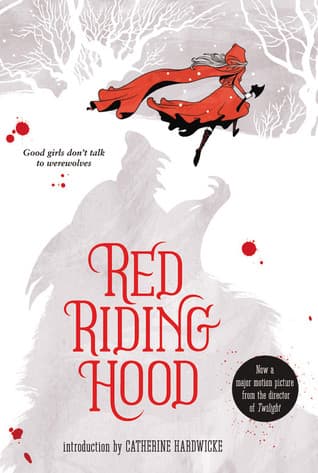
Synopsis
Covers the whole plot, including the ending.
- Difficulty
- Medium
- Pacing
- Moderate
- Mood
- Dark, Suspenseful, Romantic, Gothic
- Read it if
- You enjoy dark, atmospheric retellings of classic fairy tales with a strong romantic element and a whodunit mystery.
- Skip it if
- You prefer lighthearted fantasy or dislike stories with morally ambiguous characters and significant violence.
Red Riding Hood Plot Summary
Covers the whole plot, including the ending.
The First Blood Moon and a Tragic Loss
The story begins with Valerie, a young woman from Daggerhorn, torn between two men: Henry, the blacksmith's dependable son, and Peter, the charming but outcast woodcutter. Valerie and Peter share a secret love, planning to run away together. Their plans are interrupted by the blood moon, which traditionally signals the Wolf's monthly sacrifice. This time, the Wolf kills Valerie's older sister, Lucie, a kind girl betrothed to Henry. Lucie's death fills the village with fear and grief, breaking the long-held truce with the beast.
Father Solomon's Arrival and the Revelation
After Lucie's death, the villagers, led by Valerie's father, Cesaire, try to hunt the Wolf themselves. They manage to corner and kill what they believe is the beast, only to find it is a common wolf. Disheartened, they return to the village, where the revered Wolf hunter, Father Solomon, makes a dramatic entrance. Solomon, with his armed guards, quickly dismisses the villagers' kill. He reveals the true Wolf is not just an animal but a werewolf, a creature that takes human form during the day and can only be killed by a silver weapon. This news throws the entire village into suspicion and paranoia, as anyone could be the monster.
The Silver Hand and the Village Under Siege
Father Solomon, set on exposing the werewolf, uses a young woman as bait. He creates a large silver gauntlet, believing any human touched by it will turn into their wolf form. During the night, the Wolf attacks, causing chaos and death. Many villagers are killed, including Henry's father, Adrian. The Wolf escapes Solomon's trap, but not before biting Valerie's grandmother, Madame Lazar. The attack deepens the villagers' fear and mistrust, as the werewolf's identity remains unknown.
Valerie's Connection to the Wolf
After the attack, Valerie checks on her grandmother, Madame Lazar, who is recovering from her bite. There, Valerie is confronted by the Wolf, who speaks to her telepathically. The Wolf reveals it is not simply a beast but a person, deeply connected to Valerie. The Wolf demands Valerie surrender herself before the next blood moon, threatening to kill everyone she loves if she refuses. This encounter leaves Valerie isolated and terrified, as she is now the only one who knows the Wolf's true nature and its demands.
Accusations and Imprisonment
Valerie, upset by her encounter with the Wolf, confides in Peter, telling him about the Wolf's voice and its demands. However, her unusual connection to the creature is misunderstood by Father Solomon and the fearful villagers. They suspect her of being a witch or working with the werewolf. Solomon, seeing her as a way to find the beast, decides to imprison Valerie. He believes isolating her will force the Wolf to reveal itself or use Valerie as leverage. Valerie's imprisonment further isolates her and increases the pressure to protect her loved ones.
Peter's Desperate Rescue Attempt
Peter, unwilling to let Valerie suffer, plans to rescue her from Father Solomon. He creates a distraction, setting fire to part of the village to draw Solomon's guards away. During the chaos, Peter enters the church where Valerie is held. He reaches her, but their escape is short-lived. Solomon and his men quickly discover their attempt, leading to a tense standoff. Peter's actions, while brave, only make him seem more guilty to Solomon and some villagers, deepening the mystery around his true loyalties.
Madame Lazar's Warning and the Truth
With the blood moon nearing its peak, Father Solomon takes Valerie to her grandmother's house, hoping to use Madame Lazar's bite wound as a clue. There, Madame Lazar, dying from the Wolf's bite, reveals the shocking truth. She confesses that Valerie's father, Cesaire, is the werewolf. She explains the curse has been passed down through their family, and Cesaire transformed her the night she was bitten. This revelation shatters Valerie's world, forcing her to face the truth about her own father.
The Confrontation and Cesaire's Confession
Armed with the horrifying truth, Valerie confronts her father, Cesaire. He first denies it, but under pressure from Valerie and the growing evidence, he confesses. Cesaire reveals the long history of the werewolf curse in their family. He explains he killed Lucie, not out of malice, but because she discovered his secret and he could not control the beast. He also admits to killing other villagers who were close to exposing him. His confession is a moment of deep despair and tragedy, as Valerie grapples with her father's dual nature.
The Final Battle and a Sacrifice
As the full truth comes out, Father Solomon, determined to kill the Wolf, arrives at Valerie's house. A brutal fight breaks out between Solomon's men and Cesaire, who transforms into the Wolf. Peter, who returned to protect Valerie, joins the fight. In the chaos, Cesaire, in his wolf form, is fatally wounded by a silver weapon. Valerie, seeing her father die, is devastated but also relieved the terror is over. His death is a bittersweet victory, as it comes at the cost of her own father.
A New Beginning and a Shared Secret
After Cesaire's death and Father Solomon's departure, Daggerhorn slowly begins to heal. Valerie, however, cannot forget the horrors she witnessed. She and Peter decide to leave the village, seeking a new life away from the werewolf curse. Before they depart, Valerie performs a final act of remembrance for her father, burying his body and planting a tree over his grave as a symbol of both his monstrous and human sides. As they journey into the unknown, Valerie and Peter share a deep bond, united by their experiences and the secret they carry.
Principal Figures
Valerie
Protagonist
A strong-willed young woman caught between two loves and a terrifying family secret.
Valerie is a spirited and independent young woman who yearns for a life beyond the confines of her small, superstitious village. She possesses a fierce loyalty to her loved ones and an innate courage that allows her to confront unimaginable horrors. Her initial desire for escape with Peter clashes with her sense of duty and the tragic events that unfold. She is intelligent and observant, which ultimately allows her to piece together the truth about the Wolf. Her ability to hear the Wolf's voice marks her as unique and places a heavy burden on her shoulders.
Relationships: Peter (Secret lover, later her partner and confidant.); Henry (Betrothed to her sister, later a suitor for Valerie, representing stability.); Lucie (Older sister, whose death is the catalyst for the plot.); Cesaire (Her father, who is secretly the werewolf.); Madame Lazar (Her grandmother, who reveals the family secret.)
Peter
Supporting
The outcast woodcutter and Valerie's true love, marked by a rebellious spirit and deep devotion.
Peter is a rugged and passionate woodcutter, an outsider in the village of Daggerhorn. He is fiercely independent and protective of Valerie, willing to defy societal expectations and risk everything for her. Despite being initially suspected of being the Wolf due to his reclusive nature and skill with an axe, his unwavering loyalty to Valerie proves his true character. He represents freedom and a life unburdened by the village's traditions and superstitions. His past is shrouded in a bit of mystery, but his actions consistently demonstrate his love and commitment.
Relationships: Valerie (Secret lover, later her partner and confidant.); Cesaire (His future father-in-law, who he ultimately fights against.)
Henry
Supporting
The dependable blacksmith's son, offering Valerie stability and a conventional life.
Henry is the handsome and well-respected son of the village blacksmith. He is hardworking, reliable, and represents the traditional path Valerie is expected to take. He genuinely loves Valerie, though his approach is more conventional and rooted in the safety of the village. He is devastated by Lucie's death and later by his father's, driving him to seek justice against the Wolf. While he offers Valerie security, his inability to understand her deeper connection to the Wolf ultimately separates them. He embodies the community's desire for order and protection.
Relationships: Valerie (Suitor, representing a stable future.); Lucie (His betrothed, whose death fuels his desire for vengeance.); Adrian (His father, the blacksmith.)
Father Solomon
Antagonist
A renowned and ruthless Wolf hunter, driven by fanaticism and a rigid sense of justice.
Father Solomon is a charismatic but fearsome Wolf hunter who arrives in Daggerhorn with his army of guards. He is utterly convinced of his own righteousness and employs brutal methods to uncover and kill the werewolf. He sees the world in stark terms of good and evil, lacking empathy and quick to accuse. His arrival instills more fear and paranoia than peace, as he turns the villagers against each other. He represents religious zealotry and the dangers of blind faith, prioritizing the extermination of evil above all else, even human lives.
Relationships: Valerie (Antagonist, he suspects her of witchcraft and imprisons her.); Cesaire (His ultimate target, the Wolf.)
Cesaire
Antagonist/Supporting
Valerie's father, a respected woodcutter who harbors a terrible secret as the village werewolf.
Cesaire is initially portrayed as Valerie's loving but somewhat stern father, a respected member of the village. He is a woodcutter, like Peter, and participates in the village's efforts to hunt the Wolf. However, he secretly carries the ancient family curse of lycanthropy, transforming into the Wolf during the blood moon. His actions as the Wolf are driven by an uncontrollable primal instinct, but his human side struggles with the guilt and terror of his deeds, particularly the murder of his own daughter, Lucie. He is a tragic figure, trapped between his humanity and the beast within.
Relationships: Valerie (His daughter, whom he secretly tries to protect despite being the Wolf.); Lucie (His daughter, whom he accidentally killed as the Wolf.); Madame Lazar (His mother, who passed on the curse.)
Madame Lazar
Supporting
Valerie's eccentric grandmother, who holds the key to the family's dark secret.
Madame Lazar is Valerie's grandmother, an elderly woman who lives somewhat on the fringes of the village, known for her herbal remedies and enigmatic nature. She is insightful and observant, often speaking in riddles, and possesses a deeper understanding of the world than most villagers. She is bitten by the Wolf, which ultimately leads to her revealing the long-held family secret about the werewolf curse to Valerie. Her wisdom and knowledge, though sometimes unsettling, are crucial to Valerie's discovery of the truth. She acts as a reluctant oracle, guiding Valerie towards her destiny.
Relationships: Valerie (Her granddaughter, to whom she reveals the truth.); Cesaire (Her son, the werewolf.)
Themes & Insights
The Duality of Human Nature
This theme explores the good and evil, human and beast, that can exist within one person. Cesaire embodies this as the werewolf, a loving father by day and a killer by night. His struggle shows how even loved ones can hide dark secrets. The villagers' quick descent into suspicion and paranoia under Father Solomon's influence also shows this, demonstrating how easily fear can turn ordinary people into accusers, blurring the lines between victim and villain. Valerie herself struggles with this when she learns her father is the monster.
“The Wolf is not just an animal. It is a man.”
Fear and Paranoia
The constant threat of the Wolf and Father Solomon's arrival plunge Daggerhorn into extreme fear and suspicion. This theme shows how fear can destroy trust, turn neighbors against each other, and lead to irrational accusations and violence. The villagers, desperate for a scapegoat, readily turn on Peter and Valerie, ignoring logic for perceived threats. Solomon expertly uses this fear to assert his authority, showing how panic can be a weapon. The atmosphere of terror is clear throughout, driving many of the characters' actions.
“The beast lives among you. It could be anyone.”
Love and Sacrifice
The story explores different kinds of love and the sacrifices made for it. Valerie and Peter's forbidden love drives much of the story, as they risk everything to be together and protect each other. Cesaire, despite being the Wolf, shows a twisted love for Valerie, trying to spare her even as he commits terrible acts. Valerie's decision to leave Daggerhorn with Peter is a sacrifice of her familiar life, but one made for genuine love and a chance at peace. Lucie's death, though tragic, also starts events because the Wolf could not control itself around a loved one who discovered its secret.
“I will not let the Wolf take you.”
Choice vs. Destiny
This theme examines whether characters are truly free to choose their own paths or if they are bound by fate, curses, or family duties. Valerie constantly battles between the life expected of her (with Henry) and the life she wants (with Peter). The werewolf curse itself is a form of destiny, passed down through Cesaire's family, seemingly inescapable. However, Valerie's ability to hear the Wolf's voice, her active search for the truth, and her decision to leave the village with Peter suggest that even with a predetermined curse, individuals can still make choices that shape their future and break cycles of violence.
“You can’t run from who you are.”
Plot Devices & Literary Techniques
The Blood Moon
A recurring celestial event that signifies the Wolf's heightened power and attacks.
The blood moon serves as a powerful symbol and a key plot device. It is directly linked to the Wolf's transformations and its most violent attacks, creating a recurring cycle of dread and anticipation. Each appearance of the blood moon escalates the tension and signals a major turning point in the plot, from Lucie's death to the final confrontation. It reinforces the idea of an ancient, inescapable curse and provides a natural ticking clock for the story's events, particularly the Wolf's ultimatum to Valerie.
The Silver Gauntlet
A device used by Father Solomon to expose the werewolf.
Father Solomon's silver gauntlet is a physical manifestation of his rigid, almost scientific approach to hunting the supernatural. He believes silver is the only way to reveal the true form of the werewolf, and his attempt to use it on the villagers creates a dramatic and violent scene. While it doesn't directly catch the Wolf, the gauntlet's presence and the chaos it causes contribute to the rising body count and the villagers' terror, highlighting Solomon's brutal methods and the fear he instills.
Telepathic Connection
Valerie's unique ability to communicate with the Wolf.
Valerie's ability to hear and understand the Wolf's voice is a crucial plot device that sets her apart from the other villagers. This connection makes her both a target and the only one capable of truly understanding the creature's motives and identity. It allows for direct communication between protagonist and antagonist, revealing the Wolf's demands and eventually the shocking truth of its human form. This device isolates Valerie but also empowers her with knowledge that no one else possesses, driving her personal quest for answers.
The Red Cloak
A symbolic garment worn by Valerie.
Valerie's red cloak is a direct reference to the classic fairy tale, but it also functions symbolically within this narrative. It marks her as distinctive and, at times, vulnerable, drawing the attention of the Wolf. The color red can symbolize passion, danger, and blood, all of which are central to Valerie's story. It visually connects her to the archetype of Little Red Riding Hood, setting up expectations that are both fulfilled and subverted as the story progresses and Valerie becomes more of an active agent rather than a passive victim.
Red Riding Hood Quotes
“It’s not the wolf that frightens me, but the forest itself. All those eyes watching from the dark.”
“Sometimes the things we think we know best are the most dangerous.”
“Love doesn't make you weak, it makes you vulnerable. And vulnerability is a strength, if you know how to wield it.”
“Every secret has a scent, and this village reeks of them.”
“The truth is a mirror, and sometimes we don't like what we see looking back.”
“Fear is a powerful weapon, but hope is an even stronger shield.”
“You can't outrun your destiny, but you can choose how you face it.”
“The greatest monsters are often those we invite into our homes, not those lurking in the woods.”
“Even in the darkest night, a single spark can ignite a fire.”
“To truly know someone, you must look beyond their eyes and into their heart.”
“Sometimes the answers you seek are not in what is said, but in what is left unsaid.”
“The forest remembers everything, even the forgotten whispers.”
“A lie told often enough becomes a truth to those who want to believe it.”
“Courage is not the absence of fear, but the triumph over it.”
Quiz
10 questions on the plot and the characters. Each answer comes with a short explanation.
Question 1
What is the name of Valerie's sister who is killed by the Wolf?
- Lucie
- Sophie
- Marie
- Isabelle
Show answer
A. Lucie Valerie's sister, Lucie, is the first victim of the Wolf's new, more aggressive hunting spree, which sets the main plot in motion.
Question 2
Which character is described as the handsome son of the blacksmith and attempts to console Valerie?
- Peter
- Adrian
- Henry
- Claude
Show answer
C. Henry Henry is the blacksmith's son and Valerie's betrothed, representing the expected path for her life.
Question 3
What is the profession of Peter, the outcast Valerie's heart beats fast for?
- Baker
- Woodcutter
- Hunter
- Farmer
Show answer
B. Woodcutter Peter is an outcast woodcutter, offering Valerie a life away from the village and its expectations.
Question 4
What celestial event does the Wolf say must wane before Valerie surrenders herself?
- New Moon
- Full Moon
- Blood Moon
- Crescent Moon
Show answer
C. Blood Moon The Wolf specifically demands Valerie's surrender before the blood moon wanes, adding urgency and a supernatural element to its threat.
Question 5
What is the traditional method the villagers use to keep the Wolf at bay before its recent surge in aggression?
- Building a stronger wall
- A monthly sacrifice
- Setting traps in the forest
- Hiring guards
Show answer
B. A monthly sacrifice For generations, the villagers have offered a monthly sacrifice to appease the Wolf, a ritual that has now proven insufficient.
Question 6
What unique ability does Valerie possess regarding the Wolf that no one else in town has?
- She can track its scent
- She can see its true form
- She can hear its voice
- She can communicate with other animals
Show answer
C. She can hear its voice Valerie is the only one who can hear the voice of the Wolf, indicating a special connection or destiny related to the creature.
Question 7
What is the primary theme explored through Valerie's internal conflict between Henry and Peter?
- The conflict between good and evil
- The choice between duty/tradition and personal desire/freedom
- The importance of family loyalty
- The struggle for power in the village
Show answer
B. The choice between duty/tradition and personal desire/freedom Valerie's attraction to Peter, the outcast, versus her engagement to Henry, the respectable blacksmith's son, symbolizes the tension between societal expectations and her own wild heart and desires.
Question 8
What crucial piece of information does the expert Wolf hunter reveal to the villagers upon his arrival?
- The Wolf can only be killed by silver
- The Wolf is a shapeshifter living among them
- The Wolf is from a neighboring village
- The Wolf is a vengeful spirit
Show answer
B. The Wolf is a shapeshifter living among them The Wolf hunter's revelation that the creature lives among them and 'could be anyone in town' drastically changes the villagers' perception of the threat and introduces paranoia.
Question 9
How does Valerie's sister's death impact the village's long-standing truce with the Wolf?
- It strengthens their resolve to continue the sacrifices.
- It leads the villagers to seek a new, more powerful protector.
- It signifies that the traditional monthly sacrifices are no longer sufficient, escalating the danger.
- It causes the villagers to abandon the village out of fear.
Show answer
C. It signifies that the traditional monthly sacrifices are no longer sufficient, escalating the danger. Lucie's death demonstrates that the monthly sacrifice is no longer enough to keep the Wolf at bay, indicating a shift in the creature's behavior and an increased threat to the village.
Question 10
What is the ultimate consequence the Wolf threatens if Valerie does not surrender herself by the blood moon?
- It will burn down the village.
- It will turn Valerie into a werewolf.
- Everyone Valerie loves will die.
- It will reveal the village's darkest secrets.
Show answer
C. Everyone Valerie loves will die. The Wolf's direct threat to Valerie is that 'everyone she loves will die' if she does not surrender, putting immense personal pressure on her.
Red Riding Hood FAQ
What is the central conflict Valerie faces at the beginning of the story?
Valerie is torn between two potential suitors: Henry, the stable and handsome blacksmith's son, who represents a conventional life in her village, and Peter, the outcast woodcutter, with whom she shares a passionate connection and dreams of a life away from her home. This romantic dilemma is quickly overshadowed by the murder of her sister.
How does the death of Valerie's sister, Lucie, impact the village and Valerie personally?
Lucie's violent death shatters the village's long-held belief that monthly sacrifices keep the Wolf at bay, plunging them into fear and paranoia. For Valerie, it's a deeply personal tragedy that propels her into the heart of the mystery, forcing her to confront the creature and question everything she knows about her community.
Who is Solomon and what role does he play in the narrative?
Solomon is an expert Wolf hunter who arrives in the village after Lucie's death, bringing with him a group of armed men and a rigid, often brutal, approach to identifying and eliminating the creature. He instills fear and suspicion among the villagers, believing the Wolf is one of them, and his methods escalate the tension and paranoia.
What unique connection does Valerie develop with the Wolf?
Valerie discovers she is the only one who can hear the Wolf's voice, creating a direct and terrifying line of communication between them. The Wolf speaks to her, taunts her, and ultimately gives her an ultimatum: surrender herself before the blood moon wanes, or everyone she loves will perish.
What is the significance of the 'blood moon' in the story?
The blood moon marks a critical deadline set by the Wolf for Valerie's surrender, intensifying the race against time and raising the stakes for the entire village. It symbolizes the Wolf's power and the impending doom if Valerie fails to comply, adding a mystical and urgent element to the plot.
How does the story subtly hint at the Wolf's true identity before the reveal?
The narrative includes subtle clues such as the Wolf's knowledge of intimate village details and Valerie's personal life, its ability to appear and disappear without being seen by others, and the specific way it communicates only with Valerie. These details, upon re-reading, point towards someone known to Valerie and the village.
Are there any specific objects or symbols that foreshadow the Wolf's identity or abilities?
The recurring imagery of the color red, Valerie's cloak, and the Wolf's red eyes are prominent. More subtly, the Wolf's intelligence and manipulative speech, rather than just animalistic growls, suggest a human mind behind the creature, hinting at its dual nature and the shocking reveal of its identity.
What is the significance of Valerie's grandmother's advice or actions?
Valerie's grandmother is a wise, albeit sometimes mysterious, figure who seems to possess deeper knowledge about the village's history and the Wolf. Her warnings and insights, though initially vague, provide crucial context and subtly guide Valerie towards understanding the true nature of the threat and her own unique connection to it.
How does Valerie's 'wild heart' influence her decisions throughout the story?
Valerie's 'wild heart' represents her independent spirit, her defiance of societal expectations, and her deep emotional connection to Peter, which often puts her at odds with her family and the village. This intrinsic trait drives her to question authority, follow her instincts, and ultimately confront the Wolf on her own terms, rather than passively accepting her fate.
Discuss the psychological impact of Solomon's arrival on the villagers.
Solomon's arrival shatters the villagers' sense of security and fosters deep paranoia, turning neighbor against neighbor. His aggressive tactics and unwavering belief that the Wolf is one of them lead to unjust accusations, fear-driven violence, and a breakdown of community trust, highlighting the psychological toll of mass hysteria.
How does Valerie's grief for Lucie manifest and affect her actions?
Valerie's grief for Lucie is a powerful motivator, driving her initial desire for revenge and later, her determination to protect her remaining loved ones. It fuels her courage but also makes her vulnerable to the Wolf's manipulations, as the creature uses her loss to connect with her and exert influence.
In what ways does the story explore themes of betrayal and trust?
The story constantly questions who can be trusted, especially after Solomon's revelation that the Wolf lives among them. Valerie faces potential betrayal from her romantic interests, her family, and the entire community. This theme is central to the mystery and the emotional stakes, as trust becomes a scarce and valuable commodity.
What is the ultimate message about good versus evil presented in the book?
The book challenges simplistic notions of good and evil by revealing the Wolf to be a complex entity, often someone known and loved, rather than a purely monstrous outsider. It suggests that evil can reside within seemingly ordinary people and that the lines between victim and perpetrator can be blurred, forcing a re-evaluation of morality.
How does the ending challenge traditional fairy tale tropes?
Unlike traditional 'Red Riding Hood' retellings where the maiden is purely a victim to be rescued, Valerie actively engages with and confronts the Wolf. The ending often subverts expectations by revealing a more nuanced villain, a less-than-perfect hero, and a resolution that doesn't neatly tie up every loose end, emphasizing the complexities of human nature.
Is the Wolf's motivation purely malevolent, or are there deeper reasons for its actions?
The Wolf's motivations are often depicted as complex, extending beyond simple bloodlust. It seeks a specific connection with Valerie, suggesting a desire for companionship or an heir, and its actions are intertwined with a long-standing curse or legacy. This complexity makes the Wolf a more tragic and compelling antagonist than a purely evil monster.
How does the book use the setting of a remote, insular village to enhance its themes?
The isolated village setting intensifies the paranoia and fear, as there's no outside help and everyone is forced to confront the threat from within their own community. This insularity highlights themes of tradition, superstition, and the claustrophobic nature of secrets, making the psychological tension more potent.
What is the significance of Valerie's choice regarding her future at the end of the story?
Valerie's final decision about her life, whether it's with Henry, Peter, or on her own path, signifies her growth and agency. It reflects her breaking free from the constraints of her village's expectations and the shadow of the Wolf, asserting her independence and choosing a future that aligns with her 'wild heart' rather than one dictated by others.
About the author
Sarah Blakley-Cartwright is an author known for her work in fiction. She is particularly recognized for her novel "Red Riding Hood," which offers a reimagined take on the classic fairy tale. Her writing often explores themes of fantasy and transformation.
Similar books
- A Court of Thorns and Roses
Sarah J. Maas
4.2 (476k) average on GoodreadsFantasyDark fairy tale retelling with romance and a strong female protagonist.
- Harry Potter and the Sorcerer's Stone
J.K. Rowling
4.5 (7M) average on GoodreadsFantasyRescued from a miserable life under the stairs, an orphaned boy discovers he's a wizard destined for a magical school, where he uncovers a dangerous secret tied to the dark wizard who murdered his parents.
- The Hunger Games
Suzanne Collins
4.3 (6.4M) average on GoodreadsFantasyIn a future where children fight to the death on live television, Katniss Everdeen volunteers for the arena, turning a death sentence into a fight for survival and a spark of rebellion.
- 1984
George Orwell
4.2 (3.1M) average on GoodreadsPoliticsIn a future where surveillance and thought control are absolute, a man's search for truth clashes with the Party, showing that hope can be a form of rebellion.
- Divergent
Veronica Roth
4.2 (2.9M) average on GoodreadsFantasyIn a society divided by virtues, a sixteen-year-old's difference from the norm starts a rebellion that threatens her world.
- The Hobbit, or There and Back Again
J.R.R. Tolkien
4.3 (2.9M) average on GoodreadsFantasyA comfort-loving hobbit named Bilbo Baggins is whisked away by a mischievous wizard and a band of dwarves on an unexpected journey to reclaim stolen treasure from a fearsome dragon, discovering courage and a magical ring along the way.






Enjoyed the summary?
A summary gives you the shape of the book. The book itself has the detail, the examples and the voice.
Find Red Riding Hood on AmazonAs an Amazon Associate, BookBrief earns from qualifying purchases. How we're funded