
Synopsis
Covers the whole plot, including the ending.
- Difficulty
- Easy
- Pacing
- Moderate
- Mood
- Adventurous, Mysterious, Evocative, Hopeful
- Read it if
- You enjoy historical mysteries with a sense of adventure, set in a beautiful, exotic location, and featuring a curious young protagonist.
- Skip it if
- You prefer complex plots with gritty realism or stories without a strong sense of wonder and discovery.
Red Sails to Capri Plot Summary
Covers the whole plot, including the ending.
The Arrival of the Red Sails
Fourteen-year-old Michele, a diligent and observant boy living on Capri, is immediately drawn to a red-sailed boat entering the harbor. This event is unusual for the quiet island, and Michele senses it means change. The boat carries three gentlemen: Mr. Amos, an American looking for beauty; Mr. Williams, an Englishman seeking adventure; and the most mysterious, Mr. Davidson, a Scotsman whose goal is 'something difficult to explain.' They all book rooms at Michele's family inn, exciting Michele and the islanders, who are not used to such grand visitors.
The Strangers' Peculiar Interests
The three guests quickly become a source of great interest for the people of Capri. Mr. Amos spends his days sketching the island's scenery, calling it beautiful. Mr. Williams goes on daring trips, climbing cliffs and exploring caves, always looking for thrills. Mr. Davidson, however, is the most puzzling; he spends hours looking at the sea, often alone, and seems to be in deep thought, sometimes making vague comments. Their unusual activities and unclear goals lead to much talk among the villagers, who try to guess why they are visiting the secluded island.
Michele's Growing Curiosity
At first, Michele views the visitors with a mix of awe and suspicion, especially given their odd habits. However, his curiosity and intelligence lead him to watch them closely. He listens to their talks, watches their movements, and tries to understand why they are there. Michele often finds himself with them, whether serving them at the inn or seeing them during their daily trips. He begins to feel a connection to Mr. Davidson, in particular, sensing a deeper meaning behind the Scotsman's quiet observations and thoughtful manner, which Michele himself shares.
Whispers of the Blue Grotto
As the strangers settle in, the old legend of the Blue Grotto, a sea cave known for its glowing blue water but with a rumored inaccessible entrance, comes up in conversations. The islanders have long believed it to be a magical, almost mythical place. Michele notices that the three visitors, especially Mr. Davidson, show a particular interest in this legend. They start asking detailed questions about its location, local stories, and any attempts to enter it. This focus on the Grotto further makes Michele believe their visit is connected to something more than simple tourism, suggesting a hidden agenda.
The Discovery of the Fisherman's Map
While exploring an abandoned fisherman's hut, Michele finds an old, worn map. It is a crude but detailed drawing of the coast, with markings that seem to show an unusual way to the Blue Grotto. This discovery excites Michele, as it links to the mystery. He realizes the map could be the key to finding the Grotto, a secret many islanders, including his own family, have always thought impossible to uncover. He decides to keep the map hidden for a time, thinking about its meaning and how best to use this new information.
Sharing the Secret
After much thought, Michele decides to tell Mr. Davidson, sensing that the Scotsman is the most likely to understand and value his discovery. He shows the old fisherman's map, carefully explaining where he found it and what he thinks it means. Mr. Davidson, known for being reserved, shows real excitement and surprise. He immediately sees the map's potential to guide them to the Blue Grotto's entrance, confirming Michele's instincts about the visitors' true purpose and building trust and a shared adventure between them.
The Expedition to the Blue Grotto
With the map, Michele, Mr. Davidson, and the adventurous Mr. Williams set out in a small boat to find the Grotto's hidden entrance. Mr. Amos, happy with his art, chooses not to join. The trip is difficult, as the map is old and the sea around Capri is unpredictable. They navigate strong currents and narrow passages, using Michele's knowledge of the coast and Mr. Williams's daring spirit. The journey tests their determination and teamwork, with Michele guiding them through familiar waters, searching for the exact spot on the old map.
Unveiling the Hidden Entrance
After hours of searching, they finally find a small, almost invisible opening under a rocky overhang, exactly where the fisherman's map suggested. It is a submerged entrance, only passable at low tide and in calm waters. Michele, small and brave, volunteers to go first. He dives into the dark water. A few tense moments later, he reappears inside the Blue Grotto, its waters glowing with an ethereal light. The others follow, amazed by the beauty of the legendary cave, which had been hidden for so long.
The Revelation of Mr. Davidson's Quest
Inside the Blue Grotto, surrounded by its blue light, Mr. Davidson finally explains his 'something difficult to explain.' He is a scientist, and his goal was to find a place where a specific light phenomenon could be observed and studied—a phenomenon he believed would confirm a scientific theory about light refraction through water. The Blue Grotto, with its unique underwater opening and light conditions, is the perfect natural laboratory. His discovery is not just personal but has important scientific meaning, changing how natural light is understood.
Capri's New Fame
The discovery of the Blue Grotto's accessible entrance and Mr. Davidson's scientific findings bring great attention to Capri. News of the Grotto's beauty and its scientific importance spreads quickly, attracting scholars, artists, and tourists from around the world. The quiet fishing island changes, experiencing a boom in visitors and new wealth. Michele's inn thrives, and the islanders embrace their role as guardians of this natural wonder. The red-sailed boat, which once brought mystery, ultimately brought a future of excitement and opportunity to Capri.
Michele's Future
Michele, once an innkeeper's son, becomes a local hero and a key part of Capri's change. His courage, intelligence, and sharp observation were important to the discovery. He earns respect from his family and the islanders, and his view of the world expands beyond Capri. He continues to help guide visitors to the Grotto, sharing its history and the story of its rediscovery. The adventure has matured him, giving him a sense of purpose and a deeper appreciation for his home, knowing he played an important part in shaping its future.
Red Sails to Capri Characters
Michele
Protagonist
A curious and observant fourteen-year-old boy living in Capri.
Michele is a thoughtful and intelligent boy, mature beyond his years, who works diligently at his family's inn. He possesses a keen sense of observation and a deep connection to his home island of Capri. Initially a quiet observer, his inherent curiosity drives him to unravel the mystery of the three strangers. He is brave, resourceful, and ultimately instrumental in the discovery of the Blue Grotto's hidden entrance. He represents the innocent yet capable spirit of the island's youth.
Relationships: Mr. Davidson (mentor/confidant); Mr. Williams (fellow adventurer); Mr. Amos (acquaintance/guest); Parents (son, helper at the inn)
Mr. Davidson
Supporting
A mysterious Scotsman, a scientist seeking 'something difficult to explain'.
Mr. Davidson is a reserved and intellectual man whose quiet demeanor belies a deep scientific purpose. He is the most enigmatic of the three visitors, his quest for 'something difficult to explain' eventually revealed to be a scientific endeavor to study light refraction in a unique natural setting. He is patient, thoughtful, and recognizes Michele's intelligence and potential, trusting the boy with his true intentions. He serves as a mentor figure to Michele and represents the pursuit of knowledge.
Relationships: Michele (mentee/confidant); Mr. Amos (traveling companion/acquaintance); Mr. Williams (traveling companion/acquaintance)
Mr. Williams
Supporting
An adventurous Englishman seeking thrills and excitement.
Mr. Williams is a bold and energetic Englishman who openly declares his search for adventure. He is eager to explore Capri's rugged landscape, climbing cliffs and venturing into caves. His daring spirit and physical prowess make him an invaluable asset during the expedition to the Blue Grotto. He provides a foil to Mr. Amos's aesthetic pursuits and Mr. Davidson's intellectual quest, embodying the thrill-seeking aspect of exploration. He is generally good-natured and enthusiastic.
Relationships: Michele (fellow adventurer); Mr. Davidson (traveling companion/acquaintance); Mr. Amos (traveling companion/acquaintance)
Mr. Amos
Supporting
An American artist who comes to Capri in search of beauty.
Mr. Amos is an American gentleman who is captivated by the aesthetic splendor of Capri. He spends his days sketching and admiring the island's scenery, openly expressing his appreciation for its natural beauty. While he is part of the initial group of strangers, he is less involved in the active pursuit of the Blue Grotto, preferring to observe and capture the island's charm through his art. He represents the appreciation of beauty and the artistic perspective on the island's allure.
Relationships: Michele (guest at the inn); Mr. Davidson (traveling companion/acquaintance); Mr. Williams (traveling companion/acquaintance)
Michele's Parents
Supporting
The owners of the inn where the strangers stay, traditional islanders.
Michele's parents are hardworking and hospitable innkeepers, representative of the traditional Caprian islanders. They are initially wary of the unusual visitors but are also pragmatic, welcoming the business the strangers bring. They embody the established way of life on Capri before the discovery of the Blue Grotto. They trust Michele but are also protective, reflecting the community's initial skepticism and eventual acceptance of the changes brought by the visitors.
Relationships: Michele (parents); The Strangers (innkeepers/hosts)
The Islanders of Capri
Supporting
The close-knit community of Capri, initially curious and later benefiting from the discovery.
The islanders represent the collective voice and perspective of Capri's traditional community. They are a close-knit group, accustomed to a quiet, predictable life. Their initial reaction to the red-sailed boat and its occupants is a mix of curiosity, speculation, and a touch of suspicion. They are guardians of local legends, including that of the Blue Grotto. Their lives are significantly impacted by the discovery, as they adapt to Capri's transformation into a renowned tourist destination.
Relationships: Michele (community members, neighbors); The Strangers (hosts/observers)
Red Sails to Capri Themes
The Allure of the Unknown
The novel explores the human desire to explore and understand the unknown. The arrival of the red-sailed boat itself marks the unfamiliar entering the quiet life of Capri. Each of the three strangers is driven by a quest for something beyond the ordinary—beauty, adventure, or scientific truth. Michele, too, is drawn into the mystery, his curiosity overcoming any initial fear. The Blue Grotto, a legendary and inaccessible place, symbolizes the unknown, its appeal powerful enough to unite different people in a common goal. Its discovery satisfies a deep human need for exploration and revelation, changing both the individuals and the island.
“What they brought with them was a mystery and adventure that would change Michele's life - and all of Capri - forever.”
The Power of Observation and Curiosity
Michele's character shows that keen observation and an inquisitive mind can lead to discoveries. He does not just watch events; he actively observes, listens, and puts together clues, from the strangers' odd habits to the old fisherman's map. His initial curiosity about the red-sailed boat grows into a determined search for the truth behind the visitors' mission. It is Michele's sharp eyes that spot the important map and his courage to share his insights with Mr. Davidson that leads to the Blue Grotto's rediscovery. The story highlights how paying attention to details and asking questions can lead to extraordinary results.
“The minute he saw the boat with the red sails moving into the harbor, Michele knew that something exciting was going to happen.”
The Intersection of Art, Adventure, and Science
The three strangers represent distinct but connected ways of understanding the world: Mr. Amos seeks beauty (art), Mr. Williams seeks adventure (experience), and Mr. Davidson seeks scientific truth (knowledge). The novel shows how these different pursuits can come together to reveal a deeper, more complete picture of reality. The Blue Grotto itself is not just a scientific wonder but also a place of great beauty and requires an adventurous spirit to reach. This theme suggests that true discovery often happens when different viewpoints and motivations combine, enriching the human experience. The Grotto satisfies all three quests, showing their connection.
“They all said they were searching - one for beauty, one for adventure, and one for 'something difficult to explain.'”
Change and Tradition
Capri, a small island with a rich history, is the setting for a story of change. The arrival of the red-sailed boat and the discovery of the Blue Grotto change the island's quiet, predictable life. The islanders, initially rooted in their customs and legends, must adapt to new fame, tourism, and wealth. While the change brings economic benefits, it also means the end of a secluded era. The story explores the tension between keeping traditions and embracing progress, showing how one event can push a community into a new, unforeseen future.
“What they brought with them was a mystery and adventure that would change Michele's life - and all of Capri - forever.”
Plot Devices & Literary Techniques
The Red-Sailed Boat
A visual symbol of impending change and the arrival of the unknown.
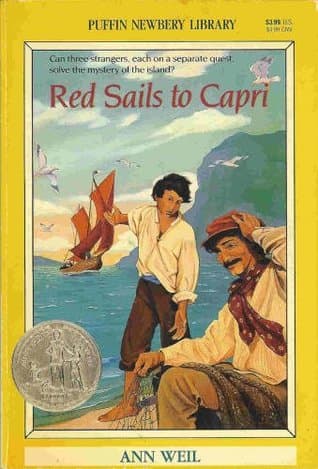
The red-sailed boat serves as the initial catalyst and a powerful symbol in the narrative. Its unusual appearance in the tranquil Capri harbor immediately signals that something out of the ordinary is about to happen. It represents the external force that disrupts the island's routine and introduces the element of mystery and adventure. Its vibrant color stands out against the blue sea, marking it as a harbinger of the exciting, and eventually transformative, events that will unfold.
The Blue Grotto
A legendary, seemingly inaccessible sea cave, representing the ultimate mystery and goal.
The Blue Grotto functions as the central MacGuffin and the ultimate destination of the strangers' quest. For the islanders, it's a mythical place, beautiful but unattainable. For the strangers, it's the specific site that holds the key to their individual pursuits. Its legendary status creates intrigue, and its hidden entrance provides the central challenge of the plot. The Grotto's ethereal beauty and scientific significance make it a worthy prize, giving tangible meaning to the characters' abstract quests.
The Fisherman's Map
A crucial physical clue that unlocks the mystery of the Blue Grotto's entrance.
The old fisherman's map acts as a critical plot device, moving the narrative from speculation to concrete action. Discovered by Michele, it provides the tangible evidence and specific directions needed to locate the Blue Grotto's hidden entrance. Without this map, the strangers' quest might have remained unsolved. It highlights Michele's role as an active participant and problem-solver, not just an observer, and serves as a bridge between ancient local knowledge and modern exploration.
Red Sails to Capri Quotes
“The sea is like a great, beautiful, dangerous lady. You must respect her, or she will swallow you whole.”
“Sometimes the most important things are hidden right in front of your eyes.”
“A good story is like a warm fire on a cold night. It chases away the shadows.”
“Fear is a poor captain for any voyage.”
“The island has its secrets, just like an old woman has her memories. You must be patient to uncover them.”
“It's not what you see, but what you understand that truly matters.”
“Even the smallest wave can change the course of a great ship.”
“The truth, like a pearl, often lies hidden beneath layers of sand and water.”
“There are some things the heart knows even before the mind can grasp them.”
“Adventure isn't always found in faraway lands; sometimes it waits right outside your door.”
“To truly see a place, you must listen to its whispers.”
“Courage is not the absence of fear, but the triumph over it.”
“Every journey, no matter how small, begins with a single step and a curious heart.”
“The past is like an anchor; it holds you in place unless you choose to lift it.”
Quiz
10 questions on the plot and the characters. Each answer comes with a short explanation.
Question 1
What is the name of the main character in 'Red Sails to Capri'?
- Giovanni
- Michele
- Antonio
- Marco
Show answer
B. Michele The main character, a fourteen-year-old boy who works at his parents' inn, is named Michele.
Question 2
What distinguishing feature of the mysterious boat first catches Michele's attention?
- Its large size
- Its unique flag
- Its red sails
- Its golden mast
Show answer
C. Its red sails The title of the book, 'Red Sails to Capri', directly references the distinctive red sails of the boat that signals the start of the adventure.
Question 3
How many men arrive on the mysterious boat and come to stay at Michele's parents' inn?
- Two
- Three
- Four
- Five
Show answer
B. Three The book description states, 'Sailing on the ship were three men who would come to stay at Michele's parents' inn.'
Question 4
Which of the following is NOT one of the explicit reasons given by the three men for their search?
- Beauty
- Adventure
- Knowledge
- Something difficult to explain
Show answer
C. Knowledge The three men said they were searching for 'beauty,' 'adventure,' and 'something difficult to explain.' Knowledge is not explicitly listed as one of their initial stated goals.
Question 5
What is the primary setting for the story 'Red Sails to Capri'?
- Sicily
- Venice
- Capri
- Naples
Show answer
C. Capri The title 'Red Sails to Capri' and the description's mention of 'all of Capri' clearly indicate the island of Capri as the main setting.
Question 6
What is Michele's age at the beginning of the story?
- Twelve
- Thirteen
- Fourteen
- Fifteen
Show answer
C. Fourteen The book description explicitly states Michele is 'fourteen-year-old'.
Question 7
What type of establishment do Michele's parents own?
- A general store
- A fishing business
- An inn
- A boat rental service
Show answer
C. An inn The description states the men 'would come to stay at Michele's parents' inn,' indicating their profession.
Question 8
The arrival of the men and their boat primarily introduces what two elements into Michele's life and Capri?
- Wealth and fame
- Mystery and adventure
- Conflict and resolution
- Romance and drama
Show answer
B. Mystery and adventure The synopsis states, 'What they brought with them was a mystery and adventure that would change Michele's life - and all of Capri - forever.'
Question 9
What does Michele instinctively feel upon first seeing the boat with the red sails?
- Fear
- Boredom
- Excitement
- Suspicion
Show answer
C. Excitement The text states, 'Michele knew that something exciting was going to happen' the minute he saw the boat.
Question 10
The genre of 'Red Sails to Capri' includes Historical Fiction. What does this imply about the story's setting and events?
- It takes place in a completely fictional world with no ties to real history.
- It features entirely mythical creatures and magic in an ancient setting.
- It is set in a recognizable past time period, blending real historical context with fictional narrative.
- It is a non-fiction account of real events that occurred on Capri.
Show answer
C. It is set in a recognizable past time period, blending real historical context with fictional narrative. Historical Fiction is a genre where a fictional story is set in a specific historical period, often incorporating real historical details, figures, or events into the narrative.
Red Sails to Capri FAQ
What is the central mystery that arrives in Capri with the men on the red-sailed boat?
The central mystery revolves around the three peculiar gentlemen—Mr. Williams, Mr. Jones, and Mr. Smith—who claim to be searching for beauty, adventure, and something difficult to explain. Their true purpose and the 'treasure' they seek remain elusive for much of the story, sparking curiosity and speculation among the islanders and Michele.
Who is Michele, and what is his role in the unfolding events?
Michele is a fourteen-year-old boy living with his parents, who own an inn on Capri. He is the primary protagonist and narrator, whose keen observation skills and adventurous spirit drive much of the mystery's investigation. He interacts closely with the mysterious guests and often pieces together clues that adults overlook.
What are the distinct personalities and stated goals of the three mysterious visitors?
Mr. Williams is described as seeking 'beauty,' often found sketching or admiring the island's scenery. Mr. Jones is after 'adventure,' always eager for exploration and physical challenges. Mr. Smith, the most enigmatic, claims to be looking for 'something difficult to explain,' hinting at a deeper, more intellectual pursuit.
How does the arrival of the red-sailed ship and its passengers impact the daily life and routines of Capri?
The arrival of the ship and its unusual passengers immediately disrupts the quiet, predictable life on Capri, generating excitement and gossip among the islanders. Their mysterious activities, strange requests, and the general air of intrigue they bring cause the entire community to speculate and engage with the unfolding events, changing the island's rhythm.
What historical period is the book set in, and how does this influence the story?
The book is set in the late 19th or early 20th century, a period when travel for leisure and scientific exploration was becoming more common, yet communication was still relatively slow. This setting allows for a genuine sense of mystery and isolation on Capri, as news travels slowly and the visitors' true identities are not easily verifiable, enhancing the adventure.
Are there any clues early in the story that hint at the true nature of the men's 'search'?
Subtle clues include the men's unusual interest in specific geological formations, their detailed maps, and their seemingly disparate 'searches' for beauty, adventure, and the unexplainable. These pursuits, while seemingly vague, align with the scientific endeavors of archaeology and paleontology, pointing towards a deeper, shared objective beyond initial appearances.
What specific 'discovery' do the men ultimately make on Capri?
The men ultimately discover a significant paleontological site, specifically the remains of prehistoric creatures or ancient human artifacts, revealing Capri's deeper historical layers. This discovery is the 'something difficult to explain' Mr. Smith was seeking, combining elements of beauty in ancient forms and the adventure of unearthing history.
How do the three men's individual 'searches' for beauty, adventure, and the unexplainable converge?
Their individual searches converge through the shared pursuit of a significant archaeological or paleontological find. The 'beauty' lies in the ancient artifacts, the 'adventure' in the exploration and excavation, and the 'something difficult to explain' is the profound historical significance and scientific understanding gained from the discovery itself.
Was there any real-world inspiration for the mystery or discovery depicted in the book?
While the book is fictional, Capri does have a rich history of archaeological finds, including Roman villas and prehistoric remains, which likely inspired the author. The novel taps into the historical allure of the island as a site of ancient human activity and natural wonders, making the central discovery feel plausible within its setting.
How does Michele's perspective as a young boy influence the reader's understanding of the adults and their motives?
Michele's youthful perspective initially views the men with a blend of awe and suspicion, interpreting their actions through a lens of adventure and simple curiosity. This allows the reader to experience the mystery unfold organically, as Michele gradually uncovers the deeper, scientific motives behind the adults' seemingly eccentric behavior, making their complex goals more relatable.
What psychological journey does Michele undergo as he participates in solving the mystery?
Michele undergoes a significant psychological journey from a curious but naive boy to a more observant and understanding young man. He develops critical thinking skills, learns to trust his instincts, and gains a deeper appreciation for history and scientific exploration, broadening his worldview beyond the confines of his island home.
How do the islanders' initial reactions to the strangers reflect common human responses to the unknown?
The islanders' initial reactions range from suspicion and gossip to fascination and hospitality, reflecting typical human responses to the unknown. Their curiosity is mixed with a natural caution towards outsiders and a tendency to create their own narratives about the mysterious visitors, highlighting the power of rumor and community dynamics.
In what ways does the book explore the theme of curiosity and its impact on personal growth?
The book deeply explores curiosity through Michele's character, showing how his insatiable desire to understand the strangers' purpose drives his personal growth. His curiosity leads him to observe, question, and engage actively with the mystery, ultimately expanding his knowledge, developing his character, and opening him up to new possibilities beyond his familiar life.
What is the broader significance of the discovery for the island of Capri, beyond the scientific aspect?
The discovery brings not only scientific recognition but also a sense of historical pride and a new understanding of Capri's ancient past for its inhabitants. It potentially opens up new avenues for tourism and scholarship, fundamentally changing how the islanders perceive their home and its place in history.
Could the 'something difficult to explain' sought by Mr. Smith also be interpreted metaphorically?
Yes, 'something difficult to explain' could be interpreted metaphorically as the inherent human desire for deeper meaning, understanding, or a connection to history that transcends simple facts. It represents the profound emotional and intellectual satisfaction derived from uncovering hidden truths, whether scientific or personal.
How does the author use the setting of Capri to enhance the themes of mystery and discovery?
Capri's natural beauty, ancient grottoes, and historical layers make it an ideal setting for mystery and discovery. Its relative isolation in the past enhances the intrigue of the arriving strangers, while its geological formations provide a plausible backdrop for significant archaeological finds, blurring the lines between natural wonder and hidden history.
What message about the value of observation and patience does the book convey through Michele's journey?
The book strongly conveys that observation and patience are crucial for understanding complex situations. Michele's success in piecing together the mystery comes from his careful watching and his willingness to wait for clues to emerge, teaching that true understanding often requires time and keen attention to detail rather than hasty conclusions.
Is there an underlying commentary on the clash between traditional island life and encroaching modernity or scientific progress?
The narrative subtly touches upon this clash by introducing modern scientific methods and intellectual pursuits into a traditional, close-knit island community. While the islanders' initial reactions are rooted in local customs and superstitions, the ultimate acceptance and integration of the scientific discovery suggest a harmonious, rather than destructive, interaction between tradition and progress.
Similar books
- Island of the Blue Dolphins
Scott O'Dell
3.8 (292k) average on GoodreadsChildren'sExplores themes of survival, discovery, and a deep connection to an island setting through a young person's eyes.
- Journey to the Center of the Earth
Jules Verne
3.9 (154k) average on GoodreadsFantasyClassic adventure story centered around scientific discovery and exploration of a hidden natural wonder.
- Harry Potter and the Sorcerer's Stone
J.K. Rowling
4.5 (7M) average on GoodreadsFantasyRescued from a miserable life under the stairs, an orphaned boy discovers he's a wizard destined for a magical school, where he uncovers a dangerous secret tied to the dark wizard who murdered his parents.
- The Hobbit, or There and Back Again
J.R.R. Tolkien
4.3 (2.9M) average on GoodreadsFantasyA comfort-loving hobbit named Bilbo Baggins is whisked away by a mischievous wizard and a band of dwarves on an unexpected journey to reclaim stolen treasure from a fearsome dragon, discovering courage and a magical ring along the way.
- Harry Potter and the Goblet of Fire
J.K. Rowling
4.6 (2.6M) average on GoodreadsFantasyA bewildered Harry Potter, underage and thrust into a deadly Triwizard Tournament, must brave dragons, mermaids, and a resurgent dark magic to survive a year that will forever alter the wizarding world.
- Harry Potter and the Order of the Phoenix
J.K. Rowling
4.5 (2.5M) average on GoodreadsFantasyIn a year of oppressive secrets and the threat of Voldemort, Harry Potter and Dumbledore's Army secretly train for war, shown through Jim Kay and Neil Packer's dark illustrations.






Enjoyed the summary?
A summary gives you the shape of the book. The book itself has the detail, the examples and the voice.
Find Red Sails to Capri on AmazonAs an Amazon Associate, BookBrief earns from qualifying purchases. How we're funded