

Synopsis
Covers the whole plot, including the ending.
- Difficulty
- Easy
- Pacing
- Moderate
- Mood
- Poignant, Hopeful, Heartwarming, Emotional
- Read it if
- You enjoy heartwarming stories about friendship, adoption, and overcoming adversity, especially for middle-grade readers.
- Skip it if
- You prefer fast-paced thrillers or stories without emotional depth, or are not interested in children's/YA literature.
Red Thread Sisters Plot Summary
Covers the whole plot, including the ending.
Life at the Blossom Home
Wen, an eleven-year-old, lives at the Blossom Home orphanage in rural China. Her closest friend is Shu Ling, a younger girl like a sister to her. They share a deep connection, relying on each other for comfort in the often-difficult orphanage. Wen, being older, often protects and guides Shu Ling, teaching her English words and sharing dreams of a future outside the orphanage. They spend their days together, doing chores, studying, and hoping for adoption, a dream that seems distant for many older girls. Their friendship is the center of their lives, providing stability and love in an uncertain world.
The Arrival of the American Parents
One day, a Western couple, the Taylors, arrive at the Blossom Home to adopt. Wen is chosen, a moment of mixed joy. She wants a family, but leaving Shu Ling is painful. The Taylors are kind, but Wen struggles with the language and big cultural changes. Before she leaves, Wen and Shu Ling say an emotional goodbye, promising to never forget each other. Wen gives Shu Ling her most treasured item, a small, red thread bracelet, symbolizing their strong bond and the Chinese belief in the 'red thread of destiny' connecting souls. This departure separates the two girls, who have known no other family.
Adjusting to America
Wen arrives in America with her new parents, Sarah and Michael Taylor, and is overwhelmed by the abundance and unfamiliarity of her new surroundings. Everything is different: the food, the language, the clothes, and having her own room. She misses Shu Ling terribly and feels guilty for leaving her. Despite her parents' patience and love, Wen finds it hard to adjust, often withdrawing and struggling to express her feelings. School is difficult, and making friends seems impossible. She holds onto the memory of Shu Ling, finding comfort in the hope of reunion, which becomes her main goal.
The Weight of Guilt and Hope
As Wen slowly adapts to American life, she constantly thinks of Shu Ling in the orphanage. She knows that as Shu Ling gets older, her chances of adoption decrease significantly. Wen feels a great responsibility, believing she must find a family for her best friend. She starts sharing stories of Shu Ling with her new parents, talking about Shu Ling's intelligence, kindness, and need for a loving home. This desire to help Shu Ling drives many of Wen's actions, pushing her to overcome shyness and cultural barriers to speak for her friend. She sees Shu Ling's future as tied to her own happiness.
A Plan Takes Shape
Inspired by Wen's dedication, Sarah and Michael Taylor begin to understand her deep bond with Shu Ling. They agree to help Wen find Shu Ling a family. This involves researching adoption agencies, contacting their original agency in China, and telling friends and community members. Wen actively participates, writing letters, drawing pictures of Shu Ling, and trying to use her improving English to explain Shu Ling's situation to anyone who will listen. The Taylors guide her through the adoption process, but the emotional burden remains on Wen, fueled by Shu Ling's age.
Setbacks and Disappointments
The search for a family for Shu Ling has many challenges and disappointments. Many paths lead to dead ends. Adoption agencies explain the difficulties of finding families for older children, especially internationally. The paperwork and legalities are overwhelming. Wen overhears conversations about cost and complexity, which increases her worry. Each 'no' or lack of progress weighs on her, making her fear Shu Ling will be alone forever. She struggles with moments of despair, wondering if her efforts are useless, but Shu Ling's face keeps her going, reminding her of their promise and the red thread connecting them.
Community Support
As Wen shares her story and her parents spread the word, the local community supports their cause. Friends, neighbors, and church members offer emotional and practical help. Some offer to spread the word to their networks, others contribute financially to potential adoption costs, and some simply encourage Wen, who is still adjusting to her new life. This generosity and compassion boost Wen and her parents, showing them they are not alone. It strengthens Wen's belief that good people care.
A Glimmer of Hope
After many months of searching and several near misses, hope appears. A family, the Johnsons, friends of the Taylors, expresses serious interest in adopting Shu Ling. They have a daughter, Emily, close to Shu Ling's age, and are moved by Wen's story and Shu Ling's pictures. Wen is cautiously optimistic, having learned not to get her hopes up too high. She gives them more details about Shu Ling, sharing personal stories and highlighting her best friend's loving nature. The Johnsons begin the rigorous international adoption process, a long and uncertain journey that fills Wen with renewed purpose.
The Long Wait
The adoption process for Shu Ling is long and full of anxious waiting. Paperwork, background checks, and international legal issues cause delays. Wen constantly checks for updates, her emotions a mix of hope and fear. She communicates with Shu Ling through letters, translated by her parents, keeping her best friend updated on the progress and reassuring her she has not been forgotten. During this time, Wen continues to grow and adapt to her new life, making friends at school and doing well in her studies, all while holding onto the dream of Shu Ling's arrival. The waiting tests everyone's patience but strengthens their resolve.
Reunion and New Beginnings
Finally, after what feels like a very long time, the day arrives. Shu Ling is adopted by the Johnsons and arrives in America. Wen, her parents, and the Johnsons are at the airport for an emotional reunion. Wen and Shu Ling embrace, tears flowing, their red thread bond confirmed. Shu Ling, like Wen before her, faces the difficult task of adjusting to a new country, language, and family. However, this time, she has Wen by her side, a familiar face and a loving sister to guide her. The two best friends, now sisters in spirit, can finally build their new lives together in America, their red thread destiny fulfilled.
Principal Figures
Wen
Protagonist
An eleven-year-old Chinese orphan adopted by an American family
Wen is a sensitive and deeply loyal girl who has spent her entire life at the Blossom Home orphanage. She is intelligent, observant, and fiercely protective of her best friend, Shu Ling. After her adoption, Wen struggles with cultural shock, guilt, and the overwhelming desire to find a family for Shu Ling. She is resilient, determined, and eventually finds her voice to advocate for her friend, showcasing a profound capacity for love and responsibility. Her journey is one of adaptation, advocacy, and finding her place in a new world.
Relationships: Shu Ling (Best friend, sister-like bond, feels responsible for her); Sarah Taylor (Adoptive mother, supportive, understanding); Michael Taylor (Adoptive father, patient, helpful)
Shu Ling
Supporting
Wen's younger best friend from the orphanage
Shu Ling is Wen's younger, spirited, and equally affectionate best friend from the Blossom Home orphanage. She looks up to Wen and relies on her for comfort and guidance. While her direct experiences in America are limited until the end of the book, her presence and well-being are the primary motivators for Wen's actions. She represents the children left behind in orphanages and embodies the hope for a loving family. She is described as bright and loving, deserving of the same opportunities as Wen.
Relationships: Wen (Best friend, sister-like bond, looks up to her); The Johnsons (Adoptive family)
Sarah Taylor
Supporting
Wen's kind and understanding adoptive mother
Sarah Taylor is Wen's adoptive mother, a compassionate and patient woman who deeply loves Wen. She is instrumental in helping Wen adjust to her new life in America, offering emotional support and understanding during Wen's struggles with cultural shock and guilt. Sarah becomes a strong advocate for Shu Ling alongside Wen, tirelessly working to find her a family. She represents the unconditional love and support that adoptive parents provide, navigating the complexities of international adoption with grace and determination.
Relationships: Wen (Adoptive daughter, loving, supportive); Michael Taylor (Husband, partner in adoption and parenting)
Michael Taylor
Supporting
Wen's patient and supportive adoptive father
Michael Taylor is Wen's adoptive father, a steady and supportive presence in her new life. He is patient with Wen's adjustment challenges and works alongside Sarah to ensure Wen feels loved and secure. He provides practical support in the search for Shu Ling's family, helping with research, contacts, and navigating the administrative hurdles of international adoption. Michael represents the quiet strength and unwavering commitment of adoptive parents, offering a stable foundation for Wen and extending his compassion to Shu Ling.
Relationships: Wen (Adoptive daughter, loving, supportive); Sarah Taylor (Wife, partner in adoption and parenting)
The Johnsons
Supporting
The family who adopts Shu Ling
The Johnsons are a compassionate American family, friends of the Taylors, who are moved by Wen's story and decide to adopt Shu Ling. They represent the kindness and generosity of spirit found in the community. Their decision to adopt an older child from another country, after learning about her through a friend, highlights the power of connection and advocacy. They are willing to undertake the challenges of international adoption, ultimately providing a loving home for Shu Ling and fulfilling Wen's deepest wish.
Relationships: Shu Ling (Adoptive family); Wen (Friend of her adoptive family, ultimately a sister-in-spirit)
Emily Johnson
Mentioned
The daughter of the Johnsons, close in age to Shu Ling
Emily Johnson is the daughter of the Johnsons, who is close in age to Shu Ling. Her presence in the Johnson family is a factor in their decision to adopt Shu Ling, as they envision the two girls becoming sisters. While not a central character, she represents the potential for new friendships and sisterly bonds that Shu Ling will form in her new life, easing her transition and providing companionship.
Relationships: Shu Ling (Future sister, friend)
Orphanage Workers/Aunties
Mentioned
Caregivers at the Blossom Home orphanage
These are the individuals who run the Blossom Home orphanage and care for the children, including Wen and Shu Ling. While not given individual names, they represent the structure and authority of the orphanage. Their interactions with the children, though sometimes stern, are typically portrayed as ensuring the children's basic needs are met. They facilitate the adoption process for Wen, acting as intermediaries between the children and potential adoptive families. They symbolize the system from which Wen and Shu Ling originate.
Themes & Insights
The Power of Friendship and Sisterhood
The core of 'Red Thread Sisters' is the strong bond between Wen and Shu Ling. Their friendship, formed in the orphanage, overcomes physical separation and cultural differences. Wen's constant search for a family for Shu Ling shows her deep love and loyalty, treating Shu Ling as a true sister. This theme shows how strong connections can provide strength, purpose, and hope, driving people to great lengths for those they care about, as seen in Wen's efforts to find Shu Ling a home.
“The red thread connects us, no matter how far apart we are. It means we are sisters.”
Identity and Belonging
Wen's journey involves her search for identity and belonging. Initially, her identity is being an orphan and Shu Ling's protector. In America, she deals with a new name, language, and culture, feeling like an outsider at home and school. Her struggle to adapt and find her place is made bigger by her guilt over leaving Shu Ling. She finds her belonging not just within her new adoptive family, but also through her advocacy for Shu Ling, which gives her a strong sense of purpose and self-worth.
“She was Wen in China, but in America, she was just... different. Like a puzzle piece from another box.”
The Meaning of Family
The book explores family in many ways, going beyond biological ties to include bonds formed through love, choice, and shared experience. Wen and Shu Ling create their own family in the orphanage. Wen then transitions to an adoptive family, learning what it means to be a daughter. The story emphasizes that family is about unconditional love, support, and commitment, not just blood relation. The Taylors' willingness to accept Wen's past and help her find a family for Shu Ling expands their own definition of family, showing the broad nature of love.
“Family wasn't just about who you were born to. It was about who loved you, who stayed with you, who fought for you.”
Hope and Resilience
Despite many setbacks, Wen and Shu Ling maintain hope throughout their experience. Wen's resilience is clear in her ability to adapt to a new life while working on a seemingly impossible task. Her hope for Shu Ling's future fuels her persistence. Shu Ling, waiting in the orphanage, also holds onto the hope of a family and reunion with Wen. The story shows the human spirit's ability to endure hardship and stay optimistic in difficult times, showing that hope, with action, can lead to good change.
“Even when the world felt dark, Wen held onto the tiny flicker of hope, like a secret ember in her heart.”
Plot Devices & Literary Techniques
The Red Thread of Destiny
A Chinese cultural belief symbolizing an unbreakable bond
The 'red thread of destiny' is a central symbolic plot device in the story. According to Chinese folklore, an invisible red thread connects those who are destined to meet and help each other, regardless of time, place, or circumstances. Wen gives Shu Ling a physical red thread bracelet as a token of their unbreakable bond before leaving China. This device not only symbolizes their deep friendship and sisterhood but also serves as a constant reminder to Wen of her promise to Shu Ling, driving her actions and providing a sense of comfort and hope throughout their separation. It reinforces the theme of enduring connection.
Letters and Drawings
A means of communication and emotional expression across continents
Letters and drawings serve as a crucial plot device, bridging the geographical and emotional distance between Wen and Shu Ling. Wen uses them to communicate with Shu Ling, keeping her hope alive and sharing her new experiences, albeit with translation. For Wen, these communications are a tangible link to her past and her best friend, helping her process her emotions and maintain her connection. They also serve to humanize Shu Ling to the Taylors and the Johnsons, providing a personal glimpse into her character and fostering empathy, which is vital for the adoption process.
Cultural Disorientation/Shock
The challenges Wen faces adapting to a new country and culture
Cultural disorientation and shock act as a significant plot device, highlighting Wen's internal and external conflicts. Her struggles with language, food, customs, and the sheer abundance of American life create obstacles she must overcome. This device emphasizes the profound changes an adopted child experiences and generates empathy for Wen's difficult adjustment. It also serves to underscore her resilience and adaptability. Her gradual navigation of this new world, while simultaneously advocating for Shu Ling, showcases her strength of character and the immense pressure she endures.
Red Thread Sisters Quotes
“The past is a thread, sometimes tangled, sometimes smooth, but always connecting us to who we are.”
“Sometimes the biggest adventures are the ones you find right in your own backyard.”
“A secret shared is a burden halved, and a joy doubled.”
“Even the smallest acts of kindness can weave the strongest bonds.”
“Stories aren't just words; they're the echoes of lives lived, waiting to be heard again.”
“Growing up means learning that some things can't be changed, but how you react to them can be.”
“The greatest treasures aren't made of gold, but of moments shared and lessons learned.”
“Sometimes you have to get a little lost to find your way to something new.”
“Courage isn't about not being scared, it's about doing what needs to be done even when you are.”
“The threads of our lives are intertwined, even when we can't see the knot.”
“A good laugh can mend a lot of things, even a grumpy mood.”
“Every person carries a story, and if you listen closely, you might learn something wonderful.”
“Home isn't just a place; it's the people who make you feel safe and loved.”
“Even when things seem broken, there's always a way to weave them back together, sometimes even stronger.”
Quiz
10 questions on the plot and the characters. Each answer comes with a short explanation.
Question 1
What is the name of Wen's best friend at the orphanage?
- Mei Lin
- Shu Ling
- Jia Li
- Xiao Hong
Show answer
B. Shu Ling Wen's closest friend and the person she considers family at the orphanage is Shu Ling.
Question 2
Where has Wen spent the first eleven years of her life?
- With her birth family in a small village
- At a boarding school in Beijing
- At an orphanage in rural China
- With foster parents in a large city
Show answer
C. At an orphanage in rural China The story explicitly states that Wen has spent her first eleven years at an orphanage in rural China.
Question 3
What is Wen's biggest struggle after being adopted by an American couple?
- Learning a new language
- Adjusting to the different food
- Missing Shu Ling and wanting her to have a family too
- Understanding American school subjects
Show answer
C. Missing Shu Ling and wanting her to have a family too While Wen struggles with many aspects of her new life, the hardest part for her is knowing Shu Ling remains at the orphanage alone, highlighting the theme of friendship and family.
Question 4
What is Wen's primary goal once she is settled in her new American home?
- To become fluent in English as quickly as possible
- To find a family for Shu Ling
- To excel in her new school
- To visit China again to see her old orphanage
Show answer
B. To find a family for Shu Ling Wen's deep bond with Shu Ling drives her to make it her mission to find a family and a future for her best friend.
Question 5
Which of the following is NOT mentioned as something Wen struggles to adjust to in her new American life?
- Having access to all the food she could want
- Going to school
- Learning to play a new musical instrument
- Being someone's daughter
Show answer
C. Learning to play a new musical instrument The text lists food, clothes, school, and being a daughter as new adjustments, but not learning a musical instrument.
Question 6
What does the phrase 'red thread sisters' likely symbolize in the context of the book?
- A specific type of traditional Chinese clothing
- The unbreakable bond of friendship and destiny between Wen and Shu Ling
- The color of the adoption files from China
- A common craft activity at the orphanage
Show answer
B. The unbreakable bond of friendship and destiny between Wen and Shu Ling The title 'Red Thread Sisters' likely refers to the Chinese belief in the 'red thread of destiny,' symbolizing the deep, fated connection and friendship between Wen and Shu Ling.
Question 7
What is the underlying motivation for Wen's efforts to find a family for Shu Ling?
- Guilt for leaving Shu Ling behind
- A sense of responsibility and deep love for her best friend
- A desire to prove her gratitude to her new American parents
- A challenge set by her new school counselor
Show answer
B. A sense of responsibility and deep love for her best friend Wen's actions stem from her profound bond and love for Shu Ling, wanting her friend to experience the same opportunities and family she now has.
Question 8
What specific challenge is highlighted regarding finding a home for Shu Ling?
- Shu Ling is too old to be adopted
- Shu Ling has a medical condition that makes adoption difficult
- Finding a home for Shu Ling 'isn't easy, and time is running out'
- Shu Ling refuses to be adopted by an American family
Show answer
C. Finding a home for Shu Ling 'isn't easy, and time is running out' The synopsis states, 'But finding a home for Shu Ling isn't easy, and time is running out,' implying a sense of urgency and difficulty.
Question 9
How does Wen's perception of 'family' evolve through her adoption experience?
- She realizes family is only defined by blood relatives.
- She learns that family can be found in deep friendships and adoptive bonds, extending beyond traditional definitions.
- She believes that only biological parents can truly understand a child.
- Her concept of family remains unchanged, focused solely on Shu Ling.
Show answer
B. She learns that family can be found in deep friendships and adoptive bonds, extending beyond traditional definitions. Wen's journey shows her adapting to a new adoptive family while still considering Shu Ling her 'family,' illustrating an expanded understanding of what family means.
Question 10
What does Wen's struggle to adjust to 'having access to all the food and clothes she could want' reveal about her past at the orphanage?
- That the orphanage had strict rules about personal belongings.
- That resources at the orphanage were likely scarce, and she was accustomed to scarcity.
- That she preferred the simple diet and uniform clothing of the orphanage.
- That she was overwhelmed by too many choices.
Show answer
B. That resources at the orphanage were likely scarce, and she was accustomed to scarcity. Her struggle with abundance suggests that her previous life at the orphanage involved limited resources, making the sudden availability of 'all the food and clothes she could want' a significant adjustment.
Red Thread Sisters FAQ
What is the central premise of 'Red Thread Sisters'?
'Red Thread Sisters' follows Wen, an eleven-year-old girl adopted from a Chinese orphanage by an American couple. Her primary struggle is adjusting to her new life of abundance while desperately trying to find a family for her best friend, Shu Ling, who remains behind at the orphanage.
Who are the main characters in the story?
The main characters are Wen, the protagonist who navigates adoption and cultural assimilation; Shu Ling, Wen's best friend left at the orphanage; and Wen's adoptive American parents, who support her efforts to help Shu Ling while she adjusts to her new home.
What significant challenge does Wen face after her adoption?
Wen faces immense challenges adjusting to her new American life, including a different language, a new school, and the overwhelming abundance of food and clothes compared to her life in China. However, the most profound struggle is the emotional burden of leaving Shu Ling behind and her relentless quest to find Shu Ling a family.
What role does the 'red thread' metaphor play in the book?
The 'red thread' metaphor, originating from Chinese folklore, symbolizes the unbreakable bond between Wen and Shu Ling, destined to be connected regardless of distance or circumstance. It reinforces their deep friendship and Wen's conviction that they are meant to be together or at least both have loving families.
Where does most of the story take place?
The story primarily takes place in America, specifically in Wen's new adoptive home and school environment, as she integrates into American culture. However, significant emotional weight and flashbacks tie back to the orphanage in rural China where Wen and Shu Ling spent their early lives.
Are there specific cultural details about Chinese orphanages hinted at in the narrative?
The narrative subtly hints at the conditions within Chinese orphanages, such as the limited resources, the close-knit bonds formed among children, and the strict routines. It highlights the stark contrast between the orphanage's scarcity and Wen's new life of plenty in America, emphasizing the emotional impact of this transition.
Does the book explore the concept of survivor's guilt through Wen's experience?
Yes, Wen deeply experiences survivor's guilt, feeling undeserving of her new life while Shu Ling remains in difficult circumstances. This guilt fuels her relentless determination to find Shu Ling a family, making her feel responsible for her best friend's future and happiness.
What specific actions does Wen take to help Shu Ling?
Wen dedicates herself to helping Shu Ling by writing letters, sharing her story with her new parents and teachers, and actively seeking avenues for Shu Ling's adoption. She tries to bridge the distance and advocate for her friend, even when it seems impossible.
How do Wen's adoptive parents react to her obsession with Shu Ling?
Wen's adoptive parents are initially concerned about her intense focus on Shu Ling, fearing it might hinder her own adjustment. However, they quickly recognize the depth of her bond and commitment, becoming supportive of her efforts and actively assisting her in finding a family for Shu Ling.
How does Wen's perception of 'family' evolve throughout the story?
Wen's perception of family evolves from primarily seeing Shu Ling as her only true family to gradually accepting her adoptive parents as loving figures. She learns that family isn't just about blood or shared past, but also about love, support, and the effort one puts into relationships, expanding her understanding.
What psychological impact does the language barrier have on Wen?
The language barrier significantly contributes to Wen's isolation and frustration in her new environment. It hinders her ability to express her complex emotions about Shu Ling and her adjustment, often leaving her feeling misunderstood and overwhelmed as she navigates a completely new way of communicating.
How does the book explore the theme of identity for an adopted child?
The book explores identity through Wen's struggle to reconcile her Chinese past with her American present. She grapples with who she is now, an American daughter, while still carrying the memories and responsibilities from her life at the orphanage, particularly her bond with Shu Ling.
Is the ending of the book definitive regarding Shu Ling's fate?
The ending of the book provides a hopeful and satisfying resolution regarding Shu Ling's future, but it might leave some subtle room for interpretation on the exact nature of her new family. It aims to deliver emotional closure while reinforcing the theme of enduring connection.
What message does the author convey about the power of friendship?
The author powerfully conveys that friendship can be an unbreakable, life-sustaining force, capable of transcending distance, culture, and difficult circumstances. Wen and Shu Ling's bond exemplifies loyalty, selflessness, and the profound impact friends can have on each other's lives and destinies.
Could Wen's intense focus on Shu Ling be interpreted as a coping mechanism for her own displacement?
Yes, Wen's unwavering focus on Shu Ling can be interpreted as a coping mechanism. By channeling her energy into helping her best friend, Wen might be unconsciously deflecting from the overwhelming challenges of her own adjustment and the pain of her past, giving her a sense of purpose and control.
How does the book address the concept of 'home'?
The book addresses 'home' as more than just a physical place; it's where one feels loved, safe, and connected. Wen's journey shows that home can be found in new relationships and places, even while cherishing the memories of where she came from and the people who were once her only family.
What is the significance of the title 'Red Thread Sisters'?
The title 'Red Thread Sisters' directly references the Chinese myth of the invisible red thread of destiny, signifying the unbreakable, fated connection between Wen and Shu Ling. It emphasizes their profound bond as not just friends, but as chosen family, destined to impact each other's lives.
Does the story explore the challenges faced by adoptive parents?
While the story primarily focuses on Wen's perspective, it subtly touches upon the challenges faced by her adoptive parents, such as navigating cultural differences, understanding Wen's trauma and intense attachment to Shu Ling, and balancing their desire to help with her need to adjust.
Similar books
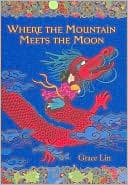
- Where the Mountain Meets the Moon
Grace Lin
4.3 (37k) average on GoodreadsFantasyLin's book is more rooted in fantasy and folklore, offering a magical journey, whereas Peacock's is a realistic portrayal of international adoption. While both feature strong young protagonists and Chinese cultural elements, their narrative styles and primary thematic focuses differ significantly. Lin's strength is imaginative storytelling; Peacock's is grounded emotional realism concerning adoption.
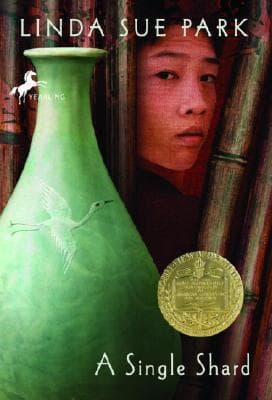
- A Single Shard
Linda Sue Park
3.9 (36k) average on GoodreadsChildren'sPark's novel provides a rich cultural immersion in historical Korea and features a strong protagonist overcoming adversity, but it does not directly address the themes of international adoption, cultural assimilation, or sibling separation as Red Thread Sisters does. Peacock's book is specifically focused on the unique psychological and emotional journey of adopted children.
- Harry Potter and the Sorcerer's Stone
J.K. Rowling
4.5 (7M) average on GoodreadsFantasyRescued from a miserable life under the stairs, an orphaned boy discovers he's a wizard destined for a magical school, where he uncovers a dangerous secret tied to the dark wizard who murdered his parents.
- The Hobbit, or There and Back Again
J.R.R. Tolkien
4.3 (2.9M) average on GoodreadsFantasyA comfort-loving hobbit named Bilbo Baggins is whisked away by a mischievous wizard and a band of dwarves on an unexpected journey to reclaim stolen treasure from a fearsome dragon, discovering courage and a magical ring along the way.
- Harry Potter and the Goblet of Fire
J.K. Rowling
4.6 (2.6M) average on GoodreadsFantasyA bewildered Harry Potter, underage and thrust into a deadly Triwizard Tournament, must brave dragons, mermaids, and a resurgent dark magic to survive a year that will forever alter the wizarding world.
- Harry Potter and the Order of the Phoenix
J.K. Rowling
4.5 (2.5M) average on GoodreadsFantasyIn a year of oppressive secrets and the threat of Voldemort, Harry Potter and Dumbledore's Army secretly train for war, shown through Jim Kay and Neil Packer's dark illustrations.




Enjoyed the summary?
A summary gives you the shape of the book. The book itself has the detail, the examples and the voice.
Find Red Thread Sisters on AmazonAs an Amazon Associate, BookBrief earns from qualifying purchases. How we're funded