

Synopsis
Covers the whole plot, including the ending.
- Difficulty
- Easy
- Pacing
- Moderate
- Mood
- Whimsical, Adventurous, Charming, Imaginative
- Read it if
- You enjoy classic, whimsical children's fantasy with a quest narrative and charming illustrations, or are a J.R.R. Tolkien fan interested in his early works.
- Skip it if
- You prefer modern, fast-paced children's stories or dislike 'old-fashioned' narrative styles.
Roverandom Plot Summary
Covers the whole plot, including the ending.
The Incident with the Wizard
Rover, a lively young dog, is walking on the beach with his owner, a little boy named Two. Rover's playful nature takes over when he meets an old man with a long beard. Mistaking the man's flowing trousers for a toy, Rover playfully nips at them. Unknown to Rover, the man is Artaxerxes, a wizard who is not pleased by the puppy's actions. Angrily, Artaxerxes turns Rover into a small, white toy dog with jointed legs and a painted smile. Two is sad about losing his real dog and seeing this toy, which he immediately recognizes as his beloved Rover.
Lost and Found
After his transformation, the toy Roverandom is accidentally left in a garden by Two's nursemaid. He lies forgotten and lonely until a young boy named Sam, visiting his grandmother, finds him. Sam, happy with the new toy, takes Roverandom home. Roverandom, though a toy, remembers being a real dog. He wants to return to his original form and reunite with Two. Sam's family, unaware of Roverandom's true nature, treats him as a cherished toy, often placing him on the mantelpiece or taking him on outings.
The Magical Introduction
One night, Roverandom is on Sam's window ledge. As the moon rises, he feels a strange sensation and can move and speak. He meets the Sand-man, a kind magical being who travels on a moonbeam, bringing dreams to children. Roverandom tells the Sand-man about his problem, explaining how a wizard turned him into a toy. The Sand-man recognizes Artaxerxes and says the wizard lives on the moon. He offers to take Roverandom to the moon to confront Artaxerxes and find a cure.
Journey to the Moon
The Sand-man carries Roverandom on a moonbeam, and they journey to the moon. The moon is a magical, otherworldly place with its own inhabitants. Upon arrival, Roverandom meets the Moon-dog, a large, friendly dog who guards the moon and guides its light. The Moon-dog sympathizes with Roverandom and offers help. He explains that Artaxerxes is a grumpy wizard but might be convinced to reverse the spell, especially if Roverandom can apologize or offer something in return.
Encountering Artaxerxes on the Moon
With the Moon-dog's help, Roverandom finds Artaxerxes's home on the moon. However, Artaxerxes is not in a good mood. He is busy with a magical argument with another wizard, Psamathos. Artaxerxes is too occupied and irritable to listen to Roverandom's pleas. He dismisses Roverandom, telling him he has more urgent magical matters. Roverandom is discouraged but not defeated, realizing he needs to get the wizard's full attention.
The Moon-dog's Dilemma
While on the moon, the Moon-dog becomes ill. His light begins to fade, threatening to darken the world below. Roverandom, grateful for the Moon-dog's kindness, decides he must help. He learns that the Moon-dog's illness is from a forgotten magical item. Roverandom, with his small size and quick thinking, searches for the missing item, navigating the moon's strange landscapes. His efforts succeed, and the Moon-dog is healthy again, shining brightly.
Psamathos and the Sea-Sorcerer
Impressed by Roverandom's resourcefulness in helping the Moon-dog, Artaxerxes finally pays him some attention. However, he is still too busy with his magical quarrel with Psamathos to reverse the spell. Artaxerxes decides that the best way to resolve the situation is for Roverandom to go to the sea and find Psamathos, hoping Psamathos might be more willing to help a lost toy. Artaxerxes sends Roverandom on a magical journey from the moon down to the sea, a vastly different and equally wondrous environment.
Adventures Under the Sea
Roverandom's journey under the sea is full of new wonders and dangers. He meets various sea creatures, including friendly mermaids and mischievous sea-serpents. He learns that Psamathos is the Sea-Sorcerer and lives in a magnificent underwater palace. The sea-dwellers are wary of Psamathos, describing him as powerful but also prone to temper. Roverandom must navigate this new world, learning its customs and avoiding its dangers, all while trying to reach the great Sea-Sorcerer.
Meeting Psamathos
After some dangerous adventures and with the help of friendly sea creatures, Roverandom finally reaches Psamathos's underwater palace. Psamathos, a grand and somewhat dramatic wizard, is initially amused by a toy dog speaking to him. Roverandom bravely explains his situation, recounting how Artaxerxes transformed him and how he wants to be a real dog again. Psamathos listens carefully, interested by the story and the connection to his rival, Artaxerxes. He sees an opportunity to help Roverandom and perhaps subtly outdo Artaxerxes.
The Resolution and Return
Psamathos, after thought and some magical display, agrees to reverse the spell. He performs a powerful counter-spell, and Roverandom feels a tingling sensation as his toy form begins to disappear. Slowly, he turns back into a real, live puppy. Overjoyed, Roverandom thanks Psamathos. Psamathos then arranges for Roverandom to be magically transported back to the home of his original owner, Two. Roverandom wakes up, a real dog once more, finding himself back in Two's garden, ready for a happy reunion.
Reunion and New Beginnings
Two, who had been sad about Rover's disappearance, is thrilled to find his dog suddenly returned, as if by magic. Rover, now a real dog again, is just as happy to be reunited with his beloved owner. Meanwhile, the toy Roverandom stays with Sam, who continues to cherish him. The story ends with both boys happy, unaware of the incredible adventures the toy dog had experienced. Rover, a little wiser from his magical journey, continues his life as a real dog, remembering his time as Roverandom and the kindness of the Sand-man, the Moon-dog, and Psamathos.
Principal Figures
Rover / Roverandom
Protagonist
A playful puppy transformed into a toy dog.
Rover is initially a boisterous and somewhat mischievous puppy, full of youthful energy and curiosity. His impulsive nature leads him to bite the wizard's trousers, resulting in his transformation. As Roverandom, the toy, he retains his intelligence, memories, and desire to be a real dog again. He is brave, resourceful, and kind, demonstrating a willingness to help others even in his toy form. His journey teaches him patience and empathy, transforming him from a simple pup into a more thoughtful individual.
Relationships: Two (Original owner, beloved companion); Artaxerxes (The wizard who cursed him); Sam (Second owner, cherishes him as a toy); Sand-man (Magical guide and friend); Moon-dog (Friend and recipient of his help); Psamathos (The wizard who cures him)
Artaxerxes
Antagonist (initially) / Supporting
A grumpy and powerful wizard living on the moon.
Artaxerxes is a powerful wizard with a short temper, easily annoyed by disruptions like a playful puppy biting his trousers. He is a master of magic, capable of transforming living beings into toys. He lives on the moon and is often preoccupied with his magical work and rivalries, particularly with Psamathos. Despite his grumpiness, he is not entirely malicious; he eventually helps Roverandom, albeit indirectly, by sending him to Psamathos. He represents the initial obstacle Roverandom must overcome.
Relationships: Roverandom (The dog he cursed); Psamathos (Magical rival); Sand-man (Acquaintance in the magical world)
Psamathos
Supporting / Catalyst
A grand and theatrical wizard of the sea.
Psamathos, also known as the Sea-Sorcerer, is another powerful wizard, Artaxerxes's rival. He lives under the sea in a magnificent palace and possesses a more flamboyant and perhaps less irritable personality than Artaxerxes. He is intrigued by Roverandom's story and sees an opportunity to demonstrate his magical prowess and subtly outdo his rival. He is ultimately benevolent, reversing the spell on Roverandom and ensuring his return home. He represents the solution to Roverandom's problem.
Relationships: Roverandom (The dog he cures); Artaxerxes (Magical rival); Sea creatures (Subjects of his underwater domain)
The Sand-man
Supporting
A kindly magical being who travels on moonbeams.
The Sand-man is a gentle and helpful magical figure who brings dreams to children. He is the first magical being Roverandom encounters after his transformation and immediately offers comfort and assistance. He possesses knowledge of the magical world and the wizards, guiding Roverandom on his initial journey to the moon. He embodies kindness and serves as Roverandom's first mentor in the magical realm, providing crucial information and transport.
Relationships: Roverandom (Guide and friend); Artaxerxes (Acquaintance in the magical world)
The Moon-dog
Supporting
A large, friendly dog who guards the moon.
The Moon-dog is a majestic and benevolent creature who lives on the moon, responsible for guiding its light and ensuring its proper function. He is sympathetic to Roverandom's plight and offers his friendship and advice. When he falls ill, Roverandom's efforts to help him showcase his growing courage and selflessness. The Moon-dog represents the interconnectedness of the magical world and the importance of helping others.
Relationships: Roverandom (Friend and recipient of his help); Artaxerxes (Co-habitant of the moon)
Two
Supporting
Rover's original loving owner.
Two is a young boy who deeply loves his puppy, Rover. He is heartbroken by Rover's sudden disappearance and the appearance of the toy Roverandom, which he immediately recognizes as his lost pet. He represents the innocence and pure affection that Rover longs to return to. His love for Rover is a driving force behind Roverandom's quest, and their eventual reunion is the ultimate goal of the story.
Relationships: Rover (Beloved pet)
Sam
Supporting
The boy who finds and cherishes Roverandom as a toy.
Sam is a kind and imaginative young boy who discovers the toy Roverandom in a garden and takes him home. He treats Roverandom as a cherished toy, unaware of the toy's true nature as a cursed dog. Sam's care and affection provide Roverandom with a temporary home and comfort during his time as a toy. He represents the simple joy and wonder children find in their toys, highlighting the contrast with Roverandom's inner turmoil.
Relationships: Roverandom (Cherished toy)
Themes & Insights
Transformation and Identity
The main theme is Rover's physical transformation into a toy and his journey to become a dog again. Despite his changed form, Roverandom keeps his memories, thoughts, and personality, showing that true identity is more than outward appearance. His adventures force him to adapt and act as a toy while still trying to return to his original self, as seen when he bravely confronts wizards despite his small size. This theme explores the idea that inner spirit and self-awareness are more important than physical form.
“He was a small white toy dog, with jointed legs and a painted smile, but inside he was still Rover, and he still wanted to be a real dog.”
Consequences of Actions
Rover's initial problem results directly from his playful but ill-mannered decision to bite Artaxerxes's trousers. This shows that even small actions can have big, unexpected consequences. His long journey to reverse the spell teaches responsibility and the need to consider the impact of one's behavior. The story suggests that apologies and making amends are important steps in correcting mistakes, even if the process is complicated.
“He had bitten the wizard's trousers, and this was the result.”
The Power of Kindness and Helpfulness
Throughout his adventures, Roverandom gets help from magical beings like the Sand-man and the Moon-dog. In turn, Roverandom shows his own kindness and helpfulness, especially when he aids the sick Moon-dog. This exchange of goodwill helps his quest, as his good deeds eventually impress Artaxerxes and lead him closer to Psamathos. The theme suggests that helping others, even when one needs help oneself, can lead to unexpected rewards and progress.
“And the Moon-dog was very grateful, and promised to help Roverandom in any way he could.”
The Wonder of the Unknown
The story takes Roverandom on journeys to the moon and under the sea, revealing imaginative landscapes and creatures. These settings are described with rich detail, showing the wonder and magic in the unknown. From moonbeams and talking dogs on the moon to mermaids and sea-serpents in the ocean depths, the story emphasizes the boundless possibilities and hidden marvels of the world beyond everyday experience. This theme encourages a sense of awe and curiosity about the magical and unseen aspects of existence.
“The moon was a strange and beautiful place, full of wonders that Roverandom had never imagined.”
Plot Devices & Literary Techniques
Magical Transformation
The central magical event that drives the entire plot.
The transformation of Rover into Roverandom by Artaxerxes's spell is the inciting incident of the story. This device immediately establishes the fantastical nature of the world and creates the central conflict: Roverandom's desire to reverse the enchantment. It allows for the exploration of themes like identity and perspective, as Rover must navigate the world from the limited viewpoint of a toy while retaining his inner consciousness. The magic is portrayed as powerful and sometimes whimsical, setting the tone for his subsequent adventures.
Quest Narrative
Roverandom's journey to find a cure for his transformation.
The entire story is structured as a quest, with Roverandom undertaking a perilous journey to achieve a specific goal: to be turned back into a real dog. This involves traveling to distant, magical lands (the moon, under the sea), encountering various helpers and obstacles, and ultimately confronting the source of his problem (or its solution). The quest framework provides a clear progression for the plot, allowing for a series of episodic adventures that build towards the resolution.
Anthropomorphism
Giving human characteristics to animals and toys.
Rover, even as a toy, retains his thoughts, feelings, and ability to communicate, allowing him to interact with magical beings and articulate his desires. The Moon-dog also speaks and exhibits human-like emotions. This device is crucial for a children's fantasy story, making the animal characters relatable and enabling their active participation in the plot. It allows for a deeper exploration of themes like identity and empathy from a non-human perspective, while also adding to the whimsical charm of the narrative.
The Magical Mentor/Helper
Characters who guide and assist the protagonist.
Throughout his journey, Roverandom encounters several benevolent magical figures who provide crucial assistance and guidance. The Sand-man initiates his journey to the moon and offers wise counsel. The Moon-dog provides companionship and advice on the moon. These characters serve to advance the plot by offering necessary information, transportation, or direct aid. They represent the forces of good in the magical world, demonstrating that help can be found in unexpected places when one is on a worthy quest.
Roverandom Quotes
“For dogs, you know, have a very great respect for the moon, and particularly for the Man in the Moon. They know him better than we do, and they often talk to him.”
“He was just a little white dog, with black ears, and a funny tail that curled over his back, and he was very proud of his tail.”
“And the little boy was very, very unhappy, because he loved his toy dog more than anything else in the world.”
“The Man in the Moon never laughed at anyone who was unhappy, and he understood all about lost toys.”
“For the Man in the Moon is really a magician, and a very good one too.”
“He had a very bad temper, and he hated being disturbed, especially when he was trying to think of new spells.”
“It is much harder to be a toy dog than a real one, because toy dogs have to be very patient.”
“The Moon dogs are very busy dogs, and they have a great deal of work to do, looking after the moonbeams.”
“For the sea, you know, has a great many secrets, and it doesn't tell them to everyone.”
“He was very brave, though he was only a little dog, and he wasn't afraid of the dark.”
“And the Mer-king was very wise, for he knew that sometimes even a little dog can be very important.”
“It's a very uncomfortable thing to be a toy, especially when you want to be a real dog.”
“For the Moon is a very good place for finding lost things, if you know how to look.”
“And so, after many adventures, Roverandom became a real dog again, and a very happy one.”
Quiz
10 questions on the plot and the characters. Each answer comes with a short explanation.
Question 1
What is the primary reason Rover is transformed into a toy?
- He stole a magical item from the wizard.
- He barked too loudly at the wizard.
- He bit the wizard's trousers.
- He wandered into the wizard's forbidden garden.
Show answer
C. He bit the wizard's trousers. The story explicitly states that Rover's punishment for biting the wizard's trousers was his transformation into a toy dog.
Question 2
What is Rover's original form before his transformation?
- A cat
- A boy
- A toy
- A dog
Show answer
D. A dog Rover is a normal dog at the beginning of the story, who is then transformed into a toy.
Question 3
Which of these locations does Rover NOT visit in his quest to become normal again?
- The Moon
- Under the sea
- The clouds above the world
- The wizard's house (post-transformation)
Show answer
C. The clouds above the world The book description explicitly mentions his adventures taking him 'to the moon and under the sea,' but not to the clouds.
Question 4
What is the name of the wizard who transforms Rover?
- Gandalf
- Artaxerxes
- Merlin
- Radagast
Show answer
B. Artaxerxes The wizard who transforms Rover is named Artaxerxes. This name is a key detail in the early part of the story.
Question 5
What is the name of the boy who receives Rover as a toy?
- Christopher
- Dick
- Michael
- John
Show answer
B. Dick After being transformed, Rover is found by a boy named Dick, who becomes his new owner.
Question 6
Who is the 'Man in the Moon' that Rover encounters?
- The wizard Artaxerxes in disguise.
- A powerful wizard named Uin.
- The Great White Dragon.
- A wizard known as the 'Man-in-the-Moon-as-he-was-before-he-fell-out-of-the-Sky'.
Show answer
D. A wizard known as the 'Man-in-the-Moon-as-he-was-before-he-fell-out-of-the-Sky'. Rover meets an exiled wizard on the Moon, who is referred to by the long title 'Man-in-the-Moon-as-he-was-before-he-fell-out-of-the-Sky'.
Question 7
What creatures assist Rover on his journey to the Moon?
- Giant eagles
- Seagulls and a magical kite
- Pigeons and a hot air balloon
- Flying fish
Show answer
B. Seagulls and a magical kite Rover reaches the Moon with the help of some seagulls and a magical kite belonging to the Man-in-the-Moon's son, Little Boy Blue.
Question 8
What is the significance of the name 'Roverandom'?
- It is the name of the wizard's pet.
- It is the original name of the toy dog.
- It is the name given to Rover by the Man in the Moon, signifying his wandering nature.
- It is the name of the magical land under the sea.
Show answer
C. It is the name given to Rover by the Man in the Moon, signifying his wandering nature. The Man-in-the-Moon renames Rover to Roverandom, a combination of 'Rover' and 'random' to reflect his unplanned adventures and travels.
Question 9
What is the primary motivation for Rover's quest throughout the story?
- To find a new owner who will love him.
- To explore the world and have adventures.
- To return to his original form as a real dog.
- To help the wizards reconcile their differences.
Show answer
C. To return to his original form as a real dog. From the very beginning, Rover's goal is to find the wizard who transformed him and convince him to reverse the spell, so he can be a real dog again.
Question 10
Which of these characters is crucial in helping Rover navigate the underwater world?
- The Great White Dragon
- The Sea-faring Gull
- The Mer-dog, Argos
- The King of the Sea
Show answer
C. The Mer-dog, Argos In his underwater adventures, Rover is aided by Argos, a Mer-dog (a dog with a fish-tail), who helps him navigate and understand the sea-world.
Roverandom FAQ
What is the central premise of Roverandom and what instigates the plot?
The story centers on a young dog named Rover who is transformed into a toy by the wizard Artaxerxes after biting his trousers. To revert to his original form, Rover, now called Roverandom, must find Artaxerxes, initiating a grand adventure to the Moon and under the Sea.
Who are the key human characters involved in Roverandom's initial transformation and subsequent ownership?
The wizard Artaxerxes is responsible for Rover's transformation into a toy. Later, a little boy named Two, who has lost his own favorite toy dog, receives Roverandom as a replacement, setting the stage for Roverandom's journey to find the wizard.
What significant locations does Roverandom visit during his quest to become a real dog again?
Roverandom's adventures take him to two primary magical realms: the Moon, where he encounters the Man-in-the-Moon and various moon-dogs, and under the Sea, where he meets the Mer-King and other aquatic creatures.
Who are some of the magical beings Roverandom encounters on his journey, and how do they assist or hinder him?
On the Moon, Roverandom meets the Man-in-the-Moon, the Great White Dragon, and the moon-dog Ylmer. Under the Sea, he encounters the Mer-King and the sea-dog Argo. These characters provide guidance, challenges, or sometimes transportation, playing crucial roles in his quest.
How does Roverandom ultimately achieve his goal of returning to his original form?
Roverandom eventually finds Artaxerxes, but only after a series of magical interventions and the assistance of other powerful beings like the Man-in-the-Moon and the Mer-King. He must convince Artaxerxes, with the help of the other wizards, to reverse the spell.
Are there any subtle connections between the wizard Artaxerxes and other magical figures in Tolkien's broader mythology?
While Artaxerxes is unique to Roverandom, his portrayal as a somewhat temperamental but ultimately powerful wizard who can alter forms echoes the broader concept of 'Istari' or wizards in Middle-earth, though he lacks their specific divine origin.
What is the significance of the names of the moon-dog Ylmer and the sea-dog Argo?
Ylmer is a name that hints at an older, possibly Nordic linguistic influence, fitting Tolkien's philological interests. Argo, the sea-dog, shares its name with the ship of Jason and the Argonauts in Greek mythology, subtly connecting the tale to classical seafaring adventures.
How does the 'Man-in-the-Moon' in Roverandom compare to other depictions of this figure in folklore or Tolkien's other works?
Tolkien's Man-in-the-Moon is a fully realized, benevolent character with his own court and magical powers, rather than just a passive celestial body. This portrayal gives him agency and a direct role in Roverandom's journey, making him a more active participant than in typical folklore.
Are there any linguistic curiosities or invented words within Roverandom that foreshadow Tolkien's later work?
While Roverandom is primarily a children's story, Tolkien's love for language is evident in the imaginative names and descriptions, occasionally hinting at the linguistic playfulness that would become a hallmark of his Middle-earth creations, though no direct Quenya or Sindarin is present.
How does Roverandom's initial act of biting Artaxerxes' trousers reflect on his character and the themes of consequence?
Rover's impulsive act demonstrates a youthful lack of judgment and a touch of mischief, immediately establishing the theme of consequences for one's actions. His transformation into a toy is a direct, albeit magical, repercussion that forces him into a journey of self-discovery.
What psychological journey does Roverandom undergo as he transitions from a real dog to a toy and back again?
Roverandom experiences a significant psychological shift from a carefree, real dog to a toy with limited agency, and then to an adventurer. His journey forces him to adapt, rely on others, and develop resilience and determination to regain his true self.
How does the 'lost toy' motif, inspired by Tolkien's son, influence the emotional depth of the story?
The genesis of the story from a child's lost toy imbues Roverandom with a poignant emotional core. It taps into the universal experience of loss and longing, making Roverandom's quest for identity and belonging resonate deeply with both children and adults.
In what ways does Roverandom's interaction with the little boy, Two, highlight themes of empathy and companionship?
Roverandom's time as Two's toy illustrates the bond between a child and their beloved plaything. It subtly teaches empathy as Roverandom, despite his own predicament, becomes a source of comfort for Two, showcasing the importance of companionship.
Is Roverandom best categorized as a pure children's fantasy, or does it contain deeper allegorical meanings?
While primarily a charming children's fantasy, Roverandom can be interpreted as having subtle allegorical undertones about identity, transformation, and the journey of self-discovery. It explores the idea of finding one's place and purpose after significant change.
How does the structure of Roverandom, with its distinct Moon and Sea adventures, contribute to its overall narrative impact?
The episodic structure, with two major, contrasting adventures, allows for a rich variety of settings and characters. This provides a sense of grand scope and continuous progression, demonstrating Roverandom's perseverance through diverse challenges.
What is the significance of the multiple wizards in the story, and how do their roles differ?
The story features Artaxerxes, the initial transformer, and later, other wizards who reside on the Moon, such as Psamathos Psamathides. This suggests a broader magical hierarchy or community, highlighting that power is not singular and often requires collective effort to resolve complex enchantments.
How does Roverandom, despite being written early in Tolkien's career, foreshadow themes or stylistic elements found in his later, more famous works?
Roverandom showcases Tolkien's early mastery of world-building, imaginative creature design, and a clear narrative voice, all of which would become hallmarks of The Hobbit and The Lord of the Rings. It also touches on themes of journeys, courage, and the impact of magic on the mundane.
What message about forgiveness and second chances can be drawn from Artaxerxes' ultimate decision to reverse the spell?
Artaxerxes' eventual decision to undo the spell, despite his initial anger, emphasizes themes of forgiveness and second chances. It suggests that even powerful beings can learn from their actions and that consequences, while necessary, can ultimately be reversed through empathy and understanding.
About the author
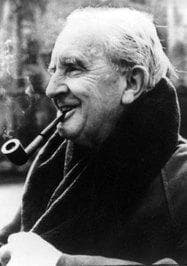
J.R.R. Tolkien was an English writer and philologist, best known for his high-fantasy works. His notable books include "The Hobbit, or There and Back Again," "The Fellowship of the Ring," and "The Return of the King," which are foundational texts in the fantasy genre. He also authored "The Silmarillion" and a boxed set featuring "The Hobbit" and "The Lord of the Rings."
Similar books
- The Hobbit, or There and Back Again
J.R.R. Tolkien
4.3 (2.9M) average on GoodreadsFantasyShares Tolkien's distinctive narrative voice, world-building, and a journey-based plot, albeit for a slightly older audience.
- Mary Poppins
P.L. Travers
4.0 (115k) average on GoodreadsFantasyFeatures a touch of everyday magic and imaginative adventures, with a classic, slightly whimsical tone.
- The Phantom Tollbooth
Norton Juster
4.2 (242k) average on GoodreadsFantasyInvolves a child embarking on a fantastical journey to magical lands, encountering unique characters and solving dilemmas.
- Alice's Adventures in Wonderland
Lewis Carroll
4.0 (245k) average on GoodreadsFantasyBoth Roverandom and Alice's Adventures in Wonderland are classic children's fantasies centered on a protagonist's journey through a whimsical, often nonsensical, magical world. However, Carroll's work is characterized by its surreal logic, wordplay, and satirical undertones, focusing more on a dream-like exploration of absurdity. Roverandom, while fantastical, maintains a more traditional narrative structure with clear goals and consequences, aligning more closely with the structure of a fairy tale. While Alice's journey is often bewildering and open to interpretation, Roverandom's journey is one of learning and resolution, firmly rooted in a moral tale for children. Verlyn Flieger's (2001) analysis of Tolkien's approach to Faërie highlights his emphasis on internal consistency, even in whimsy, which contrasts with Carroll's deliberate subversion of logic.
- Harry Potter and the Sorcerer's Stone
J.K. Rowling
4.5 (7M) average on GoodreadsFantasyRescued from a miserable life under the stairs, an orphaned boy discovers he's a wizard destined for a magical school, where he uncovers a dangerous secret tied to the dark wizard who murdered his parents.
- The Hunger Games
Suzanne Collins
4.3 (6.4M) average on GoodreadsFantasyIn a future where children fight to the death on live television, Katniss Everdeen volunteers for the arena, turning a death sentence into a fight for survival and a spark of rebellion.





Enjoyed the summary?
A summary gives you the shape of the book. The book itself has the detail, the examples and the voice.
Find Roverandom on AmazonAs an Amazon Associate, BookBrief earns from qualifying purchases. How we're funded