
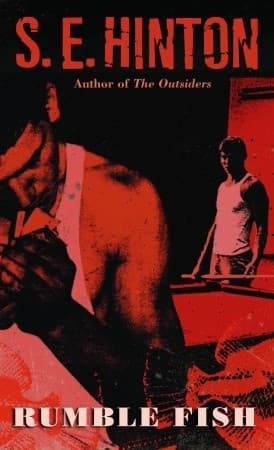
Synopsis
Covers the whole plot, including the ending.
- Difficulty
- Easy
- Pacing
- Moderate
- Mood
- Gritty, Melancholy, Intense, Reflective
- Read it if
- You enjoy gritty, character-driven coming-of-age stories about brotherhood, loyalty, and the struggles of youth in a tough environment. Perfect for fans of classic YA literature with a raw edge.
- Skip it if
- You prefer lighthearted stories, or are sensitive to themes of violence, neglect, and tragic outcomes.
Rumble Fish Plot Summary
Covers the whole plot, including the ending.
A Street Fight and the Motorcycle Boy's Reputation
The story starts with Rusty-James, a high school gang leader, facing Smoker, a member of a rival gang from across the river. Rusty-James is with his best friends, Steve and Biff. The fight happens after Rusty-James's girlfriend, Patty, flirts with Smoker. During the fight, Rusty-James is losing until the Motorcycle Boy, his older brother, shows up. The Motorcycle Boy's presence and calm way make the other gang scared, ending the fight without him doing anything. Rusty-James admires him greatly and wants to be just like his brother, who everyone in their neighborhood looks up to.
Life at Benny's and Patty's Betrayal
After the fight, Rusty-James, Steve, and the Motorcycle Boy go to Benny's, their usual spot, a pool hall and diner. The Motorcycle Boy, despite his reputation, often seems distant and thoughtful, which frustrates Rusty-James. Later, Rusty-James finds Patty, his girlfriend, with another boy, Bill, in a car. Angry and feeling betrayed, Rusty-James confronts them, which leads to a fight where he beats Bill. Patty then says she broke up with Rusty-James because he was violent and obsessed with the Motorcycle Boy, leaving him sad and confused about his relationships.
The Motorcycle Boy's Insights and Parental Neglect
Rusty-James spends time with the Motorcycle Boy, trying to understand his older brother's often unclear and thoughtful views on life, gangs, and their future. The Motorcycle Boy says he wants to see the ocean and talks about how limited their small town is. Their talk shows how different Rusty-James's desire for street fame is from the Motorcycle Boy's desire for something more. Their alcoholic father is mostly absent, and their mother left years ago, so the brothers mostly take care of themselves. This creates a deep, unspoken bond between them despite their differences.
Steve's Discomfort and the Gang's Decline
Steve, Rusty-James's best friend, feels more and more uneasy with the violence and lack of direction in their gang life. He says he wants to leave the neighborhood and go to school, which Rusty-James struggles to understand. Steve's growing distance and his clear disinterest in street fighting make Rusty-James feel alone. Rusty-James feels his world shrinking as his friends, like Biff, also start to leave, and the old gang system that once defined his life begins to fall apart around him. The exciting days of gang fights seem to be ending, leaving Rusty-James unsure of his place.
The Motorcycle Boy's Disappearance and Return
The Motorcycle Boy disappears for several days, making Rusty-James very worried. He searches for him, fearing the worst. When the Motorcycle Boy finally comes back, he says he went to California, fulfilling his long-held wish to see the ocean. He talks about how big and free it felt, showing his strong desire for a life beyond their confined neighborhood. His return brings Rusty-James temporary relief, but also shows the Motorcycle Boy's growing distance from their shared reality and his brother's world.
A Near-Fatal Injury and Medical Complications
During a minor fight, Rusty-James is stabbed. He is taken to the hospital for surgery. While recovering, he finds out he has permanent damage and has lost some of his hearing. This injury is a turning point, making Rusty-James face his own death and the results of his violent life. The Motorcycle Boy visits him in the hospital, showing concern for a rare moment, and Rusty-James, for the first time, feels truly weak and less unbeatable than he once thought.
The Bank Robbery and the Motorcycle Boy's Final Act
Wanting a change and perhaps to make a statement against how confined their lives are, the Motorcycle Boy robs a bank. He does not take any money, instead breaking the glass and setting off the alarm. He then waits for the police. Rusty-James, hearing about this, rushes to the scene with Steve. A police officer shoots and kills the Motorcycle Boy while he resists arrest. Rusty-James sees this, and the senseless act and his brother's death shatter his world and his perfect image of the Motorcycle Boy.
Aftermath and a Glimmer of Hope
After the Motorcycle Boy's death, Rusty-James is devastated. He struggles to deal with the loss and the destruction of his identity, which was so tied to his brother. Steve, despite their growing differences, stays a loyal friend, offering support. The police lieutenant who shot the Motorcycle Boy gives Rusty-James some perspective, suggesting that the Motorcycle Boy was 'rumble fish' in a 'finger bowl,' meaning his brother was too big for their small world. This insight, along with Steve's continued presence, gives Rusty-James a fragile hope that he might be able to escape the cycle of violence and find a different path for himself, away from the river.
Rumble Fish Characters
Rusty-James
Protagonist
A tough street kid obsessed with emulating his older brother, the Motorcycle Boy.
Rusty-James is a high school student who leads a small gang and prides himself on his toughness and fighting ability. He is deeply insecure and relies heavily on his older brother, the Motorcycle Boy, for validation and protection. Rusty-James is not academically inclined and struggles with understanding deeper emotions or consequences, often acting impulsively. He longs for the glory days of gang warfare and views his brother as the epitome of cool and strength, desperately wanting to be just like him. His identity is largely defined by his brother and his street reputation.
Relationships: The Motorcycle Boy (Idolizing younger brother, dependent); Steve (Best friend, intellectual foil); Patty (Girlfriend, later ex-girlfriend); Father (Neglectful, alcoholic parent)
The Motorcycle Boy
Supporting/Catalyst
Rusty-James's enigmatic, revered older brother, a legendary former gang leader.
The Motorcycle Boy is a legendary figure in their neighborhood, known for his calm demeanor, fighting prowess, and striking good looks. He is intelligent and philosophical, often appearing detached and world-weary. He has a unique way of observing the world, seeing it with a clarity that eludes Rusty-James. Despite his reputation, he often seems bored and restless, yearning for something beyond their small town. He is colorblind and has a deep affection for rumble fish, seeing a reflection of himself in their aggressive, confined existence. His actions, though often mysterious, profoundly impact Rusty-James.
Relationships: Rusty-James (Older brother, protector, idolized figure); Father (Neglectful, alcoholic parent)
Steve Hays
Supporting
Rusty-James's intelligent and sensitive best friend who seeks a path away from the streets.
Steve is Rusty-James's best friend, but he is fundamentally different from him. He is intelligent, sensitive, and observant, often reflecting on their circumstances with a maturity beyond his years. Steve is uncomfortable with the violence and aimlessness of gang life and dreams of leaving their neighborhood to pursue an education. He acts as Rusty-James's conscience and intellectual counterpart, providing a different perspective on their lives. Despite their differences, Steve remains loyal to Rusty-James, offering support even when he disapproves of his friend's choices.
Relationships: Rusty-James (Best friend, moral compass)
Patty
Supporting
Rusty-James's girlfriend, who ultimately leaves him due to his violent nature.
Patty is Rusty-James's girlfriend at the beginning of the story. She is attractive and initially drawn to Rusty-James's tough-guy image. However, she grows weary of his violent tendencies, his obsession with the Motorcycle Boy, and his lack of ambition. Her decision to break up with him and her subsequent actions highlight Rusty-James's immaturity and his inability to maintain stable relationships outside of his street world. She represents a potential normal life that Rusty-James is unable to grasp.
Relationships: Rusty-James (Girlfriend, later ex-girlfriend); Bill (New boyfriend)
Father
Supporting
The alcoholic, largely absent father of Rusty-James and the Motorcycle Boy.
The father of Rusty-James and the Motorcycle Boy is an alcoholic who is largely absent from their lives. He struggles with his own demons and provides little guidance or support to his sons. Despite his failings, there are fleeting moments where he shows a glimmer of care, but his inability to overcome his addiction and responsibilities leaves his sons to raise themselves. He represents the broken family unit and the cycle of neglect that has shaped the brothers' lives.
Relationships: Rusty-James (Neglectful parent); The Motorcycle Boy (Neglectful parent)
Smoker
Supporting
A rival gang member from the other side of the river.
Smoker is a member of a rival gang and is the initial antagonist in the opening street fight. His challenge to Rusty-James sets the stage for the Motorcycle Boy's dramatic entrance and establishes the street hierarchy. He represents the constant threat of violence and rivalry that defines Rusty-James's world, though he is ultimately outmatched by the Motorcycle Boy's reputation.
Relationships: Rusty-James (Rival gang member)
Biff Wilcox
Supporting
One of Rusty-James's friends and gang members.
Biff is one of Rusty-James's friends and a member of his gang. He is less developed than Steve but represents another aspect of Rusty-James's social circle. Biff is loyal but not particularly insightful, mostly following Rusty-James's lead. He is part of the street life, but also one of the friends who gradually drifts away as the gang culture starts to decline, further isolating Rusty-James.
Relationships: Rusty-James (Friend, gang member)
Cassandra
Supporting
A girl Rusty-James dates briefly after Patty.
Cassandra is a girl Rusty-James briefly dates after his breakup with Patty. She is portrayed as somewhat wild and impulsive. Their relationship is superficial and short-lived, highlighting Rusty-James's inability to form meaningful connections and his continued focus on his brother and the street world, even when attempting to move on from Patty.
Relationships: Rusty-James (Brief romantic interest)
Police Lieutenant
Mentioned
The officer who shoots the Motorcycle Boy, offering a final perspective.
The police lieutenant is the officer who ultimately shoots and kills the Motorcycle Boy during the bank incident. He is a minor character but delivers a crucial line to Rusty-James, describing the Motorcycle Boy as a 'rumble fish in a finger bowl.' This metaphor provides a profound insight into the Motorcycle Boy's character and the limitations of their world, helping Rusty-James begin to process his brother's death and understand his motivations.
Relationships: The Motorcycle Boy (Officer involved in his death); Rusty-James (Offers an explanation of his brother)
Rumble Fish Themes
Identity and Self-Discovery
Rusty-James's identity is first completely tied to his brother's image and his fame as a tough street fighter. He always tries to be 'just like the Motorcycle Boy.' The story shows his struggle to create his own identity separate from his brother's shadow and the expectations of his gang. The Motorcycle Boy's own search for meaning, which ends tragically, forces Rusty-James to face who he is without his idol and to think about a different future. His injury and his brother's death make him start this painful self-discovery.
“He was the toughest, coolest, most respected cat on this side of the river. And I wanted to be just like him.”
The Cycle of Violence and Its Consequences
Violence is everywhere in Rusty-James's world, from street fights to everyday aggression. The novel clearly shows the immediate physical and emotional cost of this violence, such as Rusty-James getting stabbed and losing some hearing. More deeply, it shows how violence traps people in a harmful cycle, limiting their futures and causing sadness. Patty leaving and Steve wanting to get away show how violence pushes loved ones away. The Motorcycle Boy's final, self-destructive act of violence against society is a sad end, showing that even the 'coolest' people cannot escape its hold unharmed.
“It was like being in a fish bowl, but nobody had told us we were fish.”
Escapism and the Desire for Freedom
Both Rusty-James and the Motorcycle Boy, in different ways, deal with the limits of their environment. Rusty-James holds onto the old idea of gang fame, a way to mentally escape from the ordinary and harsh reality. The Motorcycle Boy, however, wants to physically leave, dreaming of seeing the ocean and experiencing a world beyond their town. His trip to California and his last, desperate act show this strong desire for freedom from a life he sees as a 'finger bowl.' Steve also shows this theme, actively trying to escape through education.
“I wanted to see the ocean. I wanted to see it so bad I could taste it.”
Brotherhood and Loyalty
The novel's core is the strong and complex bond between Rusty-James and the Motorcycle Boy. Rusty-James's loyalty and admiration for his brother drive many of his actions. Despite the Motorcycle Boy's distance, there is an unspoken understanding and protective feeling between them. This theme also includes Rusty-James's friendship with Steve, whose loyalty lasts even as their paths diverge. The breaking or changing of these bonds is central to Rusty-James's growth, as he learns what true loyalty means when facing tragedy.
“He was my brother. He was the only person who understood anything.”
Plot Devices & Literary Techniques
The Motorcycle Boy as an Archetype
The enigmatic, almost mythical figure representing unattainable ideals and tragic wisdom.
The Motorcycle Boy functions as an archetypal 'wise fool' or 'tragic hero.' He is simultaneously revered and misunderstood, possessing a profound, almost prophetic, understanding of their world's limitations, yet unable to find a place within it. His legend precedes him, influencing everyone, especially Rusty-James. He embodies the allure of cool detachment and power, but also the ultimate futility of such a life, serving as a cautionary tale for Rusty-James's own aspirations. His actions are often symbolic, such as his desire to see the ocean or his final, non-monetary bank robbery.
Colorblindness
A literal and metaphorical device highlighting the Motorcycle Boy's unique perception.
The Motorcycle Boy's colorblindness is a significant literal and metaphorical device. Literally, it sets him apart and explains his unique perception of the world, seeing things in shades of gray. Metaphorically, it symbolizes his ability to see beyond superficial appearances and the 'colors' of gang affiliations, recognizing the inherent sameness and futility beneath the surface. It underscores his detachment and his philosophical outlook, suggesting he perceives a deeper, starker reality that others, like Rusty-James, cannot or choose not to see.
Rumble Fish (Symbol)
A central metaphor representing aggression, confinement, and self-destruction.
The rumble fish (Siamese fighting fish) are a powerful recurring symbol. These beautiful but aggressive fish, kept in separate bowls because they would kill each other if together, represent the characters, particularly the Motorcycle Boy and Rusty-James, and their confined, violent existence. The Motorcycle Boy's fascination with them, and the lieutenant's final description of him as a 'rumble fish in a finger bowl,' perfectly encapsulates the theme of individuals too wild or too confined for their environment, leading to inevitable self-destruction or conflict. They are a metaphor for the boys' lives on the streets.
The River
A symbolic boundary dividing worlds and representing stagnation.
The river in the story serves as a geographical and symbolic boundary. It divides the town into 'our side' and 'their side,' fueling gang rivalries and reinforcing a sense of tribalism and confinement. It represents the stagnant, unchanging nature of their lives and the limitations of their world. Crossing the river signifies entering rival territory, while the Motorcycle Boy's desire to see the ocean highlights a yearning to transcend this narrow, divisive boundary and find a broader, more open existence beyond their river-bound reality.
Rumble Fish Quotes
“If you're going to be a rumble fish, you have to be the toughest, meanest rumble fish in the sea.”
“I don't know why people think it's so important to be happy. I'd rather be alive.”
“Things are always changing. The only thing that stays the same is that things are always changing.”
“You can't depend on anybody. You can only depend on yourself.”
“Sometimes I think I'm the only sane person left in this whole insane world.”
“I wanted to be like him. I wanted to be the Motorcycle Boy.”
“You can't go back. You can only go forward.”
“The world is full of people who are afraid to take a chance.”
“I don't want to be a hero. I just want to be left alone.”
“You have to be careful what you wish for. You might get it.”
“There's no such thing as a free ride. Everything costs something.”
“I'm not afraid of dying. I'm afraid of not living.”
“Sometimes the only way to stay sane is to go a little crazy.”
“You can't change the past, but you can let it change you.”
Quiz
10 questions on the plot and the characters. Each answer comes with a short explanation.
Question 1
What is Rusty-James's primary motivation throughout the story?
- To become the smartest student in his school
- To be just like his older brother, the Motorcycle Boy
- To leave town and start a new life elsewhere
- To win a pool tournament at Benny's
Show answer
B. To be just like his older brother, the Motorcycle Boy Rusty-James idolizes his older brother and constantly strives to emulate his calm demeanor, toughness, and street reputation, which drives most of his actions in the book.
Question 2
Where do Rusty-James and his friends typically hang out?
- At the local library
- At a bowling alley called Strike Zone
- At Benny's, shooting pool
- At the Motorcycle Boy's apartment
Show answer
C. At Benny's, shooting pool Benny's pool hall is the central gathering place for Rusty-James and his group of high-school friends, serving as a backdrop for many key events in the story.
Question 3
How does Rusty-James typically handle problems or conflicts?
- By using his intelligence and talking things out
- By relying on his fists instead of his brains
- By seeking advice from teachers
- By avoiding confrontation entirely
Show answer
B. By relying on his fists instead of his brains Rusty-James acknowledges that he isn't book-smart and depends on physical violence to assert himself and resolve issues, which is a central aspect of his character.
Question 4
What role does the Motorcycle Boy play in Rusty-James's life before the explosive events?
- He constantly criticizes and undermines Rusty-James
- He acts as a mentor and bails Rusty-James out of trouble
- He is a distant figure who rarely interacts with Rusty-James
- He competes with Rusty-James for dominance in their group
Show answer
B. He acts as a mentor and bails Rusty-James out of trouble The Motorcycle Boy serves as a protector and rescuer for Rusty-James, intervening whenever his younger brother gets into dangerous situations, which Rusty-James comes to depend on.
Question 5
Why does Rusty-James's world begin to fall apart in the story?
- Because he fails an important school exam
- Because his drive to be like his brother eats away at his life
- Because he moves to a new town and loses his friends
- Because he gets a job that takes up all his time
Show answer
B. Because his drive to be like his brother eats away at his life Rusty-James's obsession with emulating the Motorcycle Boy leads to escalating conflicts and poor decisions, ultimately causing his life to unravel in a chain of explosive events.
Question 6
What is a key difference between Rusty-James and the Motorcycle Boy?
- The Motorcycle Boy is more violent and aggressive
- Rusty-James is more intelligent and thoughtful
- The Motorcycle Boy stays calm and laughing in danger, while Rusty-James struggles with this
- Rusty-James has a better reputation on their side of the river
Show answer
C. The Motorcycle Boy stays calm and laughing in danger, while Rusty-James struggles with this Rusty-James admires how his brother remains composed and seemingly unfazed during risky situations, a trait he tries but often fails to replicate, highlighting their contrasting personalities.
Question 7
How does the story's climax affect Rusty-James's relationship with the Motorcycle Boy?
- It strengthens their bond as they work together to solve problems
- It leaves Rusty-James without his brother's protection for the first time
- It causes them to become rivals competing for the same goals
- It results in the Motorcycle Boy taking Rusty-James under his wing more closely
Show answer
B. It leaves Rusty-James without his brother's protection for the first time The explosive chain of events culminates in a situation where the Motorcycle Boy is no longer available to bail Rusty-James out, forcing him to face consequences alone.
Question 8
What does Rusty-James's reliance on violence instead of intellect symbolize in the novel?
- The importance of physical strength in achieving success
- A critique of how societal pressures can limit personal growth and lead to self-destruction
- The benefits of street smarts over formal education
- A celebration of rebellious youth culture
Show answer
B. A critique of how societal pressures can limit personal growth and lead to self-destruction Rusty-James's choices reflect themes of trapped potential and the destructive cycle of idolizing flawed role models, common in S.E. Hinton's works about teenage struggles.
Question 9
In what way does Rusty-James's self-awareness about not being 'book-smart' influence the plot?
- It motivates him to enroll in night school to improve his education
- It leads him to avoid all conflicts to prevent making mistakes
- It reinforces his dependence on physical aggression and his brother, escalating the story's conflicts
- It causes him to reject his brother's influence entirely
Show answer
C. It reinforces his dependence on physical aggression and his brother, escalating the story's conflicts His acknowledgment of his intellectual limitations pushes him deeper into a violent lifestyle and reliance on the Motorcycle Boy, setting the stage for the novel's tragic events.
Question 10
Which statement best captures the central conflict of 'Rumble Fish'?
- A battle between two gangs for control of the city
- Rusty-James's internal struggle to define himself beyond his brother's shadow while navigating a violent world
- A love triangle involving Rusty-James and his friends
- A mystery about the disappearance of the Motorcycle Boy
Show answer
B. Rusty-James's internal struggle to define himself beyond his brother's shadow while navigating a violent world The novel focuses on Rusty-James's psychological journey as he grapples with identity, admiration, and the consequences of his actions in a gritty urban setting.
Rumble Fish FAQ
What is 'Rumble Fish' about?
'Rumble Fish' follows Rusty-James, a tough high schooler who idolizes his older brother, the Motorcycle Boy. Rusty-James relies on violence to maintain his reputation but struggles when his brother isn't there to bail him out, leading to a series of explosive events that shatter his world.
Why should I read 'Rumble Fish'?
You should read 'Rumble Fish' for its raw exploration of teenage identity, brotherhood, and the consequences of violence. S.E. Hinton's gritty portrayal of Rusty-James' downfall offers a poignant look at the pressures of masculinity and the search for role models in a harsh urban setting.
What is the background/setting of 'Rumble Fish'?
The story is set in a gritty, unnamed urban neighborhood divided by a river, where high-school kids hang out at Benny's pool hall. The setting reflects the characters' trapped lives, with the river symbolizing the divide between their rough side and a more civilized world.
What are the most memorable quotes?
Memorable quotes include Rusty-James' reflection, 'I wanted to be like him, but I never could be,' highlighting his futile idolization. The Motorcycle Boy's line, 'Rumble fish... they'll fight their own reflection till they kill themselves,' serves as a metaphor for the characters' self-destructive cycles.
What writing style does the author use?
S.E. Hinton uses a first-person narrative from Rusty-James' perspective, with a gritty, straightforward style that mirrors his uneducated and impulsive nature. The prose is sparse and direct, emphasizing the raw emotions and violent realities of the characters' lives.
What minor details add significant meaning?
Minor details like the rumble fish in the pet store symbolize the characters' self-destructive tendencies. Rusty-James' constant injuries and scars physically represent his emotional and psychological wounds, underscoring the toll of his violent lifestyle.
What are some subtle foreshadowing moments?
Early scenes where the Motorcycle Boy seems detached and mentions wanting to 'see the ocean' foreshadow his eventual death. Rusty-James' reliance on his brother hints at his inability to cope alone, setting up his downfall when the Motorcycle Boy is gone.
What unexpected character connections exist?
Unexpected connections include Rusty-James' friend Steve, who represents a more intellectual path he rejects, and Patty, his girlfriend, who briefly offers stability but is pushed away by his violence. These relationships highlight his isolation from healthier influences.
What are unspoken character motivations?
Rusty-James is motivated by a deep-seated fear of being ordinary and a desperate need for his brother's approval, which he never voices. The Motorcycle Boy is driven by a desire to escape their oppressive environment, leading to his reckless actions.
What psychological complexities do characters exhibit?
Rusty-James exhibits cognitive dissonance, clinging to toughness while feeling inadequate. The Motorcycle Boy shows signs of depression and disillusionment, masking it with aloofness. Both brothers grapple with inherited cycles of violence and neglect.
What are the major emotional turning points?
Key emotional turning points include Rusty-James' realization that he can't depend on his brother after a violent fight, the Motorcycle Boy's death, and Rusty-James' final breakdown, where he confronts his own failures and lost identity.
How do relationship dynamics evolve?
Rusty-James' relationship with the Motorcycle Boy shifts from idolization to abandonment after his death. His friendships deteriorate as his violence escalates, and his romance with Patty ends due to his inability to change, leaving him isolated.
Which parts remain ambiguous or open-ended?
The Motorcycle Boy's exact motivations for his final actions and Rusty-James' future after the story ends are ambiguous. It's unclear if Rusty-James will break the cycle of violence or succumb to it, leaving his redemption open to interpretation.
What are controversial scenes or decisions?
Controversial scenes include the Motorcycle Boy's seemingly senseless death and Rusty-James' persistent violence despite its consequences. Some readers debate whether these actions critique glorified toughness or inadvertently romanticize it.
'Rumble Fish' ending explained: how it ends & what it means
The story ends with Rusty-James alone and broken after the Motorcycle Boy's death, realizing he can never be like his brother. This signifies the collapse of his identity and the futility of idolizing violence, suggesting a bleak but honest look at the costs of such a lifestyle.
About the author
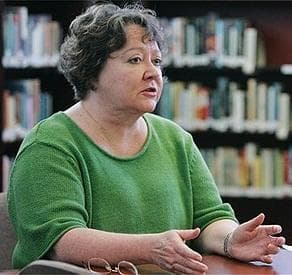
S.E. Hinton is an American author known for her contributions to young adult fiction. She gained recognition with her novels such as "Rumble Fish," "Tex," and "Hawkes Harbor," which often explore themes of adolescence and identity. Hinton's work has significantly influenced the genre, particularly in the 1960s and 1970s.
Similar books
- Tex
S.E. Hinton
3.8 (10k) average on GoodreadsChildren'sFeatures a similar narrative of two brothers navigating difficult circumstances and family struggles.
- The Chocolate War
Robert Cormier
3.5 (40k) average on GoodreadsYoung AdultBoth explore adolescent rebellion and dark social hierarchies. Cormier's work is more overtly political and cynical, focusing on institutional corruption, while Rumble Fish emphasizes familial bonds and individual psychological decay with a more melancholic tone.
- Harry Potter and the Sorcerer's Stone
J.K. Rowling
4.5 (7M) average on GoodreadsFantasyRescued from a miserable life under the stairs, an orphaned boy discovers he's a wizard destined for a magical school, where he uncovers a dangerous secret tied to the dark wizard who murdered his parents.
- The Hobbit, or There and Back Again
J.R.R. Tolkien
4.3 (2.9M) average on GoodreadsFantasyA comfort-loving hobbit named Bilbo Baggins is whisked away by a mischievous wizard and a band of dwarves on an unexpected journey to reclaim stolen treasure from a fearsome dragon, discovering courage and a magical ring along the way.
- Harry Potter and the Goblet of Fire
J.K. Rowling
4.6 (2.6M) average on GoodreadsFantasyA bewildered Harry Potter, underage and thrust into a deadly Triwizard Tournament, must brave dragons, mermaids, and a resurgent dark magic to survive a year that will forever alter the wizarding world.
- Harry Potter and the Order of the Phoenix
J.K. Rowling
4.5 (2.5M) average on GoodreadsFantasyIn a year of oppressive secrets and the threat of Voldemort, Harry Potter and Dumbledore's Army secretly train for war, shown through Jim Kay and Neil Packer's dark illustrations.




Enjoyed the summary?
A summary gives you the shape of the book. The book itself has the detail, the examples and the voice.
Find Rumble Fish on AmazonAs an Amazon Associate, BookBrief earns from qualifying purchases. How we're funded