

Synopsis
Covers the whole plot, including the ending.
- Difficulty
- Medium
- Pacing
- Moderate
- Mood
- Mysterious, Thought-provoking, Spiritual, Philosophical
- Read it if
- You enjoy philosophical thrillers that blend spiritual themes with a touch of the supernatural, and are open to exploring different perspectives on divinity and reality.
- Skip it if
- You prefer concrete explanations for supernatural events or are uncomfortable with stories that challenge traditional religious concepts without offering definitive answers.
Sati Plot Summary
Covers the whole plot, including the ending.
The Hitchhiker and the Skeptic
Michael, a successful but disillusioned writer in the Arizona desert, offers a ride to a young woman hitchhiking. She introduces herself as Sati and calmly states she is God. Michael, an atheist, finds her claim amusing and intriguing, assuming she is either delusional or joking. He brings her back to his isolated house, offering her a place to sleep. Their first conversations are filled with Sati's statements and Michael's skeptical questions, setting up their unusual relationship.
The First 'Miracle'
The morning after Sati arrives, Michael notices changes around him. His computer, usually problematic, now works perfectly. Later, his car, which had been sputtering, runs smoothly. Sati attributes these small, convenient events to her presence, fueling Michael's conflict between skepticism and growing wonder. He tries to explain them logically, but the coincidences are too frequent and specific to ignore, slowly eroding his rigid worldview. He watches her closely, looking for signs of deception or mental illness.
The Introduction of Maya
Michael's ex-girlfriend, Maya, a spiritual woman who remains important to him, senses an unusual energy from Michael's home. Intrigued, she visits and is immediately captivated by Sati. Unlike Michael, Maya does not question Sati's claims; she feels a deep connection and peace in her presence. Maya believes almost instantly, embracing Sati's teachings with childlike joy. Her unwavering faith contrasts sharply with Michael's skepticism, creating a new dynamic among the three and showing how different people react to the inexplicable.
The Skeptic's Challenge
Still unconvinced, Michael challenges Sati to perform a verifiable 'miracle' — something undeniable that defies all rational explanation. Sati, with her usual calm, says she does not perform tricks or intervene directly in human affairs to force belief. She explains her purpose is to help people see the divine within themselves and the world, not to prove herself. This frustrates Michael, who seeks tangible proof, but it also makes him confront his expectations and the limits of his scientific mindset. He struggles with the idea that true belief might not need obvious displays of power.
The Healing of Maya's Father
Maya's father is terminally ill, and his condition worsens. Distraught, Maya brings Sati to his bedside. Sati simply sits with him, radiating calm energy. Within hours, the father's health improves, and he begins a rapid recovery, baffling his doctors. This event is a turning point for Michael, who witnesses the change. While he still struggles with the implications, the healing is too clear to dismiss. For Maya, it strengthens her faith and deepens her devotion to Sati, reinforcing her belief in Sati's divine nature.
The Gathering of Disciples
News of Sati's presence and the healing of Maya's father spreads through the small community and beyond. Soon, various individuals, drawn by curiosity, hope, and spiritual longing, gather at Michael's house. They come from different backgrounds — some want healing, others seek enlightenment, and some are just curious. Michael, initially annoyed, becomes a reluctant host and an observer of the growing phenomenon. The group's interactions with Sati and each other show humanity's search for meaning and divinity.
The Temptation of Power
Among the new followers is a charismatic but manipulative man who sees Sati's influence as a chance for personal gain. He tries to convince Sati to use her powers for his agenda, suggesting she start a formal religion or a global movement under his guidance. Sati, however, remains unmoved, refusing to be used for worldly power or to create a structured belief system. Her refusal highlights her core message: divinity is not about external power or hierarchy, but internal awakening. Michael watches this attempted manipulation with concern and admiration for Sati's integrity.
Michael's Awakening
Through his time with Sati and his interactions with the other seekers, Michael experiences a spiritual awakening. He begins to shed his cynicism and intellectual barriers, opening himself to concepts beyond his rational understanding. Sati does not preach or convert him; instead, she guides him to discover answers within himself. He starts to see the world with new eyes, appreciating the interconnectedness of all things and finding beauty in the ordinary. This change is not sudden but a gradual, personal shift in his perception of reality and his place in it.
The Departure
Just as her influence seems strongest and her followers become dependent on her, Sati calmly announces her time with them is ending. She explains her purpose was not to stay but to ignite a spark within each person, empowering them to find their own path. Her departure is met with sadness, confusion, and a renewed sense of purpose by her followers. She gives a final message emphasizing self-reliance, love, and the inherent divinity within everyone, urging them to continue their spiritual journeys independently.
The Legacy of Sati
One morning, Sati is simply gone, vanishing as mysteriously as she arrived. There is no trace, no explanation. Her departure forces Michael, Maya, and the other followers to internalize her teachings and apply them to their daily lives. Michael, now changed, continues his writing with new depth and spiritual perspective. Maya dedicates herself to helping others, showing the compassion Sati inspired. The book ends with the question of Sati's true nature, but more importantly, it stresses the lasting impact she had on the lives she touched, showing that true divinity might appear not in grand spectacles, but in the transformation of individual consciousness.
Principal Figures
Sati
Protagonist/Mystic Figure
A mysterious young woman who claims to be God, inspiring profound change in those she meets.
Sati is a young, blonde, and blue-eyed woman of indeterminate age who presents herself as God. She is calm, serene, and possesses an otherworldly wisdom. She doesn't perform overt miracles to convince people, nor does she demand worship or money. Instead, she subtly influences events and offers profound insights that guide individuals to their own spiritual awakenings. Her power lies in her presence and her ability to reflect back to people their own inherent divinity. She embodies unconditional love, acceptance, and a deep understanding of the human condition, yet remains detached from worldly desires.
Relationships: Michael (Spiritual guide and catalyst for his transformation); Maya (Source of profound spiritual inspiration and healing); The Disciples (Enlightener and teacher by example)
Michael
Protagonist/Narrator
A cynical, atheist writer whose life is irrevocably altered by Sati's presence.
Michael is a successful, intelligent, and highly skeptical writer living an isolated life in the Arizona desert. He is a rationalist who believes only in what can be scientifically proven, often using his intellect as a shield against deeper emotional or spiritual experiences. Initially, he views Sati as either delusional or a fascinating subject for observation. His journey throughout the book is one of gradual deconstruction of his rigid worldview, forcing him to confront his own biases and open himself to the inexplicable. He struggles with his attraction to Sati and the implications of her claims.
Relationships: Sati (Skeptic turned believer, student, and admirer); Maya (Ex-girlfriend, spiritual foil, and eventual fellow seeker)
Maya
Supporting Character
Michael's ex-girlfriend, a spiritual and open-hearted woman who instantly believes in Sati.
Maya is a beautiful, compassionate, and deeply spiritual woman who maintains a close, complex relationship with Michael despite their past. Unlike Michael, she is open to mystical experiences and readily embraces Sati's claims, feeling an immediate, profound connection to her. Her unwavering faith and emotional openness serve as a foil to Michael's initial skepticism, highlighting the different ways people approach the divine. She is deeply devoted to her family, particularly her ailing father, and her love for him becomes a conduit for Sati's healing power.
Relationships: Michael (Ex-girlfriend, close friend, and spiritual companion); Sati (Devout follower and recipient of healing for her father)
Maya's Father
Supporting/Mentioned
A terminally ill man whose miraculous healing serves as a pivotal event.
Maya's father is introduced as a man suffering from a terminal illness, his health rapidly declining. His condition causes great distress to Maya and serves as a test of Sati's powers. His miraculous recovery, attributed to Sati's presence, is a critical turning point in the narrative, particularly for Michael, who witnesses the undeniable evidence of Sati's influence. His character primarily functions as a catalyst for demonstrating Sati's abilities and deepening the faith of her followers.
The Manipulative Follower
Antagonist (Minor)
A charismatic individual who attempts to exploit Sati's influence for personal power.
This unnamed character represents the darker side of human ambition and the temptation to corrupt spiritual movements for worldly gain. He is charismatic and intelligent, but fundamentally self-serving. He attempts to convince Sati to establish a formal religion or a global cult with himself at the helm, seeking to leverage her power for his own agenda. His presence highlights Sati's purity of purpose and her refusal to be co-opted by human ego and desire for control. He serves as a contrast to the genuine seekers and reinforces Sati's message of inner divinity over external dogma.
Relationships: Sati (Object of attempted manipulation); The Disciples (Potential leader, but ultimately rejected)
The Disciples/Seekers
Supporting/Collective
A diverse group of individuals drawn to Sati's presence, seeking healing, guidance, or enlightenment.
This collective character represents humanity's varied responses to the divine and the search for meaning. They come from different walks of life, each bringing their own hopes, fears, and ailments – both physical and spiritual. Some are desperate for physical healing, others for answers to existential questions, and some are simply curious. Their interactions with Sati and with each other form a microcosm of human society, showcasing belief, skepticism, devotion, and sometimes, manipulation. They are a sounding board for Sati's teachings and demonstrate the widespread impact of her presence.
Relationships: Sati (Teacher and source of inspiration); Michael (Reluctant host and fellow seeker)
Themes & Insights
The Nature of Divinity
The novel explores divinity not as an external, human-like god, but as a quality within all beings and the universe. Sati consistently refuses worship or grand miracles, instead guiding individuals to recognize their inner power and connection to the divine. This is clear in her interactions with Michael, where she subtly shifts his perception rather than forcing belief, or when she heals Maya's father, showing a deep energetic influence rather than a 'magic trick.' The book suggests that true divinity is found in compassion, love, and self-awareness.
“I am not here to give you God, Michael. I am here to remind you that you already are God.”
Skepticism vs. Faith
This theme is central, mainly driven by Michael's journey. He begins as an atheist and rationalist, demanding proof for Sati's claims. His intellectual resistance clashes with Sati's calm acceptance and Maya's immediate faith. The story carefully breaks down Michael's skepticism, not through forceful conversion, but through subtle, undeniable events and Sati's wisdom. The healing of Maya's father is a key moment that challenges Michael's rational view, making him reconsider the limits of scientific explanation and the validity of experiences beyond his current understanding.
“You want proof, Michael? Look around you. It's everywhere. But you have to choose to see it.”
Personal Transformation and Awakening
The core of the story is the personal transformation of those who meet Sati, especially Michael. Her presence acts as a catalyst for individuals to shed illusions, confront their inner selves, and embrace a more enlightened view. Michael's journey from a cynical, isolated writer to a spiritually awakened person is the most prominent example. The various seekers who gather at his house also change, finding healing, peace, or new purpose. Sati's role is not to 'fix' people, but to empower them to fix themselves and realize their potential for growth and understanding.
“The greatest miracle is not changing the world, but changing how you see it.”
The Illusion of Control and Ego
The novel subtly critiques the human desire for control and the limits of the ego. Michael's initial skepticism comes from his need to control and categorize reality. The manipulative follower shows the ego's desire to control spiritual power for personal gain. Sati consistently rejects these attempts, emphasizing surrender, acceptance, and letting go of ego attachments. Her departure at the end reinforces this, as she leaves her followers not with a leader, but with the responsibility to cultivate their own inner wisdom, showing that true spiritual power lies beyond external authority.
“Your desire to control is the very thing that keeps you from experiencing true freedom.”
Plot Devices & Literary Techniques
The Mysterious Stranger
An enigmatic figure whose arrival disrupts the protagonist's life and initiates profound change.
Sati embodies the archetype of the mysterious stranger. She appears suddenly and without a clear origin, possessing extraordinary knowledge and abilities that defy conventional understanding. Her presence acts as a catalyst, forcing Michael to confront his worldview and setting in motion a series of events that transform not only his life but the lives of those around him. Her enigmatic nature keeps the reader, and Michael, constantly questioning her true identity and the source of her power, driving the narrative's central mystery.
The Catalyst for Change
An event or character that initiates a significant transformation in the protagonist.
Sati herself serves as the primary catalyst. Her arrival in Michael's life immediately introduces an element of the inexplicable that challenges his rational framework. Every interaction with her, every subtle 'miracle,' and every profound statement she makes pushes Michael further out of his comfort zone and forces him to re-evaluate his beliefs. Without Sati, Michael would remain stuck in his cynical isolation; she is the essential spark that ignites his spiritual awakening and sets him on a path of self-discovery.
Symbolic Setting (The Desert)
The arid, isolated landscape reflects themes of emptiness, testing, and spiritual revelation.
The Arizona desert setting is not merely a backdrop but a symbolic element. Its vast, stark, and often unforgiving nature mirrors Michael's initial emotional and spiritual barrenness. Deserts in literature often represent places of purification, testing, and revelation, where distractions are stripped away, forcing introspection. Sati's appearance in this desolate landscape further emphasizes her otherworldly quality and the idea that profound spiritual truths can be found in unexpected, austere places, away from the noise of civilization, facilitating deep personal reflection and transformation.
The Unreliable Narrator (Subtle)
The story is told from a first-person perspective, colored by the narrator's evolving beliefs.
While Michael is not intentionally deceptive, his initial narration is heavily influenced by his ingrained skepticism and atheism. As the story progresses and Sati's influence takes hold, his perspective shifts, making him a subtly unreliable narrator in the sense that his understanding and interpretation of events are constantly evolving. This device allows the reader to experience Michael's journey of questioning and transformation alongside him, making the eventual acceptance of the inexplicable more impactful as we witness his internal struggle and the gradual dismantling of his rational defenses.
Sati Quotes
“I wish I were a girl again, with a mother to tell me what to do.”
“The greatest prison people live in is the fear of what other people think.”
“Love isn't something you find. Love is something that finds you.”
“Sometimes you have to let go of the picture of what you thought life would be like and learn to find joy in the story you are actually living.”
“There are no mistakes, only lessons.”
“The mind is everything. What you think you become.”
“Even in the darkest of times, there is always hope.”
“You can't save anyone if they don't want to be saved.”
“The past is where you learned the lesson. The future is where you apply the lesson. Don't give up in the middle.”
“We are all connected, like threads in a vast tapestry.”
“Sometimes the greatest strength is in admitting you're not strong enough.”
“The truth will set you free, but first it will make you miserable.”
“Don't be afraid to be yourself. Everyone else is already taken.”
Quiz
10 questions on the plot and the characters. Each answer comes with a short explanation.
Question 1
Who is the protagonist who picks up Sati in the Arizona desert?
- Christopher
- Michael
- Pike
- David
Show answer
B. Michael The book description explicitly states that Michael picks up a young hitch-hiker in the Arizona desert.
Question 2
What is Sati's primary claim about herself?
- She is an alien from another planet.
- She is a prophet sent to warn humanity.
- She is God.
- She is a powerful sorceress.
Show answer
C. She is God. The very first lines of the book description and the quotes clearly state that Sati claims to be God.
Question 3
Where does Michael first encounter Sati?
- In a diner
- At a bus stop
- In the Arizona desert
- At his doorstep
Show answer
C. In the Arizona desert The summary states Michael picks up a young hitch-hiker in the Arizona desert.
Question 4
According to the provided text, what physical description is given for Sati?
- Red hair and green eyes
- Dark hair and brown eyes
- Blonde hair and blue eyes
- Black hair and piercing grey eyes
Show answer
C. Blonde hair and blue eyes The quote says: 'Her name was Sati and she had blonde hair and blue eyes.'
Question 5
What is one specific 'miracle' Sati *doesn't* perform, according to the provided text?
- Changing water into wine
- Giving sight to the blind
- Healing the sick
- Walking on water
Show answer
B. Giving sight to the blind The quote explicitly states: 'She didn't give sight to the blind — or raise the dead.'
Question 6
What is Christopher Pike's previous bestselling young adult novel mentioned in the description?
- The Last Vampire
- Chain Letter
- Remember Me
- Whisper of Death
Show answer
B. Chain Letter The ALA Booklist review states: 'Christopher Pike, the author of the bestselling young adult novel Chain Letter, takes an unusual approach.'
Question 7
What is NOT one of the qualities people learn by Sati's example, according to the ALA Booklist review?
- Love
- Ambition
- Compassion
- Acceptance
Show answer
B. Ambition The ALA Booklist review states people learn 'about love, compassion, acceptance, and the beauty of life' by her example. Ambition is not mentioned.
Question 8
Which of the following describes Sati's expectations from those she interacts with?
- She expects to be worshipped and asks for money.
- She expects to be worshipped but does not ask for money.
- She does not expect to be worshipped nor does she ask for money.
- She asks for money but does not expect to be worshipped.
Show answer
C. She does not expect to be worshipped nor does she ask for money. The quote states: 'On the other hand, she didn't expect — to be worshipped, nor did she ask for money.'
Question 9
The provided text suggests Sati's impact on people's lives is primarily characterized by what?
- She brings them great fortune and material wealth.
- She causes chaos and destruction wherever she goes.
- She changes everything for those who meet her, especially through spiritual understanding.
- She instills fear and doubt in their hearts.
Show answer
C. She changes everything for those who meet her, especially through spiritual understanding. The text explicitly states: 'For all who meet her, Sati will change everything.' and the ALA review mentions people learning 'about love, compassion, acceptance, and the beauty of life,' indicating a profound, positive spiritual change.
Question 10
What literary genre is 'Sati' categorized as, according to the provided information?
- Historical Fiction, Romance, Mystery
- Thriller, Fantasy, Spirituality, Science Fiction, Young Adult
- Horror, Drama, Biography
- Comedy, Memoir, Satire
Show answer
B. Thriller, Fantasy, Spirituality, Science Fiction, Young Adult The genre list is provided at the very beginning: 'Thriller, Fantasy, Spirituality, Science Fiction, Young Adult.'
Sati FAQ
What is the core premise of 'Sati'?
The novel centers on Michael, a man who gives a ride to a mysterious young hitchhiker named Sati. She claims to be God, and her presence profoundly alters the lives of everyone she encounters, leading to both miraculous and unsettling events.
Who is Michael, and what is his initial role in the story?
Michael is the protagonist who first encounters Sati in the Arizona desert. He initially offers her a place to stay out of kindness, becoming her primary observer and the initial conduit for her interactions with others.
What kind of 'strange things' begin to happen when Sati interacts with people?
Sati's interactions cause profound personal transformations, often forcing individuals to confront their deepest fears, desires, or moral failings. This can manifest as sudden insights, inexplicable healing, or even disturbing psychological breakdowns, pushing characters towards self-realization or destruction.
Does Sati perform traditional miracles like healing the blind or raising the dead?
No, the book explicitly states Sati does not perform traditional miracles like giving sight to the blind or raising the dead. Her influence is more subtle and psychological, focusing on internal change and the transformation of human understanding and behavior.
What is the general tone and genre of 'Sati'?
'Sati' blends elements of thriller, fantasy, spirituality, and science fiction. It maintains a mysterious and often unsettling tone, exploring philosophical questions about divinity, human nature, and consciousness.
Are there any subtle clues about Sati's true nature or origin woven into the narrative?
Pike provides subtle hints through Sati's unusual knowledge, her detachment from human norms, and her sometimes-contradictory statements. Readers are left to piece together whether she is truly divine, an advanced alien, or a powerful psychic, with the narrative never fully confirming one theory.
How does the author use the Arizona desert setting to enhance the story?
The stark, isolated Arizona desert serves as a symbolic backdrop, emphasizing the spiritual barrenness and longing for meaning that many characters experience. It also highlights Sati's sudden, almost otherworldly appearance, making her seem like a phenomenon emerging from nowhere.
Are there recurring symbols or motifs related to spirituality or divinity throughout the book?
The novel frequently uses motifs of light, eyes, and mirrors to symbolize perception, self-reflection, and divine insight. Characters' reactions to Sati often reflect their inner spiritual state or lack thereof, with the desert itself acting as a metaphor for spiritual quest.
What is the psychological impact of Sati's presence on characters like Michael?
Sati's presence forces Michael to confront his own beliefs, doubts, and the meaning of his existence. He experiences a profound psychological shift, moving from skepticism to a deep, often uncomfortable, contemplation of spiritual truths and the nature of reality.
How do different characters react psychologically to Sati's claim of being God?
Characters react in a spectrum from immediate disbelief and fear to awe and devotion. Some experience profound peace and understanding, while others are driven to madness or despair as their personal illusions and coping mechanisms are shattered by her unsettling insight.
Does Sati's influence always lead to positive psychological outcomes for those she encounters?
No, Sati's influence is not always benevolent in its immediate effects. While some find enlightenment or peace, others face intense psychological turmoil, breakdown, or even self-destruction as their comfortable realities are dismantled, forcing them into uncomfortable truths.
How does the book explore the human need for belief and meaning through Sati's character?
Sati acts as a catalyst, exposing the inherent human longing for something greater than themselves. The diverse reactions to her claims reveal how people construct meaning, whether through religion, science, or personal philosophy, and the psychological void that can exist without it.
Is Sati truly God, or is there an alternative interpretation of her identity?
The novel deliberately leaves Sati's true identity ambiguous. While she claims to be God, alternative interpretations suggest she could be an alien entity, a highly evolved human, a powerful psychic, or even a metaphorical representation of humanity's collective consciousness or spiritual awakening.
What philosophical questions does the book raise about the nature of reality and consciousness?
The book challenges conventional notions of reality by presenting a character who defies scientific explanation. It prompts readers to question the limits of human perception, the existence of higher consciousness, and whether our understanding of the universe is fundamentally flawed or incomplete.
How does 'Sati' critique or affirm traditional religious beliefs?
'Sati' neither fully affirms nor rejects traditional religious beliefs. It critiques rigid dogma and hypocrisy while affirming core spiritual principles like love, compassion, and acceptance. Sati's 'divinity' is presented as an experience rather than a set of rules, encouraging personal spiritual exploration.
What is the significance of the book's title, 'Sati'?
The name 'Sati' itself is significant, possibly referencing the Hindu goddess Sati (a deity of marital felicity and longevity, who self-immolated) or the concept of 'sati' as truth or awareness in Sanskrit. It hints at profound spiritual meaning, sacrifice, and enlightenment.
Does the ending provide a definitive answer to Sati's origin or the meaning of the events?
The ending of 'Sati' maintains its ambiguity, refraining from providing a definitive, concrete answer to Sati's origin or the ultimate meaning of the events. It concludes with a sense of lasting transformation for Michael and the lingering mystery of Sati's impact, leaving the reader to ponder the implications.
How does 'Sati' differ from Christopher Pike's previous young adult novels?
'Sati' is notably more philosophical, complex, and thematically mature than Pike's young adult works. It delves into deeper spiritual and existential questions, featuring adult protagonists and exploring themes with a more nuanced and less explicit resolution.
About the author
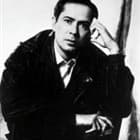
Christopher Pike is a prolific author known for his young adult horror and thriller novels. His works, including "Remember Me," "Chain Letter," and "Falling," often feature suspenseful plots, supernatural elements, and teenage protagonists. Pike's distinctive writing style has made him a popular figure in the genre, captivating readers with his ability to blend mystery and fright.
Similar books
- The Shack
Young, William Paul Young
3.8 (538k) average on GoodreadsSpiritualityFeatures a direct, personal encounter with a divine figure who offers comfort and profound spiritual lessons.
- Jonathan Livingston Seagull
Richard Bach
3.8 (202k) average on GoodreadsFantasyA short, philosophical fable about self-discovery, transcending limits, and finding deeper meaning, with a spiritual undertone.
- The Da Vinci Code
Dan Brown
3.9 (1.9M) average on GoodreadsThrillerBoth 'Sati' and 'The Da Vinci Code' involve mysteries surrounding extraordinary figures and hidden truths. However, Brown's novel focuses on global conspiracies and historical religious puzzles, whereas Pike's 'Sati' centers on individual spiritual awakening and the nature of miracles within a more personal, localized context. Pike prioritizes internal transformation over external pursuit of ancient secrets.
- Siddhartha
Hermann Hesse
4.0 (583k) average on GoodreadsHistorical FictionBoth books depict a protagonist's spiritual journey towards enlightenment. 'Siddhartha' is a literary classic that offers deep philosophical introspection and a more contemplative, allegorical narrative of self-discovery and the pursuit of wisdom. 'Sati,' while touching on similar themes, frames its journey within a young adult thriller/fantasy context, prioritizing plot progression and character interaction over Hesse's profound philosophical discourse and nuanced psychological exploration. Pike's approach is more direct and less metaphorical.
- The Celestine Prophecy
James Redfield
3.6 (96k) average on GoodreadsFantasyBoth 'Sati' and 'The Celestine Prophecy' explore spiritual awakenings and the discovery of profound truths through a narrative journey. Redfield's book, however, presents a more explicit framework of spiritual insights and energies, often bordering on self-help, with a clear sequential discovery of 'insights.' Pike's 'Sati' keeps the spiritual truths more enigmatic and tied to the character of Sati herself, integrating them more subtly within a fictional narrative without the explicit didacticism of Redfield's work. Pike's approach is more focused on the experience of the miraculous rather than a codified system of spiritual laws.
- Angels & Demons
Dan Brown
3.9 (2.7M) average on GoodreadsThrillerA Harvard symbologist races through Rome's ancient sites, deciphering cryptic clues to unmask the Illuminati and stop a vengeful plot to destroy the Vatican with a stolen antimatter weapon.






Enjoyed the summary?
A summary gives you the shape of the book. The book itself has the detail, the examples and the voice.
Find Sati on AmazonAs an Amazon Associate, BookBrief earns from qualifying purchases. How we're funded