

Synopsis
Covers the whole plot, including the ending.
- Difficulty
- Easy
- Pacing
- Moderate
- Mood
- Mystical, Hopeful, Thought-provoking, Spiritual
- Read it if
- You are interested in New Age spirituality, parables with a philosophical bent, or stories about personal and global spiritual awakening.
- Skip it if
- You prefer hard science fiction, purely character-driven narratives, or are skeptical of spiritual concepts presented as literal truths.
The Celestine Prophecy Plot Summary
Covers the whole plot, including the ending.
A Mysterious Call to Peru
The story starts with an American teacher, the narrator, feeling restless and unhappy. A friend, Charlene, calls him about an old Aramaic manuscript found in Peru. This document, the Celestine Manuscript, is said to contain nine ideas about human spiritual growth. Charlene tells him to go to Peru, saying the Peruvian government and the Catholic Church are trying to hide it. Feeling a mysterious pull, the narrator leaves his life and starts this journey, sensing that meaningful coincidences are guiding him.
First Encounters and the First Insight
In Peru, the narrator immediately notices the government trying to take and destroy copies of the manuscript. Father Sanchez, a priest who has been secretly studying the document, approaches him. Father Sanchez explains the First Insight, which is about synchronicity—meaningful coincidences that guide people towards their path. The narrator experiences this as his journey unfolds, meeting people and situations that seem planned. Father Sanchez gives him a piece of the manuscript and tells him to keep looking for the other insights, warning him about those who want to hide the truth.
The Second and Third Insights: Historical Perspective and Energy Fields
The narrator continues his journey, led by a series of meaningful coincidences. He meets Wilson James, an American professor also studying the manuscript. Wilson shares the Second Insight, which describes how humanity has moved from focusing on survival to seeking deeper meaning. He explains how our view of the world is changing. They then discuss the Third Insight, which says that all living things, including humans, have a visible energy field around them. This energy, often unseen, is a basic part of existence and can be felt and used, leading to a better understanding of our connection to the universe.
The Fourth Insight: The Struggle for Energy
As the narrator goes on, he meets American researchers led by Marjorie, who are also looking for the manuscript, but with a more academic approach. Through them and his own observations, he learns the Fourth Insight: humans unknowingly compete for energy from each other. When people feel low on energy, they try to take it from others by manipulating them, often through intimidation, interrogation, aloofness, or playing the victim. This struggle for energy causes conflicts and power dynamics between people, keeping alive a cycle of control and dependence that stops spiritual growth.
The Fifth Insight: Connecting to Universal Energy
A mysterious woman named Sarah helps the narrator understand the Fifth Insight. This idea teaches that humans can directly get a limitless supply of universal energy, often called divine or spiritual energy, by consciously connecting with and appreciating beauty in nature. By intentionally opening oneself to this energy, people no longer need to take it from others. This understanding changes things, freeing people from the energy-taking dynamic and letting them feel a deep sense of well-being and peace. Sarah shows how to actively feel and draw on this energy that is everywhere.
The Sixth Insight: Clearing Childhood Control Dramas
The narrator meets a psychologist named Phil, who helps him understand the Sixth Insight. This idea explains that each person develops a unique 'control drama' in childhood to get energy from their parents. These unconscious patterns—like being an intimidator, interrogator, aloof, or victim—continue in adult relationships, keeping the energy struggle going. Phil helps the narrator recognize his own control drama, which is a form of aloofness, and encourages him to notice how he projects this onto others. By making these unconscious patterns clear, people can start to let them go and have more real, energy-giving interactions.
The Seventh Insight: Intuition and Guiding Visions
Continuing his journey, the narrator learns the Seventh Insight, which focuses on getting inner wisdom and guidance. Once people are free from their control dramas and are consistently getting energy from the universe, they start to receive clear, intuitive thoughts and visions. These insights often come as answers to questions or as clear directions for their path. The manuscript explains that these intuitions are not random but are direct messages from a higher source, guiding people toward their purpose and helping them make meaningful coincidences happen. The narrator begins to actively practice listening to and trusting these inner messages.
The Eighth Insight: Ethics of Interpersonal Energy
The Eighth Insight explains how to interact ethically with others once one can get energy from the universal source. It says that when two people are fully connected to universal energy, their interaction can create a combined flow, raising both their energy fields. The main idea is to see the beauty and possibility in others, consciously sending them energy and affirmation, instead of trying to control or lessen them. This insight promotes conscious conversation, real encouragement, and avoiding judgment, leading to relationships that empower both people and enrich them spiritually, helping a collective rise in energy.
The Ninth Insight: The Emerging Culture
The final stop leads the narrator to the Ninth Insight, which describes what happens when humanity collectively accepts all the previous ideas. It predicts a future where many people live with high energy, constantly getting energy from the universe and interacting ethically. This will create a new human culture with spiritual growth, fewer material needs, and a deeper connection to nature. The manuscript suggests that as human energy fields become more refined, we will become less dense, eventually moving to a higher dimension, and making the planet a paradise. The narrator feels a deep sense of hope and purpose, understanding his role in this large evolutionary change.
Spreading the Message
After understanding all nine insights, the narrator feels a deep change within himself. He realizes his journey was not just about finding a manuscript, but about a personal and spiritual awakening. He understands how important it is to share these insights with others, despite the ongoing efforts of the government and church to hide them. He decides to go home and spread the message of the Celestine Prophecy, believing that by sharing this knowledge, he can help humanity's collective spiritual growth. He leaves Peru with a clear purpose, ready to live by the insights and inspire others to do the same.
The Celestine Prophecy Characters
The Narrator (Unnamed)
Protagonist
An American teacher who embarks on a spiritual quest in Peru.
The unnamed narrator begins as a man feeling unfulfilled and restless, seeking deeper meaning beyond his ordinary life. He is open-minded and receptive to new experiences, which allows him to readily accept the profound spiritual concepts presented in the Celestine Manuscript. Throughout his journey in Peru, he evolves from a curious observer to a deeply transformed individual, actively experiencing and integrating each of the nine insights. His personal journey of discovery mirrors the reader's own potential for spiritual growth, making him a relatable and aspirational figure.
Relationships: Charlene (friend who initiates his journey); Father Sanchez (mentor and guide for the First Insight); Wilson James (academic who helps with insights 2 and 3); Sarah (spiritual guide for the Fifth Insight); Phil (psychologist who helps with the Sixth Insight)
Father Sanchez
Supporting
A sympathetic priest helping to disseminate the Celestine Manuscript.
Father Sanchez is a courageous and spiritually aware priest who has secretly embraced the insights of the Celestine Manuscript, despite the Catholic Church's efforts to suppress it. He acts as an early mentor to the narrator, providing him with initial fragments of the manuscript and explaining the First Insight. His role is crucial in establishing the premise of the spiritual quest and highlighting the conflict between established institutions and emerging spiritual truths. He represents the possibility of spiritual awakening within traditional religious frameworks.
Relationships: The Narrator (mentor to the narrator); The Catholic Church (is in conflict with over the manuscript)
Wilson James
Supporting
An American professor studying the manuscript, providing academic context.
Wilson James is an American professor who has been independently researching the Celestine Manuscript. He is intelligent and analytical, providing a more academic perspective to the insights, particularly the historical context of spiritual evolution (Second Insight) and the understanding of energy fields (Third Insight). He helps ground the spiritual concepts in a framework that is accessible to the narrator and, by extension, the reader. His presence emphasizes that the insights are not just mystical but have observable effects and historical precedents.
Relationships: The Narrator (fellow seeker and intellectual collaborator)
Sarah
Supporting
A spiritual woman who guides the narrator in understanding universal energy.
Sarah is a wise and intuitive woman who appears at a crucial point in the narrator's journey. She is instrumental in helping him grasp the Fifth Insight, which concerns drawing energy directly from the universe. Sarah embodies a deep connection to nature and spiritual energy, demonstrating how to perceive and utilize this universal force. Her gentle guidance and practical demonstrations are vital for the narrator's progression, showing him a direct path to overcome the energy-stealing dynamics described in earlier insights.
Relationships: The Narrator (spiritual guide and teacher)
Phil
Supporting
A psychologist who helps the narrator understand control dramas.
Phil is a psychologist who specializes in understanding human behavior and interpersonal dynamics, particularly in the context of childhood experiences. He introduces the narrator to the Sixth Insight, explaining how 'control dramas' originate in childhood and perpetuate the struggle for energy in adult relationships. Phil provides a psychological framework for understanding and overcoming these unconscious patterns, helping the narrator identify his own control drama and begin the process of releasing it, thus enabling more authentic interactions.
Relationships: The Narrator (psychological mentor and guide)
Marjorie
Supporting
A researcher with a more academic, less spiritual approach to the manuscript.
Marjorie represents a more conventional, academic approach to understanding the Celestine Manuscript. She leads a group of American researchers who are studying the document from a scientific or anthropological perspective, initially missing the deeper spiritual implications. Her interactions with the narrator highlight the difference between intellectual understanding and experiential spiritual awakening. While not an antagonist, her group's initial skepticism and focus on objective proof serve as a contrast to the narrator's intuitive and experiential journey, illustrating differing paths to truth.
Relationships: The Narrator (initially skeptical colleague)
Charlene
Mentioned
The friend who first informs the narrator about the Celestine Manuscript.
Charlene is the narrator's friend who initiates his journey by calling him with news of the Celestine Manuscript in Peru. Though her direct involvement in the plot is brief, her initial phone call serves as the primary catalyst for the entire story. She represents the synchronistic pull that draws the narrator into his spiritual adventure, setting the stage for his transformation. Her role emphasizes how seemingly small events can trigger profound life changes.
Relationships: The Narrator (friend who provides the initial impetus for the journey)
The Peruvian Government/Catholic Church
Antagonist
Institutions attempting to suppress the Celestine Manuscript.
These institutions collectively serve as the primary antagonists, representing established power structures resistant to new spiritual truths that challenge their authority. They actively seek to confiscate and destroy copies of the Celestine Manuscript, fearing the societal upheaval and shift in consciousness it could inspire. Their actions create the central conflict and add a sense of urgency and danger to the narrator's quest, forcing him and other seekers to operate in secrecy. They symbolize the old paradigm clinging to control.
Relationships: The Narrator (opponents of his quest); Father Sanchez (authority he defies)
The Celestine Prophecy Themes
Synchronicity and Divine Guidance
The theme of synchronicity is central, introduced as the First Insight. It suggests that seemingly random coincidences are actually meaningful, divinely guided events leading individuals toward their destiny. The narrator's entire journey to Peru and his encounters with various individuals who help him understand the insights are driven by these synchronistic occurrences. This theme encourages readers to pay attention to these subtle cues in their own lives, fostering a sense of purpose and connection to a larger plan. It posits that the universe is constantly communicating and guiding us.
“'When you become aware of them, synchronicities are like little flashes of light, and they tell you that you are on the right path.'”
Energy Dynamics and Interpersonal Relationships
A core theme revolves around the understanding of energy, particularly how humans interact and compete for it. The Fourth Insight reveals that people unconsciously steal energy from each other through 'control dramas' (intimidation, interrogation, aloofness, victimhood). The Fifth Insight offers a solution: drawing energy directly from a universal source. This theme provides a new framework for understanding conflict and connection in relationships, advocating for conscious interactions where individuals empower each other rather than deplete. It shifts the focus from external validation to internal energetic abundance.
“'For centuries, humans have unknowingly been competing for a limited supply of energy, and this struggle has been the cause of all conflict between people.'”
Spiritual Evolution and Planetary Transformation
The overarching theme is humanity's spiritual evolution, culminating in the Ninth Insight. The book proposes that as more individuals embrace the insights, humanity will collectively raise its vibration, leading to a new conscious culture. This transformation involves reducing material needs, deepening connection with nature, and eventually ascending to a higher dimensional existence. It offers a hopeful vision of a future where conflict diminishes, and humanity lives in harmony with itself and the planet, suggesting a 'heaven on Earth' scenario through conscious spiritual growth.
“'The ultimate destiny of humanity is to evolve to a point where we exist as pure energy, in harmony with the divine.'”
Challenging Established Paradigms
The suppression of the Celestine Manuscript by the Peruvian government and the Catholic Church highlights the theme of challenging established paradigms. The insights presented in the book offer a radical departure from conventional religious and scientific understanding, threatening existing power structures and belief systems. The narrator's quest is not just a personal one, but also a struggle against the forces of resistance that seek to maintain the status quo. This theme encourages critical thinking and openness to new truths, even if they contradict long-held beliefs.
“'The church, like any institution, wants to control the truth. It doesn't want people to find their own spiritual path.'”
Plot Devices & Literary Techniques
The Celestine Manuscript
The central MacGuffin and source of all insights.
The Celestine Manuscript is the primary plot device, serving as the MacGuffin that drives the entire narrative. It is an ancient Aramaic document discovered in Peru, containing nine spiritual insights. Its existence, suppression, and the narrator's quest to find and understand its contents form the backbone of the story. Each insight revealed from the manuscript propels the plot forward and introduces new spiritual concepts, making it both a narrative device for adventure and a didactic tool for conveying the book's philosophical message.
The Nine Insights
A structured framework for spiritual awakening and plot progression.
The Nine Insights function as a progressive revelation, structuring the plot into distinct stages of spiritual understanding. Each insight builds upon the previous one, guiding the narrator (and the reader) through a systematic process of spiritual awakening. This device provides a clear roadmap for personal transformation, moving from recognizing synchronicity to understanding energy dynamics, clearing past traumas, and ultimately envisioning a new collective future. It ensures a logical and cumulative development of the book's core philosophical tenets.
Synchronicity
A narrative mechanism for character encounters and plot advancement.
Synchronicity, beyond being the First Insight, also serves as a crucial plot device. The narrator's journey is consistently propelled by meaningful coincidences: he meets the right person at the right time, finds clues, or is directed to the next location through seemingly random events. This device not only illustrates the First Insight in action but also conveniently moves the plot forward, allowing the narrator to encounter the necessary teachers and situations to learn each subsequent insight without relying on conventional investigative methods.
The Unnamed Narrator
A relatable everyman figure for reader identification.
The choice to leave the narrator unnamed makes him an 'everyman' figure, allowing readers to more easily identify with his journey of discovery. By not having a specific identity, he represents any individual on a spiritual quest. This device encourages readers to project themselves into the story, experiencing the insights alongside the protagonist, thereby enhancing the immersive and personally transformative nature of the book's message.
The Antagonistic Institutions
Provides external conflict and highlights the revolutionary nature of the insights.
The Peruvian government and the Catholic Church, acting as antagonists, create external conflict that adds tension and urgency to the narrator's quest. Their active suppression of the manuscript underscores the revolutionary and potentially disruptive nature of the insights. This device highlights the struggle between old paradigms and new spiritual understanding, emphasizing that embracing these truths is not without challenges and risks, making the message feel more potent and impactful.
The Celestine Prophecy Quotes
“When we get enough people to make the Shift, it will be instantaneous. We will suddenly be living in a world where everyone is connected, where everyone is working toward a common goal.”
“The First Insight occurs when we begin to see our lives as a spiritual unfolding, rather than as a random series of events.”
“The energy that we feel is not just our own; it is the energy of the universe, flowing through us.”
“When we find ourselves in synchronicity, we are on the right path.”
“All conflict is rooted in a struggle for energy.”
“We must learn to release our own control dramas and allow others to release theirs.”
“The world is a mystery to be explored, not a problem to be solved.”
“When we truly love someone, we give them energy, and in turn, we receive energy back.”
“The more we give, the more we receive. It is a universal law.”
“Our fear of the unknown is the greatest obstacle to our spiritual growth.”
“We must learn to see the beauty in everything, even in the things we find difficult.”
“The universe is constantly guiding us, if only we are open to receiving its messages.”
“Our purpose is to contribute to the evolution of the universe.”
“When we align with our true selves, we become conduits for divine energy.”
Quiz
10 questions on the plot and the characters. Each answer comes with a short explanation.
Question 1
What is the central quest that the protagonist embarks on in 'The Celestine Prophecy'?
- To find a hidden city of gold in the Amazon.
- To locate an ancient Peruvian manuscript containing nine insights.
- To stop a government conspiracy to steal ancient artifacts.
- To decipher the prophecies of Nostradamus in a new context.
Show answer
B. To locate an ancient Peruvian manuscript containing nine insights. The book centers on the protagonist's search for an ancient Peruvian manuscript that contains the nine insights predicted to guide humanity's spiritual awareness.
Question 2
Where does the quest for the manuscript primarily take the protagonist?
- Through the dense jungles of Central America.
- Across the deserts of North Africa.
- High into the Andes mountains of Peru.
- To ancient ruins in the Middle East.
Show answer
C. High into the Andes mountains of Peru. The adventure described in the book explicitly states that the quest will carry the reader 'high into the Andes mountains, to ancient ruins deep in old-growth forest.'
Question 3
What does the First Insight described in the book primarily concern?
- The importance of physical exercise for spiritual well-being.
- Recognizing mysterious coincidences and synchronistic events as guidance.
- Understanding the history of ancient Peruvian civilizations.
- The power of positive thinking in achieving material wealth.
Show answer
B. Recognizing mysterious coincidences and synchronistic events as guidance. The text states, 'You will quickly recognize the truth of the First Insight: in each of our lives occur mysterious coincidences -- sudden, synchronistic events that, once interpreted, lead us into our true destiny.'
Question 4
What is the predicted outcome for humanity once all nine insights are understood?
- A return to a primitive, hunter-gatherer lifestyle.
- An exciting new image of human life and a positive vision for saving the planet.
- The development of advanced technological societies independent of nature.
- A global conflict over the interpretation of the insights.
Show answer
B. An exciting new image of human life and a positive vision for saving the planet. The book promises that understanding all nine insights will lead to 'an exciting new image of human life, and a positive vision of how we will save this planet, its creatures, and its beauty.'
Question 5
According to the description, what is the government's stance regarding the ancient Peruvian manuscript?
- They are actively funding its discovery and translation.
- They are indifferent to its existence.
- They want to suppress its contents.
- They are using it for political propaganda.
Show answer
C. They want to suppress its contents. The text explicitly states, 'Although few Westerners know of its existence and a government wants to suppress it, this precious document contains an important secret.'
Question 6
What kind of reception did 'The Celestine Prophecy' initially receive, according to the provided text?
- It was heavily promoted by mainstream media outlets.
- It spread primarily by word of mouth among readers.
- It was initially met with widespread skepticism and criticism.
- It was a niche publication only popular among academics.
Show answer
B. It spread primarily by word of mouth among readers. The description highlights that 'By word of mouth alone, news of this magical, moving work spread throughout the country,' indicating its organic viral growth.
Question 7
The book suggests that modern physics, ecology, mystical religion, and interpersonal psychology are synthesizing into what new concept?
- A new scientific method.
- A new spiritual 'common sense'.
- A unified global government.
- A universal language.
Show answer
B. A new spiritual 'common sense'. The opening lines of the summary ask, 'Are three decades of interest in modern physics, ecology, mystical religion and interpersonal psychology finally synthesizing into a new spiritual "common sense"?'
Question 8
Which of the following authors/works is mentioned as having helped prepare the way for the revelations in 'The Celestine Prophecy'?
- J.K. Rowling's 'Harry Potter' series.
- Stephen King's 'The Stand'.
- Carlos Castaneda's 'The Teachings of Don Juan'.
- Jane Austen's 'Pride and Prejudice'.
Show answer
C. Carlos Castaneda's 'The Teachings of Don Juan'. The text explicitly states, 'Important works such as Carlos Castaneda's "The Teachings of Don Juan" and the prophecies of Nostradamus have helped prepare the way for the revelations you will find in James Redfield's life-changing words.'
Question 9
What is the overarching theme regarding humanity's future as presented in the book's description?
- A period of increasing global conflict and decline.
- A quantum leap forward as humankind approaches a new millennium.
- The inevitable dominance of technology over spiritual growth.
- A return to isolationist national policies.
Show answer
B. A quantum leap forward as humankind approaches a new millennium. The description concludes by stating, 'And you will suddenly recognize the quantum leap forward humankind is preparing to make as we approach the new millennium.'
Question 10
The book is described as a 'parable filled with vital truth that reads like a gripping adventure-tale.' What does this suggest about its narrative style?
- It is a non-fiction academic treatise on spirituality.
- It presents philosophical ideas within a compelling story.
- It is a collection of unrelated short stories.
- It is a historical account of ancient Peruvian prophecies.
Show answer
B. It presents philosophical ideas within a compelling story. Describing it as a 'parable' and 'gripping adventure-tale' indicates that it uses a fictional narrative to convey deeper spiritual and philosophical truths.
The Celestine Prophecy FAQ
What is The Celestine Prophecy about?
The Celestine Prophecy is an adventure novel that follows the unnamed narrator's quest in Peru to uncover an ancient manuscript containing nine spiritual insights. These insights detail humanity's predicted evolution into a state of heightened spiritual awareness, focusing on energy, synchronicity, and interconnectedness. The story combines elements of thriller and philosophical exploration as the protagonist encounters various allies and adversaries.
Why should I read The Celestine Prophecy?
You should read The Celestine Prophecy if you are interested in spiritual growth, the concept of synchronicity, and an adventure narrative that explores profound philosophical ideas. It offers a unique blend of a gripping quest and a framework for understanding personal and global spiritual evolution, which many readers have found to be deeply impactful and life-changing.
What is the background/setting of The Celestine Prophecy?
The story is primarily set in the lush, ancient landscapes of Peru, specifically in the Andes mountains and deep within old-growth forests where ancient ruins are hidden. This exotic and mystical setting provides a rich backdrop for the protagonist's spiritual journey and the discovery of the ancient manuscript, enhancing the sense of mystery and adventure.
What are the most memorable quotes?
While the book emphasizes concepts over direct quotes, a core idea is encapsulated in the First Insight: 'In each of our lives occur mysterious coincidences - sudden, synchronistic events that, once interpreted, lead us into our true destiny.' This idea of recognizing and following synchronicity is central to the entire narrative and its teachings.
What writing style does the author use?
James Redfield employs a straightforward, accessible narrative style, blending adventure storytelling with didactic exposition of spiritual concepts. The book reads like a fast-paced thriller, making complex philosophical ideas digestible and engaging for a broad audience. The first-person perspective immerses the reader directly into the narrator's discoveries.
What minor details add significant meaning?
The recurring theme of 'energy' as a visible aura or vibration that characters perceive around others is a minor detail that becomes a fundamental concept, explaining interpersonal dynamics and the flow of the universe. This perception of energy is crucial for understanding the later insights and how characters 'control' or 'steal' energy from each other.
What are some subtle foreshadowing moments?
Early in the narrative, the protagonist's recurring experiences with 'coincidences' and a feeling of being guided, even before learning about the First Insight, subtly foreshadows the profound role synchronicity will play in his journey. These initial, unexplained events set the stage for the systematic decoding of the manuscript's truths.
What unexpected character connections exist?
The connection between the Peruvian government and certain elements within the Catholic Church, both attempting to suppress the manuscript, reveals an unexpected alliance driven by a desire to maintain existing power structures. This connection highlights the perceived threat the Insights pose to conventional authority and established belief systems.
What are unspoken character motivations?
Many characters, particularly those trying to suppress the manuscript like the government officials or certain religious figures, are motivated by an unspoken fear of losing control and influence. Their actions stem from a desire to preserve the status quo, rather than an explicit evil intent, which adds a layer of psychological complexity to their opposition.
What psychological complexities do characters exhibit?
The protagonist, though initially a skeptic, exhibits a gradual psychological transformation as he grapples with the insights, moving from intellectual curiosity to profound spiritual awakening. His internal struggle to reconcile his previous worldview with the radical new understanding of energy and reality is a central complexity, mirroring the reader's potential journey.
What are the major emotional turning points?
A major emotional turning point occurs when the protagonist fully grasps the concept of 'energy stealing' and observes how people unconsciously manipulate others to gain energy. This realization is often accompanied by a sense of shock and discomfort, leading to a deeper understanding of human interaction and the need for conscious energy management.
How do relationship dynamics evolve?
Relationship dynamics evolve significantly as characters learn to perceive and manage energy. Initial interactions, often characterized by unconscious 'control dramas' where individuals try to siphon energy from each other, transform into more conscious, mutually empowering exchanges once the characters understand the insights. This shift promotes authentic connection over manipulation.
Which parts remain ambiguous or open-ended?
While the book presents the nine insights as definitive truths, the ultimate future of humanity's spiritual evolution, particularly the Tenth Insight which is only briefly glimpsed, remains somewhat ambiguous. The exact timeline and global adoption of these insights are left open-ended, suggesting a continuing journey for both the characters and humanity.
What are controversial scenes or decisions?
The most controversial aspect of the book is often its direct presentation of spiritual concepts as literal 'insights' discovered in an ancient manuscript, rather than as metaphorical or philosophical musings. Some readers find this approach overly prescriptive or dogmatic, while others embrace its directness as a guide.
The Celestine Prophecy ending explained: how it ends & what it means
The book concludes with the protagonist having discovered and understood all nine insights, with a glimpse of a potential Tenth Insight. He returns from Peru with a mission to share these revelations, suggesting that the journey of spiritual awakening is ongoing and collective. The ending signifies the beginning of a new paradigm for humanity, where conscious energy exchange and spiritual evolution become the norm, offering a hopeful vision for the future of the planet.
About the author

James Redfield is an American author best known for his novel "The Celestine Prophecy," which explores spiritual themes and personal growth. His works often blend fiction with philosophical insights, attracting readers interested in spirituality and self-discovery. Redfield's writing has gained a significant following since the publication of his first book in 1993.
Similar books
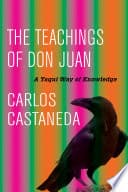
- The Teachings of Don Juan
Carlos Castañeda
3.9 (46k) average on GoodreadsFictionExplores spiritual and mystical experiences through a narrative quest and a mentor-disciple relationship.
- Jonathan Livingston Seagull
Richard Bach
3.8 (202k) average on GoodreadsFantasyA short, allegorical novel focusing on self-perfection and spiritual enlightenment.
- Siddhartha
Hermann Hesse
4.0 (583k) average on GoodreadsHistorical FictionA philosophical novel about a man's spiritual journey and search for meaning.
- THE ALCHEMIST
Paulo Coelho
3.6 (3k) average on GoodreadsFictionThe Celestine Prophecy is more prescriptive and outlines specific 'insights' for spiritual understanding, whereas The Alchemist uses a more allegorical and poetic fable style to explore destiny and personal legend, offering ambiguity rather than Redfield's quasi-scientific explanations. Coelho's work feels more like a timeless myth, while Redfield's is more akin to a spiritual self-help guide within a narrative.
- The Power of Now: A Guide to Spiritual Enlightenment
Eckhart Tolle
4.1 (211k) average on GoodreadsPsychologyWhile both books deal with spiritual awakening, The Celestine Prophecy uses a fictional narrative and adventure to reveal its spiritual truths incrementally. The Power of Now, in contrast, is a non-fiction spiritual guide that directly instructs the reader on achieving present-moment awareness, without a story framework. Redfield's book is more about a journey of discovery, while Tolle's is a direct manual for inner transformation.
- Harry Potter and the Sorcerer's Stone
J.K. Rowling
4.5 (7M) average on GoodreadsFantasyRescued from a miserable life under the stairs, an orphaned boy discovers he's a wizard destined for a magical school, where he uncovers a dangerous secret tied to the dark wizard who murdered his parents.



Enjoyed the summary?
A summary gives you the shape of the book. The book itself has the detail, the examples and the voice.
Find The Celestine Prophecy on AmazonAs an Amazon Associate, BookBrief earns from qualifying purchases. How we're funded