
Core Idea
- Difficulty
- Medium
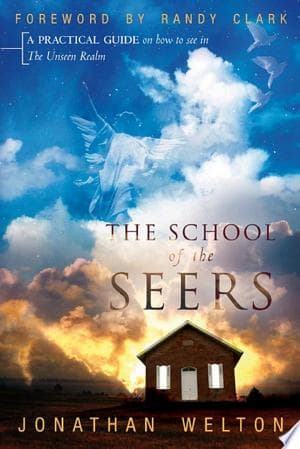
Key Takeaways from School of the Seers
The Universal Call to See
Spiritual sight is not exclusive to a select few, but an accessible gift for all believers.
Welton says spiritual sight, or being a 'seer,' is not just for prophets. Instead, he argues it is a basic part of being Christian, available to every believer. This idea is central to the book, making a mystical concept accessible and encouraging readers to seek this spiritual ability. He stresses that just as physical eyes see the natural world, spiritual eyes see the spiritual realm, and God wants them to be active. This view is empowering, moving focus from just receiving to actively engaging with the supernatural.
“God wants to open your spiritual eyes, and He wants you to see into the spirit realm.”
In the book: The book frequently references biblical passages implying a general capacity for spiritual discernment among believers, rather than limiting it to specific individuals.
Try this: Actively pray for the opening of spiritual eyes and cultivate an expectation to perceive the spiritual realm in daily life, rather than waiting for a special calling.
Four Keys to Greater Experiences
Specific practices and mindsets are outlined as catalysts for activating and enhancing spiritual perception.
Welton presents four keys for developing spiritual sight: desire, expectation, imagination, and meditation. He says a strong desire for spiritual vision, paired with firm expectation that God will grant it, prepares the way for experiences. Imagination is not fantasy, but a divine ability to see spiritual realities before they appear physically. Meditation, different from Eastern practices, means focusing on scripture and God's presence. This structured method is one of the book's best points, giving clear steps for a seemingly abstract goal. However, the focus on imagination might cause debate for some, needing careful thought.
“There are specific keys that, when applied, will unlock greater spiritual experiences and vision.”
In the book: Welton shares personal anecdotes of how applying these keys led to his own spiritual breakthroughs and visions.
Try this: Consciously cultivate a strong desire for spiritual sight, pray with expectation, use sanctified imagination to 'see' God's presence, and practice meditative reflection on scripture.
Hindrances to Discernment
Unrecognized spiritual and emotional blockages can impede clear spiritual vision.
This takeaway looks at the internal barriers that keep believers from using their spiritual sight well. Welton names unforgiveness, unconfessed sin, fear, and unbelief as major obstacles. He says these emotional and spiritual blocks create 'static' in the spiritual realm, making discernment unclear and divine revelation hard to see. This part of the book is insightful, linking spiritual practice with personal character and emotional health. It shows that spiritual growth is complete, needing self-reflection and repentance along with seeking spiritual gifts. The book suggests that a 'clean heart' helps lead to clear vision.
“Many believers are hindered from seeing clearly because of unaddressed issues in their lives.”
In the book: The author shares stories of individuals who experienced breakthroughs in spiritual sight after addressing areas of unforgiveness or fear in their lives.
Try this: Regularly engage in self-examination, confession, and repentance to identify and remove any known hindrances that might be clouding spiritual discernment.
Accessing Divine Secrets
Spiritual sight provides a pathway to unlock heavenly revelation and understanding.
Welton says spiritual sight is not just about 'seeing' into the spirit realm; it is about accessing divine secrets and handling heavenly revelation. He stresses that God reveals things, and spiritual vision is a main way He shares deeper truths, strategies, and insights. This is not about exclusive knowledge but about understanding God's heart and plans better. The book encourages readers to not just seek visions, but to seek their meaning and how to apply them, treating them as sacred trusts. This view elevates spiritual sight from a simple phenomenon to a tool for intimacy with God and effective work for His Kingdom.
“God desires to share His secrets with those who have eyes to see and ears to hear.”
In the book: Biblical examples of prophets like Daniel or John receiving visions that revealed future events or divine mysteries serve as a foundational argument.
Try this: When experiencing spiritual insights or visions, actively seek interpretation and understanding, and prayerfully consider how to steward and apply the revelation received.
Worship in Spirit and Truth
True worship transcends physical acts, engaging the spiritual senses and aligning with divine reality.
This takeaway explores worship, redefining it as a spiritual act that involves more than outward actions. Welton says 'worship in Spirit and in Truth' (John 4:24) means engaging our spiritual senses, letting us see God's presence and respond truly. He suggests spiritual sight can improve worship by letting believers 'see' God's glory, angels, or spiritual realities during praise. This changes worship from a ritual to an immersive, shared experience. While this can be very enriching, it also puts a strong emphasis on subjective experience, which some might find hard to fit with more traditional worship.
“Real worship is not just about singing songs; it's about connecting with God in the spirit.”
In the book: Welton recounts personal experiences of 'seeing' spiritual manifestations during worship services, which deepened his connection and understanding.
Try this: Approach worship with an openness to perceive spiritual realities, allowing for spontaneous expressions and a deeper, more intimate connection with God's presence.
Understanding Impartation
Spiritual gifts, including sight, can be transferred through intentional prayer and laying on of hands.
Welton focuses on impartation, stating that spiritual gifts, including the seer gift, can be passed from one person to another through prayer, laying on of hands, or even through closeness and teaching. This idea is important as it offers a way for those seeking to activate or improve their spiritual sight beyond personal effort. He stresses that impartation is not magic but a divine way for spiritual gifts to be given and activated within the body of Christ. However, this concept can be debated, as some see it as a transactional approach to spiritual gifts, possibly overlooking the Holy Spirit's sovereign work. Welton presents it as cooperating with God's will.
“Impartation is a biblical principle where spiritual gifts and anointing can be transferred from one person to another.”
In the book: The book cites examples from the New Testament, such as Paul imparting gifts to Timothy (2 Timothy 1:6), to support the principle of impartation.
Try this: Seek out opportunities for prayer and laying on of hands from those who demonstrate the gift of spiritual sight, with a humble and expectant heart.
The Role of Angels and Demons
Spiritual sight reveals the active presence and influence of both angelic and demonic entities.
A key part of 'seeing into the spirit realm' is being aware of spiritual beings—both angels and demons. Welton states that spiritual sight lets believers see ongoing spiritual warfare, recognizing angels ministering and demons trying to hinder. This understanding is crucial for effective intercession, spiritual warfare, and discernment. He says this awareness should not cause fear, but greater trust in God's protection and authority. While this look into the unseen can be unsettling for some, it is shown as necessary for fully understanding the spiritual dynamics at work in the world. The book aims to clarify these entities, making their influence clear to the seer.
“When your spiritual eyes are open, you become aware of the constant spiritual battle around you.”
In the book: Welton shares personal accounts of 'seeing' angels at work during prayer meetings or discerning demonic oppression in specific situations.
Try this: Cultivate discernment to recognize spiritual influences and engage in prayer and spiritual warfare with greater precision, understanding the unseen forces at play.
Stewardship of Revelation
Receiving spiritual revelation comes with the responsibility to discern, interpret, and apply it wisely.
This takeaway says receiving spiritual revelation is not the end, but the start of stewardship. Welton highlights the importance of discerning the revelation's source, interpreting its meaning correctly, and applying it in a way that honors God and helps others. He warns against pride, misinterpretation, and misusing spiritual insights. This argument acts as a safeguard, balancing the excitement of spiritual experiences with a call to responsibility. It acknowledges the possible problems of subjective revelation and stresses the need for accountability, humility, and alignment with biblical truth. This is a crucial counterpoint to any potential for spiritual elitism or recklessness.
“Revelation is a trust from God, and it must be stewarded carefully and responsibly.”
In the book: The book references biblical warnings against false prophets and the need to test every spirit (1 John 4:1).
Try this: When receiving spiritual revelation, prayerfully seek confirmation, consult trusted spiritual mentors, and always align it with the infallible truth of scripture before acting upon it.
The Practicality of the Mystical
Mystical experiences are framed as relevant and applicable to everyday life, not just for spiritual elites.
One of the book's main strengths is its effort to connect mystical experiences with daily life. Welton consistently argues that seeing into the spirit realm is not an obscure pursuit for a select few, but a valuable tool for facing challenges, making decisions, and living a more effective Christian life. He gives examples of how spiritual insights can guide career choices, relationships, and even everyday tasks. This approach makes the subject clear and relevant, clarifying 'seer' experiences and putting them into a complete understanding of faith. It challenges the common separation of spiritual and secular life, advocating for constant awareness of God's active presence.
“The spirit realm is not some far-off, disconnected place; it's interwoven with our daily lives.”
In the book: Welton shares stories of how spiritual insights led to practical solutions in business decisions or relational conflicts.
Try this: Seek spiritual insight not just for 'spiritual' matters, but for all areas of life, expecting God to provide guidance and wisdom through spiritual perception.
Beyond Physical Senses
The book encourages a paradigm shift to perceive reality beyond the five physical senses.
At its core, 'School of the Seers' asks believers to change how they see reality. Welton argues that the natural world, as seen by our five senses, is only a part of what exists. He urges readers to develop their spiritual senses, seeing the unseen spiritual realm as equally, if not more, real and powerful. This change in perspective is vital for embracing the seer gift, as it means moving past a purely empirical understanding of the world. This argument can be transformative for those who have felt limited by their natural perceptions, opening a new dimension of experience. However, it also requires a strong foundation in biblical truth to avoid subjective interpretations or New Age blending of beliefs.
“There is more to reality than what your physical eyes can see or your ears can hear.”
In the book: The entire premise of the book is built on the biblical concept of an unseen spiritual realm that interacts with the physical.
Try this: Consciously practice thinking and praying with the awareness of an unseen spiritual realm, trusting that God communicates through more than just physical means.
Quiz
10 questions on the main ideas. Each answer comes with a short explanation.
Question 1
What is the primary subject of the book "School of the Seers"?
- Learning to play a musical instrument.
- Developing the ability to see into the spirit realm.
- Understanding ancient historical events.
- Mastering advanced cooking techniques.
Show answer
B. Developing the ability to see into the spirit realm. The book is explicitly described as a 'how-to guide into the spirit realm' and focuses on activating the gift of seeing into this realm.
Question 2
Who is the author of "School of the Seers"?
- John Smith
- Jonathan Welton
- Sarah Johnson
- Michael Brown
Show answer
B. Jonathan Welton The book's title page and description clearly state the author's name as Jonathan Welton.
Question 3
The book aims to help readers discover vital keys from which source?
- Modern psychology textbooks.
- Science fiction novels.
- The Scripture.
- Ancient mythology.
Show answer
C. The Scripture. The description mentions 'vital keys from the Scripture' as a source of learning.
Question 4
According to the book, what is one of the vital keys to greater experiences?
- Learning to code.
- The four keys mentioned in the book.
- Practicing martial arts.
- Studying astronomy.
Show answer
B. The four keys mentioned in the book. The book states it helps readers 'Use the four keys to greater experiences.' While the specific keys aren't detailed, the number is mentioned.
Question 5
What does the book suggest readers learn to recognize that might be hindering their discernment?
- Traffic patterns.
- Meteorological forecasts.
- Things that may be hindering their discernment.
- The stock market trends.
Show answer
C. Things that may be hindering their discernment. The description explicitly states the author helps you 'Recognize what may be hindering your discernment.'
Question 6
The book discusses accessing what kind of information?
- Government secrets.
- Financial market data.
- Divine secrets and heavenly revelation.
- Scientific research findings.
Show answer
C. Divine secrets and heavenly revelation. The book aims to help readers 'Access divine secrets and steward heavenly revelation.'
Question 7
Which of the following is mentioned as a concept taught in the book?
- Quantum physics.
- Impartation.
- Artificial intelligence.
- Urban planning.
Show answer
B. Impartation. The description lists 'meditation, impartation, and so much more' as concepts taught in the book.
Question 8
The book aims to make the subject of seers and the spirit realm relevant for what aspect of life?
- Historical reenactments.
- Everyday life.
- Academic research.
- Professional sports.
Show answer
B. Everyday life. The description highlights that the book makes 'a mystical subject--seers and the spirit realm--and make it relevant for your everyday life!'
Question 9
What kind of stories does the author use to make insightful use of vital keys?
- Fictional fairy tales.
- Anecdotal stories.
- Historical biographies.
- Scientific case studies.
Show answer
B. Anecdotal stories. The book description states, 'Making insightful use of anecdotal stories, the author helps you discover vital keys from the Scripture.'
Question 10
The book describes the author's journey about how God opened his spiritual eyes. What does the author share about this experience?
- How to become a famous singer.
- How you too can activate this gift.
- How to invest in the stock market.
- How to travel the world for free.
Show answer
B. How you too can activate this gift. The description explicitly mentions that Jonathan Welton 'shares how you too can activate this gift in your life.'
School of the Seers FAQ
What is the "School of the Seers" book about?
This book is a how-to guide for understanding and operating in the seer anointing, which involves seeing into the spirit realm. It shares the author's personal journey and provides keys from scripture and practical advice to help readers activate and develop their spiritual sight.
Can anyone learn to be a seer after reading this book?
The book aims to help readers discover and activate the seer gift within them, using scriptural keys and practical exercises. While it provides a guide, the development of spiritual gifts is often seen as a journey with God's involvement.
What does it mean to 'see with your spiritual eyes'?
Seeing with your spiritual eyes refers to perceiving or discerning things in the spirit realm, beyond the natural senses. This can manifest in various ways, such as visions, symbolic imagery, or a deeper understanding of spiritual realities.
What are the 'four keys to greater experiences' mentioned in the book?
The book outlines four key principles or practices designed to enhance a believer's spiritual experiences and discernment abilities. These keys are presented as foundational for developing a more profound connection with the spirit realm.
How does the book address hindrances to spiritual discernment?
The 'School of the Seers' identifies common obstacles that can prevent individuals from accurately discerning spiritual information. It offers guidance on recognizing and overcoming these hindrances to foster clearer spiritual perception.
What is the role of worship in the context of this book?
The book explores how to worship in 'Spirit and in Truth,' suggesting that true worship can be a gateway to deeper spiritual experiences and revelation. It connects authentic worship with accessing divine insights.
Does the book explain concepts like meditation and impartation?
Yes, the book delves into various spiritual concepts, including meditation and impartation, explaining how they relate to the seer anointing and operating in the spirit realm. It aims to demystify these often misunderstood practices.
Is 'School of the Seers' a mystical or religious text?
While it deals with spiritual and mystical subjects like the spirit realm and seer abilities, the book grounds its teachings in scripture and presents them as relevant for everyday Christian life. It aims to make these concepts accessible and practical.
What makes this book 'revolutionary'?
The book is described as revolutionary because it offers a unique perspective and practical, step-by-step approach to understanding and developing seer abilities, making a traditionally mystical subject accessible to a wider audience.
Who is Jonathan Welton and what is his background?
Jonathan Welton is the author of 'School of the Seers' and shares his personal journey of having his spiritual eyes opened. He presents himself as someone who has experience in operating in the seer anointing and is teaching others how to do the same.
Similar books
- The Diary of a Young Girl
Anne Frank
4.2 (2.7M) average on GoodreadsBiographyDuring the Nazi occupation, a teenage girl's diary, written from a secret annex, shares observations on humanity, hope, and the wait for freedom.
- Twisted 1. Twisted love
Ana Huang
3.7 (1.7M) average on GoodreadsA quiet billionaire with a difficult past finds his guarded heart opening to the woman he must protect, but their growing passion uncovers dangerous secrets and a shared, traumatic history.
- Eat, Pray, Love
Elizabeth Gilbert
3.6 (1.5M) average on GoodreadsLifestyleA heartbroken writer leaves her conventional life for a year-long global search for pleasure in Italy, spiritual devotion in India, and unexpected love and balance in Bali.
- Night
Elie Wiesel
4.3 (970k) average on GoodreadsBiographyIn the darkness of Auschwitz and Buchenwald, a teenage Elie Wiesel faces the extermination of his family, the loss of his faith, and the lasting scars of humanity's deepest cruelty.
- Steve Jobs
Walter Isaacson
4.1 (957k) average on GoodreadsBusinessSteve Jobs was a visionary who fused creativity and technology to revolutionize six industries and shape our digital world.
- The Glass Castle
Jeannette Walls
4.3 (903k) average on GoodreadsBiographyJeannette Walls's memoir describes her unusual childhood with brilliant, free-spirited parents whose poverty-stricken life shaped her independence and love despite family problems.






Enjoyed the summary?
A summary gives you the shape of the book. The book itself has the detail, the examples and the voice.
Find School of the Seers on AmazonAs an Amazon Associate, BookBrief earns from qualifying purchases. How we're funded