
Core Idea
- Difficulty
- Hard
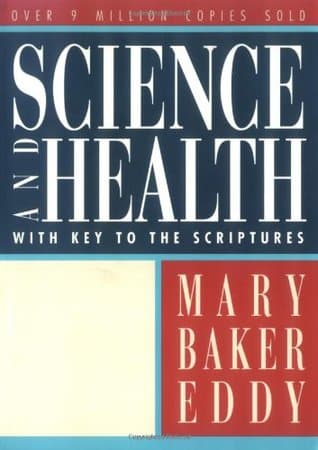
Key Takeaways from Science and Health with Key to the Scriptures
The Primacy of Mind over Matter
All reality, including the body and its ailments, is fundamentally mental or spiritual.
Eddy's main idea is that matter is not real in itself. Instead, it is a human belief or a wrong idea about Mind. This idealist view means that sickness, suffering, and even death are not physical problems. They are mistakes of the human mind, a deviation from the perfect, divine Mind. Healing, then, does not happen through physical methods but through spiritual understanding and correcting these wrong beliefs. The book says that by seeing God as infinite Spirit and people as His perfect reflection, one can get rid of the wrong thoughts that appear as physical illness. This idea challenges common scientific and medical views by saying that health and disease come from consciousness, not the body.
“All reality is spiritual and is governed by divine Mind, not by material laws.”
In the book: The entire text serves as an extended argument for this principle, frequently stating that 'disease is a belief' and 'Spirit is the only substance.'
Try this: Cultivating a constant awareness of spiritual perfection and denying the reality of material imperfection can lead to physical healing.
God as All-Encompassing Good
God is not a distant deity but an ever-present, all-powerful, and all-loving Principle of good.
Eddy describes God not as a human-like figure but as an infinite Principle—Mind, Spirit, Soul, Life, Truth, Love. This idea takes God out of human limits and makes Him the only source of all good, perfection, and harmony. This is important because if God is all good, then evil, sickness, and problems cannot come from God. Instead, the book calls them 'unreal' in God's plan. This change in theology helps people connect with this divine Principle. They believe that by understanding God's nature, they can show His perfect qualities in their own lives, including health. This is different from traditional Christian theology, as it emphasizes God's presence within, not just above, everything.
“God is not a person, but an infinite divine Principle.”
In the book: The repeated use of 'God is good' and the enumeration of God's attributes as 'Life, Truth, Love' throughout the book.
Try this: Focusing on God's omnipresent goodness helps to dissolve fear, anxiety, and the belief in evil or disease as substantial forces.
The Unreality of Evil and Disease
Evil, sin, and disease are not entities but illusions or false beliefs of the mortal mind.
This is one of the book's most challenging and debated ideas. Eddy says that because God is all good and all powerful, evil and sickness do not have any real existence or power. She describes them as mental errors, wrong ideas about truth, or false beliefs from the 'mortal mind' that are seen in experience. Sickness is not a physical state but a belief in sickness; sin is not an action but a belief in being separated from God. This view shifts responsibility, saying that by understanding that these conditions are not real, one can mentally detach from them and make their effects disappear. While this can feel empowering, critics often find it difficult to accept when faced with clear suffering, questioning how it applies in serious cases.
“Evil is not a power, but a nonentity, a nothingness.”
In the book: Eddy's frequent assertions that 'matter has no sensation,' 'disease is a belief,' and 'sin is unreal.'
Try this: Instead of fighting against disease or evil as external forces, one should deny their reality and affirm the omnipresence of divine good and harmony.
Prayer as Spiritual Understanding
Effective prayer is not petitioning a personal God but aligning thought with divine Truth.
Eddy redefines prayer. It is not asking God to change things, but changing one's own view and aligning it with the unchanging spiritual facts of God's perfect creation. This 'scientific prayer' means deeply understanding God's omnipresence, omnipotence, and omniscience, and humanity's perfect connection to Him. When someone truly understands that God is perfect and people are His perfect reflection, the wrong beliefs that cause problems naturally disappear. This method focuses on mental and spiritual work rather than emotional pleading. It aims to change consciousness, not external events.
“True prayer is not a supplication to a personal God, but a scientific knowing that God is all and all is good.”
In the book: The chapter 'Prayer' extensively details this scientific approach, contrasting it with ritualistic or merely emotional prayer.
Try this: Instead of asking for healing, affirm the perfection of God and man's inherent spiritual health, thereby discrediting the reality of sickness.
The Christ as a Divine Idea
The Christ is not just a historical figure but an eternal, divine manifestation of Truth.
This book offers a unique view of Jesus and the Christ. While Jesus is seen as the guide, Eddy separates Jesus, the man, from the Christ, which is the divine idea of God that Jesus showed. The Christ, here, is the eternal Truth, the spiritual understanding that destroys error, sin, and sickness. It is a universal principle available to everyone, not just Jesus. This difference means that anyone can embody and show the Christ-power through spiritual understanding and practice, doing 'healing works' like Jesus. This interpretation expands the idea of salvation and healing beyond usual theology, making it an active possibility for all followers today.
“The Christ is the spiritual idea of God, that came to Jesus of Nazareth.”
In the book: The 'Key to the Scriptures' section extensively reinterprets biblical narratives, particularly those concerning Jesus's healing ministry, through this lens.
Try this: Emulate Jesus's understanding of the Christ by cultivating spiritual consciousness and demonstrating its power over material limitations.
Man as the Perfect Reflection of God
Man, in his true spiritual identity, is not a mortal, material being but a perfect image and likeness of God.
Eddy states that the Bible's account of humans being made in God's image should be understood literally, but spiritually. This means that people, in their true spiritual nature, reflect all of God's perfect qualities: health, harmony, intelligence, and immortality. The human, physical sense of people, with its limits, sickness, and death, is considered a mistaken belief of the 'mortal mind.' This is a powerful, though difficult, idea because it asks for a complete change in how one sees oneself. Seeing oneself as a perfect spiritual idea, not a flawed physical body, is central to the healing process in the book. It provides the basis for denying any imperfection.
“Man is not material; he is spiritual.”
In the book: Repeated references to Genesis 1:26-27 are interpreted spiritually to define man as God's perfect, spiritual reflection.
Try this: By consistently affirming one's true spiritual identity as perfect and denying the claims of material imperfection, one can manifest greater health and harmony.
The Spiritual Interpretation of Scripture
The Bible is understood not literally, but as a symbolic text revealing spiritual truths.
A large part of 'Science and Health' is a 'Key to the Scriptures,' giving spiritual explanations of many Bible passages. Eddy argues that reading the Bible literally often hides the deeper, metaphysical truths meant by the text. She reinterprets key stories, parables, and miracles using Christian Science principles. She shows them as examples of spiritual law overcoming material belief. This way of interpreting is key to understanding how the book connects its philosophy to traditional Christian teachings. It shows that its principles are not new but reveal the original, lost meaning of the Bible. This method helps followers find support for Christian Science ideas within a widely accepted sacred text.
“The literal meaning of the Scriptures conceals the spiritual sense.”
In the book: The 'Key to the Scriptures' section systematically reinterprets numerous biblical passages, often verse by verse, from a spiritual perspective.
Try this: Approach biblical study by seeking the underlying spiritual meaning and universal principles rather than focusing solely on historical or literal narratives.
The Illusion of Material Causation
Material causes of disease (germs, accidents, heredity) are secondary to mental causation.
This is a major difference from common medical understanding. Eddy says that what seem to be physical causes of disease—like bacteria, viruses, genetics, or injuries—are really just signs of 'mortal mind's' wrong beliefs. She does not explicitly deny these physical things exist, but she says they cannot cause disease on their own. The real cause is always mental or spiritual. A belief in sickness spreading, for example, is seen as more powerful than the germ itself. This view encourages people to look past symptoms and physical explanations to address the underlying mental error. It gives individuals great control over their health. This idea is often a point of disagreement and confusion for those new to Christian Science.
“The only reality of disease is in the mortal thought.”
In the book: The book repeatedly states that 'germs are not the cause of disease' and that 'mental malpractice' or fear can induce illness.
Try this: When faced with illness, deny the power of material causes and focus on correcting any underlying fear, sin, or false belief in one's consciousness.
Healing as a Natural Outcome of Spiritual Understanding
Physical healing is not a miracle but a predictable result of understanding and applying divine law.
Eddy presents healing not as an arbitrary act of God or a breaking of natural law. Instead, it is the natural and expected result of understanding and living by spiritual law. Just as math principles give predictable results, so does correctly using divine Science lead to health. This 'scientific' approach to healing means that anyone who truly understands and uses these spiritual truths can experience healing. It moves healing from the miraculous to a demonstrable spiritual fact, making it possible through conscious effort and spiritual growth. This is an empowering part of the book, making individuals active participants in their own well-being through spiritual means.
“Healing is the natural effect of a mind enlightened by divine Science.”
In the book: The book is replete with anecdotes and affirmations of healing through spiritual means, presented as consistent demonstrations of divine law.
Try this: Instead of hoping for a cure, actively work to understand and apply the spiritual truths about God and man, expecting healing as a natural consequence.
The Practicality of Spiritual Law
Christian Science is a practical system for daily living, not just a theoretical philosophy.
This book is not just a philosophy; it is a practical guide for living and healing. Eddy stresses that the principles are meant to be used daily for physical problems, moral faults, money troubles, and relationship issues. The 'Science' in Christian Science means it is systematic, verifiable, and repeatable, like a physical science, but applied to spiritual laws. This focus on demonstration highlights its usefulness and challenges readers to prove its effectiveness through their own experience. This commitment to practical use has kept its readership and practice going for over a century, offering a tangible alternative to physical solutions for life's challenges.
“Christian Science is a demonstrable Science, not a mere theory.”
In the book: The numerous testimonies of healing and the emphasis on 'demonstration' throughout the text highlight its practical intent.
Try this: Actively apply Christian Science principles to all aspects of life, seeking spiritual solutions for every challenge, not just health-related ones.
Quiz
10 questions on the main ideas. Each answer comes with a short explanation.
Question 1
Who is the author of 'Science and Health with Key to the Scriptures'?
- Mary Baker Eddy
- Mary Shelley
- Mary Poppins
- Mary Magdalene
Show answer
A. Mary Baker Eddy Mary Baker Eddy is the author of 'Science and Health with Key to the Scriptures'.
Question 2
In what year was 'Science and Health with Key to the Scriptures' first published?
- 1975
- 1875
- 1775
- 1815
Show answer
B. 1875 The book was first published in 1875.
Question 3
Which of the following is NOT listed as a core theme of the book?
- Spirituality
- Health
- Science
- Astronomy
Show answer
D. Astronomy The book focuses on Spirituality, Health, and Science, among other themes, but Astronomy is not mentioned.
Question 4
What is the approximate number of people who have read 'Science and Health with Key to the Scriptures'?
- One million
- Five million
- Eight million
- Ten million
Show answer
C. Eight million The book has been read by more than eight million people.
Question 5
The book is described as having a history of how many years of healing and inspiration?
- 75 years
- 119 years
- 150 years
- 200 years
Show answer
B. 119 years The book has a 119-year history of healing and inspiration.
Question 6
What are some of the new features mentioned to attract a new audience?
- New cover and word index
- Easy-to-read page layout and new cover
- Word index, new cover, and easy-to-read page layout
- Audiobook version and new cover
Show answer
C. Word index, new cover, and easy-to-read page layout The text mentions a powerful new cover, easy-to-read page layout, and word index to attract a new audience.
Question 7
The book is described as 'nondenominational'. What does this imply?
- It belongs to a specific religious denomination.
- It is not associated with any particular religious group.
- It is only for people of a certain faith.
- It is a secular text with no religious content.
Show answer
B. It is not associated with any particular religious group. Nondenominational means that the book is not affiliated with or limited to a particular religious denomination.
Question 8
The book was recognized as one of '75 Books by Women Whose Words Have Changed the World'. This recognition highlights its:
- Commercial success
- Literary merit
- Cultural impact and influence
- Historical accuracy
Show answer
C. Cultural impact and influence Being named among books that 'Changed the World' points to the significant cultural impact and influence of the book.
Question 9
Considering the book's themes and its long history of healing, what is a likely primary audience or readership interest?
- Scholars of ancient history
- Individuals seeking spiritual or mental well-being and healing
- Students of theoretical physics
- Fans of contemporary fiction
Show answer
B. Individuals seeking spiritual or mental well-being and healing The book's focus on spirituality, health, and healing, along with its history of inspiration, suggests it appeals to those looking for well-being and healing.
Question 10
The description emphasizes updates like a 'powerful new cover' and 'easy-to-read page layout' to 'attract a new audience'. This suggests the original presentation might have been perceived as:
- Too modern
- Outdated or less accessible
- Too simplistic
- Too controversial
Show answer
B. Outdated or less accessible Updating the cover and layout to be 'easy-to-read' implies the previous presentation was perhaps not as appealing or accessible to a contemporary audience.
Science and Health with Key to the Scriptures FAQ
What is Science and Health with Key to the Scriptures about?
Science and Health with Key to the Scriptures explores the spiritual interpretation of the Bible and its practical application to daily life, particularly in relation to health and healing. It presents a unique perspective on the relationship between God, humanity, and the material world.
Who wrote Science and Health?
Science and Health with Key to the Scriptures was written by Mary Baker Eddy, an American author and religious innovator. She founded the Christian Science church.
What are the main themes of Science and Health?
The main themes include spiritual understanding, the nature of God and man, the power of divine Mind over matter, and the practical demonstration of healing through spiritual means. It also delves into philosophy and the scientific basis of religion.
How does Science and Health relate to the Bible?
The book is subtitled 'with Key to the Scriptures' because it offers an interpretation of biblical passages, particularly those related to healing. It aims to unlock the spiritual meaning of the Bible for contemporary readers.
Is Science and Health a religious text?
Yes, Science and Health is considered a foundational religious text for Christian Scientists. It is used for study, prayer, and spiritual growth within the Christian Science movement.
What kind of healing is discussed in Science and Health?
The book discusses spiritual healing, which is presented as a natural consequence of understanding God's allness and man's true spiritual nature. This healing is achieved through prayer and a change in consciousness, not through material remedies.
Who is the intended audience for Science and Health?
While it is a foundational text for Christian Scientists, the book is intended for anyone seeking a deeper understanding of spiritual truths, healing, and the relationship between God and humanity. It has a broad appeal across different backgrounds.
What is the difference between Science and Health and other health books?
Unlike conventional health books that focus on physical or medical approaches, Science and Health emphasizes spiritual understanding as the primary means of promoting well-being and overcoming disease. It posits that spiritual laws govern existence.
Where can I buy Science and Health?
Science and Health with Key to the Scriptures is available for purchase through Christian Science reading rooms, the official Christian Science website (ChristianScience.com), and major online and physical bookstores.
Is Science and Health a difficult book to read?
While the book deals with profound spiritual and philosophical concepts, the latest editions feature an easy-to-read page layout and a word index to aid comprehension. Many readers find its message inspiring and accessible.
About the author

Mary Baker Eddy was an American author and religious leader known for founding Christian Science. Her notable work, "Science and Health with Key to the Scriptures," outlines her beliefs and teachings, emphasizing the relationship between spirituality and healing. Eddy's writings have had a significant impact on the development of the Christian Science movement.
Similar books
- The Power of Positive Thinking
Norman Vincent Peale
4.1 (85k) average on GoodreadsBusiness"Science and Health" and "The Power of Positive Thinking" both explore the influence of thought on well-being, but their approaches and underlying philosophies diverge significantly. Peale's work is a self-help book rooted in psychological principles and a more conventional, albeit optimistic, Christian framework, focusing on using positive affirmations and faith to achieve success and overcome challenges within the existing material world. Eddy's book, in contrast, argues for the non-existence of material problems and advocates for their dissolution through a radical understanding of divine Mind. Peale aims to improve life in the material world; Eddy aims to transcend the material world entirely through spiritual realization. "Science and Health" is a theological and metaphysical treatise, while Peale's book is a practical guide to personal empowerment.
- Eat, Pray, Love
Elizabeth Gilbert
3.6 (1.5M) average on GoodreadsLifestyleA heartbroken writer leaves her conventional life for a year-long global search for pleasure in Italy, spiritual devotion in India, and unexpected love and balance in Bali.
- Educated
Tara Westover
4.5 (796k) average on GoodreadsBiographyRaised in the Idaho mountains by fundamentalist survivalists, a young woman forges her own path to education, battling fierce family loyalty and personal demons to discover a world beyond her isolated upbringing.
- The Poisonwood Bible
Barbara Kingsolver
4.1 (659k) average on GoodreadsLiterary FictionA zealous missionary's rigid faith clashes with the Belgian Congo's wilderness and people, unraveling his family through the eyes of his five unforgettable women.
- Siddhartha
Hermann Hesse
4.0 (583k) average on GoodreadsHistorical FictionSiddhartha leaves a life of privilege and piety, embracing asceticism, wealth, and love to find enlightenment not in dogma, but in the whispers of a river and the unity of all existence.
- The Five People You Meet in Heaven
Mitch Albom
3.9 (578k) average on GoodreadsFantasyAn amusement park mechanic, Eddie, dies saving a child and awakens in an afterlife where five souls, some familiar, some strangers, reveal the meaning of his ordinary life.






Enjoyed the summary?
A summary gives you the shape of the book. The book itself has the detail, the examples and the voice.
Find Science and Health with Key to the Scriptures on AmazonAs an Amazon Associate, BookBrief earns from qualifying purchases. How we're funded