

Core Idea
- Difficulty
- Easy
- Read it if
- You enjoy celebrity memoirs that are genuinely funny, self-aware, and eschew traditional glamour for relatable awkwardness; you appreciate dry wit and a behind-the-scenes look at the entertainment industry from a grounded perspective.
- Skip it if
- You're looking for deep philosophical insights or a chronological, 'rags to riches' narrative; you dislike self-deprecating humor or prefer memoirs that focus more on grand achievements than everyday anxieties.
Key Takeaways from Scrappy Little Nobody
Embrace Your Inner Weirdo
Authenticity, even if awkward, is your most valuable asset.
Kendrick's memoir shows how to embrace one's unique traits. She consistently demonstrates that her 'weirdness' — from her humor to her often-clumsy social interactions — is not a flaw, but a defining characteristic that has driven her unique voice and career. This encourages readers to look inward and identify what they might see as 'odd,' reframing these as sources of individuality and strength. It shows that trying to fit in often dilutes what makes a person interesting and memorable. Her success is often because of her quirks, not despite them.
“I was unusually small, weird, and '10 percent defiant.'”
In the book: Her entire career trajectory, from being a child actress with a peculiar sense of humor to her distinctive on-screen persona, is built on this foundation. She recounts her early life, feeling like an outsider, and how that perspective shaped her observational humor and ability to connect with audiences who also felt a bit 'off-kilter.'
Try this: Identify one 'weird' trait you possess and actively lean into it this week. Instead of trying to suppress it in social or professional settings, find a way to express it authentically. This could be a unique sense of humor, an unusual hobby, or a peculiar way of looking at problems. Observe how people respond, and how it feels to be genuinely yourself.
Related ideas: authenticity, self-acceptance, individuality
The Absurdity of Adulthood
Navigating 'grown-up' life often feels like faking it until you make it.
Kendrick humorously challenges the idea of the perfectly composed adult. She openly shares her difficulties with everyday adult tasks, from awkward dating to the bewildering experience of furnishing an apartment or managing money. This resonates because it normalizes a feeling many adults secretly have: that they are just figuring things out as they go, often feeling like an imposter in their adult life. It highlights the performative nature of adulthood and offers comfort that it is okay not to have all the answers. A big part of 'being an adult' is simply learning to handle new challenges, often clumsily.
“My struggle to live like an adult woman instead of a perpetual 'man-child.'”
In the book: Her anecdotes about 'dating experiments,' reviewing binders of butt doubles for film roles, and her general bewilderment at domestic tasks or social expectations for 'adult women' are prime examples. She contrasts her on-screen confidence with her off-screen fumbling, creating a relatable narrative.
Try this: Next time you feel overwhelmed by an 'adult' task, acknowledge the absurdity and allow yourself to laugh at the situation. Instead of striving for perfection, aim for 'good enough' and be open about your learning process with trusted friends or family. Share your own 'adulting' mishaps to create connection.
Related ideas: adulting, imposter-syndrome, humor-in-adversity
Childhood Professionalism, Adult Awkwardness
Early success doesn't guarantee social ease.
One of the most interesting contrasts Kendrick presents is her early professional skill alongside her ongoing social awkwardness. While a seasoned Broadway performer at thirteen, she was also a middle-schooler dealing with common adolescent pains and social anxieties. This challenges the idea that professional success automatically means personal confidence or social ease. It shows that different skills develop separately, and someone can be excellent in one area while feeling completely inept in another. Her experience shows that personal development, especially social and emotional maturity, is a lifelong process, regardless of career achievements.
“At the ripe age of thirteen, she had already resolved to 'keep the crazy inside my head where it belonged. Forever.'”
In the book: Her stories of being a 'Broadway kid' while simultaneously struggling with typical middle school social dynamics, like only liking boys who didn't like her back, vividly illustrate this dichotomy. She excelled on stage but often felt like an outsider in her peer group.
Try this: Reflect on areas where you feel highly competent versus areas where you feel less confident. Instead of letting one overshadow the other, acknowledge both. Be patient with your growth in areas of less confidence, understanding that development is rarely linear or uniform across all aspects of life.
Related ideas: child-actors, social-anxiety, developmental-dissonance
The Unseen Work of Performance
Behind every polished performance are countless unglamorous moments.
Kendrick offers an honest look into the less glamorous parts of the entertainment industry. She reveals the absurdities, frustrations, and mundane tasks that are part of a performer's life, from reviewing 'butt doubles' to navigating strange audition processes. This is important for breaking the myth of effortless celebrity. It emphasizes that any public performance or creative work involves much unseen, often boring, and sometimes comical work. It reminds us that success is built on persistence, adaptability, and a willingness to engage with the less exciting parts of the craft.
“With her razor-sharp wit, Anna recounts the absurdities she’s experienced on her way to and from the heart of pop culture...”
In the book: Her specific anecdote about reviewing a binder full of butt doubles for a scene is a perfect, humorous example of the strange details and decisions that go into filmmaking, far removed from the 'glamour' of the final product.
Try this: When pursuing a creative or professional goal, anticipate and embrace the less glamorous, more tedious tasks as part of the process. Rather than viewing them as obstacles, see them as necessary steps. Find humor in the absurdities and share those experiences to demystify your own work for others.
Related ideas: show-business, work-ethic, behind-the-scenes
Humor as a Coping Mechanism
Laughter is often the best defense against life's indignities.
Kendrick's book is full of her distinct dry wit and self-deprecating humor. She uses comedy not just for fun, but as a main tool for processing awkward social situations, work frustrations, and personal insecurities. This highlights the deep psychological benefit of humor: its ability to create distance from painful experiences, to reframe challenges, and to build resilience. It suggests that finding humor in difficult situations is not about making light of them, but about finding a way to navigate them without being overwhelmed by negativity. Her 'crazy' finds its voice in sharp observations.
“But here’s the thing about crazy: It. Wants. Out.”
In the book: Her entire narrative style, characterized by 'razor-sharp wit' and 'winningly wry observations,' demonstrates this. Every awkward dating story or bizarre industry encounter is recounted with a comedic spin, making them relatable and less daunting.
Try this: When facing a stressful or embarrassing situation, try to find one aspect of it that you can reframe humorously. Journal about it, share it with a trusted friend, or simply allow yourself an internal chuckle. This practice can shift your perspective and reduce emotional intensity.
Related ideas: coping-mechanisms, self-deprecating-humor, resilience
The Unconventional Path to Success
There's no single blueprint for achieving your goals.
Kendrick's path to stardom was unusual, involving early Broadway roles, a phase with Vanilla Ice-inspired fashion, and a gradual rise in Hollywood. This emphasizes that success rarely follows a straight line or a set formula. It encourages readers to embrace their unique journey, recognizing that detours, unexpected influences, and seemingly unrelated experiences can all lead to one's final destination. It is a strong message against comparing one's path to others, instead celebrating the individual nature of personal and professional growth.
“From her unusual path to the performing arts (Vanilla Ice and baggy neon pants may have played a role).”
In the book: Her recounting of her early influences, including a surprising nod to Vanilla Ice and 'baggy neon pants,' perfectly illustrates how disparate elements can contribute to a unique artistic sensibility and career path.
Try this: Instead of feeling discouraged by a non-linear career path or unexpected life events, reflect on how these experiences have uniquely shaped your skills, perspective, or opportunities. See them as part of your distinct narrative rather than deviations from an ideal.
Related ideas: career-path, non-conformity, serendipity
The Power of Observation
Paying attention to details fuels creativity and connection.
Kendrick's ability to write such a compelling memoir comes from her sharp observational skills. She notices the quirks in human behavior, the ironies in social situations, and the subtle absurdities of everyday life and the entertainment industry. This highlights the importance of being present and observant, not just for a writer or performer, but for anyone seeking to understand the world and their place in it. It suggests that a rich inner life and the capacity for storytelling come from actively engaging with one's surroundings, turning ordinary moments into extraordinary insights.
“Enter Anna’s world and follow her rise from 'scrappy little nobody' to somebody who dazzles on the stage, the screen, and now the page—with an electric, singular voice.”
In the book: Her detailed descriptions of interactions, her internal monologues about social anxieties, and her sharp critiques of industry norms all showcase her highly developed observational abilities, which she then translates into relatable humor and prose.
Try this: Dedicate time each day to mindful observation. Pay attention to a conversation, a street scene, or even your own thoughts, noting specific details, reactions, and patterns. Jot down these observations; you might be surprised at the insights or creative ideas they spark.
Related ideas: mindfulness, creative-writing, empathy
Vulnerability Breeds Connection
Sharing imperfections fosters deeper understanding.
Despite her public persona, Kendrick is open about her vulnerabilities in 'Scrappy Little Nobody.' She shares her anxieties, awkward moments, and self-doubt with an honesty that makes her incredibly relatable. This shows the power of vulnerability in building real connection, both with an audience and in personal relationships. It challenges the societal pressure to always appear strong or perfect, demonstrating that showing one's struggles and imperfections can actually make one more appealing and human, fostering empathy and understanding rather than judgment.
“She invites readers inside her brain, sharing extraordinary and charmingly ordinary stories with candor and winningly wry observations.”
In the book: Her open discussions about her 'man-child' tendencies, her struggles with dating, and her internal battles with 'crazy' thoughts all exemplify her willingness to be vulnerable, which ultimately strengthens her connection with the reader.
Try this: In a safe and appropriate context, share a recent challenge or imperfection with someone you trust. Observe how this act of vulnerability deepens your connection or elicits a more empathetic response than if you had tried to maintain a facade of perfection.
Related ideas: vulnerability, empathy, authenticity
The Perpetual 'Nobody' Mindset
Even successful individuals often retain a sense of humility and self-doubt.
The title 'Scrappy Little Nobody' is more than a clever hook; it reflects a persistent inner feeling for Kendrick, even after becoming famous. This explores the idea that success does not automatically remove feelings of inadequacy or 'imposter syndrome.' It suggests that maintaining a sense of being an 'underdog' or a 'nobody' can sometimes be a motivating force, driving continuous effort and preventing complacency. It is a reminder that even those who 'dazzle' often have a humble, self-aware perspective that keeps them grounded and relatable.
“Follow her rise from 'scrappy little nobody' to somebody who dazzles...”
In the book: Despite her celebrity status, her essays consistently return to themes of feeling out of place, slightly awkward, and perpetually learning, reinforcing the 'scrappy little nobody' identity even in the context of her immense success.
Try this: Acknowledge your achievements, but also recognize that a healthy dose of humility or self-awareness can be a powerful motivator. If you find yourself feeling like a 'nobody' despite success, reframe it not as a flaw, but as a drive to keep learning, growing, and staying authentic.
Related ideas: imposter-syndrome, humility, self-awareness
Scrappy Little Nobody Quotes
“The thing about people who are truly kind is that they are kind to everyone.”
“I often think of my life as a series of near misses.”
“I am not a person who can simply 'chill.' I wish I were. I am a person who plans.”
“I've always been a person who feels things very deeply, and sometimes that's a good thing and sometimes it's a bad thing.”
“There's a special kind of hell reserved for people who think they're being helpful by telling you to 'just relax.'”
“Sometimes I feel like I'm a grown-up who is pretending to be a grown-up.”
“My default setting is 'skeptical.'”
“I like to think of myself as a scrappy little nobody.”
“I've learned that it's okay to be a little bit weird.”
“The fear of being boring is a powerful motivator.”
“I'm always trying to figure out what the right thing to do is, even when I'm not sure what the right thing is.”
“There's a difference between being alone and being lonely.”
“I'm not good at small talk. I just want to get to the point.”
“You can be a good person and still make mistakes.”
Quiz
10 questions on the main ideas. Each answer comes with a short explanation.
Question 1
What unusual item does Anna Kendrick mention reviewing in the context of her acting career, as a humorous example of the absurdities she's encountered?
- A catalog of designer shoes for a red carpet event
- A binder full of butt doubles for a film scene
- Different types of artisanal coffees for a movie set catering menu
- A list of potential stage names for her early career
Show answer
B. A binder full of butt doubles for a film scene Anna Kendrick humorously recounts reviewing a 'binder full of butt doubles' as an example of the often absurd and unexpected aspects of working in Hollywood, highlighting her wry observations.
Question 2
What age had Anna Kendrick reached when she resolved to 'keep the crazy inside my head where it belonged. Forever'?
- Ten
- Eighteen
- Thirteen
- Twenty-one
Show answer
C. Thirteen The book description explicitly states that 'At the ripe age of thirteen, she had already resolved to 'keep the crazy inside my head where it belonged. Forever.''
Question 3
According to the book's description, what two elements played a role in Anna Kendrick's unusual path to the performing arts?
- Classical ballet and opera training
- Vanilla Ice and baggy neon pants
- Shakespearean theatre and vocal jazz
- Local community theatre and school talent shows
Show answer
B. Vanilla Ice and baggy neon pants The synopsis mentions her 'unusual path to the performing arts (Vanilla Ice and baggy neon pants may have played a role),' indicating these unexpected influences.
Question 4
What core theme does Anna Kendrick explore regarding her personal growth and identity in 'Scrappy Little Nobody'?
- Overcoming extreme shyness to become a public speaker
- Her struggle to live like an adult woman instead of a perpetual 'man-child'
- The challenges of maintaining a secret identity while famous
- Her journey to master a new language and culture
Show answer
B. Her struggle to live like an adult woman instead of a perpetual 'man-child' The book description highlights her 'struggle to live like an adult woman instead of a perpetual 'man-child',' which is a central theme of her personal growth discussed in the memoir.
Question 5
How does Anna Kendrick characterize her initial 'dating experiments' as described in the book?
- Exclusively dating older, established men
- Only liking boys who didn’t like her back
- A series of successful, long-term relationships
- Focusing solely on dating fellow actors
Show answer
B. Only liking boys who didn’t like her back The text states her 'initial 'dating experiments' (including only liking boys who didn’t like her back),' revealing a self-deprecating and relatable aspect of her youth.
Question 6
What unique aspect of her childhood does Anna Kendrick share, illustrating her early involvement in performing arts?
- She was homeschooled to focus entirely on acting
- She maintained a double life as a middle-school student who also starred on Broadway
- She ran away to join a circus at a young age
- She performed exclusively in local community theatre until college
Show answer
B. She maintained a double life as a middle-school student who also starred on Broadway The book's description mentions 'her double life as a middle-school student who also starred on Broadway,' highlighting her early and unusual professional experiences.
Question 7
Beyond humor, what quality of Anna Kendrick's voice and observations is emphasized as allowing readers 'inside her brain'?
- Her academic rigor and intellectual analysis
- Her strict adherence to factual reporting without personal opinion
- Her candor and winningly wry observations
- Her use of elaborate metaphors and allegories
Show answer
C. Her candor and winningly wry observations The text states she shares stories 'with candor and winningly wry observations,' which are key to inviting readers 'inside her brain' and understanding her unique perspective.
Question 8
The title 'Scrappy Little Nobody' reflects Anna Kendrick's self-perception at a particular stage of her life. What does 'scrappy' primarily imply in this context, given the overall tone of the memoir?
- She was physically aggressive and prone to fights
- She was resilient, determined, and perhaps a bit feisty despite her small stature
- She was disorganized and messy in her personal life
- She was someone who collected scrap metal as a hobby
Show answer
B. She was resilient, determined, and perhaps a bit feisty despite her small stature Given her description as 'unusually small, weird, and '10 percent defiant,'' 'scrappy' implies a resilient, determined, and feisty nature, a common interpretation of the term when applied to someone overcoming odds.
Question 9
The book promises an 'electric, singular voice, at once familiar and surprising, sharp and sweet, funny and serious (well, not that serious)'. What does this description suggest about the overall narrative style and Anna Kendrick's persona presented in the memoir?
- It is consistently sarcastic and maintains a cynical distance from the reader
- It is a complex blend of wit, vulnerability, and self-awareness, avoiding a one-dimensional portrayal
- It primarily serves as a factual chronicle of her career achievements without much personal reflection
- It adopts a highly academic and formal tone throughout the essays
Show answer
B. It is a complex blend of wit, vulnerability, and self-awareness, avoiding a one-dimensional portrayal The description 'at once familiar and surprising, sharp and sweet, funny and serious (well, not that serious)' indicates a nuanced and multifaceted persona, characteristic of a complex blend of wit and vulnerability, rather than a singular, unchanging tone.
Question 10
The book's premise includes Anna Kendrick sharing 'extraordinary and charmingly ordinary stories'. What is the significance of including 'charmingly ordinary stories' in a celebrity memoir, particularly for someone known for films like 'Pitch Perfect' and 'Up in the Air'?
- To demonstrate that her life is entirely mundane and unrelatable to her audience
- To highlight her desire to leave Hollywood and pursue a more conventional life
- To create a sense of relatability and intimacy with readers, showing common human experiences alongside her unique celebrity journey
- To fill pages when she ran out of interesting celebrity anecdotes
Show answer
C. To create a sense of relatability and intimacy with readers, showing common human experiences alongside her unique celebrity journey Including 'charmingly ordinary stories' alongside extraordinary ones is a common technique in memoirs to make the author more relatable and human, allowing readers to connect with universal experiences despite the author's celebrity status.
Scrappy Little Nobody FAQ
What is 'Scrappy Little Nobody' about?
'Scrappy Little Nobody' is a collection of humorous autobiographical essays by Anna Kendrick, offering readers a peek into her life experiences from childhood to her rise in Hollywood, shared with candor and wit.
Does 'Scrappy Little Nobody' cover Anna Kendrick's entire career?
While it touches on various stages of her life and career, including her Broadway beginnings and major film roles, it's more a collection of specific, often humorous anecdotes and observations rather than a comprehensive career retrospective.
Is 'Scrappy Little Nobody' suitable for all ages?
The book contains mature themes and language, reflecting Anna Kendrick's adult experiences and wry humor. It is generally intended for a young adult to adult audience.
What kind of humor can I expect in the book?
Anna Kendrick's humor is characterized by razor-sharp wit, self-deprecation, and candid observations about the absurdities of life and pop culture. Expect a mix of relatable awkwardness and celebrity insights.
How different is 'Scrappy Little Nobody' from other celebrity memoirs?
Unlike many conventional celebrity memoirs, Kendrick's book stands out for its unique voice, eschewing a chronological narrative for a series of distinct, often quirky essays. It focuses more on her internal world and specific humorous experiences rather than a straightforward career climb.
Does 'Scrappy Little Nobody' offer insights into the making of her films like 'Pitch Perfect' or 'Twilight'?
While she references her experiences working on various projects, the book focuses more on her personal anecdotes and reflections, rather than detailed behind-the-scenes accounts of specific film productions. It's more about her journey and perspective.
What is the 'man-child' concept Anna Kendrick refers to?
Anna Kendrick humorously refers to her struggle to transition from a perpetual 'man-child' existence to living like an adult woman. This concept explores her personal challenges and relatable awkwardness in navigating adult responsibilities.
Will I enjoy 'Scrappy Little Nobody' if I'm not a big fan of Anna Kendrick's movies?
Yes, many readers who appreciate witty, self-aware, and humorous writing will enjoy the book even if they aren't die-hard fans of her films. Her writing style and relatable observations stand strong on their own.
About the author

Anna Kendrick is an American actress and author known for her work in film and musical theater. In her book "Scrappy Little Nobody," she shares humorous and candid reflections on her life and career in the entertainment industry. Kendrick has received multiple awards for her performances, including a Tony Award nomination for her role in "High Society."
Similar books
- Yes Please
Amy Poehler
3.8 (430k) average on GoodreadsBiographyShares a similar blend of humor, personal anecdotes, and behind-the-scenes insights from a successful female comedian/performer.
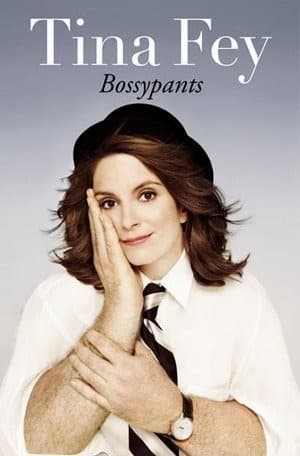
- Bossypants
Tina Fey
4.0 (848k) average on GoodreadsBiographyCombines sharp wit, personal stories, and observations on career and womanhood in the entertainment industry.
- The Diary of a Young Girl
Anne Frank
4.2 (2.7M) average on GoodreadsBiographyDuring the Nazi occupation, a teenage girl's diary, written from a secret annex, shares observations on humanity, hope, and the wait for freedom.
- Eat, Pray, Love
Elizabeth Gilbert
3.6 (1.5M) average on GoodreadsLifestyleA heartbroken writer leaves her conventional life for a year-long global search for pleasure in Italy, spiritual devotion in India, and unexpected love and balance in Bali.
- Night
Elie Wiesel
4.3 (970k) average on GoodreadsBiographyIn the darkness of Auschwitz and Buchenwald, a teenage Elie Wiesel faces the extermination of his family, the loss of his faith, and the lasting scars of humanity's deepest cruelty.
- Steve Jobs
Walter Isaacson
4.1 (957k) average on GoodreadsBusinessSteve Jobs was a visionary who fused creativity and technology to revolutionize six industries and shape our digital world.





Enjoyed the summary?
A summary gives you the shape of the book. The book itself has the detail, the examples and the voice.
Find Scrappy Little Nobody on AmazonAs an Amazon Associate, BookBrief earns from qualifying purchases. How we're funded