
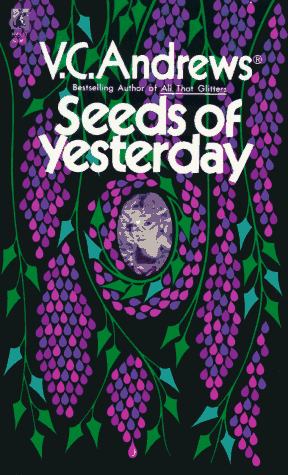
Synopsis
Covers the whole plot, including the ending.
- Difficulty
- Medium
- Pacing
- Moderate
- Mood
- Dark, Haunting, Tragic, Suspenseful
- Read it if
- You are a fan of gothic thrillers, family sagas with dark secrets, or have read the previous books in the Dollanganger series.
- Skip it if
- You are sensitive to themes of abuse, incest, and suicide, or prefer lighter, more optimistic stories.
Seeds of Yesterday Plot Summary
Covers the whole plot, including the ending.
The Arrival at Foxworth Hall
The story begins with Cathy and Chris Dollanganger, now a couple, learning that Cathy's son, Bart Winslow, inherited Foxworth Hall. Despite Cathy and Chris's dread of returning to their childhood trauma, Bart insists on moving in with his new wife, Daphne, and his adopted son, Jory Marquet, who is Cathy's biological son from her marriage to Julian Marquet. Jory is married to Melody, and they have two children, Deirdre and Darren. The large, rebuilt Foxworth Hall, a reminder of the family's dark past, becomes home for the extended, troubled family, immediately bringing back old fears for Cathy and Chris, who had hoped to escape its shadow.
Bart's Obsession and Control
Bart, now wealthy and increasingly extreme, begins to control the household. He redecorates Foxworth to match its original state, especially the attic where Cathy, Chris, and their siblings were held. He forbids Cathy and Chris from having a private life, even building a connecting door between their bedroom and his, demanding to be informed of their activities. Bart's obsession with the family's past and his cruel grandmother, Corrine Foxworth, is clear as he wears his grandfather Malcolm Foxworth's clothes and forces the family to follow his strict, puritanical rules, mirroring the oppression Cathy and Chris experienced as children.
Jory's Paralysis and Daphne's Loyalty
Tragedy strikes when Jory, a ballet dancer, falls down a flight of stairs at Foxworth Hall, leaving him paralyzed. The accident's cause is unclear, possibly a push by Bart or Jory's own despair. Jory's wife, Melody, struggles with his condition and Bart's oppressive environment. Meanwhile, Daphne, Bart's wife, remains loyal to him, even as his behavior becomes more erratic and abusive. She is pregnant, and her devotion to Bart, despite his cruelty, frustrates Cathy and Chris.
Bart's Religious Fanaticism and Abuse
Bart's religious extremism grows, and he preaches his twisted interpretation of Christianity, focusing on sin, damnation, and the 'evil' in the Dollanganger bloodline. He stops Melody from visiting Jory, accusing her of cheating, and isolates other family members. He abuses Melody physically and torments the children psychologically, especially Jory's young daughter, Deirdre, by telling her scary stories of her ancestors' sins. Cathy and Chris are horrified but feel helpless to stop him, trapped in his house and constantly reminded of their own past suffering, which Bart seems determined to recreate.
Melody's Desperation and Escape
Melody, pushed past her limit by Bart's abuse and isolation from Jory, decides to leave Foxworth Hall with her children, Deirdre and Darren. She confides in Cathy and Chris, who try to help her escape. However, Bart discovers their plans. He stops Melody and her children before they can leave, brutally punishing her and further asserting his control over the family. This failed escape attempt only strengthens Bart's power and the feeling of entrapment for everyone in Foxworth, deepening their despair.
Daphne's Revelation and Death
Daphne, increasingly weak and about to give birth, finally tells Cathy and Chris a key piece of information: Bart had been secretly visiting his grandmother, Corrine, in a mental institution for years. Corrine had filled his mind with twisted stories about the family's past, focusing on Cathy and Chris's incestuous relationship. This explains much of Bart's behavior. Daphne then goes into labor and dies during childbirth, leaving a baby girl. Her death adds another layer of tragedy to the Foxworth household, leaving Bart even more unstable and the family without her calming influence.
Jory's Suicide and Chris's Despair
Overwhelmed by his paralysis, the loss of his wife Melody, who eventually leaves for good after Bart's continued abuse, and Bart's oppressive atmosphere, Jory commits suicide. His death devastates Cathy and Chris, especially Chris, who had a strong bond with Jory. The tragedy worsens Chris's already fragile heart condition, sending him into a deep depression. He begins to withdraw, his health quickly declining under the weight of grief and the constant torment from Bart, who seems to thrive on the family's suffering.
Cathy's Desperate Plan
Watching Chris weaken, Cathy realizes that Bart will not stop until he has destroyed them all. She understands that Bart's extremism comes from Corrine's poisoned stories and his wish to 'cleanse' the family name. Desperate to save Chris and the remaining children, Cathy plans. She believes the only way to break free from the cycle of abuse and escape Foxworth's curse is to eliminate Bart, the source of their torment, even if it means extreme measures, much like her own grandmother had done.
The Confrontation and Fire
Cathy confronts Bart in the attic, the place of her childhood imprisonment, now filled with Corrine's belongings and her twisted stories. During their heated argument, Cathy reveals the truth of their past, including Corrine's role in their suffering, hoping to break through Bart's delusion. However, Bart, completely unstable, tries to kill Cathy. In the struggle, a fire starts, quickly engulfing the mansion. Cathy, Chris, and the children escape the fire, while Bart dies in the flames along with Foxworth Hall, finally destroying the physical symbol of their torment.
A New Beginning
After the fire, Foxworth Hall is completely destroyed, taking Bart and the physical representation of the Dollanganger family's traumatic past with it. Cathy and Chris, along with Jory's children, Deirdre and Darren, and Daphne's infant daughter, are finally free. Chris, though weak, begins to recover. They move to a new home, far from Foxworth's shadows, and begin to rebuild their lives. The ending suggests a fragile but hopeful future, where the surviving family members can finally escape the generational curse and find peace, free from the dark legacy that had haunted them for so long.
Seeds of Yesterday Characters
Cathy Dollanganger
Protagonist
A dancer and writer haunted by her past, struggling to protect her family.
Cathy is a complex character, deeply scarred by her childhood imprisonment in the Foxworth attic and her incestuous relationship with her brother, Chris. She is an artistic soul, a dancer and writer, who channels her trauma into her work. Despite her own suffering, she possesses a fierce maternal instinct, constantly striving to protect her children and Chris from the same horrors she endured. Her love for Chris is both a source of comfort and a constant reminder of their forbidden bond. She carries immense guilt and fear, which are reignited by Bart's actions.
Relationships: Chris Dollanganger (Incestuous lover and brother, her emotional anchor and co-sufferer.); Bart Winslow (Her biological son, who becomes her antagonist and tormentor.); Jory Marquet (Her biological son, whom she deeply loves and grieves.); Melody (Her daughter-in-law, whom she tries to protect.)
Chris Dollanganger
Protagonist/Supporting
Cathy's brother and lover, a doctor whose health declines under renewed trauma.
Chris is Cathy's older brother and her lifelong lover, a relationship born out of the trauma of their shared imprisonment. He is a physician, a profession that reflects his desire to heal and protect, but he is also deeply vulnerable to the psychological toll of their past. His love for Cathy is unwavering, and he consistently tries to shield her and their family from further pain. However, his physical and mental health are fragile, particularly his heart, which weakens under the renewed stress of Foxworth Hall and Bart's cruelty. He is often more passive than Cathy, struggling with despair.
Relationships: Cathy Dollanganger (Incestuous lover and sister, his emotional anchor and co-sufferer.); Bart Winslow (His biological nephew and adopted son, who becomes his tormentor.); Jory Marquet (His biological nephew and adopted son, whom he deeply loves and whose death devastates him.)
Bart Winslow
Antagonist
Cathy's son, a fanatical and abusive man obsessed with the family's dark history.
Bart is Cathy's biological son from her marriage to Bart Winslow Sr. He is the central antagonist of the story, a man consumed by the dark legacy of the Foxworth and Dollanganger families. Having been secretly indoctrinated by his grandmother Corrine, he believes he is on a mission to 'cleanse' his family of its 'sins.' He is wealthy, manipulative, and deeply disturbed, exhibiting extreme religious fanaticism, cruelty, and a desire to recreate the oppressive atmosphere of the original Foxworth Hall. His actions are driven by a twisted sense of moral righteousness and a profound psychological illness.
Relationships: Cathy Dollanganger (His biological mother, whom he torments and seeks to control.); Daphne (His wife, whom he manipulates and abuses.); Corrine Foxworth (His grandmother, who corrupted his mind with false narratives.)
Jory Marquet
Supporting
Cathy's son, a talented dancer whose life is tragically cut short.
Jory is Cathy's biological son from her marriage to Julian Marquet. He is a sensitive and talented ballet dancer, initially a source of light and hope for Cathy. He is married to Melody and has two young children, Deirdre and Darren. Jory is brought into the dysfunctional Foxworth household by Bart and suffers a tragic accident that leaves him paralyzed. This physical injury, combined with Bart's relentless psychological torment and the loss of his wife, ultimately leads to his despair and suicide. He represents the innocent victims caught in the web of the family's curse.
Relationships: Cathy Dollanganger (His biological mother, whom he loves deeply.); Melody (His wife, whom he loves and struggles to protect.); Bart Winslow (His half-brother, who torments him.)
Daphne
Supporting
Bart's seemingly loyal wife, who holds a crucial secret.
Daphne is Bart's wife, a character initially presented as somewhat submissive and fiercely loyal to Bart, even in the face of his increasingly cruel behavior. She is pregnant with Bart's child. Despite her apparent devotion, she harbors a secret: Bart's visits to Corrine Foxworth in the asylum. Daphne's character is complex, as she seems to genuinely love Bart but also struggles with the reality of his madness. Her revelation of Bart's visits to Corrine is a pivotal moment, providing insight into his motivations before her tragic death in childbirth.
Relationships: Bart Winslow (Her husband, whom she loves despite his cruelty.); Cathy Dollanganger (Her mother-in-law, to whom she confides a crucial secret.)
Melody
Supporting
Jory's wife, who tries to protect her children from Bart's abuse.
Melody is Jory's wife and the mother of Deirdre and Darren. She is initially a vibrant and loving character, devoted to her husband and children. However, she quickly becomes a victim of Bart's psychological and physical abuse at Foxworth Hall. She struggles to cope with Jory's paralysis and Bart's oppressive rules, eventually attempting to escape with her children. Her character represents the ordinary person caught in the extraordinary and horrifying dysfunction of the Dollanganger family. She eventually leaves Foxworth, seeking a life free from its terror.
Relationships: Jory Marquet (Her husband, whom she loves and whose suffering she witnesses.); Bart Winslow (Her brother-in-law, who abuses and torments her.)
Corrine Foxworth
Mentioned/Flashback
Cathy and Chris's mother, whose past actions and influence continue to haunt the family.
Corrine Foxworth is Cathy and Chris's mother, who imprisoned them in the attic of Foxworth Hall as children. Although she is in a mental institution throughout this novel, her influence is profoundly felt. Bart's fanatical behavior is directly linked to her twisted narratives and indoctrination during his secret visits. She represents the origin of the family's curse and the generational trauma that continues to plague the Dollangangers. Her legacy of cruelty, greed, and religious hypocrisy is the foundation upon which Bart builds his reign of terror.
Relationships: Cathy Dollanganger (Her daughter, whom she abused and abandoned.); Chris Dollanganger (Her son, whom she abused and abandoned.); Bart Winslow (Her grandson, whom she corrupted and manipulated.)
Malcolm Foxworth
Mentioned
The patriarch of Foxworth Hall, whose puritanical legacy influences Bart.
Malcolm Foxworth is Corrine's father and the original patriarch of Foxworth Hall. He is long dead by the time of the novel, but his puritanical and oppressive spirit looms large over the narrative. Bart obsessively emulates Malcolm, wearing his clothes and adopting his rigid moral code, believing he is embodying the 'true' Foxworth legacy. Malcolm represents the oppressive, judgmental, and hypocritical patriarchy that established the initial cycle of abuse and secrecy within the family, a cycle that Bart attempts to revive.
Relationships: Corrine Foxworth (His daughter, whom he emotionally abused.); Bart Winslow (His great-grandson, who idolizes and mimics him.)
Seeds of Yesterday Themes
The Cycle of Generational Trauma
The main theme is the unavoidable cycle of abuse and trauma passed down through generations of the Dollanganger family. Cathy and Chris, survivors of their own horrific childhood, find themselves reliving parts of their past through Bart's actions at Foxworth Hall. Bart, taught by Corrine, consciously tries to recreate the oppressive and abusive environment, especially the isolation and psychological torment, that his mother and uncle endured. Jory's paralysis and eventual suicide, and Melody's attempts to protect her children, show how trauma continues to affect the family, even those not directly involved in the original attic imprisonment. The destruction of Foxworth Hall by fire symbolizes the breaking of this cycle.
“The past wasn't something you could escape, not when it lived in your blood.”
The Corrupting Power of Secrets and Lies
The novel explores how family secrets and lies, especially those about Cathy and Chris's incestuous relationship and Corrine's crimes, fester and cause more destruction. Bart's entire belief system and his tyrannical behavior are based on the twisted stories Corrine told him, which are themselves lies and distortions of the truth. Cathy and Chris's inability to fully escape their past, due to lingering shame and the family's refusal to acknowledge the truth openly, allows Bart to exploit these weaknesses. Daphne's revelation about Corrine's influence on Bart is a critical moment, showing the root of Bart's corruption.
“Secrets were like poison, slowly seeping into every part of your life until you were sick with them.”
The Nature of Evil and Fanaticism
Bart Winslow shows how religious extremism can be twisted into a tool for control, cruelty, and evil. His obsession with 'sin' and 'damnation,' fueled by Corrine's warped teachings, allows him to justify his psychological and physical abuse of his family members. He sees himself as a righteous avenger, cleansing the family of its perceived moral failings, rather than recognizing his own deep psychological disturbance. This theme explores how deep-seated trauma, combined with a distorted moral compass, can appear as extreme and destructive behavior, especially when power is used without empathy.
“He saw himself as a righteous avenger, when all he was, was a monster born of a monster.”
Survival and Resilience
Despite the constant darkness and suffering, the theme of survival and resilience is clear through Cathy and Chris's lasting love and their ultimate fight for freedom. They survived unthinkable trauma in their past, and even when pushed to the limit by Bart, they find the strength to resist and protect the younger generation. Cathy's final act of confronting Bart and escaping the burning Foxworth Hall shows her strong will to live and break free. The ending, with the surviving family members starting anew, suggests that even after great tragedy, there is hope for healing and a chance to build a better future, free from the shadows of the past.
“We had survived before, and we would survive again. That was the only truth that mattered.”
Plot Devices & Literary Techniques
The Haunted House (Foxworth Hall)
The physical embodiment of the family's past trauma and ongoing curse.
Foxworth Hall functions as more than just a setting; it is a character in itself, a physical manifestation of the Dollanganger family's generational trauma. Its reconstruction and Bart's efforts to replicate its original oppressive atmosphere symbolize the inescapable nature of their past. The attic, in particular, remains a potent symbol of imprisonment and abuse. The house actively contributes to the psychological torment of Cathy and Chris, constantly reminding them of their horrific childhood. Its eventual destruction by fire is a cathartic event, signifying the breaking of the curse and the family's potential for a new beginning.
Generational Curse
The belief that the family is doomed to repeat a cycle of sin and tragedy.
The concept of a 'generational curse' is a powerful underlying plot device. The Dollanganger family believes they are cursed to repeat patterns of incest, abuse, and tragedy, stemming from their grandmother's actions and the original sin of the Foxworth patriarch. This belief is explicitly exploited and perpetuated by Bart, who uses it to justify his cruel behavior and control over the family. The curse creates a sense of fatalism and inevitability, making the characters feel trapped. The narrative ultimately challenges this device by showing that conscious action can break the cycle, culminating in the destruction of Foxworth Hall.
The Unreliable Narrator (Bart's Perspective)
Bart's skewed perception of family history, influenced by Corrine, drives his actions.
While Cathy is the primary narrator, Bart's perspective on the family history, though not directly narrated, acts as an 'unreliable narrator' device. His understanding of the past, shaped by Corrine's twisted stories, is fundamentally false and forms the basis of his fanatical behavior. This device creates tension as the reader understands the truth of Cathy and Chris's past, while Bart operates under a delusion. His skewed reality drives the conflict, forcing Cathy to confront not just Bart, but the distorted narrative of their family's history that he embodies. Daphne's revelation about Corrine's influence on Bart finally exposes the source of this unreliable 'narration'.
Symbolism of Fire
Represents both destruction and purification/renewal.
Fire is a potent symbol throughout the climax of the novel. The fire that consumes Foxworth Hall represents the complete destruction of the physical manifestation of the family's torment and the generational curse. It purifies the space, eradicating the evil that permeated the house. However, it also symbolizes the destructive nature of the family's secrets and the burning intensity of their trauma. The fire is a double-edged sword: it takes Bart's life, ending his reign of terror, but it also forces the survivors to confront the complete loss of their history, leaving them with a clean slate to build a new, hopefully uncursed, future.
Seeds of Yesterday Quotes
“Sometimes the past is like a shadow, always following, no matter how fast you run.”
“Love, true love, is supposed to be freeing, not a cage made of gilded bars.”
“We are all prisoners of our own making, some more than others.”
“The greatest lies are the ones we tell ourselves, to justify the things we do.”
“Children are not meant to be burdens, but blessings. Yet, sometimes, they carry the heaviest burdens of all.”
“To forget is to betray, to remember is to suffer. What choice do we truly have?”
“There are some wounds that never heal, only scar over, and even then, they ache with every change in the weather.”
“The truth is a dangerous thing, especially when it's buried deep and wants to come out.”
“Family is supposed to be your safe harbor, but for us, it was always the storm.”
“Revenge is a bitter fruit, and those who seek it often poison themselves in the process.”
“We were all just seeds of yesterday, blossoming into the twisted flowers of today.”
“Some desires, once awakened, can never truly be put back to sleep.”
“It's hard to break free from chains you can't see, especially when they're forged in love and desperation.”
“The past repeats itself, not because we want it to, but because we are too weak or too blind to stop it.”
Quiz
10 questions on the plot and the characters. Each answer comes with a short explanation.
Question 1
What is the name of the estate that Bart Winslow inherits and attempts to restore, much to Cathy and Chris's dismay?
- The Heights
- Fairchild Manor
- Foxworth Hall
- Greenwood Estate
Show answer
C. Foxworth Hall Bart Winslow inherits and becomes obsessed with restoring Foxworth Hall, the very place where the Dollanganger children were imprisoned, which is a source of great trauma for Cathy and Chris.
Question 2
Which character is obsessed with the Dollanganger family history and actively tries to recreate aspects of their past, particularly focusing on Corinne?
- Jory Marquet
- Melodie Marquet
- Bart Winslow
- Cindy Sheffield
Show answer
C. Bart Winslow Bart Winslow, Cathy's adopted son, becomes deeply obsessed with the Dollanganger past, particularly his grandmother Corinne, and tries to replicate aspects of their tragic history at Foxworth Hall.
Question 3
What is the primary relationship between Cathy and Chris in 'Seeds of Yesterday'?
- Siblings living together as friends
- Married couple posing as siblings to the outside world
- Estranged brother and sister
- Aunt and Uncle to Bart and Jory
Show answer
B. Married couple posing as siblings to the outside world Cathy and Chris, having been lovers and married in earlier books, continue their incestuous relationship in 'Seeds of Yesterday', maintaining the pretense of being siblings to their children and society.
Question 4
How does Jory Marquet's career as a ballet dancer come to an end?
- He retires voluntarily to focus on family.
- He suffers a debilitating injury in a car accident.
- He loses interest in dancing after a bad review.
- He is fired from his dance company due to misconduct.
Show answer
B. He suffers a debilitating injury in a car accident. Jory Marquet's promising ballet career is tragically cut short when he is involved in a severe car accident, leaving him paralyzed and unable to dance.
Question 5
What is the significant secret that Bart Winslow eventually reveals to the world regarding his lineage?
- That he is adopted and not a biological Marquet.
- That he is the illegitimate son of Christopher Foxworth Sr.
- That Cathy and Chris are not his aunt and uncle, but his biological parents.
- That Cathy and Chris are siblings, and he is the product of their incestuous relationship with Corinne as his biological mother.
Show answer
D. That Cathy and Chris are siblings, and he is the product of their incestuous relationship with Corinne as his biological mother. Bart, fueled by his obsession and manipulative tendencies, eventually exposes the scandalous truth that Cathy and Chris are siblings, and that he is the product of Corinne's affair with Malcolm Neal, making him a true Foxworth heir, though he frames it to expose Cathy and Chris's incestuous past.
Question 6
What role does Cindy Sheffield play in the lives of Cathy, Chris, and their children?
- She is Jory's childhood friend who later becomes his wife.
- She is Bart's love interest and later his wife, who is also fascinated by the Foxworth legacy.
- She is a housekeeper hired by Cathy to help at the new mansion.
- She is a private investigator hired to uncover family secrets.
Show answer
B. She is Bart's love interest and later his wife, who is also fascinated by the Foxworth legacy. Cindy Sheffield marries Bart Winslow and becomes deeply involved in his obsession with Foxworth Hall and the Dollanganger past, often acting as his accomplice in his schemes.
Question 7
Which of these themes is most central to 'Seeds of Yesterday'?
- The triumph of true love over societal norms.
- The inescapable nature of inherited trauma and the past.
- The pursuit of artistic freedom and self-expression.
- The importance of forgiveness and moving on from grudges.
Show answer
B. The inescapable nature of inherited trauma and the past. A core theme of 'Seeds of Yesterday' is how the past, particularly the trauma and sins of the Dollanganger family, continues to haunt and dictate the lives of the characters, especially through Bart's obsession with recreating it.
Question 8
What is the ultimate fate of Cathy Dollanganger at the end of 'Seeds of Yesterday'?
- She successfully escapes the past and lives a peaceful life with Chris.
- She dies in a fire at Foxworth Hall, trapped by Bart's schemes.
- She is committed to a mental institution after a breakdown.
- She leaves the family to start a new life under a different identity.
Show answer
B. She dies in a fire at Foxworth Hall, trapped by Bart's schemes. Cathy tragically dies in a fire at Foxworth Hall, which is deliberately set by Bart Winslow, thus ending her torment but also her life within the confines of the family's cursed legacy.
Question 9
How does Bart Winslow manipulate Melodie Marquet, Jory's wife?
- He convinces her to leave Jory and run away with him.
- He seduces her and uses their affair to cause discord in the family.
- He blackmails her with secrets from her own past.
- He persuades her to invest her inheritance in his restoration project.
Show answer
B. He seduces her and uses their affair to cause discord in the family. Bart manipulates Melodie through seduction, initiating an affair with her that further destabilizes the family and causes immense pain to Jory, who is already suffering from his paralysis.
Question 10
What is the symbolic significance of the 'seeds of yesterday' mentioned in the title?
- The literal seeds planted in the garden of Foxworth Hall.
- The enduring genetic traits passed down through the Dollanganger line.
- The consequences and lingering effects of past actions and sins that continue to shape the present and future.
- The buried treasure that the children hope to find at Foxworth Hall.
Show answer
C. The consequences and lingering effects of past actions and sins that continue to shape the present and future. The 'seeds of yesterday' symbolize how the past, particularly the dark and incestuous history of the Dollangangers, continues to bear bitter fruit in the present and future generations, perpetuating a cycle of tragedy and obsession.
Seeds of Yesterday FAQ
What is the central premise of 'Seeds of Yesterday'?
The novel centers on Cathy and Chris Dollanganger, now living under the surname Sheffield, as they attempt to raise their children, Jory and Bart, in a seemingly normal environment. However, the psychological scars and incestuous legacy of their past at Foxworth Hall begin to manifest, particularly through Bart's increasingly disturbing behavior and his obsession with the Dollanganger family history.
How does Foxworth Hall continue to influence the characters in this book?
Although Cathy and Chris do not physically return to Foxworth Hall in this novel, its presence is deeply felt through Bart's fixation on his grandmother Corrine and great-grandmother Olivia's diaries and possessions. The mansion represents the inescapable trauma and genetic predispositions that continue to haunt the family, shaping their present and future.
Who are Jory and Bart, and what are their relationships to Cathy and Chris?
Jory is Cathy's son from her marriage to Julian Marquet, making him Chris's stepson. Bart, however, is the biological son of Cathy and Chris, born from their incestuous relationship. This distinction is crucial as Bart struggles with his identity and inheritance, viewing Jory as the 'perfect' child.
What role does Corrine Foxworth play, even after her death?
Corrine, Cathy and Chris's mother, exerts a powerful influence from beyond the grave through her diaries and the possessions Bart uncovers. Her legacy of cruelty, manipulation, and family secrets fuels Bart's growing obsession and provides him with a twisted blueprint for his own actions, contributing significantly to the novel's central conflict.
What is the ultimate fate of Cathy and Chris in 'Seeds of Yesterday'?
Cathy tragically dies from a fall, potentially orchestrated or influenced by Bart, while Chris ultimately commits suicide. Their deaths signify the inescapable and devastating consequences of their past, as they are unable to outrun the 'seeds' of their family's terrible history.
How do the 'seeds' of the past physically manifest in the children?
The 'seeds' manifest most prominently through Bart's physical resemblance to Malcolm Foxworth and his increasingly cruel, manipulative, and religiously fanatical personality, mirroring Olivia and Corrine. Jory, while seemingly more stable, also grapples with the family's dark past and his own parentage, though not to the same destructive extent as Bart.
Are there any subtle allusions to the original attic imprisonment in this book?
Yes, the feeling of entrapment and being 'locked away' from a normal life is a recurring theme, particularly for Cathy and Chris, who are prisoners of their own past and the secrets they keep. Bart's recreation of parts of Foxworth Hall also serves as a symbolic re-imprisonment, forcing the family to confront the origins of their trauma.
What is the significance of Bart's obsession with Corrine's diaries and Foxworth artifacts?
Bart's obsession is crucial as it allows him to piece together the true, horrifying history of the Dollanganger family, including the incest and abuse. These artifacts become tools for him to understand, and ultimately emulate, the destructive patterns of his ancestors, believing he is fulfilling a dark legacy.
How does the novel subtly hint at the true nature of Bart's parentage before it's explicitly stated?
The narrative frequently highlights Bart's striking physical similarities to the Foxworth men, particularly Malcolm, and his unsettling personality traits that mirror Corrine and Olivia. These descriptions, coupled with Cathy and Chris's secretive behavior and anxieties surrounding Bart, serve as continuous foreshadowing.
Analyze Cathy's psychological state throughout 'Seeds of Yesterday'.
Cathy is depicted as profoundly traumatized and guilt-ridden, struggling to maintain a semblance of normalcy while being haunted by her incestuous relationship with Chris and the dark legacy she's passed to Bart. She is often passive and emotionally overwhelmed, unable to effectively confront Bart's escalating cruelty, ultimately leading to her tragic demise.
How does Chris's psychological burden differ from Cathy's in this final installment?
Chris carries the burden of guilt for his incestuous relationship with Cathy and the subsequent birth of Bart, but he often appears more outwardly stable than Cathy, trying to be the protector. However, his internal struggle is immense, culminating in his suicide, indicating he was ultimately unable to escape the psychological weight of his past actions and their consequences.
Explore Bart's psychological development from an innocent child to a malevolent figure.
Bart's psychological deterioration is central to the plot, driven by his discovery of the Foxworth history and his own parentage. He develops a severe personality disorder, characterized by religious fanaticism, manipulative tendencies, and a desire to 'cleanse' his family, stemming from his feeling of being a 'sinful' product of incest.
What is the psychological impact of the 'curse' on the Dollanganger family in this novel?
The 'curse' is primarily psychological, manifesting as a generational trauma that warps personalities and relationships. It instills deep-seated guilt, shame, and a propensity for destructive behavior, particularly in Bart, who internalizes the family's history of sin and attempts to 'atone' through his own cruel actions.
Is 'Seeds of Yesterday' a story of redemption or inescapable doom for the Dollangangers?
The novel leans heavily towards inescapable doom. Despite Cathy and Chris's attempts to create a new life, they are ultimately consumed by their past. Bart's actions ensure the tragic cycle continues, suggesting that the Dollanganger family is irrevocably cursed, with no true redemption possible for its central figures.
How does the ending challenge or reinforce themes established in previous books?
The ending reinforces the theme of the inescapable nature of genetic and environmental influence, showing that the trauma of Foxworth Hall cannot be outrun. It challenges the idea of a 'happily ever after' for Cathy and Chris, proving that their forbidden love, while passionate, was ultimately destructive.
What is the author's message about the long-term effects of trauma and hidden secrets?
V.C. Andrews' message is that trauma and hidden secrets have devastating, long-lasting effects that can corrupt future generations. The novel illustrates how repression and denial only allow darkness to fester, ultimately destroying those who try to bury the truth and those born into its shadow.
Could Bart's actions be interpreted as a twisted form of justice or revenge?
Bart's actions can be interpreted as a distorted form of both justice and revenge. He believes he is enacting divine justice for the 'sins' of his parents and ancestors, and also taking revenge on Cathy and Chris for his own existence and the perceived injustices he suffered, fueled by Corrine's biased accounts.
Debate: Was Cathy and Chris's decision to have a child (Bart) an act of hope or ultimate selfishness?
This is highly debatable. Some argue it was an act of desperate hope to create a 'normal' family, while others see it as ultimate selfishness, ignoring the ethical implications and the potential psychological harm to a child born from their incestuous relationship, ultimately dooming Bart to a life of confusion and trauma.
About the author
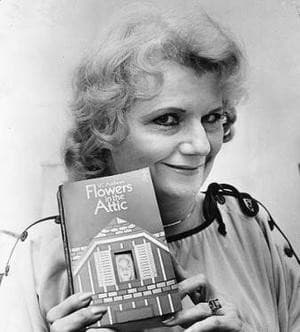
V.C. Andrews was an American author known for her gothic and family saga novels. She gained popularity with works such as "Flowers in the Attic," "Petals on the Wind," "If There Be Thorns," "Seeds of Yesterday," "Garden of Shadows," and "My Sweet Audrina," which often explore themes of betrayal, family secrets, and psychological drama. Her writing has captivated readers since the late 20th century.
Similar books
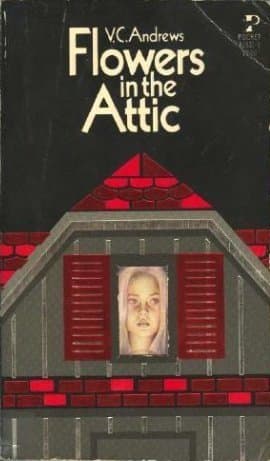
- Flowers in the Attic
V.C. Andrews
3.8 (161k) average on GoodreadsThrillerThe first book in the same series, establishing the core themes and characters.
- Rebecca
Daphne du Maurier
4.2 (450k) average on GoodreadsThrillerFeatures a haunting old mansion, psychological tension, and a pervasive sense of dread.
- The Haunting of Hill House
Shirley Jackson
3.8 (162k) average on GoodreadsThrillerExplores the psychological impact of a haunted house on its inhabitants with a dark, atmospheric tone.
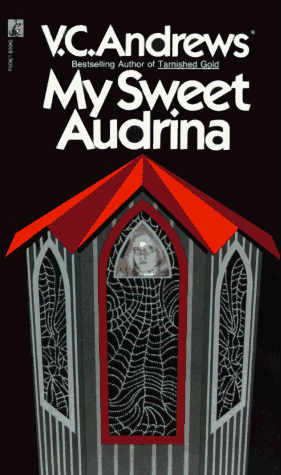
- My Sweet Audrina
V.C. Andrews
3.9 (24k) average on GoodreadsThrillerCompared to 'My Sweet Audrina,' 'Seeds of Yesterday' shares the theme of a protagonist grappling with a traumatic past and a fragile sense of identity. However, 'Audrina' is often praised for its singular focus on one character's psychological unraveling and memory loss, creating a more cohesive and unsettling narrative. 'Seeds,' by contrast, juggles multiple characters and their individual tragedies, which sometimes disperses the emotional impact. While both feature gothic elements and family secrets, 'Audrina's' more contained narrative allows for a deeper dive into the protagonist's psyche, a depth that 'Seeds' struggles to achieve amidst its sprawling plot.
- Angels & Demons
Dan Brown
3.9 (2.7M) average on GoodreadsThrillerA Harvard symbologist races through Rome's ancient sites, deciphering cryptic clues to unmask the Illuminati and stop a vengeful plot to destroy the Vatican with a stolen antimatter weapon.
- Gone Girl
Gillian Flynn
4.1 (2.3M) average on GoodreadsThrillerA wife's sudden disappearance on her fifth anniversary reveals a web of lies and psychological warfare, exposing the secrets within a seemingly perfect marriage.




Enjoyed the summary?
A summary gives you the shape of the book. The book itself has the detail, the examples and the voice.
Find Seeds of Yesterday on AmazonAs an Amazon Associate, BookBrief earns from qualifying purchases. How we're funded