
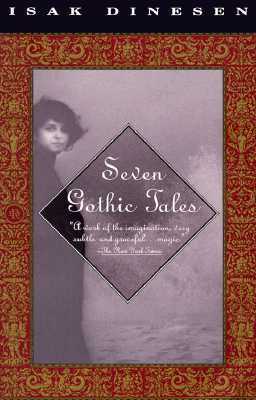
Synopsis
Covers the whole plot, including the ending.
- Difficulty
- Medium
- Pacing
- Slow
- Mood
- Atmospheric, Mysterious, Melancholic, Elegant, Philosophical
- Read it if
- You enjoy sophisticated, atmospheric short stories with a blend of historical fiction, psychological depth, and a touch of the supernatural or bizarre.
- Skip it if
- You prefer fast-paced plots, clear-cut moralities, or contemporary settings.
Seven Gothic Tales Plot Summary
Covers the whole plot, including the ending.
The Deluge at Norderney
During a great flood on the Danish coast, various people find shelter in a hayloft on Cardinal Hamilcar von Sehestedt's estate. The group includes the young Miss Malin, her fiancé Jonatan M. M. M. M. M., the mysterious Baron von Blixen, and the unusual Miss Nat-og-Dag. As the water rises, trapping them, their closeness leads to confessions and philosophical talks. Cardinal von Sehestedt, a figure of authority and wisdom, oversees their confinement, subtly guiding their interactions and showing his understanding of human nature and fate, as the flood outside reflects the inner turmoil and secrets within the loft.
The Old Chevalier
In a dimly lit Parisian salon, an elderly French chevalier, a remnant of an earlier time, tells a group of listeners about an important experience from his youth. He describes a moonlit night in a forest, where he met a beautiful and mysterious young woman. Their brief, intense connection, full of passion and a sense of timelessness, was with a woman who was already married and having a secret meeting. The chevalier, through his nostalgic story, thinks about love, memory, and the fleeting beauty of youth, stressing how this single, forbidden encounter affected his entire life, even decades later.
The Monkey
The story is about the elderly and strict cousins, Baroness Christine and Baron von Standish, who want to arrange a good marriage for their innocent young relative, Athena. Their chosen groom is the handsome and somewhat naive Boris. However, their plans are complicated by an ancient, mischievous monkey, which the Baroness keeps as a pet. This monkey, with its strange intelligence and ability to understand people, causes trouble. It intercepts a letter from Athena to Boris, replacing it with a scandalous one, thus ruining the carefully planned engagement and revealing the hidden desires and social pressures beneath the surface of the aristocratic world.
The Roads Round Pisa
Augustus von Schimmelreiter, a young Danish nobleman, travels to Pisa, Italy, on a Grand Tour that quickly becomes strange. He meets several unusual characters, including an old, blind astrologer and Italian noblemen with odd habits. The story changes when Augustus becomes obsessed with a beautiful and mysterious woman named Rosina, who seems to embody Italy's romantic and dangerous appeal. Their interactions are full of fate and premonition, as Augustus gets caught in a complex web of relationships and secrets, ending in an unexpected and tragic event that shows how fragile human desires are and how unpredictable destiny is in a foreign land.
The Supper at Elsinore
Two old, reclusive sisters, Fanny and Eliza, live in a crumbling mansion near Elsinore, haunted by memories of their past. They host a rare supper for their two nephews, Morten and Frans, who are sailors just back from sea. The evening is filled with sadness and unspoken truths. As the sisters tell stories of their youth, especially their unfulfilled love for a young man who died tragically, the past slowly takes over the present. The supper ends with a shocking revelation: the sisters confess to murdering their beloved in a misguided attempt to keep him innocent and prevent him from marrying another, a dark secret that has shaped their entire isolated lives.
The Dreamers
In a London opera house, various people, including the mysterious Marcus and the cynical Miss Astrea, gather and share their life stories. The main story is about the beautiful and enigmatic Pellegrina Leoni, a famous opera singer who mysteriously lost her voice after a fire. She then takes on different identities, living different lives under different names, each a carefully made persona. The 'dreamers' in the story are those who live through imagination and illusion, struggling with their true selves versus the roles they play. The tale explores identity, the power of storytelling, and the blurred lines between reality and fiction, as Pellegrina's changing identities reflect the inherent theatricality of human life.
The Poet
Fransine, a young and lively woman, is married to an old, famous poet, Fransine. They live in a secluded, peaceful place, seemingly cut off from the outside world. Their relationship is complex, marked by a big age difference and Fransine's youthful idealism clashing with Fransine's artistic nature and approaching death. The story looks at their private talks and thoughts on love, beauty, and creating art. As Fransine faces the reality of her husband's aging and life's temporary nature, she struggles with her own desires and the meaning of their bond. The tale ends with a touching look at how art tries to make fleeting moments and emotions last forever, and the final acceptance of life's natural impermanence.
Seven Gothic Tales Characters
Cardinal Hamilcar von Sehestedt
Supporting
An elderly, wise cardinal who provides refuge and philosophical guidance during a flood.
Cardinal Hamilcar is an ancient, sagacious figure, whose wisdom and calm demeanor anchor the chaotic events of 'The Deluge at Norderney'. He possesses a profound understanding of human nature, fate, and the divine. Despite his advanced age, his mind is sharp, and he often speaks in parables or profound observations that guide the other characters' self-discoveries. He is a detached observer yet a compassionate patriarch, allowing the drama to unfold while subtly influencing its direction with his presence and occasional pronouncements.
Relationships: Miss Malin (mentor/confidant); Baron von Blixen (philosophical interlocutor)
Miss Malin
Protagonist
A young, beautiful woman caught between societal expectations and her true desires.
Miss Malin is a central figure in 'The Deluge at Norderney', initially presented as a beautiful and somewhat naive young woman engaged to the pious Jonatan. She is grappling with the expectations placed upon her by society and her own burgeoning understanding of passion and love. Her vulnerability and sincerity make her relatable, and she experiences a significant emotional awakening during her confinement in the hayloft. She is a symbol of youthful innocence confronting the complexities of the adult world and the unpredictable nature of desire.
Relationships: Jonatan M. M. M. M. M. (fiancé (strained)); Baron von Blixen (romantic interest); Cardinal Hamilcar von Sehestedt (confidant)
Baron von Blixen
Supporting
A melancholic and mysterious baron with a hidden past.
Baron von Blixen is a brooding and enigmatic character in 'The Deluge at Norderney'. He carries a palpable sense of sorrow and a hidden past, which he eventually reveals. His melancholic nature and profound philosophical insights draw him to Miss Malin, and he represents the darker, more passionate side of human experience, contrasting with Jonatan's piety. He is a man of deep emotions and intellectual depth, whose presence adds a layer of romantic and tragic intrigue to the group.
Relationships: Miss Malin (romantic interest); Cardinal Hamilcar von Sehestedt (philosophical interlocutor)
The Old Chevalier
Protagonist
An aging French aristocrat reminiscing about a singular, passionate youthful encounter.
The Old Chevalier is the narrator and central figure of his eponymous tale. He is a man of refined manners, a relic of the ancien régime, whose life has been defined by a single, intense romantic encounter from his youth. He is a nostalgic figure, finding meaning and identity in the memory of this illicit passion. His character embodies the theme of how a singular moment can shape an entire life, and his narrative style is reflective, elegant, and imbued with a deep sense of longing for the past.
Relationships: Mysterious Woman (past romantic encounter)
Athena
Protagonist
A young woman whose arranged marriage plans are disrupted by a mischievous monkey.
Athena is the innocent and somewhat naive young woman at the center of 'The Monkey'. She is subject to the machinations of her powerful elderly cousins, who are determined to marry her off to Boris. Athena embodies youthful purity and vulnerability, and her internal struggles are subtly revealed through her interactions and the chaos caused by the monkey. She represents the constraints placed upon women in aristocratic society and the often-comic disruptions that can arise when human plans are interfered with by unforeseen forces.
Relationships: Baroness Christine (controlling cousin); Baron von Standish (controlling cousin); Boris (intended fiancé)
Pellegrina Leoni
Protagonist
A famous opera singer who loses her voice and adopts multiple identities.
Pellegrina Leoni is the captivating and enigmatic central figure in 'The Dreamers'. Once a celebrated opera singer, she loses her voice and subsequently embarks on a life of adopting various personas and identities. She is a woman of profound artistry and deep internal complexity, constantly reinventing herself and exploring the nature of selfhood. Pellegrina embodies the theme of identity as performance and the human desire to escape or transcend a singular self. Her journey is one of constant transformation and a search for meaning beyond a fixed identity.
Relationships: Marcus (confidant/fellow 'dreamer'); Miss Astrea (acquaintance)
Fransine
Protagonist
A young, vibrant woman married to an aging poet, grappling with love, art, and mortality.
Fransine is the young wife of the renowned, elderly poet in 'The Poet'. She is characterized by her youth, vitality, and a deep, intuitive understanding of love and beauty. Her character represents the vibrancy of life juxtaposed against the inevitability of aging and death. She grapples with the complexities of her marriage, her husband's artistic temperament, and her own desires. Fransine embodies a youthful perspective on profound philosophical questions, and her emotional journey is central to the tale's exploration of love's endurance and art's attempt to capture the ephemeral.
Relationships: Fransine (the poet) (husband)
Fanny and Eliza
Protagonists
Two reclusive, elderly sisters haunted by a dark secret from their youth.
Fanny and Eliza are the elderly, reclusive sisters from 'The Supper at Elsinore'. They are inseparable, living a life of quiet isolation in their decaying ancestral home, steeped in memories of their youth. Their characters are defined by a shared, tragic past involving an unfulfilled love and a dark secret. They embody the destructive power of obsession and the way past actions can irrevocably shape a life. Their interactions reveal a deep, almost symbiotic bond, and their confession is the culmination of a lifetime of shared guilt and sorrow.
Relationships: Morten and Frans (nephews); Young Man (unnamed) (shared past romantic interest (victim))
Seven Gothic Tales Themes
Fate vs. Free Will
Many of Dinesen's tales look at the conflict between predetermined destiny and individual choice. Characters often find themselves in situations where outside forces, whether a natural disaster like the flood in 'The Deluge at Norderney' or the monkey's mischief in 'The Monkey', seem to guide their paths. Yet, within these limits, characters like Miss Malin or Pellegrina Leoni try to assert their desires or redefine who they are. The stories often suggest that while fate may set the stage, the human spirit's response, through love, art, or rebellion, remains a powerful, though sometimes useless, act of will.
“And the world, what it is, is not a world of reality but a world of dreams.”
The Power of Storytelling and Illusion
Storytelling, both within the narrative and as a narrative tool, is central to the collection. Characters often recount their pasts, shaping their identities through their stories, as seen with the Old Chevalier. In 'The Dreamers', Pellegrina Leoni literally lives through different stories, adopting new identities as a way to create herself and escape. Dinesen herself, through her elaborate and often fantastical prose, creates a world where illusion and reality are closely linked, suggesting that the stories we tell ourselves and others are as strong, if not stronger, than objective truth. This theme highlights the human need for stories to understand, or escape from, life's complexities.
“All sorrows can be borne if you put them into a story or tell a story about them.”
Love, Desire, and Obsession
The various forms of love, from romantic passion to destructive obsession, are present throughout these tales. In 'The Old Chevalier', a brief, passionate encounter defines a man's entire life. 'The Supper at Elsinore' explores the dark extreme of love, where it becomes a murderous obsession that leads two sisters to commit a terrible act to preserve an idealized image. Miss Malin's awakening in 'The Deluge at Norderney' shows the unpredictable nature of desire, challenging social norms. Dinesen portrays love as a powerful, often dangerous force that can elevate or destroy, revealing the deep, often irrational, currents of human emotion.
“There are some things that cannot be told in words. They must be dreamt.”
Identity and Transformation
Many characters struggle with their sense of self, often undergoing big changes or taking on multiple identities. Pellegrina Leoni in 'The Dreamers' is the clearest example, reinventing herself repeatedly after losing her voice, suggesting that identity is fluid and performed. Miss Malin in 'The Deluge at Norderney' changes from a naive fiancée to a woman aware of her own desires. The tales question how stable identity is, proposing that it can be shaped by circumstances, desires, or even a conscious act of will, often blurring the lines between who one truly is and the roles one plays for oneself and others.
“To be a person, in a sense, is to be a mask.”
The Decay of Aristocracy and Old Worlds
Several stories are set against a background of decaying aristocratic estates and fading social orders, reflecting a sense of nostalgia for a past era while also criticizing its rigid rules. The crumbling mansion in 'The Supper at Elsinore' and the reclusive sisters embody this decline. The Old Chevalier, a remnant of the French aristocracy, laments the loss of his youth and the world he once knew. This theme suggests that while the old world had beauty and grandeur, it also held secrets and oppressive conventions, and its inevitable end makes way for new, though often chaotic, realities.
“The past, after all, is a memory, and memory is a story.”
Plot Devices & Literary Techniques
Frame Story
A story within a story, often told by a character to other characters.
Dinesen frequently employs frame stories to layer narratives and create a sense of distance and reflection. 'The Old Chevalier' is a prime example, where the chevalier recounts a past event to an audience in a salon. 'The Dreamers' also uses a frame, with various characters sharing their life stories within a larger gathering. This device allows for multiple perspectives, emphasizes the act of storytelling itself, and often imbues the inner tale with a mythic or legendary quality, enhancing the 'gothic' atmosphere by creating a sense of timelessness and recounted history.
Pathetic Fallacy
Attributing human emotions or characteristics to inanimate objects or nature.
Nature often mirrors the internal states or dramatic events of the characters. The most striking example is 'The Deluge at Norderney', where the literal flood outside the hayloft directly reflects the emotional and moral deluge experienced by the characters within, as their secrets and passions are brought to the surface. The stormy weather and dark forests in other tales contribute to the gothic mood, creating an atmosphere that resonates with the characters' psychological turmoil and the often-dark themes of the stories.
The Unreliable Narrator
A narrator whose credibility is compromised or whose account may be biased.
While not always explicitly unreliable in the traditional sense, Dinesen's narrators, or the characters who tell stories, often present their versions of events through a highly subjective, romanticized, or self-serving lens. The Old Chevalier's nostalgic recounting of his youth, for instance, is undoubtedly colored by memory and longing. This device challenges the reader to question the 'truth' of the narratives, reinforcing the theme of storytelling as a subjective act and blurring the lines between fact and embellished fiction, characteristic of the gothic genre's focus on perception and illusion.
Foil Characters
Characters who contrast with another character, typically the protagonist, to highlight particular qualities.
Dinesen often uses foil characters to illuminate the traits and struggles of her protagonists. In 'The Deluge at Norderney', the pious and somewhat rigid Jonatan M. M. M. M. M. serves as a foil to the passionate and melancholic Baron von Blixen, highlighting Miss Malin's internal conflict between duty and desire. Similarly, the elderly, controlling cousins in 'The Monkey' act as foils to the innocent Athena. This device allows for a deeper exploration of character motivations and thematic contrasts, emphasizing the complexities of human nature and societal expectations.
Seven Gothic Tales Quotes
“It is a terrible thing to be a great lady, because one is then, if one is truly great, no longer a human being.”
“Man is a storytelling animal, and as long as he lives he will tell stories.”
“For the true artist, the world is always a stage, and he himself the principal actor.”
“All sorrows can be borne if you put them into a story or tell a story about them.”
“What is man, when you come to think upon him, but a minutely set, ingenious machine for turning, with infinite artfulness, all he touches into stories, and all he sees into stories?”
“Young people, nowadays, are very fond of calling everything 'romantic.' It is a word which I detest. I do not believe in romance.”
“God made the world as a stage for his stories.”
“The greater the artist, the greater the man. He is a king in his own world.”
“Beauty is a terrible thing, and more terrible than anything else in the world.”
“To be a woman is to be an actress.”
“There are no facts, only stories.”
“Love, after all, is a matter of telling stories. And to love is to be willing to believe them.”
“The true art of living is to be able to tell your own story, and to make it a good one.”
“When you have a great sorrow, you must tell it to the trees. They are the only ones who will listen without judgment.”
“Everything in life is a masquerade, a grand play where we all wear masks.”
Quiz
10 questions on the plot and the characters. Each answer comes with a short explanation.
Question 1
In 'The Deluge at Norderney,' what is the Baroness von Platen's primary reason for seeking refuge at the inn during the flood?
- She was visiting her sister in the area.
- She was fleeing a scandal involving her husband.
- She was on a pilgrimage to a holy site.
- She was traveling to attend a royal ball.
Show answer
B. She was fleeing a scandal involving her husband. The Baroness von Platen is fleeing a scandal in Copenhagen involving her husband and a young boy, seeking anonymity and a place to hide during the deluge.
Question 2
Which character in 'The Monkey' is a young woman who makes a vow of chastity to the Virgin Mary?
- Princess Ludovica
- Athena
- Boris
- Miss Nat-og-Dag
Show answer
D. Miss Nat-og-Dag Miss Nat-og-Dag (meaning 'Night-and-Day') is the young, beautiful woman who has taken a vow of chastity to the Virgin Mary, much to the chagrin of her family and the old Abbess.
Question 3
In 'The Roads of Norderney,' what unique characteristic does the old Cardinal Hamilcar von Sehestedt possess?
- He is a renowned opera singer.
- He has a preternatural ability to predict the weather.
- He is rumored to be over 100 years old and has a very young appearance.
- He is a master chess player who never loses.
Show answer
C. He is rumored to be over 100 years old and has a very young appearance. Cardinal Hamilcar von Sehestedt is famously ancient, yet appears remarkably young, a detail that adds to his mystique and the gothic atmosphere of the tale.
Question 4
What common theme often explored in 'Seven Gothic Tales' is exemplified by characters striving to maintain their identity or illusions in the face of societal pressure or revelation?
- The triumph of good over evil.
- The fragility of appearance versus reality.
- The power of scientific advancement.
- The simplicity of rural life.
Show answer
B. The fragility of appearance versus reality. Many characters in the collection, such as the Baroness in 'The Deluge at Norderney' or the various figures in 'The Poet,' are deeply concerned with maintaining their self-conception or a public facade, highlighting the theme of appearance versus reality.
Question 5
In 'The Supper at Elsinore,' what is the significance of the two elderly sisters, Eliza and Malin, in relation to their deceased father?
- They are trying to uncover the mystery of his hidden treasure.
- They are keeping his embalmed body in their house.
- They are attempting to revive his failing business.
- They are writing a biography about his adventurous life.
Show answer
B. They are keeping his embalmed body in their house. Eliza and Malin are famously eccentric, and a key detail of their household is the presence of their embalmed father, whose 'presence' still dictates much of their lives and the atmosphere of the house.
Question 6
Which of the following is NOT one of the seven tales in the collection?
- The Immortal Story
- The Monkey
- The Dreamers
- The Supper at Elsinore
Show answer
A. The Immortal Story 'The Immortal Story' is a separate novella by Isak Dinesen, not one of the original 'Seven Gothic Tales.' The seven tales are: 'The Deluge at Norderney,' 'The Old Chevalier,' 'The Monkey,' 'The Roads of Norderney,' 'The Supper at Elsinore,' 'The Poet,' and 'The Dreamers.'
Question 7
In 'The Old Chevalier,' what is the central dilemma faced by the narrator, a former lover of the aging Princess Natalie?
- He must decide whether to reveal a long-held secret about her past.
- He is torn between his past affection for her and his present desire for her young companion.
- He is tasked with delivering a message that could save her life.
- He must convince her to leave her isolated life and return to society.
Show answer
B. He is torn between his past affection for her and his present desire for her young companion. The Old Chevalier, Count Augustus von Schimmelmann, finds himself caught between his nostalgic feelings for Princess Natalie and his burgeoning attraction to her beautiful, young, and enigmatic companion, Athena.
Question 8
What overarching narrative structure or device does Dinesen employ in several of the tales, particularly 'The Dreamers'?
- A series of interconnected letters between characters.
- A play-within-a-play format.
- Frame narratives, where stories are told by characters within a larger story.
- Flashbacks and flashforwards that constantly shift the timeline.
Show answer
C. Frame narratives, where stories are told by characters within a larger story. 'The Dreamers' is a prime example of Dinesen's use of frame narratives, where characters gather and share their own stories, often about identity and illusion, within a larger narrative framework.
Question 9
In 'The Poet,' what is the primary source of the poet's inspiration and creative energy?
- His unrequited love for a childhood sweetheart.
- His deep connection to nature and the changing seasons.
- His fascination with the grotesque and the macabre aspects of humanity.
- His patriotic fervor and devotion to his homeland.
Show answer
C. His fascination with the grotesque and the macabre aspects of humanity. The poet's inspiration often stems from the darker, more peculiar, and sometimes unsettling aspects of human nature and the world, aligning with the gothic sensibilities of the collection.
Question 10
Which historical period provides the general setting and atmosphere for most of the tales in 'Seven Gothic Tales'?
- The Renaissance
- The Victorian Era
- The late 18th and early 19th century (Romantic/Gothic era)
- The Roaring Twenties
Show answer
C. The late 18th and early 19th century (Romantic/Gothic era) The tales are steeped in the atmosphere of the late 18th and early 19th centuries, drawing heavily on the aesthetics and philosophical currents of the Romantic and Gothic literary movements, which were Dinesen's inspirations.
Seven Gothic Tales FAQ
What is the overarching theme or common thread connecting the seven distinct tales in 'Seven Gothic Tales'?
While each tale is unique, a pervasive theme is the interplay between illusion and reality, often centered on characters grappling with their idealized visions versus their actual circumstances or identities. Many stories also explore the constraints of societal expectations, the weight of the past, and the complexities of human desire, often leading to tragic or darkly ironic outcomes.
Which story best exemplifies the 'Gothic' element mentioned in the title?
'The Deluge at Norderney' perhaps most strongly embodies the Gothic, with its isolated setting, impending natural disaster, and characters revealing their hidden pasts and true natures under duress. The atmosphere is thick with fate, moral ambiguity, and a sense of impending doom, culminating in a dramatic, almost theatrical, unraveling of secrets and identities.
Is there a recurring character type or archetype that Isak Dinesen favors in these stories?
Dinesen frequently features characters who are outsiders, artists, or individuals living outside conventional societal norms, often possessing a deep inner life or a hidden past. We see figures like the eccentric Cardinal Hamilcar in 'The Deluge at Norderney,' the mysterious Baron von Brackel in 'The Monkey,' and the aging, disillusioned artists in 'The Poet,' all grappling with their unique perspectives on life and art.
What role does fate or destiny play in the lives of the characters in 'Seven Gothic Tales'?
Fate is a powerful, almost tangible force in many of the tales, often shaping characters' lives in unforeseen and inescapable ways. In 'The Roads Round Pisa,' the characters' destinies seem intertwined by a series of coincidences and past events, while in 'The Supper at Elsinore,' the weight of lineage and historical circumstance dictates the melancholic lives of the sisters. Dinesen often suggests that characters are both agents and pawns of their own destinies.
How do the settings contribute to the 'Gothic' atmosphere?
The settings are crucial, often featuring isolated estates, old European towns, or specific historical periods that evoke a sense of decay, mystery, and a past that lingers. Whether it's the storm-ravaged island in 'The Deluge at Norderney,' the ancient, aristocratic houses in 'The Supper at Elsinore,' or the grand, yet fading, landscapes of 'The Roads Round Pisa,' the environments amplify the psychological states and hidden histories of the characters.
Are there any subtle connections or recurring motifs that link the stories beyond thematic similarities?
Beyond shared themes, Dinesen subtly weaves in recurring motifs like masks, disguises, and mistaken identities, suggesting that true selves are often hidden. The motif of animals, particularly the monkey in 'The Monkey,' also appears, often symbolizing instinct, primal nature, or a mirror to human folly. There are also frequent allusions to art, theater, and storytelling itself, blurring the lines between the narrative and its creation.
In 'The Monkey,' what is the true nature of the relationship between Boris and the Baroness, and what does the monkey symbolize?
The relationship between Boris and the Baroness is complex, blending an almost maternal affection with a possessive, controlling dynamic, particularly on the Baroness's part. The monkey, a gift from the Baroness, symbolizes untamed sexuality, primal impulse, and perhaps the Baroness's own suppressed desires or her attempt to manipulate Boris's sexuality. Its actions often reflect the unacknowledged truths of the human characters.
What is the significance of the locked room and the 'secret' in 'The Roads Round Pisa'?
The locked room and its contents, revealing the Baron Augustus's past and his true identity as a woman, are central to the story's unraveling. This 'secret' symbolizes the hidden identities and societal constraints that characters navigate, and its revelation shatters the established order, forcing characters like Lord Byron and the Cardinal to confront their perceptions of gender, love, and reality.
How does the character of Mira in 'The Poet' embody the book's larger themes of art and reality?
Mira, the young woman who becomes the object of the Baron's artistic projection, embodies the tension between idealized art and messy reality. She is initially seen as a muse, a blank canvas for the Baron's romantic notions, but her eventual, mundane fate underscores the tragic limitations of art to truly transform or escape the realities of life. Her story critiques the artist's tendency to prioritize their vision over genuine human connection.
Discuss the psychological motivations behind the Cardinal's actions in 'The Deluge at Norderney.'
Cardinal Hamilcar, despite his religious office, is driven by a profound sense of playfulness, a desire to orchestrate human dramas, and a detached amusement at the follies of others. His actions are motivated by a psychological need to observe, manipulate, and perhaps even 'redeem' by forcing characters to confront their true selves under extreme pressure. He acts as a puppet master, testing the boundaries of morality and identity.
How do characters in these tales deal with unfulfilled desires or lost loves?
Characters often cope with unfulfilled desires by retreating into fantasy, art, or a resigned acceptance of their fate. In 'The Supper at Elsinore,' the sisters cling to idealized memories and their aristocratic identity as a shield against their isolated reality. In 'The Dreaming Child,' the protagonist creates an elaborate narrative to cope with a lost love, blurring the lines between memory and invention. They rarely find direct resolution.
What psychological impact does the past have on the present lives of the characters?
The past exerts a heavy, often inescapable, psychological burden on the characters, shaping their identities, relationships, and choices. Secrets from the past are frequently revealed, dramatically altering present perceptions, as seen in 'The Roads Round Pisa' with the Baron's true identity. Characters are often prisoners of their lineage, past mistakes, or unresolved traumas, which dictate their current limitations and desires.
Explore the psychological significance of masquerade and disguise in the collection.
Masquerade and disguise are central psychological tools, allowing characters to explore hidden facets of their personalities or to escape societal expectations. They serve as a means of self-deception, social critique, and a way for characters to enact their desires or avoid unpleasant truths. The act of assuming a different identity often reveals a deeper, more authentic self beneath the fabricated one, as exemplified by the Baron in 'The Roads Round Pisa.'
Is 'Seven Gothic Tales' a critique of societal norms, particularly regarding gender and class?
Yes, the collection subtly but powerfully critiques societal norms, especially those related to gender and class. Through characters who defy or are constrained by these expectations—like the cross-dressing Baron Augustus in 'The Roads Round Pisa,' or the aristocratic sisters clinging to their heritage in 'The Supper at Elsinore'—Dinesen exposes the artificiality and often damaging consequences of rigid social structures. She challenges conventional notions of identity and propriety.
How does Dinesen's narrative style, with its ornate language and lengthy digressions, contribute to the reader's experience?
Dinesen's ornate, almost theatrical language and frequent digressions immerse the reader in a rich, often dreamlike world that mirrors the characters' own complex inner lives. This style creates a sense of timelessness and fable, inviting the reader to engage with the stories on multiple levels, much like listening to an ancient storyteller. It enhances the 'Gothic' atmosphere by building suspense and a sense of unfolding revelation.
To what extent can the tales be seen as allegories, and what might they be allegories for?
Many of the tales can be interpreted as allegories, often exploring the human condition, the nature of art, or the tension between spirit and flesh. 'The Monkey,' for instance, can be seen as an allegory for the untamed aspects of human nature or the dangers of sexual repression. 'The Poet' might be an allegory for the artist's struggle with inspiration and the limitations of their craft. Dinesen often uses her characters and plots to explore larger philosophical questions.
What is the ultimate message or enduring legacy of 'Seven Gothic Tales'?
The enduring legacy of 'Seven Gothic Tales' lies in its masterful blend of psychological depth, atmospheric storytelling, and philosophical inquiry. It suggests that human nature is complex and often contradictory, that fate plays a significant role, and that the line between reality and illusion is perpetually blurred. The collection celebrates the power of storytelling while simultaneously questioning the narratives we construct for ourselves and others, leaving readers with a profound sense of wonder and melancholy.
About the author
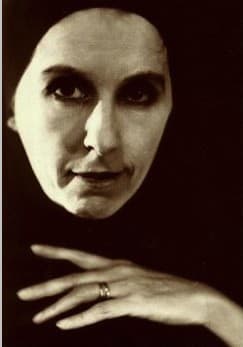
Isak Dinesen was a Danish author known for her evocative storytelling and rich prose. Her notable works include "Out of Africa," a memoir reflecting on her life in Kenya, and "Seven Gothic Tales," a collection of stories that blend elements of the supernatural and the gothic. Dinesen's writing often explores themes of love, loss, and the complexities of human experience.
Similar books
- The Bloody Chamber and Other Stories
Angela Carter
4.0 (39k) average on GoodreadsFantasyWhile both Dinesen and Carter reimagine traditional tales with a gothic sensibility, Carter's collection is more explicitly feminist and subversive in its deconstruction of fairy tales and patriarchal narratives. Carter's language is often more visceral and overtly sensual, contrasting with Dinesen's more formal and philosophical prose. Dinesen's 'gothic' is rooted in existential and aesthetic concerns, whereas Carter's is more focused on power dynamics and the female experience within traditional archetypes.
- Ficciones
Jorge Luis Borges
4.4 (49k) average on GoodreadsFantasyBoth Dinesen and Borges are masters of intricate, intellectually stimulating short fiction that often blurs the lines between reality and fiction. They share a penchant for erudite language and philosophical inquiry. However, Borges's work is typically more concise, fragmented, and overtly meta-fictional, often playing with labyrinthine structures and library motifs. Dinesen's narratives, while complex, tend to be more sprawling and character-driven, with a stronger emphasis on atmospheric detail and psychological drama than Borges's more abstract, conceptual tales.
- Harry Potter and the Sorcerer's Stone
J.K. Rowling
4.5 (7M) average on GoodreadsFantasyRescued from a miserable life under the stairs, an orphaned boy discovers he's a wizard destined for a magical school, where he uncovers a dangerous secret tied to the dark wizard who murdered his parents.
- The Hunger Games
Suzanne Collins
4.3 (6.4M) average on GoodreadsFantasyIn a future where children fight to the death on live television, Katniss Everdeen volunteers for the arena, turning a death sentence into a fight for survival and a spark of rebellion.
- 1984
George Orwell
4.2 (3.1M) average on GoodreadsPoliticsIn a future where surveillance and thought control are absolute, a man's search for truth clashes with the Party, showing that hope can be a form of rebellion.
- Divergent
Veronica Roth
4.2 (2.9M) average on GoodreadsFantasyIn a society divided by virtues, a sixteen-year-old's difference from the norm starts a rebellion that threatens her world.






Enjoyed the summary?
A summary gives you the shape of the book. The book itself has the detail, the examples and the voice.
Find Seven Gothic Tales on AmazonAs an Amazon Associate, BookBrief earns from qualifying purchases. How we're funded