
Core Idea
- Difficulty
- Easy
- Read it if
- You want to understand the profound emotional impact of residential schools through a child's perspective, appreciate the beauty of Indigenous culture, or explore themes of memory, resilience, and the power of nature.
- Skip it if
- You are looking for an academic treatise on residential schools or prefer books with complex plots over introspective, character-driven narratives.
Key Takeaways from Shi-shi-etko
The Power of Memory Gathering
Consciously collecting sensory details as a shield against future hardship.
Shi-shi-etko's way of coping centers on deliberately gathering memories. Facing the coming trauma of residential school, she does not just passively experience her surroundings; she actively collects and internalizes specific sensory details—the smell of cedar, the feel of a smooth rock, the sound of her grandfather's paddle song. This is not just nostalgia; it's a proactive plan to build an internal safe place, a mental archive of comfort and identity that she can use when her external world becomes hostile. This practice shows the human ability to create inner strength when outside events are out of control, highlighting memory as a tool for emotional survival and cultural preservation.
“Shi-shi-etko spent her last days at home treasuring the beauty of her world... She carefully gathered her memories for safekeeping.”
In the book: Shi-shi-etko's repeated actions of looking, touching, listening, and asking her family to share specific teachings, explicitly for the purpose of 'remembering,' illustrate this conscious effort.
Try this: When facing significant life transitions or potential hardship, intentionally engage in a 'memory gathering' practice. Dedicate time to deeply observe and record sensory details of your current comforting environment or loved ones. Use journaling, mental imagery, or even creating small sensory tokens to solidify these memories, creating a personal 'go-bag' of emotional resilience.
Related ideas: memory-as-resilience, cultural-preservation, sensory-memory
Intergenerational Wisdom Transfer
Family elders impart essential cultural knowledge and love through specific teachings.
The book shows the important role of family elders in passing on cultural identity and life lessons. Each family member—mother, father, grandmother—offers comfort and specific, practical teachings: how to find berries, the meaning of the river, the importance of listening to the wind. These are not abstract ideas but practical wisdom mixed with spiritual and cultural meaning. This passing of knowledge between generations is shown as a desperate, loving effort to arm Shi-shi-etko with her heritage before she is forced into an environment designed to take it away. It highlights the deep responsibility and love in Indigenous family structures, especially when facing outside threats to their way of life.
“Her mother, father and grandmother, each in turn, share valuable teachings that they want her to remember.”
In the book: Her mother tells her to remember the berries, her father tells her to listen to the river's song, and her grandmother teaches her about the wind's whisper.
Try this: Actively seek out and record wisdom from elders or experienced mentors in your life. Ask specific questions about their knowledge, life lessons, and cultural practices. Document these teachings, not just for personal growth but as a way to honor and preserve their legacy, especially for future generations.
Related ideas: indigenous-pedagogy, familial-transmission, cultural-identity
Nature as a Source of Solace and Identity
The natural world provides deep comfort and reinforces a child's sense of self and belonging.
For Shi-shi-etko, nature is not just a background; it is an active part of her life, a source of comfort, wonder, and a reflection of her own identity. The detailed descriptions of sunlight, grass, rocks, and tadpoles show a deep, mutual relationship with the land. This connection is more than just appreciation; it's a spiritual and cultural tie, rooting her in who she is and where she comes from. This bond with the natural world becomes even more important as she faces an environment where such connections will be cut, highlighting nature's role as a basic part of the Indigenous worldview and a source of emotional strength.
“She spent her last days at home treasuring the beauty of her world -- the dancing sunlight, the tall grass, each shiny rock, the tadpoles in the creek.”
In the book: The vivid descriptions of Shi-shi-etko observing and interacting with specific natural elements: 'the dancing sunlight,' 'the tall grass,' 'each shiny rock,' 'the tadpoles in the creek.'
Try this: Regularly engage with nature mindfully. Dedicate time to observe specific natural elements around you—a tree, a patch of grass, a cloud formation. Pay attention to sensory details and reflect on how these connections contribute to your sense of peace, grounding, or identity, actively cultivating a deeper bond with your environment.
Related ideas: eco-spiritualism, indigenous-land-connection, nature-therapy
The Weight of Impending Loss
The bittersweet experience of cherishing present beauty in the shadow of future trauma.
The book shows the sadness and injustice of residential schools by framing Shi-shi-etko's final days at home as a countdown to an inevitable, devastating loss. Every cherished memory gathered is filled with the knowledge that it will soon be taken away or made unreachable. This coming loss casts a sad shadow over the beautiful moments, creating a strong emotional tension. It makes the reader confront the cruelty of a system that tried to erase culture and break family bonds, highlighting the deep emotional cost on children and families who knew what was coming but could not stop it. This narrative choice makes the historical trauma personal and immediate.
“She is on the verge of great loss -- a loss that native people have endured for generations because of the residential schools system.”
In the book: The narrative structure, where the limited 'four days' are explicitly stated, creating a sense of urgency and countdown, and the concluding sentence directly addressing the 'great loss' and the residential school system.
Try this: When facing an unavoidable difficult change, allow yourself to fully feel the emotions of both gratitude for what you have and grief for what you might lose. This dual awareness can foster a deeper appreciation for the present while acknowledging the reality of the future, helping to process the change more holistically.
Related ideas: anticipatory-grief, intergenerational-trauma, cultural-genocide
Resilience Through Internalization
Creating an inner world of cherished memories as a defense mechanism against external hostility.
Shi-shi-etko's main way of showing strength is not outward protest but an inward act of self-preservation. By carefully internalizing and protecting her memories, she creates an inner defense against the cultural attack she is about to endure. This strategy acknowledges the harsh reality that outward resistance might be impossible for a child, shifting the focus to the power of the individual mind and spirit to keep identity. It shows the human spirit's ability to find purpose even in the most oppressive situations, suggesting that true identity can be kept internally, even when outward expressions are suppressed. This subtle yet profound act of defiance makes her journey moving.
“And so Shi-shi-etko carefully gathers her memories for safekeeping.”
In the book: The repeated motif of Shi-shi-etko 'gathering' and 'safekeeping' her memories, implying a deliberate act of internal storage for future recall.
Try this: In challenging or isolating environments, consciously cultivate an internal 'safe space.' This could involve daily visualization of comforting memories, mentally reviewing cherished teachings, or carrying a small, symbolic object that reminds you of your roots and values. This internal sanctuary can provide strength and continuity of self.
Related ideas: psychological-resilience, inner-sanctuary, identity-preservation
The Sensory Details of Belonging
Small, specific sensory experiences define and anchor one's connection to home and heritage.
The book shows that belonging is not just an abstract idea but is rooted in real, sensory experiences. It's not just 'home' but the 'smell of cedar,' not just 'family' but 'grandfather's paddle song.' These specific details are what Shi-shi-etko carefully collects, showing their importance in forming and keeping identity. When facing cultural erasure, these specific sensory anchors become important reminders, able to instantly transport one back to their roots. This highlights how our deepest connections to place and people are often stored in the smallest, often overlooked, sensory information, making them powerful tools for memory and resilience.
“The feel of a smooth, shiny rock in her pocket, the taste of wild berries, the sound of her grandfather's paddle song.”
In the book: The precise descriptions of 'each shiny rock,' 'the tadpoles in the creek,' 'the smell of cedar smoke,' 'the sound of her grandfather's paddle song.'
Try this: When reflecting on places or people you love, focus beyond general feelings to specific sensory details. What are the unique smells, sounds, textures, or sights that define that connection? Consciously note these details to deepen your appreciation and strengthen your memory of them.
Related ideas: sensory-anchors, place-attachment, autobiographical-memory
Art as a Vehicle for Empathy and History
Picture books can convey profound historical trauma with sensitivity and impact.
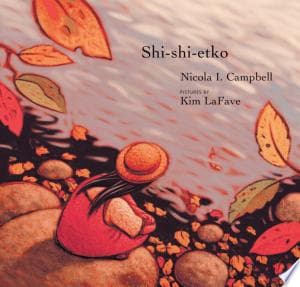
Nicola I. Campbell's 'Shi-shi-etko' shows how powerful children's literature, especially picture books, can be in addressing complex and painful historical truths like the residential school system. The gentle, poetic language and 'richly hued illustrations' make it easy for young readers (and adults) to understand the human cost of cultural genocide. By focusing on a child's personal experience and her proactive ways of coping, the book builds empathy without overwhelming the reader with graphic details. This approach demonstrates how art can be an educational tool, bridging generational gaps and building understanding of difficult histories in a kind and impactful way.
“Richly hued illustrations complement this gently moving and poetic account of a child who finds solace all around her, even though she is on the verge of great loss.”
In the book: The book's status as a multi-award winner and finalist, recognized for its sensitive portrayal of a difficult subject for a young audience.
Try this: Seek out and engage with artistic works—books, films, visual art—that explore challenging historical or social issues. Recognize how the medium itself (e.g., a picture book's illustrations, a song's melody) contributes to the emotional impact and understanding, using art as a pathway to empathy and learning.
Related ideas: childrens-literature, historical-trauma-education, empathy-through-art
The Enduring Spirit of Indigenous Peoples
Despite systemic attempts at erasure, cultural identity and love persist through individual and familial acts.
While 'Shi-shi-etko' is a story of coming loss, it is also a strong affirmation of the lasting spirit and resilience of Indigenous peoples. The act of Shi-shi-etko gathering memories, and her family's deliberate teachings, are acts of resistance against a system designed to strip them of their identity. The book, in its gentle sorrow, carries a defiant message: that culture, love, and connection to the land cannot be completely put out. It quietly champions the strength found in family bonds and the deep roots of Indigenous heritage, suggesting that even when facing great hardship, the core of who a person is, and where they come from, can be kept within the heart and mind, passed down through generations.
“A loss that native people have endured for generations because of the residential schools system.”
In the book: The entire narrative arc, where Shi-shi-etko's family actively equips her with memories and teachings, and her own agency in 'safekeeping' them, despite the looming threat.
Try this: Actively support and learn from Indigenous communities and artists. Recognize and celebrate acts of cultural preservation and resilience in your own life and community. Understand that identity is a dynamic, enduring force that can withstand external pressures when nurtured internally and communally.
Related ideas: indigenous-resilience, cultural-survival, intergenerational-strength
Shi-shi-etko Quotes
“Four days she had, until she had to go to the residential school.”
“Her grandmother, her mother, and her father drew a map in her mind.”
“Her father showed her how to find the sweet water spring, hidden under a tangle of roots.”
“Her mother showed her how to gather the wild roses and dry them for tea.”
“Her grandmother showed her where to pick the ripe berries and how to make them into jam.”
“She tucked each memory deep inside her heart, a tiny seed.”
“On the last day, her family walked with her to the big yellow bus.”
“Her grandmother held her close, whispering, 'Remember us.'”
“Shi-shi-etko looked out the window, past the faces, past the trees, past the mountains.”
“She closed her eyes and saw the sweet water spring.”
“She opened her eyes and knew she would never forget.”
“Each day she was at the school, she remembered.”
“She remembered the taste of the berries, the scent of the roses, the feel of the cool water.”
“And when she finally came home, she would find them again.”
Quiz
10 questions on the main ideas. Each answer comes with a short explanation.
Question 1
How many days does Shi-shi-etko have left before she must leave for residential school?
- Seven days
- Three days
- Four days
- Two days
Show answer
C. Four days The book explicitly states, 'In just four days young Shi-shi-etko will have to leave her family...' making four days the correct answer.
Question 2
What is the primary reason Shi-shi-etko is leaving her home?
- To visit her extended family in another village.
- To attend a residential school.
- To go on a long journey with her grandfather.
- To learn a new skill in a nearby town.
Show answer
B. To attend a residential school. The central premise of the book is Shi-shi-etko's impending departure for residential school, a historical system that caused great loss for Indigenous peoples.
Question 3
What does Shi-shi-etko's mother teach her to remember?
- The names of all the constellations.
- The feeling of the sun dancing on the water.
- How to make a traditional basket.
- A specific hunting technique.
Show answer
B. The feeling of the sun dancing on the water. The book highlights that her mother specifically shares the importance of remembering the beauty of her world, including 'the dancing sunlight'.
Question 4
What specific sound does Shi-shi-etko's grandfather share with her?
- The sound of the wind through the tall pines.
- The call of a loon at dusk.
- His paddle song.
- The babbling of the creek.
Show answer
C. His paddle song. The text mentions her grandfather sharing 'his paddle song' as one of the valuable teachings for her to remember.
Question 5
How does Shi-shi-etko 'gather her memories for safekeeping'?
- By drawing pictures in a notebook.
- By collecting physical objects like shiny rocks and leaves.
- By reciting stories aloud to her family.
- By burying a time capsule in the forest.
Show answer
B. By collecting physical objects like shiny rocks and leaves. Shi-shi-etko literally gathers tangible reminders of her home, such as 'each shiny rock' and observing the natural world, to hold onto these memories.
Question 6
What is the overarching theme the author conveys through Shi-shi-etko's actions of treasuring her world?
- The excitement of embarking on a new adventure.
- The importance of material possessions.
- The resilience of spirit and the power of memory in the face of loss.
- The necessity of forgetting the past to move forward.
Show answer
C. The resilience of spirit and the power of memory in the face of loss. Despite the impending loss, Shi-shi-etko actively collects memories and teachings, demonstrating a deep connection to her heritage and a way to carry it with her, illustrating resilience and the importance of memory.
Question 7
The book mentions 'a loss that native people have endured for generations.' What specific system is this referring to?
- The forced relocation to reservations.
- The residential schools system.
- The loss of traditional hunting grounds.
- The impact of modern technology on culture.
Show answer
B. The residential schools system. The book explicitly states this loss is 'because of the residential schools system,' directly linking Shi-shi-etko's experience to this historical trauma.
Question 8
What role do the 'richly hued illustrations' play in conveying the book's message?
- They distract from the somber subject matter.
- They highlight the stark contrast between her home and the unknown future.
- They enhance the beauty of Shi-shi-etko's world, emphasizing what she is about to lose and the richness of her culture.
- They primarily serve to depict the historical accuracy of the residential schools.
Show answer
C. They enhance the beauty of Shi-shi-etko's world, emphasizing what she is about to lose and the richness of her culture. The illustrations 'complement this gently moving and poetic account,' underscoring the beauty of her world and the profound loss associated with the residential school system.
Question 9
How does Shi-shi-etko's interaction with her family members contribute to the book's central message about memory and identity?
- Her family tries to convince her that residential school will be a positive experience.
- Each family member imparts specific cultural teachings and memories, reinforcing her identity and providing tools for resilience.
- Her family encourages her to forget her past to adapt more easily to her new environment.
- Her family focuses solely on practical survival skills for her time away.
Show answer
B. Each family member imparts specific cultural teachings and memories, reinforcing her identity and providing tools for resilience. Her mother, father, and grandmother 'each in turn, share valuable teachings that they want her to remember,' directly contributing to her 'gathering her memories for safekeeping' and strengthening her sense of self.
Question 10
The book is described as 'gently moving and poetic.' How does this tone influence the reader's understanding of the difficult subject matter?
- It diminishes the severity of the residential school experience.
- It allows young readers to approach a painful historical topic through a lens of love, family, and cultural strength, rather than explicit trauma.
- It suggests that Shi-shi-etko's personal experience was not as harsh as others'.
- It focuses primarily on the natural world, making the human struggle secondary.
Show answer
B. It allows young readers to approach a painful historical topic through a lens of love, family, and cultural strength, rather than explicit trauma. The gentle and poetic tone makes the difficult subject accessible, particularly for children, by emphasizing the beauty, love, and cultural heritage Shi-shi-etko carries with her, rather than detailing the trauma of the schools themselves.
Shi-shi-etko FAQ
What is the main story of 'Shi-shi-etko'?
'Shi-shi-etko' tells the story of a young Indigenous girl named Shi-shi-etko in the four days leading up to her departure for residential school. She spends this time with her family, absorbing and treasuring the natural beauty of her home and the valuable lessons her family shares.
Who is the author of 'Shi-shi-etko'?
The author of 'Shi-shi-etko' is Nicola I. Campbell, an award-winning Nłeʔkepmx and Métis writer known for her children's books that often explore Indigenous themes and experiences.
Does 'Shi-shi-etko' accurately portray the residential school experience?
While 'Shi-shi-etko' focuses on the pre-residential school experience of gathering memories and family teachings, it powerfully conveys the impending loss and the profound impact of the residential school system on Indigenous children and families, reflecting a historical truth.
What is the significance of Shi-shi-etko gathering her memories?
Shi-shi-etko gathers her memories as a way to hold onto her identity, culture, and family teachings before entering the residential school system, which aimed to strip Indigenous children of these very things. It's an act of resilience and preservation.
How does 'Shi-shi-etko' differ from other books about residential schools?
'Shi-shi-etko' uniquely focuses on the time *before* a child enters residential school, highlighting the beauty of Indigenous culture, family bonds, and connection to nature that was forcibly taken away, rather than directly depicting the harsh realities within the schools.
What age group is 'Shi-shi-etko' suitable for?
'Shi-shi-etko' is primarily a picture book suitable for young children, typically ages 4-8. Its gentle narrative and beautiful illustrations make it accessible for introducing the topic of residential schools in an age-appropriate manner.
What awards has 'Shi-shi-etko' won?
'Shi-shi-etko' is the winner of the Anskohk Aboriginal Children's Book of the Year Award and was a finalist for the TD Canadian Children's Literature Award, the Marilyn Baillie Picture Book Award, and the Ruth Schwartz Award.
What is the role of family in 'Shi-shi-etko'?
Family plays a central and vital role in 'Shi-shi-etko,' as her mother, father, and grandmother each impart valuable teachings and share moments of love and connection. They help Shi-shi-etko gather her memories and prepare her for the profound changes ahead.
Does 'Shi-shi-etko' offer hope despite the difficult subject matter?
Yes, 'Shi-shi-etko' offers a subtle sense of hope through the enduring power of memory, family love, and cultural identity. It emphasizes the strength of spirit and the importance of holding onto one's heritage even in the face of immense adversity.
Similar books
- The Diary of a Young Girl
Anne Frank
4.2 (2.7M) average on GoodreadsBiographyDuring the Nazi occupation, a teenage girl's diary, written from a secret annex, shares observations on humanity, hope, and the wait for freedom.
- Twisted 1. Twisted love
Ana Huang
3.7 (1.7M) average on GoodreadsA quiet billionaire with a difficult past finds his guarded heart opening to the woman he must protect, but their growing passion uncovers dangerous secrets and a shared, traumatic history.
- Eat, Pray, Love
Elizabeth Gilbert
3.6 (1.5M) average on GoodreadsLifestyleA heartbroken writer leaves her conventional life for a year-long global search for pleasure in Italy, spiritual devotion in India, and unexpected love and balance in Bali.
- Night
Elie Wiesel
4.3 (970k) average on GoodreadsBiographyIn the darkness of Auschwitz and Buchenwald, a teenage Elie Wiesel faces the extermination of his family, the loss of his faith, and the lasting scars of humanity's deepest cruelty.
- Steve Jobs
Walter Isaacson
4.1 (957k) average on GoodreadsBusinessSteve Jobs was a visionary who fused creativity and technology to revolutionize six industries and shape our digital world.
- The Glass Castle
Jeannette Walls
4.3 (903k) average on GoodreadsBiographyJeannette Walls's memoir describes her unusual childhood with brilliant, free-spirited parents whose poverty-stricken life shaped her independence and love despite family problems.






Enjoyed the summary?
A summary gives you the shape of the book. The book itself has the detail, the examples and the voice.
Find Shi-shi-etko on AmazonAs an Amazon Associate, BookBrief earns from qualifying purchases. How we're funded