

Synopsis
Covers the whole plot, including the ending.
- Difficulty
- Medium
- Pacing
- Moderate
- Mood
- Epic, adventurous, spiritual, mysterious, action-packed
Shiva Trilogy Plot Summary
Covers the whole plot, including the ending.
The Arrival of the Outsider
Shiva, leader of the Guna tribe, brings his people from Tibet to Meluha, an advanced empire known for its Suryavanshi way of life. They seek shelter from the war with the Pakratis. After arriving, Shiva drinks Somras, a powerful elixir, and his throat turns blue. This fulfills an ancient prophecy of the 'Neelkanth,' the destroyer of evil. The Meluhans see him as a potential savior; their land suffers from drought due to the dying Saraswati river and attacks from the Chandravanshis and the mysterious Nagas. Shiva doubts his destiny at first but becomes involved in Meluhan politics.
A Royal Romance and Political Intrigue
Shiva soon gets involved with the royal family, especially Princess Sati, Emperor Daksha's daughter. Sati is labeled 'impure' because she was born after her mother's miscarriage, a stigma that has followed her. Despite her initial coldness, Shiva's genuine nature and kindness win her over, and they fall deeply in love. Their relationship is complicated by social rules and ongoing political problems. Shiva learns about the Meluhan's advanced weapons, the 'Devyastras,' and their use of Somras for long life. He also sees the divisions and suspicions within the empire, especially regarding the Nagas.
The First Battle and the Naga Enigma
Many now accept Shiva as the Neelkanth, and he takes charge of the Meluhan army to defend against Chandravanshi attacks. He proves to be a brilliant, though unconventional, military leader. During a major battle, he meets the Nagas, a group of disfigured humans with great fighting skills, who seem to be allied with the Chandravanshis. Shiva is struck by their ferocity and the mystery surrounding them. He begins to question the Meluhan idea that Nagas are evil. The battle is a partial win for Meluha, but it makes Shiva more determined to understand the conflict and the Nagas' role.
The Betrayal and the Hunt for Vengeance
After a time of peace and his marriage to Sati, a tragedy occurs. Brahaspati, a brilliant Meluhan scientist and Shiva's friend, is murdered by a mysterious Naga warrior. At the same time, Sati is kidnapped, seemingly by the same Naga. Overwhelmed by grief and a desire for revenge, Shiva promises to find the killer and rescue his wife. This event shatters his trust in the established order and forces him to consider that the truth is more complex than he believed. His quest for vengeance begins, leading him into conflict with the Naga people.
Journey to the Land of the Nagas
Shiva, with his loyal companions, goes on a dangerous journey to the land of the Nagas, a place feared and mysterious. He finds that the Nagas are not evil monsters but a misunderstood people, often disfigured by a genetic defect, who have been shunned. He learns about their culture, their knowledge, and their connection to the Somras. During his quest, he uncovers that the Naga warrior who attacked Brahaspati and Sati was not acting for all Nagas, but was a rogue element, adding more layers to the conflict. He also reunites with Sati, who has her own experiences and insights into Naga society.
The Secret of Maika and the Vasudevs' Deception
Shiva and Sati look further into the mysteries of the Nagas and the Somras. They visit Maika, the city of births, and uncover a terrible secret: Somras, while granting long life, also causes severe birth defects in some children, leading to the creation of the Nagas. This reveals the hypocrisy of the Meluhans, who have hidden this truth for centuries. Shiva also learns that the revered Vasudevs, his philosophical guides, are not as good as they seem and have been manipulating events from behind the scenes, further blurring the lines between good and bad. He realizes that 'evil' is not a race, but a corrupted idea.
Alliances and Betrayals
As Shiva's understanding of the conflict changes, he starts to form alliances with certain Naga groups who also seek truth and justice. He realizes that many Nagas are victims, not villains. However, he also faces betrayals from those he once trusted, including some within the Meluhan hierarchy who want to keep things as they are and protect their secrets. These betrayals force Shiva to question everyone and rely more on his own judgment. The lines between allies and enemies become less clear, making his quest more dangerous.
The Revelation of the Vayuputras
Shiva's journey leads him to the hidden cities of Ujjain and Pariha, where he finally meets the Vayuputras, an ancient and secret tribe believed to be the true guardians of knowledge and the universe's balance. He learns that the Vayuputras have watched humanity for centuries, stepping in only when necessary to prevent disaster. They reveal the true history of the Somras, its purpose, and the dangers of its misuse. Shiva seeks their help in his coming war against the real source of corruption, understanding that he needs their ancient wisdom and strength.
The Holy War Against Evil
With new knowledge and a clear understanding of his enemy, Shiva prepares for a 'holy war' against the mastermind behind the corruption that has afflicted India. He unites his diverse allies – Meluhans, Chandravanshis, and Nagas – under one banner, overcoming their old enmities. The war is not just a fight but a clash of ideas: the pursuit of perfection at any cost versus accepting imperfection and the importance of dharma. Shiva understands that victory will require not just military power, but a deep change in mindset.
Personal Sacrifices and Divine Transformation
The war is brutal and costly. Many lives are lost, and Shiva himself suffers great personal loss, including Sati's death. These sacrifices strengthen his spirit and resolve. In the final fight with the true 'evil' – a powerful, misguided individual driven by a twisted sense of order – Shiva wins, but at a devastating cost. Through his journey of self-discovery, his commitment to dharma, and his willingness to sacrifice everything, Shiva becomes Mahadev, the God of Gods, remembered by his people.
Principal Figures
Shiva
Protagonist
The Tibetan immigrant destined to become Mahadev, the Destroyer of Evil.
Shiva is initially a rough-hewn, pragmatic tribal chief from Tibet, more interested in protecting his people than in prophecies. He is fiercely loyal, courageous, and possesses a strong moral compass. He is skeptical of rigid rules and traditions, preferring common sense and compassion. His blue throat, a result of consuming Somras, marks him as the Neelkanth. Throughout the trilogy, he grapples with his destiny, his love for Sati, and the complex nature of good and evil. He is a natural leader and a brilliant, albeit unconventional, warrior.
Relationships: Sati (wife, lover, intellectual companion); Daksha (father-in-law, initial political ally, later conflicted); Brahaspati (friend, scientific advisor); Veer Bhadra (brother-in-law, loyal general); Parvateshwar (loyal general, mentor figure)
Sati
Supporting
The 'impure' princess who becomes Shiva's beloved and a strong ally.
Sati is the beautiful and intelligent daughter of Emperor Daksha, burdened by the societal stigma of being a 'Vishkanya' (born after a miscarriage). She is initially withdrawn and cynical, hardened by her past. However, Shiva's unconditional love and acceptance break through her defenses, revealing her fierce loyalty, courage, and keen intellect. She is a skilled warrior and an independent thinker who often challenges Shiva's perspectives, offering crucial insights into the political landscape and the mysteries of the Nagas. Her journey is one of self-acceptance and finding her voice.
Relationships: Shiva (husband, lover, intellectual companion); Daksha (father, complex and strained relationship); Veer Bhadra (brother, protective and loving)
Daksha
Supporting
The Emperor of Meluha, a pragmatic but often misguided ruler.
Emperor Daksha is the wise but rigid ruler of Meluha, deeply committed to preserving his empire and its traditions. He is a strong leader but can be blinded by his adherence to the Suryavanshi way, leading him to make morally questionable decisions. He initially welcomes Shiva as the Neelkanth but struggles to fully accept Shiva's unconventional methods and questioning of Meluhan dogmas. His love for his daughter, Sati, is evident, but his actions are often dictated by political necessity and the perceived purity of his lineage. He represents the established order and its inherent flaws.
Relationships: Shiva (son-in-law, political ally, ideological opponent); Sati (daughter, complex and loving)
Brahaspati
Supporting
The brilliant Meluhan scientist and Shiva's trusted friend.
Brahaspati is Meluha's chief scientist, a brilliant and inquisitive mind who is open to new ideas, unlike many of his rigid countrymen. He becomes a close friend and confidant to Shiva, providing scientific explanations and insights into the Somras and other Meluhan technologies. He is pragmatic and values truth above dogma, often challenging the established beliefs of his society. His murder is a pivotal moment, fueling Shiva's quest for vengeance and revealing the darker undercurrents of the Meluhan empire. He represents the pursuit of knowledge and truth.
Relationships: Shiva (friend, intellectual partner); Daksha (employer, scientific advisor)
Veer Bhadra
Supporting
Sati's protective brother and Shiva's loyal general.
Veer Bhadra is Sati's fiercely protective younger brother and a skilled Meluhan general. Initially wary of Shiva, he quickly develops a deep respect and loyalty for his brother-in-law, becoming one of Shiva's most trusted companions and military commanders. He is brave, honorable, and unwavering in his support, often acting as Shiva's voice and enforcer within the Meluhan army. He embodies the ideal of a loyal warrior and a devoted family member, providing both emotional and military support to Shiva throughout his journey.
Relationships: Shiva (brother-in-law, loyal general); Sati (sister, protective and loving)
Parvateshwar
Supporting
The stoic Meluhan general who becomes Shiva's mentor and friend.
Parvateshwar is a seasoned and highly respected Meluhan general, known for his stoicism, discipline, and unwavering adherence to the Suryavanshi code. Initially skeptical of Shiva, he eventually recognizes Shiva's true character and potential. He becomes a mentor figure to Shiva, guiding him through Meluhan military strategies and political nuances. Despite his rigid exterior, he possesses a deep sense of honor and loyalty. His eventual acceptance and support of Shiva are crucial in uniting the Meluhan forces under the Neelkanth's banner.
Relationships: Shiva (general, mentor, friend); Daksha (superior officer)
Anandamayee
Supporting
The wise Meluhan priestess and advisor.
Anandamayee is a revered Meluhan priestess and a key advisor to Emperor Daksha. She is deeply spiritual and possesses a calm, insightful demeanor. She is one of the first to truly believe in Shiva as the Neelkanth and often acts as an interpreter of prophecies and spiritual matters. Her wisdom and guidance are invaluable to Shiva, helping him understand the deeper meanings behind the events unfolding around him. She represents the spiritual wisdom of Meluha and a connection to ancient knowledge.
Krittika
Supporting
Sati's loyal handmaiden and confidante.
Krittika is Princess Sati's loyal and devoted handmaiden. She is a constant presence by Sati's side, offering comfort, support, and friendship. Despite her humble position, she is observant and perceptive, often providing a grounded perspective. Her unwavering loyalty to Sati and later to Shiva highlights the human element amidst the grand conflicts. She represents the enduring power of personal bonds and devotion in challenging times. Her presence underscores Sati's humanity and vulnerability.
Relationships: Sati (mistress, friend); Shiva (master, object of loyalty)
Nandi
Supporting
Shiva's trusted aide and a Guna tribesman.
Nandi is one of Shiva's most loyal and devoted Guna tribesmen, who accompanies him from Tibet. He is a strong and silent warrior, always by Shiva's side, ready to protect him. His unwavering loyalty and practical skills make him an invaluable asset to Shiva's retinue. Nandi represents the simple, unadulterated devotion and strength of the common people who believe in Shiva. He is a constant reminder of Shiva's origins and the genuine trust he inspires.
Relationships: Shiva (leader, object of loyalty)
Kali
Antagonist/Supporting
The mysterious Naga princess and Sati's sister.
Kali is a powerful and enigmatic Naga princess, revealed to be Sati's elder sister, who was believed to have died at birth. Disfigured by the Somras, she represents the suffering and ostracization of the Naga people. She is a fierce warrior and a complex character, driven by a desire for justice and revenge for her people. Her actions are often morally ambiguous, blurring the lines between antagonist and victim. She challenges Shiva's understanding of good and evil and forces him to confront the dark consequences of Meluhan policies. She embodies the tragic fate of the Nagas.
Relationships: Shiva (initial adversary, later ally); Sati (sister)
Themes & Insights
The Nature of Good and Evil
The trilogy consistently questions simple ideas of good versus evil. At first, the Meluhans seem 'good' and the Nagas 'evil.' But as Shiva learns more, he finds that 'evil' does not belong to a race but comes from bad ideas, corruption, and seeking perfection at any cost. The Somras, meant to be helpful, causes suffering and creates the 'evil' it was supposed to fix. The story argues that true evil is in rigid beliefs, hypocrisy, and refusing to see one's own flaws, not in outside enemies.
“Evil is not a person. It is a concept. It is a thought. It is a disease that festers in the heart of man.”
Dharma and Duty
Dharma, or right conduct and duty, is a main theme. Shiva, though hesitant at first, always acts according to his dharma – first as a tribal chief protecting his people, then as a husband protecting his wife, and eventually as the Neelkanth protecting all of India. Conflict often comes from different views of dharma, especially between the Meluhans' strict adherence to old laws and Shiva's kinder, more practical approach. The trilogy suggests that true dharma is not about blindly following rules, but about making morally good choices for the greater good, even if it means challenging tradition.
“Your dharma is not to follow rules. Your dharma is to do what is right. Even if it means breaking every rule in the book.”
Love and Sacrifice
The lasting power of love, both romantic and family-based, drives Shiva's journey. His love for Sati changes him, giving him a personal reason to fight and making him both vulnerable and stronger. The sacrifices made by characters, especially Sati and Shiva, show the great costs of upholding dharma and fighting for justice. These sacrifices are not just sad events but necessary acts that elevate the characters and solidify their legacy. The trilogy suggests that true love often requires ultimate sacrifice for a larger cause.
“Love is not about possession. Love is about appreciation.”
The Perils of Perfection and Genetic Engineering
Meluhan society, built on seeking perfection through the Somras, serves as a warning. While Somras grants long life and advanced abilities, it also causes severe birth defects, creating the Naga people, who are then shunned. This highlights the dangers of interfering with nature and aiming for an unnatural ideal. The theme explores the unintended results of scientific progress without ethics and the moral compromises made for advancement. It questions whether 'perfection' is truly desirable if it costs humanity and compassion.
“Perfection is a dangerous word. It hides the flaws, the compromises, the suffering that created it.”
Social Exclusion and Acceptance
The situation of the Nagas, shunned and persecuted because of their deformities caused by the Somras, comments on social exclusion. Shiva's journey forces readers to face prejudice and the unfairness of judging people based on looks or birth. The trilogy promotes acceptance and empathy, showing how fear and ignorance lead to the marginalization of entire groups. Shiva's eventual alliance with the Nagas symbolizes breaking down social barriers and recognizing shared humanity, regardless of physical differences or societal labels.
“The greatest evil is not what they do, but how we treat those who are different.”
Plot Devices & Literary Techniques
The Neelkanth Prophecy
The ancient prophecy foretelling the arrival of a blue-throated savior.
This prophecy is the central driving force of the first book and a significant element throughout the trilogy. It establishes Shiva's destiny and provides the Meluhans with hope. The prophecy's fulfillment through Shiva's blue throat after consuming the Somras immediately sets him apart and thrusts him into a leadership role. It creates both reverence and suspicion, as characters interpret its meaning differently. The prophecy serves to elevate Shiva from a common man to a figure of immense importance, guiding the narrative and shaping the expectations of various factions within the story.
The Somras
The powerful elixir of life and its hidden, dangerous side effects.
The Somras is a pivotal plot device, initially presented as a divine drink that grants longevity and health to the Suryavanshis. Its consumption by Shiva turns his throat blue, fulfilling the Neelkanth prophecy. However, its true nature is gradually revealed: it causes severe birth defects, creating the Naga people, and is also linked to the drying of the Saraswati river. This duality makes the Somras a symbol of both scientific advancement and its ethical perils, driving much of the conflict and the eventual revelation of the Meluhan's hypocrisy. It is the genesis of the 'evil' Shiva must fight.
The Naga Mystery
The enigmatic and ostracized race, initially portrayed as villains, later revealed as victims.
The Nagas are introduced as the primary antagonists, a fearsome race of deformed warriors allied with the Chandravanshis. This initial portrayal creates suspense and fear. However, as Shiva investigates, the Nagas evolve from monolithic villains into a complex society of victims, ostracized and suffering from the side effects of the Somras. This plot device is crucial for subverting reader expectations and challenging the 'good vs. evil' narrative, forcing Shiva (and the audience) to question preconceived notions and uncover the deeper truths behind their existence and motivations.
The Vasudevs
The secretive philosophical guides who manipulate events from the shadows.
The Vasudevs are presented as an ancient order of philosopher-guides, revered for their wisdom and believed to be neutral observers. However, they are later revealed to be active manipulators of events, guiding both sides of the conflict for their own long-term agenda, which they believe is for the ultimate good. This plot device introduces a layer of political and philosophical intrigue, revealing that even seemingly benevolent forces can have hidden motives and make morally ambiguous choices. Their existence forces Shiva to question the nature of authority and wisdom.
Quiz
10 questions on the plot and the characters. Each answer comes with a short explanation.
Question 1
What was the ancient name of the land in 1900 BC, as mentioned in 'The Immortals of Meluha'?
- Indus
- Meluha
- Saraswati
- Ram Rajya
Show answer
B. Meluha The inhabitants of that period called the land Meluha, not the modern Indians who mistakenly called it the Indus Valley Civilisation.
Question 2
What was the primary problem faced by the Suryavanshi rulers in Meluha?
- Drought
- Invasions from the west
- The Saraswati river drying up
- Internal rebellion
Show answer
C. The Saraswati river drying up The Suryavanshi rulers faced severe perils as its primary river, the revered Saraswati, was slowly drying to extinction.
Question 3
Who were the 'Nag'as described as in 'The Immortals of Meluha'?
- A rival empire
- An ostracised and sinister race of deformed humans
- A group of wise sages
- A mythical creature
Show answer
B. An ostracised and sinister race of deformed humans The Nagas were described as an ostracised and sinister race of deformed humans with astonishing martial skills.
Question 4
In 'The Secret of the Nagas', whose life is threatened by the Naga warrior?
- Shiva's
- Brahaspati's and Sati's
- Lord Ram's
- The Vasudevs'
Show answer
B. Brahaspati's and Sati's The sinister Naga warrior killed Shiva's friend Brahaspati and then stalked his wife Sati.
Question 5
What is 'Maika' referred to as in 'The Secret of the Nagas'?
- A secret weapon
- A hidden city of warriors
- The city of births
- A place of exile
Show answer
C. The city of births Maika is mentioned as the city of births within the empire of Meluha, holding a terrible secret.
Question 6
Who are the 'Vayuputras' in the context of the Shiva Trilogy?
- The ancient enemies of Shiva
- A group of powerful warriors who initially refuse to help Shiva
- The rulers of Meluha
- The serpent people
Show answer
B. A group of powerful warriors who initially refuse to help Shiva The Vayuputras are a group who have never offered help to Shiva previously but are sought out in his final battle against Evil.
Question 7
What is Shiva's ultimate goal in 'The Oath of the Vayuputras'?
- To become the king of Meluha
- To find a cure for the dying Saraswati river
- To destroy the Nagas
- To unveil the root of all evil and his true enemy
Show answer
D. To unveil the root of all evil and his true enemy In the final part, Shiva realizes the Nagas are not his enemies and determines to unveil the root of all evil and his true enemy.
Question 8
Which city does Shiva reach in 'The Oath of the Vayuputras' to come face to face with Evil?
- Meluha
- Pariha
- Panchvati
- Ujjain
Show answer
C. Panchvati Shiva reaches Panchvati, the capital of the Nagas, to come face to face with Evil.
Question 9
What is Shiva also known as by the time of 'The Oath of the Vayuputras'?
- Mahadev
- Neelkanth
- Vayuputra
- Suryavanshi
Show answer
B. Neelkanth Shiva is also known as Neelkanth by the time of the third book, 'The Oath of the Vayuputras'.
Question 10
The Shiva Trilogy explores the transformation of Shiva from a mortal tribal chief to what?
- A great king
- A wise philosopher
- The God of Gods (Mahadev)
- The leader of the Nagas
Show answer
C. The God of Gods (Mahadev) The trilogy is about Shiva, the simple man whose karma re-cast him as our Mahadev, the God of Gods.
Shiva Trilogy FAQ
What is the Shiva Trilogy about?
The Shiva Trilogy is a fantasy and historical fiction series that reimagines the life of Lord Shiva as a mortal man. It explores his journey from a Tibetan immigrant to a powerful figure, set against the backdrop of ancient India during the Indus Valley Civilization.
What is the historical setting of the Shiva Trilogy?
The books are set around 1900 BC, during what is now known as the Indus Valley Civilization. The inhabitants called their land Meluha, a near-perfect empire founded by Lord Ram.
Who is the main character in the Shiva Trilogy?
The main character is Shiva, a rough-hewn Tibetan immigrant who is prophesied to be a hero. The series chronicles his transformation from a simple man into the revered Mahadev.
What conflicts do the characters face in the books?
The inhabitants of Meluha face threats from terrorist attacks by the Chandravanshis and the drying up of their sacred river, the Saraswati. Shiva also battles a sinister race called the Nagas and a powerful entity known as 'Evil'.
What is the significance of the Nagas in the Shiva Trilogy?
The Nagas are initially portrayed as an ostracized and sinister race. However, as the trilogy progresses, their role evolves, and Shiva eventually allies with them against a greater evil.
What is the role of Lord Ram in the Shiva Trilogy?
Lord Ram is depicted as the founder of the once-perfect empire of Meluha, centuries before the events of the trilogy. He is revered as one of the greatest monarchs.
How does Shiva become Mahadev?
The trilogy focuses on Shiva's mortal journey, showing how his actions, karma, and battles lead him to become the God of Gods, Mahadev. It's a story of transformation from a human to a divine figure.
What are the main themes explored in the Shiva Trilogy?
The series explores themes of good versus evil, destiny versus free will, the nature of heroism, betrayal, love, and the journey of self-discovery and transformation.
Is the Shiva Trilogy based on actual historical events?
While set against the backdrop of the Indus Valley Civilization and drawing inspiration from Hindu mythology, the Shiva Trilogy is a fictional reimagining. It blends historical elements with fantasy and spiritual concepts.
What is the order of the books in the Shiva Trilogy?
The books should be read in the following order: 1. The Immortals of Meluha, 2. The Secret of the Nagas, and 3. The Oath of the Vayuputras.
About the author

Amish Tripathi is a celebrated Indian author, best known for his "Shiva Trilogy," which includes "The Immortals of Meluha" and "The Secret of the Nagas." His novels blend mythology, history, and fiction, offering a unique perspective on ancient Indian narratives. Tripathi's work has achieved significant commercial success and critical acclaim, making him a prominent voice in contemporary Indian literature.
Similar books
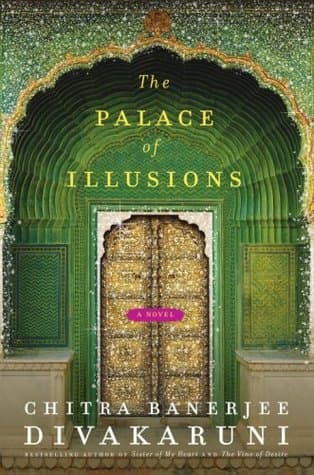
- The Palace of Illusions
Chitra Banerjee Divakaruni
4.2 (34k) average on GoodreadsFantasyWhile both re-interpret Indian epics, Divakaruni's The Palace of Illusions offers a deeply introspective and feminist perspective on the Mahabharata, narrated by Draupadi. Tripathi's trilogy, in contrast, focuses on a heroic male protagonist and a more action-oriented, quest-driven narrative. Divakaruni's prose is significantly more literary and poetic, delving deeper into psychological complexities, whereas Tripathi prioritizes plot momentum and broader mythological reimagining.
- Harry Potter and the Sorcerer's Stone
J.K. Rowling
4.5 (7M) average on GoodreadsFantasyRescued from a miserable life under the stairs, an orphaned boy discovers he's a wizard destined for a magical school, where he uncovers a dangerous secret tied to the dark wizard who murdered his parents.
- The Hunger Games
Suzanne Collins
4.3 (6.4M) average on GoodreadsFantasyIn a future where children fight to the death on live television, Katniss Everdeen volunteers for the arena, turning a death sentence into a fight for survival and a spark of rebellion.
- 1984
George Orwell
4.2 (3.1M) average on GoodreadsPoliticsIn a future where surveillance and thought control are absolute, a man's search for truth clashes with the Party, showing that hope can be a form of rebellion.
- Divergent
Veronica Roth
4.2 (2.9M) average on GoodreadsFantasyIn a society divided by virtues, a sixteen-year-old's difference from the norm starts a rebellion that threatens her world.
- The Hobbit, or There and Back Again
J.R.R. Tolkien
4.3 (2.9M) average on GoodreadsFantasyA comfort-loving hobbit named Bilbo Baggins is whisked away by a mischievous wizard and a band of dwarves on an unexpected journey to reclaim stolen treasure from a fearsome dragon, discovering courage and a magical ring along the way.





Enjoyed the summary?
A summary gives you the shape of the book. The book itself has the detail, the examples and the voice.
Find Shiva Trilogy on AmazonAs an Amazon Associate, BookBrief earns from qualifying purchases. How we're funded