
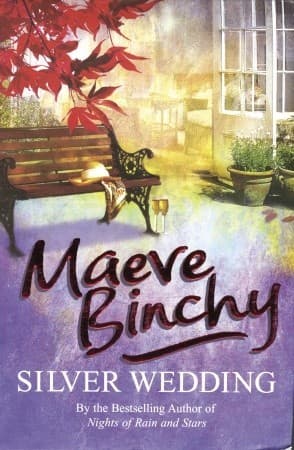
Synopsis
Covers the whole plot, including the ending.
- Difficulty
- Medium
- Pacing
- Moderate
- Mood
- Introspective, Melancholy, Revealing, Domestic
- Read it if
- You enjoy character-driven family sagas with multiple perspectives and a focus on hidden secrets and domestic drama.
- Skip it if
- You prefer fast-paced plots with clear heroes and villains, or dislike stories heavy on family dysfunction and internal conflict.
Silver Wedding Plot Summary
Covers the whole plot, including the ending.
The Silver Wedding Idea
The novel opens with Anna Doyle, the eldest daughter of Desmond and Deirdre, thinking about her parents' upcoming twenty-fifth wedding anniversary. She feels she must organize a celebration, despite the clear distance and unspoken tensions within the family. Her sister, Helen, is a nun in a London convent, seemingly apart from family life, while her brother, Brendan, lives a reclusive life on a farm in the West of Ireland, having cut ties with his parents. Anna, a practical and responsible woman, knows that while a party might be difficult, it is necessary to mark such a milestone for her parents, who often present a respectable image to the outside world, hiding their true feelings and hidden resentments.
Deirdre's Discontent
Deirdre Doyle, a beautiful but often passive woman, reflects on her marriage to Desmond. She feels a deep sense of unfulfillment, having given up her own aspirations for a life centered on her husband's career and social standing. She sees Desmond as charming but ultimately self-absorbed, always seeking admiration and controlling their life story. Deirdre holds a secret resentment, feeling that her husband has never truly seen or appreciated her beyond her role as his elegant wife. She anticipates the anniversary with dread and a faint hope that it might somehow change things, though she doubts it will.
Desmond's World
Desmond Doyle is a successful, charismatic barrister, well-liked in his professional circles. He enjoys the praise he receives and believes he has provided an excellent life for his family. He remains largely unaware of the emotional turmoil in his household, genuinely believing his marriage is a happy one, at least on the surface. He sees the silver wedding as another chance to display his achievements and Deirdre's elegance. He focuses on maintaining appearances and his public image, often dismissing any subtle signs of unhappiness from his wife or children as minor issues.
Helen's Sanctuary
Helen, the middle child, lives a quiet life as a nun in London. Her decision to enter the convent was not just a religious calling, but also an escape from the suffocating atmosphere of her family home and her parents' troubled relationship. She carries a secret burden from her youth, a past mistake that she believes makes her unworthy of a conventional life. The thought of returning for the anniversary party fills her with anxiety, forcing her to confront the memories and the people she tried to leave behind, while also questioning her own path and the true nature of her faith.
Brendan's Exile
Brendan, the Doyle's only son, lives a solitary, almost isolated life on a remote farm in the West of Ireland. He left home after a difficult childhood marked by his father's harsh criticism and high expectations, and his mother's inability to protect him. He feels like a failure in his parents' eyes and has chosen a life opposite to their aspirations. Brendan resents his past and his family, and the idea of attending the silver wedding party forces him to confront the anger and pain he has tried to bury, making him question if he can ever truly escape his past.
Anna's Burden
Anna, always the dutiful eldest daughter, takes on the large task of organizing the silver wedding party. She tries to contact Helen and Brendan, hoping to bring the fragmented family together, despite their resistance. She is aware of the deep-seated issues within her family, having often been the mediator and the one who tried to keep peace. As she plans the event, she deals with her own resentment towards her parents for the emotional burdens they've placed on her, and the sacrifices she's made for their perceived happiness and stability. The party becomes a symbol of her attempt to create some normalcy.
Hidden Betrayals and Secrets
As the anniversary nears, the novel explores the individual secrets and hidden betrayals that have shaped each character's life. Deirdre's long-held secret about a past love and a missed opportunity is hinted at, while Desmond's own indiscretions and his controlling nature become clearer. Helen's traumatic teenage experience, a source of her guilt and her flight to the convent, slowly comes to light. Brendan's deep anger stems from his father's emotional abuse and a sense of abandonment. These revelations create mounting tension, threatening to unravel the carefully constructed facade of the Doyle family.
The Guests Arrive
The day of the silver wedding party arrives, and guests gather at the Doyle's home. The guest list includes friends, colleagues, and extended family members, each bringing their own views and observations about the Doyles. The atmosphere is filled with polite conversation and social niceties, but beneath the surface, the family's internal struggles are clear. Helen and Brendan reluctantly arrive, their presence adding to the already tense dynamic. Anna watches everyone, trying to keep up appearances, while Desmond enjoys the attention and Deirdre tries to stay composed, feeling the weight of their collective secrets.
Confrontations and Revelations
As the party continues, the careful decorum begins to crack. Alcohol loosens tongues, and the pressure of the occasion brings long-suppressed emotions to the forefront. Subtle glances, sharp remarks, and accidental revelations start to expose the hidden truths. A significant confrontation occurs between Brendan and Desmond, where Brendan finally voices his long-held grievances against his father. Helen must confront her past, and Deirdre reaches a breaking point, no longer able to maintain her passive facade. The party, meant to celebrate unity, instead becomes a reason for the exposure of deep-seated resentments and betrayals.
The Aftermath
The silver wedding party ends in emotional explosions that shatter the Doyle family's facade. While not everything is resolved, the airing of grievances and the exposure of secrets create a painful but necessary reckoning. Desmond must confront the reality of his family's unhappiness and his own role in it. Deirdre, having finally expressed some of her long-held pain, feels a glimmer of liberation. Anna, Helen, and Brendan, though still scarred, find a new, albeit fragile, understanding among themselves. The party does not magically fix everything, but it opens the door for a more honest and potentially healing future for the fractured Doyle family.
Principal Figures
Deirdre Doyle
Protagonist
The elegant, unfulfilled wife of Desmond, harboring deep resentments.
Deirdre is a beautiful woman who married Desmond for his charm and promise of a good life, only to find herself living a life of quiet desperation. She is outwardly composed and elegant, fulfilling the role of a barrister's wife, but inwardly she feels unappreciated and unfulfilled. She gave up her own aspirations for her family and resents Desmond's self-centeredness and control. Her passivity has allowed many hurts to fester, and she carries a secret from her past that she believes defines her. She longs for recognition and genuine connection, but struggles to express her true feelings.
Relationships: Desmond Doyle (Husband; strained, marked by resentment and lack of true intimacy.); Anna Doyle (Daughter; relies on Anna's responsibility, but often takes her for granted.); Helen Doyle (Daughter; complex, feels guilt over Helen's decision to become a nun.); Brendan Doyle (Son; feels guilt for not protecting him from Desmond, but also struggles to connect.)
Desmond Doyle
Protagonist/Antagonist
A charismatic barrister, outwardly successful but emotionally oblivious and controlling.
Desmond is a charming and successful barrister who thrives on admiration and control. He genuinely believes he has provided a wonderful life for his family and is oblivious to the deep unhappiness simmering beneath the surface. He is self-absorbed, often dismissing the feelings of others, and prioritizes his public image above all else. He can be critical and demanding, especially towards Brendan, and struggles with genuine empathy. His charisma masks a deeper insecurity and an unwillingness to confront uncomfortable truths about himself or his relationships. He sees the anniversary as a testament to his success.
Relationships: Deirdre Doyle (Wife; sees her as an elegant accessory rather than an equal partner.); Anna Doyle (Daughter; respects her responsibility, but doesn't fully understand her burdens.); Helen Doyle (Daughter; distant, doesn't fully grasp her reasons for becoming a nun.); Brendan Doyle (Son; critical and dismissive, leading to a deeply fractured relationship.)
Anna Doyle
Protagonist/Supporting
The responsible eldest daughter, burdened by family expectations and secrets.
Anna is the pragmatic, dutiful eldest child who often acts as the family's anchor and mediator. She feels a strong sense of responsibility to her parents and siblings, often at the expense of her own desires. She is keenly aware of the dysfunction within her family and carries the weight of their unspoken secrets and resentments. While she loves her family, she also harbors a quiet resentment for the emotional labor she constantly performs. She is the one who tries to hold everything together, even when it feels like an impossible task, and she hopes the anniversary party might somehow heal old wounds.
Relationships: Deirdre Doyle (Mother; tries to support her, but also frustrated by her passivity.); Desmond Doyle (Father; respects his success, but is aware of his flaws and emotional distance.); Helen Doyle (Sister; close but distant, longs for a deeper connection.); Brendan Doyle (Brother; protective and understanding, tries to bridge the gap.)
Helen Doyle
Supporting Protagonist
The middle daughter, a nun who sought refuge from her family's dysfunction.
Helen is the middle child, who became a nun primarily as an escape from the suffocating atmosphere and unspoken tensions of her family home. She is quiet, thoughtful, and carries a significant secret from her teenage years that she believes makes her unworthy of a 'normal' life. Her faith provides her with a sense of peace and purpose, but she is still haunted by her past and her family's unresolved issues. The prospect of returning for the anniversary party fills her with anxiety, forcing her to confront the people and memories she tried to leave behind, while also questioning her true vocation.
Relationships: Deirdre Doyle (Mother; distant, but still seeks her mother's approval and understanding.); Desmond Doyle (Father; distant, feels judged and misunderstood by him.); Anna Doyle (Sister; sees Anna as a source of stability, but struggles to confide in her.); Brendan Doyle (Brother; shares a silent understanding of their difficult childhood.)
Brendan Doyle
Supporting Protagonist
The youngest child, an estranged son living in self-imposed exile.
Brendan is the youngest child and the only son, deeply scarred by his childhood experiences, particularly his father's harsh criticism and his mother's inability to intervene. He lives a solitary life on a remote farm, having deliberately cut himself off from his family and their expectations. He is deeply resentful, carrying a heavy burden of anger and hurt. He feels like a failure in his parents' eyes and has chosen a life that is the antithesis of what they desired for him. The anniversary party forces him to confront his past and his family, leading to a volatile and emotional reckoning.
Relationships: Deirdre Doyle (Mother; loves her but resents her passivity.); Desmond Doyle (Father; deeply resentful and angry, feels emotionally abused by him.); Anna Doyle (Sister; trusts Anna and finds some comfort in her.); Helen Doyle (Sister; shares a quiet, unspoken bond of understanding.)
Stella
Supporting
Deirdre's childhood friend, a confidante and observer.
Stella is Deirdre's long-time friend, who provides an outside perspective on the Doyle family dynamics. She knew Deirdre before her marriage to Desmond and is aware of some of Deirdre's hidden aspirations and disappointments. Stella is kind, perceptive, and often acts as a sounding board for Deirdre, though she doesn't fully grasp the depth of Deirdre's unhappiness. She represents a connection to Deirdre's past and serves as a foil to the more superficial acquaintances Desmond cultivated.
Relationships: Deirdre Doyle (Close childhood friend; confidante and observer.)
Father Brian
Supporting
A family friend and priest, offering a spiritual and moral perspective.
Father Brian is a family friend, a priest who has known the Doyles for years. He is kind, understanding, and offers a spiritual and moral perspective on the family's struggles. He is particularly close to Helen and understands some of her reasons for entering the convent. He tries to offer guidance and comfort to the family members, although he is also somewhat limited by his role and the family's resistance to open communication. He represents an external force of compassion and attempts at reconciliation.
Relationships: Helen Doyle (Confidante and spiritual guide.); The Doyle Family (Family friend and spiritual advisor.)
Liam Kelly
Mentioned
A past love interest of Deirdre's.
Liam Kelly is a character from Deirdre's past, a man she once loved and almost married before Desmond entered her life. He represents the path not taken, the life Deirdre might have had if she had followed her heart instead of societal expectations. His memory often resurfaces for Deirdre, highlighting her unfulfilled desires and the sacrifices she made. Though he doesn't appear in the present narrative, his presence is felt through Deirdre's internal reflections.
Relationships: Deirdre Doyle (Past love interest.)
Themes & Insights
The Illusion of the Perfect Family
The novel carefully dissects the facade of the 'perfect family' maintained by the Doyles, especially Desmond and Deirdre. Outwardly, they are a respected couple with successful children, but internally, they are fractured by unspoken resentments, secrets, and a lack of communication. The silver wedding party, meant to celebrate their unity, instead exposes the cracks in this illusion. For example, Desmond's insistence on a grand celebration highlights his focus on appearances, while Deirdre's quiet despair behind her elegant smile reveals the true cost of maintaining such a front. The children's various forms of escape (Helen's convent, Brendan's farm) are direct results of this pervasive pretense.
“For each of them is keeping up a front, nursing a secret wound, or smarting over a hidden betrayal.”
Unfulfilled Desires and Sacrifices
A central theme is the cost of unfulfilled desires and the sacrifices made, often by women, for societal expectations or perceived family stability. Deirdre's life is a prime example; she gave up her own dreams and passions to become Desmond's wife, leading to deep resentment and a sense of lost self. Helen's decision to enter the convent, while partly spiritual, is also a sacrifice of a conventional life, driven by a desire to escape her family's dysfunction and a past trauma. The novel explores how these unaddressed longings fester and contribute to the family's unhappiness, highlighting the personal cost of suppressing one's true self.
“Deirdre wondered if she had ever made a choice in her life, or if things had just happened to her.”
The Burden of Secrets
Secrets, both individual and collective, weigh heavily on every member of the Doyle family. Deirdre harbors a secret about a past love, Helen carries the burden of a traumatic teenage experience, and Desmond has his own hidden indiscretions. These secrets create emotional distance, prevent genuine intimacy, and fuel misunderstanding. The novel shows how the effort to keep these secrets hidden consumes emotional energy and distorts communication, leading to an atmosphere of unease. The silver wedding party acts as a pressure cooker, forcing these long-buried truths to the surface, showing that while painful, their exposure is necessary for any possibility of healing.
“The house was full of things unsaid, things understood without words, and things deliberately hidden.”
The Nature of Love and Marriage
The book explores the complex and often flawed nature of love and marriage, especially through Desmond and Deirdre's twenty-five-year union. Their marriage is not one of deep affection or mutual respect, but rather convenience, societal expectation, and Desmond's need for a presentable wife. The novel questions what truly makes a successful marriage, contrasting their outwardly 'silver' union with inner emptiness and resentment. It suggests that without genuine communication, empathy, and shared vulnerability, even a long-standing marriage can become a prison for one or both partners, highlighting the difference between a partnership and a performance.
“Twenty-five years. A lifetime. And what had they built, really?”
Plot Devices & Literary Techniques
The Anniversary Party as Catalyst
The silver wedding anniversary party serves as the central event that forces all characters to confront their past and present.
The silver wedding anniversary party is not merely a backdrop but a crucial plot device. It is the inescapable event that compels the estranged children, Helen and Brendan, to return home, and forces Desmond and Deirdre to present a united front. The pressure of the occasion, combined with the presence of both family and external observers, acts as a catalyst for the exposure of long-held secrets, resentments, and betrayals. Without the fixed point of the party, the family's internal conflicts might have continued to simmer indefinitely. It creates a confined space and a deadline, intensifying the emotional stakes and leading to the inevitable eruption of truth.
Multiple Perspectives/Shifting Point of View
The narrative shifts between the internal thoughts and experiences of different family members, offering a multifaceted view of events.
The novel employs a shifting point of view, allowing the reader access to the inner lives of Desmond, Deirdre, Anna, Helen, and Brendan. This device is essential for revealing the deep disparity between the family's public facade and their private realities. By presenting each character's individual perspective, the author gradually uncovers their secrets, motivations, and resentments, showing how each person experiences the same family dynamic in a profoundly different way. This technique builds suspense and empathy, as the reader piece by piece understands the complex web of misunderstanding and unfulfilled desires that defines the Doyle family.
Symbolism of the 'Silver Wedding'
The 'silver' of the anniversary symbolizes both preciousness and the tarnished, superficial nature of the Doyle's marriage.
The title 'Silver Wedding' itself functions as a significant plot device. Silver traditionally symbolizes twenty-five years of marriage, representing something precious and enduring. However, in the context of the Doyle family, the 'silver' is deeply ironic. While outwardly polished and respectable, their marriage is tarnished by resentment, lack of intimacy, and unfulfilled dreams. The term highlights the superficiality of their union – a celebration of longevity rather than genuine love or happiness. It sets up a contrast between public perception and private reality, making the eventual unraveling of their facade all the more poignant and impactful.
Flashbacks and Reminiscences
Brief recollections and internal monologues provide insight into the characters' past experiences and the origins of their current unhappiness.
Throughout the narrative, characters frequently engage in internal monologues and brief flashbacks or reminiscences about their past. These moments are crucial for revealing the historical context of the family's dysfunction. Deirdre's memories of Liam Kelly or her early hopes for marriage, Helen's recollections of a traumatic event, and Brendan's painful memories of his father's criticism all serve to explain their current emotional states and decisions. This device allows the author to gradually unfold the layers of each character's backstory, providing depth and justification for their present-day actions and reactions without interrupting the main narrative flow of the anniversary preparation.
Silver Wedding Quotes
“Life wasn't a dress rehearsal. You had to live it, even the parts that weren't perfect.”
“The past was like a foreign country; they did things differently there.”
“It was amazing how much you could miss someone you hadn't seen in years, just by hearing their name.”
“Families were like that, full of unspoken rules and ancient resentments, all wrapped up in a package of love.”
“Sometimes the greatest love stories were the ones that never quite happened, the what-ifs and the might-have-beens.”
“People always thought they knew what was best for you, but only you truly knew your own heart.”
“A silver wedding anniversary was a time for looking back, but also for looking forward, to whatever came next.”
“Secrets had a way of festering, didn't they? Like a bad tooth that kept throbbing until you finally pulled it out.”
“It wasn't about being perfect; it was about being present, about showing up for the people you loved.”
“You couldn't force happiness, but you could create the conditions for it.”
“The silence between people could be louder than any argument.”
“Sometimes the greatest acts of love were the ones nobody ever saw.”
“Memory was a tricky thing, always editing, always adding its own flourishes.”
Quiz
10 questions on the plot and the characters. Each answer comes with a short explanation.
Question 1
Who takes on the responsibility of organizing Desmond and Deirdre Doyle's silver wedding anniversary celebration?
- Helen, their daughter in a London convent
- Brendan, their son on a farm in the West of Ireland
- Anna, their eldest daughter
- Deirdre Doyle herself
Show answer
C. Anna, their eldest daughter The synopsis explicitly states, 'It falls to the Doyles' eldest daughter, Anna, to decide how best to commemorate her parents' Silver Wedding.'
Question 2
How long have Desmond and Deirdre Doyle been married when the story begins?
- Fifteen years
- Twenty years
- Twenty-five years
- Thirty years
Show answer
C. Twenty-five years The first sentence of the synopsis states, 'Desmond and Deirdre Doyle will have been married for twenty-five years in October,' indicating the duration of their marriage.
Question 3
Which of the following phrases best describes the general state of the Doyle family's relationships as the anniversary approaches?
- Open and communicative
- Filled with shared joy and anticipation
- Marked by hidden wounds and betrayals
- Completely indifferent to each other's feelings
Show answer
C. Marked by hidden wounds and betrayals The synopsis mentions that 'each of them is keeping up a front, nursing a secret wound, or smarting over a hidden betrayal,' highlighting the underlying tension.
Question 4
What is Helen's current living situation at the time of the silver wedding planning?
- She lives with her parents, helping Anna.
- She is residing in a London convent.
- She is traveling abroad and cannot be reached.
- She has chosen another form of exile on a bleak farm.
Show answer
B. She is residing in a London convent. The text states, 'No use asking her sister Helen, living in her London convent,' directly revealing her location.
Question 5
Why does the synopsis suggest it's 'no use' asking Helen or Brendan for help with the anniversary party?
- They are both too busy with their careers.
- They are geographically distant and seemingly detached from family matters.
- They have had a major falling out with their parents.
- They lack the organizational skills for such an event.
Show answer
B. They are geographically distant and seemingly detached from family matters. Helen is in a 'London convent' and Brendan has chosen 'another form of exile on a bleak farm in the West of Ireland,' implying their distance and unavailability for help.
Question 6
What common characteristic defines the children's situations (Helen and Brendan) as described in the synopsis?
- They are both successful in their chosen professions.
- They are both actively involved in their parents' lives.
- They have both chosen a form of separation or 'exile' from the immediate family.
- They are both eager to return home for the celebration.
Show answer
C. They have both chosen a form of separation or 'exile' from the immediate family. Helen is in a 'London convent' and Brendan is in 'another form of exile on a bleak farm,' both representing a removal from the core family unit.
Question 7
What is the primary reason for the 'tension' mounting as the anniversary day draws nearer for the Doyle family?
- Concerns about the weather impacting the outdoor party.
- The logistical challenges of organizing a large event.
- The surfacing of unaddressed secrets, wounds, and betrayals among family members.
- Disagreements over the guest list for the party.
Show answer
C. The surfacing of unaddressed secrets, wounds, and betrayals among family members. The text explicitly states, 'For each of them is keeping up a front, nursing a secret wound, or smarting over a hidden betrayal. And as the day draws nearer, so the tension mounts,' directly linking the tension to these hidden issues.
Question 8
What does the phrase 'another form of exile' imply about Brendan's choice to live on a bleak farm?
- He is a successful farmer who enjoys his solitude.
- He has deliberately distanced himself from his family or previous life.
- He was forced to leave home due to financial difficulties.
- He is exploring a new career path in agriculture.
Show answer
B. He has deliberately distanced himself from his family or previous life. The term 'exile' suggests a deliberate or imposed separation from one's home or familiar surroundings, implying Brendan's choice to distance himself from his family.
Question 9
Given the description of the Doyle family, what is a likely central theme of 'Silver Wedding'?
- The joys of harmonious family gatherings.
- The challenges of maintaining appearances and the impact of unspoken truths within a family.
- The ease of planning large-scale celebrations.
- The importance of individual independence above all else.
Show answer
B. The challenges of maintaining appearances and the impact of unspoken truths within a family. The synopsis repeatedly mentions 'keeping up a front,' 'secret wound,' 'hidden betrayal,' and 'tension mounts,' all pointing to the theme of facades and concealed issues within the family.
Question 10
What does the phrase 'family occasions are more difficult than for most' suggest about the Doyles?
- They have a uniquely large and complicated family tree.
- They struggle with basic social interactions compared to other families.
- Their family dynamics are complicated by unresolved issues and emotional baggage.
- They live in a remote area, making travel for occasions hard.
Show answer
C. Their family dynamics are complicated by unresolved issues and emotional baggage. This phrase, coupled with the subsequent mention of 'secret wound' and 'hidden betrayal,' indicates that their family gatherings are fraught with underlying emotional complexities and unresolved conflicts.
Silver Wedding FAQ
What is the central premise of 'Silver Wedding'?
'Silver Wedding' revolves around the Doyle family as they prepare to celebrate Desmond and Deirdre's twenty-fifth wedding anniversary. The novel explores the hidden tensions, secrets, and betrayals within the family that surface as their eldest daughter, Anna, plans the celebration, revealing the true nature of their relationships beneath a polished facade.
Who are the main characters in the Doyle family?
The main characters include the parents, Desmond and Deirdre Doyle, and their three adult children: Anna, the eldest and most responsible; Helen, who has joined a convent in London; and Brendan, who lives a reclusive life on a farm in the West of Ireland. Each family member carries their own burdens and secrets.
What role does Anna play in the story?
Anna takes on the responsibility of organizing her parents' silver wedding anniversary party, despite the lack of enthusiasm from her siblings. Her efforts to create a celebratory occasion inadvertently bring to light the long-standing resentments, unspoken truths, and deep-seated issues that have plagued the Doyle family for years.
Why are Helen and Brendan estranged from the family, or at least from the celebration planning?
Helen has chosen a life in a London convent, indicating a spiritual or personal detachment from her family's world. Brendan has opted for a solitary existence on a remote farm in the West of Ireland, suggesting a desire for physical and emotional distance from the family dynamics, which he finds suffocating or painful.
What is the significance of the 'front' that each character is keeping up?
The 'front' refers to the superficial appearance of normalcy and happiness that each Doyle family member maintains, masking their true feelings, secret wounds, or hidden betrayals. This facade highlights the theme of unspoken truths and the difficulty of genuine communication within the family.
What is the nature of Desmond and Deirdre's 'hidden betrayal'?
The novel gradually reveals that Desmond had an affair with a younger woman, Maeve, which profoundly impacted Deirdre and their children, even if not explicitly acknowledged by all. This betrayal forms a central wound in their marriage, shaping Deirdre's bitterness and Desmond's guilt, and influencing the children's perceptions of their parents.
How does Anna's relationship with her fiancé, Gerald, reflect the family's issues?
Anna's relationship with Gerald is initially presented as stable, but it comes under strain as she navigates her family's dysfunction. Gerald, an outsider, struggles to understand the complexities and unsaid rules of the Doyle household, which highlights how deeply entrenched the family's problems are and how they affect even external relationships.
What specific incident from the past continues to haunt Brendan?
Brendan carries the burden of witnessing his mother's profound distress and breakdown after discovering Desmond's affair. This childhood trauma, coupled with his perception of his father's betrayal, deeply affected his emotional development and led to his eventual retreat from urban life and family expectations.
How does Helen's decision to join a convent connect to the family's past?
Helen's choice of a religious life can be interpreted as a form of escape from the emotional turmoil and hypocrisy she perceived within her family. It allowed her to seek solace, order, and a sense of purpose away from the unresolved conflicts and unfulfilled expectations that characterized the Doyle household.
How does Deirdre's character embody suppressed resentment?
Deirdre embodies suppressed resentment through her carefully maintained composure and her subtle, often passive-aggressive, comments. Her bitterness over Desmond's past infidelity, though rarely confronted directly, manifests in her interactions with him and her children, creating a tense atmosphere within the family.
What psychological impact did Desmond's affair have on the children?
Desmond's affair created a lasting sense of insecurity and disillusionment in his children. Anna developed a strong need for control and perfection, Brendan became withdrawn and emotionally scarred, and Helen sought refuge in a spiritual calling, all as coping mechanisms for the fractured family dynamic.
How does Desmond's behavior reflect guilt and avoidance?
Desmond's behavior is characterized by a desire to avoid confrontation and maintain a pleasant facade, often through superficial gestures or by deflecting difficult conversations. He carries a deep-seated guilt over his past actions but struggles to genuinely atone or fully acknowledge the pain he caused, preferring to keep the peace.
What is the psychological significance of the party itself for the Doyle family?
The silver wedding party acts as a pressure cooker, forcing the family to confront the long-simmering tensions and unspoken truths. It strips away their facades, creating a crucible where their individual pains and collective dysfunction are finally exposed, leading to potential breakthroughs or further fragmentation.
Is the ending of 'Silver Wedding' ultimately hopeful or melancholic?
The ending of 'Silver Wedding' is often interpreted as bittersweet rather than definitively hopeful or melancholic. While the party forces some truths into the open and offers glimpses of understanding, it doesn't necessarily provide a neat resolution. The family's deep-seated issues are acknowledged, suggesting a long road to true healing, if at all.
Does the novel suggest that secrets are always destructive to families?
The novel strongly suggests that long-held secrets, especially those involving betrayal and pain, are deeply destructive to family bonds. The Doyles' inability to communicate openly and resolve past hurts leads to estrangement, resentment, and a superficial existence, highlighting the corrosive power of unaddressed truths.
What is the broader commentary on marriage that 'Silver Wedding' offers?
'Silver Wedding' offers a nuanced and often critical commentary on marriage, suggesting that longevity does not equate to happiness or health. It portrays marriage as a complex institution that can harbor deep-seated wounds and unfulfilled expectations, challenging the idyllic notion of a perfect union after many years.
How does the setting of rural Ireland for Brendan contribute to the novel's themes?
Brendan's chosen exile in rural Ireland emphasizes themes of escape, solitude, and a yearning for authenticity away from societal pressures and family pretense. His connection to the land reflects a desire for a simpler, more honest existence, contrasting sharply with the Doyles' urban, facade-driven life.
Could the title 'Silver Wedding' be interpreted ironically?
Yes, the title 'Silver Wedding' is heavily ironic. While 'silver' traditionally symbolizes twenty-five years of marriage and often implies something precious and enduring, for the Doyles, their twenty-fifth anniversary exposes the tarnished, fragile, and often bitter reality of their union, far from a celebratory ideal.
About the author

Maeve Binchy was an Irish author known for her engaging fiction that often explores themes of friendship and community. Some of her notable works include "Tara Road," "Circle of Friends," "A Week in Winter," "Evening Class," "Nights of Rain and Stars," and "Light a Penny Candle." Her storytelling style has resonated with readers worldwide, making her a significant figure in contemporary literature.
Similar books
- Circle of Friends
Maeve Binchy
4.0 (59k) average on GoodreadsHistorical FictionExplores Irish life and relationships with a focus on character development and everyday drama.
- The Glass Castle
Jeannette Walls
4.3 (903k) average on GoodreadsBiographyFeatures complex family dynamics, hidden pasts, and the impact of childhood on adult lives.
- Big Little Lies
Liane Moriarty
4.3 (748k) average on GoodreadsThrillerUnravels secrets and lies within a community, leading to a dramatic culmination at a social event.
- The Shell Seekers
Rosamunde Pilcher
4.2 (95k) average on GoodreadsHistorical FictionWhile both authors write multi-generational family sagas often set in picturesque locales, Pilcher's "The Shell Seekers" typically presents a more romanticized and nostalgic view of family history and artistic passion. Her characters, particularly Penelope Keeling, often find peace and resolution through art and reflection on a well-lived life. Binchy's "Silver Wedding," however, offers a grittier and more psychologically realistic portrayal of family dysfunction and unresolved conflicts. The 'silver wedding' in Binchy's novel is a moment of reckoning, not necessarily one of gentle reminiscence, making it a more challenging and less comforting read than Pilcher's work, which often emphasizes resilience and finding beauty amidst adversity.
- The Hunger Games
Suzanne Collins
4.3 (6.4M) average on GoodreadsFantasyIn a future where children fight to the death on live television, Katniss Everdeen volunteers for the arena, turning a death sentence into a fight for survival and a spark of rebellion.
- The Great Gatsby
F. Scott Fitzgerald
3.9 (3.8M) average on GoodreadsHistorical FictionIn the opulent Roaring Twenties, a mysterious millionaire's lavish parties hide his desperate, tragic pursuit of a lost love, exposing the emptiness within the American Dream.





Enjoyed the summary?
A summary gives you the shape of the book. The book itself has the detail, the examples and the voice.
Find Silver Wedding on AmazonAs an Amazon Associate, BookBrief earns from qualifying purchases. How we're funded