
Synopsis
Covers the whole plot, including the ending.
- Difficulty
- Medium
- Pacing
- Moderate
- Mood
- Satirical, Witty, Humorous, Intellectual, Observational
- Read it if
- You enjoy clever satire about academia, intellectual humor, and a globe-trotting narrative with a large cast of interconnected characters.
- Skip it if
- You prefer a straightforward plot with a single protagonist, or dislike academic jargon and satirical takes on intellectual pursuits.
Small World Plot Summary
Covers the whole plot, including the ending.
The Dublin Conference
Philip Swallow, a middle-aged English lecturer from the University of Rummidge, attends an academic conference on Structuralism in Dublin. He feels out of place among the more ambitious academics. He meets Persse McGarrigle, a young Irish academic interested in medieval quest narratives, who tells Philip about the 'International Conference Circuit.' Philip also sees the famous American scholar Morris Zapp, known for his deconstructionist theories and rivalry with Arthur Beale. During the conference, Philip has a brief encounter with Angelica Pabst, a charming woman who moves easily among academics. This first look at the glamorous and competitive world of international academia prepares Philip for his own change and involvement in this circuit.
Morris Zapp's Predicament
Morris Zapp, a celebrated but tired American literary critic, is in a personal and professional rut. His wife, Désirée, has left him, and he struggles with his deconstructionist theories, which seem to have undermined literary study itself. He is annoyed by the challenge of writing a book about Jane Austen that a rival cannot deconstruct. Zapp constantly travels from one conference to another, partly to escape his problems and partly to keep his academic standing. His travels take him to various European cities, where he lectures, attends panels, and engages in intellectual debates, all while dealing with his internal conflicts and the absurdities of academic competition.
Persse McGarrigle's Quest
Persse McGarrigle, a fervent young scholar, is deeply involved in his academic work on the medieval quest narrative. He believes the modern academic conference circuit is like the medieval quest for the Holy Grail, with the 'Unicorn' being the ultimate, secure academic position. Inspired by this idea, and his love for Angelica Pabst, whom he sees as his 'fairy mistress,' Persse begins his own quest. He travels widely, attending conferences across Europe and America, hoping to get a permanent job and perhaps win Angelica's affection. His journey includes both intellectual discovery and humorous mistakes as he navigates the eccentricities of the academic world.
Angelica Pabst's Entanglements
Angelica Pabst is a beautiful and mysterious young woman who appears at various conferences, seemingly without a fixed academic affiliation. She attracts many male academics, including Persse McGarrigle, Philip Swallow, and Morris Zapp, though her reasons are often unclear. She is a graduate student, supposedly working on a thesis, but her main activity seems to be traveling and having a series of romantic and intellectual relationships. Her relationships are complex and often brief, showing her desire for both intellectual stimulation and freedom from commitment. Angelica's presence drives many of the male characters' actions, especially Persse's quest, and she represents the allure and elusive nature of the international academic scene.
Philip's Transformation
Initially a reluctant participant, Philip Swallow becomes more involved in the international academic circuit. After his Dublin experience, he is invited to a conference in Amsterdam, where he reconnects with Persse and Angelica. He starts to enjoy the travel, the intellectual discussions, and the sense of freedom from his ordinary life in Rummidge. Philip becomes more confident, even having a brief affair with Joy, a young American academic. This change brings anxiety as he deals with his conscience and responsibilities at home, but the appeal of the 'small world' is too strong, fundamentally changing his perspective and lifestyle.
The Quest for the UNESCO Chair
The novel introduces a new UNESCO Chair of Literary Criticism, a prestigious and well-paying position offering great academic freedom and financial security. This 'Unicorn' becomes the ultimate goal for many ambitious academics, especially Morris Zapp and Arthur Beale, whose rivalry grows as they both compete for the position. Persse McGarrigle also sees this as the end of his quest, believing it to be the modern Holy Grail. The existence of this chair fuels the competitive spirit of the conference circuit, pushing the characters to outmaneuver each other in their pursuit of the ultimate academic prize.
Morris Zapp's Kidnapping
While at a conference in Sicily, Morris Zapp is kidnapped by Italian terrorists. They mistake him for an American industrialist because of a luggage mix-up. Zapp, always the academic, tries to talk with his captors, even trying to deconstruct their political manifestos. The kidnapping is a surreal and darkly humorous event that forces Zapp to face his own mortality and the limits of his theories in a real crisis. His eventual release, after a ransom is paid, allows him to return to the academic circuit, with a new, though temporary, perspective on life outside academia.
The Final Conference in Jerusalem
The story ends at a large international conference in Jerusalem, where the selection committee for the UNESCO Chair of Literary Criticism will make its final decision. Almost all the main characters—Philip Swallow, Morris Zapp, Persse McGarrigle, Angelica Pabst, and Arthur Beale—are there. The atmosphere is full of anticipation and rivalry. Philip thinks about his journey and his changing views, while Zapp and Beale have their final, intense intellectual battle. Persse, still hoping for both the chair and Angelica, watches the events. The conference becomes a small version of the entire 'small world,' with all its intellectual posturing, personal dramas, and career anxieties coming to a head.
The Announcement and Its Aftermath
At the Jerusalem conference, the winner of the UNESCO Chair of Literary Criticism is announced. To everyone's surprise, it is not Morris Zapp or Arthur Beale, but an obscure, previously unmentioned scholar, Fulvia Morgana. This anti-climax shows the arbitrary nature of such awards and the often-unpredictable results of the academic quest. Persse McGarrigle, disappointed by the outcome and his unrequited love for Angelica, decides to leave the academic circuit and pursue a different path. Philip Swallow, though not winning the chair, finds contentment in his more modest academic life and his personal growth. Zapp and Beale are left with their dashed ambitions, showing the often-futile pursuit of ultimate academic glory.
Resolutions and Departures
After the Jerusalem conference, the characters go their separate ways, each facing new realities. Persse McGarrigle, disillusioned, decides to leave academia and return to Ireland to write a novel. Angelica Pabst, after several relationships, reveals she is pregnant and plans to settle down, though her future is unclear. Morris Zapp, despite his disappointment, continues his academic life, with a slightly changed perspective after his kidnapping. Philip Swallow returns to Rummidge, having gained a broader understanding of the world and himself, content with his position and his adventures. The novel ends with a sense that while the 'small world' of academia continues, its inhabitants have been changed by their experiences.
Principal Figures
Philip Swallow
Protagonist
A provincial English lecturer who discovers the international academic circuit.
Philip Swallow is a middle-aged, somewhat timid, and initially provincial English lecturer from the fictional University of Rummidge. He feels stuck in a rut, both professionally and personally, longing for more excitement and recognition. He is married to Hilary and has children, but he feels a growing dissatisfaction with his domestic life. Philip is observant and reflective, often providing an outsider's perspective on the eccentricities of the academic world. His journey is one of self-discovery, as he gradually sheds his inhibitions and embraces the opportunities and temptations of the global conference circuit.
Relationships: Hilary Swallow (wife, representing his domestic life and responsibilities); Persse McGarrigle (friend and guide into the conference circuit); Angelica Pabst (brief romantic interest and object of fascination); Joy (brief romantic interest during his travels)
Morris Zapp
Protagonist/Antagonist
A renowned but jaded American deconstructionist literary critic.
Morris Zapp is a highly successful and influential American literary critic, famous for his deconstructionist theories. Despite his fame, he is deeply cynical and disillusioned with academia, feeling trapped by his own critical methods and an unhappy marriage. He is constantly traveling, delivering lectures and engaging in intellectual duels, particularly with Arthur Beale. Zapp is sharp-witted, arrogant, and often self-absorbed, but also capable of moments of vulnerability. His intellectual prowess is matched only by his personal turmoil, as he grapples with the meaninglessness he perceives in his work and life.
Relationships: Désirée Zapp (estranged wife); Arthur Beale (fierce academic rival); Angelica Pabst (brief, unconsummated attraction)
Persse McGarrigle
Protagonist
A young, idealistic Irish academic on a quest for the 'Unicorn' of academia.
Persse McGarrigle is a young, earnest, and somewhat naive Irish academic specializing in medieval literature, particularly the quest narrative. He views the modern academic conference circuit as a contemporary quest, with the ultimate academic position (the UNESCO Chair) as his 'Unicorn.' He is deeply romantic and infatuated with Angelica Pabst, whom he sees as his 'fairy mistress.' Persse is driven by a genuine passion for his subject and a desire to succeed, but his idealism often clashes with the cynical realities of the academic world. He is a key figure in introducing Philip Swallow to the intricacies of the 'small world.'
Relationships: Angelica Pabst (object of his unrequited love and inspiration for his quest); Philip Swallow (friend and fellow traveler on the conference circuit)
Angelica Pabst
Supporting
A beautiful and enigmatic graduate student who captivates many academics.
Angelica Pabst is a stunningly beautiful and alluring young woman, ostensibly a graduate student, who frequently appears at various international conferences. She is intelligent, sophisticated, and somewhat mysterious, maintaining multiple romantic and intellectual relationships simultaneously. Angelica embodies the glamour and elusive nature of the 'small world,' attracting the attention of many male academics, including Philip, Morris, and Persse. Her academic focus remains vague, and her primary role seems to be as a catalyst for the male characters' actions and desires, symbolizing both opportunity and temptation within the circuit.
Relationships: Persse McGarrigle (object of his romantic quest); Philip Swallow (brief romantic encounter); Rudolf Rasselas (brief romantic encounter, father of her child); Morris Zapp (object of his attraction)
Arthur Beale
Antagonist
Morris Zapp's arch-rival and another prominent literary critic.
Arthur Beale is a distinguished British literary critic and Morris Zapp's long-standing academic rival. He represents a more traditional, although still ambitious, approach to literary studies, often clashing with Zapp's deconstructionist views. Beale is equally driven by the desire for academic prestige and is a strong contender for the UNESCO Chair. He is pompous and self-important, constantly seeking to undermine Zapp's reputation and advance his own career. Their intellectual sparring provides much of the novel's comedic and satirical tension, highlighting the competitive nature of the academic world.
Relationships: Morris Zapp (fierce academic rival)
Rudolf Rasselas
Supporting
A charming but opportunistic academic who becomes involved with Angelica.
Rudolf Rasselas is a charismatic and somewhat opportunistic academic who has a romantic entanglement with Angelica Pabst. He is less concerned with profound intellectual pursuits than with enjoying the perks and social aspects of the conference circuit. Rasselas represents a more hedonistic side of the 'small world,' prioritizing personal pleasure and convenience. His relationship with Angelica is one of several she maintains, and he ultimately becomes the father of her child, albeit somewhat accidentally. He serves as a foil to the more intellectually driven characters like Persse and Zapp.
Relationships: Angelica Pabst (lover and father of her child)
Fulvia Morgana
Mentioned
The unexpected winner of the UNESCO Chair.
Fulvia Morgana is an obscure Italian academic who, to the surprise of all the main characters, is ultimately awarded the prestigious UNESCO Chair of Literary Criticism. Her character is not developed in depth; rather, she serves as a plot device to highlight the arbitrary and often unpredictable nature of academic recognition. Her victory subverts the expectations of the reader and the characters, demonstrating that the most ambitious and well-known scholars do not always achieve the ultimate prize, and that the 'quest' can have unexpected outcomes.
Hilary Swallow
Supporting
Philip Swallow's long-suffering wife.
Hilary Swallow is Philip's wife, representing his domestic life and the ties that bind him to Rummidge. She is pragmatic and grounded, often feeling neglected as Philip becomes increasingly absorbed in the international academic circuit. Her concerns are primarily domestic and family-oriented, providing a stark contrast to the glamorous and intellectually stimulating world Philip explores. Hilary's role highlights the tension between academic ambition and personal responsibility, and Philip's struggle to balance these two aspects of his life.
Relationships: Philip Swallow (husband)
Themes & Insights
The Absurdity of Academia
The novel satirizes the pretentiousness, intellectual posturing, and often trivial nature of academic life, especially within the international conference circuit. Characters like Morris Zapp and Arthur Beale engage in elaborate intellectual duels that often lack real substance, driven more by ego and careerism than genuine inquiry. The pursuit of the UNESCO Chair becomes a farcical 'quest,' showing how academics, despite their intelligence, can be consumed by petty rivalries and the pursuit of status. Zapp's kidnapping further highlights the disconnect between academic theories and real-world events, as he tries to deconstruct his captors' manifestos. This theme is central to the novel's comedic tone.
“'But what if the whole thing is just a game, Zapp? What if it's all just a performance?'”
The Quest for Meaning and Identity
Many characters, especially Philip Swallow and Persse McGarrigle, are searching for meaning and identity. Philip seeks escape from his mundane life and finds a new, more adventurous self within the conference circuit. Persse literally sees his academic career as a medieval quest for the 'Unicorn' (the UNESCO Chair) and his 'fairy mistress' (Angelica), seeking validation and purpose through this framework. Even Morris Zapp, despite his cynicism, struggles with his deconstructionist theories, which have undermined his own sense of purpose. The novel explores how individuals try to define themselves through their work, relationships, and travels.
“'The modern academic, then, is a knight errant, forever riding off to conferences, in search of the Holy Grail of tenure, or a prestigious chair.'”
Globalization and the 'Small World' Phenomenon
The novel explores the increasing interconnectedness of the academic world, where scholars travel across continents for conferences, creating a 'small world' where everyone knows everyone else. This globalization is shown as both exciting and confining. Characters often meet each other in different cities, reinforcing the idea of a close-knit, though geographically spread out, community. This theme is seen through the characters' constant travel, their ease of movement between countries, and their shared intellectual and social circles. It highlights opportunities for intellectual exchange but also the potential for insularity and a loss of connection to local realities.
“'It's a small world, isn't it?'”
Love, Sex, and Academic Life
The novel looks at how romantic and sexual relationships intertwine with academic pursuits. The conference circuit offers many chances for affairs, brief romances, and unrequited loves. Angelica Pabst, in particular, embodies this theme, attracting multiple male academics and navigating a series of relationships that are both intellectual and physical. Philip Swallow's affair with Joy and Persse's love for Angelica show how the freedom and excitement of travel can lead to personal transgressions and emotional entanglements. The novel suggests that along with intellectual stimulation, the 'small world' also offers an escape from domestic constraints and a chance for personal liberation, though with potential consequences.
“'Conferences, he reflected, were an ideal setting for adultery.'”
The Nature of Literary Criticism
At its heart, *Small World* comments on the state of literary criticism in the late 20th century. Through Morris Zapp's deconstructionist theories and his rivalry with Arthur Beale, the novel satirizes various schools of thought, their jargon, and their often self-referential nature. Zapp's internal struggle with deconstruction, which seems to dismantle the very meaning of literature, reflects a real anxiety within the humanities. The search for the ultimate critical approach, symbolized by the UNESCO Chair, highlights the intellectual battles and theoretical fads that dominate academic discussion.
“'If you can deconstruct a text, you can deconstruct a deconstruction.'”
Plot Devices & Literary Techniques
The International Conference Circuit
The central setting and organizing principle for the characters' movements and interactions.
The international conference circuit is the primary plot device, serving as the stage where all the characters meet, interact, and pursue their ambitions. It facilitates the 'small world' phenomenon, allowing Lodge to bring together diverse academics from different countries. The circuit provides opportunities for intellectual exchange, romantic liaisons, and career advancement, while also highlighting the absurdities and competitiveness of academic life. Each conference acts as a mini-chapter, propelling the narrative forward and allowing for new encounters and developments.
The Quest Narrative
A structural and thematic metaphor for Persse McGarrigle's academic journey.
The medieval quest narrative, specifically the search for the Holy Grail and the Unicorn, is a crucial plot device, especially for Persse McGarrigle. Persse explicitly frames his pursuit of a permanent academic position (the UNESCO Chair) and Angelica Pabst as a modern-day quest. This device provides a humorous and ironic lens through which to view the often-mundane and self-serving academic world, elevating the stakes for Persse and providing a clear, albeit ultimately unfulfilled, goal for his character. It also allows Lodge to draw parallels between ancient myths and contemporary academic struggles.
Morris Zapp's Deconstructionist Theories
A philosophical framework that both defines and traps one of the main characters.
Morris Zapp's deconstructionist theories serve as a significant plot device, particularly in defining his character and his intellectual struggles. His theories, which assert that all texts can be deconstructed and have no stable meaning, become a source of both his fame and his personal crisis. This device allows Lodge to satirize academic trends and the potential for critical theories to become self-defeating. Zapp's attempts to write an 'undeconstructable' book on Jane Austen, and his efforts to deconstruct his kidnappers' manifestos, highlight the pervasive influence and occasional absurdity of his own intellectual framework.
The UNESCO Chair of Literary Criticism
The ultimate academic prize that drives the characters' ambitions.
The UNESCO Chair of Literary Criticism functions as the central MacGuffin and the ultimate object of desire for many of the ambitious academics, particularly Morris Zapp, Arthur Beale, and Persse McGarrigle. This highly prestigious and lucrative position symbolizes the pinnacle of academic success and security. Its existence fuels the rivalries, intellectual battles, and extensive travels of the characters, giving their individual quests a collective focus. The eventual, unexpected winner of the chair serves as an ironic twist, undermining the characters' intense pursuit and highlighting the arbitrary nature of such awards.
Small World Quotes
“The modern university is a sort of intellectual supermarket.”
“Academic life is just like real life, only more so.”
“There are only two things that matter in academic life: publications and international conferences.”
“The quest for tenure is a medieval tournament, with the dragon being the peer review process.”
“To travel hopefully is a better thing than to arrive.”
“The international conference circuit is a kind of global village, but one where everyone speaks a different dialect of the same academic jargon.”
“For the academic, the highest form of flattery is to be invited to give a paper at a conference.”
“Love, like literary theory, is a constantly shifting signifier.”
“The most important thing in life is to be able to distinguish between what is important and what is not.”
“Every academic has a book inside them, and usually it's the same book.”
“The world is a small place, but it's getting smaller all the time.”
“The only way to get anything done in academia is to pretend you're not trying to get anything done.”
“Post-structuralism is like a hall of mirrors: you see many reflections, but never the original.”
“The desire for tenure is the root of all academic evil.”
Quiz
10 questions on the plot and the characters. Each answer comes with a short explanation.
Question 1
Which academic is initially portrayed as an unassuming lecturer from a provincial British university, who first encounters the 'small world' of international conferences?
- Morris Zapp
- Philip Swallow
- Persse McGarrigle
- Arthur Baldry
Show answer
B. Philip Swallow Philip Swallow is the character from the University of Rummidge who is first introduced to the international academic circuit and its associated perks and pitfalls.
Question 2
What is the primary academic pursuit of Persse McGarrigle throughout the novel?
- Deconstruction and literary theory
- The search for the elusive 'Original Critic'
- Post-structuralist semiotics
- The sociology of academic conferences
Show answer
B. The search for the elusive 'Original Critic' Persse McGarrigle is obsessed with finding the 'Original Critic', a mythical figure whose existence would validate or invalidate all literary criticism.
Question 3
Which character is famously known for having multiple wives, each in a different country, and struggling with the concept of divorce in his home country?
- Philip Swallow
- Arthur Baldry
- Morris Zapp
- Rudolf Rasselas
Show answer
C. Morris Zapp Morris Zapp is the flamboyant American professor who has several wives across the globe and faces legal complications regarding his marital status in the US.
Question 4
Angelica Pabst, a recurring figure in the novel, is primarily engaged in what activity related to the academic world?
- Organizing major international conferences
- Writing a groundbreaking feminist literary theory
- Serving as a 'conference groupie' and pursuing academics for sexual encounters
- Working as an editor for a prestigious academic journal
Show answer
C. Serving as a 'conference groupie' and pursuing academics for sexual encounters Angelica Pabst is a 'groupie' who travels the conference circuit, forming romantic and sexual relationships with various academics, particularly Philip Swallow.
Question 5
What is the central satirical target of 'Small World' regarding academia?
- The decline of classical studies
- The insularity and provincialism of university departments
- The increasing commercialization and superficiality of the international conference circuit
- The difficulty of securing tenure in modern universities
Show answer
C. The increasing commercialization and superficiality of the international conference circuit The novel primarily satirizes the jet-setting, often superficial, and self-serving nature of the international academic conference circuit, where travel and networking often supersede genuine scholarly work.
Question 6
Where does the climactic final conference, where the 'Chair of Literary Criticism' is to be announced, take place?
- New York City
- Jerusalem
- Tokyo
- The Hague
Show answer
D. The Hague The final, highly anticipated conference where the prestigious 'Chair of Literary Criticism' is to be awarded takes place in The Hague.
Question 7
What is the specific, highly sought-after prize that many characters are competing for, which promises immense prestige and freedom?
- The Nobel Prize in Literature
- The UNESCO Chair of Comparative Literature
- The UNESCO Chair of Literary Criticism
- The Golden Quill Award
Show answer
C. The UNESCO Chair of Literary Criticism Many characters, including Philip Swallow and Morris Zapp, are vying for the UNESCO Chair of Literary Criticism, a position offering significant funding and international recognition.
Question 8
How does Persse McGarrigle attempt to 'prove' the existence of the Original Critic?
- By discovering an ancient manuscript attributed to the Original Critic
- By deducing the Original Critic's identity through a complex semiotic analysis
- By creating a computer program to generate 'original' literary criticism
- By attempting to become the Original Critic himself through a series of plagiarized and re-published works
Show answer
D. By attempting to become the Original Critic himself through a series of plagiarized and re-published works Persse's desperate and ultimately ironic quest leads him to attempt to become the Original Critic by publishing and re-publishing the same 'original' critical essay under various names.
Question 9
Which major literary theory, popular in the 1970s and 80s, is frequently referenced and parodied through characters like Morris Zapp?
- New Criticism
- Structuralism
- Deconstruction
- Reader-Response Theory
Show answer
C. Deconstruction Morris Zapp is a caricature of the flamboyant, often self-contradictory deconstructionist academic, and the novel frequently pokes fun at the jargon and concepts of deconstruction.
Question 10
What ultimately happens to Philip Swallow's wife, Hilary, regarding her own academic aspirations and involvement in the 'small world'?
- She becomes a highly successful academic, surpassing Philip's achievements.
- She leaves academia entirely to pursue a career in journalism.
- She begins attending conferences herself, mirroring Philip's earlier experiences, and eventually has an affair.
- She remains at home, completely detached from the international academic scene.
Show answer
C. She begins attending conferences herself, mirroring Philip's earlier experiences, and eventually has an affair. Hilary Swallow, initially a stay-at-home wife, eventually enters the conference circuit herself, experiencing similar temptations and ultimately having an affair, completing a thematic circle with Philip's own earlier infidelities.
Small World FAQ
What is the central premise of 'Small World'?
'Small World' satirizes the global academic conference circuit, following various characters as they jet across the world to attend conferences, deliver papers, and engage in academic politics and romantic entanglements. The novel centers on the pursuit of the UNESCO Chair of Literary Criticism, a prestigious and lucrative position that many characters vie for.
Who is Philip Swallow and what is his role in the story?
Philip Swallow is a middle-aged British academic, initially quite provincial, who gradually gets drawn into the 'small world' of international conferences. He represents the more traditional academic, often bewildered by the fast pace and superficiality, but also finds himself enjoying the travel and opportunities for new experiences, including a brief affair with Joy.
Who is Morris Zapp and what is his academic specialty?
Morris Zapp is a renowned American literary theorist, famous for his multi-volume work on Jane Austen. He is an archetypal 'star' academic, constantly traveling, giving lectures, and preoccupied with his own intellectual legacy and the pursuit of the UNESCO Chair, often clashing with other academics like Fulvia Morgana.
Describe Persse McGarrigle's journey and his romantic quest.
Persse McGarrigle is a young, earnest Irish academic, a postgraduate student researching Spenser and the Arthurian legends. He is on a quest to find his ideal woman, Angelica, whom he believes embodies the mythical figures of his research, encountering her at various conferences and pursuing her across continents.
Who is Angelica and what is her significance to the plot?
Angelica Pabst is a beautiful, enigmatic young woman who works as a hostess and secretary at various international conferences. She becomes the object of Persse McGarrigle's romantic quest, embodying his idealized vision of womanhood, and also has a significant, albeit brief, relationship with Morris Zapp, further complicating the narrative.
What is the 'grail' that many characters are seeking in the novel?
The 'grail' in 'Small World' is the UNESCO Chair of Literary Criticism, a highly prestigious and well-funded position that allows its holder to travel the world, give lectures, and essentially live a life of academic luxury. Its pursuit drives much of the characters' actions and interactions throughout the story, mirroring Persse's mythical quest.
How does the novel subtly critique the academic world's reliance on 'theory'?
The novel critiques the academic world's reliance on 'theory' through characters like Morris Zapp and Fulvia Morgana, whose abstract and often impenetrable theoretical frameworks are shown to be detached from practical literary analysis or genuine human experience. Their theories often become tools for academic one-upmanship rather than true intellectual advancement, highlighting the performative aspect of much academic discourse.
Are there any meta-fictional elements in 'Small World' that relate to David Lodge's other works?
Yes, 'Small World' is part of a trilogy with 'Changing Places' and 'Nice Work,' featuring recurring characters like Philip Swallow and Morris Zapp, and exploring similar themes of Anglo-American academic exchange. Lodge often uses his characters to comment on literary theory and the nature of fiction itself, blurring the lines between the author's voice and the characters' perspectives.
What is the significance of the character Arthur King and his connection to the Arthurian legend?
Arthur King is an elderly, reclusive academic, a specialist in Arthurian legend, whom Persse McGarrigle seeks out. His character is a direct parallel to the mythical King Arthur, symbolizing a lost, purer form of scholarship and the ultimate, elusive wisdom that Persse is pursuing in his own academic and romantic quests. His eventual 'reappearance' is a key moment.
How does Philip Swallow's character arc reflect a psychological shift?
Philip Swallow undergoes a significant psychological shift from a timid, provincial academic to one who embraces, albeit sometimes awkwardly, the international 'small world.' He gains confidence, experiences personal liberation through his affair, and begins to understand the game of academic politics, moving from an observer to a participant, reflecting a late-life awakening.
Analyze Morris Zapp's underlying motivations beyond academic success.
Beneath Morris Zapp's outwardly confident and ambitious persona lies a deep insecurity about his legacy and a fear of intellectual obsolescence. His relentless pursuit of the UNESCO Chair and his need to constantly publish and theorize are driven by a desire for validation and a desperate attempt to stay relevant in a rapidly changing academic landscape, as well as a latent desire for control over his personal life.
How does Persse McGarrigle's romantic idealization of Angelica impact his psychological development?
Persse's romantic idealization of Angelica prevents him from seeing her as a real person, trapping him in a cycle of unfulfilled longing and unrealistic expectations. This quest, rooted in his academic study of medieval romance, signifies a psychological struggle to reconcile idealized literary narratives with the complexities and disappointments of real-world relationships, hindering his emotional maturity.
What psychological pressures do academics face in the 'small world' depicted in the novel?
Academics in 'Small World' face immense psychological pressures including the constant need to publish, secure funding, travel extensively, and maintain a public intellectual persona, often at the expense of personal well-being and genuine scholarship. The competitive environment fosters anxiety, professional jealousy, and a sense of existential dread about one's intellectual contribution and legacy.
Is the ending of 'Small World' optimistic or cynical regarding the future of academia?
The ending of 'Small World' is arguably more cynical than optimistic. While some characters achieve a form of resolution (like Arthur King's reappearance), the overall impression is that the 'small world' of academia continues its absurd, self-serving cycle. The pursuit of the UNESCO Chair, while resolved, doesn't fundamentally change the superficiality and careerism that pervade the international conference circuit, suggesting an enduring critique.
How does the novel use humor to critique the excesses of postmodern literary theory?
The novel uses humor, often through absurd scenarios and exaggerated characterizations, to critique postmodern literary theory by showing its practitioners, like Morris Zapp and Fulvia Morgana, engaging in convoluted, self-referential debates that often lack real-world application or clarity. The humor highlights the pretentiousness and intellectual faddishness that Lodge perceives in certain academic circles, making complex ideas seem ridiculous.
What is the novel's stance on the balance between academic pursuit and personal life?
The novel generally portrays a stark imbalance, suggesting that the relentless pursuit of academic success in the 'small world' often leads to neglected personal lives, strained marriages, and superficial relationships. Characters like Philip and Morris struggle to reconcile their professional ambitions with domestic responsibilities, indicating that the global academic lifestyle frequently compromises personal fulfillment for professional advancement.
To what extent does 'Small World' suggest that academics are 'on the make' both professionally and romantically?
'Small World' strongly suggests that academics are 'on the make' in both professional and romantic senses. Characters are constantly networking, seeking grants, and vying for prestige (professionally), while simultaneously pursuing romantic or sexual encounters at conferences. The blurred lines between professional and personal ambition highlight the opportunistic nature of the global academic circuit, where opportunities for both advancement and dalliance are plentiful.
Could Angelica be interpreted as a symbolic figure rather than a literal character?
Angelica can certainly be interpreted as a symbolic figure, representing the elusive ideal or the 'grail' that Persse McGarrigle is perpetually seeking, much like the mythical figures in his research. Her transient nature and frequent appearances at disparate locations underscore her role as an embodiment of desire and the unattainable, rather than a fully fleshed-out character with independent agency.
About the author
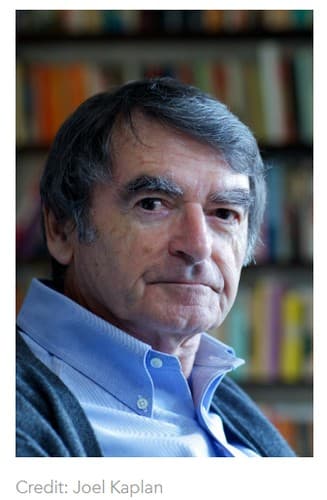
David Lodge is a celebrated British novelist and critic known for his satirical explorations of academic life. His acclaimed works, including "Small World," "Nice Work," and "Changing Places," humorously dissect the absurdities of university culture and the literary world. Lodge's sharp wit and intellectual depth have earned him a significant place in contemporary British fiction.
Similar books
- Changing Places
David Lodge
3.9 (7k) average on GoodreadsLiterary FictionShares a similar satirical take on academia and features some of the same characters.
- Lucky Jim
Kingsley Amis
3.8 (25k) average on GoodreadsLiterary FictionA classic academic satire with a bumbling, relatable protagonist navigating institutional absurdities.
- Pnin
Vladimir Nabokov
3.9 (18k) average on GoodreadsLiterary FictionNabokov's Pnin (1957) is another classic of academic fiction, but it differs significantly in tone and focus. While both novels feature eccentric academics, Pnin is more of a poignant character study, offering a sympathetic, often melancholic, portrayal of its titular Russian émigré professor navigating American academia. In contrast, Small World is primarily a high-energy, farcical satire, more interested in the systemic absurdities of the academic world than the individual's struggle within it. Lodge's novel revels in intellectual gamesmanship and a larger cast of caricatures, whereas Nabokov's work is more subtly humorous and deeply empathetic towards its central, somewhat tragic, figure.
- Nineteen Eighty-Four
George Orwell
4.2 (5.5M) average on GoodreadsFictionWinston Smith dreams of truth and rebellion in a world where Big Brother watches all, but he confronts the terrifying power of a regime that controls not just actions, but thoughts.
- The Frozen River
Ariel Lawhon
4.4 (600k) average on GoodreadsFictionIn 1789 Maine, a heroic midwife's diary helps her expose a murder and get justice in a town that wants to silence her.
- A Man Called Ove
Fredrik Backman
4.4 (569k) average on GoodreadsFictionA stubborn widower, who lives by strict rules, finds his quiet world changed by a lively new family next door, making him face his past and find happiness in human connection.




Enjoyed the summary?
A summary gives you the shape of the book. The book itself has the detail, the examples and the voice.
Find Small World on AmazonAs an Amazon Associate, BookBrief earns from qualifying purchases. How we're funded