

Synopsis
Covers the whole plot, including the ending.
- Difficulty
- Medium
- Pacing
- Moderate
- Mood
- Wry, Melancholy, Humorous, Reflective, Poignant
- Read it if
- You enjoy character-driven literary fiction with a blend of humor, pathos, and keen observation of human foibles, particularly stories about expatriates adapting to new cultures.
- Skip it if
- You prefer fast-paced plots, clear-cut resolutions, or stories with straightforward, unambiguous narratives.
Pnin Plot Summary
Covers the whole plot, including the ending.
A Train Journey and a Lost Lecture
Professor Timofey Pnin, a Russian émigré and Russian professor at Waindell College, travels to Cremona Women's College to give a guest lecture. He prepares carefully, memorizing the speech on 'The Problem of the Emigré Writer' in English. However, because he is absentminded and has trouble with American train schedules, he boards the wrong train. He realizes his mistake after a significant delay and takes a taxi the rest of the way, arriving late and flustered. Despite the problem, he delivers a somewhat improvised, but passionate, lecture to an appreciative audience, though he knows his English is not perfect.
The Search for a New Home
Pnin must move out of his current lodgings because the landlady's son needs the room. This eviction starts a frantic search for a new place to live, a process with many miscommunications and cultural misunderstandings. He views several unsuitable rooms, including one with an overly curious landlady and another that is too small and dark. His struggles show his general displacement and difficulty adapting to practical American life. Eventually, he finds a temporary, awkward arrangement in a spare room at the house of a colleague, Professor Boyd.
A Toothache and New Dentures
Pnin has a bad toothache. He tries various home remedies before seeking professional help. His visit to the dentist, Dr. Shapiro, causes much anxiety and discomfort, both from the pain and his general unease in medical settings. The painful extraction of several teeth and the fitting of new dentures are important events, showing his physical vulnerability and his struggle to keep his dignity. He first resists the dentures, finding them strange, but eventually, they become a part of him, though they cause minor irritation.
The Waindell Campus and Academic Life
The narrative shows Pnin's daily life at Waindell College, including his interactions with colleagues, students, and the campus. He is often seen as an eccentric figure, both liked and gently made fun of by his peers. His lectures are passionate, but sometimes grammatically flawed. He finds comfort in the college library, researching and preparing his lessons. His office, a former lumber-room, is a personal sanctuary, filled with his books and mementos. It represents his intellectual world amidst his personal chaos. He navigates faculty meetings and social gatherings with earnestness and bewilderment.
The Arrival of Liza Wind
Pnin's ex-wife, Liza Wind, a manipulative and self-absorbed poet and psychologist, visits. Her presence immediately causes Pnin much anxiety, as she has often exploited his good nature and emotional vulnerability. She has always used him for financial support and emotional validation, despite having left him years ago for another man. Her visit is supposedly to discuss their son, Victor, but she also seeks Pnin's help with her own financial troubles. Pnin, despite his resentment, remains attached to the memory of their past and is easily swayed by her appeals, which often leave him feeling drained and used.
Victor's Visit and Pnin's Paternal Affection
Liza brings their son, Victor, to stay with Pnin for a few days before Victor goes to summer camp. Although Victor is not Pnin's biological son, Pnin cares for him deeply, treating him with much affection and generosity. He takes Victor on outings, buys him gifts, and tries to teach him, especially about Russian culture. Victor, a talented and somewhat detached young artist, appreciates Pnin's kindness but also notices his eccentricities. Their time together is a rare period of genuine happiness and warmth for Pnin, showing his longing for family and his capacity for selfless love, despite the complicated relationship with Liza.
The Housewarming Party
Pnin finds and rents his own house, a charming, though slightly run-down, residence. He carefully prepares for a housewarming party, inviting several colleagues and friends. He is proud of his new home and looks forward to entertaining. The party begins with Pnin serving a delicious punch, which makes him happy. However, minor mishaps and miscommunications occur, typical of Pnin's life. The party is a moment of fleeting domestic bliss, showing his desire for stability and belonging, but it is soon overshadowed by upcoming changes.
The Narrator's Introduction and Pnin's Past
Later in the book, the anonymous narrator, who has been observing Pnin, gradually reveals his identity and his past connection to Pnin and Liza. He admits to having known Pnin in Russia and, more importantly, to having had an affair with Liza after Pnin. This revelation sheds new light on Pnin's character, suggesting a deeper understanding of his vulnerabilities and past traumas, especially regarding Liza's betrayals. The narrator's presence also explains some of the more intimate details and subjective interpretations of Pnin's life, as he is not just an observer but a participant in Pnin's history.
The Threat of Replacement
Pnin learns that a new, younger Russian literature professor, a protégé of the narrator, is being hired by Waindell College. This news is unsettling, as it suggests Pnin's position as head of the Russian department, or even his continued employment, is in danger. The new professor is rumored to be a more 'modern' and 'distinguished' scholar, adding to Pnin's anxieties about his place in the academic world and his inability to fully grasp American academic politics. This threat to his professional stability is a significant blow, coinciding with other personal setbacks.
Pnin's Departure
Facing the arrival of the new professor, and feeling increasingly out of place, Pnin decides to leave Waindell College. The narrative ends with Pnin packing his belongings into his old car, a symbol of his independence and his struggles. He drives away from the college and his rented house, leaving behind the life he tried to build. His departure is poignant, as he drives off into the morning mist, with his dog, a stray he adopted, by his side. The narrator observes his departure, reflecting on Pnin's resilience and his enduring dignity.
Principal Figures
Timofey Pnin
Protagonist
Eccentric Russian émigré professor at Waindell College
Professor Timofey Pnin is a kind-hearted, absentminded, and deeply earnest Russian émigré who teaches Russian literature at Waindell College. He struggles with the English language, American customs, and the practicalities of daily life, often leading to humorous and poignant mishaps. Despite his intellectual capabilities, he is socially awkward and emotionally vulnerable, frequently exploited by his ex-wife, Liza. He possesses a deep love for his Russian heritage and an unwavering, if often frustrated, dignity. His inner world is rich with memories and intellectual pursuits, providing a stark contrast to his clumsy exterior.
Relationships: Liza Wind (ex-wife, manipulative and exploitative); Victor Wind (stepson, whom he loves deeply); Narrator (acquaintance from Russia, rival for Liza's affection, later Pnin's replacement)
Liza Wind
Supporting/Antagonist
Pnin's manipulative ex-wife, a poet and psychologist
Liza Wind is Pnin's beautiful, charming, and utterly self-absorbed ex-wife. A poet and psychologist, she has a history of exploiting Pnin's good nature, using him for financial support and emotional validation long after their divorce. She is manipulative and often cruel, yet Pnin remains emotionally tethered to her. She represents Pnin's past trauma and his enduring vulnerability, as her visits inevitably leave him feeling drained and used. She is the biological mother of Victor and later becomes involved with the narrator.
Relationships: Timofey Pnin (ex-husband, whom she exploits); Victor Wind (son); Narrator (lover)
Victor Wind
Supporting
Liza's son and Pnin's beloved stepson
Victor Wind is Liza's son from a previous marriage and Pnin's beloved stepson. He is a quiet, observant, and artistically talented young boy, often seen sketching. Despite his mother's complicated relationship with Pnin, Victor genuinely likes and appreciates Pnin's kindness and generosity. He provides Pnin with a rare source of pure joy and paternal affection, representing Pnin's longing for family and stability. Victor is somewhat detached and mature for his age, often observing the adults around him with a quiet understanding.
Relationships: Timofey Pnin (stepfather, beloved and doting); Liza Wind (mother)
The Narrator
Supporting/Minor Antagonist
An anonymous, omniscient observer who reveals his personal connection to Pnin
The narrator is initially an anonymous, omniscient voice, but gradually reveals himself to be a fellow Russian émigré, a successful academic, and a former acquaintance of Pnin. Crucially, he also reveals he was Liza's lover after Pnin, and is slated to replace Pnin at Waindell College. His presence introduces a layer of subjective interpretation and potential bias to Pnin's story. He seems to possess a mix of admiration and a detached, almost predatory, interest in Pnin's life, often presenting Pnin's foibles with a wry, superior tone.
Relationships: Timofey Pnin (acquaintance, later professional rival and replacement); Liza Wind (lover)
Dr. Hagen
Supporting
Head of the Russian Department at Waindell College
Dr. Hagen is the head of the Russian Department at Waindell College and Pnin's immediate superior. He is generally kind and well-meaning but often bewildered by Pnin's eccentricities and struggles with American academic bureaucracy. Hagen represents the institutional aspect of Pnin's life, often trying to accommodate Pnin while also being constrained by college politics and decisions. He is a figure of authority who, despite his good intentions, ultimately oversees the changes that lead to Pnin's departure.
Relationships: Timofey Pnin (colleague and subordinate)
Dr. Boyd
Supporting
A colleague of Pnin's at Waindell College
Dr. Boyd is a colleague of Pnin's at Waindell College who briefly offers Pnin a temporary room when he is searching for new lodgings. He is a sympathetic, if somewhat distant, figure who exemplifies the general academic environment Pnin inhabits. Boyd's interaction with Pnin highlights Pnin's transient nature and his reliance on the goodwill of others for basic necessities.
Relationships: Timofey Pnin (colleague, temporary landlord)
Dr. Shapiro
Supporting
Pnin's dentist
Dr. Shapiro is Pnin's dentist, responsible for the painful extraction of Pnin's teeth and the fitting of his new dentures. He is a competent professional, but his interactions with Pnin are marked by Pnin's anxiety and discomfort in medical settings. Dr. Shapiro represents the impersonal, yet necessary, services Pnin must navigate in his new country, highlighting his physical vulnerabilities and the indignities he endures.
Relationships: Timofey Pnin (patient)
Mrs. Thayer
Mentioned
Pnin's first landlady at Waindell
Mrs. Thayer is Pnin's landlady at the beginning of the novel, who forces him to move out because her son needs his room. Though not a major character, her actions precipitate Pnin's frantic search for new housing, setting in motion a significant part of the plot that highlights his displacement and struggles with stability.
Relationships: Timofey Pnin (landlady)
Themes & Insights
Exile and Displacement
The novel explores exile through Timofey Pnin, a Russian émigré struggling to adapt to American culture, language, and daily life. Pnin is always out of place, whether boarding the wrong train, misinterpreting social cues, or feeling threatened in his academic position. His internal world, rich with memories of Russia, contrasts sharply with his external clumsiness in America. This shows the sense of loss and alienation in exile. His search for a stable home and his inability to fully integrate symbolize this constant displacement.
“Pnin was not the stuff of which first-class émigrés are made. He could not, for instance, take a train without a certain amount of inner panic.”
Dignity and Resilience in the Face of Adversity
Despite constant mishaps, humiliations, and manipulation from others, Pnin always keeps a quiet dignity and an unconquerable spirit. He endures dental pain, academic insecurity, and emotional exploitation with a stoicism that, while sometimes funny, is deeply moving. His resilience is clear in his continued efforts to teach, find a home, and care for Victor, even when life seems against him. His final departure from Waindell, though forced, is an act of asserting his own agency and keeping his self-respect.
“And the Pninian principle of never letting a new environment get the better of him, of never succumbing to the melancholy of adaptation, was being tested to its limits.”
The Nature of Memory and the Past
Pnin's inner life is shaped by his memories of Russia, his deceased first love, Mira, and his complicated relationship with Liza. These memories, often idealized or tinged with nostalgia and pain, provide a refuge from his current problems. The past is not just a backdrop but an active force shaping Pnin's character and perceptions. The narrator's own memories and past connection to Pnin and Liza further complicate this theme, suggesting that memory itself is subjective and can be a source of both comfort and betrayal.
“He had a way of remembering things that made them seem more real than the present.”
Language and Communication Barriers
Pnin's struggles with the English language are a central funny and sad part of the novel. His malapropisms, grammatical errors, and difficulty understanding American idioms show the barrier between him and his new environment. This language struggle is not just about words; it reflects a deeper inability to fully connect with American culture and people. It also serves as a metaphor for his broader miscommunications and misunderstandings, isolating him even among well-meaning colleagues. His passionate but flawed lectures embody this theme.
“He still spoke English with a strong accent, often mispronouncing words and struggling with idiomatic expressions, a source of constant embarrassment and frustration.”
Plot Devices & Literary Techniques
Unreliable Narrator
The narrator's subjective perspective and personal involvement shape the story
Initially appearing as an omniscient, detached observer, the narrator gradually reveals his personal connection to Pnin and Liza, including having been Liza's lover and being Pnin's replacement. This revelation retroactively casts doubt on the objectivity of the narrative, suggesting that Pnin's story is filtered through a biased and potentially self-serving lens. The narrator's tone, often wry and subtly mocking, contributes to the reader's understanding that Pnin is being presented by someone with a complex and not entirely benevolent relationship to him.
Tragicomedy
Blending humor and pathos to depict Pnin's struggles
Nabokov masterfully employs tragicomedy throughout 'Pnin.' Pnin's numerous mishaps – taking the wrong train, struggling with dentures, misinterpreting social cues – are often presented in a humorous light, eliciting laughter. However, beneath the surface of these comical situations lies a deep vein of pathos, revealing Pnin's loneliness, his vulnerability, and the quiet dignity with which he endures his struggles. The humor serves not to diminish Pnin, but to highlight the bittersweet reality of his exile and his enduring human spirit.
Symbolism of Objects and Places
Everyday items and locations reflect Pnin's internal state and external struggles
Various objects and places in the novel take on symbolic meaning. Pnin's dentures symbolize his physical vulnerability and the indignities of aging and adaptation. His 'lumber-room' office represents his intellectual sanctuary amidst the chaos of his life. The succession of temporary lodgings he occupies underscores his constant displacement. His old car, packed with his belongings, signifies his independence and his journey into an uncertain future. These elements contribute to a deeper understanding of Pnin's character and his predicament.
Flashbacks and Memory
Non-linear narrative incorporating Pnin's past experiences
The narrative frequently delves into Pnin's past through flashbacks, revealing his life in Russia, his first love Mira, and his marriage to Liza. These memories are not presented chronologically but emerge as Pnin reflects or as the narrator provides background. This non-linear structure enriches Pnin's character, providing context for his present behavior and emotions, and emphasizing the profound impact of his past on his current exiled existence. It allows the reader to understand the depth of his internal world beyond his external clumsiness.
Pnin Quotes
“The only important thing in life is to love someone, and to have someone love you.”
“The Pninian world was not exactly a square, but it had four corners, and at each corner stood a Pnin.”
“One likes to remember the good times, and to forget the bad. But sometimes the bad times are more memorable.”
“His English was a matter of constant improvisation, and often, in his mind, he would rephrase a sentence several times before uttering it.”
“A good book, thought Pnin, is a book that you want to read again.”
“The past was a country of which he was an exile, and he visited it often in his dreams.”
“Happiness, after all, is a kind of oblivion, a state of mind in which one forgets oneself and one's troubles.”
“He was a man of routines, and his routines were his armor against the chaos of the world.”
“The very air was a dictionary of invisible words.”
“To be different is to be lonely.”
“Life, in general, is a series of misunderstandings.”
“He carried his past with him like a hump, but it was a hump that contained treasures.”
“The future was a dark tunnel, and he was walking into it, bravely, with his umbrella.”
Quiz
10 questions on the plot and the characters. Each answer comes with a short explanation.
Question 1
What is the primary academic subject Professor Pnin teaches at Waindell University?
- Russian Literature
- Comparative Linguistics
- Slavic History
- European Philosophy
Show answer
A. Russian Literature Pnin is a professor of Russian, specifically Russian literature and language, at Waindell University, a role he often struggles with due to his English.
Question 2
What significant personal item does Pnin lose, leading to a memorable episode involving a dental procedure?
- His spectacles
- His wallet
- His teeth (dentures)
- His academic notes
Show answer
C. His teeth (dentures) One of Pnin's defining struggles is the loss of his dentures, which necessitates a visit to the dentist and the fitting of new ones, a process he finds quite uncomfortable.
Question 3
What is Pnin's relationship with Liza Wind, his former wife?
- They are happily remarried.
- She is his current colleague at Waindell.
- She frequently manipulates him for financial or emotional support.
- They maintain a distant but amicable friendship.
Show answer
C. She frequently manipulates him for financial or emotional support. Liza Wind, Pnin's ex-wife, is a recurring figure who often exploits his good nature and generosity, seeking money or emotional reassurance while having little genuine affection for him.
Question 4
Which of these events is NOT a challenge Pnin faces in the book?
- Being removed from his preferred 'lumber-room' office.
- Taking the wrong train for a lecture he is supposed to deliver.
- Successfully publishing his magnum opus on Russian culture.
- Struggling to find suitable and stable housing.
Show answer
C. Successfully publishing his magnum opus on Russian culture. While Pnin dreams of intellectual achievements, the book primarily focuses on his daily struggles and minor humiliations. He does not successfully publish a magnum opus, but rather faces practical challenges like housing, his office, and travel mishaps.
Question 5
What is a central theme explored through Pnin's character and experiences?
- The triumph of the individual over societal oppression.
- The challenges and isolation of exile and cultural displacement.
- The pursuit of romantic love in old age.
- The corruption within academic institutions.
Show answer
B. The challenges and isolation of exile and cultural displacement. Pnin vividly portrays the difficulties faced by an émigré, highlighting the linguistic, cultural, and social alienation that comes with being an exile in a foreign land.
Question 6
How does Pnin typically react to situations that cause him distress or confusion?
- He confronts them directly and assertively.
- He often experiences internal turmoil and clumsy physical reactions, like dropping things.
- He seeks immediate assistance from his colleagues.
- He withdraws completely and avoids interaction.
Show answer
B. He often experiences internal turmoil and clumsy physical reactions, like dropping things. Pnin is characterized by his often-clumsy and flustered reactions to stress, frequently dropping objects, misplacing items, or becoming visibly agitated, which adds to his endearing but tragicomic persona.
Question 7
What is the significance of the narrator's presence and perspective in 'Pnin'?
- The narrator is Pnin's loyal and objective biographer.
- The narrator is a detached, omniscient voice with no personal connection to Pnin.
- The narrator is a former colleague and rival of Pnin, whose perspective is often biased and condescending.
- The narrator is Pnin's student, offering an admiring and sympathetic view.
Show answer
C. The narrator is a former colleague and rival of Pnin, whose perspective is often biased and condescending. The narrator, eventually revealed to be a fellow Russian émigré and academic named Vladimir Vladimirovich, has a complex and often critical relationship with Pnin, sometimes undermining his dignity while also showing moments of understanding. This unreliable and biased narration is a key element of the novel.
Question 8
How does Pnin's relationship with Victor, Liza's son, develop throughout the novel?
- Victor actively avoids Pnin, finding him embarrassing.
- Pnin is indifferent to Victor, focusing solely on his academic work.
- Pnin develops a deep, paternal affection for Victor, despite not being his biological father.
- Victor and Pnin become intellectual sparring partners.
Show answer
C. Pnin develops a deep, paternal affection for Victor, despite not being his biological father. Despite Liza's manipulative nature, Pnin genuinely cares for Victor and treats him with warmth and affection, seeing him as a son figure. Their bond is one of the more tender aspects of the book.
Question 9
What is the ultimate fate of Pnin's position at Waindell University?
- He receives a promotion and tenure.
- He resigns voluntarily to pursue other opportunities.
- He is effectively displaced by the arrival of the narrator, who takes over his department.
- He retires peacefully after a long career.
Show answer
C. He is effectively displaced by the arrival of the narrator, who takes over his department. In a final act of displacement, Pnin loses his position at Waindell when the narrator, Vladimir Vladimirovich, is hired to head the Russian department, effectively pushing Pnin out. This highlights the theme of Pnin's perpetual exile and lack of stable belonging.
Question 10
Which of the following best describes the overall tone of 'Pnin'?
- Bleak and purely tragic.
- Satirical, with moments of profound empathy and pathos.
- Lighthearted and farcical throughout.
- Didactic and morally instructive.
Show answer
B. Satirical, with moments of profound empathy and pathos. Nabokov masterfully blends humor and sadness. While Pnin's mishaps are often comical, the novel consistently evokes sympathy for his struggles and isolation, creating a tone that is both wryly satirical and deeply moving.
Pnin FAQ
What is 'Pnin' about?
'Pnin' by Vladimir Nabokov follows the misadventures of Timofey Pnin, an émigré Russian professor of Russian language and literature, as he navigates the bewildering landscape of American academic life and culture. The novel chronicles his struggles with the English language, social customs, and the often-unfeeling bureaucracy of Waindell College, all while he carries the poignant weight of his past in Tsarist Russia.
Why should I read 'Pnin'?
You should read 'Pnin' for its unique blend of poignant humor, sharp social satire, and deep empathy for its protagonist. Nabokov masterfully crafts a character who is both a figure of ridicule and profound sympathy, offering a moving exploration of exile, identity, and the resilience of the human spirit amidst constant bewilderment. It's a beautifully written, often hilarious, and ultimately touching character study.
What is the background/setting of 'Pnin'?
The novel is primarily set in the mid-20th century, specifically during the late 1940s and early 1950s, on the campus of the fictional Waindell College in America. Pnin, an aristocratic Russian émigré, is a professor there, having fled the Russian Revolution. The setting highlights the cultural clash between Pnin's Old World sensibilities and the often-impersonal, pragmatic American academic environment.
What writing style does the author use?
Nabokov employs a highly sophisticated, ornate, and often ironic prose style, characterized by intricate wordplay, vivid imagery, and a distinctive narrative voice that is both omniscient and subtly intrusive. The narrator frequently comments on Pnin's struggles with a blend of detached amusement and underlying affection, creating a complex tone that shifts between satire and deep pathos.
What minor details add significant meaning?
Minor details, like Pnin's meticulous care for his few possessions, such as his antique chess set or the 'fire-opal' given to him by his former wife Liza, underscore his clinging to fragments of his past and identity. His struggle with simple tasks, like buying a squirrel-proof bird feeder, highlights his fundamental disconnect from practical American life, making his 'victories' over such objects all the more charming and meaningful.
What are some subtle foreshadowing moments?
The narrator's increasingly personal and detailed interjections throughout the book subtly foreshadow his eventual, direct involvement in Pnin's life and the revelation of his own connection to Pnin's past, particularly concerning Liza. Early mentions of Pnin's precarious academic position and the looming threat of the Russian Department's reorganization also hint at his eventual displacement from Waindell College.
What unexpected character connections exist?
The most significant unexpected connection is revealed towards the end: the narrator, who has been observing and recounting Pnin's life, is actually a former acquaintance and rival of Pnin from Russia, and even had a relationship with Pnin's ex-wife, Liza. This revelation completely reframes the reader's understanding of the narrative voice and its motivations for telling Pnin's story.
What are unspoken character motivations?
Pnin's unspoken motivation is a profound yearning for belonging and stability, despite his outward clumsiness and resistance to American culture. He desperately tries to create a home and a routine, evident in his search for a suitable boarding house and his attempts to host a successful party. Liza's motivation, though often self-serving, appears to be a desire to maintain a connection to her past and perhaps to secure financial support for her son, Victor, through Pnin.
What psychological complexities do characters exhibit?
Pnin exhibits a complex blend of resilience, profound nostalgia, and an almost childlike vulnerability. He often retreats into his memories of Russia, using them as a shield against the present. His pride is easily wounded, yet he possesses an indomitable spirit that allows him to bounce back from repeated humiliations. Liza, his ex-wife, displays a manipulative streak, exploiting Pnin's kindness while maintaining an air of intellectual superiority.
What are the major emotional turning points?
One major emotional turning point is Pnin's decision to host a housewarming party, symbolizing his attempt to fully embrace his new life and create a community. Another is his reunion with his stepson, Victor, which brings him immense joy and a sense of paternal pride, highlighting his capacity for deep affection. The ultimate turning point, however, is his final departure from Waindell, which, despite its sadness, also signifies his continued, solitary journey.
How do relationship dynamics evolve?
Pnin's relationship with Liza, his ex-wife, remains complicated and somewhat one-sided, with her largely using him. His dynamic with his stepson, Victor, evolves into one of genuine affection and understanding, despite their limited time together. His relationships with his American colleagues and landladies, while often marked by misunderstanding, also show moments of genuine warmth and concern, indicating a slow, if awkward, integration into his new environment.
Which parts remain ambiguous or open-ended?
The true nature of the narrator's ultimate intentions towards Pnin remains somewhat ambiguous. While he seems to offer Pnin a position at a new university, his past actions and the way he frames Pnin's story leave room for interpretation regarding his sincerity or whether he truly has Pnin's best interests at heart. Pnin's future beyond Waindell is also left open, emphasizing his perpetual state of exile and transition.
What are controversial scenes or decisions?
A controversial aspect might be the narrator's seemingly cruel and condescending tone towards Pnin at times, especially given his intimate knowledge of Pnin's vulnerabilities and past. The decision by Waindell College to effectively dismiss Pnin by absorbing his department, despite his dedication, can be seen as a harsh commentary on academic politics and the disregard for individual contributions.
'Pnin' ending explained: how it ends & what it means
The novel ends with Pnin, having been effectively displaced from Waindell College due to a departmental reorganization led by the narrator, driving away in his car, leaving the campus behind. This ending signifies Pnin's perpetual state of exile and his resilience in moving forward despite setbacks. It underscores the theme that Pnin, while often a figure of pathos, is ultimately indomitable, always finding a way to continue his solitary journey, free from the machinations of others.
About the author
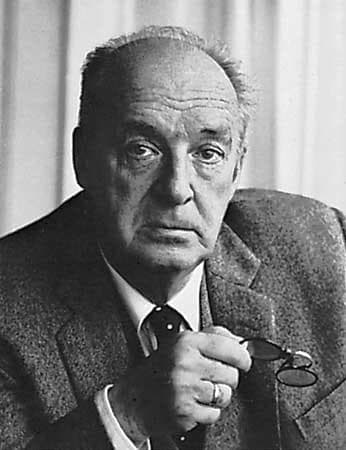
Vladimir Vladimirovich Nabokov, also known by the pen name Vladimir Sirin, was an expatriate Russian and Russian-American novelist, poet, translator, and entomologist. Born in Imperial Russia in 1899, Nabokov wrote his first nine novels in Russian (1926–1938) while living in Berlin, where he met his wife. He achieved international acclaim and prominence after moving to the United States, where he began writing in English. Nabokov became an American citizen in 1945 and lived mostly on the East Coast before returning to Europe in 1961, where he settled in Montreux, Switzerland.
Similar books
- A Confederacy of Dunces
John Kennedy Toole
3.9 (231k) average on GoodreadsLiterary FictionFeatures another memorable, eccentric academic protagonist struggling comically with the modern world.
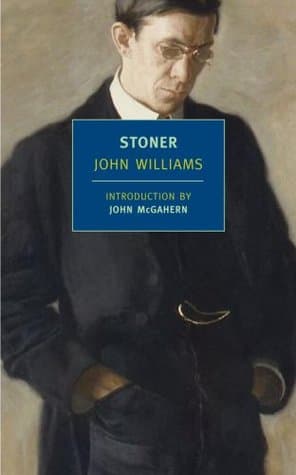
- Stoner
John Williams
4.3 (103k) average on GoodreadsLiterary FictionExplores the quiet life and academic struggles of a university professor with a similar blend of subtle humor and underlying sadness.
- The Master And Margarita
Mikhail Bulgakov
4.3 (243k) average on GoodreadsFantasyShares a Russian literary sensibility and a blend of the absurd with profound human observations, though 'Pnin' is less fantastical.
- The Unbearable Lightness of Being
Milan Kundera
4.1 (342k) average on GoodreadsLiterary FictionWhile both novels explore themes of exile and dislocation, Nabokov's Pnin is more character-driven and less overtly philosophical than Kundera's work. Pnin focuses on the minute, often comedic, struggles of an émigré's daily life, whereas Kundera delves into broader existential and political reflections.
- The Old Man and the Sea
Ernest Hemingway
3.8 (831k) average on GoodreadsLiterary FictionA Cuban fisherman's long struggle with a giant marlin becomes a story of endurance and dignity, now retold for young adults with illustrations, phonetic guides, and writing prompts in Traditional Chinese.
- One Hundred Years of Solitude
Gabriel García Márquez
4.1 (753k) average on GoodreadsLiterary FictionThrough the multi-generational story of the Buendía family, a mythical town deals with the repeating patterns of time, love, and solitude, as the extraordinary mixes with the ordinary.




Enjoyed the summary?
A summary gives you the shape of the book. The book itself has the detail, the examples and the voice.
Find Pnin on AmazonAs an Amazon Associate, BookBrief earns from qualifying purchases. How we're funded