
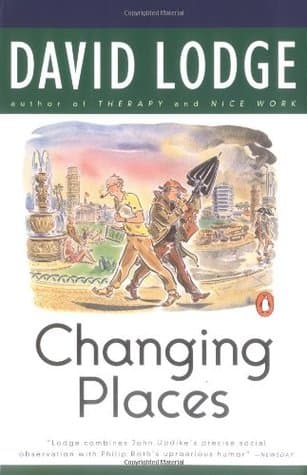
Synopsis
Covers the whole plot, including the ending.
- Difficulty
- Medium
- Pacing
- Moderate
- Mood
- Witty, Observational, Humorous, Satirical, Reflective
- Read it if
- You enjoy academic satire, cultural contrasts between the UK and USA, and witty character studies of middle-aged men undergoing mid-life crises.
- Skip it if
- You prefer fast-paced thrillers or are looking for a story with deep emotional resonance over intellectual humor.
Changing Places Plot Summary
Covers the whole plot, including the ending.
Philip Swallow's Arrival at Euphoria State
Philip Swallow, a quiet Senior Lecturer in English Literature at the University of Rummidge, England, begins a six-month exchange at Euphoria State University in California. He leaves his wife, Hilary, and their children. He immediately notices the differences from British academia: the grand campus, the casual students, the obvious wealth, and the widespread focus on therapy and self-expression. Philip, a man of routine and traditional values, feels lost in the size and informality of American life, especially the free atmosphere of Euphoria, which contrasts sharply with Rummidge.
Morris Zapp's Despair in Rummidge
At the same time, Morris Zapp, a well-known American professor of English Literature from Euphoria State, arrives at the University of Rummidge. Zapp, known for his work on Jane Austen and his ambition, is put off by the bad weather, the old buildings, and the general lack of energy among his British colleagues and students. He finds the students uninspired and the faculty isolated, with little interest in the theories he supports. Zapp, used to comfort and intellectual stimulation, struggles to adapt to Rummidge's perceived narrowness and strictness, feeling increasingly alone and creatively stuck.
Philip's Californian Transformation
Influenced by Euphoria State's liberal setting, Philip starts to let go of his usual inhibitions. He attends a student protest, tries marijuana for the first time, and becomes involved with Mary-Ann Mendelson, a free-spirited American graduate student. Their relationship quickly becomes intimate, a big change from his conservative married life. Philip also finds new confidence in his teaching, trying less traditional methods and enjoying his American students' open participation, a contrast to the reserved British undergraduates. He begins to enjoy the freedom and anonymity California offers, making him question his past life choices.
Morris's Growing Frustration
Morris Zapp's frustration in Rummidge grows. His attempts to introduce modern literary theory are met with polite but firm resistance, and he finds the department politics stifling. His estranged wife, Désirée, who was supposed to join him, instead files for divorce, adding to his problems. He tries to start an affair with Hilary Swallow, Philip's wife, at first seeing it as a casual distraction, but Hilary, though curious, keeps him at a distance. Zapp feels more and more out of place and intellectually bored, missing the energy and opportunities of his American life, while his own academic project stalls.
Hilary Swallow's Awakening
While Philip is away, Hilary Swallow, initially lonely, starts to become more independent. She takes a new job, learns to drive, and even considers an affair with Morris Zapp, who pursues her directly. Although she resists Zapp's advances, his presence and her new freedom make her re-evaluate her marriage and her role in it. She begins to see Philip's absence as a chance for self-discovery, leading to a quiet but important shift in her outlook and desires.
The Student Uprising in Euphoria
Political tensions at Euphoria State peak with a large student protest against the Vietnam War and university policies. Philip, who initially found student activism somewhat amusing, gets caught in a violent clash between students and police. This experience is a wake-up call, showing him the raw energy and potential danger of American counter-culture, a sharp contrast to the calmer protests he might have seen in England. He sees the destruction and chaos firsthand, making him reconsider his romanticized view of American freedom and its consequences.
Morris's Literary Block
Morris Zapp, despite his initial plans for a new book on Jane Austen, finds himself unable to write in Rummidge. The lack of intellectual stimulation, the dull environment, and his personal worries about his divorce all lead to severe writer's block. He becomes increasingly cynical and unhappy, his former confidence in his academic ability starting to waver. He feels intellectually alone and unappreciated, his grand theories about literary criticism seeming irrelevant in Rummidge, making him question his own academic identity.
The Exchange Extension
As the six-month exchange ends, both Philip and Morris decide to extend their stays for another six months. Philip, now involved with Mary-Ann and enjoying his new identity, wants to continue his Californian adventure. Morris, despite his unhappiness, sees a chance to escape his personal problems in America and perhaps find a new academic path, or at least avoid returning to his estranged wife. This decision, made without telling their spouses, leads to more complications and forces Hilary and Désirée to react to their husbands' unexpected choices, creating new tensions.
Hilary's Visit to Euphoria
Alarmed by Philip's decision to extend his stay, Hilary Swallow travels to Euphoria State. She quickly discovers Philip's affair with Mary-Ann and faces the reality of his change. The meeting is emotional, as Hilary deals with Philip's infidelity and the person he has become. She also experiences Euphoria's bewildering culture firsthand, including its unconventional social norms and academic environment. This visit forces both Philip and Hilary to confront the results of their separation and Philip's new life, reaching a turning point in their marriage.
Désirée's Arrival in Rummidge
Désirée Zapp, Morris's estranged wife, arrives in Rummidge, having found him. She is forceful, demanding attention and confronting Morris about their failing marriage and his responsibilities. Her arrival disrupts Morris's already unstable life in Rummidge, adding more personal drama to his professional frustrations. Désirée, a strong and independent woman, makes it clear that she will not let Morris avoid their issues, forcing him to deal with what he has been trying to escape, further complicating his stay in England.
The Academic Conference in London
All four main characters—Philip, Hilary, Morris, and Désirée—meet in London for an academic conference. This neutral ground, though full of tension, brings their intertwined relationships and personal dramas to a head. Philip and Hilary have a tense discussion about their future, while Morris tries to handle Désirée's demands. The conference setting, with its mix of intellectual talk and social maneuvering, reflects the larger cultural and personal conflicts that have defined their exchange, leading to uncomfortable truths and unresolved issues.
The Climax and Role Reversal
In a final scene, Morris Zapp, desperate to escape Désirée and Rummidge, makes a desperate plea to Hilary. He proposes that they, as a new couple, switch places entirely with Philip and Mary-Ann, essentially swapping partners and countries. This bold proposal shows the extreme lengths both men have gone to escape their lives. While the full outcome of this 'changing places' is left somewhat unclear, the novel ends with a strong sense of role reversal, suggesting that the initial exchange has permanently altered everyone involved, leaving their futures uncertain and connected.
Principal Figures
Philip Swallow
Protagonist
A mild-mannered British academic who undergoes a dramatic personal transformation.
Philip is a Senior Lecturer in English at the University of Rummidge, a man of routine, tradition, and quiet domesticity. He is initially rather repressed, cautious, and somewhat unadventurous, content with his lot but perhaps unknowingly yearning for more. He is married to Hilary and has children. His academic interest lies in more traditional literary studies. He represents the stereotypical British academic – understated, polite, and somewhat reserved.
Relationships: Hilary Swallow (Wife, initially stable but strained by his infidelity.); Morris Zapp (Exchange partner, a foil to his personality and academic approach.); Mary-Ann Mendelson (American graduate student, lover during his exchange.)
Morris Zapp
Protagonist
An ambitious and celebrated American literary theorist who experiences a profound intellectual and personal crisis.
Morris Zapp is a brilliant, highly acclaimed, and self-assured professor of English at Euphoria State University. He is a leading figure in literary theory, particularly known for his work on Jane Austen, and is driven by ambition, intellectual prowess, and a desire for fame. He is accustomed to comfort and American dynamism. He is married to Désirée, though their relationship is strained. Zapp embodies the confident, often arrogant, American academic – innovative, outspoken, and status-conscious.
Relationships: Désirée Zapp (Estranged wife, a source of conflict and obligation.); Philip Swallow (Exchange partner, a source of initial disdain but later a potential solution.); Hilary Swallow (Object of his attempted seduction and later a confidante.)
Hilary Swallow
Supporting
Philip's wife, who discovers her own independence and desires during his absence.
Hilary is Philip's wife, initially portrayed as a somewhat traditional, dutiful housewife. She is intelligent and observant but has largely defined herself through her marriage and family. Philip's absence forces her to confront her own identity, desires, and the state of her marriage. She possesses a quiet strength and a growing sense of self-awareness, capable of both loyalty and independent thought.
Relationships: Philip Swallow (Husband, their relationship undergoes significant strain and re-evaluation.); Morris Zapp (Object of his pursuit, she resists his advances but is intrigued by his attention.)
Désirée Zapp
Supporting
Morris's estranged, strong-willed wife who pursues him to England.
Désirée is Morris Zapp's estranged wife, a formidable and independent woman. She is direct, assertive, and unwilling to be easily dismissed. Her arrival in Rummidge forces Morris to confront his marital problems head-on. She is a practical and determined character, representing the unresolved issues in Morris's American life that he desperately tries to escape. Her presence adds a layer of chaos and accountability to Morris's experience.
Relationships: Morris Zapp (Estranged husband, their relationship is deeply contentious and unresolved.)
Mary-Ann Mendelson
Supporting
A free-spirited American graduate student who becomes Philip's lover.
Mary-Ann is a graduate student at Euphoria State, embodying the liberal, counter-culture spirit of 1960s California. She is open-minded, sexually liberated, and intellectually curious. She forms a relationship with Philip Swallow, introducing him to new experiences and perspectives that challenge his conservative upbringing. She is a catalyst for Philip's transformation, representing the allure and freedom of American youth culture.
Relationships: Philip Swallow (Lover, she introduces him to new experiences and a different lifestyle.)
Professor Gordon Masters
Supporting
Head of the English Department at Rummidge, representing traditional British academia.
Professor Masters is the amiable but somewhat staid head of the English department at Rummidge. He embodies the traditional, conservative values of British academia, valuing decorum and established literary studies over radical new theories. He is polite but resistant to change, representing the institutional inertia that frustrates Morris Zapp. He is a foil to Zapp's ambitious and modern academic approach.
Relationships: Morris Zapp (Departmental colleague, his traditionalism clashes with Zapp's modernity.)
Professor Joop van der Plaat
Supporting
A Dutch academic who offers a detached, European perspective on the Anglo-American cultural exchange.
Joop van der Plaat is a visiting Dutch academic who occasionally interacts with both Philip and Morris. He serves as an outsider observer, offering a more detached and often wry commentary on the cultural differences and academic follies he witnesses. His perspective provides an additional layer of irony and humor, highlighting the absurdities of both British and American academic life from a neutral, European viewpoint.
Themes & Insights
Cultural Clash and Identity
The novel explores the differences between British and American academic cultures and national identities. Philip Swallow initially finds American life confusing and excessive, while Morris Zapp feels stifled by British provincialism. This clash makes both men rethink their identities and values, leading to personal changes. Philip becomes more open in California, while Morris struggles with his ambition in Rummidge. The contrast shows how environment shapes personality and how people adapt, or fail to adapt, to new cultural norms, as seen in Philip's embrace of American casualness and Morris's dislike for British stoicism.
“One of the things I've found hardest to adjust to here is the sheer size of everything... and the way people talk about it, as if bigness were a virtue in itself.”
Academic Life and Its Absurdities
Lodge satirizes the pretensions, petty politics, and intellectual trends within academia. From Morris Zapp's pursuit of academic fame and his theories on Jane Austen, to the isolated world of Rummidge's English department, the novel exposes the often-silly aspects of university life. The contrast between the free Euphoria State and the traditional Rummidge highlights different forms of academic absurdity. The conference scenes, in particular, show the performative nature of intellectual discussion and the superficiality of some academic pursuits, revealing how academics often prioritize status and self-promotion over true scholarship.
“Literary criticism is not a science. It is an art. And the art of literary criticism is to make people believe that it is a science.”
Personal Liberation and Infidelity
The exchange program helps characters find personal freedom, especially Philip Swallow, who embraces a more pleasure-seeking lifestyle in California, including an affair. This theme looks at the results of escaping one's established life and moral boundaries. Both Philip and Hilary, in their own ways, discover new aspects of their desires and identities. Morris Zapp also tries to find freedom through an affair with Hilary, though his reasons are more selfish. The novel examines the appeal of infidelity as a way to escape and renew oneself, and how these choices affect marriages and self-perception.
“He felt a sudden, exhilarating sense of freedom, as if he had shed a skin, or a decade.”
The Search for Identity and Self-Discovery
Throughout the novel, Philip, Morris, and Hilary go on journeys of self-discovery. Philip, initially a conformist, questions his life's path and values as he gets involved in American culture. Morris, despite his outward confidence, faces a crisis when his academic work stalls and his personal life falls apart. Hilary, left behind, finds her own independence and desires outside of her husband's influence. The 'changing places' literally and figuratively forces these characters to confront who they are, what they truly want, and whether their established identities are real or just products of their environment.
“Perhaps, he thought, the real 'changing places' was not between two universities, but within himself.”
Plot Devices & Literary Techniques
The Exchange Program
The central conceit allowing for a direct comparison of two contrasting worlds.
The academic exchange program is the primary plot device, serving as the engine for the entire narrative. It literally 'changes places' for the two protagonists, Philip Swallow and Morris Zapp, placing them in vastly different cultural and academic environments. This device facilitates the exploration of cultural clashes, personal transformations, and the satirical critique of academic life. It provides a clear framework for observing how individuals react to unfamiliar settings and how their identities are shaped or challenged by their surroundings, directly driving all major conflicts and character developments.
Parallel Narratives
Alternating chapters following the experiences of Philip and Morris.
The novel employs a parallel narrative structure, alternating between the experiences of Philip Swallow in Euphoria State and Morris Zapp in Rummidge. This allows David Lodge to draw direct comparisons and contrasts between the two men's reactions to their new environments, highlighting the cultural differences and their respective personal journeys. The device also builds suspense as readers follow two distinct but interconnected stories, often ending chapters with cliffhangers or ironic juxtapositions, emphasizing the 'changing places' theme by showing two sides of the same coin.
Satire and Irony
The use of humor and exaggeration to critique academic and cultural norms.
Satire and irony are pervasive plot devices used to deliver the novel's social commentary. Lodge employs humorous exaggeration to lampoon the pretentions of academia, the cultural eccentricities of both Britain and America, and the foibles of his characters. For example, Morris Zapp's complex theories on Jane Austen are a satirical jab at academic jargon, while Philip's naive encounters with Californian counter-culture are rich with irony. This device allows the author to critique serious themes like identity and cultural differences with a light touch, making the commentary both incisive and entertaining.
Epistolary Elements (Letters and Emails)
Letters between characters used to reveal inner thoughts and advance plot.
While not exclusively epistolary, the novel frequently incorporates letters (and later, telegrams/phone calls) between characters, particularly between Philip and Hilary. These communications serve as a device to reveal the characters' inner thoughts, feelings, and evolving perspectives without direct narration. They also advance the plot by sharing information across geographical divides and highlighting the growing distance, both literal and emotional, between the characters. The contrast between what is said and what is unsaid in these letters often creates dramatic irony and underscores the theme of miscommunication and changing identities.
Changing Places Quotes
“Academic life is a succession of meetings to discuss the next meeting.”
“The trouble with England is that it's full of English people.”
“He felt a sudden, sharp pang of nostalgia for a life he hadn't yet lived.”
“Every man is the hero of his own story.”
“The true sign of intelligence is not knowledge but imagination.”
“Culture shock is a term invented by people who don't understand that all cultures are shocking.”
“He was beginning to suspect that freedom was just another word for not knowing what to do next.”
“Life, after all, was just a series of adjustments.”
“The greatest enemy of knowledge is not ignorance, it is the illusion of knowledge.”
“One could not truly understand a place until one had made love in it.”
“He felt like a character in a novel, and not even the main character.”
“The world was full of coincidences, but only the novelist had to make them plausible.”
“All travel is a form of nostalgia for the place you haven't been yet.”
“Perhaps the only way to truly understand a culture was to commit adultery in it.”
Quiz
10 questions on the plot and the characters. Each answer comes with a short explanation.
Question 1
What is the name of the American professor who exchanges places with his British counterpart?
- Philip Swallow
- Morris Zapp
- Arthur King
- Desmond Doolittle
Show answer
B. Morris Zapp Morris Zapp is the flamboyant American professor from Euphoric State who swaps places with Philip Swallow.
Question 2
Which British university does Philip Swallow come from?
- University of Cambridge
- University of Oxford
- University of Birmingham
- University of Rummidge
Show answer
D. University of Rummidge Philip Swallow is a lecturer at the fictional University of Rummidge in England.
Question 3
What is the primary academic field of both Morris Zapp and Philip Swallow?
- History
- Sociology
- English Literature
- Linguistics
Show answer
C. English Literature Both professors are involved in the study and teaching of English Literature, albeit with very different approaches.
Question 4
What does Morris Zapp frequently boast about regarding his academic output?
- His comprehensive bibliography of modern poetry
- His six-volume critical study of Jane Austen
- His groundbreaking theory on post-structuralism
- His influential biography of Shakespeare
Show answer
B. His six-volume critical study of Jane Austen Morris Zapp is famously working on a monumental multi-volume study of Jane Austen, which he constantly refers to.
Question 5
Which specific event marks the beginning of Philip Swallow's affair with his colleague's wife at Euphoric State?
- A departmental Christmas party
- A faculty picnic
- A protest march against the Vietnam War
- A late-night study session in the library
Show answer
C. A protest march against the Vietnam War Philip Swallow's affair with Mary Zapp begins after they attend a protest march together, which is a significant departure from his conservative British life.
Question 6
What is a significant cultural difference Philip Swallow observes about American students compared to British ones?
- Their strict adherence to formal dress codes
- Their deferential attitude towards professors
- Their outspokenness and willingness to challenge authority
- Their preference for traditional lecture formats
Show answer
C. Their outspokenness and willingness to challenge authority Philip is initially taken aback by the American students' informality, their willingness to engage in debate, and their critical approach to the curriculum, which contrasts sharply with the more passive British students he is used to.
Question 7
How does Morris Zapp's teaching style differ from Philip Swallow's, as observed by the Rummidge students?
- Zapp is more formal and relies heavily on textual analysis, while Swallow prefers discussion.
- Zapp is highly theatrical and engaging, often improvising, while Swallow is more structured and conventional.
- Zapp focuses on historical context, while Swallow emphasizes modern interpretations.
- Zapp uses only primary sources, while Swallow incorporates secondary criticism.
Show answer
B. Zapp is highly theatrical and engaging, often improvising, while Swallow is more structured and conventional. Morris Zapp is known for his energetic, often unconventional, and highly performative teaching style, which contrasts with Philip Swallow's more traditional, reserved lectures.
Question 8
What is the significance of the novel's structure, particularly its use of alternating perspectives and a countdown to the exchange?
- It builds suspense for a dramatic climax where the professors refuse to return.
- It highlights the parallel experiences and growing disillusionment of both men, emphasizing the theme of cultural relativism.
- It primarily serves to showcase the distinct architectural features of each university campus.
- It allows for a detailed historical account of the academic exchange program.
Show answer
B. It highlights the parallel experiences and growing disillusionment of both men, emphasizing the theme of cultural relativism. The alternating perspectives and countdown structure effectively juxtapose the experiences of Zapp and Swallow, allowing the reader to compare and contrast their adaptations and challenges, reinforcing the novel's themes of cultural difference and personal transformation.
Question 9
How does Lodge satirize the concept of 'academic freedom' in both the American and British contexts?
- By showing professors being forced to teach subjects outside their expertise.
- By depicting Zapp's ability to teach almost anything he wants at Euphoric State, contrasting with Swallow's more restricted curriculum at Rummidge, while also exposing the pettiness of both systems.
- By illustrating strict departmental oversight preventing any deviation from established syllabi.
- By having both professors face severe penalties for minor infractions of university rules.
Show answer
B. By depicting Zapp's ability to teach almost anything he wants at Euphoric State, contrasting with Swallow's more restricted curriculum at Rummidge, while also exposing the pettiness of both systems. Lodge satirizes academic freedom by showing Zapp's almost boundless, yet sometimes self-indulgent, freedom at Euphoric State, contrasting it with the more constrained, tradition-bound Rummidge. However, both environments are also shown to have their own forms of academic pettiness and pretense.
Question 10
What is the ultimate irony regarding the personal lives of Philip Swallow and Morris Zapp by the end of their exchange year?
- They both decide to permanently reside in the country they exchanged to.
- Each professor finds himself in a similar marital predicament to the one he 'escaped' from, suggesting that changing places doesn't necessarily change personal problems.
- They both achieve significant career advancements due to their time abroad.
- Their wives have become best friends and decide to co-author a book.
Show answer
B. Each professor finds himself in a similar marital predicament to the one he 'escaped' from, suggesting that changing places doesn't necessarily change personal problems. The irony lies in both men experiencing similar marital crises – Philip begins an affair, and Morris's wife, Mary, also has an affair, mirroring the marital instability that Zapp had been experiencing before the exchange. This suggests that their personal issues followed them, despite the change of scenery.
Changing Places FAQ
What is the core premise of 'Changing Places'?
'Changing Places' follows two professors, Philip Swallow from the University of Rummidge, UK, and Morris Zapp from Euphoric State University, USA, as they swap institutions for a six-month exchange program. The novel explores the cultural clashes and personal transformations that occur as they navigate vastly different academic and social environments.
Who are the two main characters and what are their initial situations?
Philip Swallow is a middle-aged, somewhat uninspired British lecturer in English, feeling stuck in his marriage and career. Morris Zapp is a younger, highly successful, and arrogant American literary theorist, struggling with the pressures of fame and a failing marriage, who sees the exchange as an escape.
How do Philip Swallow's experiences in America differ from his expectations?
Philip, initially intimidated by American academia, finds himself thriving at Euphoric State. He gains confidence, enjoys the more relaxed student-teacher dynamic, and embarks on an affair with Melanie Byrd, experiencing a personal and professional awakening he hadn't anticipated.
What challenges does Morris Zapp face at the University of Rummidge?
Morris struggles with the perceived provincialism of Rummidge, the less prestigious academic environment, and the British social conventions. He finds the students less engaged, the faculty more reserved, and ultimately feels his intellectual superiority is unappreciated, leading to frustration and a sense of isolation.
How do the wives, Hilary Swallow and Désirée Zapp, fit into the narrative?
Hilary Swallow, initially a devoted but somewhat stifled wife, finds a new sense of independence and self-worth during Philip's absence, even pursuing a relationship with a student. Désirée Zapp, fed up with Morris's self-absorption, uses the exchange as an opportunity to leave him, highlighting the strains already present in their marriage.
What is the significance of the novel's structure, particularly the use of different narrative styles?
Lodge employs various narrative techniques, including conventional prose, epistolary sections (letters, telegrams), and even a screenplay format for the climax. This stylistic playfulness mirrors the academic experimentation of the era and underscores the novel's themes of communication, interpretation, and the construction of reality.
Are there any subtle allusions to real academic figures or theories within the text?
Morris Zapp's character and his work on 'The Future of Fiction' are widely seen as a satirical portrayal of prominent literary theorists of the time, particularly those associated with structuralism and post-structuralism. Lodge subtly critiques the sometimes impenetrable jargon and self-referential nature of academic discourse through Zapp.
How does the 'Changing Places' reflect the cultural anxieties of the late 1960s/early 1970s?
The novel captures the spirit of the late 60s and early 70s with its themes of sexual liberation, student protests, and questioning of traditional institutions. The free love, drug use, and anti-establishment sentiments encountered by Philip in America, and the more subdued but present changes in Britain, reflect the broader societal shifts of the period.
What is the symbolic significance of the 'Volcano' in the novel?
The active volcano near Euphoric State University, which threatens to erupt, serves as a powerful metaphor for the volatile social and personal changes occurring. It symbolizes the simmering tensions and potential for explosive transformation that both Philip and the wider society are experiencing, contrasting with the more stable, yet ultimately less exciting, Rummidge.
How does Philip Swallow's journey represent a form of mid-life crisis and renewal?
Philip's exchange is a catalyst for him to confront his professional stagnation and personal dissatisfaction. In America, he sheds his inhibitions, embraces new experiences, and gains a sense of agency he lacked in Rummidge, undergoing a significant psychological transformation that revitalizes his sense of self.
Analyze Morris Zapp's psychological state throughout the novel. Does he undergo any significant change?
Morris Zapp, despite his intellectual prowess, is deeply insecure and self-absorbed. He remains largely unchanged psychologically, his arrogance serving as a defense mechanism against his anxieties about his career and failing marriage. His inability to adapt or find genuine connection in Rummidge highlights his rigidity.
How do the wives' experiences, Hilary and Désirée, contribute to the psychological depth of the novel?
Hilary's growing independence and Désirée's decisive departure from Morris add crucial psychological depth by showing the ripple effects of the exchange on the spouses. They illustrate that the men's journeys are not isolated but profoundly impact their partners' self-perception, desires, and decisions, leading to their own forms of liberation or self-assertion.
To what extent are Philip and Morris foils to each other, and how does this enhance the novel's themes?
Philip and Morris are almost perfect foils: one a modest Brit, the other an arrogant American; one a traditionalist, the other a modernist. Their contrasting personalities and experiences highlight the novel's themes of cultural difference, academic pretension, and personal transformation, showing how environment can profoundly shape or expose character.
Is the novel primarily a satire of academia, or does it offer a more nuanced commentary?
While 'Changing Places' is undoubtedly a sharp satire of academic foibles, greed, and intellectual posturing, it also offers a more nuanced commentary on identity, cultural exchange, and the search for personal fulfillment. It balances its humor with genuine insights into human desires and the complexities of cross-cultural understanding.
What is the significance of the ending, particularly the 'interchange' of the two couples?
The ending, with its chaotic 'interchange' at the airport, is ambiguous and highly symbolic. It suggests that while the exchange has profoundly altered everyone, a complete resolution or return to the status quo is impossible. It leaves the reader to ponder the lasting impact of their experiences and the potential for continued 'changing places' in their lives.
How does Lodge use humor to convey his messages about academic life and cultural differences?
Lodge employs various forms of humor, from gentle irony to outright farce, to highlight the absurdities of academic life and the misunderstandings arising from cultural differences. His witty dialogue, exaggerated characterizations, and satirical situations make his critiques both enjoyable and incisive, allowing readers to laugh while reflecting on deeper issues.
Could 'Changing Places' be considered a commentary on the nature of identity itself?
Yes, the novel strongly suggests that identity is not fixed but fluid and contingent upon environment and experience. Both Philip and Morris, and even their wives, discover different facets of themselves when placed in new contexts, challenging the notion of a singular, unchanging self and highlighting the performative aspects of identity.
About the author
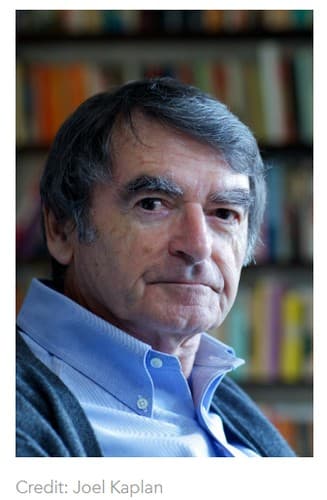
David Lodge is a celebrated British novelist and critic known for his satirical explorations of academic life. His acclaimed works, including "Small World," "Nice Work," and "Changing Places," humorously dissect the absurdities of university culture and the literary world. Lodge's sharp wit and intellectual depth have earned him a significant place in contemporary British fiction.
Similar books
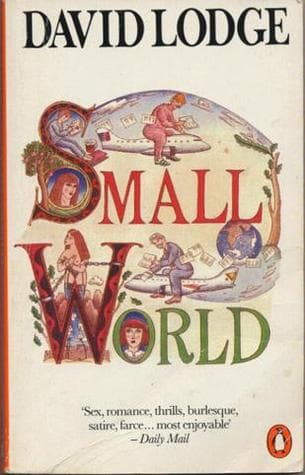
- Small World
David Lodge
3.9 (5k) average on GoodreadsFictionAnother academic satire by Lodge, exploring the conference circuit and literary theory.
- Lucky Jim
Kingsley Amis
3.8 (25k) average on GoodreadsLiterary FictionClassic British academic satire with a bumbling, relatable protagonist.
- The Old Man and the Sea
Ernest Hemingway
3.8 (831k) average on GoodreadsLiterary FictionA Cuban fisherman's long struggle with a giant marlin becomes a story of endurance and dignity, now retold for young adults with illustrations, phonetic guides, and writing prompts in Traditional Chinese.
- One Hundred Years of Solitude
Gabriel García Márquez
4.1 (753k) average on GoodreadsLiterary FictionThrough the multi-generational story of the Buendía family, a mythical town deals with the repeating patterns of time, love, and solitude, as the extraordinary mixes with the ordinary.
- The Goldfinch
Donna Tartt
3.9 (720k) average on GoodreadsLiterary FictionHaunted by a tragic explosion and clutching a stolen Dutch masterpiece, a young orphan navigates the opulent drawing rooms of New York and the gritty underbelly of the art world, desperately seeking connection and redemption amidst a life spiraling into crime and obsession.
- Little Fires Everywhere
Celeste Ng
4.1 (713k) average on GoodreadsLiterary FictionIn Shaker Heights, an artist and her daughter move in, and their free-spirited lives clash with a rule-bound matriarch, revealing hidden conflicts beneath a perfect surface.




Enjoyed the summary?
A summary gives you the shape of the book. The book itself has the detail, the examples and the voice.
Find Changing Places on AmazonAs an Amazon Associate, BookBrief earns from qualifying purchases. How we're funded