

Synopsis
Covers the whole plot, including the ending.
- Difficulty
- Easy
- Pacing
- Moderate
- Mood
- Humorous, Satirical, Witty, Frustrating (for the protagonist)
- Read it if
- You enjoy satirical comedies of manners, academic farces, or stories about an underdog railing against pretension and hypocrisy.
- Skip it if
- You dislike cringe comedy, find social awkwardness uncomfortable, or prefer high-stakes drama over character-driven satire.
Lucky Jim Plot Summary
Covers the whole plot, including the ending.
The Perils of the Provincial University
Jim Dixon, a junior history lecturer, tries to secure his probationary position. His future depends on Professor Welch, his eccentric head of department, and his upcoming lecture on 'Merrie England.' Jim is often stressed, dealing with hangovers, and pretending to care about Welch's cultural interests, such as madrigal singing. He feels stuck in a world of academic snobbery, often making mistakes and privately mocking the people he needs to impress. His main goal is to get through the year without being fired.
Welch's Weekend
Jim attends a weekend at the Welches' home, which includes a folk-music concert where Professor Welch performs. There, Jim meets Christine Callaghan, Welch's prospective daughter-in-law, who is dating Welch's annoying artist son, Bertrand. Jim is immediately drawn to Christine, but their conversations are awkward because of Bertrand and Jim's own social anxieties. He also deals with constant, subtle insults from Mrs. Welch and Bertrand, which increases his dislike for the Welch family.
The Car Accident and Its Aftermath
After a university dance, Jim offers to drive Margaret Peel, a fellow lecturer who is Bertrand's ex-lover and often dramatic. Jim, distracted and perhaps drunk, crashes Professor Welch's car into a ditch. Margaret, who often exaggerates her feelings, pretends to be more injured and upset than she is, making Jim feel obligated to stay with her. This incident complicates Jim's life, as he now feels tied to Margaret, who uses the crash to create a dependent, pseudo-romantic relationship with him, to his private dismay.
A Confession and a Complication
Jim finds himself increasingly attracted to Christine, despite her relationship with Bertrand and his own ties to Margaret. He manages to talk to Christine alone, where he awkwardly, but honestly, says he dislikes Bertrand and likes her. Christine, though at first defending Bertrand, seems open to Jim's honesty. However, their growing connection is constantly blocked by Bertrand's possessiveness and Margaret's demands on Jim's time, making any progress impossible.
The Academic Conference
Jim attends an academic conference in London, hoping to find a new job and leave his current university. He meets Gareth ap Rhys, a successful academic, who offers a potential job lead. In London, Jim tries to avoid Margaret, who has followed him, but she continues to impose herself, claiming illness. He also has a brief, awkward meeting with Christine, which strengthens his desire for her but also shows the difficulties of their situation.
The Lecture Preparation
As the date for his important 'Merrie England' lecture nears, Jim is increasingly unprepared. He delays, drinks too much, and struggles to write anything that meets Professor Welch's vague expectations. He is full of self-doubt, knowing his career depends on a performance he feels unable to give. His thoughts are filled with sarcastic comments about academic pretension and his own perceived failures.
The Drunken Lecture
On the night of his 'Merrie England' lecture, Jim, having drunk too much, gives a disastrous performance. He makes fun of the very ideas he is supposed to be praising, mocks his colleagues, and eventually collapses on stage, setting fire to the lectern. The audience, including Professor Welch and the university principal, is horrified. This public failure confirms Jim's dismissal from the university and seems to end his academic career.
Margaret's Revelation
After his disastrous lecture and dismissal, Jim visits Margaret, who is still pretending to be ill. However, during their conversation, the truth about Margaret's manipulative nature becomes clear. It is revealed that her 'illnesses' are mostly made up to get sympathy and control. This frees Jim from the guilt he felt towards her, letting him see her for who she is.
A New Opportunity and a Clear Path
Unexpectedly, Jim receives an offer for a good job as a personal secretary to Gore-Urquhart, a wealthy industrialist. This opportunity comes through Christine's uncle, Gareth ap Rhys, whom Jim met at the conference. The job offers Jim a stable future outside of academia, a world he dislikes. The job also brings him closer to Christine, as she is also connected to Gore-Urquhart's circle.
Confrontation and Resolution
Jim finally confronts Bertrand, who is revealed to have been having an affair with a married woman, Carol Goldsmith, all along, despite his relationship with Christine. This revelation, along with Margaret's exposed lies, clears the way for Jim and Christine. Jim is now free from both Margaret and Bertrand. With his new job secured and Christine available, Jim leaves the university, ready for a new life with Christine.
Principal Figures
Jim Dixon
Protagonist
A young, cynical history lecturer struggling to fit into academic life.
Jim Dixon is a junior history lecturer at a provincial British university, constantly on the verge of losing his job. He is intelligent and observant but deeply cynical, finding much of the academic world, particularly its pretentiousness and social rituals, utterly ridiculous. He struggles with hangovers, social awkwardness, and a tendency towards self-sabotage, often expressing his contempt through internal monologues and exaggerated facial expressions. Despite his flaws, he possesses an underlying honesty and a desire for genuine connection, which sets him apart from the phoniness around him.
Relationships: Professor Welch (His eccentric and pretentious head of department, whom Jim secretly despises.); Christine Callaghan (His love interest, initially dating Bertrand.); Margaret Peel (A manipulative colleague with whom he becomes entangled.); Bertrand Welch (Professor Welch's insufferable son and Jim's rival for Christine.)
Professor Welch
Antagonist/Supporting
Jim's pompous and culturally pretentious head of department.
Professor Welch is the head of the History department and Jim's immediate superior. He is a caricature of academic pretension, obsessed with 'culture' in its most superficial forms: madrigal singing, amateur art, and folk music. He is oblivious to Jim's disdain and his own ridiculousness, often delivering long, rambling monologues that bore everyone around him. Welch holds Jim's career in his hands, making him a constant source of anxiety for the protagonist, yet he is more foolish than truly malicious.
Relationships: Jim Dixon (His junior lecturer, whose career he controls.); Bertrand Welch (His equally pretentious artist son.); Christine Callaghan (His would-be daughter-in-law, whom he approves of.)
Christine Callaghan
Love Interest/Supporting
Bertrand's girlfriend and Jim's eventual love interest.
Christine Callaghan is initially introduced as Bertrand Welch's girlfriend and a potential love interest for Jim. She is intelligent, attractive, and possesses a quiet integrity that makes her stand out from the other characters. Though initially somewhat reserved and entangled in Bertrand's world, she gradually recognizes Jim's genuine qualities and Bertrand's deceit. She represents a potential escape and a more authentic life for Jim, embodying the kind of honesty and directness he values.
Relationships: Jim Dixon (Her eventual love interest.); Bertrand Welch (Her initial boyfriend, whom she leaves.); Gareth ap Rhys (Her uncle, a successful academic and benefactor.)
Margaret Peel
Antagonist/Supporting
A manipulative and emotionally unstable colleague who entangles Jim.
Margaret Peel is a fellow lecturer who uses feigned illness, emotional distress, and guilt to manipulate those around her, particularly Jim. She claims to have been Bertrand's discarded lover and uses this narrative to garner sympathy and attention. Her 'illnesses' are largely psychosomatic, and she thrives on being seen as a tragic figure. Jim's entanglement with her after the car accident becomes a major obstacle to his happiness, representing the suffocating obligations and emotional blackmail he faces.
Relationships: Jim Dixon (She manipulates him into a pseudo-romantic relationship.); Bertrand Welch (Her alleged former lover, a narrative she uses for sympathy.)
Bertrand Welch
Antagonist/Supporting
Professor Welch's snobbish, bohemian artist son and Jim's rival.
Bertrand Welch is Professor Welch's son, a self-proclaimed 'artist' who embodies the worst aspects of academic and artistic pretension. He is snobbish, arrogant, and condescending, particularly towards Jim. He is Christine's boyfriend and a direct rival to Jim for her affection. Bertrand's artistic endeavors are as superficial as his father's cultural interests, and he is ultimately revealed to be a hypocrite, engaging in an affair while stringing Christine along. He represents the kind of insincerity Jim despises.
Relationships: Jim Dixon (His rival for Christine and general adversary.); Christine Callaghan (His girlfriend, whom he takes for granted.); Professor Welch (His father, whose pretentiousness he inherits.)
Gore-Urquhart
Supporting
A wealthy industrialist and benefactor who offers Jim a new job.
Gore-Urquhart is a wealthy and influential industrialist, a benefactor of the university, and Christine's uncle (through marriage, or close family friend). He is a pragmatic and down-to-earth character, a stark contrast to the academic snobs. He recognizes Jim's underlying intelligence and honesty despite his blunders, and offers him a position as his personal secretary, providing Jim with the means to escape his academic predicament and start a new life. He represents a world of genuine opportunity and competence, free from academic posturing.
Relationships: Jim Dixon (His future employee.); Christine Callaghan (Her uncle (or close family friend).)
Gareth ap Rhys
Supporting
A successful and well-connected academic, Christine's uncle.
Gareth ap Rhys is Christine's uncle and a successful, well-regarded academic. He is a more grounded and less pretentious figure than most of Jim's colleagues. He serves as a connection point for Jim, providing a lead for the job with Gore-Urquhart. He recognizes Jim's potential and, through his connection to Christine, plays a crucial role in facilitating Jim's escape from the university and his eventual happiness with Christine.
Relationships: Jim Dixon (He helps Jim find a new job.); Christine Callaghan (Her uncle.)
Mrs. Welch
Supporting
Professor Welch's long-suffering and slightly snobbish wife.
Mrs. Welch is Professor Welch's wife, a seemingly long-suffering but equally pretentious woman who supports her husband's cultural affectations. She often makes subtle, passive-aggressive remarks and maintains a facade of polite superiority. She is part of the suffocating social environment that Jim finds so unbearable, contributing to the atmosphere of intellectual snobbery and forced gentility.
Relationships: Professor Welch (Her husband.); Jim Dixon (Her husband's junior lecturer, whom she subtly condescends to.)
Themes & Insights
The Absurdity of Academic Pretension
The novel satirizes the snobbery, hypocrisy, and lack of real thought in academia. Jim's thoughts and discomfort show the ridiculousness of characters like Professor Welch, who care more about superficial cultural things (madrigal singing, 'Merrie England' lectures) than true learning or human connection. The university setting, with its forced social rituals and focus on appearances, represents this absurdity. Jim's disastrous 'Merrie England' lecture, where he drunkenly mocks the subject and his colleagues, is the ultimate example, as he literally sets fire to the symbols of academic pomp.
“'Why did you take history, Jim?' 'I don't know. Thought it would be easy, I suppose.”
Authenticity vs. Performance
A main theme is the conflict between being oneself and the social roles required to get by in society, especially in academia. Jim constantly struggles to 'put on a face' for Professor Welch and his colleagues, pretending to be interested in their cultural activities while privately angry. His inability to conform, often shown in his 'faces' and sarcastic thoughts, highlights his desire for authenticity. In contrast, characters like Margaret and Bertrand are good at performing, manipulating others with fake emotions and artistic poses. Jim's eventual freedom comes from dropping these performances and living a life where he can be his true self, especially with Christine.
“'It was one of those faces he reserved for occasions when he was feeling at once servile and malicious.”
Social Anxiety and Alienation
Jim Dixon is a socially anxious character who often feels disconnected from the people and environment around him. His constant hangovers, awkward meetings, and internal thoughts show a deep discomfort with social interaction, especially with those he finds pretentious or manipulative. He feels like an outsider at the university, struggling to connect with anyone until Christine. This theme is clear in his failed attempts at small talk, his fear of social events, and his tendency to withdraw into his own mind, making him relatable to anyone who has felt out of place.
“''Nice, isn't it?' Mrs Welch said, 'to see our young people enjoying themselves.' Jim looked at the young people, who were mainly not enjoying themselves much.”
The Search for Freedom and Self-Realization
At its heart, 'Lucky Jim' is about Jim's search for freedom — freedom from a job he hates, from manipulative relationships, and from a social environment that restricts him. His initial goal is simply to keep his job, but as the story continues, his desire to escape grows. His eventual firing, far from being a tragedy, becomes a release. The new job with Gore-Urquhart and his relationship with Christine represent his ultimate freedom and the chance to live life on his own terms, without academic snobbery or emotional blackmail. He sheds the 'lucky' label given to him ironically, becoming truly lucky in finding his path.
“'He was a lucky Jim, all right, but not in the way they meant.”
Plot Devices & Literary Techniques
The 'Faces'
Jim's exaggerated facial expressions used to express private contempt.
Jim frequently makes a series of exaggerated, often grotesque, 'faces' when he is alone or when he believes no one is looking. These faces are a physical manifestation of his internal contempt, frustration, and amusement at the absurdity around him. They serve as a crucial insight into his true feelings, providing comic relief and highlighting his authentic, often cynical, reactions in contrast to the polite facade he maintains in public. They are a non-verbal coping mechanism and a symbol of his suppressed rebellion against the pretentious academic world.
The 'Merrie England' Lecture
A crucial, symbolic academic presentation that Jim must deliver.
The 'Merrie England' lecture is a recurring motif and a central plot device. It represents everything Jim despises about academic pretension: a vague, uninspiring topic chosen by Professor Welch, requiring a performance of enthusiasm Jim cannot muster. The lecture's impending doom hangs over Jim throughout the novel, symbolizing his probationary status and the suffocating pressure of his job. Its disastrous delivery, where Jim gets drunk and openly mocks his colleagues and the topic, is the climax of his rebellion, leading to his dismissal but ultimately paving the way for his liberation.
The Car Accident
An unfortunate incident that entangles Jim with Margaret Peel.
The car accident, where Jim crashes Professor Welch's car, serves as a significant plot device that complicates Jim's life. It directly leads to his entanglement with Margaret Peel, who exaggerates her injuries and emotional distress to manipulate Jim into a dependent relationship. This incident is a catalyst for much of Jim's misery and romantic complications, forcing him into obligations he resents. It highlights Margaret's manipulative nature and sets up the obstacle that Jim must overcome to be with Christine.
The Gore-Urquhart Job Offer
A deus ex machina that provides Jim with an escape from academia.
The job offer from Gore-Urquhart, a wealthy industrialist, functions as a deus ex machina. It appears unexpectedly late in the novel, after Jim has been dismissed from his university position, and provides him with a well-paying, non-academic role that he genuinely finds appealing. This device offers Jim a clear and sudden path to freedom and financial security, liberating him from the academic world he despises and clearing the way for his relationship with Christine. It represents a stroke of genuine luck, contrasting with the ironic 'Lucky Jim' title.
Lucky Jim Quotes
“Nice things are nicer than nasty things.”
“He was a man for whom the world was a storehouse of minor irritations.”
“No pleasure, no treasure, no leisure, no pleasure, no treasure, no leisure.”
“He felt a sudden, familiar surge of loathing for the whole institution.”
“The point about people who avoid talking about money is that they are so terribly vulgar as to be unable to think of anything else.”
“He was one of those men who are like a magnet for minor disasters.”
“The best thing for being sad is to learn something. That's the only thing that never fails.”
“It was a face that seemed to have been designed by an enemy.”
“He was not a man who enjoyed being observed while eating.”
“The only way to get rid of temptation is to yield to it.”
“He often wondered if the world was populated entirely by people more stupid than himself.”
“It was a good morning for not doing anything much.”
“He felt a sudden, unreasonable urge to hit someone.”
“The thought of facing another day of academic trivialities filled him with dread.”
Quiz
10 questions on the plot and the characters. Each answer comes with a short explanation.
Question 1
What is Jim Dixon's initial academic position at the university?
- Professor of History
- Lecturer in History
- Senior Lecturer in English
- Research Fellow in Medieval Studies
Show answer
B. Lecturer in History Jim Dixon is a junior lecturer, specifically in History, at the unnamed red-brick university.
Question 2
Who is Professor Welch's son, and thus Margaret Peel's boyfriend/fiancé?
- Bertrand Welch
- Julian Welch
- Arthur Welch
- Michael Welch
Show answer
A. Bertrand Welch Bertrand Welch is Professor Welch's artistic, often rude son, who is involved with Margaret Peel.
Question 3
What is the primary reason Jim Dixon is worried about losing his job at the university?
- He failed to publish a required academic paper.
- He has a poor relationship with Professor Welch, whose good opinion is crucial for his tenure.
- He was caught having an affair with a student.
- He frequently misses his lectures and tutorials.
Show answer
B. He has a poor relationship with Professor Welch, whose good opinion is crucial for his tenure. Jim's employment hinges on Professor Welch's recommendation for his renewal, and Jim's various social blunders and general disdain for Welch's tastes put him in a precarious position.
Question 4
What instrument does Professor Welch insist on playing (or having played) at his various social gatherings?
- Piano
- Flute
- Recorder
- Violin
Show answer
C. Recorder Professor Welch is obsessed with madrigals and early music, often involving the recorder, which Jim struggles to distinguish from a flute.
Question 5
Who is Christine Callaghan?
- Professor Welch's niece, who is visiting for the term.
- The university's new librarian, with whom Jim develops a rivalry.
- Bertrand Welch's girlfriend, who eventually becomes Jim's love interest.
- A fellow lecturer in the History department, Jim's colleague.
Show answer
C. Bertrand Welch's girlfriend, who eventually becomes Jim's love interest. Christine Callaghan is initially Bertrand Welch's girlfriend, but she and Jim become romantically involved as the novel progresses.
Question 6
What is the topic of Jim Dixon's disastrous public lecture, which he gives while heavily intoxicated?
- The Economic Impact of Monasteries in Medieval England
- Merrie England: a Reappraisal of the Fifteenth Century
- The Role of the Common Man in the Tudor Period
- The Decline of Feudalism in Northern Europe
Show answer
B. Merrie England: a Reappraisal of the Fifteenth Century Jim's infamous lecture, delivered while drunk, is titled 'Merrie England: a Reappraisal of the Fifteenth Century,' during which he mocks the very concept.
Question 7
What is the primary theme explored through Jim Dixon's character and his struggles at the university?
- The importance of academic rigor and intellectual pursuits.
- The conflict between authenticity and social conformity in a pretentious environment.
- The inevitable triumph of good over evil in institutional settings.
- The universal appeal of traditional arts and culture.
Show answer
B. The conflict between authenticity and social conformity in a pretentious environment. Jim's frustration stems from the need to conform to the affected, 'cultured' behaviors of his academic superiors, which he finds deeply inauthentic and silly.
Question 8
Who is Margaret Peel, and what is her relationship with Jim Dixon?
- She is Jim's landlady, who frequently complains about his habits.
- She is a fellow lecturer who is Jim's closest confidante.
- She is Jim's emotionally manipulative and possessive girlfriend.
- She is Professor Welch's long-suffering wife.
Show answer
C. She is Jim's emotionally manipulative and possessive girlfriend. Margaret Peel is Jim's girlfriend at the beginning of the novel, characterized by her emotional fragility and manipulative tendencies, which Jim struggles to escape.
Question 9
What significant event occurs at the end of the novel that changes Jim's career prospects?
- He publishes a groundbreaking article that earns him a promotion.
- He receives a lucrative offer to teach at a more prestigious London university.
- Professor Welch unexpectedly resigns, leaving Jim in charge of the department.
- He inherits a large sum of money, allowing him to retire from academia.
Show answer
B. He receives a lucrative offer to teach at a more prestigious London university. Through Christine's uncle, Gore-Urquhart, Jim is offered a well-paying and desirable job in London, allowing him to escape the provincial university and the Welches.
Question 10
What is the name of the benefactor who eventually offers Jim Dixon a new, much-desired job in London?
- Sir Richard Headlam
- Mr. Geoffrey Gore-Urquhart
- Lord Cranbrook
- Dr. Ernest Millington
Show answer
B. Mr. Geoffrey Gore-Urquhart Geoffrey Gore-Urquhart, Christine's wealthy and influential uncle, is impressed by Jim's frankness and offers him a position as his personal assistant, which pays significantly better.
Lucky Jim FAQ
What is the central conflict Jim Dixon faces at the start of the novel?
Jim Dixon, a probationary history lecturer at an unnamed provincial university, struggles to secure his permanent position. He feels immense pressure to impress his eccentric and pretentious head of department, Professor Welch, whose good opinion is crucial, despite Jim's disdain for Welch's artistic and academic affectations.
Who is Professor Welch and how does he influence Jim's situation?
Professor Welch is Jim's head of department, a pompous and self-important man obsessed with culture, folk music, and 'Merrie England' ideals. His approval is vital for Jim's job security, forcing Jim into awkward social situations like madrigal singing and attending dreadful concerts, which Jim secretly despises.
Describe Jim Dixon's relationship with Margaret Peel.
Margaret Peel is a fellow lecturer and Jim's current romantic entanglement. Their relationship is fraught with tension; Margaret is emotionally manipulative, frequently feigning illness and distress to elicit sympathy and control Jim, making him feel trapped and obligated to her.
How does Christine Callaghan enter Jim's life and what is her initial role?
Christine Callaghan is the attractive young woman Jim meets through the Welch family; she is Bertrand Welch's girlfriend. Jim is immediately drawn to her, but their initial interactions are complicated by her relationship with Bertrand and Jim's own commitment to Margaret, creating a significant romantic dilemma for him.
What is the significance of Jim's 'faces' and internal monologues?
Jim's 'faces' are his private, exaggerated grimaces and expressions he makes when reacting to the absurdity or pomposity of others, serving as an outlet for his suppressed frustration and disdain. His internal monologues reveal his true, often sarcastic and critical, thoughts, contrasting sharply with his outwardly polite or awkward demeanor.
What role does Bertrand Welch play in Jim's academic and personal life?
Bertrand Welch is Professor Welch's obnoxious, self-important artist son, and Christine Callaghan's boyfriend. He is a rival to Jim both romantically and socially, often belittling Jim and embodying the very pretentiousness that Jim despises, further complicating Jim's pursuit of Christine.
What is the 'Merrie England' lecture and why is it so disastrous for Jim?
The 'Merrie England' lecture is Jim's crucial public address, meant to impress the university and secure his position. However, fueled by alcohol and his deep-seated resentment for the academic world's pretensions, Jim delivers a drunken, sarcastic, and increasingly incoherent parody of the very ideas Professor Welch cherishes, leading to his inevitable dismissal.
How does Jim Dixon's view of academic life evolve throughout the novel?
Initially, Jim views academia as a necessary evil to secure a job, despite his contempt for its pretentiousness and the mediocrity of many colleagues. By the end, having experienced the hypocrisy and absurdity firsthand, he is disillusioned and ultimately relieved to escape its confines, finding a more authentic path outside the university.
What specific details reveal Jim's contempt for Professor Welch's cultural interests?
Jim's contempt is evident in his internal reactions to the Welch family's madrigal singing, his inability to distinguish a flute from a recorder (and his disinterest in doing so), and his forced attendance at Welch's dreadful concerts. He also despises Welch's antiquated 'Merrie England' historical views, which he later parodies in his disastrous lecture.
What is the significance of the phone call Jim makes to Christine from the phone box?
This phone call marks a turning point in Jim's romantic pursuit of Christine. It's a moment of direct, albeit awkward, communication where he tries to express his feelings and clarify their situation, moving past the complications of Bertrand and Margaret. It signifies his growing determination to pursue a genuine connection with Christine.
How does Jim's relationship with Margaret Peel reflect broader themes of manipulation and obligation?
Margaret's manipulative tactics, such as feigning suicide attempts and emotional distress, highlight the theme of obligation and how it can trap individuals in unhealthy relationships. Jim feels immense guilt and responsibility, preventing him from acting on his true desires and illustrating the social pressures that can dictate personal choices.
What does Jim's eventual employment with Mr. Gore-Urquhart symbolize?
Jim's new job as Mr. Gore-Urquhart's secretary, thanks to Christine's uncle, symbolizes his escape from the stifling academic world into a more practical and rewarding career. It represents a victory of authenticity and merit over pretentiousness and connections, and offers him financial security and a clear future with Christine.
How does the novel critique the British class system, specifically within academia?
The novel critiques the class system by portraying the provincial university as a microcosm where social climbing, snobbery, and inherited privilege (like Bertrand's status) often trump genuine academic merit. Jim, from a less privileged background, struggles against the established, often ridiculous, norms dictated by figures like Professor Welch.
Is Jim Dixon a hero or an anti-hero?
Jim Dixon is best described as an anti-hero. While he is relatable and ultimately triumphs, his methods are often cynical, his internal thoughts are highly critical, and he frequently acts out of self-interest and resentment rather than noble intentions. His charm lies in his flawed, rebellious nature.
How does the novel use humor to convey its message about post-war British society?
The novel uses satirical humor, particularly through Jim's internal monologues and his interactions with pretentious characters, to mock the stuffiness, hypocrisy, and cultural affectations of post-war British academia and middle-class society. This humor highlights the absurdity of these social conventions and Jim's struggle against them.
What is the significance of the final scene where Jim and Christine leave together?
The final scene signifies Jim's complete triumph over his academic and romantic predicaments. Leaving the university with Christine, who is now free from Bertrand, represents his escape from pretentiousness, his embrace of genuine affection, and the beginning of a new, more authentic life free from the constraints that previously plagued him.
What psychological impact do the Welches have on Jim?
The Welches, particularly Professor Welch, inflict significant psychological stress on Jim, forcing him to suppress his true feelings and conform to their absurd expectations to secure his job. This constant suppression leads to his 'faces' and internal sarcasm, creating a deep sense of frustration and resentment that eventually boils over.
How does Christine's character challenge Jim's initial cynicism?
Christine, initially seen as Bertrand's girlfriend and part of the 'establishment' Jim despises, gradually reveals herself to be intelligent, kind, and capable of seeing through pretension. Her genuine nature and quiet strength offer Jim a sincere connection, challenging his cynical view that everyone around him is either foolish or manipulative.
About the author

Sir Kingsley William Amis was an English novelist, poet, critic and teacher. He wrote more than 20 novels, six volumes of poetry, a memoir, short stories, radio and television scripts, and works of social and literary criticism. He is best known for satirical comedies such as Lucky Jim (1954), One Fat Englishman (1963), Ending Up (1974), Jake's Thing (1978) and The Old Devils (1986).
Similar books
- A Confederacy of Dunces
John Kennedy Toole
3.9 (231k) average on GoodreadsLiterary FictionFeatures an eccentric, anti-establishment protagonist railing against society's absurdities.
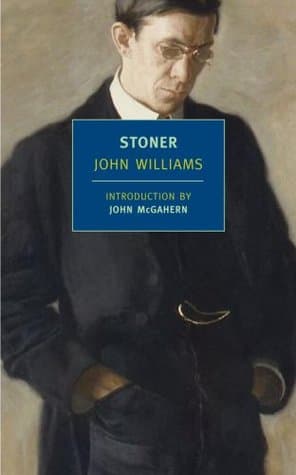
- Stoner
John Williams
4.3 (103k) average on GoodreadsLiterary FictionExplores academic life, but from a more melancholic and serious perspective, offering a contrast.
- Decline and Fall
Evelyn Waugh
3.9 (12k) average on GoodreadsLiterary FictionWaugh's novel offers a broader, more surreal satire of British public schools and upper-class society, with a more detached and ironic protagonist. Amis's Lucky Jim is more grounded in the specific absurdities of provincial university life and features a more actively rebellious and relatable protagonist struggling with class anxieties.
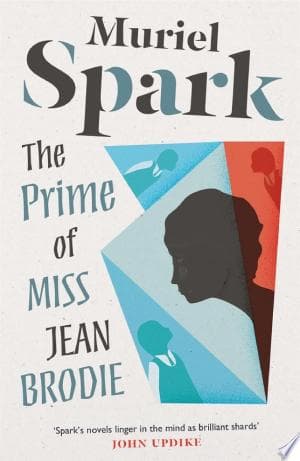
- The Prime of Miss Jean Brodie
Muriel Spark
3.7 (43k) average on GoodreadsLiterary FictionSpark's novel, also set in an educational institution, delves into darker themes of psychological manipulation, cult of personality, and disillusionment within a girls' school. It offers a more nuanced and psychologically complex exploration of influence compared to Lucky Jim's primarily comedic and social satire of institutional pretension and personal advancement.
- The Old Man and the Sea
Ernest Hemingway
3.8 (831k) average on GoodreadsLiterary FictionA Cuban fisherman's long struggle with a giant marlin becomes a story of endurance and dignity, now retold for young adults with illustrations, phonetic guides, and writing prompts in Traditional Chinese.
- One Hundred Years of Solitude
Gabriel García Márquez
4.1 (753k) average on GoodreadsLiterary FictionThrough the multi-generational story of the Buendía family, a mythical town deals with the repeating patterns of time, love, and solitude, as the extraordinary mixes with the ordinary.




Enjoyed the summary?
A summary gives you the shape of the book. The book itself has the detail, the examples and the voice.
Find Lucky Jim on AmazonAs an Amazon Associate, BookBrief earns from qualifying purchases. How we're funded